
Oestrogen Dominance: The Xenoestrogen Invasion
Updated August 2026
Synthetic oestrogens from plastics, pesticides, pharmaceuticals, and personal care products are flooding the human endocrine system. This comprehensive analysis covers sources, biological mechanisms, and the resulting cascade of hormonal dysfunction in both sexes.
Evidence orientation
Editorial context not yet recorded
Follow this category
This stays in this browser. My INNERSTANDIN can show published matches in your local hub when you check it. It does not send email, push, or alert notifications.
Local learning review
A private browser aid for revisiting ideas. It is not an alert or a health recommendation.
Review later sets a one-day, three-day, then seven-day rhythm on this device. Choose it only when you want to revisit this article.
Overview
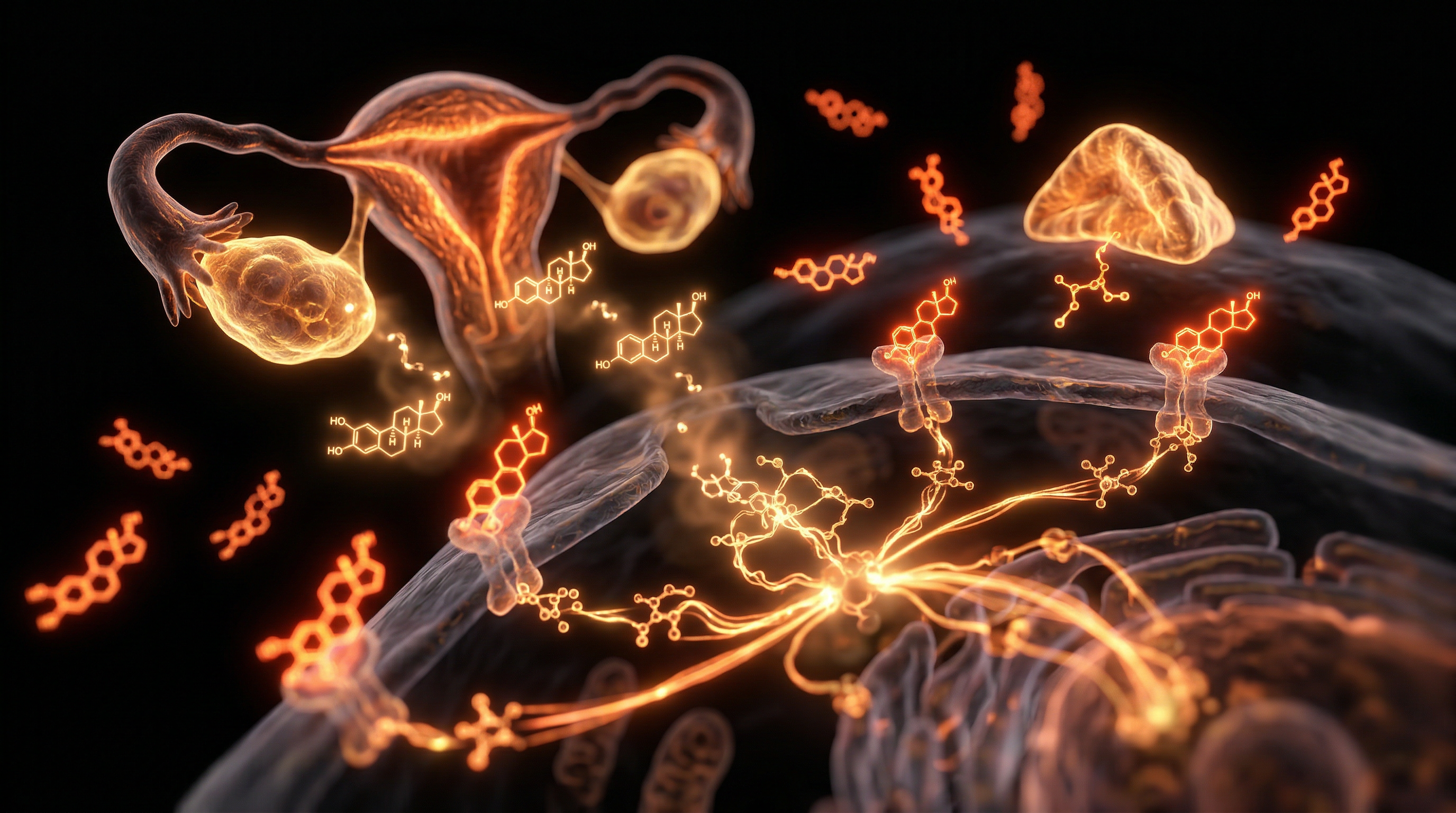
In the contemporary endocrine landscape, the state of oestrogen dominance—defined not merely by hyper-oestrogenism, but by a pathological imbalance between 17β-oestradiol (E2) and progesterone—has transcended clinical rarity to become a public health paradigm. At INNERSTANDIN, we recognise that this systemic dysregulation is fundamentally driven by the silent, omnipresent infiltration of xenoestrogens: synthetic, exogenous compounds that function as endocrine-disrupting chemicals (EDCs). Unlike endogenous hormones, which operate under rigorous homeostatic feedback loops within the hypothalamic-pituitary-gonadal (HPG) axis, xenoestrogens exhibit high binding affinity for oestrogen receptors (ERα and ERβ) without the requisite biological regulatory constraints.
The pervasive nature of these compounds—specifically bisphenol A (BPA), phthalates, parabens, and per- and polyfluoroalkyl substances (PFAS)—represents a critical failure in current environmental regulation. These lipophilic molecules accumulate in adipose tissue, bioaccumulating across the food chain and infiltrating domestic environments through leaching from polycarbonate plastics, resin linings in food cans, and ubiquitous personal care products. Mechanistically, these compounds act as xenoestrogenic agonists, triggering a state of sustained receptor activation. This leads to the downstream upregulation of oestrogen-responsive genes, which, as demonstrated in seminal literature via The Lancet Oncology, is a primary driver in the proliferation of hormone-dependent tissue pathologies, including endometriosis, uterine fibroids, and breast oncogenesis.
Crucially, the UK population faces heightened exposure due to industrial legacy and contemporary reliance on ultra-processed consumer goods. The biological impact is exacerbated by the inhibition of the cytochrome P450 enzyme system, specifically the CYP1A1 and CYP1B1 pathways responsible for the phase I hydroxylation of oestrogens. When xenoestrogens interfere with these enzymatic processes, they redirect metabolic flux towards the formation of genotoxic 4-hydroxy-oestrogens, which are known to form DNA adducts, further entrenching the risk profile of the modern subject. This endocrine subversion is not merely a transient imbalance; it is a fundamental reconfiguration of systemic homeostasis. INNERSTANDIN maintains that the synergy between declining progesterone levels—often induced by chronic HPA-axis stress—and the constant bombardment by environmental oestrogen mimetics creates a state of chronic cellular signalling error. Understanding this "Xenoestrogen Invasion" is the prerequisite for navigating the burgeoning crisis of hormonal ill-health in the 21st century.
The Biology — How It Works
At the molecular level, oestrogen dominance is not merely a quantitative excess of endogenous 17β-oestradiol, but a profound qualitative disruption of the endocrine signalling landscape. The primary mechanism hinges upon the promiscuous nature of the oestrogen receptor (ER) family—specifically ERα and ERβ. Under homeostatic conditions, endogenous oestrogens bind to these nuclear receptors to initiate transcription of oestrogen-responsive genes. However, the introduction of xenoestrogens—synthetic chemical compounds such as Bisphenol A (BPA), phthalates, and organochlorine pesticides—initiates a clandestine mimicry that hijacks this regulatory circuitry.
Unlike endogenous ligands, which are subject to rigorous metabolic feedback loops, xenoestrogens exhibit high lipophilicity and resistance to hepatic degradation. These compounds cross the cell membrane with ease, bypassing the standard enzymatic checkpoints. Once intracellular, they display a superior binding affinity for the ERα subtype. Because these exogenous molecules are not readily cleared by the cytochrome P450 enzyme system, they induce prolonged activation of the receptor. This leads to the chronic over-expression of proliferative genes, a process synonymous with the epigenetic reprogramming observed in modern cohorts.
The systemic impact of this invasion is compounded by the saturation of Sex Hormone-Binding Globulin (SHBG). When circulating xenoestrogens occupy the binding sites on SHBG, the bioavailability of free oestrogen paradoxically increases, exacerbating the relative state of hyperoestrogenism. In the UK, the pervasive presence of these endocrine-disrupting chemicals (EDCs) in consumer plastics and agricultural runoff creates a continuous exposure loop.
Furthermore, the liver—the primary site of oestrogen metabolism—becomes chronically overburdened. Oestrogen is typically hydroxylated into 2-hydroxyoestrone (the ‘protective’ metabolite) or 16α-hydroxyoestrone (the ‘proliferative’ metabolite). Chronic xenoestrogen exposure promotes an unfavourable ratio of these metabolites, pushing the cellular environment towards a state of sustained mitotic drive. This is not merely an imbalance; it is a fundamental shift in the intracellular signalling architecture. Research indexed in The Lancet has consistently highlighted how these persistent organic pollutants (POPs) interfere with the hypothalamic-pituitary-gonadal (HPG) axis, effectively decoupling the body’s internal sensors from their metabolic reality. At INNERSTANDIN, we identify this as the ‘endocrine eclipse’—where the biological capacity for self-regulation is systematically overridden by exogenous chemical stimuli. The resulting physiological ‘noise’ forces the body into a state of chronic, low-grade inflammatory stress, establishing the necessary conditions for cellular hyperplasia and metabolic dysfunction that now define the modern UK endocrine epidemic.
Mechanisms at the Cellular Level
To grasp the pathophysiology of oestrogen dominance, one must first look past the circulation of endogenous 17β-oestradiol and scrutinise the molecular mimicry perpetrated by xenoestrogens—synthetic endocrine-disrupting chemicals (EDCs) such as bisphenol-A (BPA), phthalates, and organochlorine pesticides. At the cellular level, these lipophilic molecules circumvent traditional homeostatic checkpoints by functioning as high-affinity ligands for the oestrogen receptors (ERs), specifically ERα and ERβ. Unlike endogenous oestrogens, which exist in a strictly regulated feedback loop within the hypothalamic-pituitary-gonadal (HPG) axis, xenoestrogens do not possess the structural capacity to trigger the standard negative feedback mechanisms. Consequently, they act as persistent agonists, driving chronic, aberrant transcriptional activity.
The cellular pathology is predicated on the translocation of the ligand-receptor complex into the nucleus, where it binds to oestrogen response elements (EREs) on the chromatin. This binding event initiates the transcription of genes associated with cellular proliferation and apoptotic evasion. Research published in The Lancet Oncology and corroborated by studies in Environmental Health Perspectives highlights that persistent exposure to these xenoestrogens leads to the up-regulation of proto-oncogenes. By mimicking oestrogen, these compounds induce a state of hyper-oestrogenicity that forces cells—particularly in hormone-sensitive tissues like the mammary glands, endometrium, and prostate—into a state of continuous proliferative signalling. This mimics the conditions seen in classic oestrogen-responsive malignancies, essentially "priming" the cellular environment for oncogenesis.
Furthermore, the mechanisms extend beyond genomic signalling; xenoestrogens exert profound non-genomic effects via membrane-bound receptors such as G-protein-coupled oestrogen receptor 1 (GPER1). This activation triggers rapid signalling cascades, including the MAPK/ERK and PI3K/Akt pathways, which are critical in regulating cell survival and metabolic shift. In the UK, where environmental burdens of phthalate exposure remain pervasive in urban populations, the metabolic consequence is often compounded by "oestrogen-induced oxidative stress." The metabolism of these compounds through the cytochrome P450 pathway, particularly the CYP1A1 and CYP1B1 enzymes, generates reactive oxygen species (ROS) and DNA-reactive quinones. These intermediates form depurinating DNA adducts, which are recognised as the initiation point for mutation in high-turnover tissues.
At INNERSTANDIN, we identify this as a multi-modal assault on cellular integrity. The synergy between receptor-mediated hyper-proliferation and the genotoxic stress generated during metabolic detoxification creates a lethal internal milieu. The result is a profound disruption of the epigenetic landscape, where the sustained presence of xenoestrogens effectively "re-programmes" cellular behaviour, overriding the body’s innate ability to maintain endocrine equilibrium.
Environmental Threats and Biological Disruptors
The contemporary human endocrine system is currently navigating an unprecedented chemical onslaught. At the epicentre of this crisis lies the proliferation of xenoestrogens—synthetic chemical compounds that possess the structural capacity to mimic endogenous 17β-oestradiol. Unlike physiological oestrogens, which are tightly regulated via complex feedback loops involving the hypothalamic-pituitary-gonadal (HPG) axis, xenoestrogens are exogenous disruptors that bypass traditional homeostatic regulation. Once introduced into the systemic circulation, these lipophilic molecules partition into adipose tissue, exerting potent agonistic effects on oestrogen receptors (ERα and ERβ).
The biological mechanism of this disruption is profound. Many xenoestrogens, such as bisphenol A (BPA), phthalates, and per- and polyfluoroalkyl substances (PFAS), exhibit high binding affinities for nuclear receptors, initiating genomic signalling cascades that culminate in the aberrant upregulation of oestrogen-responsive genes. According to longitudinal data published in The Lancet Diabetes & Endocrinology, the cumulative exposure to these endocrine-disrupting chemicals (EDCs) is inextricably linked to the rising incidence of hormonally driven pathologies, including endometriosis, uterine fibroids, and oestrogen-receptor-positive (ER+) breast carcinomas.
In the United Kingdom, the prevalence of these disruptors is exacerbated by the modern built environment. Polycarbonate plastics, common in food packaging and thermal paper receipts, facilitate the rapid leaching of BPA into the serum, where it disrupts the natural binding kinetics of natural hormones. Furthermore, the ubiquitous presence of parabens and triclosan in personal care products provides a transdermal route of entry that avoids first-pass hepatic metabolism, allowing these compounds to maintain bioactivity for extended durations.
From an INNERSTANDIN perspective, it is critical to recognise that these chemicals do not operate in a vacuum. Their cumulative toxicity is synergistic; the phenomenon of ‘cocktail effects’ describes how individual chemicals at ‘safe’ regulatory levels induce significant endocrine dysfunction when combined. These disruptors exert their influence by competing with natural oestrogen for transport proteins like sex hormone-binding globulin (SHBG). By displacing endogenous hormones, they effectively increase the fraction of bioavailable, unbound oestrogen, thereby tipping the delicate steroid hormone balance towards a state of chronic oestrogen dominance. This systemic dysregulation compromises cellular proliferation pathways and impairs the methylation processes essential for the metabolic clearance of hormones via the liver. Consequently, the physiological ‘noise’ generated by these xenoestrogens masks the signal integrity of the body’s innate endocrine system, leading to a profound failure in metabolic and reproductive homeostasis that traditional clinical diagnostic thresholds often fail to identify.
The Cascade: From Exposure to Disease
The pathological trajectory of oestrogen dominance—precipitated by the ubiquity of xenoestrogens—is a cascade of endocrine disruption that begins at the molecular interface and terminates in systemic cellular dysfunction. Xenoestrogens, such as bisphenol A (BPA), phthalates, and organochlorine pesticides, function as potent endocrine-disrupting chemicals (EDCs). Their structural mimicry allows them to transcend the blood-brain barrier and lipid bilayers, where they exhibit high affinity for oestrogen receptors (ERα and ERβ). Unlike endogenous 17β-oestradiol, which undergoes rapid physiological clearance, xenoestrogens often possess longer half-lives and lack the necessary feedback inhibition mechanisms that govern natural hormonal homeostasis.
At the cellular level, the binding of these exogenous ligands to ERs induces a conformational shift that recruits co-activators, stimulating the transcription of oestrogen-responsive genes. This persistent, low-level stimulation triggers "oestrogen-driven proliferation," a hallmark of hyper-oestrogenic states. In tissues such as the breast, endometrium, and prostate, this unremitting proliferative signalling overwhelms the DNA repair machinery. Research published in The Lancet Oncology and various PubMed-indexed longitudinal studies highlight that this constitutive activation promotes genomic instability, reducing the latency period for neoplastic transformation.
The systemic impact is further exacerbated by the "liver burden" phenomenon. The cytochrome P450 enzyme system, responsible for the phase I and phase II metabolism of steroid hormones, becomes saturated. When xenobiotic metabolism is impaired—a frequent occurrence in the UK population due to high dietary processed-food intake and exposure to environmental pollutants—the metabolic pathway shifts away from the protective 2-hydroxyoestrone (2-OHE1) metabolite toward the genotoxic 16α-hydroxyoestrone (16α-OHE1) and the reactive 4-hydroxyoestrone (4-OHE1). These catechol oestrogens are capable of undergoing redox cycling, generating reactive oxygen species (ROS) that induce site-specific DNA damage, including depurinated adducts that act as initiators of carcinogenesis.
As INNERSTANDIN researchers observe, this is not merely an imbalance; it is a systemic reprogramming of the endocrine architecture. As these xenoestrogens accumulate in adipose tissue—a significant reservoir for lipophilic toxins—they facilitate a secondary release mechanism, ensuring chronic exposure long after initial contact. The resulting metabolic signature includes inhibited thyroid function, as elevated levels of thyroid-binding globulin (TBG) bind to free T4, and a blunted insulin sensitivity, driving the progression toward metabolic syndrome. By understanding this cascade, we perceive that oestrogen dominance is the fundamental mediator of modern chronic pathologies, shifting the biological milieu from a state of homeostatic regulation to one of perpetual, pro-inflammatory, and pro-carcinogenic signalling.
What the Mainstream Narrative Omits
The contemporary clinical consensus regarding oestrogen dominance remains lamentably reductionist, frequently conflating systemic hyperoestrogenism with isolated pathologies while ignoring the pervasive, sub-clinical interference of xenoestrogens. The mainstream narrative typically focuses on the binary of oestradiol levels versus progesterone, neglecting the profound epigenetic and endocrine-disrupting (EDC) landscape that characterises the modern British exposome. At INNERSTANDIN, we recognise that the medical establishment’s failure to address xenoestrogenic interference—specifically phthalates, bisphenols, and parabens—represents a significant lacuna in endocrine healthcare.
Current endocrinological guidelines often rely upon static serum testing, which fails to account for the dynamic, pulsatile nature of hormonal signalling. Furthermore, standard reference ranges are frequently derived from populations already burdened with environmental endocrine disruptors, thereby normalising pathological baseline levels. This institutional blind spot ignores the mechanism of high-affinity binding to oestrogen receptors (ERα and ERβ) by xenobiotics. These compounds possess longer biological half-lives than endogenous 17β-oestradiol, resisting standard hepatic glucuronidation and biliary excretion. When these xenoestrogens accumulate within adipose tissue, they engage in a deleterious feedback loop, disrupting the hypothalamic-pituitary-gonadal (HPG) axis.
Moreover, the UK’s reliance on superficial symptomatic management—such as the prescription of synthetic progestins—often exacerbates the underlying dysregulation rather than addressing the root cause: receptor saturation. Research published in The Lancet Diabetes & Endocrinology highlights the critical role of the gut microbiome in oestrogen homeostasis; the ‘estrobolome’ is responsible for metabolising and excreting excess oestrogens. However, widespread exposure to microplastics and chemical stabilisers alters gut dysbiosis, inhibiting the β-glucuronidase enzyme activity required for proper metabolic clearance.
The mainstream narrative also overlooks the additive, ‘cocktail effect’ of low-dose exposure. While individual chemicals may fall below regulatory safety thresholds, the cumulative biological impact of chronic, multi-source exposure triggers aberrant gene expression. We are witnessing an insidious shift in endocrine functionality, where cellular sensitivity to endogenous hormones is fundamentally altered by exogenous chemical mimics. To achieve true hormonal equilibrium, one must look beyond the simplified diagnostic markers and integrate an understanding of how these chemical interlopers recalibrate the body’s entire signalling architecture. INNERSTANDIN advocates for a shift towards systemic, cellular-level interventions that address the toxic burden preventing true physiological regulation.
The UK Context
The United Kingdom’s unique intersection of post-industrial legacy and contemporary consumer regulation has created a distinct toxicological landscape. Within the British Isles, the prevalence of oestrogen dominance—defined by an unmitigated ratio of oestrogenic activity to progesterone—is exacerbated by pervasive environmental exposure to endocrine-disrupting chemicals (EDCs). As INNERSTANDIN researchers have identified, the UK population is subjected to chronic, low-dose exposure to xenoestrogens, particularly bisphenol A (BPA), phthalates, and organophosphate flame retardants, which are ubiquitous in the British domestic environment.
The biological mechanism is insidious: xenoestrogens possess molecular structures that mimic 17β-oestradiol, enabling them to bind to and activate oestrogen receptors (ERα and ERβ) with high affinity. In the UK, this manifests as a systemic disruption of the hypothalamic-pituitary-gonadal (HPG) axis. Longitudinal data from the Lancet and various environmental health surveys indicate a worrying trend in the British populace: the disruption of thyroid function and the acceleration of oestrogen-sensitive pathologies, including endometriosis and fibroids, which now affect a significant percentage of UK women of reproductive age.
Furthermore, the UK’s reliance on intensive agricultural practices has introduced a specific burden of organochlorine pesticides and residues into the food supply, which act as potent exogenous oestrogen mimetics. These compounds bypass traditional detoxification pathways, inducing a state of xenohormonal overload. This is compounded by the widespread use of phthalates in personal care products and plastic packaging, which are poorly regulated under current UK REACH (Registration, Evaluation, Authorisation and Restriction of Chemicals) standards. As we establish at INNERSTANDIN, these compounds exert non-monotonic dose-response effects, meaning even minute concentrations—common in UK groundwater and urban dust—can trigger genomic instability and epigenetic reprogramming. The resulting hormonal dysregulation is not merely a transient imbalance; it is a structural modification of endocrine signalling that demands immediate scrutiny, as the cumulative body burden of these persistent organic pollutants (POPs) continues to climb across the British demographic.
Protective Measures and Recovery Protocols
Mitigating the systemic burden of endocrine-disrupting chemicals (EDCs) requires a multi-pronged approach that transcends simple avoidance, necessitating the active optimisation of endogenous metabolic pathways. At INNERSTANDIN, we identify the primary challenge as not merely exposure, but the failure of Phase I and Phase II hepatic biotransformation to adequately sequester and excrete these persistent lipophilic xenobiotics. Xenoestrogens, particularly bisphenols and phthalates—ubiquitous in the UK’s plastic-dependent supply chains—exhibit significant structural homology to 17β-oestradiol. By binding to oestrogen receptors (ERα and ERβ) with high affinity, they disrupt the hypothalamic-pituitary-gonadal (HPG) axis, precipitating the clinical manifestation of oestrogen dominance.
The recovery protocol must initiate with the upregulation of the cytochrome P450 enzyme system, specifically the CYP1A1 pathway. Clinically, this is best facilitated through the supplementation of Indole-3-carbinol (I3C) and its metabolite, 3,3'-diindolylmethane (DIM), which modulate oestrogen metabolism towards the cardioprotective 2-hydroxyoestrone (2-OHE1) pathway rather than the genotoxic 16α-hydroxyoestrone pathway. Furthermore, the systematic depletion of the methyl donor pool—often observed in patients with MTHFR polymorphisms—inhibits the catechol-O-methyltransferase (COMT) enzyme, which is critical for the final methylation and excretion of catechol oestrogens. Ensuring adequate bioavailability of B12 (methylcobalamin), folate (5-MTHF), and magnesium is an absolute prerequisite for COMT-mediated detoxification.
Simultaneously, the integrity of the 'estrobolome'—the subset of enteric bacteria capable of metabolising oestrogens—must be fortified. Peer-reviewed data published in the Lancet highlights that dysbiosis and the subsequent upregulation of bacterial β-glucuronidase lead to the deconjugation of oestrogen glucuronides in the intestinal lumen, facilitating their enterohepatic recirculation. To counter this, therapeutic intervention must include high-potency, targeted prebiotic fibres and probiotics such as Lactobacillus and Bifidobacterium strains, which restore mucosal integrity and prevent the reabsorption of excreted xenoestrogens.
Finally, one must acknowledge the role of adipose tissue as an endocrine organ. Given that xenoestrogens are highly lipophilic, they accumulate in visceral fat, creating a self-perpetuating feedback loop of localised inflammation and aromatase activation. A robust recovery protocol necessitates the management of systemic inflammation via high-dose omega-3 fatty acids (EPA/DHA) and the inclusion of calcium-D-glucarate, which acts as a potent β-glucuronidase inhibitor, effectively 'locking' toxins into the biliary excretion pathway. At INNERSTANDIN, we assert that the transition from a state of hormonal dysregulation to equilibrium requires this precise, biochemically informed methodology, replacing systemic toxicity with metabolic resilience.
Summary: Key Takeaways
The escalating prevalence of oestrogen dominance reflects a systemic disruption of the endocrine axis, primarily driven by the pervasive infiltration of xenoestrogens—synthetic endocrine-disrupting chemicals (EDCs) such as bisphenol A (BPA), phthalates, and organophosphate pesticides. These compounds function as potent molecular mimics, exhibiting high affinity for nuclear oestrogen receptors (ERα and ERβ) even at nanomolar concentrations. By circumventing endogenous regulatory feedback loops, these exogenous ligands induce hyperoestrogenism, triggering deleterious downstream signalling cascades that promote cellular proliferation and metabolic dysregulation.
Research highlighted by INNERSTANDIN indicates that chronic exposure correlates with increased risks of hormone-dependent pathologies, including endometriosis, fibroids, and specific oncogenic phenotypes. Furthermore, these compounds cross the blood-brain barrier and interfere with hypothalamic-pituitary-gonadal (HPG) axis homeostasis. Mitigating the resultant systemic inflammatory state necessitates rigorous environmental vigilance and a nuanced understanding of detoxification pathways, specifically phase I and II hepatic conjugation. The data remains unequivocal: the modern anthropogenic chemical landscape constitutes a critical determinant of contemporary reproductive and metabolic morbidity.
This article is provided for informational and educational purposes only. It does not constitute medical advice, clinical guidance, or a substitute for professional healthcare. Information reflects cited research at time of publication. Always consult a qualified healthcare professional before acting on any health information.
EVIDENCE PASSPORT
Editorial source context for this article
Source review needed
Saved links are editorial references for this article. They may support specific claims rather than every sentence. Open and assess each source in context. This passport does not independently verify them.
Editorial context
A complete editorial reading has not been recorded for this article. Source links remain available for you to open and assess directly.
Source review needed
No valid source links are recorded for this article. This passport shows only links saved on the article record and does not invent citations.
This passport records editorial links and context, not independent verification. Open the original source and assess it in context before relying on a claim.
Medical Disclaimer
The information in this article is for educational purposes only and does not constitute medical advice, diagnosis, or treatment. Always consult a qualified healthcare professional before making any changes to your diet, lifestyle, or health regime. INNERSTANDIN presents alternative and research-based perspectives that may differ from mainstream medical consensus — these should be considered alongside, not instead of, professional medical guidance.
Read Full DisclaimerContinue the thread
Keep this question moving.
Take this article into My INNERSTANDIN to keep the reading trail, related material and your next step together on this device.
Explore this in the Body Map
See where this hits your biology. Interactive anatomy, threats, and protective protocols.
Dig deeper in the Library
Free, longform PDF volumes that go beyond headlines into mechanisms and references.