
Omega-3 vs Omega-6: The UK Dietary Imbalance
Updated May 2026
The modern British diet is heavily skewed toward pro-inflammatory Omega-6 fatty acids. We discuss the biological necessity of restoring the lipid balance to prevent chronic systemic inflammation.
Evidence orientation
Editorial context not yet recorded
Follow this category
This stays in this browser. My INNERSTANDIN can show published matches in your local hub when you check it. It does not send email, push, or alert notifications.
Local learning review
A private browser aid for revisiting ideas. It is not an alert or a health recommendation.
Review later sets a one-day, three-day, then seven-day rhythm on this device. Choose it only when you want to revisit this article.
Overview
The biological landscape of the modern British citizen has been radically altered over the last half-century. We are currently witnessing a silent, systemic shift in the very building blocks of our cellular structures—a shift driven by a profound dietary imbalance between Omega-3 and Omega-6 polyunsaturated fatty acids (PUFAs). While mainstream nutritional discourse often fixates on total calorie counts or the demonisation of saturated fats, it has largely ignored the catastrophic consequences of the distorted lipid ratios found in the contemporary UK diet.
Historically, the human genome evolved on a diet where the ratio of Omega-6 to Omega-3 was approximately 1:1 or 2:1. In the modern United Kingdom, however, this ratio has ballooned to an estimated 15:1 or even 20:1. This is not merely a statistical curiosity; it is a biological emergency. This imbalance acts as a fundamental driver of chronic systemic inflammation, providing the physiological substrate for the UK’s leading causes of morbidity and mortality, including cardiovascular disease, type 2 diabetes, and neurodegenerative decline.
At INNERSTANDING, we recognise that the lipid composition of our cell membranes dictates our health. If the foundation is unstable, the entire biological edifice will eventually crumble. This article serves as a comprehensive forensic examination of the mechanisms, consequences, and suppressed truths surrounding the UK's lipid crisis.
Key Fact: The human brain is approximately 60% fat, with the Omega-3 fatty acid DHA (Docosahexaenoic acid) making up a significant portion of the cerebral cortex and retina. A deficiency in these lipids directly compromises cognitive architecture.
The Biology — How It Works
To understand why the Omega-6 to Omega-3 ratio is critical, one must first understand that these are not merely "fuel sources." They are bioactive molecules and structural components that dictate the fluidity and signalling capacity of every cell membrane in the body.
Essential Fatty Acids: The "Essential" Conflict
Both Omega-3 (Alpha-linolenic acid - ALA) and Omega-6 (Linoleic acid - LA) are classified as Essential Fatty Acids (EFAs). This means the human body cannot synthesise them de novo; they must be acquired through the diet. Once ingested, these parent fatty acids undergo a series of enzymatic conversions into longer-chain, more biologically active forms.
- Omega-3 Pathway: ALA is converted into EPA (Eicosapentaenoic acid) and DHA (Docosahexaenoic acid).
- Omega-6 Pathway: LA is converted into GLA (Gamma-linolenic acid) and AA (Arachidonic acid).
The Enzymatic Bottleneck
The critical biological tension arises from the fact that both pathways rely on the same set of enzymes, specifically Delta-6 Desaturase and Delta-5 Desaturase. This is a competitive inhibition scenario. When the diet is flooded with Omega-6 (from sunflower, rapeseed, and soybean oils), these enzymes are sequestered by the Omega-6 pathway. This effectively "starves" the Omega-3 pathway, preventing the conversion of plant-based ALA into the critical EPA and DHA required for anti-inflammatory signalling.
Lipid Membrane Composition
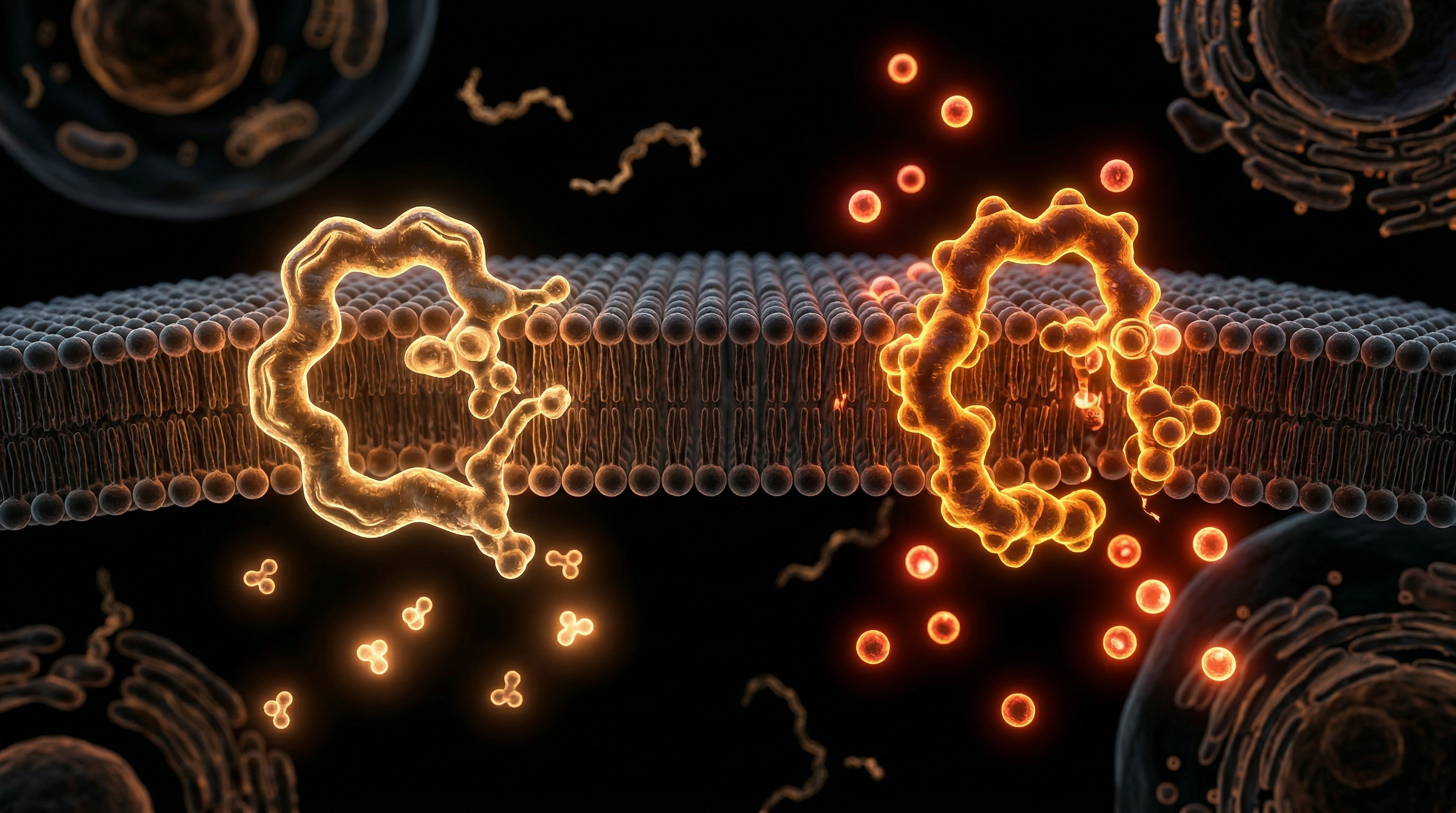
Every cell in the body is encased in a phospholipid bilayer. The types of fats we consume determine the "flexibility" of these membranes. Omega-3 fatty acids, with their multiple double bonds and curved structure, provide membrane fluidity. In contrast, an over-abundance of Omega-6 can lead to membranes that are more rigid and prone to oxidative damage.
Mechanisms at the Cellular Level
The most profound impact of the Omega imbalance occurs at the level of cellular signalling, specifically regarding the production of eicosanoids. These are "local hormones" that act as the body’s primary switches for inflammation.
Pro-inflammatory vs. Pro-resolving Mediators
- Omega-6 Derivatives: Arachidonic acid (AA) is the primary precursor for pro-inflammatory eicosanoids, such as prostaglandins (PGE2) and leukotrienes (LTB4). These molecules initiate the inflammatory response—causing redness, swelling, and pain—which is necessary for acute injury but devastating when persistent.
- Omega-3 Derivatives: EPA and DHA produce Specialised Pro-resolving Mediators (SPMs), including resolvins, protectins, and maresins. As the name suggests, these molecules are responsible for "turning off" the inflammatory fire.
The COX and LOX Pathways
The enzymes Cyclooxygenase (COX) and Lipoxygenase (LOX) act on these stored fatty acids. If the cell membranes are saturated with Omega-6, these enzymes produce a flood of pro-inflammatory signals. This is the biological equivalent of a car with a stuck accelerator (Omega-6) and no brakes (Omega-3).
Mitochondrial Integrity and Oxidative Stress
Mitochondria, the energy-producing organelles, are particularly sensitive to lipid composition. Cardiolipin, a unique phospholipid in the inner mitochondrial membrane, is highly susceptible to the ratio of PUFAs. When Omega-6 concentrations are too high, cardiolipin becomes prone to peroxidation, leading to mitochondrial dysfunction and the leakage of reactive oxygen species (ROS), which further damages cellular DNA.
Callout: Chronic inflammation is not a disease in itself, but a state of biological failure where the body loses its ability to resolve the "repair cycle," leading to the degradation of healthy tissue.
Environmental Threats and Biological Disruptors
The shift in the UK’s lipid profile is not an accident of nature; it is the result of systematic changes in agriculture, food processing, and industrial chemistry.
The Rise of Industrial Seed Oils
The most significant environmental threat is the ubiquity of Industrial Seed Oils (often marketed as "vegetable oils"). In the UK, rapeseed oil (Canola), sunflower oil, and soybean oil have replaced traditional animal fats like butter and tallow. These oils are extracted using high heat and chemical solvents (such as hexane), and are inherently unstable.
Lipid Peroxidation: The Silent Killer
Because Omega-6 oils are polyunsaturated, they possess multiple double bonds that are highly susceptible to oxidation when exposed to light, heat, or oxygen.
- HNE (4-Hydroxynonenal): A toxic byproduct of Omega-6 oxidation that binds to proteins and DNA, causing cellular mutations.
- MDA (Malondialdehyde): A marker of oxidative stress that indicates systemic lipid damage.
The Shift in UK Agriculture
The British food chain has been decoupled from its natural fatty acid profile.
- Livestock Feed: Traditionally, British cattle were grass-fed, resulting in beef and dairy with a balanced 1:1 ratio. Modern intensive farming uses grain, corn, and soy-based feeds, which skyrocket the Omega-6 content of the meat.
- Pork and Poultry: Pigs and chickens are "monogastric" animals, meaning their body fat directly reflects what they eat. Fed on high-Omega-6 grains, their fat becomes a concentrated source of pro-inflammatory linoleic acid.
Glyphosate and Nutrient Chelation
The widespread use of glyphosate in UK arable farming further complicates the issue. Glyphosate can act as a mineral chelator, potentially interfering with the minerals (like zinc and magnesium) required as cofactors for the desaturase enzymes that process Omega-3s.
The Cascade: From Exposure to Disease
When the lipid imbalance is sustained over decades, it triggers a cascade of physiological failures that manifest as chronic disease.
Cardiovascular Disease and Oxidised LDL
For years, the British public was told that cholesterol (LDL) causes heart disease. However, cholesterol only becomes dangerous when it is oxidised. LDL particles contain PUFAs. When a diet is high in Omega-6, the LDL particles themselves become enriched with linoleic acid, making them highly susceptible to oxidation. It is these Oxidised LDL (ox-LDL) particles that are engulfed by macrophages to form foam cells and arterial plaque.
Metabolic Dysfunction and Insulin Resistance
Excessive Omega-6 intake has been linked to the "clogging" of insulin receptors on the cell surface. When cell membranes are rigid and oxidised, the insulin signalling cascade is muffled. This forces the pancreas to pump out more insulin, eventually leading to hyperinsulinemia and Type 2 diabetes—a condition currently reaching epidemic proportions in the UK.
The Neurological Crisis
The brain requires massive amounts of DHA for synaptic plasticity and neuroprotection. In an Omega-6 dominant environment, the brain is deprived of its primary structural fat. This has been linked to:
- Major Depressive Disorder (MDD): Inflammation in the brain (neuroinflammation) is now recognised as a primary driver of depression.
- Cognitive Decline: Low Omega-3 levels are a strong predictor of age-related brain atrophy and Alzheimer’s disease.
Autoimmunity and the Cytokine Storm
A skewed ratio primes the immune system for hyper-reactivity. The overproduction of pro-inflammatory cytokines can lead the immune system to lose "self-tolerance," resulting in the rise of autoimmune conditions like rheumatoid arthritis and Crohn’s disease.
What the Mainstream Narrative Omits
The mainstream UK health narrative, largely influenced by outdated mid-20th-century studies, continues to promote high-Omega-6 oils as "heart-healthy" alternatives to saturated fats. This omission is not merely an oversight; it is a result of deeply entrenched institutional bias.
The Saturated Fat Myth
The "Diet-Heart Hypothesis," championed by Ancel Keys, successfully demonised saturated fats (like those found in butter and coconut oil). Saturated fats are chemically stable; they do not oxidise easily. By replacing stable saturated fats with unstable Omega-6 PUFAs, the British public was unwittingly moved from a state of metabolic stability to a state of high oxidative stress.
The Industry Influence on NHS Guidelines
Public Health England and the NHS continue to recommend "low-fat" spreads and sunflower oils. These recommendations are often supported by research funded by the multi-billion pound edible oil industry. The conflict of interest is profound: a population that consumes high-Omega-6 oils is a population that requires more pharmaceutical intervention for the resulting chronic inflammation.
The Statin Diversion
The mainstream focus on lowering total cholesterol via statins ignores the root cause: the quality of the lipids, not the quantity. Lowering cholesterol does not fix the underlying inflammatory fire caused by the Omega-6/Omega-3 imbalance; it merely attempts to hide one of the symptoms.
The Bioavailability Gap
Mainstream advice often suggests that "flaxseeds and chia seeds" are sufficient Omega-3 sources. This ignores the human biological reality: the conversion rate of plant-based ALA to the necessary EPA and DHA is abysmally low (often less than 5% for EPA and <1% for DHA). Relying solely on plant sources in an Omega-6 heavy environment is a recipe for deficiency.
The UK Context
The United Kingdom presents a unique case study in lipid dysregulation due to its geographical and economic climate.
The "Ultra-Processed" Capital of Europe
The UK consumes more Ultra-Processed Foods (UPFs) than any other country in Europe, with over 50% of the average British diet consisting of these products. UPFs are almost universally manufactured with "hidden" Omega-6 oils because they are cheap, shelf-stable (when chemically treated), and provide a desirable "mouthfeel."
- The Takeaway Culture: Deep-frying in the UK is dominated by sunflower and rapeseed oil. These oils are often reused for days, causing them to undergo extreme thermal oxidation, creating a "toxic sludge" of lipid peroxides.
- The Ready-Meal Epidemic: Cheap ready-meals use seed oils as an emulsifier and preservative, ensuring that even "healthy" sounding convenience meals are skewed toward Omega-6.
The Cost of Living and Nutritional Poverty
As food prices in the UK rise, the first items to be removed from the shopping basket are high-quality sources of Omega-3, such as wild-caught oily fish (mackerel, sardines) and grass-fed beef. They are replaced by cheaper, calorie-dense foods fried in industrial oils. This creates a socio-economic health divide, where the poorest in society are physiologically primed for chronic inflammation.
The Decline of the British Seafront
Despite being an island nation, the UK's consumption of fresh, local seafood has plummeted. Much of what is consumed is "breaded" or "battered" and fried in—you guessed it—Omega-6 oils, effectively negating the benefits of the fish itself.
Statistic: According to some estimates, the average UK adult consumes less than half of the recommended weekly intake of long-chain Omega-3s, while consuming 300% more Omega-6 than is biologically optimal.
Protective Measures and Recovery Protocols
Restoring the lipid balance is not a matter of "dieting" in the traditional sense; it is a matter of biological reconstruction. It takes approximately two years to fully turn over the fatty acids stored in human adipose tissue. Therefore, the approach must be disciplined and sustained.
Step 1: The Elimination Phase
The most effective way to lower the ratio is to drastically reduce Omega-6 intake.
- Purge the Pantry: Remove sunflower, soybean, corn, and rapeseed oils.
- Scrutinise Labels: Avoid any product containing "vegetable oil" or "partially hydrogenated fats."
- Avoid "Restaurant Oils": Be aware that most restaurant food, including high-end establishments, uses seed oils for cost-saving.
Step 2: The Substitution Phase
Replace unstable PUFAs with stable fats that do not drive inflammation.
- Animal Fats: Reintroduce grass-fed butter, ghee, and tallow for high-heat cooking.
- Fruit Oils: Use extra-virgin olive oil and avocado oil (primarily monounsaturated and more stable) for low-heat or raw use.
- Saturated Stability: Coconut oil is highly resistant to oxidation and an excellent fuel source.
Step 3: Aggressive Omega-3 Loading
To displace the accumulated Omega-6 in the cell membranes, one must increase the intake of pre-formed EPA and DHA.
- Oily Fish: Aim for 3-4 servings per week of SMASH fish (Sardines, Mackerel, Anchovies, Salmon, Herring). These are low in heavy metals and high in Omega-3.
- Grass-Fed Meat: Transition to 100% grass-fed and finished British beef and lamb, which has a significantly better lipid profile than grain-fed counterparts.
- High-Quality Supplementation: Use a molecularly distilled, third-party tested fish oil or algal oil. Look for high concentrations of EPA/DHA per capsule, not just "total fish oil."
Step 4: Supporting Cofactors
The body requires specific nutrients to process and protect these fats.
- Vitamin E (Tocopherols): A primary lipid-soluble antioxidant that prevents fats from oxidising inside the body.
- Magnesium and Zinc: Essential for the enzymes that metabolise fatty acids.
- Selenium: Critical for the production of glutathione peroxidase, an enzyme that neutralises lipid peroxides.
Step 5: Testing, Not Guessing
The Omega-3 Index test is a commercially available blood test that measures the percentage of EPA and DHA in red blood cell membranes.
- Goal: Aim for an Index of 8% or higher. Most UK residents hover around 3-4%, which is the "high-risk" zone for sudden cardiac death and chronic inflammation.
Summary: Key Takeaways
The Omega-3 vs Omega-6 imbalance is a fundamental biological mismatch that underpins the modern British health crisis. By understanding the cellular mechanics and the environmental pressures that have led us here, we can begin to reclaim our health.
- The Ratio is King: It is not just about getting "more Omega-3," but about reducing the overwhelming flood of Omega-6 that blocks its function.
- Seed Oils are Industrial Chemicals: Sunflower and rapeseed oils are unstable, prone to oxidation, and produce toxic byproducts like HNE.
- The UK Diet is Compromised: High UPF consumption and grain-fed agriculture have created a pro-inflammatory baseline for the majority of the population.
- Inflammation is Resolvable: By shifting the lipid composition of our cell membranes through careful dietary choices, we can "turn off" systemic inflammation and protect against chronic disease.
- Institutional Failure: Mainstream guidelines are decades behind the current lipid science; personal responsibility and education are the only paths to biological sovereignty.
At INNERSTANDING, we believe that true health begins at the molecular level. To ignore the lipid balance is to ignore the foundation of human biology. The choice is simple: continue to build your body from industrial waste oils, or return to the evolutionary fats that sustained our ancestors for millennia. The future of British public health depends on this shift.
This article is provided for informational and educational purposes only. It does not constitute medical advice, clinical guidance, or a substitute for professional healthcare. Information reflects cited research at time of publication. Always consult a qualified healthcare professional before acting on any health information.
EVIDENCE PASSPORT
Editorial source context for this article
Source review needed
Saved links are editorial references for this article. They may support specific claims rather than every sentence. Open and assess each source in context. This passport does not independently verify them.
Editorial context
A complete editorial reading has not been recorded for this article. Source links remain available for you to open and assess directly.
Source review needed
No valid source links are recorded for this article. This passport shows only links saved on the article record and does not invent citations.
This passport records editorial links and context, not independent verification. Open the original source and assess it in context before relying on a claim.
Medical Disclaimer
The information in this article is for educational purposes only and does not constitute medical advice, diagnosis, or treatment. Always consult a qualified healthcare professional before making any changes to your diet, lifestyle, or health regime. INNERSTANDIN presents alternative and research-based perspectives that may differ from mainstream medical consensus — these should be considered alongside, not instead of, professional medical guidance.
Read Full DisclaimerContinue the thread
Keep this question moving.
Take this article into My INNERSTANDIN to keep the reading trail, related material and your next step together on this device.
Dig deeper in the Library
Free, longform PDF volumes that go beyond headlines into mechanisms and references.