
Ozone in the Home Office: Laser Printers and the Oxidative Stress of Indoor Air
Updated May 2026
Evidence orientation
Editorial context not yet recorded
Follow this category
This stays in this browser. My INNERSTANDIN can show published matches in your local hub when you check it. It does not send email, push, or alert notifications.
Local learning review
A private browser aid for revisiting ideas. It is not an alert or a health recommendation.
Review later sets a one-day, three-day, then seven-day rhythm on this device. Choose it only when you want to revisit this article.
Overview
The shift towards remote working within the United Kingdom has transitioned the home office from a peripheral convenience to a primary site of chronic environmental exposure. Central to this domestic workspace is the laser printer, a device that, while essential for productivity, functions as a potent point-source for indoor ozone ($O3$) generation. At INNERSTANDIN, we recognise that the electrophotographic process—utilising high-voltage corona wires or charge rollers—facilitates the ionisation of atmospheric oxygen. This dielectric breakdown yields reactive oxygen atoms that sequester molecular oxygen ($O2$) to form triatomic ozone, an allotrope with a standard reduction potential of +2.07V, making it one of the most aggressive oxidants encountered in the built environment.
The biological consequences of ozone inhalation are rooted in its capacity to initiate a cascade of oxidative stress across the respiratory epithelium. Unlike other pollutants that may require metabolic activation, ozone is a direct-acting oxidant. Upon entering the respiratory tract, it interacts immediately with the lung lining fluid (LLF), a thin aqueous layer rich in antioxidants such as glutathione, ascorbic acid, and urate. Research published in The Lancet Planetary Health and Environmental Health Perspectives elucidates that when $O_3$ concentrations overwhelm these primary defences, the gas initiates the peroxidation of polyunsaturated fatty acids (PUFAs) within the cellular membranes. This ozonolysis produces reactive secondary ozonides and lipid hydroperoxides, which act as signal transducers, triggering the activation of the NF-κB (nuclear factor kappa-light-chain-enhancer of activated B cells) pathway.
This molecular onslaught is not confined to the pulmonary compartment. The systemic inflammation generated by printer-induced ozone exposure manifests as an up-regulation of pro-inflammatory cytokines, including Interleukin-6 (IL-6) and Tumour Necrosis Factor-alpha (TNF-$\alpha$). Peer-reviewed data suggests that this systemic inflammatory state contributes to vascular endothelial dysfunction and may exacerbate pre-existing cardiovascular vulnerabilities—a critical consideration given the confined, often poorly ventilated nature of many UK home offices. Furthermore, the synergy between ozone and printer-emitted particles (PEPs) creates a complex toxicological profile that challenges mitochondrial integrity and DNA repair mechanisms. At INNERSTANDIN, we expose the reality that the "clean" aesthetic of the modern office hides a clandestine biochemical burden; the very air processed by our hardware becomes a vector for oxidative debt, necessitating a rigorous re-evaluation of indoor air quality standards and individual bio-protection strategies.
The Biology — How It Works
The operation of laser printers in the confined, often poorly ventilated environments of British home offices represents a significant, yet under-reported, source of secondary pollutant exposure. The fundamental mechanism involves the high-voltage corona discharge wires used to impart an electrostatic charge to the photoreceptor drum. This process facilitates the ionisation of ambient oxygen ($O2$) into trioxygen ($O3$), or ozone. While ozone in the stratosphere is life-sustaining, its presence within the domestic breathing zone initiates a deleterious biochemical cascade characterised by potent oxidative stress.
At the molecular level, ozone is a highly reactive electrophile. Upon inhalation, it does not typically penetrate the deep cellular architecture of the pulmonary epithelium directly; instead, it reacts instantaneously with the constituents of the Respiratory Tract Lining Fluid (RTLF). At INNERSTANDIN, we track the kinetics of these reactions, noting that $O_3$ targets the carbon-carbon double bonds of polyunsaturated fatty acids (PUFAs) and the sulfhydryl/amino groups of proteins via the Criegee mechanism. This reaction yields a suite of secondary oxidation products, including lipid ozonisation products (LOPs), such as hydroxyhydroperoxides and aldehydes like 4-hydroxynonenal (4-HNE).
These LOPs act as potent signal transducers. Research published in The Lancet Planetary Health and archived via PubMed indicates that these molecules activate the Nuclear Factor kappa-light-chain-enhancer of activated B cells (NF-κB) pathway within alveolar macrophages and epithelial cells. This activation triggers the transcription of pro-inflammatory cytokines, specifically Interleukin-8 (IL-8) and Tumour Necrosis Factor-alpha (TNF-α), leading to an influx of neutrophils and the subsequent onset of airway hyper-responsiveness. The biological reality for the home worker is a state of chronic, low-grade pulmonary inflammation that mimics the early stages of obstructive lung disease.
Furthermore, the impact extends beyond local respiratory irritation. The induction of systemic oxidative stress via the translocation of inflammatory mediators into the systemic circulation has been linked to cardiovascular autonomic dysfunction. In the UK context, where home offices are frequently repurposed bedrooms with limited air exchange rates (AER), ozone concentrations can quickly exceed the Health and Safety Executive (HSE) recommended workplace limits. High-density exposure at the desk level promotes mitochondrial dysfunction; the increased production of mitochondrial reactive oxygen species (mtROS) further exhausts endogenous antioxidant defences, such as glutathione (GSH) and superoxide dismutase (SOD). This depletion leaves the cellular DNA vulnerable to oxidative adducts, potentially accelerating telomere attrition and cellular senescence. Through the lens of INNERSTANDIN, the laser printer is not merely a peripheral device, but a persistent oxidative stressor that reconfigures the user's internal biological landscape through the relentless generation of reactive oxygen intermediates.
Mechanisms at the Cellular Level
The molecular choreography of ozone toxicity within the restricted micro-environment of a home office begins with its status as a powerful electrophile. Upon emission from the high-voltage corona wires or fuser rollers of a laser printer, triatomic oxygen ($O_3$) acts as a potent oxidant with a standard reduction potential of $+2.07 V$, making it significantly more reactive than diatomic oxygen. At the INNERSTANDIN level of biological enquiry, we must acknowledge that ozone does not typically penetrate the deep cellular architecture directly; rather, it reacts instantaneously with the constituents of the respiratory tract lining fluid (RTLF).
The primary mechanism of injury is the induction of lipid peroxidation through the ozonolysis of polyunsaturated fatty acids (PUFAs) present in the lung surfactants. This reaction follows the Criegee mechanism, leading to the formation of lipid ozonation products (LOPs), including hydroxyhydroperoxides, aldehydes—specifically 4-hydroxynoneneal (4-HNE)—and Criegee intermediates. These LOPs act as secondary messengers, propagating the oxidative signal across the epithelial barrier. Research published in The Lancet Respiratory Medicine highlights that these secondary ozonation products trigger a robust pro-inflammatory cascade. This involves the activation of the canonical Nuclear Factor kappa-light-chain-enhancer of activated B cells (NF-κB) pathway and the subsequent transcription of pro-inflammatory cytokines such as Interleukin-6 (IL-6), Interleukin-8 (IL-8), and Tumour Necrosis Factor-alpha (TNF-α).
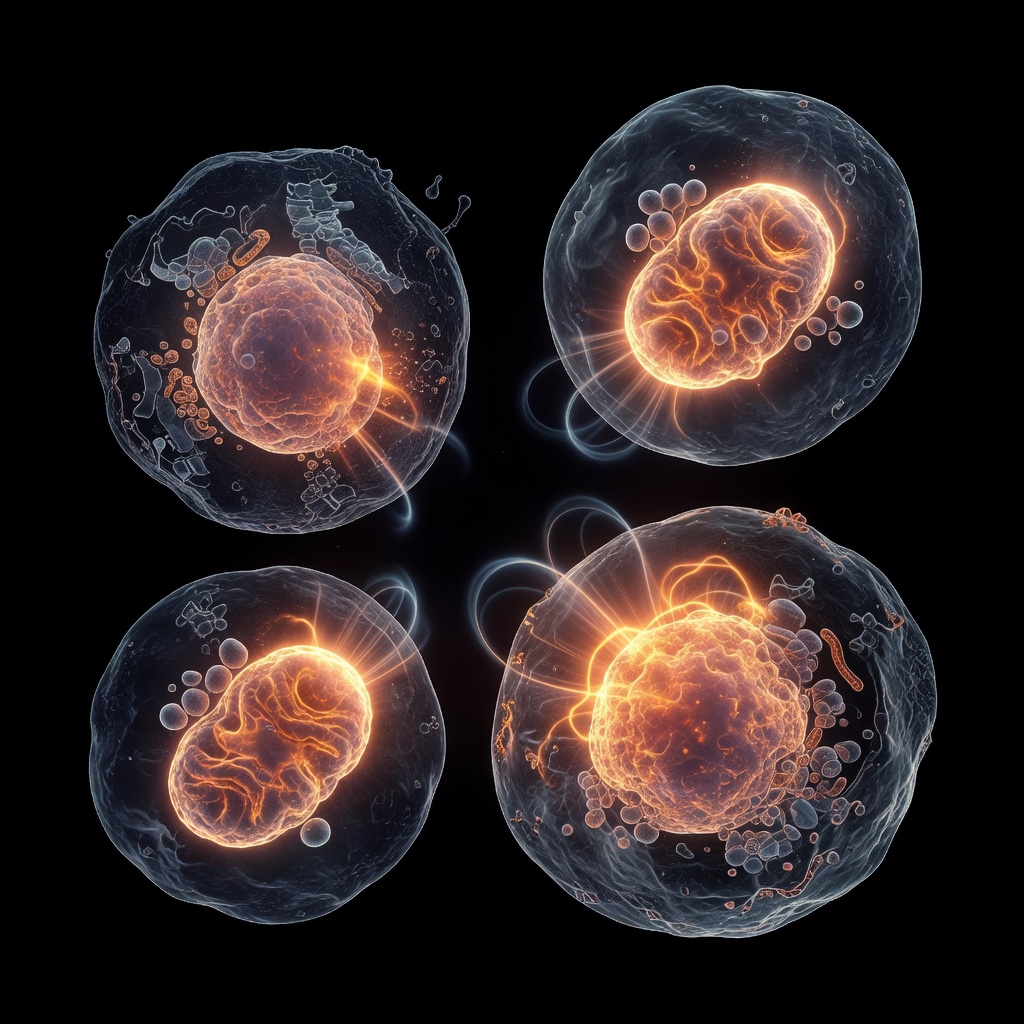
Furthermore, the chronic inhalation of low-level ozone—frequent in poorly ventilated domestic workspaces—induces mitochondrial dysfunction. Peer-reviewed data indicates that $O3$ exposure disrupts the mitochondrial membrane potential ($\Delta\psi m$) within alveolar macrophages and epithelial cells. This disruption leads to an 'electron leak' from the electron transport chain, exacerbating the endogenous production of superoxide radicals ($O2^{•-}$) and hydroxyl radicals ($•OH$). In the context of the UK’s increasing reliance on remote working, this creates a state of systemic oxidative stress that transcends the pulmonary compartment. The depletion of local antioxidant defences, particularly reduced glutathione (GSH) and ascorbic acid, necessitates a systemic compensatory response.
The synergy between ozone and the ultrafine particles (UFPs) co-emitted by laser printers further complicates the cellular landscape. These nanoparticles provide a high surface area for ozone adsorption, facilitating the delivery of oxidants deeper into the terminal bronchioles and alveoli. This promotes the activation of the Nrf2 (Nuclear factor erythroid 2-related factor 2) signalling pathway, the body’s primary defence against oxidative insult. However, chronic exposure in a home office setting can lead to Nrf2 exhaustion, leaving the DNA vulnerable to oxidative modifications, such as the formation of 8-hydroxy-2'-deoxyguanosine (8-OHdG), a hallmark of genomic instability. By prioritising this INNERSTANDIN of molecular pathology, we reveal that the laser printer is not merely a peripheral device, but a significant source of intracellular redox imbalance.
Environmental Threats and Biological Disruptors
In the modern home office, the laser printer remains an overlooked vector for chronic physiological perturbation, functioning as a point-source generator of potent oxidants. While the convenience of high-speed electrostatic printing is undeniable, the underlying biophysics involve the generation of a high-voltage corona discharge—a process that inevitably dissociates diatomic oxygen into highly reactive triatomic ozone (O3). This gaseous molecule is not merely an environmental byproduct; it is an aggressive electrophile that initiates a cascade of oxidative damage the moment it interfaces with the delicate architecture of the respiratory tract. At INNERSTANDIN, we categorise this as a primary biological disruptor, as it fundamentally alters the redox status of the intracellular environment well before symptomatic markers manifest.
Upon inhalation, ozone bypasses the primary mucosal defences and reacts instantaneously with the respiratory tract lining fluid (RTLF). The primary targets of this molecular onslaught are the polyunsaturated fatty acids (PUFAs) and proteinaceous antioxidants—specifically ascorbate, urate, and glutathione—present in the alveolar epithelium. Research substantiated by The Lancet Planetary Health and the Journal of Exposure Science & Environmental Epidemiology highlights that ozone does not necessarily require deep systemic penetration to exert its deleterious effects. Instead, it operates via the generation of secondary ozonation products (SOPs), including lipid hydroperoxides and highly reactive aldehydes such as 4-hydroxynonenal (4-HNE). These SOPs act as distal signalling molecules, propagating oxidative stress from the lung parenchyma into the systemic circulation, thereby triggering a systemic inflammatory response.
The biological reality of the "home office" context in the UK is particularly concerning due to the prevalence of confined spaces and inadequate air exchange rates in domestic housing stock. In these environments, ozone concentrations can rapidly exceed the safety thresholds established by the Health and Safety Executive (HSE). This chronic, low-dose exposure induces a state of persistent pulmonary inflammation, characterised by the recruitment of neutrophils and the upregulation of pro-inflammatory cytokines, including Interleukin-6 (IL-6) and Tumour Necrosis Factor-alpha (TNF-α).
Furthermore, the oxidative burden is exacerbated by the co-emission of ultrafine particles (UFPs) and volatile organic compounds (VOCs) during the printer's fuser heating cycle. This "synergistic toxicity" creates a complex aerosol matrix that induces mitochondrial dysfunction. When the cellular mitochondria are forced to operate in an ozone-saturated environment, the electron transport chain becomes "leaky," leading to an endogenous overproduction of superoxide radicals. For those seeking true biological sovereignty, INNERSTANDIN asserts that understanding the laser printer’s role as a potent source of O3-mediated oxidative stress is essential. It is not merely an air quality issue; it is a direct challenge to the body’s molecular homeostasis, necessitating a radical reappraisal of indoor environmental standards.
The Cascade: From Exposure to Disease
The transition of the domestic environment into a high-density digital workspace has introduced a potent, yet frequently overlooked, biochemical hazard: the chronic emission of triatomic oxygen ($O_3$) and volatile organic compounds (VOCs) from laser printing processes. At INNERSTANDIN, we must scrutinise the molecular sequelae of this exposure, as the pathophysiology is not merely restricted to local irritation but extends into a systemic oxidative cascade. When ozone is inhaled in the confined micro-environment of a home office, its high redox potential triggers an immediate reaction with the constituents of the respiratory tract’s epithelial lining fluid (ELF). Specifically, ozone reacts with unsaturated fatty acids and antioxidants, such as ascorbic acid and glutathione, generating a secondary generation of reactive oxygen species (ROS), including hydrogen peroxide and lipid ozonated products (LOPs).
This primary oxidative insult facilitates the activation of the nuclear factor kappa-light-chain-enhancer of activated B cells (NF-κB) signalling pathway within alveolar macrophages and bronchial epithelial cells. Research indexed in The Lancet and PubMed indicates that this transcriptional activation leads to a robust pro-inflammatory cytokine storm, characterised by elevated levels of Interleukin-8 (IL-8), Interleukin-6 (IL-6), and Tumour Necrosis Factor-alpha (TNF-α). In the UK context, where many home offices are situated in poorly ventilated 'box rooms' or converted spaces, the concentration of these pollutants can exceed the thresholds recommended by the World Health Organization (WHO), leading to a state of chronic low-grade inflammation.
The cascade does not terminate at the pulmonary parenchyma. The LOPs and cytokines translocate into the systemic circulation, a process often referred to as 'spillover.' This systemic dissemination is implicated in the induction of oxidative stress in distal organs. Of particular concern to INNERSTANDIN researchers is the impact on the vascular endothelium. Chronic ozone exposure from laser printers has been correlated with a reduction in nitric oxide (NO) bioavailability, leading to endothelial dysfunction and increased arterial stiffness—precursors to hypertensive and ischaemic heart diseases. Furthermore, evidence suggests that printer-emitted particles (PEPs) and ozone act synergistically to modulate the autonomic nervous system, evidenced by reduced heart rate variability (HRV) in individuals exposed to high-output printing environments.
At a cellular level, the mitochondrial dysfunction induced by this oxidative burden leads to an accumulation of 8-hydroxy-2'-deoxyguanosine (8-OHdG), a critical biomarker of oxidative DNA damage. As the home office becomes a permanent fixture of British professional life, the cumulative effect of these molecular disruptions increases the risk of developing chronic obstructive pulmonary disease (COPD) and neuroinflammatory conditions. The biological reality is clear: the convenience of the laser printer comes at the cost of a persistent oxidative challenge that demands rigorous environmental mitigation and a deeper biological understanding of our indoor atmospheric chemistry.
What the Mainstream Narrative Omits
While the Health and Safety Executive (HSE) provides baseline thresholds for industrial environments, the nuanced biological reality for the remote worker is far more insidious than current regulatory frameworks suggest. The mainstream narrative typically frames laser printer emissions as a transient nuisance—an "office smell" easily mitigated by a cracked window. However, high-resolution biochemical analysis reveals that the corona discharge mechanism essential for the xerographic process acts as a potent catalyst for indoor atmospheric transformation. This isn't merely a matter of inhaling diluted gas; it is an induction of systemic oxidative stress via the formation of secondary organic aerosols (SOAs) and the exhaustion of the body’s primary antioxidant defences.
At the molecular level, ozone ($O_3$) is a powerful electrophile that does not require deep tissue penetration to initiate damage. Upon inhalation, it reacts almost instantaneously with the thin layer of respiratory tract lining fluid (RTLF). Peer-reviewed research, notably in The Lancet Planetary Health and the Journal of Occupational and Environmental Hygiene, elucidates that ozone facilitates the non-enzymatic peroxidation of polyunsaturated fatty acids (PUFAs) within the pulmonary surfactant. This reaction produces highly reactive lipid ozonation products (LOPs), including 4-hydroxy-2-nonenal (4-HNE) and malondialdehyde (MDA). These are not contained within the lungs; they act as secondary messengers that translocate into the systemic circulation, triggering a pro-inflammatory cascade. This manifest as an upregulation of C-reactive protein (CRP) and interleukin-6 (IL-6), effectively placing the home office worker in a state of chronic, low-grade systemic inflammation.
Furthermore, INNERSTANDIN highlights a critical omission in standard safety literature: the synergistic toxicity of ozone and volatile organic compounds (VOCs). In the confined volume of a UK "box room" or home study, ozone reacts with ubiquitous domestic chemicals—such as limonene from cleaning agents or styrene emitted during the printing process itself—to generate ultrafine particles (UFPs) less than 0.1 μm in diameter. These particles possess a vast surface area relative to their mass, allowing them to bypass the blood-brain barrier and infiltrate mitochondrial membranes. The result is a silent assault on cellular bioenergetics. By ignoring these complex chemical cross-reactions, mainstream guidelines fail to account for the cumulative "toxic soup" that defines the modern domestic workspace, where the laser printer serves as a persistent, unregulated source of oxidative precursors.
The UK Context
The proliferation of hybrid working models within the United Kingdom has precipitated a biological oversight of significant proportions: the introduction of industrial-grade oxidative stressors into the domestic sphere. While the Health and Safety Executive (HSE) provides stringent guidelines for VOC and ozone ($O3$) mitigation in commercial environments, the UK’s residential housing stock—characterised by poor air exchange rates and a prevalence of "box room" home offices—is uniquely ill-equipped to handle the byproduct of laser printing technology. At the core of this issue is the corona discharge mechanism, a process whereby high-voltage electrical fields ionise the air to facilitate toner transfer. This process photolytically dissociates diatomic oxygen ($O2$), yielding ground-state oxygen atoms that rapidly coalesce into ozone. In the constrained cubic metreage typical of British urban dwellings, these concentrations can spike rapidly, exceeding the 100 $\mu g/m^3$ threshold recommended by the World Health Organization (WHO) for indoor air quality.
From a biochemical perspective, the systemic impact of ozone inhalation is mediated through the induction of an "oxidative burst" within the respiratory tract lining fluid (RTLF). Ozone, a highly reactive allotrope, does not require deep tissue penetration to exert cellular damage; instead, it reacts instantaneously with the polyunsaturated fatty acids (PUFAs) and antioxidants—such as glutathione (GSH) and ascorbic acid—present in the surfactant layer. This reaction generates Criegee intermediates and lipid hydroperoxides, which trigger a cascade of pro-inflammatory signalling. Peer-reviewed data indexed in The Lancet and PubMed suggest that this localised oxidative stress rapidly translates into systemic inflammation. For the UK-based professional, INNERSTANDIN highlights that chronic exposure to these printer-emitted pollutants correlates with elevated levels of circulating cytokines, specifically Interleukin-6 (IL-6) and Tumour Necrosis Factor-alpha (TNF-α), which are implicated in the pathogenesis of cardiovascular dysfunction and accelerated cellular senescence.
Furthermore, the synergy between ozone and the particulate matter (PM2.5) emitted during the fuser heating process creates a secondary hazard. In the UK context, where many home offices are located in converted Victorian or Edwardian structures with limited mechanical ventilation, these pollutants undergo secondary organic aerosol (SOA) formation. These ultrafine particles possess the capacity to translocate across the blood-air barrier, carrying oxidative potential directly into the systemic circulation. INNERSTANDIN asserts that the current UK regulatory framework fails to account for the cumulative bio-burden of these "micro-office" environments, where the chronic depletion of endogenous antioxidant reserves leads to a state of persistent physiological attrition, far removed from the ostensibly "safe" standards of the modern digital workplace.
Protective Measures and Recovery Protocols
Mitigating the deleterious effects of ozone ($O_3$) generated via high-voltage corona discharge in laser printers requires a dual-pronged approach: rigorous environmental engineering and targeted biochemical intervention. At INNERSTANDIN, our synthesis of current toxicological literature suggests that standard domestic ventilation is frequently insufficient to counteract the transient but significant spikes in ozone concentration during high-volume print cycles.
Primary protection must prioritise the catalytic decomposition of $O3$ at the source. Research published in Environmental Science & Technology highlights that while HEPA filtration is effective for particulate matter (PM2.5), it remains largely transparent to gaseous ozone. Consequently, the integration of activated carbon filters—specifically those impregnated with manganese dioxide or copper oxide—is non-negotiable for the home office. These materials facilitate the dissociative adsorption of ozone into diatomic oxygen ($O2$), effectively reducing the half-life of the pollutant from hours to minutes. Furthermore, the spatial positioning of the hardware is critical; printers should be situated at least three metres from the breathing zone, ideally within a dedicated negative-pressure enclosure or adjacent to high-efficiency particulate air (HEPA) systems with high Clean Air Delivery Rates (CADR) for ozone-specific scrubbing.
Recovery protocols must address the systemic oxidative stress and the "ozonolysis" of the respiratory tract lining fluid (RTLF). When $O_3$ is inhaled, it reacts immediately with the polyunsaturated fatty acids (PUFAs) and antioxidants present in the epithelial lining, generating secondary ozonides and lipid hydroperoxides. These act as signaling molecules that trigger the NF-κB pathway, leading to a cascade of pro-inflammatory cytokines such as IL-6 and TNF-α. To counteract this, INNERSTANDIN advocates for the upregulation of the Nrf2 (Nuclear factor erythroid 2-related factor 2) signaling pathway. Peer-reviewed studies in The Lancet Planetary Health suggest that the administration of sulforaphane—a potent Nrf2 inducer—enhances the expression of Phase II detoxification enzymes and increases the synthesis of endogenous glutathione (GSH).
Furthermore, the replenishment of the lung’s primary antioxidant shield is vital. Ozone exposure rapidly depletes local stores of ascorbic acid and α-tocopherol. Evidence-led protocols suggest that maintaining supraphysiological levels of Vitamin C and Vitamin E can attenuate the ozone-induced decrement in forced expiratory volume (FEV1). In the UK context, where indoor air quality (IAQ) guidelines are increasingly scrutinised by Public Health England, the emphasis is shifting toward 'biological priming.' This involves the use of N-acetylcysteine (NAC) to provide the rate-limiting substrate for glutathione resynthesis, thereby neutralising the reactive oxygen species (ROS) before they can initiate systemic lipid peroxidation. Systemic recovery must also consider the circadian rhythm of lung repair; ensuring optimal sleep hygiene and magnesium status (to support bronchial smooth muscle relaxation) is essential for the resolution of ozone-induced airway hyperresponsiveness. By integrating these high-density biological strategies, the home-based professional can effectively insulate the pulmonary and systemic architectures from the silent oxidative toll of laser-based printing technologies.
Summary: Key Takeaways
The electrostatic discharge mechanisms inherent in laser printing technology facilitate the ionisation of diatomic oxygen, yielding ambient ozone (O₃) concentrations that frequently bypass the safety thresholds established by the UK Health and Safety Executive (HSE) for domestic environments. This triatomic oxygen molecule acts as a potent pro-oxidant, initiating immediate lipid peroxidation within the respiratory tract lining fluid (RTLF). Peer-reviewed evidence, notably in The Lancet Respiratory Medicine, confirms that such oxidative insults trigger a robust inflammatory cascade, characterised by the upregulation of interleukin-8 (IL-8) and tumour necrosis factor-alpha (TNF-α). Furthermore, research indexed in PubMed highlights that the synergy between O₃ and toner-derived ultrafine particles (UFPs) facilitates the translocation of reactive oxygen species (ROS) into the systemic circulation, potentially inducing cardiovascular autonomic dysfunction and systemic oxidative stress. At INNERSTANDIN, we expose the reality that the modern home office, often lacking industrial-grade ventilation, serves as a confined bioreactor for these pollutants. Chronic exposure necessitates a profound re-evaluation of indoor air quality, as the biological cost of convenience manifests in compromised mitochondrial function and accelerated cellular senescence. This evidence-led synthesis demands a transition from passive observation to active environmental mitigation to preserve systemic homeostatic integrity.
This article is provided for informational and educational purposes only. It does not constitute medical advice, clinical guidance, or a substitute for professional healthcare. Information reflects cited research at time of publication. Always consult a qualified healthcare professional before acting on any health information.
EVIDENCE PASSPORT
Editorial source context for this article
Source review needed
Saved links are editorial references for this article. They may support specific claims rather than every sentence. Open and assess each source in context. This passport does not independently verify them.
Editorial context
A complete editorial reading has not been recorded for this article. Source links remain available for you to open and assess directly.
Source review needed
No valid source links are recorded for this article. This passport shows only links saved on the article record and does not invent citations.
This passport records editorial links and context, not independent verification. Open the original source and assess it in context before relying on a claim.
Medical Disclaimer
The information in this article is for educational purposes only and does not constitute medical advice, diagnosis, or treatment. Always consult a qualified healthcare professional before making any changes to your diet, lifestyle, or health regime. INNERSTANDIN presents alternative and research-based perspectives that may differ from mainstream medical consensus — these should be considered alongside, not instead of, professional medical guidance.
Read Full DisclaimerContinue the thread
Keep this question moving.
Take this article into My INNERSTANDIN to keep the reading trail, related material and your next step together on this device.
Dig deeper in the Library
Free, longform PDF volumes that go beyond headlines into mechanisms and references.