
Pantothenic Acid and Adrenal Exhaustion
Updated May 2026
Vitamin B5 is the precursor to Coenzyme A, yet chronic stress in the UK workforce rapidly depletes this nutrient. We investigate the link between B5 deficiency and impaired cortisol production.
Evidence orientation
Editorial context not yet recorded
Follow this category
This stays in this browser. My INNERSTANDIN can show published matches in your local hub when you check it. It does not send email, push, or alert notifications.
Local learning review
A private browser aid for revisiting ideas. It is not an alert or a health recommendation.
Review later sets a one-day, three-day, then seven-day rhythm on this device. Choose it only when you want to revisit this article.
Overview
In the hierarchy of nutritional science, Vitamin B5—scientifically known as Pantothenic Acid—is frequently relegated to the background, overshadowed by its more famous cousins, B12 and Folate. Yet, its etymological root, the Greek word pantothenos meaning "from everywhere," suggests a ubiquity that belies its critical importance. For the modern biological researcher, the paradox of B5 is stark: while it is found in almost all whole foods, the physiological demands of the 21st-century human have created a widespread, sub-clinical deficiency that the mainstream medical establishment consistently fails to diagnose.
The primary casualty of this deficiency is the Adrenal Gland. These two small, pyramid-shaped organs sitting atop the kidneys are the command centres for our response to existence. They govern our ability to wake up, our response to danger, our inflammatory regulation, and our very survival. At the heart of adrenal function lies Coenzyme A (CoA), a complex molecule for which Pantothenic Acid is the fundamental precursor. Without sufficient B5, the synthesis of CoA falters, leading to a systemic collapse of cellular energy and steroid hormone production—a state commonly referred to as Adrenal Exhaustion.
In the United Kingdom, we are witnessing a public health crisis masquerading as "burnout." As the workforce grapples with unprecedented levels of chronic psychological stress, the biological "sink" for B5 deepens. This article serves as a technical deep-dive into the biochemical mechanisms connecting B5 to the adrenal cortex, exposing how environmental disruptors and a flawed nutritional narrative have left millions in a state of chronic, unrecognised physiological depletion.
Fact: The adrenal glands contain a higher concentration of Pantothenic Acid than any other organ in the human body, highlighting its essential role in endocrine function.
The Biology — How It Works
To understand the relationship between Pantothenic Acid and the adrenals, we must first look at the molecule itself. B5 is a water-soluble vitamin that the body cannot store in significant quantities. Its primary biological destiny is the creation of Coenzyme A (CoA), arguably the most important cofactor in human metabolism.
The Synthesis of Coenzyme A
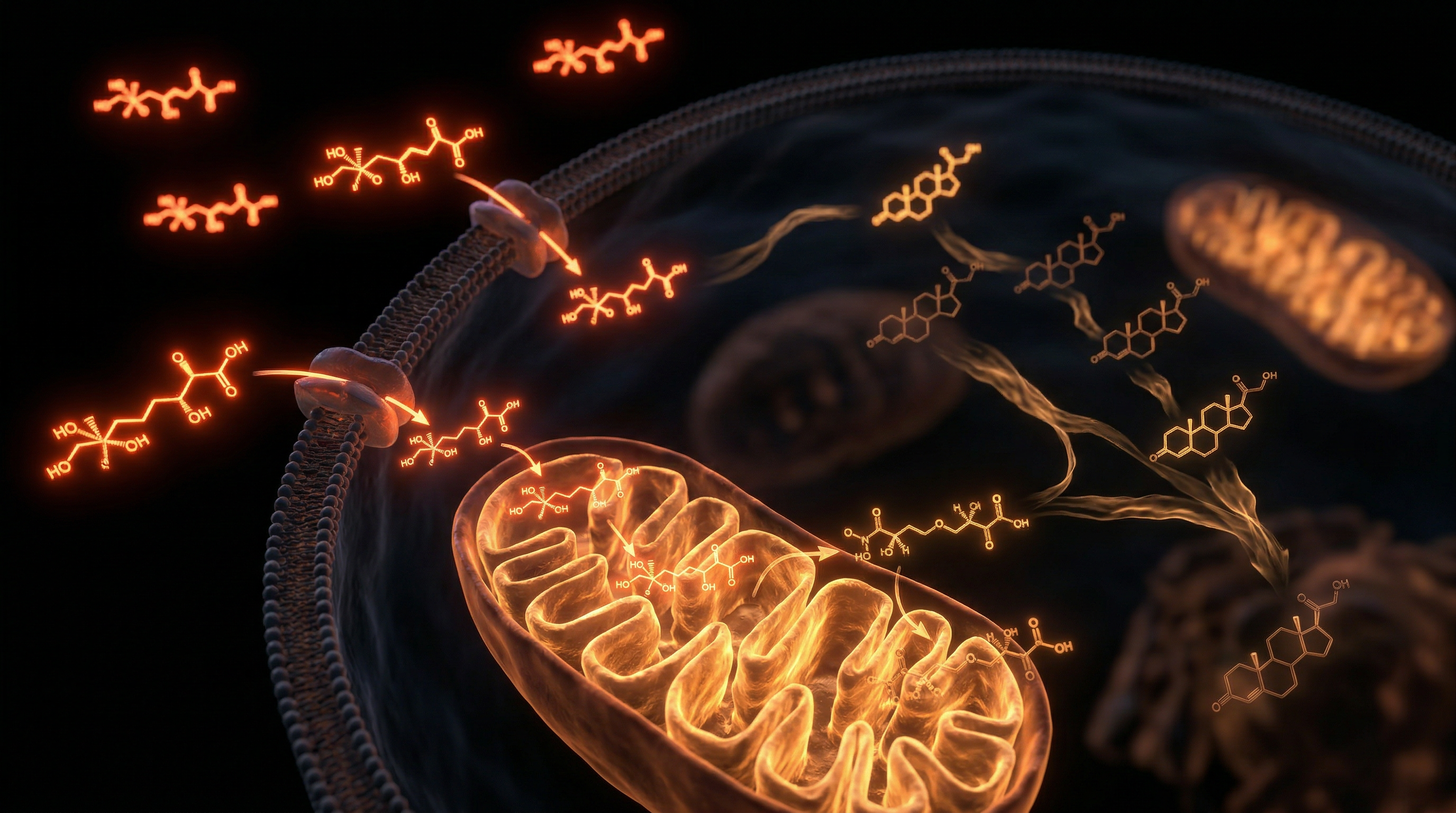
The transformation of Pantothenic Acid into CoA is a five-step enzymatic process. It begins with the phosphorylation of pantothenate by the enzyme pantothenate kinase. This is the rate-limiting step. Once CoA is formed, it acts as a carrier for acyl groups, most notably forming Acetyl-CoA.
Acetyl-CoA is the "universal currency" of the mitochondria. It enters the Krebs Cycle (Citric Acid Cycle) to produce ATP (adenosine triphosphate), the energy that powers every cellular action. However, in the context of the adrenal glands, Acetyl-CoA has a second, equally vital mission: the synthesis of cholesterol.
The Steroidogenesis Pathway
It is a common misconception that cholesterol is purely a dietary villain. In the adrenal cortex, cholesterol is the "mother" raw material. The process of Steroidogenesis—the production of hormones like Cortisol, Aldosterone, and DHEA—begins with the conversion of cholesterol into pregnenolone.
This entire pathway is heavily dependent on CoA. If B5 levels are insufficient, the production of CoA drops. Consequently, the adrenal glands lose their ability to manufacture the very hormones required to manage stress and maintain electrolyte balance. This is why B5 is often termed the "anti-stress vitamin."
The HPA Axis Feedback Loop
The adrenals do not act in isolation. They are the final effector in the Hypothalamic-Pituitary-Adrenal (HPA) Axis. When the brain perceives a threat (work deadlines, financial instability, or physical trauma), the hypothalamus releases CRH (Corticotropin-Releasing Hormone), which signals the pituitary to release ACTH (Adrenocorticotropic Hormone).
ACTH then stimulates the adrenal glands to produce cortisol. This stimulation drastically increases the demand for B5. If the B5 is not present to facilitate the rapid synthesis of CoA and subsequent steroid hormones, the HPA axis becomes "stuck." The brain continues to scream for cortisol, but the adrenals are unable to respond, leading to the clinical manifestation of exhaustion.
Mechanisms at the Cellular Level
At the microscopic level, the exhaustion of the adrenals is a failure of mitochondrial efficiency and cellular integrity. Pantothenic Acid is not just a precursor; it is a structural necessity.
Fatty Acid Metabolism and the Myelin Sheath
Beyond the Krebs cycle, CoA is essential for fatty acid oxidation (beta-oxidation). This is the process of breaking down fats for fuel. In the absence of B5, the body becomes "sugar-dependent," as it cannot efficiently access fat stores for energy. This explains the characteristic "crashes" and hypoglycaemic episodes seen in those with adrenal dysfunction.
Furthermore, B5 is involved in the synthesis of sphingolipids, which are components of the myelin sheath—the insulating layer around nerves. This provides a biochemical link between B5 deficiency and the "brain fog" or neurological irritability associated with chronic stress.
The Role of Acetylcholine
CoA is also a precursor to Acetylcholine, the primary neurotransmitter of the parasympathetic nervous system (the "rest and digest" system). When B5 is depleted to make cortisol (the "fight or flight" hormone), the body's ability to produce acetylcholine is compromised. This creates a state of sympathetic dominance where the individual is "tired but wired," unable to drop into a restorative state because the biochemical building blocks for relaxation are being diverted to the stress response.
Heme Synthesis and Oxygenation
CoA is required for the synthesis of Heme, the part of haemoglobin that carries oxygen in the blood. Adrenal exhaustion is often accompanied by a subtle form of cellular hypoxia. Even if blood oxygen levels appear normal on a pulse oximeter, the efficiency of oxygen utilisation at the mitochondrial level is impaired when B5-dependent enzymes are lacking. This results in the profound, bone-deep lethargy that no amount of sleep seems to fix.
- Key Cellular Functions of B5:
- Synthesis of Acetyl-CoA for the Krebs Cycle.
- Production of cholesterol for steroid hormones.
- Beta-oxidation of fatty acids.
- Synthesis of Acetylcholine for nerve transmission.
- Formation of Heme for oxygen transport.
Environmental Threats and Biological Disruptors
The "everywhere-ness" of B5 in our food supply is a biological red herring. While B5 is present in many foods, modern environmental factors and dietary habits act as aggressive "B5 thieves."
The Impact of Processed Carbohydrates
The UK diet, increasingly dominated by "ultra-processed" foods, is a primary driver of B5 depletion. The metabolism of refined sugar and flour requires B vitamins for processing, yet the refining process strips these nutrients away. We are essentially eating "anti-nutrients" that use up our internal B5 stores just to be metabolised, leaving none for the adrenal glands.
The Alcohol and Caffeine Loop
In the UK, the culture of "coffee to wake up, alcohol to wind down" creates a metabolic pincer movement on the adrenals.
- Caffeine artificially stimulates the HPA axis, forcing the adrenals to pump out cortisol and adrenaline even when the body is exhausted. This accelerates the depletion of B5.
- Alcohol is a major disruptor of B-vitamin absorption and increases the urinary excretion of Pantothenic Acid. It also stresses the liver, which is the primary site of CoA synthesis.
The Microbiome and Antibiotics
A significant, yet ignored, source of B5 is our own gut microbiota. Certain beneficial bacteria in the colon are capable of synthesising Pantothenic Acid. However, the widespread use of broad-spectrum antibiotics in the UK—both as medicine and through the food chain (livestock)—has decimated these microbial populations. A "sterile" gut is a gut that cannot contribute to the body’s B5 pool, making the individual entirely dependent on dietary intake, which is often insufficient.
Warning: Chronic exposure to blue light from digital screens at night suppresses melatonin and stimulates nocturnal cortisol production, further draining the B5 reserves required for hormone synthesis.
The Cascade: From Exposure to Disease
Adrenal exhaustion does not happen overnight. It is a progressive cascade that follows a predictable biochemical trajectory.
Stage 1: The Alarm Phase (Hypercortisolism)
Initially, when stress increases, the body compensates. B5 levels are drawn down rapidly to keep up with the demand for cortisol. The individual may feel productive, "on edge," or hyper-energetic. Biochemically, the body is burning through its B5-dependent CoA stores to maintain a state of high alert.
Stage 2: The Resistance Phase
As the stress continues and B5 levels drop, the adrenals begin to struggle. Cortisol levels may remain high, but the production of other hormones, such as DHEA (the "youth and repair" hormone), starts to fall. This is known as the "Pregnenolone Steal." The body diverts all available B5 and raw materials to cortisol at the expense of everything else. The individual begins to experience fatigue, digestive issues, and increased susceptibility to infection.
Stage 3: The Exhaustion Phase (Hypocortisolism)
Eventually, the "well runs dry." There is no longer enough Pantothenic Acid to maintain even baseline cortisol production. The HPA axis becomes desensitised. This is the hallmark of Adrenal Exhaustion. Symptoms at this stage include:
- Inability to handle even minor stress.
- Severe morning fatigue (the "coffee-resistant" fatigue).
- Salt cravings (due to low Aldosterone, another B5-dependent hormone).
- Postural hypotension (dizziness when standing up).
- Chronic inflammation and new-onset allergies (due to lack of anti-inflammatory cortisol).
The Autoimmune Connection
There is compelling evidence that chronic B5 deficiency and the resulting adrenal collapse are precursors to autoimmune disease. Cortisol is the body's primary endogenous immunosuppressant. When B5 depletion prevents adequate cortisol production, the immune system becomes "unbound," leading to the systemic inflammation and loss of self-tolerance characteristic of conditions like Rheumatoid Arthritis or Hashimoto’s Thyroiditis.
What the Mainstream Narrative Omits
The refusal of mainstream medicine to recognise "Adrenal Fatigue" or "Adrenal Exhaustion" as a valid diagnosis is one of the great scandals of modern healthcare. While the term may be imprecise, the underlying biochemical reality of HPA Axis Dysfunction and Nutritional Depletion is undeniable.
The Fallacy of the RDA
The Recommended Dietary Allowance (RDA) for Vitamin B5 in the UK is set at around 5mg per day. This figure is based on the bare minimum required to prevent overt disease (like the rare "Burning Feet Syndrome"). It does not account for the Bio-Individual Demand of a person living under chronic stress. Biological research suggests that under high-stress conditions, the requirement for B5 can increase tenfold. By maintaining the 5mg narrative, health authorities are effectively ignoring the sub-clinical deficiency that underpins the UK's burnout epidemic.
The Focus on Addison’s Disease
Mainstream endocrinology typically only recognises adrenal failure when it reaches the state of Addison’s Disease—where the adrenal glands are 90% destroyed. This is like refusing to recognise that a person has a fever until they are in a coma. There is a vast spectrum of "sub-clinical adrenal insufficiency" that is driven by B5 depletion, which is routinely dismissed as "lifestyle-related" or "psychosomatic" by GPs.
The Pharmaceutical Bias
There is no "patentable" profit in Pantothenic Acid. It is an inexpensive, naturally occurring substance. Conversely, the symptoms of adrenal exhaustion are treated with a myriad of profitable pharmaceuticals: SSRIs for the depression/anxiety, Statins for the dysregulated cholesterol (which is often a compensation for low B5), and Proton Pump Inhibitors (PPIs) for the stress-induced indigestion. By ignoring the B5-Adrenal link, the system maintains a cycle of symptomatic management rather than curative intervention.
The UK Context
The United Kingdom presents a unique "perfect storm" for B5-driven adrenal exhaustion. The confluence of economic pressure, cultural attitudes, and environmental factors makes the British population particularly vulnerable.
The "Stiff Upper Lip" and Cortisol
The British cultural predilection for "carrying on" despite overwhelming stress—the "Stiff Upper Lip"—is biochemically expensive. Repressing emotional stress does not make the physiological response disappear; it merely internalises it, leading to prolonged HPA axis activation. This silent, chronic activation is a massive drain on Pantothenic Acid stores.
The UK Workplace Crisis
According to the Health and Safety Executive (HSE), stress, depression, or anxiety accounted for 49% of all work-related ill health in the UK in 2022/23.
- Presenteeism: The culture of being physically present while mentally or physically unwell is rampant.
- The "Meal Deal" Culture: The ubiquitous UK "Meal Deal" (processed sandwich, crisps, and a sugary drink) is a nutritional desert, devoid of the B5-rich organ meats and fresh vegetables that sustained previous generations.
NHS Limitations
The NHS is currently ill-equipped to handle nutritional biochemistry. Most standard blood tests do not measure Vitamin B5 levels, and if they do, they measure serum levels, which are a poor reflection of cellular CoA status. Patients presenting with the symptoms of B5 depletion are often funneled into mental health services rather than receiving nutritional support.
- UK Adrenal Risk Factors:
- High consumption of processed "convenience" foods.
- Widespread antibiotic use in the population.
- Culture of high-caffeine and high-alcohol consumption.
- Lack of awareness regarding sub-clinical B-vitamin deficiencies.
Protective Measures and Recovery Protocols
Recovery from B5-depleted adrenal exhaustion requires a multi-pronged approach that goes beyond simply taking a multivitamin. It requires the systematic restoration of cellular CoA and the down-regulation of the HPA axis.
1. High-Dose Pantothenic Acid Supplementation
Therapeutic doses for adrenal recovery often range from 500mg to 1500mg per day. There are two primary forms:
- Calcium Pantothenate: The most common form, excellent for general adrenal support.
- Pantethine: A more bioavailable, "pre-activated" form that skips one step of the CoA synthesis pathway. It is particularly effective for those with metabolic issues or high cholesterol.
2. Synergistic Co-Factors
B5 does not work alone. To restore the adrenals, it must be combined with:
- Vitamin C: The adrenal glands have the highest requirement for Vitamin C in the body. It protects the adrenals from oxidative damage during cortisol synthesis.
- Magnesium: Essential for the activation of ATP and the modulation of the stress response.
- Vitamin B6 (P5P): Works with B5 to facilitate the production of neurotransmitters and steroid hormones.
3. Dietary Restructuring
To stop the "B5 drain," the diet must be shifted away from refined sugars and toward B5-dense whole foods.
- Top Sources: Beef liver (the gold standard), shiitake mushrooms, avocados, eggs (specifically the yolks), and oily fish.
- Microbiome Support: Fermented foods (kefir, sauerkraut) to encourage the growth of B5-producing gut bacteria.
4. Circadian Rhythm Standardisation
Since B5 depletion is driven by HPA axis over-activity, "resting" the axis is crucial.
- Blue Light Blocking: Reducing evening exposure to blue light.
- Salt Loading: For those in the "Exhaustion Phase," adding high-quality sea salt (Celtic or Himalayan) to water can support the low aldosterone levels caused by B5 deficiency, reducing the load on the adrenals.
5. The "Suppressed Truth" Protocol
One must understand that recovery takes time. It takes approximately 3 to 6 months of consistent B5 repletion to restore cellular CoA levels and "re-prime" the steroidogenic pathways. Short-term bursts of supplementation are often insufficient to reverse years of chronic depletion.
Clinical Insight: Many patients report a "second wind" of energy within 10 days of high-dose B5 therapy, but this must not be mistaken for full recovery. Continued support is necessary to rebuild the hormonal reserves.
Summary: Key Takeaways
The link between Pantothenic Acid (Vitamin B5) and Adrenal Exhaustion is a fundamental principle of biological science that has been marginalised by a medical system focused on pharmacological intervention.
- B5 is the engine of the Adrenals: Without it, the production of Coenzyme A ceases, halting the production of energy and the hormones required to survive stress.
- Chronic Stress is a B5 Sink: The modern world demands more B5 than a standard diet can provide, leading to a state of "metabolic bankruptcy."
- Adrenal Fatigue is Real: While dismissed by mainstream MDs, the biochemical cascade from B5 depletion to hypocortisolism (exhaustion) is a documented physiological reality.
- The UK is at the Epicentre: A combination of ultra-processed diets, high-stress work cultures, and a lack of nutritional testing has created a silent epidemic of B5 deficiency.
- Repletion requires precision: High-dose Pantothenic Acid, combined with synergistic nutrients like Vitamin C and Magnesium, is the only way to reverse the cascade and restore vitality.
At INNERSTANDING, we believe that biological sovereignty begins with the understanding of these core nutritional truths. We are not merely "stressed"; we are biologically depleted, and the path to recovery begins with the restoration of the "anti-stress vitamin," Pantothenic Acid. Only by addressing the cellular foundation can we hope to weather the storms of the modern world.
This article is provided for informational and educational purposes only. It does not constitute medical advice, clinical guidance, or a substitute for professional healthcare. Information reflects cited research at time of publication. Always consult a qualified healthcare professional before acting on any health information.
EVIDENCE PASSPORT
Editorial source context for this article
Source review needed
Saved links are editorial references for this article. They may support specific claims rather than every sentence. Open and assess each source in context. This passport does not independently verify them.
Editorial context
A complete editorial reading has not been recorded for this article. Source links remain available for you to open and assess directly.
Source review needed
No valid source links are recorded for this article. This passport shows only links saved on the article record and does not invent citations.
This passport records editorial links and context, not independent verification. Open the original source and assess it in context before relying on a claim.
Medical Disclaimer
The information in this article is for educational purposes only and does not constitute medical advice, diagnosis, or treatment. Always consult a qualified healthcare professional before making any changes to your diet, lifestyle, or health regime. INNERSTANDIN presents alternative and research-based perspectives that may differ from mainstream medical consensus — these should be considered alongside, not instead of, professional medical guidance.
Read Full DisclaimerContinue the thread
Keep this question moving.
Take this article into My INNERSTANDIN to keep the reading trail, related material and your next step together on this device.
Explore this in the Body Map
See where this hits your biology. Interactive anatomy, threats, and protective protocols.
Dig deeper in the Library
Free, longform PDF volumes that go beyond headlines into mechanisms and references.