
Permethrin Persistence: Synthetic Pyrethroids in UK Household Storage
Updated May 2026
The use of permethrin in UK food storage facilities creates a secondary route of exposure for dry goods. This persistent neurotoxin can accumulate in fatty tissues, leading to long-term health complications.
Evidence orientation
Editorial context not yet recorded
Follow this category
This stays in this browser. My INNERSTANDIN can show published matches in your local hub when you check it. It does not send email, push, or alert notifications.
Local learning review
A private browser aid for revisiting ideas. It is not an alert or a health recommendation.
Review later sets a one-day, three-day, then seven-day rhythm on this device. Choose it only when you want to revisit this article.
Overview
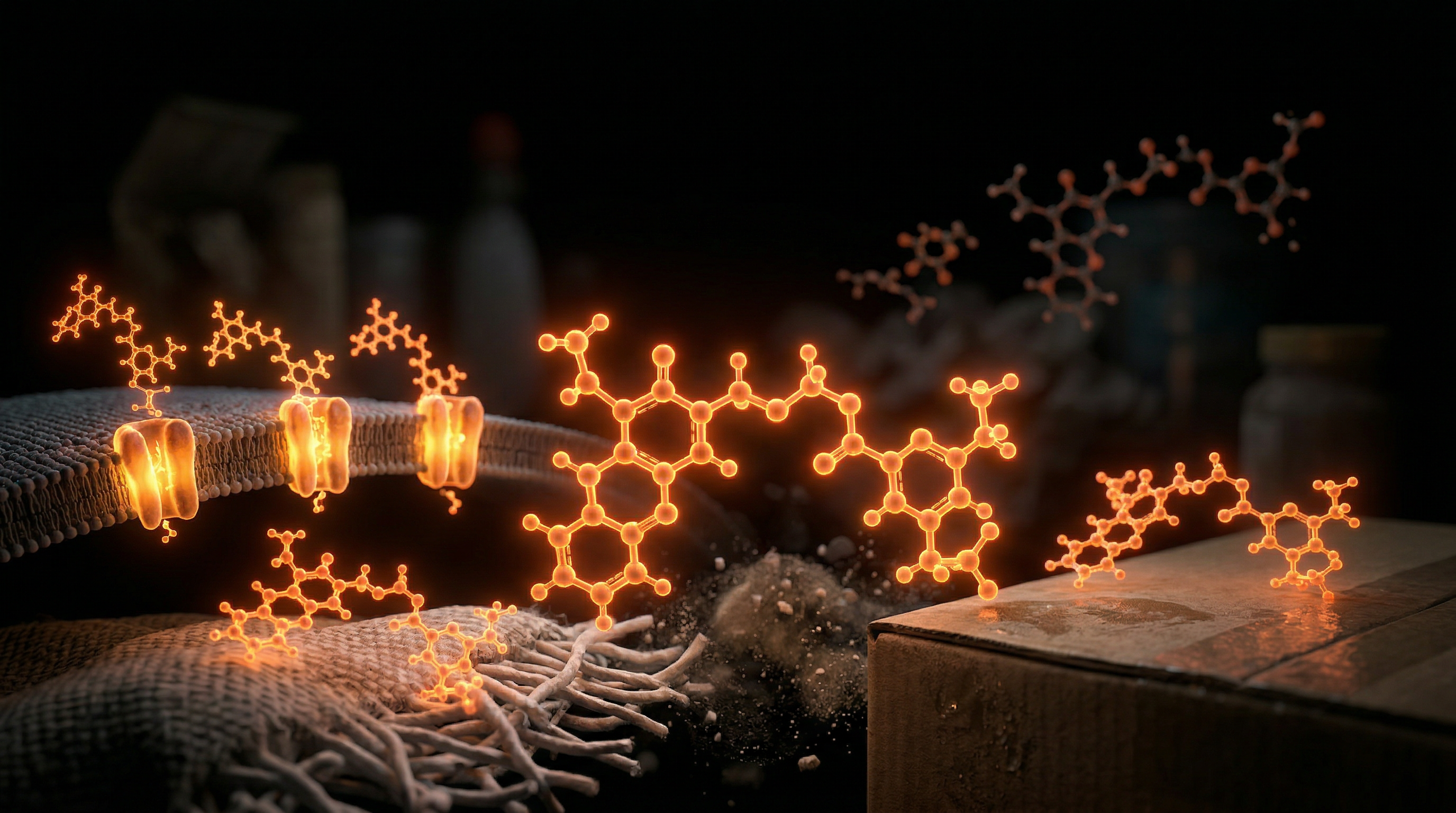
In the modern British landscape, the sanctuary of the home is often perceived as a fortress against environmental toxins. However, beneath the clinical sheen of our kitchen cupboards and the organised rows of our food storage facilities, a silent, molecular intruder persists. Permethrin, a synthetic Type I pyrethroid, has transitioned from a specialized agricultural tool to a ubiquitous domestic occupant. While mainstream discourse focuses heavily on glyphosate and organophosphates, the synthetic pyrethroids—and permethrin in particular—represent a more insidious threat due to their unique chemical stability and high affinity for fatty tissues.
The UK’s reliance on long-term food storage, both at the industrial warehouse level and within the domestic "pantry," has created a secondary route of exposure that is rarely quantified by public health authorities. Permethrin is frequently employed in the "empty store" treatment of grain silos, warehouses, and transport containers to prevent infestations of weevils and beetles. Because permethrin is designed for persistence, it does not degrade rapidly upon contact with surfaces. Instead, it undergoes a process of "molecular migration," leaching from treated surfaces into the dry goods stored within—flour, oats, pasta, and pulses.
As a senior researcher at INNERSTANDING, I have observed a disturbing trend: the systemic dismissal of sub-lethal, chronic exposure. The prevailing regulatory framework operates on the "acute toxicity" model, which ignores the cumulative bio-burden of a lipophilic neurotoxin that the body struggles to eliminate. We are not merely dealing with a pesticide; we are dealing with a persistent biological disruptor that bridges the gap between the field and the fork.
Fact: Permethrin is approximately 2,250 times more toxic to insects than to humans on an acute basis, but this "safety margin" evaporates when considering chronic, multi-route exposure and the bioaccumulation in human adipose tissue.
The Biology — How It Works
To understand the danger of permethrin, one must understand its origin and its evolution. Permethrin is a synthetic analogue of pyrethrin, a natural insecticidal compound found in the chrysanthemum flower (Chrysanthemum cinerariifolium). However, while natural pyrethrins are unstable and break down rapidly in sunlight (photolability), permethrin was engineered in the 1970s to be photostable. This engineering feat is precisely what makes it a persistent environmental hazard.
The Type I Classification
Permethrin belongs to the Type I pyrethroid class. Unlike Type II pyrethroids (such as cypermethrin), which contain a cyano group and cause a different set of neurological symptoms, Type I pyrethroids primarily affect the sodium channels of the nerve cells without the "choreoathetosis" (involuntary movement) associated with their Type II counterparts.
Route of Entry and Absorption
In the context of UK food storage, exposure is tripartite:
- Ingestion: Consumption of grain-based products that have absorbed residues from treated silos.
- Inhalation: Breathing in micro-particulates in domestic kitchens where permethrin-based "ant and roach" sprays have been used or where treated wood products (like kitchen cabinetry) off-gas.
- Dermal: Contact with treated surfaces or clothing (permethrin is widely used in the UK as a textile treatment for outdoor gear).
Once permethrin enters the human system, its lipophilic (fat-loving) nature dictates its journey. It avoids the aqueous environment of the bloodstream where possible, seeking refuge in the myelin sheaths of nerves and the adipose tissue (body fat). This is not a transient visitor; it is a molecular squatter.
Mechanisms at the Cellular Level
The toxicity of permethrin is not a "poisoning" in the traditional sense of immediate cell death; rather, it is a catastrophic interference with the electrical signalling of the body.
Voltage-Gated Sodium Channels (VGSCs)
The primary target of permethrin is the Voltage-Gated Sodium Channel. These channels are the gatekeepers of the nervous system, allowing sodium ions to flow into the neuron to initiate a nerve impulse (action potential). Under normal conditions, these gates open and close in milliseconds.
"Permethrin binds to these channels and prevents them from closing."
This results in:
- Repetitive Discharges: The neuron fires repeatedly without a new stimulus.
- Negative After-Potentials: The cell remains in a state of partial depolarisation, making it hyper-excitable.
- Synaptic Exhaustion: Over time, the constant firing depletes neurotransmitter stores, leading to cognitive "fog" and muscular fatigue.
Mitochondrial Dysfunction and Oxidative Stress
Beyond the sodium channels, permethrin acts as a mitochondrial poison. It has been shown to inhibit Complex I and Complex III of the electron transport chain. When mitochondria—the powerhouses of the cell—are compromised, they begin to leak Reactive Oxygen Species (ROS).
- Lipid Peroxidation: The ROS attack the fatty acids in cell membranes, creating a chain reaction of damage.
- Calcium Homeostasis: Permethrin disrupts the balance of calcium ions within the cell, which can trigger apoptosis (programmed cell death) in dopaminergic neurons—the very cells lost in Parkinson’s Disease.
The Role of Piperonyl Butoxide (PBO)
In many UK household formulations, permethrin is coupled with Piperonyl Butoxide (PBO). PBO is not a pesticide itself; it is a "synergist." It works by inhibiting the Cytochrome P450 enzymes in the liver. These enzymes are the body's primary defence for breaking down toxins. By including PBO, manufacturers ensure the permethrin stays "active" longer in the insect—and, inadvertently, in the human consumer.
Environmental Threats and Biological Disruptors
The persistence of permethrin in the UK household environment is exacerbated by the climate. Unlike tropical regions where high heat might accelerate some degradation, the temperate, often damp UK environment allows permethrin residues on wood and within insulation to remain stable for years.
The "Empty Store" Phenomenon
In the UK, the Health and Safety Executive (HSE) permits the use of permethrin for treating empty grain stores. The logic is that the chemical will be dry before the grain enters. However, research into sorption kinetics shows that dry grains (especially wheat and maize) act as "sinks" for the chemical. The permethrin migrates from the walls and floors of the silo into the dust, which then coats the grain. This dust is often milled directly into the flour used in British bread and biscuits.
Synergistic Toxicity with Other Pollutants
We do not live in a vacuum. The UK population is simultaneously exposed to:
- Aluminium from cookware and water treatment.
- Microplastics in bottled water.
- Airborne particulates (PM2.5) from urban traffic.
Permethrin acts as a "force multiplier." By stressing the nervous system and inhibiting the liver's detoxification pathways (via the PBO mechanism or enzyme saturation), it makes the body significantly more vulnerable to these other environmental stressors.
Important Callout: Studies have shown that the combination of permethrin and the insect repellent DEET—a common combination for UK travellers—is significantly more neurotoxic than either chemical alone, as they compete for the same metabolic pathways.
The Cascade: From Exposure to Disease
The progression from chronic low-level exposure to clinical disease is often slow, making it difficult for the NHS or traditional toxicology to draw a direct line of causation. At INNERSTANDING, we refer to this as the Pyrethroid Cascade.
Stage 1: Metabolic Sequestration
Because permethrin is lipophilic, the body attempts to protect the vital organs by sequestering the toxin in the adipose tissue. This leads to "toxic fat." When an individual attempts to lose weight, these stored toxins are released back into the bloodstream, often causing a "healing crisis" or "re-toxification" that manifests as intense headaches, nausea, and tremors.
Stage 2: Endocrine Disruption
Permethrin is a documented endocrine-disrupting chemical (EDC). It can mimic oestrogen and interfere with androgen receptors. In the UK, we have seen a steady decline in sperm counts and an increase in hormonal imbalances (such as PCOS). Permethrin's ability to bind to hormone receptors contributes to this silent reproductive crisis.
Stage 3: Neurodegenerative Pathogenesis
The most alarming aspect of permethrin persistence is its link to Parkinson's Disease (PD). By chronically stressing the dopaminergic neurons in the substantia nigra, permethrin creates a "pre-clinical" state of neurodegeneration.
- α-Synuclein Misfolding: Emerging evidence suggests that pyrethroid exposure can accelerate the misfolding of proteins that lead to the characteristic "Lewy Bodies" found in PD.
- Dopamine Transporter Interference: Permethrin interferes with the transport of dopamine, essentially "starving" the brain of the chemical required for smooth motor control and mood regulation.
What the Mainstream Narrative Omits
The UK government and large-scale food producers maintain that permethrin residues are "well within safe limits." However, this narrative is built on several fundamental scientific fallacies.
1. The Fallacy of the "Safe Dose"
Toxicology has historically relied on the LD50 (the dose required to kill 50% of a test population). This is an antiquated metric for neurotoxins. Modern science recognizes Non-Monotonic Dose Response (NMDR), where extremely low doses of a chemical can have more significant endocrine-disrupting effects than higher doses, by "tricking" the body's sensitive receptor systems.
2. The Exclusion of Cumulative Load
The Acceptable Daily Intake (ADI) for permethrin is calculated in isolation. Regulators do not account for the fact that a British citizen may be wearing permethrin-treated clothing, eating permethrin-tainted oats for breakfast, and using a permethrin "bug spray" in their garden. This cumulative load is never factored into the safety assessments.
3. Regulatory Capture and Data Suppression
Much of the safety data used by the HSE and the European Food Safety Authority (EFSA) is provided by the chemical manufacturers themselves. These "proprietary studies" are often not peer-reviewed or available for independent scrutiny. There is a documented history of industry-funded research downplaying the persistence of pyrethroids in household dust.
4. The "Inert" Ingredients
In the UK, only the "active" ingredient (Permethrin) must be fully disclosed and tested for some effects. The "inert" ingredients—solvents, surfactants, and propellants—are often kept as trade secrets. Many of these, such as petroleum distillates, increase the permeability of the skin and the blood-brain barrier, making the permethrin far more dangerous than it appears in a lab setting.
The UK Context
The United Kingdom presents a unique case study for permethrin exposure. Following Brexit, the UK has its own regulatory framework (UK REACH), which has struggled to keep pace with emerging independent research.
The British Pantry: A Hub of Persistence
The UK's climate necessitates dry, airtight storage for grains. However, the use of permethrin-impregnated packaging is an emerging trend. Some "pest-proof" bags used for pet food and bulk grains are treated with permethrin. Because the chemical is not being sprayed on the food, it escapes many labelling requirements, yet the molecular migration into the food remains a reality.
Pesticide Residues in Food (PRiF) Reports
The UK Government’s Pesticide Residues in Food (PRiF) monitoring frequently finds pyrethroid residues in bread, herbs, and soft citrus fruits. While the reports generally state that these residues "do not pose a risk to health," they fail to acknowledge the specific vulnerability of the British paediatric population, whose developing nervous systems are far more susceptible to sodium channel disruption than the "reference man" used in safety models.
Woodworm Treatments in British Homes
A significant and overlooked source of permethrin in the UK is woodworm treatment. Thousands of older British homes have had their floorboards and roof timbers treated with high-concentration permethrin solutions. These treatments are marketed as "permanent" or "long-lasting." This very persistence means that the chemical is slowly outgassing into the domestic air supply, where it is inhaled and then settles on food preparation surfaces.
Statistic: In a sampling of UK household dust, synthetic pyrethroids were found in over 70% of homes, with permethrin being the most prevalent, often at levels exceeding those found in agricultural soils.
Protective Measures and Recovery Protocols
Given the ubiquity of permethrin in the UK food chain and domestic environment, total avoidance is nearly impossible. However, we can employ strategies to minimise exposure and facilitate the body’s natural clearance mechanisms.
Environmental Remediation
- HEPA Filtration: Use high-efficiency particulate air (HEPA) filters to capture dust, which is the primary vector for permethrin in the home.
- Organic Sourcing: Prioritise organic grains, pulses, and flours. Organic standards strictly prohibit the use of synthetic pyrethroids in both the field and the storage silo.
- Wet Dusting: Avoid dry dusting, which kicks particles into the air. Use a damp cloth to wipe down kitchen surfaces and food storage areas regularly.
- Glass Storage: Transfer dry goods from plastic or paper packaging into glass jars. Glass is impermeable and prevents further leaching from external environmental residues.
Biological Support and Detoxification
The goal is to support the Cytochrome P450 enzyme system and facilitate the mobilisation of lipophilic toxins from the fat stores.
- Glutathione Support: Glutathione is the body's master antioxidant and is essential for conjugating (binding to) toxins for excretion. Supplementation with N-Acetyl Cysteine (NAC) or liposomal glutathione can be beneficial.
- Infrared Sauna Therapy: This is one of the few effective ways to mobilise toxins stored in adipose tissue. The deep heat encourages the "sweating out" of lipophilic compounds.
- Toxin Binders: Taking binders such as Activated Charcoal, Bentonite Clay, or Chlorella (specifically broken cell-wall chlorella) can help trap permethrin residues in the gut, preventing them from being re-absorbed through the "enterohepatic circulation."
- Dietary Chlorophyll: Consuming green leafy vegetables provides chlorophyll, which has been shown to assist in the excretion of persistent organic pollutants.
Advocacy and Testing
For those suspecting chronic exposure, specialized laboratories can test for 3-PBA (3-phenoxybenzoic acid), a primary metabolite of permethrin, in the urine. While this only shows recent exposure (within the last few days), it can be a powerful tool for identifying "hot spots" in one's environment.
Summary: Key Takeaways
The issue of Permethrin Persistence is a microcosm of a larger failure in modern toxicology—the failure to respect the complexity of biological systems.
- Persistence is the Problem: Permethrin was engineered to last. Its photostability makes it a permanent resident in UK storage facilities and homes.
- Neurotoxic Mechanism: By locking sodium channels open, permethrin causes neuronal hyper-excitability, leading to a "burnout" of the nervous system.
- Lipophilic Accumulation: Permethrin hides in body fat and the brain, bypassing many of the body’s standard detoxification filters.
- The Synergist Trap: The inclusion of PBO in household products deliberately cripples our ability to metabolise the toxin.
- UK Vulnerability: From "empty store" grain treatments to legacy woodworm applications, the British public is uniquely exposed to this chemical "cocktail."
- The Path Forward: Protection requires a combination of organic consumption, HEPA filtration, and metabolic support to clear the bio-burden.
The illusion of safety provided by current UK regulations is a thin veil. As we move deeper into an era of chronic illness, we must look toward the chemicals we have allowed to saturate our most private spaces. Permethrin is not just a tool for pest control; it is a persistent challenge to human biological integrity. At INNERSTANDING, we believe that through knowledge and proactive measures, we can reclaim our health from these molecular invaders.
"References & Further Reading:"
- Department for Environment, Food & Rural Affairs (Defra): Expert Committee on Pesticide Residues in Food (PRiF) Annual Reports.
- Journal of Occupational and Environmental Medicine: Neurotoxicological effects of chronic pyrethroid exposure.
- The Lancet Planetary Health: The global burden of pesticide-related disease.
- HSE UK: Pesticides - Information on Authorisation and Use.
This article is provided for informational and educational purposes only. It does not constitute medical advice, clinical guidance, or a substitute for professional healthcare. Information reflects cited research at time of publication. Always consult a qualified healthcare professional before acting on any health information.
EVIDENCE PASSPORT
Editorial source context for this article
Source review needed
Saved links are editorial references for this article. They may support specific claims rather than every sentence. Open and assess each source in context. This passport does not independently verify them.
Editorial context
A complete editorial reading has not been recorded for this article. Source links remain available for you to open and assess directly.
Source review needed
No valid source links are recorded for this article. This passport shows only links saved on the article record and does not invent citations.
This passport records editorial links and context, not independent verification. Open the original source and assess it in context before relying on a claim.
Medical Disclaimer
The information in this article is for educational purposes only and does not constitute medical advice, diagnosis, or treatment. Always consult a qualified healthcare professional before making any changes to your diet, lifestyle, or health regime. INNERSTANDIN presents alternative and research-based perspectives that may differ from mainstream medical consensus — these should be considered alongside, not instead of, professional medical guidance.
Read Full DisclaimerContinue the thread
Keep this question moving.
Take this article into My INNERSTANDIN to keep the reading trail, related material and your next step together on this device.
Explore this in the Body Map
See where this hits your biology. Interactive anatomy, threats, and protective protocols.
Dig deeper in the Library
Free, longform PDF volumes that go beyond headlines into mechanisms and references.