
Beyond Non-Stick: The Bioaccumulative Mechanism of PFAS
Published April 2026
This article explores the bioaccumulative nature of PFAS in the home, detailing their interference with liver metabolism and thyroid hormone transport proteins.
Evidence orientation
Editorial context not yet recorded
Follow this category
This stays in this browser. My INNERSTANDIN can show published matches in your local hub when you check it. It does not send email, push, or alert notifications.
Local learning review
A private browser aid for revisiting ideas. It is not an alert or a health recommendation.
Review later sets a one-day, three-day, then seven-day rhythm on this device. Choose it only when you want to revisit this article.
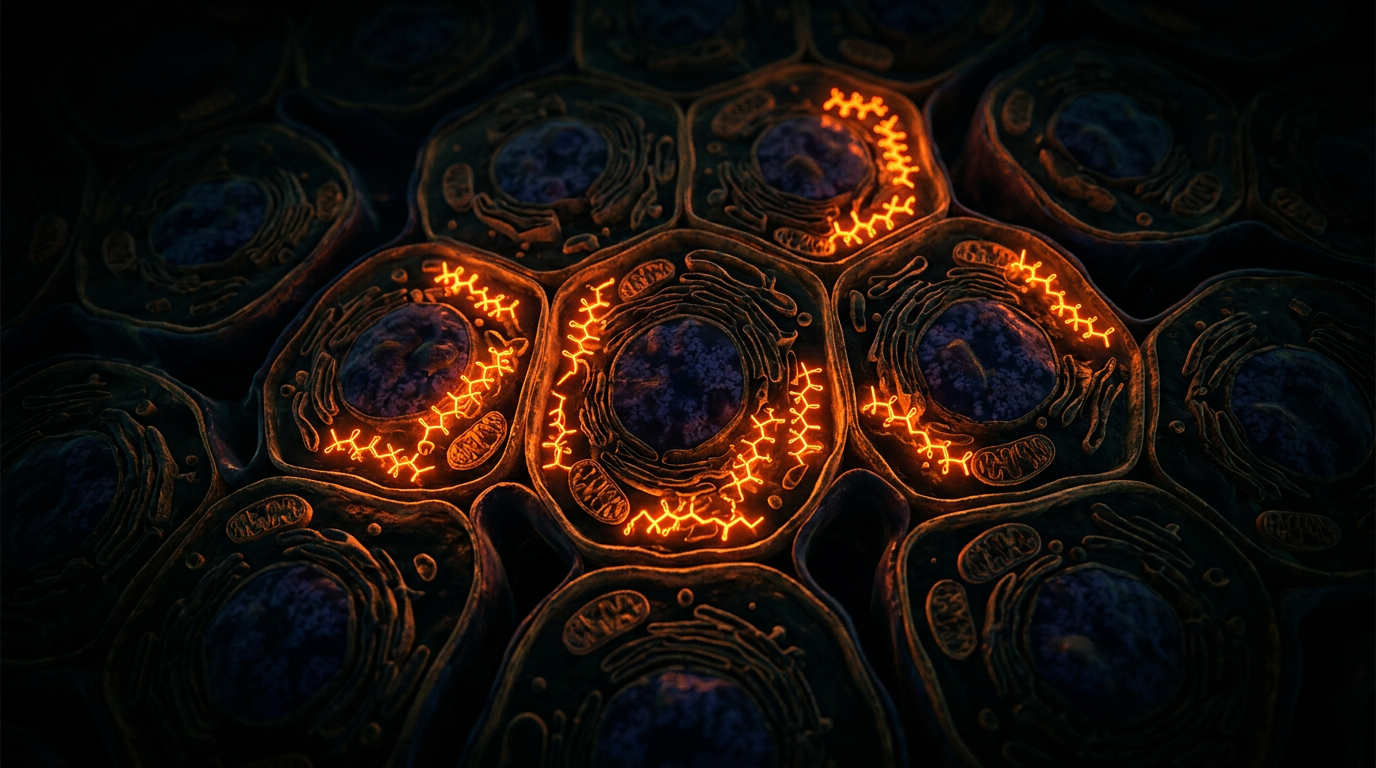
Per- and polyfluoroalkyl substances (PFAS), colloquially known as 'forever chemicals', represent one of the most significant challenges to modern biological resilience. In the UK household, these substances are ubiquitously found in non-stick cookware, stain-resistant upholstery, and water-repellent clothing. The primary concern for the health-literate adult is not merely their environmental persistence, but their ability to bioaccumulate within human tissues by binding to serum proteins, specifically albumin. PFAS molecules possess a carbon-fluorine bond, one of the strongest in organic chemistry, making them virtually indestructible by standard metabolic processes. Consequently, the half-life of these compounds in the human body is measured in years, not days.
The Hepatotoxic Mechanism and Lipid Metabolism. The liver is a primary site of PFAS accumulation. Mechanistically, these chemicals are known to activate the Peroxisome Proliferator-Activated Receptor alpha (PPARα). While PPARα is a critical regulator of lipid metabolism, its chronic over-activation by synthetic ligands like PFOA and PFOS can lead to disrupted fatty acid oxidation and the development of non-alcoholic fatty liver disease (NAFLD). This pathway is frequently overlooked in mainstream clinical settings, where lifestyle and diet are blamed for liver enzymes that may, in fact, be elevated due to chronic chemical leaching from high-end non-stick pans.
Thyroidal Interference and Transport Proteins. PFAS also exhibit a high affinity for transthyretin (TTR), a transport protein responsible for carrying thyroid hormones in the blood. By competitively binding to TTR, PFAS can displace thyroxine (T4), potentially leading to a state of 'functional' hypothyroidism where blood tests may appear within normal ranges, but the hormone is not reaching its target tissues effectively. This competitive inhibition explains why many individuals experience persistent hypothyroid symptoms—such as cold intolerance and lethargy—despite 'normal' TSH levels. The displacement of hormones by industrial surfactants is a profound example of how the chemical environment dictates physiological outcomes.
Remediation: Moving Towards Inert Materials. Addressing PFAS exposure requires a proactive shift in domestic procurement. Transitioning to inert cooking surfaces such as cast iron, carbon steel, or high-quality stainless steel is a foundational step. Furthermore, because PFAS are frequently found in UK municipal water supplies due to industrial run-off, high-performance water filtration—specifically reverse osmosis or dual-stage activated carbon—is essential. By removing the source of bioaccumulative surfactants, we reduce the total body burden and allow the liver to focus on endogenous metabolic waste rather than exogenous 'forever' molecules.
This article is provided for informational and educational purposes only. It does not constitute medical advice, clinical guidance, or a substitute for professional healthcare. Information reflects cited research at time of publication. Always consult a qualified healthcare professional before acting on any health information.
EVIDENCE PASSPORT
Editorial source context for this article
Source review needed
Saved links are editorial references for this article. They may support specific claims rather than every sentence. Open and assess each source in context. This passport does not independently verify them.
Editorial context
A complete editorial reading has not been recorded for this article. Source links remain available for you to open and assess directly.
Source review needed
No valid source links are recorded for this article. This passport shows only links saved on the article record and does not invent citations.
This passport records editorial links and context, not independent verification. Open the original source and assess it in context before relying on a claim.
Medical Disclaimer
The information in this article is for educational purposes only and does not constitute medical advice, diagnosis, or treatment. Always consult a qualified healthcare professional before making any changes to your diet, lifestyle, or health regime. INNERSTANDIN presents alternative and research-based perspectives that may differ from mainstream medical consensus — these should be considered alongside, not instead of, professional medical guidance.
Read Full DisclaimerContinue the thread
Keep this question moving.
Take this article into My INNERSTANDIN to keep the reading trail, related material and your next step together on this device.
Explore this in the Body Map
See where this hits your biology. Interactive anatomy, threats, and protective protocols.
Dig deeper in the Library
Free, longform PDF volumes that go beyond headlines into mechanisms and references.