
UK Expert Committee on Pesticide Residues in Food (PRiF): Interpreting Annual Residue Monitoring Data
Updated May 2026
Understanding how the UK government monitors our food for chemical residues is essential for making informed dietary choices. This article breaks down the role of the PRiF, how they conduct testing, and what their latest findings reveal about the safety of our produce.
Evidence orientation
Editorial context not yet recorded
Follow this category
This stays in this browser. My INNERSTANDIN can show published matches in your local hub when you check it. It does not send email, push, or alert notifications.
Local learning review
A private browser aid for revisiting ideas. It is not an alert or a health recommendation.
Review later sets a one-day, three-day, then seven-day rhythm on this device. Choose it only when you want to revisit this article.
Overview
The modern British dinner table has become a landscape of invisible chemical complexity. While the average consumer views a punnet of strawberries or a loaf of wholemeal bread as foundational components of a healthy diet, the biological reality is often far more concerning. Central to the management of this chemical landscape is the Expert Committee on Pesticide Residues in Food (PRiF). This body is tasked with the monumental responsibility of monitoring the UK’s food supply for chemical residues, interpreting complex toxicological data, and advising the Food Standards Agency (FSA) and the Health and Safety Executive (HSE) on potential risks to public health.
However, to understand the true impact of these substances, we must look beyond the sterile spreadsheets of annual reports. PRiF operates within a framework of Maximum Residue Levels (MRLs)—statutory limits that dictate the highest amount of a pesticide residue legally tolerated in or on food. While the official narrative suggests that as long as residues remain below these MRLs, the consumer is safe, a deeper biological investigation reveals a more nuanced and alarming picture. The PRiF annual monitoring programme tests approximately 3,500 samples of food and drink across the UK, spanning both domestic produce and imports.
The fundamental issue is that "safe" is a moving target. Current regulatory frameworks often fail to account for the synergistic effects of multiple residues—what we call the "pesticide cocktail"—nor do they adequately address the long-term, low-dose exposure that characterises the modern British diet. As we peel back the layers of PRiF’s data, we find a system that prioritises agricultural efficiency and international trade over the uncompromising protection of human biological integrity. This article will deconstruct the mechanisms of these chemicals, expose the flaws in the monitoring process, and provide the biological context necessary to navigate a food system increasingly saturated with synthetic xenobiotics.
##
##
The Biology — How It Works
To grasp the magnitude of pesticide exposure, we must first understand that these chemicals are not passive bystanders in the body. They are bioactive molecules specifically engineered to disrupt biological systems. Whether they are designed to paralyse the nervous system of an aphid or inhibit the metabolic pathways of a fungus, their fundamental targets are often conserved across species. This means that the very mechanisms used to kill "pests" are frequently present in human biology.
Pesticides primarily enter the human system through ingestion, where they must navigate the complex environment of the gastrointestinal tract. Once absorbed, they enter the portal circulation and are delivered to the liver, the body’s primary detoxification hub. Here, the body attempts to neutralise these foreign compounds through Phase I (functionalisation) and Phase II (conjugation) detoxification pathways.
The Role of Cytochrome P450 Enzymes
The heavy lifting of pesticide metabolism is performed by the Cytochrome P450 (CYP450) enzyme superfamily. These enzymes are responsible for the oxidation of lipophilic (fat-soluble) chemicals, making them more polar and easier to excrete. However, many pesticides, such as organophosphates and carbamates, act as "suicide inhibitors" or potent modifiers of these enzymes. When the CYP450 system is overwhelmed by a constant influx of residue-laden food, the body’s ability to detoxify not only pesticides but also endogenous hormones and environmental pollutants is severely compromised.
The Gut Microbiome and the Shikimate Pathway
One of the most significant biological revelations of the last decade concerns the herbicide glyphosate, which is frequently detected in PRiF’s monitoring of cereal products and pulses. The mainstream narrative long insisted that glyphosate was non-toxic to humans because it targets the shikimate pathway—a metabolic route used to synthesise essential aromatic amino acids (phenylalanine, tyrosine, and tryptophan) that is absent in mammals.
However, this ignores the human microbiome. The trillions of bacteria residing in the human gut do possess the shikimate pathway. When we consume glyphosate residues, we are effectively deploying a broad-spectrum antibiotic against our beneficial gut flora. This disruption, known as dysbiosis, leads to a decrease in essential amino acid production and an overgrowth of pathogenic species like Clostridium botulinum and Salmonella, which are naturally more resistant to the herbicide.
Biological Fact: Glyphosate has been patented as an antimicrobial agent. Its presence in the UK food supply at "sub-toxic" levels according to MRLs may still be sufficient to alter the delicate balance of the human mycobiome and microbiome, leading to systemic inflammatory responses.
##
##
Mechanisms at the Cellular Level
Once pesticides bypass the primary defences of the liver and the gut, they exert their effects at the cellular and molecular levels. This is where the most profound and lasting damage occurs, often through mechanisms that are not fully captured by traditional acute toxicity testing.
Mitochondrial Dysfunction and Oxidative Stress
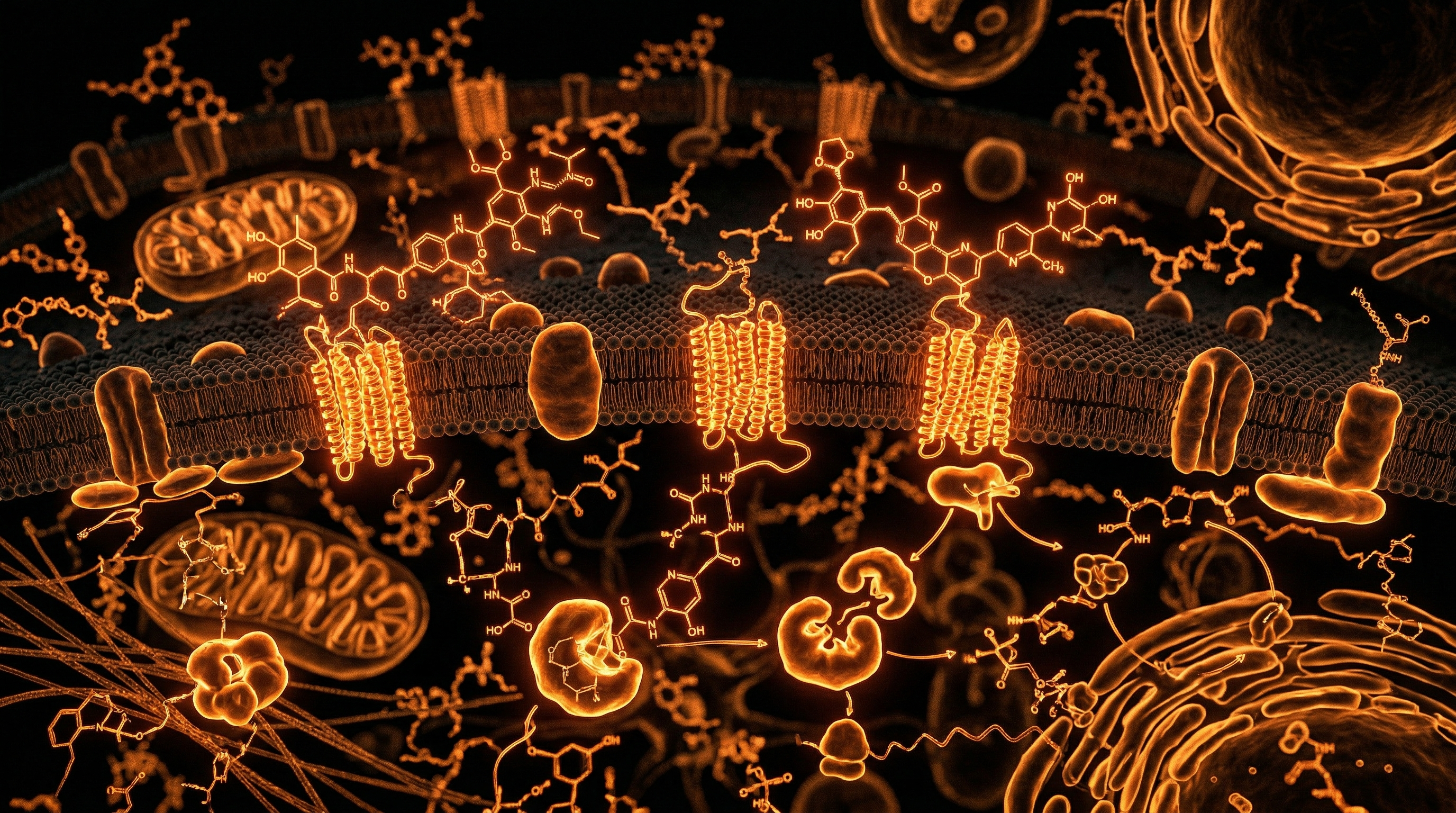
The mitochondria are the powerhouses of the cell, responsible for generating adenosine triphosphate (ATP). Many pesticides, particularly neonicotinoids and certain fungicides like strobilurins, have been shown to interfere with the Electron Transport Chain (ETC). By inhibiting specific complexes within the mitochondria (notably Complex I and Complex III), these chemicals reduce energy production and trigger a massive leak of Reactive Oxygen Species (ROS).
This state of chronic oxidative stress leads to:
- Lipid Peroxidation: The destruction of cell membranes, particularly in the brain, which is rich in polyunsaturated fatty acids.
- Protein Carbonylation: The misfolding and inactivation of essential enzymes and structural proteins.
- DNA Damage: Specifically, the formation of 8-hydroxy-2'-deoxyguanosine (8-OHdG), a hallmark of oxidative DNA lesions that can lead to mutations and oncogenesis.
Acetylcholinesterase Inhibition
A significant portion of the PRiF monitoring data focuses on insecticides. Organophosphates (OPs), such as chlorpyrifos (which, despite bans, still appears in imported produce), work by inhibiting the enzyme acetylcholinesterase (AChE). This enzyme is responsible for breaking down the neurotransmitter acetylcholine in the synaptic cleft. When AChE is inhibited, acetylcholine builds up, leading to overstimulation of the nervous system. In humans, even low-level chronic exposure is linked to neurodevelopmental delays in children and cognitive decline in adults, as the cholinergic system is fundamental to memory, focus, and autonomic function.
Endocrine Disruption: The Aromatase Interference
Perhaps the most insidious mechanism is endocrine disruption. Many fungicides monitored by PRiF, such as prochloraz and tebuconazole, are designed to inhibit ergosterol synthesis in fungi by targeting the CYP51 enzyme. In humans, these chemicals cross-react with Aromatase (CYP19), the enzyme responsible for converting androgens into estrogens.
Alarming Statistic: Research into "low-dose" endocrine disruptors suggests that these chemicals can exert more significant effects at lower concentrations than at higher doses—a phenomenon known as non-monotonic dose-response. This completely undermines the "the dose makes the poison" philosophy upon which MRLs are built.
##
##
Environmental Threats and Biological Disruptors
The PRiF reports often categorise residues by individual chemical names, but the environment does not work in isolation. Our biology is subjected to what researchers call the Exposome—the sum total of all environmental exposures over a lifetime.
The Synergy Problem: 1 + 1 = 10
The UK regulatory framework evaluates each pesticide in a vacuum. However, PRiF’s own data frequently shows samples containing multiple different residues. For example, a single sample of imported grapes can contain upwards of 10 to 15 different fungicides and insecticides. This creates a toxicological synergy.
- Potentiation: One chemical can enhance the toxicity of another by inhibiting the enzymes (like the aforementioned CYP450) needed to detoxify it.
- Combined Pathway Stress: Multiple chemicals hitting different complexes of the mitochondrial ETC can lead to a total collapse of cellular respiration that none of the chemicals would cause individually.
- Additive Endocrine Burden: Different chemicals may bind to different sites on the same hormone receptor (e.g., the Estrogen Receptor Alpha), leading to a massive over-activation of hormonal signalling.
Persistent Organic Pollutants (POPs)
While many modern pesticides are designed to break down relatively quickly, PRiF still occasionally detects legacy chemicals—Persistent Organic Pollutants (POPs) like DDT metabolites or Lindane. These substances are highly lipophilic and bioaccumulate up the food chain. They store themselves in the adipose (fat) tissue of animals and humans. During periods of weight loss or metabolic stress, these toxins are released back into the bloodstream, providing a "second wave" of internal exposure decades after the initial ingestion.
The Role of Adjuvants and "Inert" Ingredients
PRiF tests for the active ingredients of pesticides. However, commercial pesticide formulations include surfactants, anti-foaming agents, and solvents—often labelled as "inert" ingredients. The most famous example is POEA (polyethoxylated tallowamine) used in glyphosate formulations. Research indicates that these "inerts" can be hundreds of times more toxic than the active ingredient itself, often by making the cell membranes more permeable and allowing the pesticide to flood into the cell. PRiF does not systematically monitor for these adjuvants.
##
##
The Cascade: From Exposure to Disease
The journey from a residue on a piece of fruit to a clinical diagnosis is often a slow, silent cascade of biological degradation. By the time a disease manifests, the inciting chemical exposures are often long forgotten.
Neurodegeneration and the Parkinson’s Link
The link between pesticide exposure and Parkinson’s Disease is one of the most robust findings in environmental toxicology. Chemicals like Paraquat (a herbicide) and Maneb (a fungicide) target the dopaminergic neurons in the substantia nigra of the brain. These neurons are particularly sensitive to mitochondrial inhibitors. When the PRiF data shows even trace amounts of mitochondrial-disrupting fungicides in the food supply, we are looking at a potential long-term driver of the UK’s neurodegeneration epidemic.
Metabolic Syndrome and Obesogens
Emerging science identifies many pesticides as obesogens—chemicals that interfere with lipid metabolism and promote fat storage. By disrupting the Peroxisome Proliferator-Activated Receptors (PPARs), which regulate glucose and lipid sensation, these residues can "reprogramme" the body’s metabolic set-point. This leads to:
- Insulin Resistance: Inability of cells to respond to insulin, leading to type 2 diabetes.
- Non-Alcoholic Fatty Liver Disease (NAFLD): As the liver becomes overwhelmed by the task of processing pesticides, it begins to store fat as a secondary defence mechanism.
The Transgenerational Impact
Perhaps the most terrifying aspect of pesticide exposure is epigenetic inheritance. Research has shown that exposure to certain pesticides (like vinclozolin) can alter the DNA methylation patterns in sperm and egg cells. This means that the chemical exposure of a mother or father today could potentially programme their grandchildren for increased risk of kidney disease, prostate issues, or immune dysfunction, regardless of whether the grandchildren are ever directly exposed to the chemicals themselves.
Key Biological Truth: We are not just eating for our own health; we are eating for the genetic integrity of our future descendants. The "safety" of a residue cannot be judged solely by its effect on the current consumer.
##
##
What the Mainstream Narrative Omits
The PRiF annual reports are presented with a veneer of absolute scientific certainty, yet they omit several critical biological realities that would change the way consumers perceive "compliance" with MRLs.
The MRL is Not a Health Standard
The most significant deception in food safety communication is the definition of the MRL. Most consumers believe the MRL is the point at which a food becomes toxic. In reality, the MRL is a trading standard. It is based on Good Agricultural Practice (GAP)—it represents the maximum amount of residue expected if a farmer follows the label instructions. While toxicologists do check that the MRL is below the Acceptable Daily Intake (ADI), the MRL itself is not a threshold of safety, but a threshold of legal use.
The Failure of "Average" Consumption Models
PRiF assesses risk based on "average" consumption patterns. This "average consumer" is a statistical myth.
- Vulnerable Groups: Infants and children consume more food per kilogram of body weight than adults and have developing organ systems that are far more sensitive to chemical disruption.
- The "High-Level" Consumer: Individuals who eat large quantities of a specific fruit (e.g., someone on a "juice cleanse" consuming kilos of conventional celery and apples) may exceed the ADI for certain pesticides, even if every individual item is below the MRL.
- Genetic Variability: Human populations have significant polymorphisms in their detoxifying enzymes (e.g., PON1 gene variants). A dose that is "safe" for one person may be highly toxic to another whose body cannot efficiently break down organophosphates.
The Monitoring Gap
PRiF only tests a small fraction of the food consumed in the UK. Furthermore, there is a significant delay between sampling and reporting. By the time the annual data is released, the contaminated batches have long been consumed. The system is a post-mortem analysis, not a preventative shield. It identifies failures in the system rather than preventing toxic produce from reaching the shelves.
##
##
The UK Context
Following the UK’s exit from the European Union, the regulatory landscape for pesticides has undergone a seismic shift. The UK now has its own independent pesticide regulatory regime, overseen by the HSE and advised by PRiF.
Post-Brexit Divergence
There is growing concern that the UK may diverge from the EU’s "hazard-based" approach—which bans chemicals based on their inherent toxicity (e.g., if they are known carcinogens)—towards a "risk-based" approach, which allows the use of toxic chemicals if the "exposure" is deemed to be controlled. This shift could lead to the re-introduction or continued use of substances that the EU has deemed too dangerous for human health.
High-Risk Produce in the UK Market
According to recent PRiF findings, certain foods consistently show higher frequencies of multiple residues. Consumers should be particularly vigilant with:
- Imported Citrus Fruits: Often treated with post-harvest fungicides like imazalil and thiabendazole to prevent mould during transport. These are often found at levels close to the MRL and are known endocrine disruptors.
- Soft Fruits (Strawberries/Raspberries): Due to their vulnerability to pests and mould, these are among the most heavily sprayed crops.
- Wholemeal Bread and Oats: Frequently contain residues of glyphosate used as a "desiccant" (to kill and dry the crop) just before harvest.
- Tea: Often imported from regions with less stringent regulations, tea can contain residues of pesticides that are banned for use within the UK.
The Environment Agency and Water Runoff
The issue extends beyond the food on the plate. The Environment Agency has documented the widespread contamination of UK waterways with agricultural pesticides. This not only destroys aquatic ecosystems but also enters the human "water cycle." While water companies filter many contaminants, the presence of persistent herbicides like metaldehyde (used for slug pellets) has historically challenged UK water treatment facilities.
##
##
Protective Measures and Recovery Protocols
While the PRiF data can be disheartening, understanding the biology allows us to implement targeted strategies to minimise our toxic burden and support our body’s innate recovery mechanisms.
1. Strategic Sourcing: The Organic Imperative
The most effective way to reduce pesticide exposure is to choose certified organic produce (Soil Association or EU Organic). Organic standards strictly prohibit the use of synthetic systemic pesticides and herbicides.
- Priority Items: If a full organic diet is not feasible, prioritise the "Dirty Dozen"—foods with the highest residue loads. In the UK, this typically includes strawberries, spinach, kale, nectarines, apples, grapes, cherries, peaches, pears, tomatoes, celery, and potatoes.
- The "Clean Fifteen": Foods with thick skins that are discarded (avocados, sweetcorn, pineapples, onions, papayas) generally have lower residue levels in the edible portion.
2. Decontamination Techniques
Simply rinsing under a cold tap is insufficient for many modern pesticides, which are often oil-based or designed to be "rain-fast."
- The Bicarbonate Soak: Research has shown that soaking produce in a solution of sodium bicarbonate (baking soda) and water for 12–15 minutes is more effective at removing surface residues (like thiabendazole and phosmet) than plain water or bleach solutions.
- Peeling: For non-organic produce, peeling is one of the most effective ways to remove residues, as many chemicals concentrate in the skin. However, this also removes beneficial phytonutrients and fibre.
3. Biological Support and Upregulating Detoxification
We can support our body’s ability to process the residues we cannot avoid by upregulating our Phase II detoxification pathways.
- Sulforaphane: Found in broccoli sprouts and cruciferous vegetables, sulforaphane is a potent inducer of NRF2, a master genetic switch that increases the production of antioxidant enzymes and glutathione.
- Glutathione Support: The body’s master antioxidant. Boosting levels through N-acetylcysteine (NAC), vitamin C, and selenium-rich foods (like Brazil nuts) helps the liver conjugate and excrete pesticides.
- Calcium D-Glucarate: This compound inhibits the enzyme beta-glucuronidase, which can "uncouple" toxins that the liver has already processed, preventing them from being reabsorbed in the gut.
4. Microbiome Restoration
Given the impact of glyphosate on gut bacteria, a protocol for microbiome recovery is essential.
- Fermented Foods: Regularly consuming sauerkraut, kefir, and kimchi introduces beneficial strains that can help displace pathogens.
- Prebiotic Fibre: Fueling the "good" bacteria with diverse fibres (inulin, resistant starch) helps them survive the chemical onslaught.
##
##
Summary: Key Takeaways
The work of the Expert Committee on Pesticide Residues in Food (PRiF) provides a vital window into the chemical state of our food, but the interpretation of that data requires a deep understanding of biological vulnerability.
- MRLs are not safety guarantees: They are regulatory trade markers that do not account for synergistic effects or long-term, low-dose biological disruption.
- The "Cocktail Effect" is real: Our bodies are processing multiple chemicals simultaneously, leading to potentiation and increased toxic stress.
- Systemic Impact: Pesticides target fundamental biological processes, including mitochondrial function, neurotransmitter balance, and the health of the gut microbiome.
- UK-Specific Risks: Post-Brexit regulatory changes and the high residue levels in imported citrus and grains require heightened consumer awareness.
- Proactive Defence: Reducing exposure through organic choices and supporting the liver and gut through targeted nutrition are the only ways to preserve biological integrity in a chemically saturated world.
The data provided by PRiF should not be viewed as a "seal of approval," but as a call to action. True health in the 21st century requires us to become our own biological advocates, looking beyond the mainstream narrative to understand the profound interaction between the chemicals in our environment and the cells in our bodies. The "truth-exposing" reality is that while the government monitors the residues, the biological cost is paid entirely by the consumer. Knowledge is the first step toward reclaiming our physiological sovereignty.
This article is provided for informational and educational purposes only. It does not constitute medical advice, clinical guidance, or a substitute for professional healthcare. Information reflects cited research at time of publication. Always consult a qualified healthcare professional before acting on any health information.
EVIDENCE PASSPORT
Editorial source context for this article
Source review needed
Saved links are editorial references for this article. They may support specific claims rather than every sentence. Open and assess each source in context. This passport does not independently verify them.
Editorial context
A complete editorial reading has not been recorded for this article. Source links remain available for you to open and assess directly.
Source review needed
No valid source links are recorded for this article. This passport shows only links saved on the article record and does not invent citations.
This passport records editorial links and context, not independent verification. Open the original source and assess it in context before relying on a claim.
Medical Disclaimer
The information in this article is for educational purposes only and does not constitute medical advice, diagnosis, or treatment. Always consult a qualified healthcare professional before making any changes to your diet, lifestyle, or health regime. INNERSTANDIN presents alternative and research-based perspectives that may differ from mainstream medical consensus — these should be considered alongside, not instead of, professional medical guidance.
Read Full DisclaimerContinue the thread
Keep this question moving.
Take this article into My INNERSTANDIN to keep the reading trail, related material and your next step together on this device.
Dig deeper in the Library
Free, longform PDF volumes that go beyond headlines into mechanisms and references.