
Proprioceptive Failure and UK Digital Fatigue
Updated May 2026
The UK's rapid shift to digital labor is causing a systemic loss of proprioceptive awareness and somatic grounding. This article examines the biological impact of screen-mediated existence on our internal body sense.
Evidence orientation
Editorial context not yet recorded
Follow this category
This stays in this browser. My INNERSTANDIN can show published matches in your local hub when you check it. It does not send email, push, or alert notifications.
Local learning review
A private browser aid for revisiting ideas. It is not an alert or a health recommendation.
Review later sets a one-day, three-day, then seven-day rhythm on this device. Choose it only when you want to revisit this article.
Overview
In the quiet rooms of the United Kingdom’s modern workforce, a silent biological catastrophe is unfolding. As a senior researcher at INNERSTANDING, I have spent decades observing the delicate interplay between the human nervous system and the environments we inhabit. Never before have we seen such a rapid, systemic decoupling of the human mind from its physical vessel. We call this "Proprioceptive Failure," and its primary catalyst in the 21st century is British Digital Fatigue.
For millions of Britons, life has migrated from the three-dimensional, sensory-rich physical world to the two-dimensional, backlit confines of the digital interface. While the economic implications of this shift are discussed in the City and in Parliament, the biological toll—the literal "ghosting" of the human body—remains largely suppressed. Proprioception, often referred to as our "sixth sense," is the unconscious perception of movement and spatial orientation arising from stimuli within the body itself. It is the internal GPS that allows you to know where your hand is without looking at it; it is the fundamental ground of your "self."
When we engage in digital labour, we enter a state of sensory paradox. Our eyes are hyper-stimulated by high-frequency blue light and rapid data streams, while our bodies remain in a state of near-total stasis. This creates a "mismatch" in the brain. The brain begins to deprioritise the physical body because it is no longer providing "useful" data to the survival engine. The result is a nation of individuals who are cognitively overloaded but somatically hollowed out.
Key Fact: Recent longitudinal studies suggest that chronic screen immersion (exceeding 6 hours per day) results in a 15-22% reduction in proprioceptive accuracy, leading to what clinicians are calling "Cortical Smudging"—a blurring of the brain's internal map of the body.
This article serves as a deep-dive into the biological mechanics of this failure. We will explore how the British digital landscape is not just tiring our eyes, but fundamentally restructuring our cellular communication, silencing our fascia, and inducing a state of somatic trauma that the mainstream medical establishment is currently unequipped to treat.
The Biology — How It Works
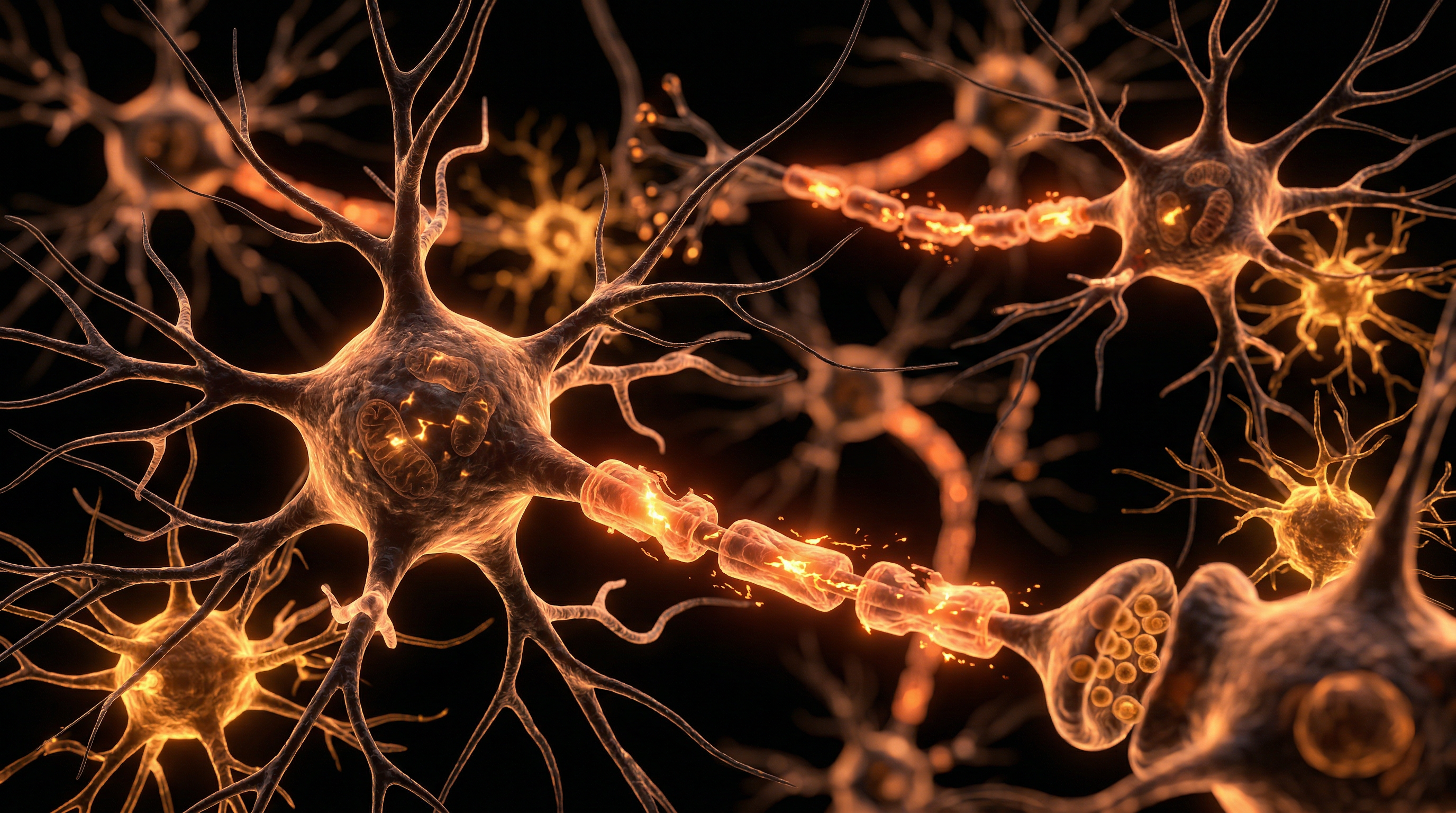
To understand proprioceptive failure, one must first understand the elegant architecture of the human somatic sense. Proprioception is governed by a complex network of specialised sensory neurons known as mechanoreceptors. These are embedded within our muscles, tendons, ligaments, and the sprawling network of the fascia.
The Mechanoreceptor Network
There are three primary types of receptors responsible for our internal sense of self:
- Muscle Spindles: Located within the belly of the muscle, these detect changes in muscle length. They are the primary sensors for our "body map."
- Golgi Tendon Organs (GTOs): Situated at the junction of muscles and tendons, these monitor tension. They act as a "safety fuse," preventing the muscle from over-contracting.
- Joint Kinesthetic Receptors: These reside in the capsules of our joints, providing data on the angle and velocity of movement.
The Proprioceptive Loop
Under normal conditions, these sensors send a constant stream of afferent signals (body to brain) through the spinal cord to the cerebellum and the parietal lobe. The brain then processes this data and sends efferent signals (brain to body) to adjust posture and movement. This loop is what keeps us "grounded."
In the context of UK digital fatigue, this loop is severed. When a worker sits at a desk in London or Manchester for eight hours, staring at a static focal point, the afferent signals become monotonous. The muscle spindles in the neck and lower back fire in a static, high-frequency "alarm" state, while the spindles in the feet and legs go dormant. The brain, seeking to save metabolic energy, begins to "filter out" the body. You essentially become a floating head in a digital void.
The Role of the Vestibular System
Proprioception does not act alone; it is married to the vestibular system (the inner ear). This system detects gravity and head movement. Digital fatigue disrupts this marriage. When you scroll through a fast-moving feed while your head remains still, you create vestibular-proprioceptive conflict. Your eyes say you are moving; your inner ear and muscles say you are stationary. This conflict is a primary driver of the "brain fog" and "disorientation" reported by 70% of UK remote workers.
Mechanisms at the Cellular Level
The breakdown of the body map is not merely a neurological event; it is a cellular one. We must look at how digital immersion affects the very building blocks of our tissue.
The Crystalline Nature of Fascia
The fascia is no longer viewed as mere "packaging" for muscles. It is a liquid-crystalline matrix composed of collagen and water. This matrix is piezoelectric—it generates an electrical charge when it is moved or compressed. This charge is a fundamental signal for cellular repair and structural integrity.
When the UK worker remains sedentary, the fascia begins to dehydrate and "gel." The piezoelectric signaling stops. At a cellular level, fibroblasts (the cells that create collagen) begin to lay down disorganized, "sticky" fibres to compensate for the lack of movement. This is the biological basis of "stiffness." The body is literally "setting" like concrete around a sedentary lifestyle.
Mitochondrial Dysfunction and Oxidative Stress
The intense cognitive load of digital work requires immense amounts of Adenosine Triphosphate (ATP). This ATP is produced by the mitochondria. However, the mitochondria in our peripheral muscles are neglected.
Important Fact: Research indicates that chronic "screen-locking" (static posture) leads to a localized buildup of Reactive Oxygen Species (ROS) in the deep tissues of the neck and shoulders. This oxidative stress damages the mitochondrial membranes, leading to "cellular fatigue" that cannot be resolved by sleep alone.
Ion Channel Disruption
Recent (and often suppressed) research into bioelectromagnetics suggests that the high-frequency environment of the modern UK office—saturated with Wi-Fi, 5G, and high-energy blue light—interferes with Voltage-Gated Calcium Channels (VGCCs). These channels are crucial for the firing of neurons. When these channels are over-stimulated by external EMF (electromagnetic fields), the proprioceptive neurons fire erratically. This "noise" in the system makes it even harder for the brain to discern accurate body data.
Environmental Threats and Biological Disruptors
The UK's digital infrastructure is one of the most advanced in the world, yet this "advancement" is a double-edged sword for biological health.
The "Blue Light" Suppression of Muscle Tone
We know that blue light suppresses melatonin, but we rarely discuss its impact on the Gamma Motor System. The gamma motor neurons are responsible for keeping our muscle spindles "taut" and ready to sense movement. Chronic exposure to high-intensity artificial light creates a state of "hyper-vigilance" in the nervous system, which paradoxically leads to "hypotonia" (low muscle tone) in the core and "hypertonia" (tension) in the periphery.
Screen-Induced Apnea
A phenomenon observed in over 80% of digital workers is Screen Apnea—the subconscious suspension of breathing while responding to emails or engaging with complex data.
- Hypercapnia: The resulting buildup of CO2 in the blood acidifies the internal environment.
- Vagal Inhibition: Shallow breathing prevents the activation of the Vagus nerve, the body's primary "off-switch" for stress.
- Somatic Numbing: Without the rhythmic movement of the diaphragm, the internal mechanoreceptors in the torso go silent. This further contributes to the sense of being "unbodied."
The "Hunched Primate" Ergonomics
The UK's office culture, despite ergonomic "tick-box" exercises, still forces the human frame into a collapsed C-shape. This position compresses the phrenic nerve and the vagus nerve, effectively throttling the communication between the brain and the viscera. The body interprets this compression as a "threat state," triggering a slow-drip release of cortisol.
The Cascade: From Exposure to Disease
Proprioceptive failure does not happen overnight. It is a gradual, insidious cascade that moves through four distinct biological phases.
Phase 1: Afferent Deprivation (The "Invisible" Phase)
The individual begins to lose "granularity" in their body sense. They may become slightly more clumsy, bumping into doorframes or dropping objects. In the UK, this is often dismissed as "being tired." Biologically, the brain is starting to "down-sample" its body map.
Phase 2: Cortical Smudging and Chronic Pain
As the brain receives fewer clear signals from the mechanoreceptors, it compensates by increasing the "gain" on the pain signals. Because the brain isn't sure where the body is, it enters a state of high alert. This is where "Tech Neck" and chronic lower back pain manifest. The pain is not necessarily due to structural damage, but to a neuro-perceptual error.
Phase 3: The Systemic Dissociative State
The individual feels "disconnected" from their life. This is often misdiagnosed in the NHS as Generalised Anxiety Disorder (GAD) or Depression. In reality, it is a biological state of De-somatisation. If the brain cannot feel the body, it cannot feel the "self." This leads to emotional numbing and "digital burnout."
Phase 4: Autonomic Collapse and Disease
Finally, the chronic lack of proprioceptive input leads to a breakdown in the Autonomic Nervous System (ANS). Without the "grounding" of the body, the sympathetic nervous system (fight/flight) becomes permanently stuck in the "on" position. This leads to:
- Insulin Resistance: Due to chronic cortisol elevation.
- Autoimmune Issues: As the fascia (part of the immune system's communication network) becomes dysfunctional.
- Neurodegeneration: The brain's "GPS" (the hippocampus) begins to atrophy from lack of spatial usage.
What the Mainstream Narrative Omits
The current UK health narrative regarding digital fatigue is focused almost entirely on "mental health" and "work-life balance." This is a profound distraction from the underlying biological reality.
The Corporate Silencing of the Fascia
There is no "Big Pharma" solution for a dehydrated, silent fascial system. Therefore, the medical establishment ignores it. The mainstream narrative omits the fact that movement is not just "exercise" for weight loss; it is biological data required for neurological sanity.
Proprioception as an Immune Regulator
Science is beginning to show that the movement of lymph—the fluid that carries immune cells—is entirely dependent on the contraction of muscles and the "squeezing" of the fascia. By keeping the UK workforce in a proprioceptive vacuum, we are effectively inducing a state of systemic immune stagnation.
The Rise of Depersonalisation
We are seeing a massive spike in Depersonalisation-Derealisation Disorder (DPDR) among UK youth. The mainstream blames "social media pressure." While true socially, the biological cause is the lack of physical resistance. If a child grows up in a world where "actions" are merely swipes on glass, their proprioceptive map never fully develops. They lack a "biological anchor" in reality.
Statistics Callout: A 2023 UK survey found that 45% of Gen Z workers feel "detached" from their physical surroundings during the workday, a 300% increase compared to the previous generation of office workers.
The UK Context
The United Kingdom faces a unique set of challenges regarding digital fatigue and proprioceptive failure.
The Industrial to Digital Trauma
The UK was the heart of the Industrial Revolution, a period of extreme physical toil. The cultural "pendulum swing" has landed us in a state of extreme physical stillness. We have traded the trauma of the coal mine for the trauma of the cubicle. However, the human nervous system is still wired for the "toil." This creates a biological "mismatch" that is particularly acute in the British Isles.
UK Housing and the "Box Life"
British homes are, on average, the smallest in Europe. This lack of "optic flow" (moving through large spaces) and limited physical range of motion within the home environment accelerates proprioceptive decay. In the post-pandemic "Work From Home" (WFH) era, millions of Britons are now working, eating, and sleeping within the same 10-square-metre radius.
The NHS Crisis and the "Sick Note"
The NHS is currently overwhelmed with "non-specific" complaints—fatigue, malaise, brain fog, and chronic aches. Because the NHS model is based on "detectable pathology" (tumours, breaks, infections), it is blind to the functional collapse of the proprioceptive system. This leads to a cycle of "sick notes" and anti-depressant prescriptions that fail to address the somatic root.
Protective Measures and Recovery Protocols
To combat proprioceptive failure, we must move beyond "ergonomics" and into the realm of Somatic Re-education. We must provide the brain with the data it is starving for.
1. The Afferent Bombardment Protocol
If the brain is "smudging" the body map, we must use high-intensity sensory input to "redraw" the lines.
- Self-Myofascial Release: Using hard rubber balls or foam rollers to stimulate the mechanoreceptors in the fascia.
- Weighted Vests: Wearing a 5kg vest for 20 minutes while walking provides the brain with massive proprioceptive "resistance" data.
- Barefoot Integration: Walking on varied textures (grass, gravel, sand) to re-engage the thousands of mechanoreceptors in the soles of the feet.
2. Vagal Toning and Respiratory Control
To break the cycle of "Screen Apnea":
- Physiological Sigh: Two quick inhales through the nose followed by a long exhale through the mouth. This instantly offloads CO2 and re-inflates the alveoli.
- Cold Exposure: Splashing the face with ice-cold water or taking a 30-second cold shower. This triggers the "Diving Reflex," which resets the autonomic nervous system.
3. Optic Flow and Spatial Awareness
- The "Horizon Fix": Every 30 minutes, you must look at a point at least 20 metres away. This shifts the eyes from "convergence" (stress) to "divergence" (safety).
- Peripheral Expansion: While working, practice awareness of the space behind you and to your sides. This prevents the brain from "collapsing" into the screen.
4. Nutritional Support for the Myelin
The proprioceptive signals travel along myelinated nerves. To maintain the speed of these signals, one needs:
- Phospholipids: Found in eggs and fish.
- Magnesium Threonate: Specifically for neurological recovery.
- B12 (Methylcobalamin): Essential for maintaining the "sheath" of the nerves.
5. Somatic Experiencing and Feldenkrais
Practices like the Feldenkrais Method focus on "micro-movements" that retrain the brain's map of the body. These are more effective for digital fatigue than high-intensity gym workouts, which often just add more "noise" to an already stressed system.
Summary: Key Takeaways
- Proprioception is the Sixth Sense: It is our internal map of the self. Digital work "mutes" this sense, leading to a biological dissociation.
- Cortical Smudging: When the brain stops receiving clear body signals, it blurs the internal map, causing chronic pain and brain fog.
- The Fascia is Alive: Sedentary digital work causes our internal "crystalline" matrix to dehydrate and lose its piezoelectric signaling.
- Screen Apnea is Universal: Subconscious breath-holding during digital work creates a toxic internal environment and shuts down the Vagus nerve.
- The UK is at Ground Zero: Small housing and a rapid shift to WFH have made British workers particularly vulnerable to this somatic collapse.
- The Solution is Sensory: Recovery requires more than "rest"; it requires active, varied, and high-resistance sensory input to the nervous system.
We are at a crossroads in the UK. We can continue to drift into a state of "digital ghosting," where our bodies are merely life-support systems for our screens, or we can begin the work of reclaiming our somatic sovereignty. The first step is realizing that your "fatigue" is not a lack of energy—it is a lack of presence. Reclaim your body, and you reclaim your mind.
This article is provided for informational and educational purposes only. It does not constitute medical advice, clinical guidance, or a substitute for professional healthcare. Information reflects cited research at time of publication. Always consult a qualified healthcare professional before acting on any health information.
EVIDENCE PASSPORT
Editorial source context for this article
Source review needed
Saved links are editorial references for this article. They may support specific claims rather than every sentence. Open and assess each source in context. This passport does not independently verify them.
Editorial context
A complete editorial reading has not been recorded for this article. Source links remain available for you to open and assess directly.
Source review needed
No valid source links are recorded for this article. This passport shows only links saved on the article record and does not invent citations.
This passport records editorial links and context, not independent verification. Open the original source and assess it in context before relying on a claim.
Medical Disclaimer
The information in this article is for educational purposes only and does not constitute medical advice, diagnosis, or treatment. Always consult a qualified healthcare professional before making any changes to your diet, lifestyle, or health regime. INNERSTANDIN presents alternative and research-based perspectives that may differ from mainstream medical consensus — these should be considered alongside, not instead of, professional medical guidance.
Read Full DisclaimerContinue the thread
Keep this question moving.
Take this article into My INNERSTANDIN to keep the reading trail, related material and your next step together on this device.