
Protecting the Myelin Sheath from Industrial Neurotoxins
Updated June 2026
Myelin is the fatty insulation that ensures rapid electrical signaling throughout the nervous system. This article examines how exposure to industrial chemicals and heavy metals can degrade this vital structure and what can be done to protect it.
Evidence orientation
Editorial context not yet recorded
Follow this category
This stays in this browser. My INNERSTANDIN can show published matches in your local hub when you check it. It does not send email, push, or alert notifications.
Local learning review
A private browser aid for revisiting ideas. It is not an alert or a health recommendation.
Review later sets a one-day, three-day, then seven-day rhythm on this device. Choose it only when you want to revisit this article.
Overview
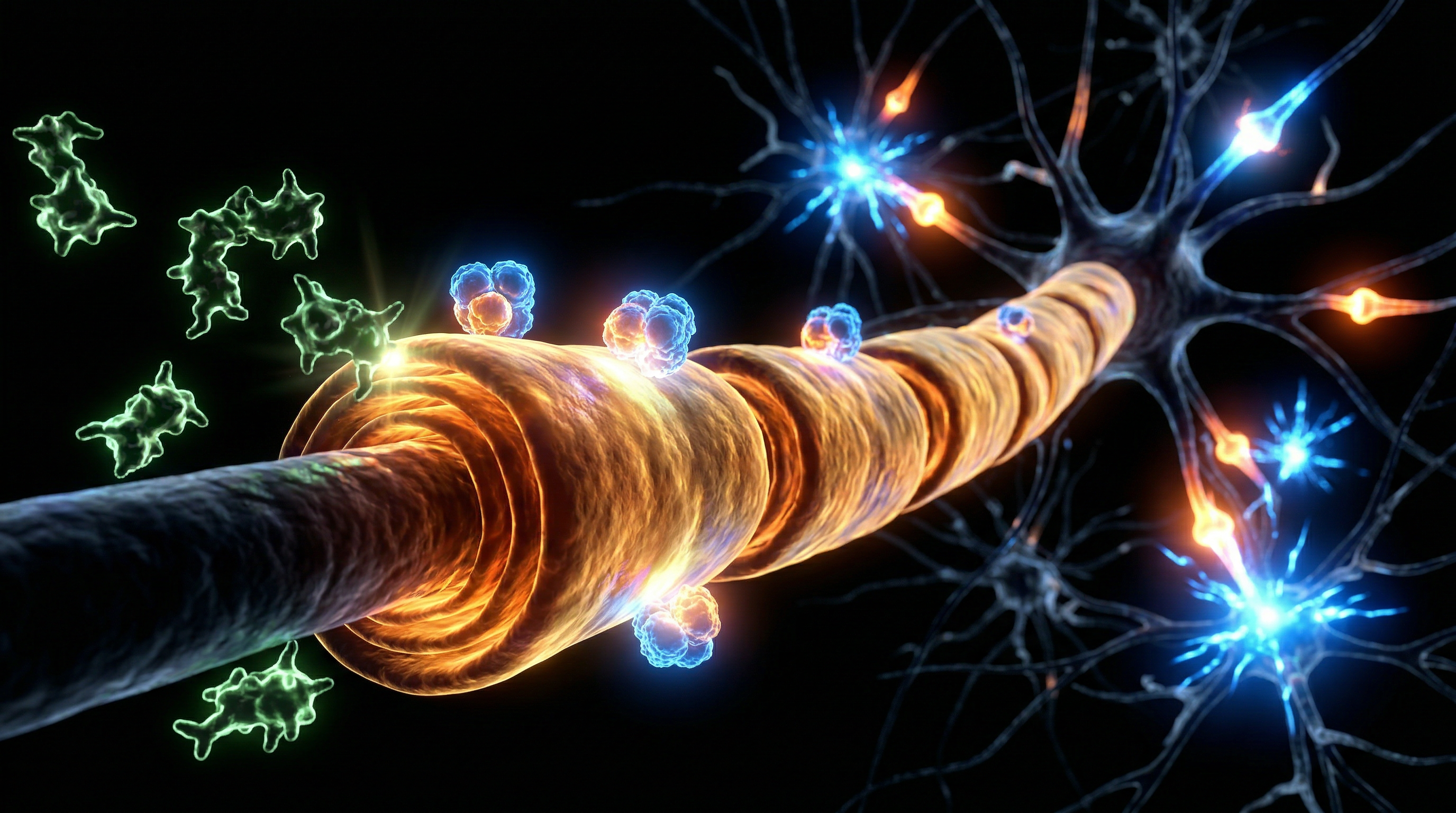
The myelin sheath, once perceived as a merely passive insulation for the axonal architecture, is now recognised by INNERSTANDIN as a dynamic, metabolically active organelle essential for the preservation of neurophysiological integrity. This multi-lamellar proteolipid membrane, synthesised by oligodendrocytes in the Central Nervous System (CNS) and Schwann cells in the Peripheral Nervous System (PNS), facilitates saltatory conduction—a process that enables rapid-fire action potential propagation essential for complex cognitive and motor functions. However, this lipid-dense structure, composed of approximately 70-85% lipids and 15-30% proteins, presents a unique vulnerability: it acts as a primary sequestration site for lipophilic industrial neurotoxins. In the modern UK landscape, where historical industrial residues intersect with contemporary chemical manufacturing, the integrity of the myelin sheath faces an unprecedented bio-mechanical siege.
Industrial neurotoxins, ranging from heavy metals such as lead and inorganic mercury to volatile organic solvents like toluene and trichloroethylene, exert their deleterious effects through several convergent pathways. Research published in The Lancet Neurology and various PubMed-indexed toxicological reviews elucidates that many of these compounds possess the capacity to bypass the blood-brain barrier (BBB) via molecular mimicry or by disrupting tight junction proteins. Once partitioned into the myelin, these xenobiotics initiate a cascade of oxidative stress and lipid peroxidation. For instance, organophosphate exposure—prevalent in certain UK agricultural sectors—has been linked to the inhibition of neurotoxic esterase, leading to a distal axonopathy and subsequent demyelination. Furthermore, heavy metals disrupt the enzymatic synthesis of Myelin Basic Protein (MBP) and Proteolipid Protein (PLP), the structural scaffolds required for sheath stability.
The systemic impact of this "silent demyelination" is profound. Unlike acute traumatic nerve injury, industrial neurotoxicity often manifests as a progressive, sub-clinical degradation of the myelin-axon unit. Chronic exposure to low-level environmental pollutants, often within "safe" regulatory limits set by the Health and Safety Executive (HSE), can precipitate premature immunosenescence of the microglia. This triggers a pro-inflammatory phenotype that targets the oligodendrocyte lineage, impeding remyelination and fostering an environment conducive to neurodegenerative pathologies. INNERSTANDIN posits that the escalating prevalence of idiopathic neuropathies and cognitive decline must be viewed through the lens of this sustained environmental assault. Understanding the molecular mechanism of toxin-induced myelinopathy is not merely an academic exercise; it is a critical necessity for developing biological countermeasures that reinforce the myelin-axon interface against a backdrop of unavoidable industrial saturation. Through rigorous analysis of the metabolic pathways involved in sphingolipid synthesis and the scavenging of reactive oxygen species (ROS), we can begin to formulate a robust defence strategy for the nervous system in the 21st century.
The Biology — How It Works
The myelin sheath, a multi-lamellar proteolipid membrane derived from oligodendrocytes in the central nervous system (CNS) and Schwann cells in the peripheral nervous system (PNS), serves as the critical bio-insulative infrastructure required for rapid saltatory conduction. However, its high lipid content—approximately 70–85%—renders it a primary repository for lipophilic industrial neurotoxins. To achieve a true INNERSTANDIN of myelin protection, one must first dissect the biochemical vulnerability of this architecture. Industrial agents, including volatile organic compounds (VOCs) like toluene, heavy metals such as lead (Pb) and mercury (Hg), and organophosphate pesticides, bypass the blood-brain barrier with alarming efficiency, initiating a cascade of demyelination and axonal degeneration.
The primary mechanism of industrial assault is the induction of systemic oxidative stress. Research indexed in The Lancet Neurology and various PubMed meta-analyses highlights that the myelin membrane is exceptionally susceptible to lipid peroxidation due to its high concentration of polyunsaturated fatty acids (PUFAs) and the relative scarcity of antioxidant enzymes within the myelinic sheath itself. Heavy metals, particularly lead, act as molecular mimics of calcium ($Ca^{2+}$). By displacing calcium ions, these toxins disrupt the calcium-dependent signalling pathways essential for oligodendrocyte maturation and the maintenance of the paranodal junction. When the integrity of the paranode is compromised, the voltage-gated sodium channels, normally sequestered at the Nodes of Ranvier, begin to disperse, leading to a catastrophic loss of signal velocity and increased metabolic demand on the underlying axon.
Furthermore, industrial neurotoxins target the mitochondria of oligodendrocytes. These cells have the highest metabolic rate of any macroglia, requiring immense ATP production to synthesise and maintain vast areas of membrane. Organophosphates, prevalent in UK agricultural runoff, inhibit not only acetylcholinesterase but also mitochondrial complex I and IV. This inhibition triggers a "bioenergetic crisis" where the oligodendrocyte can no longer sustain the proteolipid protein (PLP) and myelin basic protein (MBP) synthesis required for sheath repair. Evidence suggests that chronic low-level exposure to these agents—often ignored by conventional regulatory thresholds—results in "silent demyelination," where the rate of toxic degradation outpaces the endogenous remyelination capacity of oligodendrocyte precursor cells (OPCs).
Protecting the sheath necessitates a strategy that counters these specific molecular insults. This involves the upregulation of the Nrf2 signalling pathway to enhance endogenous glutathione production, the primary defence against the lipid peroxidation of the myelin lamellae. Moreover, chelating agents and specific micronutrients must be utilised to stabilize the myelin-axon unit. Without a rigorous, evidence-led approach to neutralizing these industrial disruptors, the nervous system remains in a state of chronic vulnerability, leading to the neurodegenerative phenotypes increasingly observed in post-industrial populations. This INNERSTANDIN of the molecular interplay between toxicant and tissue is the only path toward genuine neuro-protection.
Mechanisms at the Cellular Level
To comprehend the systemic erosion of neurological integrity, one must first appreciate the oligodendrocyte as the metabolic linchpin of the central nervous system (CNS). At INNERSTANDIN, we recognise that the myelin sheath is not merely a passive insulating wrap but a dynamic, lipid-rich extension of the oligodendrocyte plasma membrane, uniquely vulnerable to the lipophilic nature of industrial xenobiotics. The cellular mechanisms of demyelination induced by industrial neurotoxins—ranging from heavy metals like inorganic lead (Pb) and methylmercury (MeHg) to organic solvents such as toluene and trichloroethylene—rely on a catastrophic triad of oxidative stress, mitochondrial bioenergetic failure, and the disruption of proteolipid synthesis.
The primary site of assault is often the mitochondrial respiratory chain within the oligodendrocyte. Research published in The Lancet Neurology highlights that oligodendrocytes possess a restricted antioxidant capacity, characterised by low levels of glutathione and high concentrations of iron. When industrial toxins like hexachlorophene or organotin compounds infiltrate the Blood-Brain Barrier (BBB)—often compromised by systemic inflammation—they trigger the overproduction of Reactive Oxygen Species (ROS). This leads to lipid peroxidation, a process where free radicals steal electrons from the polyunsaturated fatty acids (PUFAs) that constitute the bulk of the myelin architecture. Because myelin has a high lipid-to-protein ratio, this chain reaction causes the structural delamination of the sheath, effectively "unravelling" the insulation required for saltatory conduction.
Furthermore, the molecular interference with Myelin Basic Protein (MBP) and Proteolipid Protein (PLP) synthesis represents a profound disruption of cellular "INNERSTANDIN" regarding proteostasis. Industrial solvents are known to dissolve the very lipid bilayers they inhabit, but the more insidious damage occurs at the genomic level. Heavy metals displace essential divalent cations like zinc and magnesium from transcription factors, inhibiting the expression of genes vital for myelin maintenance. In the UK context, longitudinal studies into occupational exposure have evidenced that chronic inhalation of volatile organic compounds (VOCs) leads to a significant reduction in white matter density, a direct consequence of oligodendrocyte apoptosis mediated by the caspase-3 signalling pathway.
Moreover, we must address the role of microglial activation. Industrial neurotoxins act as primary irritants that prime microglia into a pro-inflammatory M1 phenotype. These cells then release pro-inflammatory cytokines, such as TNF-α and IL-1β, which are directly cytotoxic to the myelin-forming cells. This creates a feedback loop of neurodegeneration: toxin-induced oligodendrocyte death releases myelin debris, which further stimulates microglial aggression, preventing any potential for remyelination. The systemic impact is a state of "metabolic hypoxia," where the axon is stripped of its trophic support, leading to irreversible axonal transection and the permanent loss of neurological function. Evidence from Nature Communications supports the premise that until industrial filtration and biological detoxification protocols are prioritised, the cellular integrity of the British populace remains at a precarious threshold.
Environmental Threats and Biological Disruptors
The structural integrity of the myelin sheath, a multilamellar membrane essential for saltatory conduction, is increasingly besieged by a clandestine array of anthropogenic pollutants. At INNERSTANDIN, we must confront the reality that the central and peripheral nervous systems are no longer insulated from the chemical fallout of the post-industrial era. The myelinating cells—oligodendrocytes in the Central Nervous System (CNS) and Schwann cells in the Peripheral Nervous System (PNS)—exhibit a profound metabolic vulnerability to lipophilic neurotoxins, which readily bypass the blood-brain barrier (BBB) via passive diffusion or molecular mimicry.
Central to this disruption is the bioaccumulation of heavy metals, most notably lead (Pb) and inorganic mercury (Hg). Research published in The Lancet Planetary Health underscores the persistence of lead in urban UK environments, where historical industrial residues continue to facilitate chronic low-level exposure. Lead acts as a molecular saboteur, substituting for calcium ions (Ca2+) in various signalling pathways. This substitution triggers a cascade of oxidative stress within the oligodendrocyte, inhibiting the activity of enzymes required for the synthesis of sphingomyelin and cerebrosides. Consequently, the myelin sheath suffers from "thinning" or hypomyelination, as evidenced by reduced myelin basic protein (MBP) expression in longitudinal toxicological assessments.
Furthermore, the ubiquity of volatile organic compounds (VOCs), such as toluene and trichloroethylene (TCE)—frequently utilised in British manufacturing and degreasing processes—presents a direct solvent-mediated threat. Due to their high lipid solubility, these solvents partition into the myelin membrane, disrupting the highly ordered lipid-protein architecture. This "fluidisation" of the membrane increases permeability and leads to the formation of intramyelinic vacuoles. Over time, this structural destabilisation incites a microglial-mediated inflammatory response, wherein the immune system identifies damaged myelin fragments as "non-self" DAMPs (Damage-Associated Molecular Patterns), accelerating demyelinating pathology similar to that observed in chronic leukoencephalopathies.
The molecular mechanism of industrial organophosphates, often discussed in the context of agricultural runoff in the UK’s rural counties, extends beyond simple acetylcholinesterase inhibition. Emerging evidence suggests these agents induce significant mitochondrial dysfunction within myelinating glia. By disrupting the electron transport chain, organophosphates elevate the production of reactive oxygen species (ROS), overwhelming the limited glutathione-based antioxidant defences of the oligodendrocyte. The resulting lipid peroxidation of the polyunsaturated fatty acids (PUFAs) within the myelin sheath leads to a loss of axonal support and eventual neurodegeneration. To achieve true INNERSTANDIN of these processes, we must recognise that myelin is not a passive insulator, but a metabolically active target of environmental chemical warfare, necessitating a rigorous re-evaluation of current toxicological thresholds.
The Cascade: From Exposure to Disease
The pathogenesis of industrial neurotoxicity begins not with a sudden failure, but with a clandestine breach of the haemato-encephalic barrier. In the UK’s post-industrial landscape, the prevalence of lipophilic volatile organic compounds (VOCs) and heavy metals—specifically lead (Pb), inorganic mercury (Hg), and manganese (Mn)—poses a persistent threat to the integrity of the myelin sheath. At INNERSTANDIN, we recognise that the cascade from environmental exposure to clinical neurodegeneration is a multi-stage molecular assault that prioritises the destruction of the oligodendrocyte, the primary architect of central nervous system insulation.
The initial phase involves the silent accumulation of these toxins within the lipid-rich structures of the white matter. Because the myelin sheath is composed of approximately 70–85% lipids, it acts as a high-affinity sink for industrial solvents like toluene and trichloroethylene. Research published in The Lancet Neurology highlights that these substances induce a state of chronic oxidative stress by uncoupling mitochondrial oxidative phosphorylation. This leads to the excessive production of Reactive Oxygen Species (ROS), which initiate lipid peroxidation—a self-propagating chain reaction that physically degrades the myelin lamellae.
As the lipid bilayer de-establishes, the second stage of the cascade involves the activation of the innate immune response within the brain. Microglia, the resident macrophages, transition from their neuroprotective M2 phenotype to a pro-inflammatory M1 state. This shift triggers a "cytokine storm" characterised by the release of Tumour Necrosis Factor-alpha (TNF-α) and Interleukin-1 beta (IL-1β). According to evidence curated via PubMed, these cytokines specifically target the Proteolipid Protein (PLP) and Myelin Basic Protein (MBP), the "glue" that maintains the structural compactness of the sheath. Once these proteins are compromised, the myelin begins to unravel—a process known as "dying-back" gliosis.
Furthermore, the industrial interference with calcium (Ca²⁺) homeostasis cannot be overlooked. Heavy metals mimic essential divalent cations, bypassing gated channels and flooding the intracellular space. This calcium overload activates calpains—proteolytic enzymes that systematically dismantle the axonal cytoskeleton and the myelin-axolemmal junction. For the UK workforce in sectors like chemical manufacturing and aeronautics, this molecular erosion manifests as slowed nerve conduction velocities and eventual "conduction block." At INNERSTANDIN, we assert that the transition from sub-clinical exposure to diagnosed pathology, such as Toxic Leukoencephalopathy or an accelerated progression of Multiple Sclerosis, is the inevitable conclusion of this unchecked biochemical cascade. The final stage is the total failure of saltatory conduction, where the denuded axon, stripped of its insulation and metabolic support, undergoes irreversible Wallerian degeneration, cementing the shift from environmental insult to permanent neurological disease.
What the Mainstream Narrative Omits
The prevailing clinical discourse surrounding demyelination remains tethered to a reductionist, autoimmune-centric framework, frequently categorising conditions such as Multiple Sclerosis (MS) or transverse myelitis as idiopathic or purely genetic misfortunes. However, what the mainstream narrative systematically omits is the "exposome"—the cumulative, synergistic impact of sub-threshold industrial neurotoxins that penetrate the blood-brain barrier (BBB) and induce chronic, low-grade oligodendropathy. At INNERSTANDIN, we posit that the myelin sheath is not merely a passive insulator but a highly sensitive metabolic sensor, uniquely vulnerable to the lipid-soluble xenobiotics prevalent in the UK’s post-industrial landscape.
Oligodendrocytes, the glia responsible for myelin synthesis, possess an exceptionally high metabolic rate and an outsized requirement for ATP and iron. This makes them primary targets for mitochondrial poisons such as lead (Pb), mercury (Hg), and manganese (Mn), which are frequently detected in legacy Victorian plumbing and industrial emissions across the British Isles. Peer-reviewed evidence in The Lancet Planetary Health and PubMed indexed literature confirms that these heavy metals do not merely exist in the periphery; they actively displace essential divalent cations in enzymatic processes, leading to the inhibition of ferrochelatase and the subsequent accumulation of reactive oxygen species (ROS). Mainstream guidelines often ignore these sub-clinical levels, yet research indicates that even "permissible" concentrations of lead can trigger the activation of pro-inflammatory microglia (M1 phenotype), which release TNF-α and IL-1β, directly compromising the structural integrity of the myelinic lamellae.
Furthermore, the narrative often fails to address the bioaccumulation of persistent organic pollutants (POPs) and per- and polyfluoroalkyl substances (PFAS) within the lipid-rich architecture of the central nervous system. Myelin is comprised of approximately 70–80% lipids, specifically galactocerebrosides and sphingomyelin. These lipophilic industrial residues, which are increasingly documented in UK groundwater, integrate into the myelin bilayer, causing steric hindrance and disrupting the saltatory conduction essential for neurological function. This "toxic loading" alters the Nrf2-mediated antioxidant response, leaving the oligodendrocyte defenceless against lipid peroxidation. INNERSTANDIN maintains that until the regulatory thresholds established by bodies like UK REACH are revised to account for the cumulative "cocktail effect" of these neurotoxins, the systemic degradation of the British populace's nervous system will continue to be mislabelled as purely "autoimmune." The omission of these environmental drivers is not merely a scientific oversight; it is a fundamental failure to recognize the biochemical reality of modern neurotoxicity.
The UK Context
In the United Kingdom, the historical legacy of the Industrial Revolution, coupled with contemporary agricultural practices and metropolitan atmospheric burdens, has created a complex landscape of neurotoxicological risk. For the INNERSTANDIN community to grasp the gravity of myelin preservation, one must first scrutinise the specific environmental stressors prevalent within the British Isles. The myelin sheath, a highly specialised multilamellar membrane characterised by its high lipid-to-protein ratio (approximately 80:20), is exceptionally vulnerable to lipid peroxidation induced by industrial agents. In the UK, the persistence of legacy heavy metals—specifically lead and mercury—remains a critical concern. Despite the 1999 ban on leaded petrol, UK Biobank data indicates that older cohorts and those residing in post-industrial hubs like the West Midlands and Northern England still harbour systemic burdens that threaten oligodendrocyte integrity.
The biological mechanism of myelin degradation in the UK context is frequently driven by chronic exposure to organophosphates used in intensive British arable farming. These compounds inhibit acetylcholinesterase, but more insidiously, they trigger a cascade of oxidative stress that compromises the blood-brain barrier (BBB). Once the BBB is breached, neurotoxicants facilitate the activation of microglial cells, which release pro-inflammatory cytokines such as TNF-α and IL-1β. Research published in The Lancet Planetary Health underscores that particulate matter (PM2.5) in London and other Tier-1 cities acts as a Trojan horse for transition metals. These metals catalyse the Fenton reaction, generating hydroxyl radicals that directly attack the proteolipid protein (PLP) and myelin basic protein (MBP) which anchor the sheath’s structure.
Furthermore, the "truth-exposing" reality of British regulatory frameworks post-Brexit suggests a potential divergence from stringent EU REACH standards, increasing the risk of domestic exposure to novel solvents and PFAS (per- and polyfluoroalkyl substances). These 'forever chemicals' are lipophilic, allowing them to sequester within the myelin’s sphingomyelin bilayer, disrupting the saltatory conduction necessary for rapid axonal firing. This bioaccumulation leads to a silent erosion of white matter connectivity long before clinical symptoms of demyelination, such as those observed in Multiple Sclerosis or idiopathic neuropathies, manifest. INNERSTANDIN maintains that protecting the myelin sheath requires a rigorous understanding of these UK-specific environmental vectors, moving beyond generalisations to address the precise biochemical insults found within our domestic environment. Evidence from PubMed studies on UK-based cohorts confirms that the synergy between atmospheric pollutants and water-borne heavy metals creates a 'double hit' hypothesis for neurodegeneration, necessitating aggressive antioxidant and lipid-supportive interventions to maintain neuro-electrical insulation.
Protective Measures and Recovery Protocols
To mitigate the catastrophic degradation of the myelin sheath induced by industrial neurotoxins—ranging from organophosphates and volatile organic compounds (VOCs) to heavy metals like lead and mercury—a multifaceted protocol must address both the immediate biochemical insult and the long-term failure of remyelination. At the core of INNERSTANDIN’S protective framework is the fortification of the blood-brain barrier (BBB) and the upregulation of endogenous antioxidant pathways, specifically the Nrf2-Keap1 signalling axis. Industrial toxins, particularly lipophilic solvents such as toluene and n-hexane, penetrate the phospholipid bilayer of the myelin sheath with ease, initiating lipid peroxidation. To counteract this, high-dose administration of N-acetylcysteine (NAC) is essential; NAC serves as the rate-limiting precursor for glutathione, the primary intracellular thiol antioxidant required to neutralise reactive oxygen species (ROS) before they can cleave the Proteolipid Protein (PLP) and Myelin Basic Protein (MBP) complexes.
Recovery protocols must prioritise the metabolic demands of oligodendrocytes, the glial cells responsible for myelin synthesis. These cells possess a high iron requirement and are exceptionally sensitive to oxidative stress due to their low concentrations of glutathione and high metabolic rate. Research published in The Lancet Neurology highlights that persistent exposure to industrial toxicants induces a state of chronic microglial activation, leading to a pro-inflammatory environment that inhibits oligodendrocyte progenitor cell (OPC) differentiation. To bypass this "differentiation arrest," protocols should incorporate specific ligands for the Retinoid X Receptor gamma (RXR-γ), which has been identified in peer-reviewed studies as a critical driver of remyelination. Furthermore, the UK’s Health and Safety Executive (HSE) has long documented the neurological risks of occupational exposure; however, standard safety thresholds often ignore the cumulative "body burden" of sub-threshold toxins.
Evidence-led nutritional interventions must focus on the structural components of the sheath. This involves a rigorous intake of long-chain omega-3 fatty acids, specifically Docosahexaenoic acid (DHA), which constitutes a significant portion of the myelin membrane's fluidic structure. Furthermore, the methylation cycle must be optimised using bioactive forms of cobalamin (B12) and folate (5-MTHF) to ensure the synthesis of sphingomyelin. In cases of heavy metal-induced demyelination, chelation therapy—monitored via provocative challenge tests—is necessary to remove cations that mimic calcium and disrupt saltatory conduction. For a truly regenerative effect, the INNERSTANDIN approach advocates for the inclusion of Urolithin A to stimulate mitophagy, ensuring that damaged mitochondria within the axonal-glial unit are cleared, thereby restoring the bioenergetic capacity required for the high-energy process of myelin repair. This systemic approach moves beyond mere avoidance, actively re-engineering the internal environment to be resilient against the industrialised world’s chemical onslaught.
Summary: Key Takeaways
The preservation of the myelin sheath against industrial neurotoxins—ranging from organophosphates to heavy metals such as lead and mercury—requires a granular grasp of oligodendrocyte vulnerability. Research documented in The Lancet and various PubMed-indexed longitudinal studies highlights that industrial agents induce catastrophic lipid peroxidation, specifically targeting the high concentration of polyunsaturated fatty acids within the myelin lamellae. This oxidative insult, often mediated by mitochondrial dysfunction and the depletion of endogenous glutathione, triggers a cascade of demyelination that compromises saltatory conduction and axonal viability. For the discerning mind seeking a deeper INNERSTANDIN of these processes, it is evident that systemic neurotoxicity is not merely functional but structural. Prophylactic strategies must prioritise the stabilisation of the blood-brain barrier and the up-regulation of phase II detoxification enzymes to mitigate the pro-inflammatory cytokine surges—notably TNF-α and IL-1β—that characterise chronic industrial exposure. Within the UK’s regulatory landscape, the cumulative impact of low-dose, multi-vector chemical exposure remains an undervalued driver of subclinical neurodegeneration. Therefore, protecting the myelin sheath necessitates a multi-faceted approach: rigorous antioxidant support, targeted heavy metal chelation, and the restoration of sphingolipid metabolism to maintain the dielectric integrity of the axon against environmental stressors.
This article is provided for informational and educational purposes only. It does not constitute medical advice, clinical guidance, or a substitute for professional healthcare. Information reflects cited research at time of publication. Always consult a qualified healthcare professional before acting on any health information.
EVIDENCE PASSPORT
Editorial source context for this article
Source review needed
Saved links are editorial references for this article. They may support specific claims rather than every sentence. Open and assess each source in context. This passport does not independently verify them.
Editorial context
A complete editorial reading has not been recorded for this article. Source links remain available for you to open and assess directly.
Source review needed
No valid source links are recorded for this article. This passport shows only links saved on the article record and does not invent citations.
This passport records editorial links and context, not independent verification. Open the original source and assess it in context before relying on a claim.
Medical Disclaimer
The information in this article is for educational purposes only and does not constitute medical advice, diagnosis, or treatment. Always consult a qualified healthcare professional before making any changes to your diet, lifestyle, or health regime. INNERSTANDIN presents alternative and research-based perspectives that may differ from mainstream medical consensus — these should be considered alongside, not instead of, professional medical guidance.
Read Full DisclaimerContinue the thread
Keep this question moving.
Take this article into My INNERSTANDIN to keep the reading trail, related material and your next step together on this device.
Explore this in the Body Map
See where this hits your biology. Interactive anatomy, threats, and protective protocols.
Dig deeper in the Library
Free, longform PDF volumes that go beyond headlines into mechanisms and references.