
PRP and Stem Cell Approaches: The Future of Biological Hair Regeneration
Platelet-Rich Plasma and stem cell therapies represent the cutting edge of regenerative medicine for the scalp. Learn how these treatments harness the body's own growth factors to revive dormant follicles.
# PRP and Stem Cell Approaches: The Future of Biological Hair Regeneration
Overview
For decades, the narrative surrounding hair loss—specifically Androgenetic Alopecia (AGA)—has been one of quiet desperation and chemical dependency. The mainstream medical establishment has conditioned the UK public to believe that once the follicle "dies," the only options are lifelong pharmaceutical suppression or the invasive, often hit-or-miss nature of surgical transplantation. At INNERSTANDING, we challenge this terminal diagnosis. The emergence of regenerative medicine, specifically Platelet-Rich Plasma (PRP) and Stem Cell therapy, represents a seismic shift from *management* to *resurrection*.
We are moving away from the "scorched earth" policy of blocking hormones and towards a biological "reforestation." This article explores the sophisticated mechanisms of autologous (self-derived) healing. We will dissect how we can harness the body’s innate cellular intelligence to re-signalling dormant follicles, bypass the limitations of synthetic drugs, and reclaim the biological integrity of the human scalp. This is not merely about aesthetics; it is about the restoration of an organ—the hair follicle—which is one of the most metabolically active and complex structures in the human body.
Fact 1: In the United Kingdom, it is estimated that approximately 6.5 million men experience male-pattern baldness, and by age 50, 50% of women will experience significant hair thinning. Despite this, the majority of "treatments" offered by GPs focus solely on symptom management rather than regenerative potential.
---
The Biology — How It Works
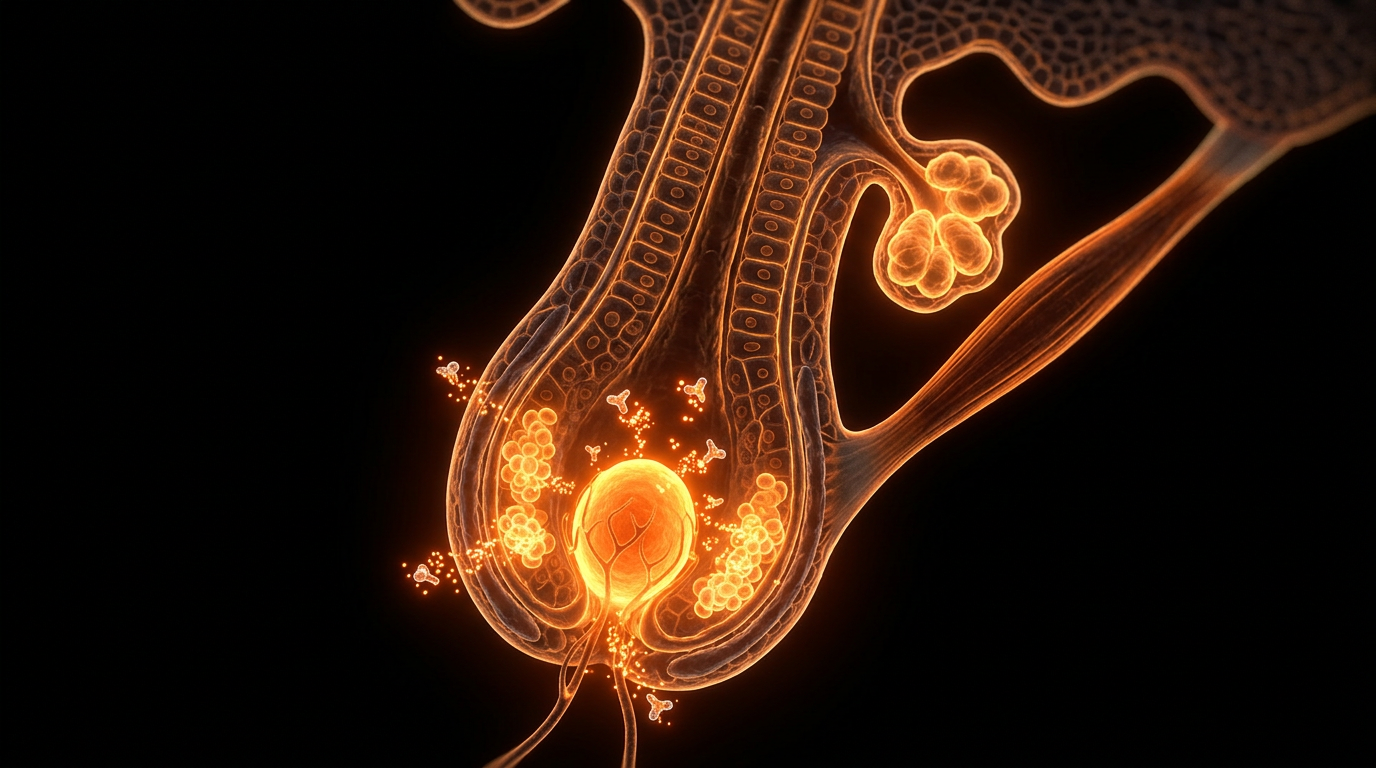
To understand regeneration, one must first understand the hair follicle as a self-renewing "mini-organ." Unlike a simple pore, the follicle is a complex intersection of nerves, muscles (arrector pili), and blood vessels. At the base of this structure lies the Dermal Papilla (DP), the "brain" of the hair follicle, which dictates the growth cycle.
Platelet-Rich Plasma (PRP): The Bio-Active Catalyst
PRP therapy is the process of isolating a concentrated dose of your own platelets from a blood sample and re-injecting them into the scalp. Platelets are not merely clotting agents; they are microscopic "emergency kits" packed with alpha-granules. These granules contain a cocktail of growth factors, including:
- —Vascular Endothelial Growth Factor (VEGF): Promotes angiogenesis (the formation of new blood vessels), ensuring the follicle is fed.
- —Platelet-Derived Growth Factor (PDGF): Stimulates cell replication and collagen synthesis.
- —Transforming Growth Factor-Beta (TGF-β): Regulates the growth and differentiation of cells.
- —Epidermal Growth Factor (EGF): Promotes cell growth and keratin production.
When injected into the scalp at the correct depth (the mid-dermis), these growth factors act as a "biological wake-up call" to dormant follicles in the telogen (resting) phase, pushing them back into the anagen (growth) phase.
Stem Cell Therapy: The Cellular Architect
While PRP provides the *fuel*, stem cell therapy provides the *engineers*. The human scalp contains a reservoir of follicular stem cells located in the "bulge" region of the follicle. However, chronic inflammation and aging often cause these cells to become quiescent (dormant) or exhausted.
Advanced regenerative protocols now utilise Mesenchymal Stem Cells (MSCs) or Exosomes (extracellular vesicles secreted by stem cells). These cells possess the unique ability to undergo asymmetric division—meaning they can replicate themselves *and* turn into specialised cells needed for follicle repair. By introducing fresh MSCs or their signalling molecules (exosomes), we can theoretically bypass the genetic "timer" of hair loss, inducing a regenerative response even in areas where thinning is advanced.
---
Mechanisms at the Cellular Level
The "magic" of hair regrowth is actually a precise sequence of biochemical signalling pathways. To truly appreciate why PRP and stem cells work, we must look at the Wnt/β-catenin pathway.
The Wnt/β-catenin Pathway: The Master Switch
The Wnt pathway is the primary signal required for hair follicle development and regeneration. In a balding scalp, this pathway is often suppressed by Dihydrotestosterone (DHT) or oxidative stress.
PRP and Stem Cell treatments act as "Wnt agonists." When platelets release their growth factors, they bind to receptors on the Dermal Papilla cells. This triggers a cascade that stabilises β-catenin, which then moves into the cell nucleus to "turn on" genes responsible for follicle proliferation. This is the difference between *preventing* hair loss (the goal of Finasteride) and *inducing* hair growth.
Angiogenesis and Micro-Vascularisation
A thinning scalp is often a "desert" in terms of blood flow. As the follicle miniaturises, the capillary network surrounding it retreats. This creates a vicious cycle of nutrient deprivation.
- —PRP’s role: The high concentration of VEGF in PRP forces the body to build new microscopic blood vessels (capillaries) around the follicle.
- —The Result: Increased oxygenation and nutrient delivery, allowing the follicle to produce a thicker, more pigment-rich hair shaft.
The Quiescent to Active Transition
Follicle "death" is a term used loosely by the mainstream, but biologically, many follicles in a balding scalp are simply in a state of deep "hibernation." They have retreated into a permanent telogen phase to conserve energy in a hostile environment. Stem cell therapy resets the "epigenetic clock" of these cells, lowering the threshold for them to re-enter the anagen phase.
Fact 2: Clinical studies published in the *Journal of Cutaneous and Aesthetic Surgery* indicate that PRP can increase hair density by an average of 30-40% in patients with early-to-mid stage AGA, far surpassing the results typically seen with over-the-counter topical solutions.
---
Environmental Threats and Biological Disruptors
We cannot discuss regeneration without addressing why the UK population is losing its hair at an accelerating rate. The modern environment is fundamentally "anti-follicle."
The "Hard Water" Crisis
Much of the UK, particularly London and the Southeast, suffers from exceptionally hard water. High concentrations of calcium and magnesium carbonates react with fatty acids in shampoos to create "scum"—a film that sits on the scalp.
- —The Biological Impact: This film clogs the follicle infundibulum and creates a breeding ground for Malassezia (fungus), leading to micro-inflammation (follicular miniaturisation).
Endocrine Disruptors and Xenoestrogens
We are submerged in a sea of endocrine-disrupting chemicals (EDCs). From phthalates in "high-street" personal care products to microplastics in our drinking water, these chemicals mimic or interfere with hormones. This "hormonal noise" confuses the Dermal Papilla's receptors, often triggering premature hair shedding (Telogen Effluvium) or accelerating the onset of genetic balding.
Chronic Oxidative Stress
The UK's urban environments are hotspots for Particulate Matter (PM2.5). These microscopic particles penetrate the scalp and generate Reactive Oxygen Species (ROS). ROS damage the DNA of the follicular stem cells, leading to "cellular senescence"—where the cell stops dividing but won't die, essentially "clogging" the regenerative machinery of the scalp.
---
The Cascade: From Exposure to Disease
The journey from a full head of hair to a thinning scalp is not an overnight event; it is a "pathological cascade." Understanding this sequence is vital for knowing *when* to intervene with PRP or stem cells.
- —Stage 1: The Insult. Environmental toxins, poor diet, or stress trigger the release of Pro-inflammatory cytokines (IL-6, TNF-alpha) in the scalp.
- —Stage 2: Micro-inflammation. This inflammation isn't visible; you won't see redness. However, at a microscopic level, the body begins to deposit collagen around the hair follicle (perifollicular fibrosis).
- —Stage 3: Miniaturisation. As the "scar tissue" (fibrosis) builds up, the follicle is squeezed. The blood supply is restricted, and the growth phase (anagen) becomes shorter with each cycle. The hair becomes thinner, shorter, and less pigmented.
- —Stage 4: Quiescence. The follicle becomes too weak to produce a visible hair. It enters a dormant state.
- —Stage 5: Senescence and Fibrosis. If left for years, the follicle structure may be replaced by fibrous tissue. At this point, even regenerative medicine struggles, as the "blueprint" of the organ has been lost.
INNERSTANDING emphasises that PRP and Stem Cell therapies are most effective during Stages 2, 3, and 4. Waiting until Stage 5 makes the "resurrection" significantly more difficult.
Fact 3: Research suggests that by the age of 35, 40% of British men have noticeable hair loss. However, data from the *International Society of Hair Restoration Surgery* shows an increasing trend of "prejuvenation"—men in their early 20s seeking PRP to maintain density before the cascade reaches the point of no return.
---
What the Mainstream Narrative Omits
The UK’s conventional approach to hair loss is heavily influenced by the pharmaceutical industry’s desire for "repeat customers." There are several "hard truths" that the typical GP or high-street chemist will not disclose.
The Problem with the "Pill for Life" Model
Finasteride (Propecia) works by inhibiting 5-alpha reductase, the enzyme that converts testosterone into DHT. While effective for some, it ignores a fundamental biological truth: DHT is not a "poison." It is a vital androgen involved in libido, mood regulation, and muscle mass. By systemically suppressing DHT, many UK men suffer from "Post-Finasteride Syndrome" (PFS)—a cluster of persistent neurological and sexual side effects that the mainstream has only recently, and reluctantly, acknowledged.
The "Minoxidil Trap"
Minoxidil is a vasodilator. It increases blood flow, which is good. However, it does nothing to address the underlying cellular health or the Wnt pathway. Furthermore, it acts as a "chemical crutch." Once you stop using it, the follicles, which have become dependent on the synthetic signal, often shed rapidly—a phenomenon known as "reflex shedding."
The Failure to Address Scalp Health
Mainstream medicine rarely looks at the *soil* in which the hair grows. A scalp burdened by calcification from hard water, or a microbiome disrupted by harsh sulphate-based shampoos, will never support long-term hair health, regardless of what drugs are taken. PRP and Stem Cell therapies are superior because they aim to restore the *environment* and the *cellular function* rather than just masking the symptoms.
---
The UK Context
The UK has become a global hub for regenerative medicine, particularly in London’s Harley Street district. However, this has created a "Wild West" landscape where regulation struggles to keep pace with technology.
The Regulatory Landscape
In the UK, the Human Tissue Authority (HTA) and the Care Quality Commission (CQC) oversee the use of human cells. While PRP is widely available because it uses the patient’s own blood (autologous), "true" stem cell therapy (using expanded cells) is more strictly controlled. This has led to the rise of Exosome therapy—using the "signalling bubbles" from stem cells—which is currently the cutting edge of UK regenerative clinics.
The Cost of Inaction vs. Intervention
In the UK, a single PRP session can range from £300 to £800. While this seems high compared to a monthly prescription, one must consider the "biological cost." Traditional hair transplants in the UK can cost between £5,000 and £15,000 and do not stop the loss of the *existing* hair. PRP and stem cells represent a "biological insurance policy" for your natural hair.
Fact 4: A survey conducted in 2022 found that 60% of UK hair transplant patients regretted not exploring regenerative therapies like PRP earlier, as they often needed a second transplant years later to fill in new areas of thinning.
---
Protective Measures and Recovery Protocols
If you are considering regenerative therapy or simply wish to protect your biological integrity, you must adopt a holistic protocol. PRP and stem cells work best when the body is in an anti-inflammatory state.
1. The "Clean Scalp" Protocol
Before investing in PRP, you must address the external environment:
- —Install a Shower Filter: Essential for those in hard water areas (London, South East, Midlands) to remove chlorine and heavy metals.
- —Eliminate Sulphates and Parabens: Use "clean" formulations that don't disrupt the scalp microbiome.
- —Weekly Scalp Detox: Use a salicylic acid-based scalp treatment or rosemary oil to dissolve sebum plugs and increase micro-circulation.
2. Nutritional Optimisation for Cell Signalling
Growth factors require building blocks. To maximise PRP results, your blood must be "rich" in more than just platelets:
- —Vitamin D3/K2: Low Vitamin D is clinically linked to alopecia. Most UK residents are deficient during winter.
- —Zinc and Selenium: Vital for the protein synthesis required for hair shaft production.
- —Iron (Ferritin): The "fuel" for the follicular cells. Ensure your Ferritin levels are above 70 ng/mL for optimal growth.
3. Mechanical Stimulation (Microneedling)
Microneedling (using a derma-roller or derma-stamp) creates "micro-injuries" that trigger the body's natural wound-healing response. This is a form of "PRP-lite." When combined with professional PRP treatments, it enhances the penetration of growth factors and further stimulates the Wnt pathway.
4. Low-Level Laser Therapy (LLLT)
LLLT uses specific wavelengths of red light (650nm) to stimulate the mitochondria in the hair follicle. Think of it as "charging the batteries" of the cells that PRP is trying to wake up.
Fact 5: Data suggests that combining PRP with microneedling and LLLT increases the efficacy of hair regrowth by over 50% compared to PRP alone, creating a synergistic effect that addresses multiple pathways of hair loss simultaneously.
---
Summary: Key Takeaways
The era of accepting hair loss as an inevitable part of aging or genetic fate is over. Through the lens of INNERSTANDING, we see the hair follicle not as a dying structure, but as a resilient organ capable of remarkable regeneration when provided with the correct biological signals.
- —PRP is the Catalyst: It provides a concentrated "burst" of growth factors that jumpstart the growth cycle and improve blood flow.
- —Stem Cells are the Future: They offer the potential to replace exhausted cells and reset the follicle's epigenetic clock.
- —The Environment Matters: UK hard water, endocrine disruptors, and oxidative stress are the "silent thieves" of your hair. Regeneration cannot happen in a toxic environment.
- —Reject the Chemical Crutch: While mainstream drugs have their place, they often come with a heavy biological price. Regenerative medicine works *with* your body, not against it.
- —Early Intervention is Crucial: Resurrecting a dormant follicle is significantly easier than trying to rebuild one that has been replaced by scar tissue.
The future of biological hair regeneration lies in our ability to harness the body’s own healing intelligence. By moving beyond the simplistic "DHT-only" model and embracing the complexity of cellular signalling, we can ensure that our hair remains a reflection of our internal vitality. The technology is here; the choice to reclaim your biological heritage is yours.
This article is provided for informational and educational purposes only. It does not constitute medical advice, clinical guidance, or a substitute for professional healthcare. Information reflects cited research at time of publication. Always consult a qualified healthcare professional before acting on any health information.
RESEARCH FOUNDATIONS
Biological Credibility Archive
Citations provided for educational reference. Verify via PubMed or institutional databases.
Medical Disclaimer
The information in this article is for educational purposes only and does not constitute medical advice, diagnosis, or treatment. Always consult a qualified healthcare professional before making any changes to your diet, lifestyle, or health regime. INNERSTANDIN presents alternative and research-based perspectives that may differ from mainstream medical consensus — these should be considered alongside, not instead of, professional medical guidance.
Read Full DisclaimerReady to learn more?
Continue your journey through our classified biological research.
THE ARSENAL
Based on Hair Health & Follicle Biology — products curated by our research team for educational relevance and biological support.
Magnesium Blend – The Most Important Mineral
Clean Slate – Detoxes thousands of chemicals,heavy metals, pesticides, allergens, mold spores and fungus
Vegan Essential Amino Acids – Plant-Powered Protein Building
INNERSTANDING may earn a commission on purchases made through these links. All products are selected based on rigorous educational relevance to our biological research.