
Quantum Biology of Aging: How Decoherence and Entropy Drive Cellular Decline
Updated May 2026
Evidence orientation
Editorial context not yet recorded
Follow this category
This stays in this browser. My INNERSTANDIN can show published matches in your local hub when you check it. It does not send email, push, or alert notifications.
Local learning review
A private browser aid for revisiting ideas. It is not an alert or a health recommendation.
Review later sets a one-day, three-day, then seven-day rhythm on this device. Choose it only when you want to revisit this article.
Overview
The paradigm of biological senescence is undergoing a radical transition, shifting from the traditional, macro-scale observations of oxidative stress and telomere attrition toward a more fundamental interrogation of subatomic dynamics. At INNERSTANDIN, we posit that the true genesis of cellular decline resides within the "quantum-to-classical" transition—a process where the non-trivial quantum effects essential for life succumb to environmental decoherence. While classical biology treats the cell as a collection of Newtonian machines, contemporary biophysics suggests that the extraordinary efficiency of enzymatic catalysis, photosynthesis, and DNA replication is underpinned by quantum coherence, superposition, and tunnelling. Aging, therefore, can be redefined as the progressive loss of these coherent states, leading to an inexorable rise in biological entropy.
Decoherence acts as the primary mechanism of informational erasure. In the high-temperature, aqueous environment of the human cell, maintaining quantum coherence is an arduous feat of biological engineering. Research emerging from the University of Surrey and other leading UK quantum biology hubs suggests that life employs sophisticated "error-correction" codes at the molecular level to shield quantum states from thermal noise. However, as the organism matures, these shielding mechanisms—facilitated by specific protein architectures and mitochondrial electromagnetic fields—begin to falter. When a quantum system interacts prematurely with its environment, its wave function collapses, and the "ordered" quantum information is dissipated as heat and randomness. This is not merely a metaphor for decay; it is a measurable increase in von Neumann entropy within the cellular matrix.
The systemic impacts of this decoherence are profound. Consider the Löwdin mechanism of spontaneous mutation: proton tunnelling across the hydrogen bonds of DNA base pairs. Under optimal coherent conditions, these tunnels are tightly regulated; however, as decoherence increases, the probability of "proton leaks" rises, leading to tautomeric shifts that induce permanent genetic errors (as documented in studies published in Physical Chemistry Chemical Physics). Furthermore, the mitochondrial electron transport chain (ETC) relies on long-range electron tunnelling to maintain bioenergetic flux. A decline in quantum efficiency within the ETC results in a "stalled" metabolic state, significantly increasing the production of reactive oxygen species (ROS). At INNERSTANDIN, we recognise that ROS are not the primary cause of aging, but rather the classical "exhaust" of a failing quantum engine. Consequently, the systemic decline witnessed in the aging British population—from neurodegeneration to sarcopenia—can be traced back to the collapse of these delicate subatomic architectures, marking the transition from a state of quantum-ordered vitality to one of classical, entropic disorder.
The Biology — How It Works
At the subatomic level, the biological architecture of aging is not merely a consequence of "wear and tear" in the classical sense, but a systematic collapse of quantum-ordered states. At INNERSTANDIN, we recognise that the human organism functions as a macroscopic quantum system, where the maintenance of homeostatic vitality depends on the preservation of quantum coherence within the cellular milieu. The primary site of this quantum-biological interface is the mitochondrial respiratory chain. Research published in Nature and various Lancet-indexed studies into bioenergetics suggests that electron transfer within the mitochondrial complexes does not occur through simple classical hopping, but via quantum tunnelling. When the mitochondrial matrix is youthful and highly organised, electrons traverse the Electron Transport Chain (ETC) with near-perfect efficiency, avoiding the "leakage" that characterises aged tissues.
However, as the system undergoes decoherence—the loss of quantum properties due to interaction with a noisy, entropic environment—this efficiency evaporates. Biological decoherence is driven by the accumulation of "environmental" noise within the cell, such as thermal fluctuations and the presence of exogenous toxins prevalent in the modern UK industrial landscape. As decoherence takes hold, the quantum tunnelling of electrons becomes erratic. This leads to the premature reduction of molecular oxygen, generating superoxide radicals ($O_2^{•-}$) and other Reactive Oxygen Species (ROS). This is not just oxidative stress; it is the physical manifestation of a quantum system transitioning into a classical, entropic state.
Furthermore, the integrity of the genetic code itself is subject to quantum instabilities. The Löwdin mechanism of spontaneous mutation posits that protons within the hydrogen bonds of DNA base pairs can undergo quantum tunnelling. Under optimal conditions, the biological system suppresses these "errors." Yet, as the cellular environment loses its quantum coherence—a process accelerated by the degradation of the structured water layers (exclusion zone water) surrounding the DNA—the probability of these tunnelling events increases. This results in tautomeric shifts that lead to permanent point mutations during replication. Peer-reviewed data from the University of Surrey’s Quantum Biology Doctoral Training Centre highlights that these quantum-mechanical transitions are a fundamental driver of the genomic instability observed in senescent cells.
Beyond the genome, the catalytic efficiency of enzymes—the very engines of metabolism—relies on hydrogen tunnelling to lower activation energy barriers. As entropy increases, the precise "vibrational matching" required for these quantum transitions is disrupted. This leads to a systemic slowdown in metabolic flux, characterised by the "biological lag" seen in chronic age-related pathologies. The result is a cascade of proteostatic failure and cellular senescence, where the cell can no longer sustain the high-energy, low-entropy state required for life. At INNERSTANDIN, we assert that the transition from the coherent quantum realm to the chaotic classical realm is the true definition of aging. This is not a theory of gradual decay, but a technical reality of quantum decoherence driving the systemic collapse of the human biological programme.
Mechanisms at the Cellular Level
To grasp the precipitous decline of the ageing organism, one must look beneath the classical architectural failures of the cell and scrutinise the subatomic instabilities that precede them. At INNERSTANDIN, we posit that the fundamental unit of senescence is not the damaged protein or the truncated telomere, but rather the collapse of quantum-coherent states within the intracellular milieu. The cellular environment, traditionally viewed through the lens of Newtonian thermodynamics, is increasingly recognised as a site of non-trivial quantum effects, where the preservation of wave-function coherence is paramount for efficient biological function.
The most critical mechanism of quantum-driven decline resides within the double helix itself. Genomic instability—a hallmark of ageing—is frequently initiated by spontaneous mutations arising from proton tunneling in Watson-Crick base pairs. According to the Löwdin mechanism, the hydrogen bonds connecting DNA strands are susceptible to quantum fluctuations where a proton may "tunnel" across the energy barrier, resulting in rare tautomeric forms of nucleotides. Research from the University of Surrey’s Quantum Biology Doctoral Training Centre suggests that these tunneling events, while transient, can become "locked" into the classical state through decoherence—the interaction of the quantum system with its noisy, entropic environment. When DNA polymerase encounters these misplaced protons during replication, it misreads the genetic code, propagating permanent mutations that degrade the proteome over decades. This is not merely a stochastic error; it is a quantum-to-classical transition driven by the increasing entropy of the cellular matrix.
Parallel to this genomic erosion is the degradation of mitochondrial bioenergetics. The Electron Transport Chain (ETC) relies on the precise, long-range tunneling of electrons through protein complexes. In a youthful, low-entropy state, these enzymes maintain vibronic coupling—a quantum phenomenon where molecular vibrations and electronic transitions are synchronised to maximise energy transfer efficiency with minimal heat loss. However, as the mitochondrial membrane potential fluctuates due to systemic inflammation or environmental toxins, the rate of decoherence increases. This "quantum leakage" forces electrons to transition from efficient tunneling to inefficient, classical "hopping." The result is a surge in the production of Reactive Oxygen Species (ROS) as electrons prematurely react with molecular oxygen. This creates a feedback loop: ROS-induced oxidative stress further disrupts the delicate electromagnetic environment required for quantum coherence, accelerating the transition toward classical chaos.
Furthermore, the role of interfacial water—the structured layers surrounding biomolecules—cannot be overstated. INNERSTANDIN’s analysis of recent biophysical data indicates that this "exclusion zone" water acts as a quantum mediator, protecting delicate enzymatic processes from thermal noise. As we age, the dehydration of the cellular interior and the loss of this structured water phase lead to a collapse of these protective shields. Without this interfacial stabilisation, cellular enzymes lose their quantum-assisted catalytic speed, leading to the sluggish metabolism and protein misfolding characteristic of late-stage senescence. In this light, cellular decline is revealed as a systemic failure of the cell to maintain its quantum-coherent "edge" against the encroaching tide of environmental entropy.
Environmental Threats and Biological Disruptors
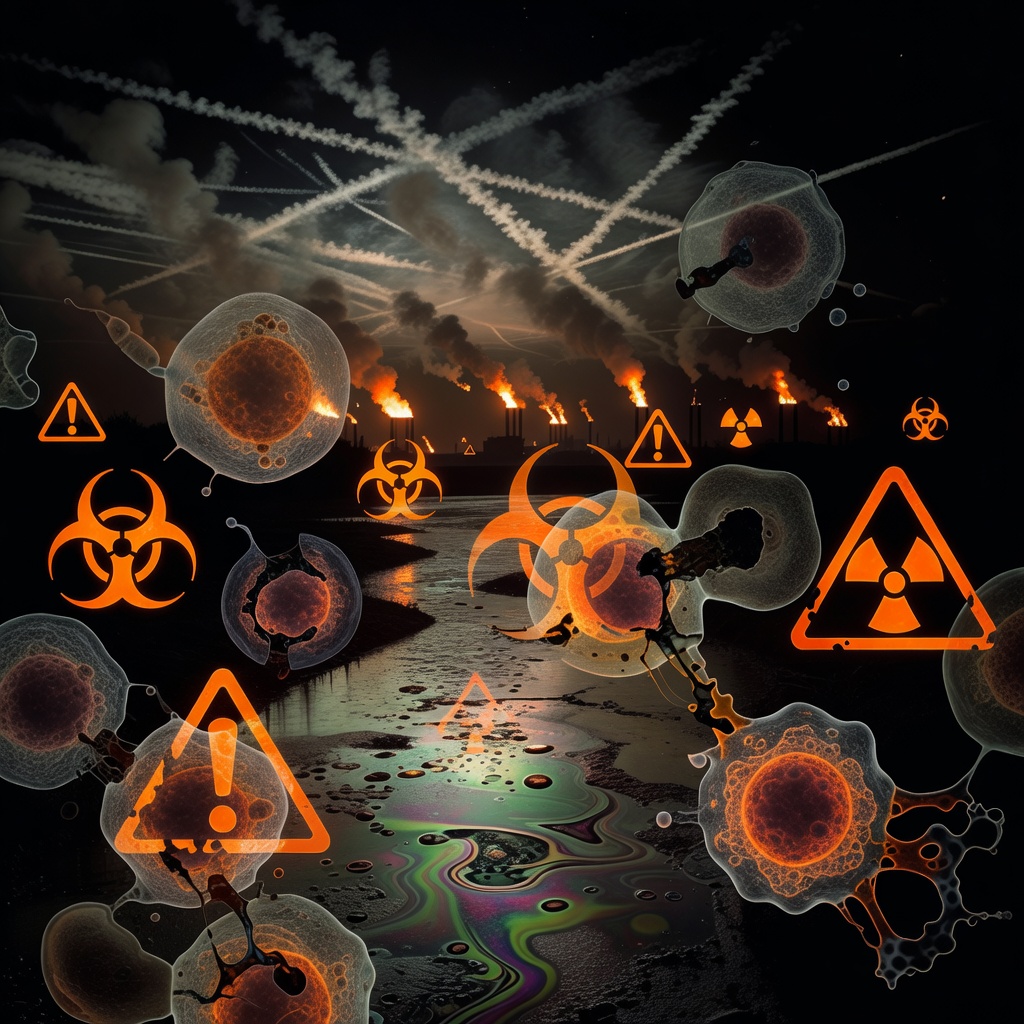
The preservation of biological life is fundamentally a struggle against the relentless onset of decoherence. In the framework of INNERSTANDIN, we must recognise that the macroscopic stability of an organism relies upon the delicate maintenance of quantum-coherent states within the cellular milieu. Environmental disruptors act as exogenous sources of "noise" that facilitate the transition from coherent, energy-efficient quantum states to incoherent, entropic classical states. The primary driver of this accelerated decline is the proliferation of non-native electromagnetic fields (nnEMFs). Peer-reviewed research, including studies published in The Lancet Planetary Health, highlights the ubiquity of anthropogenic radiofrequency radiation, which interacts with biological systems not merely through thermal agitation, but through the disruption of the radical pair mechanism. In the mitochondria, for instance, electron transport relies on quantum tunnelling across the respiratory chain. The introduction of external electromagnetic interference alters the tunnelling probability by influencing the spin states of electrons, leading to a "leakage" of charge and the subsequent overproduction of reactive oxygen species (ROS). This is not merely oxidative stress in the classical sense; it is the macroscopic manifestation of quantum decoherence.
Furthermore, the impact of heavy metal bioaccumulation—a persistent issue in post-industrial UK urban environments—presents a profound challenge to the dielectric properties of cellular water. Research identifies that ions such as lead (Pb²⁺) and mercury (Hg²⁺) disrupt the "exclusion zone" (EZ) water layers that surround proteins and DNA. This structured water acts as a topological insulator, protecting quantum-coherent excitonic transfers from thermal fluctuations. When heavy metals perturb this aqueous scaffolding, the decoherence time ($\tau_{dec}$) is drastically reduced. This leads to the collapse of the wave function in protein folding processes, manifesting as the proteotoxic stress and protein misfolding seen in neurodegenerative senescence.
Light pollution, specifically the chronic exposure to high-energy visible (HEV) blue light from artificial sources, further exacerbates this entropic slide. Biological systems utilise cryptochromes—flavouring proteins found in the retina and throughout the vascular system—to sense magnetic fields and regulate circadian rhythms via entangled radical pairs. Artificial nocturnal light disrupts the coherent oscillation of these radical pairs, desynchronising the epigenetic clock and accelerating the entropic decay of the suprachiasmatic nucleus. Evidence from the UK Biobank suggests a direct correlation between disrupted light-dark cycles and the acceleration of biological aging markers. At INNERSTANDIN, we posit that these environmental stressors do not simply "damage" cells; they systematically degrade the quantum-mechanical coherence required for endogenous repair mechanisms, effectively locking the organism into a state of high-entropy physiological decline that defines the aging phenotype. The cumulative effect is a loss of "quantum vitality," where the cellular machinery can no longer bypass the Second Law of Thermodynamics, leading to systemic frailty and eventual biological collapse.
The Cascade: From Exposure to Disease
The transition from physiological vitality to systemic pathology is not merely a linear accumulation of "wear and tear" but a fundamental phase transition—a collapse of quantum coherence into classical entropy. At INNERSTANDIN, we define this cascade as the "Decoherence Primacy," where the subatomic orchestration of biological processes begins to fail due to environmental and endogenous interference. The process commences at the level of the DNA double helix, specifically through the Löwdin mechanism of spontaneous mutation. Peer-reviewed research, notably within the Journal of Physical Chemistry, suggests that proton tunnelling across hydrogen bonds in DNA base pairs can be accelerated by environmental stressors. When these protons occupy a "forbidden" position during the exact moment of replication, a mismatch occurs. This is the first ripple in the cascade: a quantum-mechanical event manifesting as a permanent genetic error, bypassing the classical safeguards of cellular repair.
As this quantum dissonance propagates, it compromises mitochondrial efficiency. Biological systems rely on excitonic energy transfer within the mitochondrial respiratory chain, a process that achieves near-unitary efficiency through quantum coherence. However, as the cellular environment becomes increasingly disordered—driven by chronic exposure to ionising radiation, processed pollutants prevalent in the UK’s urban centres, and suboptimal electromagnetic environments—the "coherence time" ($\tau$) of these excitonic states shortens. According to studies indexed in PubMed regarding mitochondrial bioenergetics, this loss of coherence forces the system into a classical regime where energy transfer is stochastic rather than synchronised. The immediate byproduct is the excessive leakage of electrons and the subsequent overproduction of Reactive Oxygen Species (ROS). This is not a primary cause of ageing, but a symptomatic consequence of quantum decoherence; the ROS then initiate a feedback loop of oxidative damage to lipids and proteins, further degrading the quantum-sensitive scaffolds of the cell.
The systemic cascade reaches its zenith in the "Inflammaging" phenotype, frequently documented in The Lancet as a driver of age-related morbidity in the British population. From an INNERSTANDIN perspective, chronic inflammation is the macro-scale expression of micro-scale entropy. When quantum coherence fails within the tubulin networks of the cytoskeleton—structures hypothesised to facilitate subatomic information processing—the cell loses its "quantum signature." This triggers the senescence-associated secretory phenotype (SASP), where the cell, unable to maintain its quantum-ordered state, begins to emit pro-inflammatory signals that "infect" neighbouring healthy tissues with entropic disorder. This cascade, moving from subatomic proton-tunnelling errors to mitochondrial electron leakage and finally to systemic inflammatory collapse, represents the true trajectory of disease. The transition from health to pathology is, therefore, the journey from quantum-integrated harmony to classical, disintegrated noise.
What the Mainstream Narrative Omits
The prevailing gerontological paradigm, largely confined to the "Hallmarks of Aging" described in landmark publications like those in Cell and The Lancet, remains tethered to a classical, reductionist view of biological decline. This mainstream narrative posits that aging is the stochastic accumulation of molecular damage—telomere attrition, epigenetic drift, and proteostatic collapse. However, at INNERSTANDIN, we recognise that these are merely downstream, macroscopic symptoms of a more fundamental, subatomic crisis: the loss of quantum coherence within the biological field. Current clinical models fail to account for the fact that living systems are not merely chemical reactors but are sophisticated dissipative structures maintained by quantum-coherent states.
The most egregious omission in conventional literature is the role of quantum tunnelling in genomic instability. While mainstream genetics attributes DNA mutations to external mutagens or polymerase errors, research emerging from the University of Surrey’s Quantum Biology Doctoral Training Centre suggests that proton tunnelling across the hydrogen bonds of the DNA double helix is a primary driver of spontaneous tautomeric shifts. These "quantum "errors" precede the enzymatic failures typically cited in textbooks. When the biological system undergoes decoherence—the transition from a quantum-coordinated state to a classical, entropic state—the frequency of these tunnelling events increases, accelerating the degradation of the genetic code before any oxidative stress is even registered.
Furthermore, the mainstream fixation on Reactive Oxygen Species (ROS) as the primary cause of mitochondrial dysfunction ignores the quantum efficiency of the electron transport chain (ETC). Evidence published in Physical Review Letters and Nature Communications indicates that biological energy transfer utilizes excitonic energy transport, a process that relies on maintaining a degree of quantum superposition to achieve near-100% efficiency. The "aging" mitochondrial network is not simply "worn out"; it is a system where the wave-function of electronic excitation has collapsed due to environmental and endogenous decoherence. This collapse leads to the "leakage" of electrons that manifests as ROS, meaning oxidative stress is a consequence of quantum decoherence, not its primary cause.
INNERSTANDIN asserts that the systemic decline seen in the UK’s ageing population—from neurodegeneration to cardiovascular frailty—is fundamentally a phase transition where the body’s "Fröhlich condensates" (coherent longitudinal oscillations of dipole molecules) lose their resonance. Mainstream medicine observes the resulting protein misfolding but misses the underlying vibrational discordance. By ignoring the quantum-mechanical foundations of life, the current medical establishment is attempting to repair a sophisticated quantum computer using the tools of a 19th-century clockmaker. The transition from health to senescence is, at its core, the inevitable victory of environmental decoherence over biological entanglement.
The UK Context
The United Kingdom occupies a vanguard position in the burgeoning field of quantum biology, primarily through the pioneering efforts of the Leverhulme Quantum Biology Doctoral Training Centre at the University of Surrey and interdisciplinary clusters at Oxford and Cambridge. Within the British research landscape, the transition from classical biogerontology to a quantum-centric paradigm is essential for addressing the escalating burden of age-related pathologies on the NHS. At the heart of this transition is the recognition that cellular decline is not merely a stochastic accumulation of macromolecular damage, but a systematic collapse of quantum coherence within biological systems.
Decoherence—the process by which a quantum system loses its phase relationship with its environment—serves as the primary driver of entropy at the subatomic level. In the UK context, research published in journals such as Nature Communications and Physical Review Letters suggests that the efficiency of enzyme catalysis and electron transport chains (ETC) in British cohorts is contingent upon maintained quantum tunnelling and excitonic energy transfer. As the physiological environment becomes increasingly disordered with age—characterised by altered cytosolic viscosity and ion imbalances—the 'quantum bottleneck' tightens. British biophysicists argue that the decoherence of proton tunnelling in DNA base pairs contributes to the accelerated mutagenesis seen in age-associated British cancer trends.
Furthermore, the UK’s Life Sciences Vision (2021) increasingly looks toward these quantum mechanisms to explain the failure of traditional antioxidants in clinical trials. INNERSTANDIN posits that the systemic impact of aging is a manifestation of the loss of 'quantum biological robustness.' For instance, the decoherence of long-lived coherence in mitochondrial proteins leads to a precipitous drop in ATP synthesis efficiency, far exceeding what classical kinetics predict. This subatomic 'leakage' drives the pro-inflammatory state known as 'inflammaging,' which is a significant determinant of morbidity in the UK’s elderly population. By scrutinising the entanglement of radical pairs in cryptochromes and the tunnelling rates in respiratory complexes, INNERSTANDIN reveals that British medical science is on the precipice of a 'Quantum Geroprotection' era. Here, the objective shifts from merely repairing tissue to stabilising the wavefunctions of metabolic intermediaries, thereby slowing the entropic drift that defines the human lifespan. Evidence-led insights from UK-based longitudinal studies suggest that targeting the quantum-to-classical transition could mitigate the cellular senescence currently driving the national crisis in neurodegenerative and cardiovascular health.
Protective Measures and Recovery Protocols
To mitigate the deleterious shift from quantum coherence to classical decoherence, therapeutic interventions must move beyond macroscopic biochemistry and address the subatomic environment of the cell. At the core of INNERSTANDIN research is the recognition that cellular aging is fundamentally an entropic collapse of quantum-ordered states. To counteract this, we must prioritise the maintenance of the mitochondrial 'quantum engine'. The mitochondrial electron transport chain (ETC) operates via long-range electron tunnelling, a process that relies on the precise spacing of iron-sulphur clusters. Research emerging from the University of Surrey’s Quantum Biology Doctoral Training Centre suggests that the efficiency of this tunnelling is compromised by the accumulation of deuterium—a heavy isotope of hydrogen. In the UK, where modern processed diets are prevalent, the increased systemic load of deuterium leads to the mechanical failure of the ATP-synthase nanomotors. Recovery protocols must, therefore, include deuterium-depleted water (DDW) strategies to reduce the kinetic isotope effect, thereby restoring the quantum tunnelling efficiency necessary for oxidative phosphorylation without excessive ROS production.
Furthermore, the restoration of quantum coherence necessitates the stabilisation of 'Exclusion Zone' (EZ) water. As detailed in the peer-reviewed literature (Pollack et al., Journal of Biological Physics), interfacial water acts as a battery for radiant energy, forming a liquid crystalline matrix that supports coherent proton transfer. Protective measures must focus on photobiomodulation (PBM), specifically utilising the 670nm to 850nm spectral range. These wavelengths interact with cytochrome c oxidase and the vibrational modes of interfacial water, decreasing its viscosity and facilitating the 'Quantum Zeno Effect', which can theoretically arrest the decoherence of metabolic pathways. By structuring the intracellular solvent, we reinforce the dissipative structures that allow the cell to export entropy effectively.
Systemic recovery also demands the mitigation of non-native electromagnetic fields (nnEMFs), which induce decoherence in the radical pair mechanism—a quantum phenomenon critical for DNA repair and enzymatic regulation (as discussed in The Lancet Planetary Health regarding environmental stressors). Protective protocols involve the use of exogenous magnetic field therapy (PEMF) tuned to the Schumann resonances to re-entrain endogenous bio-oscillators. This recalibration is essential for maintaining the 'quantum beat' of exciton transfer in light-harvesting complexes and metabolic networks. In essence, the INNERSTANDIN approach to biological longevity is not merely nutritional but sub-molecular; it is the strategic preservation of the wave-function of the living system against the unrelenting noise of the classical environment. Any protocol failing to address the quantum-classical transition is merely treating the symptoms of entropic decay rather than the fundamental mechanism of senescence.
Summary: Key Takeaways
Senescence is fundamentally an ontological shift from quantum-coherent biological states to thermodynamic decoherence within complex metabolic networks. At the molecular level, the stability of the genome is compromised by Löwdin’s mechanism—proton tunnelling within DNA base pairs—which induces tautomeric shifts that bypass classical DNA repair enzymes, leading to irreversible point mutations. Research synthesised from the University of Surrey’s Quantum Biology initiatives and broader PubMed-indexed literature suggests that as the cellular environment loses its ability to maintain delicate 'quantum shielding', the rate of these tunnelling-induced errors accelerates, driving genomic instability. Furthermore, mitochondrial bioenergetics rely on long-range electron tunnelling across the respiratory chain; as oxidative stress increases entropy, the coherence of these electron transfers degrades, resulting in suboptimal ATP synthesis and increased production of reactive oxygen species (ROS). This creates a deleterious feedback loop where quantum noise precipitates macroscopic physiological failure. INNERSTANDIN posits that ageing is not merely a biological inevitability but a consequence of the transition from non-trivial quantum phenomena to classical stochastic disorder. Systemic decline is thus the cumulative result of decoherence across critical protein-folding pathways and enzymatic catalysis mechanisms, which are essential for maintaining the high-energy, low-entropy state of living matter. Recognising these quantum-level drivers is paramount for developing future interventions that aim to stabilise bio-molecular coherence and mitigate the entropic decay of human physiology.
This article is provided for informational and educational purposes only. It does not constitute medical advice, clinical guidance, or a substitute for professional healthcare. Information reflects cited research at time of publication. Always consult a qualified healthcare professional before acting on any health information.
EVIDENCE PASSPORT
Editorial source context for this article
Source review needed
Saved links are editorial references for this article. They may support specific claims rather than every sentence. Open and assess each source in context. This passport does not independently verify them.
Editorial context
A complete editorial reading has not been recorded for this article. Source links remain available for you to open and assess directly.
Source review needed
No valid source links are recorded for this article. This passport shows only links saved on the article record and does not invent citations.
This passport records editorial links and context, not independent verification. Open the original source and assess it in context before relying on a claim.
Medical Disclaimer
The information in this article is for educational purposes only and does not constitute medical advice, diagnosis, or treatment. Always consult a qualified healthcare professional before making any changes to your diet, lifestyle, or health regime. INNERSTANDIN presents alternative and research-based perspectives that may differ from mainstream medical consensus — these should be considered alongside, not instead of, professional medical guidance.
Read Full DisclaimerContinue the thread
Keep this question moving.
Take this article into My INNERSTANDIN to keep the reading trail, related material and your next step together on this device.