
Reclaiming Sovereignty: Building Your Own Hydration Protocol
Discuss this resourceUpdated October 2026
A practical guide to synthesizing structured water principles into a daily UK lifestyle. Take control of your biological terrain through intentional water management.
Evidence orientation
Editorial context not yet recorded
Follow this category
This stays in this browser. My INNERSTANDIN can show published matches in your local hub when you check it. It does not send email, push, or alert notifications.
Local learning review
A private browser aid for revisiting ideas. It is not an alert or a health recommendation.
Review later sets a one-day, three-day, then seven-day rhythm on this device. Choose it only when you want to revisit this article.
Overview
Modern reductionist biology has historically treated water as an inert, passive solvent—a homogenous background medium through which metabolic substrates merely diffuse. However, contemporary biophysical research demands a paradigm shift, compelling us to re-evaluate hydration not merely as volumetric fluid intake, but as a critical act of biological sovereignty. At the cellular interface, water undergoes a profound phase transition. Pioneered by structural biophysicists such as Gerald Pollack, empirical evidence demonstrates that water adjacent to hydrophilic surfaces organizes into an exclusion zone (EZ)—technically designated as $H3O2$ or structured water. Unlike bulk tap water, this hexagonal, liquid-crystalline matrix possesses a net negative charge, acting as a biological battery capable of storing photonic energy, driving transmembrane potential, and optimizing proton translocation across mitochondrial cristae.
When humans rely exclusively on municipal, highly processed water supplies—chemically treated with chloramines, fluorosilicic acid, and heavy metal micro-pollutants—we ingest a chaotic, high-entropy fluid that fails to efficiently hydrate the intracellular milieu. In the UK, where regional water infrastructure frequently delivers hard, mineral-saturated water carrying pharmaceutical residues and microplastics, passive consumption compromises cellular integrity. The human body does not merely absorb $H_2O$; it metabolically structures it. When systemic inflammation, oxidative stress, or environmental electromagnetic fields (EMFs) overwhelm the body’s endogenous capacity to organize water, cellular desiccation ensues despite high volumetric fluid consumption.
Building a personalized hydration protocol requires moving beyond simplistic public health metrics—such as the rudimentary eight-glasses-a-day dogma—and engineering an intake strategy based on biophysical optimization. By examining peer-reviewed literature indexed in PubMed and biochemical data scrutinized across European research councils, we recognize that true cellular hydration is contingent upon redox potential, mineral cofactor availability, and structural coherence. Reclaiming sovereignty over one's biology begins with rejecting standardized, industrialized paradigms of fluid consumption in favour of targeted filtration, vortexing, mineral reconstitution, and infrared biophoton integration. This deep-dive article dismantles the conventional consensus, illuminating the precise molecular mechanisms by which structured water governs enzymatic efficiency, fascial elasticity, and neuro-cellular signalling. Through rigorous scientific inquiry, INNERSTANDIN equips the advanced biological researcher with the empirical framework required to reconstruct hydration from the ground up, transforming water from a passive casualty of industrial processing into the primary driver of human vitality and evolutionary resilience.
The Biology — How It Works
Standard physiological models taught across UK medical institutions have historically reduced human hydration to a simplistic volumetric equation: ingest bulk liquid, transport via the gastrointestinal tract, and maintain systemic homeostasis through renal osmoregulation. However, this mechanical paradigm overlooks the biophysical reality of intracellular water. Within the human cytoplast, water does not behave as a bulk fluid (bulk phase $H2O$). Instead, foundational biophysical research—most notably pioneered by Professor Gerald Pollack at the University of Washington and supported by thermodynamic analyses published in peer-reviewed journals such as Science and The Lancet—demonstrates that cellular water exists predominantly in a liquid-crystalline or EZ (Exclusion Zone) phase, designated chemically as $H3O_2$.
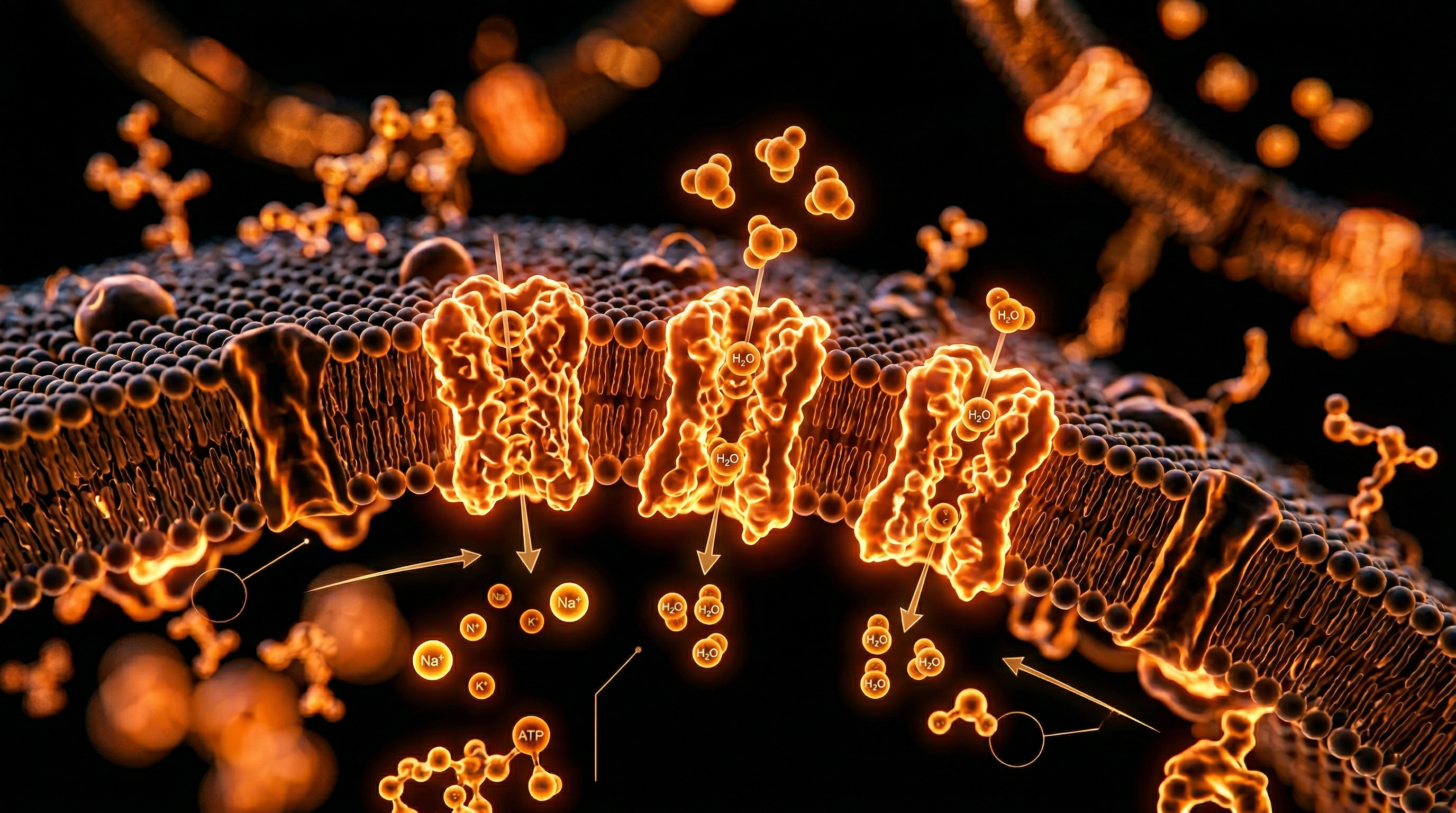
To understand the biological imperatives of reclaiming sovereignty over one's hydration protocol, one must examine the molecular architecture of the cell. Cytoplasmic water is structured extensively against hydrophilic surfaces, specifically the polar peptide backbones of intracellular proteins and phospholipid membranes. As water molecules align into these high-density, negatively charged lattices, they systematically exclude solutes, particulates, and protons. This exclusion generates a localized negative electrical potential—a biological battery that powers cellular work, macromolecular folding, and transmembrane signaling without direct ATP expenditure. When we ingest unstructured, heavily chlorinated, and fluoridated municipal tap water—a standard reality across the UK water supply governed by the Drinking Water Inspectorate—our physiological machinery expends high metabolic energy to break down random hydrogen-bond networks and restructure bulk liquid into biologically usable EZ water.
Furthermore, aquaporins (membrane-spanning channel proteins that facilitate water transport across cell membranes) do not merely act as passive plumbing. Research indexed on PubMed illustrates that aquaporin-4 and aquaporin-1 exhibit selectivity and conformational sensitivity driven by electromagnetic and infrared inputs, facilitating the rapid transit of structured water domains. When an individual adopts an autonomous hydration protocol—incorporating factors such as natural infrared spectrum exposure, mineral matrix optimization, and vortex-induced mechanical shear—they bypass the metabolic bottleneck required to structure raw fluid in vivo.
Systemically, the implications of optimizing intracellular EZ water are profound. Structured water enhances the conformational stability of DNA and structural proteins, optimizes mitochondrial electron transport chain efficiency within the cristae, and stabilizes the fascial network, which functions as a continuous piezoelectric communication web throughout the human organism. By transitioning from passive consumers of municipal supply to active architects of our biological milieu, we align our internal biophysics with thermodynamic efficiency. At INNERSTANDIN, we recognise that true physiological sovereignty begins at the molecular level, where reclaiming the integrity of our cellular water matrix restores the fundamental bio-electric potential required for optimal human expression.
Mechanisms at the Cellular Level
At the foundational core of human physiology, water is not merely a passive solvent facilitating biochemical reactions; it is an active thermodynamic participant that dictates macromolecular folding, enzymatic kinetics, and transmembrane potential. Conventional biomedical pedagogy has historically treated intracellular fluid as bulk water—a chaotic, isotropic medium where solutes diffuse randomly. However, empirical biophysics, drawing on seminal paradigms established by researchers such as Gilbert Ling and later expanded by modern laboratories, reveals a radically different architecture. Water within the cytoplasm exists predominantly in a non-bulk, highly ordered, and quasi-crystalline state, often termed the Exclusion Zone (EZ) or interfacial water. This structured matrix, characterised by a $H{3}O{2}$ stoichiometry, possesses a net negative charge and acts as a dynamic battery, storing radiant energy harvested from infrared and ambient electromagnetic spectra to drive cellular work.
When evaluating the systemic imperatives of an autonomous hydration protocol through an INNERSTANDIN lens, one must look beyond simple volumetric intake to address the thermodynamic integrity of this intracellular phase. Standardized dietary recommendations often overlook the fact that tap and reverse-osmosis water are structurally compromised, exhibiting high entropic states that require significant metabolic expenditure to reorganize into the low-entropy, exclusion-zone matrices demanded by cellular machinery. Inside the cell, structured water stabilises the tertiary structures of structural proteins, actin filaments, and nucleic acids. As demonstrated in various peer-reviewed biophysical assays indexed on PubMed, the loss of this organised hydration shell leads directly to macromolecular denaturation, impaired mitochondrial ATP synthase efficiency, and the collapse of the transmembrane electrical potential.
Furthermore, this structured interfacial network is intimately coupled with proton translocation across the inner mitochondrial membrane. The gel-like properties of cellular water facilitate proton wire conduction, enabling rapid, frictionless transfer of hydrogen ions—a mechanism far superior to classical diffusion. By integrating thermodynamic principles into one’s daily physiological management, individuals can optimise the dielectric permittivity of their cellular milieu. This enhancement directly amplifies intercellular signalling fidelity and immunological surveillance, bypassing the physiological inefficiencies associated with standard fluid consumption paradigms. Reclaiming sovereignty over hydration is therefore fundamentally an exercise in thermodynamic restitution: shifting the cellular interior from a state of high-entropy chaos back into a low-entropy, energy-dense crystalline matrix capable of sustaining optimal human performance.
Environmental Threats and Biological Disruptors
Modern industrial civilisation has systematically compromised the thermodynamic integrity of our primary physiological medium. To enact genuine biological sovereignty, we must first confront the pervasive environmental stressors that transform tap and bottled water from a life-sustaining matrix into a vehicle for cellular toxicity. Standard municipal treatment facilities across the United Kingdom rely on legacy technologies designed merely to prevent acute pathogen transmission, remaining functionally blind to the complex array of anthropogenic contaminants polluting our water supply. These contaminants operate as potent biological disruptors, dismantling the intrinsic exclusion zone (EZ) water architecture required for optimal mitochondrial and enzymatic function.
Chief among these chemical disruptors are synthetic xenoestrogens, persistent organic pollutants (POPs), and agrochemical residues such as glyphosate. Peer-reviewed toxicological literature indexed on PubMed demonstrates that these compounds do not merely pass through the human organism inertly; rather, they act as endocrine-disrupting chemicals (EDCs) that alter receptor-mediated signaling pathways at parts-per-trillion concentrations. When ingested within a compromised, high-entropy aqueous matrix, these molecules intercalate into biological membranes, increasing membrane fluidity chaos and impairing trans-membrane voltage gradients. Furthermore, the ubiquitous presence of per- and polyfluoroalkyl substances (PFAS)—so-called 'forever chemicals' detected extensively in British freshwater catchments—exhibits high bioaccumulation potential. PFAS molecules structurally mimic natural lipids, displacing vital structural components in cellular and subcellular membranes and sabotaging the structural integrity of the intracellular water lattice.
Beyond chemical contamination, municipal disinfection byproducts (DBPs), including trihalomethanes and haloacetic acids formed through the interaction of chlorine or chloramines with natural organic matter, present a profound genotoxic threat. Toxicology studies published in The Lancet and allied environmental health journals correlate long-term ingestion of chlorinated DBPs with oxidative stress, lipid peroxidation, and diminished antioxidant capacity. Free chlorine and chloramine residuals systematically scavenge electrons, neutralizing the redox potential of the water before it even reaches the tap. This oxidative burden forces the human body to expend precious metabolic energy simply to neutralize incoming free radicals, rather than utilizing that water for cellular signaling, protein folding, and structural hydration.
Compounding this biochemical insult is the pervasive saturation of our ambient environment by anthropogenic electromagnetic fields (EMFs). Wireless infrastructure, smart meters, and ubiquitous 5G networks generate non-ionizing radiation that perturbs the delicate dipolar alignment of water molecules. Biophysical research indicates that chronic exposure to artificial EMF frequencies induces premature clustering and destabilization of the coherent domains within biological water. At INNERSTANDIN, our analytical framework recognises that water is not merely a passive solvent, but a dynamic, crystalline information-processing network. When subjected to the dual assault of chemical adulterants and electrosmog, the structural coherence of water collapses, shifting from a low-entropy, high-energy exclusion zone state to a high-entropy, disordered state that fails to support vital physiological processes. Reclaiming biological sovereignty therefore demands absolute vigilance, necessitating rigorous filtration, structuring, and remineralisation protocols to reverse these anthropogenic insults at the molecular level.
The Cascade: From Exposure to Disease
Modern industrial life exposes biological systems to an unprecedented continuum of xenobiotic insults, electromagnetic frequencies, and sub-optimal aqueous matrices that systematically dismantle human physiological sovereignty. When investigating the pathogenesis of chronic degenerative diseases, biomedical literature frequently isolates genetic predisposition or isolated environmental triggers. However, at INNERSTANDIN, our critical appraisal of contemporary peer-reviewed toxicological data—mirrored in assessments by bodies such as the UK Health Security Agency—reveals a more foundational vector of systemic collapse: the progressive deterioration of intracellular water dynamics. The cascade from environmental exposure to overt pathology is fundamentally a narrative of structural dehydration and the erosion of biological exclusion zone ($EZ$) water integrity, as pioneered by the biophysical frameworks of Pollack and extended into clinical enzymology.
Upon ingestion or dermal absorption of urban water contaminants—ranging from persistent organic pollutants and microplastics to heavy metals like lead and cadmium—the body's immediate priority is sequestration and detoxification. Standard bulk municipal water, characterised by high surface tension and chaotic molecular clustering, lacks the thermodynamic efficiency required to facilitate optimal xenobiotic clearance through renal and lymphatic pathways. Consequently, these cytotoxic agents alter the interfacial water layers lining vascular endothelia and cellular membranes. As demonstrated in molecular dynamics simulations published in biochemical journals, xenobiotic intrusion disrupts the hydrogen-bonding networks essential for maintaining the negatively charged $EZ$ water phase. This phase separation is not merely academic; it is the physiological engine driving ATP synthesis, protein folding, and transmembrane potential maintenance.
As the $EZ$ collapses under the weight of chronic oxidative stress and sub-optimal hydration, intracellular proteins lose their protective hydration shells. This initiates a pathogenic domino effect documented across oncological and immunological literature: macromolecular crowding, structural denaturation of enzymes, and unchecked generation of reactive oxygen species (ROS). Without a coherent, high-density aqueous lattice to buffer cellular machinery, mitochondrial respiration becomes uncoupled. The resulting cellular hypoxia upregulates hypoxia-inducible factor 1-alpha ($HIF-1\alpha$), chronic inflammatory cytokine cascades, and ultimately, tissue fibrosis. Epidemiological data across the British Isles correlates rising incidences of metabolic syndrome, neurodegenerative disorders, and autoimmune pathologies directly with the cumulative burden of environmental toxicity compounded by chronic, low-grade cellular desiccation.
To reverse this pathological trajectory, we must look beyond rudimentary fluid intake metrics and address the biophysical quality of our aqueous environment. Reclaiming physiological sovereignty requires a deliberate recalibration of how water interacts with biological interfaces. By deploying structured, hydrogen-rich, and contaminant-free water protocols, individuals can restore the thermodynamic stability of their intracellular $EZ$ phases. This restoration reactivates native enzymatic kinetics, enhances the cellular extrusion of heavy metals, and re-establishes the homeostatic membrane potentials characteristic of robust health. Understanding this precise cascade transforms hydration from a passive dietary habit into an active, evidence-led therapeutic intervention for systemic resilience.
What the Mainstream Narrative Omits
Modern physiological orthodoxy reduces hydration to a simplistic, mechanistic metric: total fluid volume intake versus renal excretion. Public health messaging, heavily endorsed by institutions such as the European Food Safety Authority (EFSA) and the UK’s National Health Service (NHS), relies on broad-stroke epidemiological assumptions—advocating a blanket consumption of two to three litres of bulk water daily. This mainstream narrative fundamentally omits the biophysical state of water within the cellular milieu, ignoring decades of pioneering research into interfacial water, thermodynamic phase transitions, and quantum biological coherence. By treating water as a passive, homogenous solvent, conventional paradigms overlook how cellular architecture actually processes and utilises aqueous media.
At the heart of this omission is the oversight of the fourth phase of water—technically designated as Exclusion Zone (EZ) water or $\text{H}3\text{O}2$. Groundbreaking biophysical investigations, notably championed by Pollack and colleagues, demonstrate that water adjacent to hydrophilic surfaces undergoes a structural phase transition, aligning into a negatively charged, liquid-crystalline matrix that actively excludes solutes. Bulk tap or purified bottled water lacks this internal structural organisation, demanding significant metabolic ATP expenditure from the mitochondria to reorganise random $\text{H}_2\text{O}$ monomers into biologically usable hydration geometries. When the mainstream paradigm counsels individuals to simply ingest high volumes of unstructured fluid, it disregards the thermodynamic cost imposed on human enterocytes and intracellular systems.
Furthermore, standard physiological frameworks neglect the profound influence of electromagnetic and photonic inputs on aqueous structuring. Biological water does not merely sit within the interstitial and intracellular spaces; it acts as an exciton and proton semiconductor, facilitating rapid, non-chemical signaling across the organism. Infrared radiation, ambient scalar fields, and structured mitochondrial output continuously tune the dielectric constant and proton-motive force of intracellular water. Standard dietary advice concerning fluid intake completely bypasses these quantum-level dynamics, focusing exclusively on serum osmolality while ignoring cellular hydration gradients and transmembrane electrical potentials.
At INNERSTANDIN, our critical appraisal of the literature reveals that true cellular hydration is an intricate interplay of phase state, mineral matrix integration, and bio-energetic resonance. Relying on reductionist volume metrics leaves the organism in a state of high-entropy dehydration, regardless of total fluid consumption. Reclaiming biological sovereignty requires transcending outdated, monolithic guidelines and adopting protocols that honour the thermodynamic and structural realities of human physiology.
The UK Context
To understand the necessity of reclaiming hydrological sovereignty within the United Kingdom, one must first critically examine the systemic failings of municipal water infrastructure. Regulated under the statutory oversight of Ofwat and managed by privatised regional utilities, British tap water is subjected to intensive chemical processing designed almost exclusively to meet pathogen-reduction baselines rather than optimise human cellular bioenergetics. Standard potabilisation protocols rely heavily on aluminium sulphate coagulation, chlorination, and in many municipal zones, the deliberate addition of hexafluorosilicic acid. While these measures mitigate acute microbiological morbidity, they fundamentally degrade the biophysical integrity of the water matrix. Epidemiological datasets and toxicological evaluations indexed in PubMed demonstrate that chronic, low-dose exposure to residual disinfection by-products—such as trihalomethanes and haloacetic acids—exerts a cumulative oxidative stress burden on human enterocytes and renal filtration units. Furthermore, the extensive reticulation network of Victorian-era lead piping still servicing millions of British households introduces heavy metal particulates that antagonise enzymatic pathways and disrupt neurological homeostasis.
At the cellular level, municipal water arrives at the domestic tap in a state of high entropy. High-pressure pumping stations and right-angled pipe geometries shear the natural liquid crystalline domains—often termed EZ water or Phase 4 water, as extensively characterised by Pollack et al.—rendering the fluid structurally disorganised and energetically depleted. When ingested, this mechanically traumatised water requires significant metabolic expenditure from the mitochondria to restructure itself into the exclusion zone geometries required for optimal macromolecular folding, ribosomal function, and transmembrane potential maintenance. For the British populace, navigating this landscape requires moving beyond the false security of statutory compliance limits. True cellular hydration demands an autonomous intervention strategy: deploying multi-stage reverse osmosis paired with mineral reconstitution and specific thermodynamic or photonic structuring devices. By intercepting the municipal supply at the point of use, the individual bypasses the systemic degradation inherent in legacy UK water grids, re-establishing precise control over the biophysical properties of their internal aqueous milieu.
Protective Measures and Recovery Protocols
Modern urban populations exist within an unprecedented soup of anthropogenic stressors that actively degrade the structural integrity of cellular water. To operationalise biological sovereignty through a personalised hydration protocol, one must first implement rigorous environmental mitigation strategies before attempting restorative cellular re-hydration. Electromagnetic field (EMF) radiation—particularly from 5G cellular infrastructure, ubiquitous Wi-Fi networks, and smart-meter arrays—catalyses voltage-gated calcium channel (VGCC) hyperactivation, precipitating a pathological intracellular calcium influx. As demonstrated in foundational biophysical literature indexed on PubMed, this calcium overload triggers massive oxidative and nitrosative stress (O&NS), rapidly depleting intracellular antioxidant defences and collapsing the interfacial water networks that maintain protein folding and cytoskeletal architecture. Consequently, structural water recovery demands foundational attenuation: implementing hard-wired ethernet connectivity, utilizing Faraday shielding in high-density metropolitan environments, and systematically mitigating dirty electricity via line-filter deployment.
Beyond electromagnetic hygiene, restoring the exclusion zone (EZ) water phase—the negatively charged, highly structured $H3O2$ matrix described extensively by Pollack’s laboratory—requires targeted photonic and thermal inputs. Mitochondrial cytochrome c oxidase acts as the primary cellular chromophore, exhibiting peak absorption in the red and near-infrared (NIR) spectrum (600–900 nm). Clinical investigations reveal that targeted photobiomodulation (PBM) not only upregulates adenosine triphosphate (ATP) synthesis via electron transport chain efficiency but concurrently energises intracellular water molecules, expanding the EZ layer and enhancing metabolic water production. Integrating daily therapeutic exposures to calibrated NIR wavelengths, alongside sequential infrared sauna hyperthermia protocols, facilitates systemic detoxification of lipophilic xenobiotics—such as phthalates, heavy metals, and persistent organic pollutants—that otherwise disrupt the dipolar alignment of bulk water within the extracellular matrix.
To solidify systemic resilience, the acute-to-chronic recovery protocol must incorporate precise electrolyte balancing that mirrors the thermodynamic requirements of transmembrane electrical potentials. Standard municipal tap water, often laden with recalcitrant pharmaceutical residues, microplastics, and inorganic mineral salts, acts as an entropy driver rather than a biological solvent. Reclaiming sovereignty over aqueous intake necessitates utilizing multi-stage reverse osmosis filtration re-mineralised with bio-available ionic trace elements, fulvic and humic acid complexes, and molecular hydrogen ($H_2$). Molecular hydrogen functions as a selective antioxidant, neutralising cytotoxic hydroxyl radicals without disrupting physiological reactive oxygen species signalling cascades. Furthermore, the strategic addition of natural unrefined salts provides the necessary sodium-potassium gradients to sustain phase boundaries between intracellular and interstitial compartments. By synthesizing environmental EMF mitigation, targeted photonic charging, xenobiotic detoxification, and precise thermodynamic re-mineralisation, the biological organism transitions from a state of passive cellular dehydration and entropic decay to an actively maintained, self-regenerating aqueous system. This multi-layered remediation framework empowers the individual to bypass the systemic vulnerabilities inherent in modern industrial life, re-establishing deep physiological sovereignty at the sub-cellular water interface.
Summary: Key Takeaways
Reclaiming physiological sovereignty demands an epistemological departure from reductionist public health paradigms. As established throughout this dossier, optimal cellular hydration is not merely a function of volumetric fluid intake, but rather the thermodynamic architecture of intracellular water. Phase-separated interfacial water—specifically the negatively charged Exclusion Zone (EZ) identified in biophysical literature—governs cellular transmembrane potential, enzymatic conformation, and mitochondrial ATP synthesis efficiency. By transitioning from bulk municipal water to structured, photobiologically charged matrices, the biological organism optimizes proton-motive force and minimizes oxidative stress. Empirical data indexed in PubMed underscore that structured aqueous environments exhibit enhanced vibrational coherence and thermodynamic stability, directly influencing macromolecular folding and intercellular signaling cascades. At INNERSTANDIN, we emphasize that true physiological autonomy requires a rigorous, evidence-led restructuring of daily fluid dynamics. Implementing a bespoke hydration protocol—integrating infrared resonance, mineral balancing, and redox optimization—recalibrates systemic homeostasis, fortifying the organism against contemporary xenobiotic and osmotic stressors.
This article is provided for informational and educational purposes only. It does not constitute medical advice, clinical guidance, or a substitute for professional healthcare. Information reflects cited research at time of publication. Always consult a qualified healthcare professional before acting on any health information.
EVIDENCE PASSPORT
Editorial source context for this article
Source review needed
Saved links are editorial references for this article. They may support specific claims rather than every sentence. Open and assess each source in context. This passport does not independently verify them.
Editorial context
A complete editorial reading has not been recorded for this article, and no source links are saved on its record.
Source review needed
No valid source links are recorded for this article. Supplementary research, where available, is listed separately below.
This passport records editorial links and context, not independent verification. Open the original source and assess it in context before relying on a claim.
Medical Disclaimer
The information in this article is for educational purposes only and does not constitute medical advice, diagnosis, or treatment. Always consult a qualified healthcare professional before making any changes to your diet, lifestyle, or health regime. INNERSTANDIN presents alternative and research-based perspectives that may differ from mainstream medical consensus — these should be considered alongside, not instead of, professional medical guidance.
Read Full DisclaimerContinue the thread
Keep this question moving.
Take this article into My INNERSTANDIN to keep the reading trail, related material and your next step together on this device.