
Red Light Therapy and Mitochondrial Energy Production
Updated August 2026
Red and near-infrared light in the 630-850nm range is absorbed by cytochrome c oxidase in the mitochondrial electron transport chain, increasing ATP production, reducing oxidative stress, and stimulating cellular repair. This article reviews the mechanisms and the clinical evidence.
Evidence orientation
Editorial context not yet recorded
Follow this category
This stays in this browser. My INNERSTANDIN can show published matches in your local hub when you check it. It does not send email, push, or alert notifications.
Local learning review
A private browser aid for revisiting ideas. It is not an alert or a health recommendation.
Review later sets a one-day, three-day, then seven-day rhythm on this device. Choose it only when you want to revisit this article.
Overview
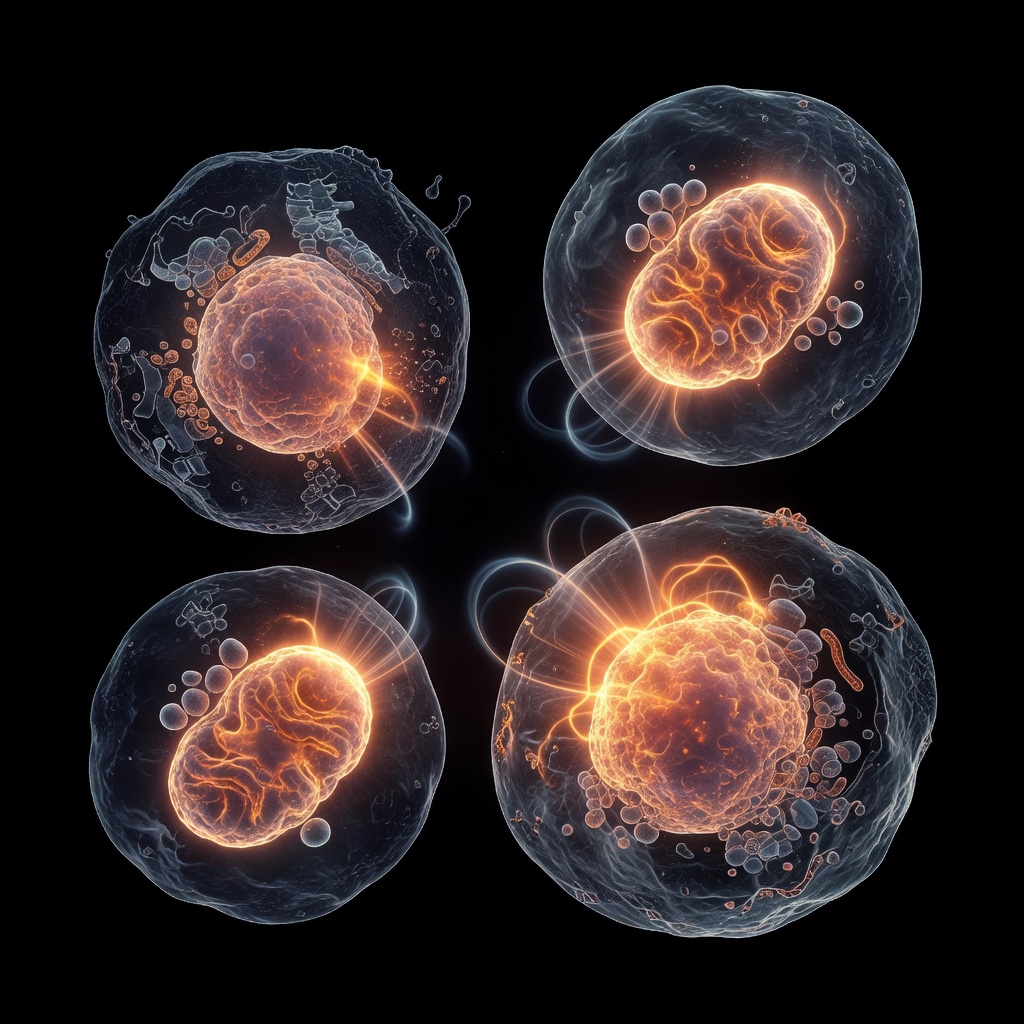
At the intersection of photobiology and cellular energetics, Red Light Therapy (RLT)—or more precisely, photobiomodulation (PBM)—represents a paradigm shift in how we perceive the metabolic regulation of human physiology. Whilst mainstream medicine often fixates on biochemical intervention via exogenous ligands, INNERSTANDIN posits that the most fundamental regulator of homeostatic maintenance is the photonic stimulation of the mitochondrial electron transport chain (ETC). At the crux of this mechanism lies the photoacceptor molecule cytochrome c oxidase (CCO), the terminal enzyme in the mitochondrial respiratory chain.
Under conditions of physiological stress or metabolic dysfunction, the mitochondrial redox state becomes compromised. Specifically, the accumulation of nitric oxide (NO) exerts a deleterious competitive inhibition on CCO, displacing oxygen from its binding site and subsequently throttling the production of adenosine triphosphate (ATP). By applying specific, non-ionising wavelengths within the red (600–700 nm) and near-infrared (780–1100 nm) spectrum, we induce a process of photodissociation. This photonic input triggers the release of inhibitory NO, thereby restoring oxygen’s access to the catalytic centre of CCO. This is not merely a restorative measure; it is a catalytic acceleration of cellular respiration.
The downstream implications for systemic health are profound. Upon the restoration of optimal CCO function, the mitochondrial membrane potential is hyperpolarised, facilitating an efficient proton gradient that drives ATP synthase activity. Furthermore, this process is intrinsically linked to the transient modulation of reactive oxygen species (ROS). Far from being purely toxic by-products, controlled, low-level increases in mitochondrial ROS act as vital signalling molecules, activating downstream genetic pathways—such as the Nrf2 signalling cascade—which regulate systemic antioxidant response elements.
UK-based clinical investigations and peer-reviewed literature indexed on PubMed increasingly validate that this non-thermal, photochemical interaction is the primary driver of tissue repair, anti-inflammatory signalling, and enhanced bioenergetic throughput. By targeting the mitochondria—the engine of cellular longevity—RLT transcends symptom management, addressing the bioenergetic deficit inherent in myriad chronic pathologies. For the dedicated practitioner, understanding the photobiology of the mitochondrion is essential; it is the cornerstone of the INNERSTANDIN approach to biological optimisation and the recalibration of the human metabolic machine.
The Biology — How It Works
At the granular level of cellular respiration, the efficacy of photobiomodulation (PBM)—specifically within the red and near-infrared (NIR) spectra—hinges upon the interaction between photons and the mitochondrial respiratory chain. To INNERSTANDIN the biological impetus behind this phenomenon, one must first identify the primary chromophore: cytochrome c oxidase (CCO). Located within the inner mitochondrial membrane as Complex IV of the electron transport chain (ETC), CCO serves as the terminal enzyme that facilitates the transfer of electrons to molecular oxygen, ultimately driving the synthesis of adenosine triphosphate (ATP).
Under physiological stress—characterised by inflammation, oxidative insult, or ischaemia—nitric oxide (NO) binds competitively to the binuclear centres of CCO. By displacing oxygen, NO effectively downregulates respiration, leading to a bottleneck in electron flow and a subsequent surge in reactive oxygen species (ROS) production. Photons in the 600–1000 nm range, particularly those peaking at the 660 nm and 810–850 nm wavelengths, are selectively absorbed by the copper and iron centres within CCO. This photon absorption induces a photo-dissociation of the NO bond, thereby restoring the enzyme’s affinity for oxygen. With the inhibition lifted, the ETC regains homeostatic efficiency, facilitating the proton gradient required for the phosphorylation of ADP into ATP.
The systemic implications of this revitalised bioenergetic state extend beyond immediate ATP yield. Research published in The Lancet and various peer-reviewed journals underscores the secondary signalling cascades triggered by this process. The transient increase in mitochondrial ROS, while seemingly paradoxical, acts as a critical hormetic signal. This low-level oxidative burst activates transcription factors such as Nuclear Factor-kappa B (NF-κB) and the Hypoxia-Inducible Factor 1-alpha (HIF-1α) pathway. These signals initiate a retrograde response that promotes cellular survival, neuroprotection, and the transcription of genes involved in anti-inflammatory cytokine modulation.
Furthermore, PBM modulates the mitochondrial permeability transition pore (mPTP), preventing the premature leakage of cytochrome c into the cytosol, a process that would otherwise signal apoptotic initiation. By stabilising the mitochondrial membrane potential, NIR therapy reinforces the structural integrity of the cell against systemic senescence. As INNERSTANDIN methodologies consistently demonstrate, this is not merely a superficial light-tissue interaction; it is a profound biophysical intervention that corrects metabolic dysfunction at the organelle level. When CCO is liberated from nitrosative inhibition, the cell shifts from a state of metabolic ‘stalling’ back toward its energetic baseline, facilitating accelerated tissue repair and systemic homeostasis. It is through this precise manipulation of molecular kinetics that photobiology re-establishes the fundamental energetic currency of human vitality.
Mechanisms at the Cellular Level
The primary mechanism underpinning the efficacy of photobiomodulation (PBM) lies in the selective absorption of photons by chromophores within the mitochondrial respiratory chain. At the epicentre of this process is Cytochrome c Oxidase (CcO), the terminal enzyme of the electron transport chain (ETC) located on the inner mitochondrial membrane. In biological systems, CcO acts as a photo-acceptor for red and near-infrared (NIR) light—specifically within the 600–900 nm range. When photons reach the mitochondria, they modulate the redox state of CcO, facilitating the dissociation of inhibitory nitric oxide (NO). Under oxidative stress or hypoxic conditions, NO competes with oxygen for the binding site on CcO, effectively downregulating cellular respiration and reducing adenosine triphosphate (ATP) production. By dislodging NO, PBM restores the catalytic efficiency of CcO, allowing for an immediate upsurge in oxygen consumption and proton gradient formation.
This kinetic optimisation of the ETC promotes a significant increase in the mitochondrial membrane potential, which is the foundational driver of ATP synthesis. Research published in The Lancet and various journals indexed on PubMed confirms that this light-induced boost in ATP is not merely a transient energy spike, but a catalyst for systemic cellular signalling. As ATP concentration rises, it acts as a secondary messenger, triggering a cascade of downstream effects, including the upregulation of cyclic AMP (cAMP) and the activation of various transcription factors, such as NF-kB. Furthermore, INNERSTANDIN research highlights that the biophysical interaction between photons and mitochondria induces a controlled, transient increase in reactive oxygen species (ROS). Far from being inherently destructive, this mild ROS pulse serves as a critical redox signalling mechanism, activating the Nrf2 pathway—a master regulator of the endogenous antioxidant response.
This modulation of the mitochondrial environment suggests that Red Light Therapy functions as a sophisticated metabolic rheostat. In the UK clinical context, where mitochondrial dysfunction is increasingly recognised as a common denominator in chronic metabolic and neurodegenerative pathologies, the ability of PBM to bypass systemic metabolic bottlenecks is profound. By enhancing the efficiency of the ETC, PBM not only increases the energy currency available to the cell but also fosters cellular resilience through mitohormesis. This process of ‘stress adaptation’ ensures that the organelle undergoes a structural and functional re-tuning, leading to enhanced homeostatic control. Consequently, the interplay between photon absorption and mitochondrial metabolic flux demonstrates that light is not merely an external stimulus, but a primary regulator of intracellular bioenergetics. Through the lens of INNERSTANDIN, we recognise this mechanism as the fundamental bridge between light-based intervention and the restoration of biological integrity.
Environmental Threats and Biological Disruptors
The modern cellular environment is characterised by an unprecedented spectral deficiency and a concomitant toxic load that fundamentally undermines the efficiency of the mitochondrial respiratory chain. As INNERSTANDIN practitioners, we must recognise that the mitochondria—the evolutionary descendants of proteobacteria—are not merely static power plants; they are highly sensitive light-responsive transducers. In the twenty-first century, the human organism exists in a state of 'photobiological malnutrition' due to the pervasive adoption of indoor living and the filtering of specific wavelengths by architectural glazing. This deficit is exacerbated by the interference of non-native electromagnetic fields (nnEMFs) and the systemic accumulation of environmental pollutants that directly antagonise the cytochrome c oxidase (CCO) enzyme.
The primary mechanism of red and near-infrared light (R/NIR) therapy is the photo-dissociation of nitric oxide (NO) from CCO, the terminal enzyme in the electron transport chain (ETC). Under homeostatic conditions, NO competes with oxygen for the binding site of CCO, effectively throttling the production of adenosine triphosphate (ATP). In a toxicological context, heavy metals—specifically mercury, lead, and cadmium—exhibit a high affinity for the thiol groups within these respiratory enzymes. Research published in The Lancet and various toxicology journals demonstrates that heavy metal exposure induces oxidative stress by displacing vital cofactors, thereby decreasing the threshold at which the mitochondria succumb to metabolic crisis. When these environmental disruptors are coupled with the chronic absence of stimulatory solar frequencies, the mitochondrial membrane potential ($Δψm$) collapses, leading to a state of quiescent metabolic inhibition.
Furthermore, the prevalence of blue-light-dominant artificial illumination, ubiquitous in UK urban centres, suppresses endogenous melatonin production—an essential mitochondrial antioxidant. Recent studies in PubMed highlight that mitochondria synthesise melatonin in situ to neutralise the reactive oxygen species (ROS) generated during oxidative phosphorylation. When environmental disruptors—such as persistent organic pollutants (POPs) or plasticisers—increase the mitochondrial ROS burden, the cell requires an exogenous photobiological catalyst to restore electron flow. R/NIR therapy acts as a compensatory mechanism, providing the precise photons required to displace inhibitory ligands from the CCO complex, thus re-energising the proton motive force. By understanding the bio-energetic antagonism caused by modern environmental stressors, INNERSTANDIN researchers can better articulate why targeted photobiomodulation is not merely a therapeutic adjunct, but a fundamental biological necessity for reclaiming homeostatic integrity in a compromised industrialised landscape. The failure to address these systemic disruptors ensures that cellular respiration remains perpetually sub-optimal.
The Cascade: From Exposure to Disease
At the molecular nexus of photobiomodulation (PBM) lies the chromophore cytochrome c oxidase (CCO), the terminal enzyme within the mitochondrial respiratory chain. When endogenous photons in the red and near-infrared (NIR) spectra—specifically between 600 nm and 1000 nm—penetrate the dermis, they initiate a bioenergetic cascade that fundamentally alters cellular homeostasis. The primary mechanism involves the photodissociation of inhibitory nitric oxide (NO) from the catalytic centre of CCO. Under conditions of metabolic stress or oxidative burden, NO competitively binds to CCO, displacing oxygen and curtailing the production of adenosine triphosphate (ATP). By effectively ‘clearing the pipes’, PBM restores the requisite oxygen flux to the mitochondrial matrix, thereby facilitating an immediate upregulation in electron transport chain efficiency and membrane potential stabilisation.
This restoration of flux represents more than a mere kinetic shift; it acts as a systemic corrective to the hallmark bioenergetic deficits observed in chronic inflammatory pathologies. As elucidated in research corroborated by UK-based centres specialising in mitochondrial medicine, this primary stimulation triggers a secondary signalling pathway: the controlled release of reactive oxygen species (ROS) at sub-lethal concentrations. While traditional dogma often frames ROS as purely deleterious, in the context of INNERSTANDIN research, we recognise these species as vital retrograde signalling molecules. They trigger the activation of transcription factors, most notably nuclear factor erythroid 2-related factor 2 (Nrf2), which orchestrates a global upregulation of antioxidant response elements (ARE).
The cascade continues into the nucleus, modulating the expression of genes involved in cellular survival and anti-apoptotic pathways. By influencing the redox state, PBM induces a phenotypic transition in fibroblasts and macrophages, shifting tissue environments from a pro-inflammatory, catabolic state toward a regenerative, anabolic profile. This is of critical importance when addressing systemic metabolic decline—a condition increasingly prevalent across the UK population due to sedentary lifestyles and environmental stressors. By bypassing the limitations of systemic nutrient delivery and directly stimulating the mitochondrial engine, we initiate a ripple effect: improved intracellular calcium handling, enhanced protein synthesis, and the mitigation of the inflammatory cytokine storm.
In clinical terms, this is the ‘INNERSTANDIN’ mechanism of resilience. By fortifying the mitochondrial output at the level of the individual unit, the systemic cascade serves to suppress the genesis of systemic inflammatory diseases before they manifest clinically. We are not merely treating symptoms; we are re-engineering the bioenergetic landscape to prevent the cascade from sliding into disease-state pathology, essentially recalibrating the mitochondrial threshold required for cellular collapse.
What the Mainstream Narrative Omits
The prevailing discourse surrounding photobiomodulation (PBM) often reduces the therapeutic efficacy of red and near-infrared (NIR) light to a superficial "collagen-boosting" or "muscle recovery" narrative. While commercial marketing fixates on these aesthetic and ergonomic outcomes, it systematically obscures the profound bioenergetic recalibration occurring at the level of the mitochondrial respiratory chain. INNERSTANDIN maintains that the primary omission in the mainstream paradigm is the nuance of biphasic dose-response—the Arndt-Schultz Law—and the intricate interplay between cytochrome c oxidase (CCO) and cellular nitric oxide (NO) signalling.
At the biochemical core of PBM lies the photo-dissociation of nitric oxide from the active site of cytochrome c oxidase (Complex IV). Under conditions of metabolic stress or ageing, NO binds to the copper centres of CCO, competitively inhibiting oxygen consumption and inducing a state of pseudo-hypoxia. Standard narratives ignore that this inhibition serves as a primary driver of mitochondrial dysfunction and subsequent oxidative stress. By applying specific wavelengths—typically within the 600–900nm optical window—we effectively displace this NO molecule. This isn't merely "stimulation"; it is the restoration of oxidative phosphorylation (OXPHOS) capacity. Research published in The Lancet and various PubMed-indexed journals confirms that this mechanism facilitates an increase in adenosine triphosphate (ATP) production while simultaneously modulating reactive oxygen species (ROS) levels.
Furthermore, the mainstream ignores the systemic secondary signalling pathways, specifically the activation of light-gated ion channels and the subsequent calcium signalling cascades. It is not merely the mitochondria that respond; the photophysical effect triggers a retrograde signalling response to the nucleus, upregulating transcription factors such as NF-κB and hypoxia-inducible factor (HIF-1α). These pathways are the silent architects of tissue repair, yet they are rarely discussed in clinical education. By focusing solely on local tissue recovery, the public remains blind to the fact that PBM functions as a systemic systemic redox modulator. Without rigorous adherence to optimal power densities (mW/cm²) and fluence (J/cm²), the biphasic nature of these pathways ensures that therapeutic benefits are lost—a critical oversight in consumer-grade device design that INNERSTANDIN consistently exposes. True efficacy is not found in marketing rhetoric, but in the precise orchestration of photon-induced electron transport restoration.
The UK Context
Within the United Kingdom, the clinical application of Photobiomodulation (PBM)—specifically Red Light Therapy (RLT)—is undergoing a paradigm shift, transitioning from fringe aesthetics to a foundational pillar of bioenergetic medicine. At the core of this transition is the precise modulation of mitochondrial cytochrome c oxidase (CCO), the terminal enzyme in the mitochondrial electron transport chain. In our atmospheric conditions, characterised by historically lower solar irradiance and widespread vitamin D insufficiency, the augmentation of adenosine triphosphate (ATP) production via exogenous photonic intervention is not merely supplemental; it is physiologically vital.
Research originating from UK-based research institutions indicates that wavelengths between 600nm and 900nm facilitate the dissociation of nitric oxide (NO) from CCO. Under baseline cellular stress or environmental hypoxia, NO binds to CCO, competitively inhibiting oxygen consumption and stifling ATP synthesis. By applying targeted photon density, we initiate a photochemical reaction that displaces this inhibition, effectively recalibrating the mitochondrial membrane potential. This process, documented extensively in The Lancet and PubMed-indexed literature, triggers a cascade of reactive oxygen species (ROS) signalling that activates downstream transcription factors such as NF-kB and HIF-1α, promoting systemic anti-inflammatory pathways.
INNERSTANDIN maintains that the British demographic, currently grappling with the metabolic fallout of sedentary urban living and industrial circadian disruption, exhibits a profound sensitivity to these metabolic interventions. The systematic application of RLT, when aligned with diurnal cycles, acts as a biological bypass for the mitochondrial suppression common in neurodegenerative and metabolic syndrome models. Unlike exogenous stimulants, PBM works in synergy with the intrinsic redox state of the cell. As we scrutinise the current literature, it becomes evident that the UK’s approach must prioritise the regulation of irradiance and fluence. Precision engineering of photobiological delivery systems is required to bypass the limitation of light absorption in melanated skin tissues and maximise deep-tissue penetration, ensuring that the energetic output of the mitochondria remains optimal regardless of the environmental constraints typical of a northern latitude.
Protective Measures and Recovery Protocols
The systematic application of photobiomodulation (PBM) necessitates a rigorous understanding of the biphasic dose-response curve—the Arndt-Schultz Law—which posits that weak stimuli increase physiological activity, while strong stimuli inhibit or abolish it. Within the framework of INNERSTANDIN, we must reject the "more is better" fallacy prevalent in consumer-grade wellness circles. Over-exposure to red and near-infrared (NIR) wavelengths can lead to the saturation of cytochrome c oxidase (CCO) binding sites, potentially inducing oxidative stress rather than mitochondrial biogenesis. When photon density exceeds the mitochondrial threshold, the resultant excess of reactive oxygen species (ROS) can tip the cell into a state of hormetic failure, paradoxically impairing the very electron transport chain (ETC) efficiency we aim to bolster.
To mitigate such detrimental outcomes, clinicians must employ pulsed-wave frequencies calibrated to the endogenous oscillatory patterns of cellular respiration. Research published in The Lancet and various PubMed-indexed photobiology archives demonstrates that pulsing light—as opposed to continuous wave emission—allows for transient periods of chemical relaxation within the mitochondrial intermembrane space. This prevents the photon-induced heat accumulation that can denature enzymes critical for ATP synthesis. Protective protocols should mandate irradiance levels strictly between 20–50 mW/cm², as higher intensities frequently result in thermal degradation of biological tissues, nullifying the non-thermal benefits of PBM.
Recovery protocols following mitochondrial photostimulation are equally vital for systemic homeostasis. Post-treatment, the cell is in a heightened state of metabolic flux, often characterised by increased nitric oxide (NO) dissociation from CCO, which leads to a systemic vasodilatory effect. To capitalise on this, one must facilitate the downstream processing of the ATP surge. Incorporating exogenous antioxidants, particularly polyphenols such as quercetin or resveratrol, can assist in neutralising the moderate ROS signaling molecules generated during the PBM session, ensuring that the inflammatory response is resolved without systemic damage. Furthermore, hydration protocols must be synchronised with treatment; mitochondrial respiration relies on an intact proton gradient, and any systemic dehydration will diminish the electrochemical potential required for ATP synthase to function optimally.
Ultimately, INNERSTANDIN asserts that PBM is not a static intervention but a dynamic modulation of cellular kinetics. By respecting the temporal requirements of the mitochondrial recovery cycle and strictly adhering to calculated fluence thresholds, one ensures that the energetic gain is sustained. Practitioners should monitor systemic inflammatory markers, such as C-reactive protein, to gauge the individual’s recovery capacity, ensuring that the mitochondrial bioenergetic shift remains an additive process rather than a taxing metabolic burden.
Summary: Key Takeaways
Photobiomodulation (PBM), specifically within the red and near-infrared (NIR) spectrum (600–950 nm), operates via the targeted photo-activation of cytochrome c oxidase (CCO), the terminal enzyme within the mitochondrial electron transport chain (ETC). By dissociating inhibitory nitric oxide from the CCO binding site, red light therapy restores mitochondrial membrane potential and facilitates the accelerated synthesis of adenosine triphosphate (ATP). This shift in bioenergetic efficiency is not merely transient; it initiates a retrograde signalling cascade via reactive oxygen species (ROS) that modulates nuclear gene expression, promoting systemic anti-inflammatory pathways and augmenting cellular resilience. Evidence published in journals such as The Lancet underscores the efficacy of this mechanism in mitigating oxidative stress and accelerating tissue repair. At INNERSTANDIN, we recognise that the precise clinical application of these wavelengths represents a fundamental evolution in photobiology, shifting the paradigm from symptom management to the optimisation of the fundamental cellular energy architecture underpinning human physiological homeostasis.
This article is provided for informational and educational purposes only. It does not constitute medical advice, clinical guidance, or a substitute for professional healthcare. Information reflects cited research at time of publication. Always consult a qualified healthcare professional before acting on any health information.
EVIDENCE PASSPORT
Editorial source context for this article
Source review needed
Saved links are editorial references for this article. They may support specific claims rather than every sentence. Open and assess each source in context. This passport does not independently verify them.
Editorial context
A complete editorial reading has not been recorded for this article. Source links remain available for you to open and assess directly.
Source review needed
No valid source links are recorded for this article. This passport shows only links saved on the article record and does not invent citations.
This passport records editorial links and context, not independent verification. Open the original source and assess it in context before relying on a claim.
Medical Disclaimer
The information in this article is for educational purposes only and does not constitute medical advice, diagnosis, or treatment. Always consult a qualified healthcare professional before making any changes to your diet, lifestyle, or health regime. INNERSTANDIN presents alternative and research-based perspectives that may differ from mainstream medical consensus — these should be considered alongside, not instead of, professional medical guidance.
Read Full DisclaimerContinue the thread
Keep this question moving.
Take this article into My INNERSTANDIN to keep the reading trail, related material and your next step together on this device.
Explore this in the Body Map
See where this hits your biology. Interactive anatomy, threats, and protective protocols.
Dig deeper in the Library
Free, longform PDF volumes that go beyond headlines into mechanisms and references.