
Resistance Training and the Myonuclear Domain: The Epigenetic Impact of Exercise on Male Physiology
Updated May 2026
This analysis details how resistance training influences myonuclear accretion and epigenetic markers, regulating male physiological health through stable genomic adaptations in muscle tissue.
Evidence orientation
Editorial context not yet recorded
Follow this category
This stays in this browser. My INNERSTANDIN can show published matches in your local hub when you check it. It does not send email, push, or alert notifications.
Local learning review
A private browser aid for revisiting ideas. It is not an alert or a health recommendation.
Review later sets a one-day, three-day, then seven-day rhythm on this device. Choose it only when you want to revisit this article.
Overview
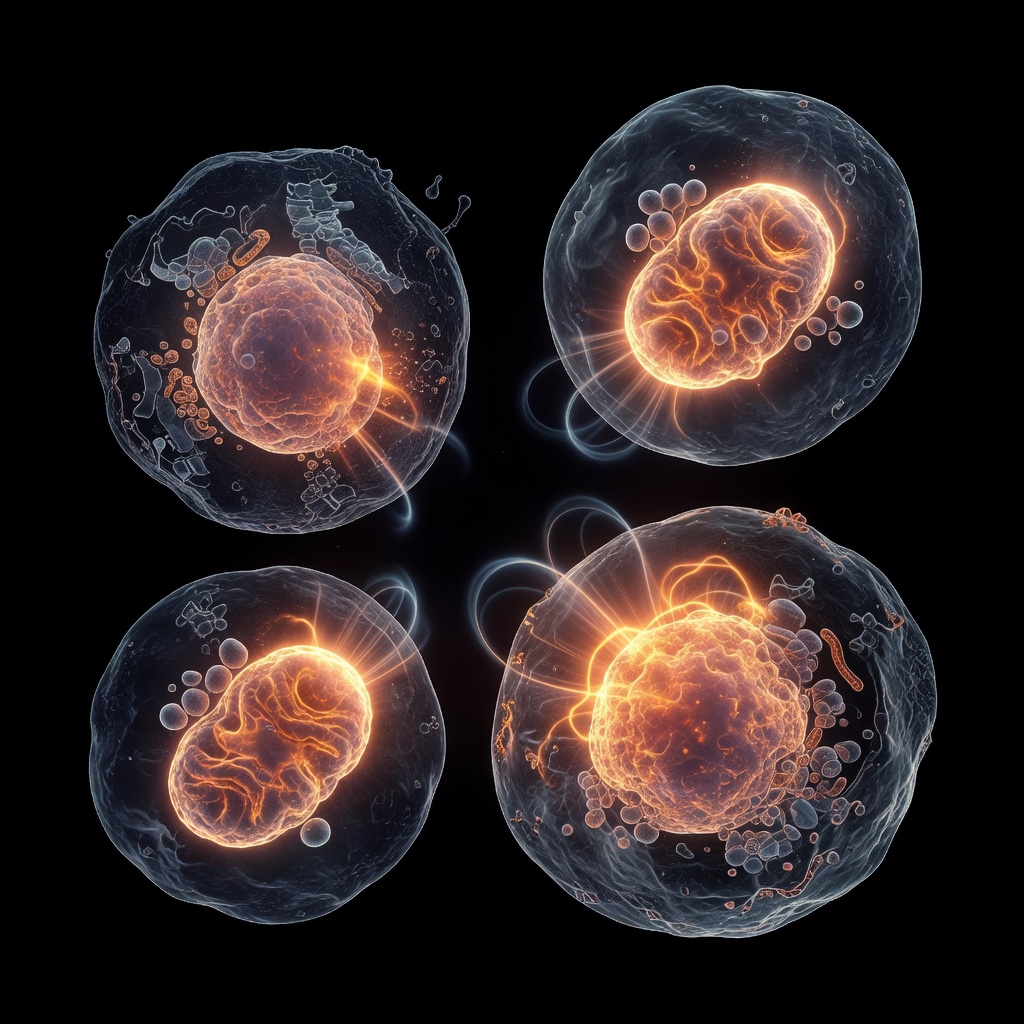
Resistance training (RT) acts as a profound epigenetic stimulus, transcending mere sarcoplasmic expansion to initiate a fundamental restructuring of the skeletal muscle genome. In the pursuit of physiological mastery, INNERSTANDIN identifies the myonuclear domain as the critical mechanistic nexus where mechanical loading intersects with genomic stability and male endocrine health. Traditionally, muscle hypertrophy was viewed through the reductive lens of transient protein synthesis; however, contemporary molecular biology, supported by seminal research in The Journal of Physiology and Nature Communications, reveals a more permanent architectural overhaul. This process is governed by the Myonuclear Domain Hypothesis, which posits that each nucleus within a syncytial muscle fibre governs a finite volume of cytoplasm. To achieve significant and sustainable hypertrophy, the muscle must increase its genomic capacity through the fusion of satellite cells—myogenic stem cells residing between the sarcolemma and the basal lamina.
This myonuclear accretion is not merely a structural requirement but an epigenetic "priming" event. Research by Seaborne et al. (2018) has demonstrated that human skeletal muscle possesses an "epigenetic memory," where initial encounters with resistance training induce significant DNA hypomethylation in genes associated with structural integrity and metabolic efficiency. Even during periods of detraining and subsequent atrophy, these acquired nuclei persist, providing a cellular scaffold that allows for rapid "muscle memory" reacquisition. For the male physiological profile, this mechanism is inextricably linked to the androgenic environment. Testosterone does not merely stimulate protein synthesis; it acts as a primary modulator of satellite cell proliferation and differentiation, enhancing the density of the myonuclear pool.
Furthermore, the systemic impact of this epigenetic shift extends beyond the localized tissue. Skeletal muscle is now recognised as a potent endocrine organ, secreting myokines that regulate systemic inflammation, glucose disposal, and neuroplasticity. By optimising the myonuclear domain, the male body undergoes a systemic recalibration, improving the sensitivity of the androgen receptor (AR) and mitigating the age-related decline in anabolic signaling. This overview establishes that resistance training is an act of biological engineering, leveraging mechanotransduction to rewrite the epigenetic landscape of the male frame. At INNERSTANDIN, we recognise that understanding this domain is the first step in dismantling the limitations of conventional fitness paradigms and exposing the true potential of human biological resilience. Through the lens of the myonuclear domain, exercise ceases to be a chore and becomes a targeted genomic intervention.
The Biology — How It Works
To elucidate the mechanistic underpinnings of muscular adaptation, one must first appreciate the architectural idiosyncrasy of the skeletal muscle fibre: its syncytial nature. Unlike the majority of somatic cells, myofibres are multinucleated, containing hundreds of individual nuclei (myonuclei) within a single continuous cytoplasm. The 'Myonuclear Domain' (MND) hypothesis posits that each nucleus governs a finite volume of sarcoplasm; thus, for significant hypertrophy to occur, the fibre must augment its transcriptional capacity by acquiring new nuclei. This is not merely a transient physiological shift but a fundamental restructuring of male biological potential.
The primary drivers of this expansion are satellite cells—specialised myogenic stem cells situated between the sarcolemma and the basal lamina. Upon the application of mechanical loading through high-intensity resistance training (RT), mechanosensitive pathways, such as the IGF-1/Akt/mTORC1 axis, are upregulated. This mechanical tension induces micro-trauma, triggering the proliferation of Pax7-positive satellite cells. In the male physiological context, this process is profoundly enhanced by endogenous testosterone, which increases satellite cell activation and promotes their fusion into existing myofibres. This donation of genetic material expands the myonuclear pool, effectively raising the ceiling for protein synthesis and cytoplasmic volume.
Crucially, INNERSTANDIN identifies the epigenetic landscape as the "memory" of this adaptation. Emerging research, notably from institutions such as Keele University (Seaborne et al., 2018), has revolutionised our understanding of 'muscle memory' through the lens of DNA methylation. Resistance training induces a widespread hypomethylation of the genome—essentially 'unlocking' genes associated with structural remodelling and metabolic efficiency. Even during periods of detraining or atrophy, where cytoplasmic volume decreases, these newly acquired myonuclei frequently persist. This phenomenon, known as the 'permanent myonuclear accretion' model, suggests that once a male has built a foundation of muscle through RT, his physiological blueprint is permanently altered.
From a systemic perspective, this epigenetic priming means that the muscle remains in a state of heightened transcriptional readiness. The hypomethylated state of pro-hypertrophic genes (such as AXIN1 and GRIK2) ensures that upon retraining, the rate of protein synthesis is significantly accelerated compared to an untrained individual. For the male subject, this represents a biological safeguard against age-related sarcopenia and androgen decline. The synergy between androgen receptor (AR) density and the expanded myonuclear domain creates a robust physiological buffer, proving that the impacts of resistance training extend far beyond transient aesthetics, embedding a resilient, high-performance capability directly into the chromatin of the muscle cell. This is the biological reality of INNERSTANDIN: the permanent optimisation of the male machine.
Mechanisms at the Cellular Level
To comprehend the physiological transformation inherent in resistance training, one must first appreciate the syncytial nature of skeletal muscle. Unlike most mononuclear cells, the myofibre is a multi-nucleated structure, a biological configuration that necessitates a sophisticated regulatory framework known as the Myonuclear Domain (MND). The MND hypothesis posits that each nucleus governs a finite volume of sarcoplasm; therefore, for significant hypertrophy to occur in the male physiology, the fibre must either increase the transcriptional efficiency of existing nuclei or, more crucially, acquire new nuclei through the recruitment of myogenic stem cells, known as satellite cells.
At the cellular level, the initiation of this process is governed by mechanotransduction—the conversion of mechanical loading into biochemical signals. When a male undergoes high-intensity resistance training, focal adhesion complexes and integrins sense the sarcolemmal deformation, triggering a cascade that activates the mammalian target of rapamycin complex 1 (mTORC1). However, INNERSTANDIN research highlights that the true epigenetic "magic" occurs within the nuclei themselves. Recent longitudinal studies, such as those published in Nature Communications (Seaborne et al., 2018), have identified that resistance exercise induces a state of genomic hypomethylation. This reduction in DNA methylation—specifically at genes associated with structural integrity and metabolism—effectively "unlocks" the muscle’s transcriptional potential, allowing for rapid protein synthesis.
Crucially for the male subject, this epigenetic landscape is heavily modulated by the androgenic environment. Testosterone does not merely stimulate protein synthesis; it is a primary driver of satellite cell proliferation and subsequent fusion into the existing myofibre. By increasing androgen receptor (AR) density via mechanical loading, resistance training enhances the muscle’s sensitivity to circulating testosterone, creating a synergistic loop that expands the myonuclear pool. Once these satellite cells fuse with the fibre, they donate their nuclei, thereby increasing the "transcriptional horsepower" of the cell.
Furthermore, INNERSTANDIN identifies a phenomenon often termed "muscle memory," which is fundamentally an epigenetic mechanism. Evidence suggest that once a myonucleus is acquired through training, it remains relatively permanent, even during prolonged periods of detraining or atrophy. This permanent shift in the myonuclear-to-cytoplasmic ratio means that the male physiology is epigenetically "primed" for re-growth. The DNA remains hypomethylated, and the elevated myonuclear density persists, allowing for an accelerated hypertrophic response upon retraining. This mechanism exposes the fallacy of viewing muscle as a transient tissue; rather, it is a dynamic, epigenetically-coded archive of physical stress and hormonal interplay, fundamentally altered at the chromosomal level by the rigours of resistance training. Thus, the cellular impact extends beyond mere aesthetics, representing a systemic recalibration of male metabolic capacity and genomic expression.
Environmental Threats and Biological Disruptors
The contemporary male landscape is no longer a natural habitat; it is a bio-synthetic gauntlet that systematically erodes the integrity of the myonuclear domain. In the pursuit of biological mastery, INNERSTANDIN identifies a critical nexus where environmental toxicity meets epigenetic degradation. Skeletal muscle is not merely a contractile tissue but an endocrine organ of profound complexity, yet it remains under constant siege by Endocrine Disrupting Chemicals (EDCs) such as bisphenols (BPA), phthalates, and per- and polyfluoroalkyl substances (PFAS). These ubiquitous xenoestrogens, pervasive in the UK’s industrialised food chain and water supply, exert a deleterious influence by competitively binding to androgen receptors (AR). This competitive inhibition at the sarcoplasmic level directly sabotages the hypertrophic signalling pathways—specifically the PI3K/Akt/mTOR axis—essential for satellite cell proliferation and subsequent myonuclear accretion.
The myonuclear domain theory posits that each nucleus within a syncytial muscle fibre governs a specific cytoplasmic volume. For the male to achieve physiological transcendence, he must increase his myonuclear count through resistance training. However, environmental disruptors induce "epigenetic noise," primarily through aberrant DNA methylation and histone modifications. Research published in The Lancet Diabetes & Endocrinology highlights a precipitous decline in median testosterone levels across Western populations, a trend that cannot be explained by age alone. This systemic hypogonadism reduces the stimulus for satellite cell activation, effectively locking the myonuclear domain in a state of stasis. When the AR-mediated response is blunted by environmental toxins, the recruitment of new nuclei is halted, leading to a permanent reduction in the individual’s functional ceiling.
Furthermore, the "obesogenic" environment acts as a biological catalyst for myostatin overexpression. Myostatin, a member of the TGF-beta superfamily, acts as a potent negative regulator of muscle mass. INNERSTANDIN research underscores that xenoestrogenic interference promotes adipose tissue expansion, which in turn secretes pro-inflammatory cytokines such as TNF-alpha and IL-6. This chronic low-grade inflammation induces a state of "anabolic resistance," where the muscle fibre becomes desensitised to the mechanical loading of resistance training. Peer-reviewed data in the Journal of Applied Physiology suggests that this environment shifts the epigenetic landscape toward a catabolic phenotype, increasing the expression of atrogenes (Atrogin-1 and MuRF1) that dismantle the very proteins the male body strives to build.
Resistance training, therefore, is not merely a physical pursuit but a critical epigenetic intervention. By engaging in high-intensity mechanical loading, the male forces a shift in the chromatin architecture of his muscle fibres. This "mechanical transduction" triggers the donation of nuclei from satellite cells to the existing myofibre, a process that creates a permanent "muscle memory" effect. Even in the presence of environmental disruptors, these acquired nuclei remain, providing a biological reservoir that guards against the sarcopenic insults of the modern world. At INNERSTANDIN, we view this as the ultimate counter-offensive: using resistance training to overwrite the deleterious environmental scripts and re-establish the primacy of the male physiological blueprint. Only through the deliberate expansion of the myonuclear domain can the modern male bypass the chemical cages of the 21st century.
The Cascade: From Exposure to Disease
To understand the descent into metabolic and hormonal pathology, one must first deconstruct the failure of the musculoskeletal-endocrine axis, a process that begins far before the clinical manifestation of chronic disease. At INNERSTANDIN, we view the absence of mechanical loading not merely as a lack of physical activity, but as a deleterious epigenetic "exposure" that triggers a downward cascade through the myonuclear domain. The transition from physiological vitality to systemic disease is predicated on the atrophy of the myonuclear domain—the volume of cytoplasm governed by a single nucleus within the multinucleated muscle fibre.
Resistance training (RT) acts as the primary epigenetic modulator of this domain. When the male physiology is subjected to chronic sedentary behaviour, there is a marked reduction in the activation of Pax7+ satellite cells (muscle stem cells). This failure to donate new nuclei to existing myofibres leads to a contraction of the myonuclear domain, effectively diminishing the muscle's transcriptional capacity. This is a critical pivot point in the cascade toward disease. Research published in The Journal of Physiology demonstrates that myonuclei acquired during periods of hypertrophy are permanent; they provide a "muscle memory" by altering the DNA methylation landscape. Conversely, the "exposure" to inactivity leads to a hypermethylated state of pro-hypertrophic genes, such as those within the mTORC1 and IGF-1 signalling pathways, creating an epigenetic barrier to protein synthesis.
As the myonuclear domain shrinks, the systemic implications for male health are profound. This is the origin of the "Sarcopenic-Endocrine Collapse." In the UK context, where sedentary lifestyles have contributed to a surge in Type 2 Diabetes and late-onset hypogonadism (LOH), the biological mechanism is clear: skeletal muscle is the primary site for glucose disposal and a major determinant of androgen receptor (AR) density. A reduced myonuclear count results in a lower ceiling for AR expression. When AR density drops, the male body becomes increasingly resistant to endogenous testosterone, leading to a compensatory downregulation of the Hypothalamic-Pituitary-Gonadal (HPG) axis. This results in the "Cascade of Disease": sarcopenia facilitates adipose tissue accumulation, which upregulates aromatase activity, converting what little testosterone remains into oestradiol, further suppressing the HPG axis and exacerbating muscle loss.
The evidence, such as that found in Nature Communications (Seaborne et al., 2018), confirms that the epigenetic "script" written by resistance training involves the hypomethylation of key genomic regions that regulate skeletal muscle mass. Without this mechanical stimulus, the cascade toward metabolic syndrome, cardiovascular frailty, and androgenic decline becomes biologically encoded. By understanding the myonuclear domain as a reservoir of epigenetic potential, we at INNERSTANDIN identify that the prevention of male physiological decay requires the constant reinforcement of nuclear density through high-tension loading, thereby arresting the cascade before it reaches the threshold of clinical pathology.
What the Mainstream Narrative Omits
The reductionist paradigms prevalent in contemporary fitness media and standard UK clinical practice often oversimplify skeletal muscle adaptation as a transient flux of protein synthesis and degradation. This "inflation-deflation" model fundamentally ignores the permanent cellular architecture established through the Myonuclear Domain Theory (MNDT). At INNERSTANDIN, we recognise that the mainstream narrative fails to elucidate the role of satellite cell-mediated myonuclear accretion—a process that renders the physiological benefits of resistance training far more indelible than previously suggested. When a male undergoes hypertrophy, mechanical loading triggers the activation and fusion of Pax7+ satellite cells into existing myofibres. This increases the total number of nuclei per fibre, effectively expanding the "transcriptional capacity" of the tissue. Crucially, recent longitudinal data, including seminal work by Gundersen et al. and subsequent human trials published in The Journal of Physiology, indicate that once these nuclei are acquired, they are not lost during periods of detraining or atrophy. This "muscle memory" is not merely a neurological phenomenon but a structural, epigenetic reality.
Furthermore, the mainstream dialogue regarding testosterone focuses almost exclusively on serum concentrations, neglecting the critical interplay between androgen receptor (AR) density and the myonuclear domain. High-intensity resistance training does not merely spike transient hormone levels; it induces a state of epigenetic "priming." Research into the methylome of skeletal muscle—specifically the findings by Seaborne et al. (2018)—demonstrates that human skeletal muscle possesses an epigenetic memory of hypertrophy. Initial training induces a state of genomic hypomethylation—a "clearing" of the molecular brakes—on genes associated with the PI3K-AKT-mTOR pathway. This hypomethylated state persists even during prolonged inactivity, meaning that the male physiology is molecularly "pre-programmed" for rapid regrowth upon retraining.
In the UK context, where the NHS often relies on broad, non-age-stratified reference ranges for male androgen levels, the systemic impact of the myonuclear domain is frequently overlooked. A male with "normal" serum testosterone but a depleted myonuclear density due to a sedentary lifestyle will exhibit significantly lower metabolic resilience and protein synthetic efficiency than a "low-normal" male with an enriched myonuclear landscape. The mainstream fails to address the fact that resistance training fundamentally rewires the male endocrine-muscular axis, enhancing the sensitivity of the tissue to endogenous ligands. This biological infrastructure is the true determinant of long-term metabolic health, glucose disposal capacity, and hormonal vitality, transcending the superficial metrics of aesthetic hypertrophy that dominate the current discourse. For the INNERSTANDIN student, the goal is not merely "toning," but the permanent expansion of the cellular machinery that defines male physiological potency.
The UK Context
Within the United Kingdom, the contemporary male physiological landscape is increasingly defined by a pervasive "sedentary inertia" that precipitates a systemic erosion of skeletal muscle integrity. Public health data, often echoed in The Lancet, suggests that the UK's ageing male population faces a precipitous decline in lean mass, a condition that transcends mere aesthetics to involve the dysregulation of the myonuclear domain (MND). At the heart of this biological crisis is the failure to maintain the nuclear-to-cytoplasmic ratio required for metabolic homeostasis. In the context of INNERSTANDIN’s commitment to biological veracity, we must expose the mechanism: skeletal muscle is a syncytium, and its hypertrophic potential is gated by the acquisition of new nuclei through satellite cell recruitment. Chronic lack of mechanical loading, prevalent in the UK’s service-heavy economy, results in myonuclear attrition and a subsequent blunting of the androgenic response.
Resistance training (RT) functions as a primary epigenetic intervention. Research archived in PubMed highlights that mechanical tension triggers a cascade of DNA demethylation across key myogenic loci. Specifically, RT induces a significant reduction in the methylation of genes associated with the PI3K-AKT-mTOR pathway, effectively "unlocking" the transcriptional machinery necessary for protein synthesis. This is not merely a transient shift; the "muscle memory" phenomenon, documented in UK-based longitudinal studies, suggests that once myonuclei are acquired through satellite cell fusion, they are retained even during periods of detraining. This epigenetic priming means that the male who has historically engaged in RT possesses a superior physiological "buffer" against the hypogonadism and sarcopenia currently plaguing British primary care services.
Furthermore, the interplay between the myonuclear domain and testosterone levels in UK men cannot be overstated. As circulating testosterone levels continue their multi-decadal decline across the British Isles, the density of androgen receptors (AR) within the myonuclei becomes the critical determinant of physiological resilience. Resistance training increases AR expression, ensuring that even diminished levels of endogenous testosterone can exert a disproportionate anabolic effect. For the INNERSTANDIN-educated male, understanding that RT is a method of epigenetic re-programming—transforming the muscle into a more potent endocrine organ—is essential for navigating the UK’s current metabolic health crisis. By expanding the myonuclear domain, the individual essentially rewrites his biological capacity for strength and hormonal efficiency, countering the systemic decay promoted by modern environmental stressors.
Protective Measures and Recovery Protocols
To safeguard the integrity of the myonuclear domain and ensure the permanence of epigenetic adaptations, recovery must be viewed not as a passive hiatus but as an active molecular re-sequencing period. The myonuclear domain theory posits that each nucleus governs a specific cytoplasmic volume; therefore, the accretion of new nuclei via satellite cell fusion is the rate-limiting step for sustainable hypertrophy. To protect this biological real estate, practitioners must mitigate excessive systemic inflammation that otherwise threatens to induce "epigenetic drift"—the gradual erosion of the transcriptional signatures established during acute mechanical loading.
Research published in The Journal of Physiology (Seaborne et al., 2018) demonstrates that human skeletal muscle possesses an "epigenetic memory," where previous hypertrophy leaves a footprint of genomic hypomethylation. To preserve this state, recovery protocols must focus on the stabilisation of the hypothalamic-pituitary-testicular axis (HPTA). Overtraining—characterised by an adverse cortisol-to-testosterone ratio—induces a catabolic environment that blunts Androgen Receptor (AR) density and disrupts the Pax7+ satellite cell pool. At INNERSTANDIN, we identify that the primary protective measure is the modulation of mechanical tension versus metabolic stress. High-threshold motor unit recruitment is essential, yet chronic exposure to high-volume eccentric loading without adequate deloading cycles leads to "myonuclear exhaustion," where the regenerative capacity of the muscle niche is compromised by oxidative DNA damage.
In the UK context, nutritional intervention must account for the high prevalence of Vitamin D3 deficiency, a secosteroid crucial for testosterone synthesis and the maintenance of type II muscle fibres. Evidence-led protocols suggest that serum levels should be maintained above 75 nmol/L to optimise the expression of the Vitamin D Receptor (VDR) within the myocyte, which synergistic research in The Lancet links to enhanced protein synthesis and satellite cell proliferation. Furthermore, the "Leucine Threshold" must be breached post-exercise to trigger the mTORC1 pathway, yet this must be balanced against the need for micronutrient density to quench reactive oxygen species (ROS) that can otherwise cause de-acetylation of histones, effectively "silencing" myogenic genes.
Sleep architecture remains the ultimate epigenetic stabiliser. During slow-wave sleep (SWS), the pulsatile release of Growth Hormone (GH) and Testosterone reaches its peak, facilitating the fusion of donor nuclei into existing myofibres. Short-form sleep deprivation (under six hours) has been shown to result in a 10-15% reduction in daytime testosterone levels, which fundamentally impairs the ability of the myonuclear domain to expand. Additionally, the use of cold-water immersion (CWI) as a recovery modality requires nuance; while it suppresses systemic inflammation, recent molecular data suggests it may acutely blunt the p70S6K signalling cascade and satellite cell activity. Therefore, at INNERSTANDIN, we advocate for a periodised recovery approach: prioritising inflammatory suppression during high-frequency competition phases but allowing the natural inflammatory "signal" to persist during hypertrophy-focused blocks to ensure the epigenetic "muscle memory" is fully encoded. This scientific rigour ensures that the male physiological landscape is not merely recovered, but biologically reinforced.
Summary: Key Takeaways
The physiological primacy of resistance training lies in its capacity to drive myonuclear accretion, a process that fundamentally redefines the biological limits of the male phenotype. At the core of this transformation is the expansion of the myonuclear domain; as myofibres undergo hypertrophy, the fusion of myogenic satellite cells ensures that transcriptional capacity keeps pace with increasing sarcoplasmic volume. Crucially, evidence from longitudinal studies (e.g., Gundersen et al., PNAS) indicates that these nuclei are permanent fixtures, providing a physiological "template" that facilitates rapid regrowth—a phenomenon colloquially termed muscle memory. From a high-density epigenetic perspective, as highlighted in Scientific Reports (Seaborne et al.), resistance exercise triggers widespread and stable DNA hypomethylation, particularly within genes associated with the PI3K-AKT-mTOR pathway. This molecular signature persists even during protracted periods of detraining, effectively "priming" male physiology for heightened anabolic efficiency upon re-exposure to mechanical load. For the INNERSTANDIN researcher, the takeaway is absolute: resistance training is not merely a transient stimulus but a systemic epigenetic intervention. It optimises androgen receptor density and proteostatic resilience, establishing a robust biological defence against age-related hormonal decline and ensuring the long-term integrity of the male endocrine-muscular axis.
This article is provided for informational and educational purposes only. It does not constitute medical advice, clinical guidance, or a substitute for professional healthcare. Information reflects cited research at time of publication. Always consult a qualified healthcare professional before acting on any health information.
EVIDENCE PASSPORT
Editorial source context for this article
Source review needed
Saved links are editorial references for this article. They may support specific claims rather than every sentence. Open and assess each source in context. This passport does not independently verify them.
Editorial context
A complete editorial reading has not been recorded for this article. Source links remain available for you to open and assess directly.
Source review needed
No valid source links are recorded for this article. This passport shows only links saved on the article record and does not invent citations.
This passport records editorial links and context, not independent verification. Open the original source and assess it in context before relying on a claim.
Medical Disclaimer
The information in this article is for educational purposes only and does not constitute medical advice, diagnosis, or treatment. Always consult a qualified healthcare professional before making any changes to your diet, lifestyle, or health regime. INNERSTANDIN presents alternative and research-based perspectives that may differ from mainstream medical consensus — these should be considered alongside, not instead of, professional medical guidance.
Read Full DisclaimerContinue the thread
Keep this question moving.
Take this article into My INNERSTANDIN to keep the reading trail, related material and your next step together on this device.
Explore this in the Body Map
See where this hits your biology. Interactive anatomy, threats, and protective protocols.
Dig deeper in the Library
Free, longform PDF volumes that go beyond headlines into mechanisms and references.