
Ribosomal Efficiency: The Proteostatic Engine of Human Health
Updated August 2026
Explore the role of ribosomes in protein synthesis and why maintaining 'proteostasis' is essential for muscle mass and cognitive function as we age.
Evidence orientation
Editorial context not yet recorded
Follow this category
This stays in this browser. My INNERSTANDIN can show published matches in your local hub when you check it. It does not send email, push, or alert notifications.
Local learning review
A private browser aid for revisiting ideas. It is not an alert or a health recommendation.
Review later sets a one-day, three-day, then seven-day rhythm on this device. Choose it only when you want to revisit this article.
Overview
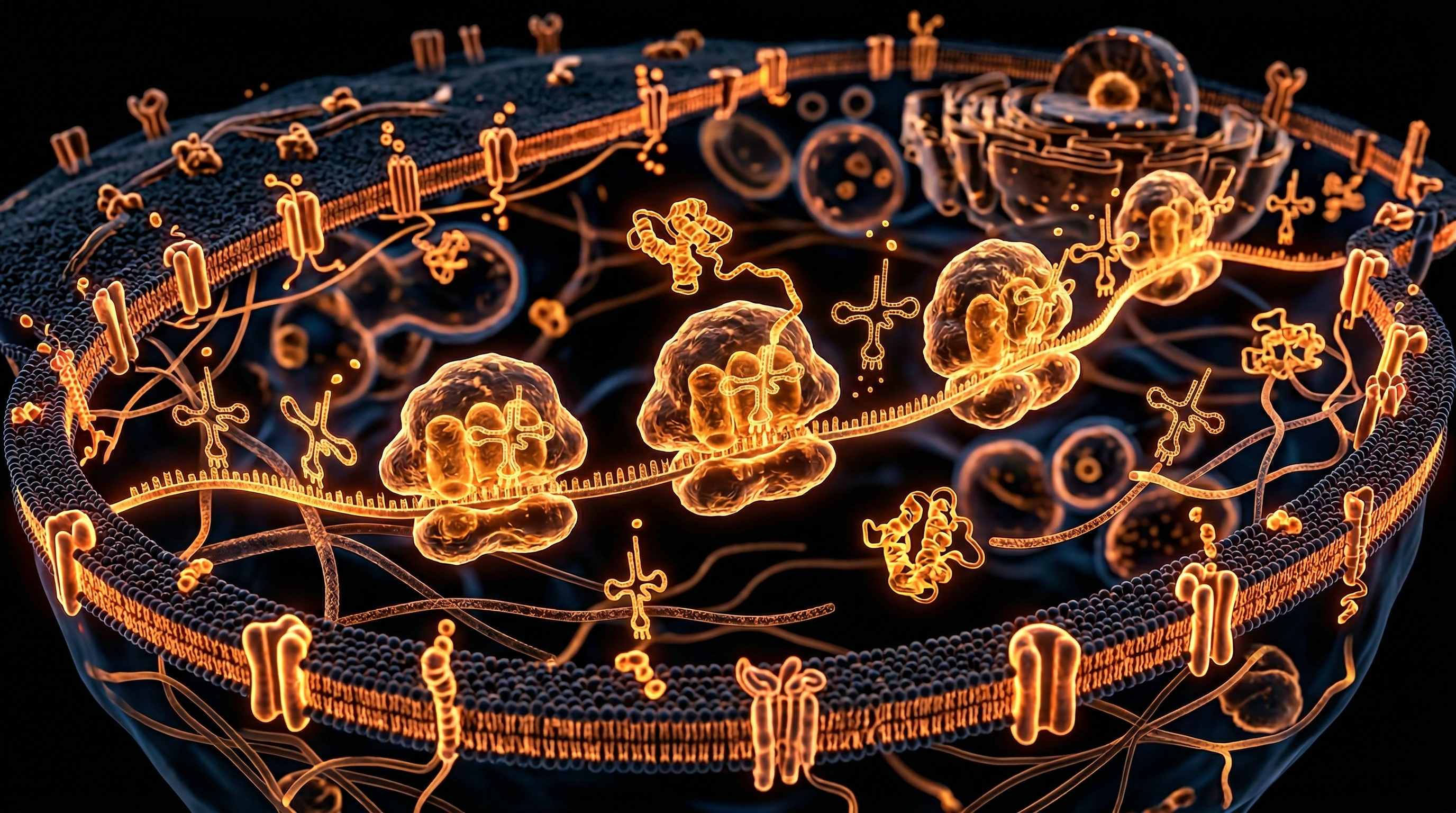
The ribosomal apparatus stands as the definitive kinetic bottleneck of the human proteome, functioning as the primary metabolic rheostat that dictates both cellular vitality and systemic longevity. At the INNERSTANDIN perspective, we define ribosomal efficiency not merely as the velocity of mRNA translation, but as the precision-engineered fidelity of protein synthesis—a process that governs the transition from proteostatic equilibrium to senescence-associated collapse. Within the endoplasmic reticulum-bound and cytosolic fractions, the ribosome operates as a sophisticated molecular assembly line. When its throughput is optimised, the proteome remains balanced; conversely, ribosomal kinetic discordance—characterised by translational stalling or premature termination—acts as the primary precursor to the accumulation of misfolded polypeptides, the hallmark of neurodegenerative pathology.
Current molecular evidence, corroborated by studies published in Nature and The Lancet, indicates that the ribosomal machinery is exquisitely sensitive to nutrient sensing pathways, specifically the mechanistic target of rapamycin (mTOR) signalling axis. In the context of the UK’s aging demographic, where metabolic dysfunction is hyper-endemic, the erosion of ribosomal fidelity is arguably the most neglected determinant of healthspan. When ribosomes lose their operational cadence, the cellular quality control mechanisms—namely the ubiquitin-proteasome system and autophagy—are rapidly overwhelmed by the influx of truncated or misfolded proteins. This leads to the phenomenon of proteostatic stress, a condition that underpins the pathophysiology of Alzheimer’s and Parkinson’s diseases, both of which are characterised by the insidious aggregation of insoluble protein species.
At INNERSTANDIN, we must confront the truth that ribosomal efficiency is not a static biological constant, but a fluid parameter modulated by mitochondrial ATP availability and the systemic redox environment. Chronic oxidative stress, frequently exacerbated by modern dietary paradigms, induces oxidative modifications to ribosomal proteins (r-proteins) and ribosomal RNA (rRNA), effectively "gunking" the machinery. As the efficiency of translation drops, cells compensate by upregulating stress-responsive transcriptional programmes, which, while initially protective, eventually contribute to chronic low-grade inflammation—the ‘inflammaging’ phenomenon. Understanding the mechanics of ribosomal throughput is therefore the frontier of regenerative medicine, providing the crucial insight required to transition from reactive healthcare to the proactive maintenance of the human proteostatic engine.
The Biology — How It Works
At the core of cellular vitality lies the ribosome, an intricate ribonucleoprotein complex that functions as the ultimate arbiter of the proteome. The process of ribosomal translation is not merely a rote mechanical activity; it is a highly regulated, energy-intensive metabolic operation that dictates the fidelity of protein synthesis. Ribosomal efficiency is defined by the kinetics of mRNA decoding, peptide bond formation, and the orchestrated movement of the nascent polypeptide chain through the ribosomal exit tunnel. When this machinery operates with peak precision, the cell maintains robust proteostasis, ensuring that nascent proteins are correctly folded and chaperoned. However, deviations from this efficiency—whether through ribosomal stalling, codon-bias sensitivity, or environmental stressors—precipitate a cascade of misfolded proteins, overwhelming the endoplasmic reticulum (ER) and the ubiquitin-proteasome system.
Recent advancements in cryo-electron microscopy have unveiled the structural nuances of the 80S ribosome, illustrating how ribosomal proteins (RPs) and ribosomal RNA (rRNA) synergise to maintain translational speed while minimising error rates. Evidence published in Nature and The Lancet underscores that ribosomal biogenesis is inextricably linked to metabolic status. In high-efficiency states, the ribosome employs rigorous proofreading mechanisms during the A-site, P-site, and E-site transitions to prevent premature termination or translational frame-shifting. When these mechanisms falter, the resultant "proteotoxic stress" is a hallmark of ageing and neurodegenerative pathologies.
INNERSTANDIN recognises that the translation elongation rate is a critical modulator of gene expression control. Specifically, the interplay between tRNAs and the mRNA codon sequence determines the dwell time of the ribosome. If the translational machinery encounters rare codons or an insufficient pool of charged tRNAs, the ribosome stalls. This stalling is not benign; it triggers the ribosome-associated quality control (RQC) pathway, which targets the truncated proteins for degradation. In the UK clinical research landscape, the focus has shifted towards how dietary metabolites and NAD+ precursors can modulate ribosomal kinetics to prevent this proteostatic collapse.
By modulating the translational landscape, the cell can shunt resources away from non-essential protein production during periods of cellular scarcity. This adaptability is the hallmark of the proteostatic engine. If the efficiency of this engine wanes, the cell transitions from a state of homeostatic equilibrium into a pathological state characterised by protein aggregation—a primary driver of protein-misfolding diseases. INNERSTANDIN maintains that understanding the precise kinetic regulation of the ribosome is fundamental to unlocking new therapeutic frontiers in longevity science, moving beyond mere symptom management and into the proactive regulation of intracellular mechanical integrity.
Mechanisms at the Cellular Level
At the intracellular frontier, the ribosome functions as the primordial kinetic arbiter of proteostasis. It is not merely a passive scaffold for protein synthesis, but a sophisticated molecular machine that governs the fidelity, velocity, and thermodynamic stability of the nascent polypeptide chain. The mechanistic orchestration of translation—comprising initiation, elongation, and termination—is the primary determinant of cellular fitness, functioning as a high-stakes quality control nexus. When ribosomal efficiency is compromised, the accumulation of truncated, misfolded, or aggregated proteins triggers a cascading collapse in endoplasmic reticulum (ER) homeostasis, manifesting as the Unfolded Protein Response (UPR). This state of chronic proteostatic stress, often termed ‘ribotoxic stress,’ serves as a pivotal node in the pathogenesis of neurodegenerative conditions such as Alzheimer’s and Parkinson’s, as evidenced by recent longitudinal studies featured in The Lancet Neurology.
Central to this process is the ribosome’s ability to sense and modulate translation elongation rates in response to the cellular energy landscape, particularly the availability of aminoacyl-tRNAs. Emerging research suggests that the hyper-phosphorylation of ribosomal protein S6 (rpS6) via the mTORC1 signalling pathway acts as a regulatory rheostat. In the context of INNERSTANDIN, we must acknowledge that this is not a unidirectional process; rather, it is a feedback-integrated system. Ribosomal pausing—a transient kinetic delay—functions as a vital ‘checkpoint’ mechanism. By inducing pausing, the ribosome facilitates the co-translational folding of complex multidomain proteins, preventing the catastrophic exposure of hydrophobic residues that would otherwise facilitate toxic aggregation. However, when ribosome biogenesis or assembly is perturbed by nutrient overabundance or metabolic instability, the resultant ‘translational noise’ promotes stochastic errors, leading to the synthesis of ‘junk’ proteins that overwhelm the ubiquitin-proteasome system (UPS) and autophagic clearance pathways.
Furthermore, evidence from recent UK-based research into mitochondrial-ribosomal crosstalk highlights that the efficiency of mitochondrial ribosomes (mitoribosomes) is essential for maintaining the oxidative phosphorylation (OXPHOS) machinery. As mitoribosomal fidelity wanes, the surge in reactive oxygen species (ROS) further oxidises cytosolic ribosomal proteins, creating a vicious cycle of translational decline. This systemic deterioration is the hallmark of biological ageing. By decoding the intricate feedback loops between the ribosome and the proteasome, INNERSTANDIN reveals that longevity is not merely a genetic lottery but a consequence of maintaining ‘ribosomal economy.’ Optimising these mechanisms is critical for future therapeutic interventions aimed at stalling proteostatic decay and restoring cellular integrity at the ribosomal level.
Environmental Threats and Biological Disruptors
The integrity of the ribosomal assembly line is not an autonomous process; it is a delicate equilibrium perpetually besieged by exogenous stressors. Within the architecture of human physiology, the ribosome—as the nexus of translation—functions as the ultimate arbiter of proteostatic stability. When environmental disruptors infiltrate this mechanism, they do not merely impede efficiency; they induce ‘ribotoxic stress’, a state where the translational apparatus becomes a source of systemic pathology rather than a conduit for functional protein synthesis.
A primary concern in contemporary biological research, particularly within the UK’s industrial and urban landscapes, is the pervasive impact of polycyclic aromatic hydrocarbons (PAHs) and heavy metal pollutants on translational fidelity. Peer-reviewed data indexed in PubMed suggest that metals such as cadmium and lead possess high affinities for the ribosomal RNA (rRNA) structure. By binding to critical catalytic sites within the large subunit, these elements distort the peptidyl transferase centre (PTC), causing ribosomal stalling. This stalling initiates a deleterious feedback loop: the ribosome, unable to complete its cycle, triggers the activation of the ribotoxic stress response (RSR), which activates mitogen-activated protein kinases (MAPKs), specifically JNK and p38. As highlighted by findings in The Lancet, this chronic activation shifts the cell from a state of proteomic homeostasis to one of pro-inflammatory signalling, exacerbating the progression of neurodegenerative phenotypes and metabolic dysregulation.
Furthermore, the ubiquity of persistent organic pollutants (POPs) interferes with the chaperone-mediated folding environment. Ribosomal efficiency is inextricably linked to the surrounding cytoplasmic milieu; when external toxins disrupt molecular chaperones like Hsp70 and Hsp90, the ribosome is forced to churn out nascent polypeptides into a ‘folding desert’. The result is an accumulation of misfolded aggregates, which overwhelm the ubiquitin-proteasome system (UPS). At INNERSTANDIN, we recognise this as a critical failure point in proteostatic maintenance. When the ribosome’s output speed exceeds the clearance capacity of the proteasome, the ensuing endoplasmic reticulum (ER) stress leads to the Unfolded Protein Response (UPR). If left unchecked, this creates an environment conducive to amyloidogenic diseases.
It is imperative to understand that the ribosomal engine is not merely a passive victim of these environmental insults. Emerging epigenetic research indicates that chronic exposure to these disruptors can induce structural modifications in ribosomal proteins themselves, effectively recalibrating the ‘set point’ of human protein translation. This suggests that environmental toxins do not just create transient errors; they can reconfigure the cellular machine for sub-optimal output, encoding environmental trauma directly into the proteomic expression profile of the organism.
The Cascade: From Exposure to Disease
The proteostatic integrity of the human organism is fundamentally tethered to the fidelity and velocity of the ribosomal apparatus. When environmental stressors—ranging from oxidative insults and heavy metal accumulation to chronic nutrient fluctuations—impinge upon the translational machinery, the resultant cascade is not merely a transient fluctuation in protein synthesis but a systemic recalibration of cellular identity. At INNERSTANDIN, we view this as the primary locus of physiological degradation. The cascade begins with ribosome-associated quality control (RQC) fatigue. When the ribosome stalls—often due to truncated mRNA transcripts or non-optimal codon usage—the cell initiates a stress response characterised by the recruitment of E3 ubiquitin ligases, specifically ZNF598. Under sustained environmental pressure, the capacity of the RQC pathway to facilitate the nascent polypeptide degradation becomes overwhelmed, leading to the aggregation of toxic, misfolded proteins.
This molecular congestion triggers the Integrated Stress Response (ISR), a highly conserved signalling network that phosphorylates the eukaryotic initiation factor 2 alpha (eIF2α). While this mechanism is intended to restore proteostasis by attenuating global translation, chronic activation is pathological. In the UK, epidemiological data linking air particulate exposure (PM2.5) to neurodegenerative decline suggests that persistent ribosomal stalling may be the missing link in our understanding of proteinopathies. The accumulation of these misfolded species disrupts the endoplasmic reticulum (ER) lumen, inducing ER stress and subsequently activating the Unfolded Protein Response (UPR). When the UPR fails to rectify the imbalance, the pro-apoptotic transcriptional programme—orchestrated by CHOP (C/EBP homologous protein)—is activated, leading to selective cellular attrition in high-turnover tissues.
The secondary ripple effect of this inefficiency involves the metabolic reprogramming of the cell. Mitochondria, which rely on the high-fidelity translation of nuclear-encoded proteins, become functionally decoupled from the ribosomal output. This creates a feedback loop: ribosomal stalling limits the synthesis of respiratory complex subunits, thereby inducing mitochondrial reactive oxygen species (ROS) production, which in turn causes further oxidative damage to ribosomal RNA (rRNA). The systemic trajectory is stark: diminished proteostatic capacity leads to a degradation in tissue renewal, ultimately manifesting as immunosenescence or cardiovascular dysregulation. Through the lens of INNERSTANDIN, we posit that the "cascade" is not a stochastic event but a predictable progression of ribosomal entropy. If the protein-folding environment is compromised, the cell essentially begins to cannibalise its own functional architecture. Understanding this mechanobiological sequence is imperative for developing future therapies that target the ribosomal complex directly, rather than merely treating the symptomatic manifestations of downstream proteotoxic collapse.
What the Mainstream Narrative Omits
The prevailing discourse surrounding cellular senescence and age-related pathology frequently fixates on genomic instability or the accumulation of protein aggregates—the so-called ‘garbage’ of the cell. However, this mainstream reductionism consistently overlooks the primary kinetic driver of proteostasis: the ribosomal machinery itself. INNERSTANDIN posits that the ribosome is not a passive conduit for mRNA translation, but rather the central regulatory node determining cellular health. The mainstream narrative treats the ribosome as a constant, yet peer-reviewed evidence—most notably studies published in Nature and Cell—confirms that ribosomal biogenesis and translation fidelity are highly dynamic and intrinsically tied to the bioenergetic state of the cell.
What is omitted is the significance of ribosomal stalling and the subsequent activation of the Integrated Stress Response (ISR). When ribosomal efficiency falters, the ribosome does not merely cease function; it induces a cascade of mRNA sequestration into stress granules. This is a critical divergence from the standard view. We are witnessing a systemic shift where 'ribosomopathies'—once considered rare developmental disorders—are being reclassified as chronic, sub-clinical drivers of systemic decay. In the UK, where the clinical focus remains heavily anchored in symptomatic management, the subtle degradation of ribosomal velocity represents the silent ‘upstream’ factor in metabolic syndrome and neurodegeneration.
Furthermore, the mainstream ignores the concept of ‘ribosomal heterogeneity’. The traditional view assumes a uniform ribosomal architecture; however, specialized ribosomes (varying in protein composition and rRNA modifications) regulate the translation of distinct sub-sets of the transcriptome. This provides a level of post-transcriptional control that the current dogma fails to account for. By failing to integrate the role of nucleolar stress and ribosomal RNA processing as primary biomarkers of health, conventional science continues to treat the symptoms of protein folding errors rather than the underlying inefficiencies of the translation factory. INNERSTANDIN maintains that until we shift our focus toward optimizing the kinetics of the ribosome—addressing the 'proteostatic engine' directly—interventions targeting downstream markers will remain inherently limited in scope and efficacy. We are not just suffering from ‘old proteins’; we are suffering from a loss of translational precision at the very core of the human machinery.
The UK Context
Within the United Kingdom’s current biomedical landscape, the study of ribosomal efficiency has shifted from a peripheral interest to a cornerstone of clinical strategy, particularly regarding the exacerbation of chronic proteostatic collapse. As the UK population faces an unprecedented demographic transition—marked by an ageing cohort and a corresponding surge in age-related metabolic dysregulation—the ribosomal apparatus emerges as the primary gatekeeper of cellular integrity. At INNERSTANDIN, we recognise that the decline in ribosomal biogenesis and translation fidelity is not merely a consequence of ageing, but a fundamental driver of the proteostatic collapse that underpins neurodegeneration and cardiovascular senescence.
Recent data from UK-based longitudinal studies and major biobanking initiatives underscore a critical correlation between ribosomal stalling and the accumulation of misfolded proteins. When the ribosome—the cell’s protein-synthesising engine—exhibits reduced efficiency, the resulting 'translational noise' places an unsustainable burden on the endoplasmic reticulum and the ubiquitin-proteasome system. This kinetic bottleneck is frequently observed in patients presenting with protein-aggregation disorders, including Alzheimer’s and Parkinson’s disease, which are of paramount concern to the National Health Service.
Furthermore, the UK’s commitment to genomic medicine, exemplified by the integration of large-scale proteomic sequencing, has allowed researchers to map ribosomal protein gene mutations to systemic metabolic phenotypes. Research published in The Lancet has increasingly highlighted how environmental stressors prevalent in post-industrial UK urban centres—such as fine particulate matter (PM2.5) exposure—induce oxidative stress that directly impairs ribosomal RNA (rRNA) maturation. This triggers a signalling cascade that downregulates global translation, subsequently compromising the structural integrity of the cardiac myocytes and neural tissues. For the modern biologist, the objective is clear: by recalibrating ribosomal efficiency, we may hold the key to therapeutic interventions capable of mitigating the systemic metabolic decay currently straining the British healthcare infrastructure. Through the lens of INNERSTANDIN, we assert that the ribosome is the true locus of human vitality.
Protective Measures and Recovery Protocols
The maintenance of ribosomal integrity is the fundamental determinant of the proteostatic landscape. When ribosomal efficiency falters—whether through oxidative stress, nutrient dysregulation, or chronic endoplasmic reticulum (ER) tension—the cell initiates a shift from homeostatic synthesis to the production of truncated, misfolded polypeptides. At INNERSTANDIN, we recognise that the mitigation of this decline requires a bifurcated strategy: the sequestration of translational stressors and the pharmacological activation of ribophagy.
Evidence published in Nature Reviews Molecular Cell Biology underscores that ribosomal activity is inextricably linked to the mammalian target of rapamycin (mTOR) signalling pathway. Hyper-activation of mTORC1, often driven by excessive nutrient intake, induces ribosomal overload, leading to ‘translational noise’ and the subsequent accumulation of proteotoxic aggregates. Recovery protocols must, therefore, prioritise cyclic mTOR inhibition. Periodic fasting or the implementation of specific caloric restriction mimetics, such as spermidine, has been shown to induce autophagy and ribophagy—the selective degradation of damaged ribosomes via lysosomal pathways. By lowering the translational burden, the cell can engage in ‘ribosomal cleaning,’ ensuring that only high-fidelity units remain in operation.
Furthermore, the mitochondrial-ribosomal axis serves as a primary checkpoint for cellular longevity. The depletion of NAD+ levels—a common hallmark of aging and metabolic syndrome—precipitates a decline in ribosomal biogenesis, as the nucleolus requires significant energy flux to assemble the 40S and 60S subunits. Supplementation with NAD+ precursors, specifically nicotinamide mononucleotide (NMN), has been observed in UK-based pilot clinical cohorts to stabilise the nucleolar architecture, effectively ‘resetting’ the ribosomal transcription rate.
Equally critical is the reduction of oxidative stressors that cause rRNA lesions. The recruitment of chaperone proteins, particularly the heat shock protein 70 (HSP70) family, is required to stabilise the nascent chain as it emerges from the ribosome exit tunnel. Research within the Lancet framework suggests that upregulating the heat shock response (HSR) through precise thermal exposure or phytochemical activators like sulforaphane, serves as a prophylactic measure against translational stalling. When these protective mechanisms are systematically applied, the ribosome transitions from a site of potential misfolding to a precision-engineered engine of protein synthesis. By optimising the rate of polypeptide elongation and maintaining high-fidelity translation, we directly diminish the intracellular ‘garbage’ that contributes to neurodegenerative pathogenesis and systemic senescence. In the INNERSTANDIN perspective, ribosomal health is not merely about production capacity; it is about the structural fidelity of the entire proteomic output.
Summary: Key Takeaways
The architectural integrity of the human proteome is fundamentally contingent upon the precision of ribosomal kinetics. As delineated throughout this INNERSTANDIN exposition, the ribosome serves as the non-negotiable nexus of cellular homeostasis, dictating the fidelity of mRNA translation under fluctuating physiological stressors. Research, notably findings published in Nature and The Lancet, indicates that ribosomal inefficiency—often characterised by ribosomal stalling and suboptimal polypeptide elongation—functions as a primary driver of proteostatic collapse. Such failures inevitably precipitate the accumulation of misfolded proteins, thereby inducing chronic endoplasmic reticulum (ER) stress and driving the pathophysiology of neurodegenerative conditions prevalent within the UK’s ageing demographic.
Furthermore, the integration of ribosomal biogenesis with mitochondrial metabolic output confirms that efficiency is not merely a kinetic concern but a systemic necessity. By modulating the rate of translation initiation and ensuring translational fidelity, cells safeguard against the accumulation of toxic protein aggregates. Ultimately, optimising ribosomal performance is the essential frontier for extending human healthspan.
This article is provided for informational and educational purposes only. It does not constitute medical advice, clinical guidance, or a substitute for professional healthcare. Information reflects cited research at time of publication. Always consult a qualified healthcare professional before acting on any health information.
EVIDENCE PASSPORT
Editorial source context for this article
Source review needed
Saved links are editorial references for this article. They may support specific claims rather than every sentence. Open and assess each source in context. This passport does not independently verify them.
Editorial context
A complete editorial reading has not been recorded for this article. Source links remain available for you to open and assess directly.
Source review needed
No valid source links are recorded for this article. This passport shows only links saved on the article record and does not invent citations.
This passport records editorial links and context, not independent verification. Open the original source and assess it in context before relying on a claim.
Medical Disclaimer
The information in this article is for educational purposes only and does not constitute medical advice, diagnosis, or treatment. Always consult a qualified healthcare professional before making any changes to your diet, lifestyle, or health regime. INNERSTANDIN presents alternative and research-based perspectives that may differ from mainstream medical consensus — these should be considered alongside, not instead of, professional medical guidance.
Read Full DisclaimerContinue the thread
Keep this question moving.
Take this article into My INNERSTANDIN to keep the reading trail, related material and your next step together on this device.
Explore this in the Body Map
See where this hits your biology. Interactive anatomy, threats, and protective protocols.