
Saturated Fat: Re-evaluating NHS Guidelines
Updated May 2026
The historical vilification of saturated fat is being challenged by modern lipid science. We examine the biological nuances of different saturated fatty acids and their actual impact on British heart health.
Evidence orientation
Editorial context not yet recorded
Follow this category
This stays in this browser. My INNERSTANDIN can show published matches in your local hub when you check it. It does not send email, push, or alert notifications.
Local learning review
A private browser aid for revisiting ideas. It is not an alert or a health recommendation.
Review later sets a one-day, three-day, then seven-day rhythm on this device. Choose it only when you want to revisit this article.
Overview
For over half a century, the nutritional landscape of the United Kingdom has been dominated by a single, monolithic directive: saturated fat is the primary driver of cardiovascular disease (CVD). This "diet-heart hypothesis," originally exported from American laboratories in the mid-20th century, has formed the bedrock of NHS dietary advice, leading to the systematic replacement of traditional animal fats with industrial seed oils and processed carbohydrates.
However, as we progress further into the 21st century, a profound dissonance has emerged between official guidelines and the burgeoning body of lipid science. Despite the British public’s general adherence to "low-fat" and "heart-healthy" spreads, the incidence of metabolic syndrome, Type 2 diabetes, and obesity has reached unprecedented levels. The historical vilification of saturated fatty acids (SFAs) is now being scrutinised not just as a potential scientific error, but as a catastrophic public health misstep.
At INNERSTANDING, we recognize that biological truths are often buried beneath layers of bureaucratic inertia and corporate influence. This article serves as a comprehensive re-evaluation of the lipid hypothesis. We will dismantle the simplistic "clogged pipe" model of atherosclerosis and explore the biochemical reality of how different saturated fats interact with human physiology. From the mitochondrial membrane to the signalling pathways of the liver, the role of saturated fat is far more nuanced—and far more essential—than the NHS "Eatwell Guide" would suggest.
Fact: The landmark 1983 UK dietary guidelines, which recommended reducing fat intake to 30% and saturated fat to 10%, were introduced despite the fact that no randomised controlled trials (RCTs) involving British populations had demonstrated a mortality benefit from such restrictions at the time.
The Biology — How It Works
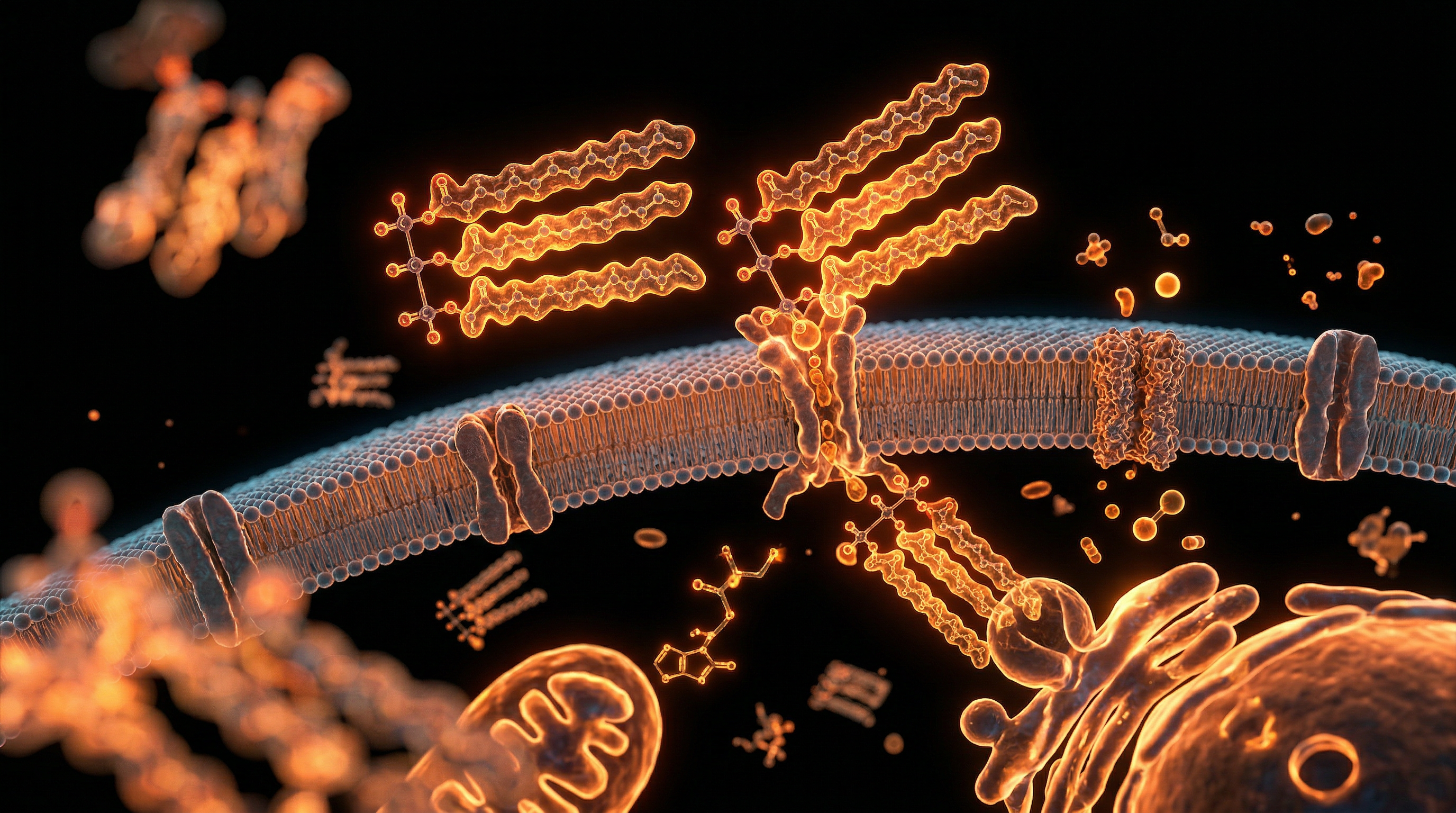
To understand why the mainstream narrative is flawed, we must first understand what a saturated fatty acid actually is at a molecular level. The term "saturated" refers to the chemical structure of the hydrocarbon chain. In an SFA, every carbon atom is "saturated" with hydrogen atoms, meaning there are no double bonds between carbon atoms.
Chemical Stability and Resistance to Oxidation
This lack of double bonds is the defining characteristic of SFAs. Double bonds, found in monounsaturated (MUFAs) and polyunsaturated fatty acids (PUFAs), create "kinks" in the molecular chain and, more importantly, represent points of high chemical reactivity. These sites are vulnerable to lipid peroxidation—the process by which oxygen radicals attack the fat molecule, turning it rancid (toxic).
Because SFAs lack these vulnerable sites, they are exceptionally stable. They do not easily oxidise when exposed to heat, light, or oxygen. In the context of human biology, this stability is a vital asset. Our internal body temperature is approximately 37°C—an environment that promotes the oxidation of unstable vegetable oils but leaves saturated fats intact.
The Diversity of Saturated Fats
Mainstream guidelines often treat "saturated fat" as a homogenous toxin. In reality, SFAs are a diverse class of molecules categorised by their chain length, each possessing distinct metabolic effects:
- Short-Chain Fatty Acids (SCFAs): Such as Butyric acid (C4), primarily produced by gut fermentation of fibre but also found in butter. These are crucial for colonic health and possess potent anti-inflammatory properties.
- Medium-Chain Fatty Acids (MCFAs): Such as Lauric acid (C12) and Caprylic acid (C8), found in coconut oil and breast milk. These are sent directly to the liver via the portal vein for immediate energy (ketone production), bypassing the lymphatic system.
- Long-Chain Fatty Acids (LCFAs): Such as Palmitic acid (C16) and Stearic acid (C18), found in tallow, lard, and cocoa butter. These are the primary structural fats in the human body.
Mechanisms at the Cellular Level
The biological necessity of saturated fat extends to the very structure of our cells. Every cell in the human body is encased in a phospholipid bilayer—a membrane that dictates what enters and exits the cell.
Membrane Integrity and Fluidity
A healthy cell membrane requires a precise balance of saturated and unsaturated fats. Saturated fats provide the necessary structural rigidity and "tightness" to the membrane, preventing it from becoming too porous. Without adequate SFAs, cell membranes become excessively fluid and "leaky," compromising the cell's ability to maintain ion gradients and respond to hormonal signals.
Mitochondrial Function
Recent research has highlighted the role of Stearic acid (C18:0) in mitochondrial dynamics. Mitochondria, the "powerhouses" of the cell, must constantly undergo fusion and fission to maintain health. Stearic acid has been shown to signal for mitochondrial fusion, a process that "cleans up" damaged mitochondria and improves energy efficiency. Conversely, high intakes of polyunsaturated linoleic acid (found in sunflower and soybean oils) can lead to mitochondrial fragmentation and dysfunction.
Signal Transduction and Protein Palmitoylation
The body uses SFAs to "tag" certain proteins, a process known as palmitoylation. By attaching a palmitic acid molecule to a protein, the body can direct that protein to a specific location on the cell membrane. This is critical for:
- G-protein coupled receptors, which mediate the effects of hormones like adrenaline.
- Immune system signalling, ensuring that white blood cells can respond effectively to pathogens.
Callout: Over 50% of the human cell membrane is composed of saturated fatty acids, providing the physical framework for cellular communication and protection.
Environmental Threats and Biological Disruptors
The modern British diet is not merely "high in fat"; it is high in the wrong kind of fat, often consumed alongside biological disruptors that exacerbate metabolic damage. The NHS's failure to distinguish between naturally occurring SFAs and modern industrial "franken-fats" is a primary source of the current health crisis.
The Rise of Industrial Seed Oils
The most significant environmental threat to British cardiovascular health over the last 50 years has been the displacement of butter and dripping by refined vegetable oils (omega-6 rich seed oils). These oils, extracted using high heat and chemical solvents like hexane, are inherently unstable.
When these oils are integrated into our tissues, they increase the "oxidative load" of the body. The real danger occurs when these unstable fats are incorporated into Low-Density Lipoprotein (LDL) particles. It is not the presence of LDL that causes heart disease, but the oxidation of the fats within the LDL. Saturated fats, being resistant to oxidation, actually protect the LDL particle from becoming pathogenic.
The Sugar-SFA Synergy
The "Standard British Diet" often combines saturated fats with highly refined carbohydrates (e.g., pastries, biscuits, sweetened dairy). This combination is metabolically disastrous. High insulin levels (driven by sugar) tell the body to store fat rather than burn it. Furthermore, the liver converts excess sugar into Palmitic acid through a process called de novo lipogenesis.
Crucially, the saturated fat measured in the blood of people with heart disease is often not the fat they ate, but the fat their liver manufactured from sugar. The NHS guidelines fail to make this distinction, blaming dietary butter for the sins of dietary sugar.
Glyphosate and Metabolic Interference
Emerging evidence suggests that environmental toxins like glyphosate (the active ingredient in many herbicides used in UK wheat and oilseed rape production) may interfere with the body's ability to transport and metabolise fats. By disrupting the cytochrome P450 enzymes in the liver, these chemicals may impair the synthesis of bile acids, leading to poor fat digestion and systemic inflammation.
The Cascade: From Exposure to Disease
The progression from a healthy metabolism to cardiovascular disease is not a simple matter of "fat sticking to arteries." It is a complex inflammatory cascade.
Step 1: The Transition to Small Dense LDL
The total amount of cholesterol in the blood is a poor predictor of heart disease risk. What matters is the particle size.
- Pattern A: Large, buoyant LDL particles (induced by saturated fat consumption). These are harmless and move freely through the circulatory system.
- Pattern B: Small, dense LDL (sdLDL) particles (induced by high carbohydrate intake and seed oil consumption). These are small enough to slip under the arterial lining (the endothelium).
Step 2: Oxidation and Macrophage Recruitment
Once sdLDL particles are trapped in the arterial wall, if they are composed of unstable PUFAs, they oxidise. The immune system identifies these oxidised particles as foreign invaders. White blood cells called macrophages arrive to "eat" the oxidised fat.
Step 3: Foam Cell Formation and Plaque
When macrophages gorge themselves on oxidised cholesterol, they turn into foam cells. These cells die and accumulate, forming a fatty streak that eventually hardens into atherosclerotic plaque.
Saturated fat plays no role in this inflammatory initiation. In fact, by raising the proportion of Large, buoyant LDL (Pattern A), saturated fat intake acts as a protective buffer against this cascade.
What the Mainstream Narrative Omits
The NHS and other health bodies frequently cite a "consensus" regarding saturated fat. However, this consensus is built on a foundation of selective reporting and the exclusion of contradictory evidence.
The Failure of the "Heart-Diet" Trials
Several massive, gold-standard trials conducted in the 1960s and 70s were suppressed or ignored for decades because their results did not support the low-fat dogma:
- The Minnesota Coronary Experiment (MCE): A large RCT that replaced saturated fat with corn oil. While the corn oil group successfully lowered their cholesterol, they had a higher risk of death. The researchers didn't publish these findings for 16 years.
- The Sydney Diet Heart Study: Similarly showed that replacing animal fats with safflower oil increased the risk of death from all causes and cardiovascular disease.
- The PURE Study (2017): A massive global study involving over 135,000 participants across five continents. It found that high fat intake (including saturated fat) was associated with a lower risk of total mortality, while high carbohydrate intake was associated with increased mortality.
The "Saturated Fat raises LDL" Half-Truth
The NHS's primary argument against SFA is that it raises LDL cholesterol. This is true, but it is an incomplete metric. SFA also raises HDL (the "good" cholesterol) and lowers triglycerides.
The most accurate predictor of heart disease is the Triglyceride-to-HDL ratio. A diet high in saturated fat and low in refined starch consistently improves this ratio, whereas the NHS-recommended low-fat, high-carbohydrate diet often worsens it.
Stat: A 2010 meta-analysis published in the American Journal of Clinical Nutrition, involving 347,747 subjects, found "no significant evidence for concluding that dietary saturated fat is associated with an increased risk of CHD or CVD."
The UK Context
The United Kingdom presents a unique case study in the failure of the low-fat experiment. Since the implementation of the COMA (Committee on Medical Aspects of Food Policy) reports in the 1980s, the British diet has shifted dramatically.
The "Eatwell Guide" Critique
The current NHS "Eatwell Guide" suggests that the base of our diet should be starchy carbohydrates (potatoes, bread, rice, pasta), while "saturated fat" (butter, fatty meats) should be kept to a minimum.
This advice has coincided with:
- A 400% increase in Type 2 Diabetes diagnoses since 1996.
- Over 60% of British adults being classified as overweight or obese.
- Non-Alcoholic Fatty Liver Disease (NAFLD) becoming the leading cause of liver disease in the UK.
The Displacement of Traditional British Fats
Historically, the British population relied on tallow (beef fat), lard (pork fat), and butter. These fats are local, stable, and nutrient-dense. Lard, for instance, is one of the richest sources of Vitamin D in the traditional diet—a nutrient in which the British population is chronically deficient. By vilifying these fats, the NHS has inadvertently encouraged the consumption of ultra-processed "vegetable" spreads and sunflower oils, which lack fat-soluble vitamins and promote systemic inflammation.
The Economic Burden
The NHS spends approximately £6 billion annually on treating overweight and obesity-related ill-health. This figure is projected to rise to £9.7 billion by 2050. Much of this cost is driven by chronic metabolic diseases that are arguably the result of the very dietary guidelines intended to prevent them.
Protective Measures and Recovery Protocols
For the individual seeking to reclaim their health from outdated guidelines, a shift in perspective is required. Protecting the cardiovascular system is not about avoiding fat; it is about choosing evolutionarily consistent fats and maintaining metabolic flexibility.
1. Reintroducing Stable Fats
The first step in any recovery protocol is to eliminate industrial seed oils (sunflower, rapeseed, corn, soybean) and replace them with stable, saturated, and monounsaturated fats:
- Tallow and Lard: Excellent for high-heat cooking (roasting, frying).
- Butter and Ghee: Rich in butyrate and fat-soluble vitamins (A, D, E, K2).
- Coconut Oil: Provides MCFAs for immediate cognitive energy.
- Extra Virgin Olive Oil: Primarily monounsaturated, but stable enough for light cooking and cold dressings.
2. Prioritising Vitamin K2
Saturated fats often come packaged with Vitamin K2 (found in grass-fed butter and aged cheeses). K2 is the "traffic cop" for calcium; it ensures that calcium goes into the bones and teeth rather than the soft tissues like the arteries. The NHS focus on "low-fat dairy" has stripped the British diet of this essential cardioprotective nutrient.
3. Achieving Metabolic Flexibility
The body should be able to switch seamlessly between burning glucose (carbs) and burning fatty acids/ketones. High-carbohydrate, low-fat diets lock the body into "glucose-only" mode, leading to insulin resistance. By increasing SFA intake and reducing refined sugars, the body regains its ability to oxidise fat efficiently—a state known as metabolic flexibility.
4. Sourcing and Quality
Not all saturated fats are created equal. The fat of a grain-fed, factory-farmed cow contains a different fatty acid profile and more stored toxins than the fat of a grass-fed, pasture-raised animal.
- Grass-Fed Beef/Dairy: Higher in Omega-3s and Conjugated Linoleic Acid (CLA), which has anti-cancer and fat-burning properties.
- Organic and Local: Reduces exposure to the environmental disruptors (pesticides/hormones) that interfere with lipid metabolism.
5. Monitoring the Right Markers
Discard the obsession with "Total Cholesterol." Instead, request a full lipid panel and focus on:
- Triglycerides: Should be low (under 1.0 mmol/L).
- HDL: Should be high (over 1.5 mmol/L).
- HbA1c: A measure of average blood sugar over 3 months.
- HS-CRP: A marker of systemic inflammation.
Summary: Key Takeaways
The narrative that saturated fat "clogs" arteries is a 1950s oversimplification that has failed the test of modern science. The re-evaluation of NHS guidelines is not just a scientific necessity; it is a public health emergency.
- Saturated fats are chemically stable: Unlike vegetable oils, they do not easily oxidise into toxic compounds within the body.
- The "Diet-Heart Hypothesis" lacks evidence: Major clinical trials have failed to show that reducing saturated fat prevents heart attacks or increases lifespan.
- Structure is function: Saturated fats are essential components of cell membranes and are necessary for healthy mitochondrial function and hormone signalling.
- The real culprits are refined: The combination of industrial seed oils (omega-6) and refined carbohydrates is the true driver of the British obesity and heart disease epidemic.
- Traditional is better: Returning to the fats our ancestors used—butter, tallow, and lard—sourced from high-quality animal husbandry, provides the nutrients necessary for a resilient cardiovascular system.
At INNERSTANDING, we believe that true health begins with the courage to question "settled" science. The British public has been misled for decades. It is time to move beyond the fear of fat and embrace the biological reality of our nutritional needs. The path to heart health is not paved with margarine and grains, but with the stable, nourishing fats that have sustained human life for millennia.
"References for further study (Internal Archive):"
- The Big Fat Surprise by Nina Teicholz.
- The Cholesterol Con by Dr. Malcolm Kendrick.
- The PURE Study, The Lancet (2017).
- Siri-Tarino et al. Meta-analysis, American Journal of Clinical Nutrition (2010).
This article is provided for informational and educational purposes only. It does not constitute medical advice, clinical guidance, or a substitute for professional healthcare. Information reflects cited research at time of publication. Always consult a qualified healthcare professional before acting on any health information.
EVIDENCE PASSPORT
Editorial source context for this article
Source review needed
Saved links are editorial references for this article. They may support specific claims rather than every sentence. Open and assess each source in context. This passport does not independently verify them.
Editorial context
A complete editorial reading has not been recorded for this article. Source links remain available for you to open and assess directly.
Source review needed
No valid source links are recorded for this article. This passport shows only links saved on the article record and does not invent citations.
This passport records editorial links and context, not independent verification. Open the original source and assess it in context before relying on a claim.
Medical Disclaimer
The information in this article is for educational purposes only and does not constitute medical advice, diagnosis, or treatment. Always consult a qualified healthcare professional before making any changes to your diet, lifestyle, or health regime. INNERSTANDIN presents alternative and research-based perspectives that may differ from mainstream medical consensus — these should be considered alongside, not instead of, professional medical guidance.
Read Full DisclaimerContinue the thread
Keep this question moving.
Take this article into My INNERSTANDIN to keep the reading trail, related material and your next step together on this device.
Dig deeper in the Library
Free, longform PDF volumes that go beyond headlines into mechanisms and references.