
Self-Diagnosing 2.0: Using AI to Decode Your Personal Biology and Circumvent Generic Health Advice
Updated May 2026
Evaluate how AI interprets biometric datasets to replace population-averaged protocols with precise, individualized health strategies grounded in unique physiological architecture.
Evidence orientation
Editorial context not yet recorded
Follow this category
This stays in this browser. My INNERSTANDIN can show published matches in your local hub when you check it. It does not send email, push, or alert notifications.
Local learning review
A private browser aid for revisiting ideas. It is not an alert or a health recommendation.
Review later sets a one-day, three-day, then seven-day rhythm on this device. Choose it only when you want to revisit this article.
Overview
The current paradigm of clinical practice is built upon the statistical phantom of the "average patient," a demographic abstraction that increasingly fails to account for the stochastic nature of individual molecular biology. For decades, the UK’s primary care framework has relied on population-level guidelines—such as those issued by NICE—which, while effective for public health triaging, often neglect the nuanced epigenetic and metabolic variations that define personal health. Self-Diagnosing 2.0 represents a radical departure from this reactive, "one-size-fits-all" model. By leveraging advanced machine learning architectures and large language models (LLMs), individuals are now bypass-ing traditional diagnostic bottlenecks to perform what can be termed "Deep Phenotyping." This involves the synthesis of multi-omic data—incorporating genomic predispositions, real-time glycaemic variability, and gut microbiome composition—to identify sub-clinical homeostatic imbalances before they manifest as chronic pathology.
At the core of this transition is the capability of AI to process non-linear biological data at a scale impossible for human clinicians. Research published in The Lancet Digital Health underscores the superior predictive power of neural networks in identifying patterns within complex datasets, such as the interplay between systemic inflammation (C-reactive protein levels) and circadian rhythm disruption. Traditional health advice often categorises symptoms into siloed pathologies; however, AI-driven biological decoding views the body as an integrated biophysical system. For instance, rather than addressing "fatigue" through generic lifestyle interventions, the Self-Diagnosing 2.0 approach utilises AI to correlate continuous glucose monitor (CGM) telemetry with heart rate variability (HRV) and nutritional pharmacogenomics. This allows for the identification of specific metabolic inflexibility or dysregulation of the hypothalamic-pituitary-adrenal (HPA) axis that generic blood panels frequently overlook.
Furthermore, the integration of polygenic risk scores (PRS) into personal health AI provides a longitudinal foresight that the current NHS model cannot practically offer. As highlighted in Nature Medicine, the ability to quantify cumulative genetic risk for conditions like coronary artery disease or Type 2 diabetes enables the individual to implement "precision prophylaxis." This is not merely about symptom tracking; it is about the algorithmic elucidation of one's unique biological "operating system." At INNERSTANDIN, we recognise that this shift necessitates a high degree of biological literacy. The individual is no longer a passive recipient of health services but an active curator of their own physiological data. By utilising AI to decode the proteomic and metabolomic signals of the body, the bio-literate citizen can circumvent the inertia of generic medical advice, transitioning from speculative wellness to high-fidelity biological optimisation. This section explores the mechanisms through which these computational tools interface with human biochemistry, exposing the limitations of the traditional diagnostic gaze.
The Biology — How It Works
The transition from reactive "Dr. Google" queries to the sophisticated infrastructure of Self-Diagnosing 2.0 is underpinned by the convergence of high-throughput multi-omics and deep learning architectures. At the biological core of this shift is the transition from population-averaged reference ranges to N-of-1 longitudinal biological profiling. Traditional clinical diagnostics in the UK frequently rely on the "Normal Distribution" model, where an individual’s health is assessed against a mean derived from a heterogenous population. However, AI-driven decoding identifies the "personal baseline"—a precise physiological signature that accounts for stochastic biological variation.
The primary mechanism involves the integration of multimodal data streams through neural networks, specifically transformer architectures capable of processing sequential biological data. In the UK context, researchers utilizing the UK Biobank have demonstrated that AI can synthesize polygenic risk scores (PRS) with real-time phenotypic data to predict disease trajectories with greater accuracy than standard NHS QRISK3 tools. By analyzing genomic SNPs (Single Nucleotide Polymorphisms) alongside transcriptomic expression patterns, AI models can infer the functional state of specific metabolic pathways. For example, rather than simply measuring fasting glucose, an AI-enabled approach processes continuous glucose monitoring (CGM) telemetry to calculate glycemic variability and insulin sensitivity indices. Research published in The Lancet Digital Health highlights that these algorithmic inferences can detect early-stage metabolic dysfunction—such as impaired glucose tolerance—years before HbA1c levels breach the clinical threshold for pre-diabetes.
Systemically, this process deconstructs the "interactome"—the complex map of molecular interactions within the human body. AI platforms analyze the microbiome-metabolic axis by correlating the abundance of specific taxa (such as Faecalibacterium prausnitzii) with systemic inflammatory markers like C-reactive protein (CRP) and interleukin-6 (IL-6). At INNERSTANDIN, we recognize that this level of granularity exposes the limitations of generic health advice; a diet deemed "heart-healthy" by public health guidelines may, in a specific biological context, trigger a pro-inflammatory postprandial response due to unique microbial metabolite production.
Furthermore, the biological impact extends to the autonomic nervous system (ANS). AI-driven analysis of heart rate variability (HRV) and nocturnal skin temperature—processed via Bayesian inference models—allows for the detection of "allostatic load" shifts. These subtle deviations in the circadian rhythm of cortisol and melatonin secretion are often invisible in standard blood panels but are captured by the high-frequency sampling of the Self-Diagnosing 2.0 stack. By mapping these signals, individuals can circumvent the "one-size-fits-all" model, instead leveraging AI to modulate their biological terrain in real-time, effectively moving from a state of passive symptom observation to active molecular management. This is the essence of biological sovereignty: using computational intelligence to decode the idiosyncratic language of one's own cellular physiology.
Mechanisms at the Cellular Level
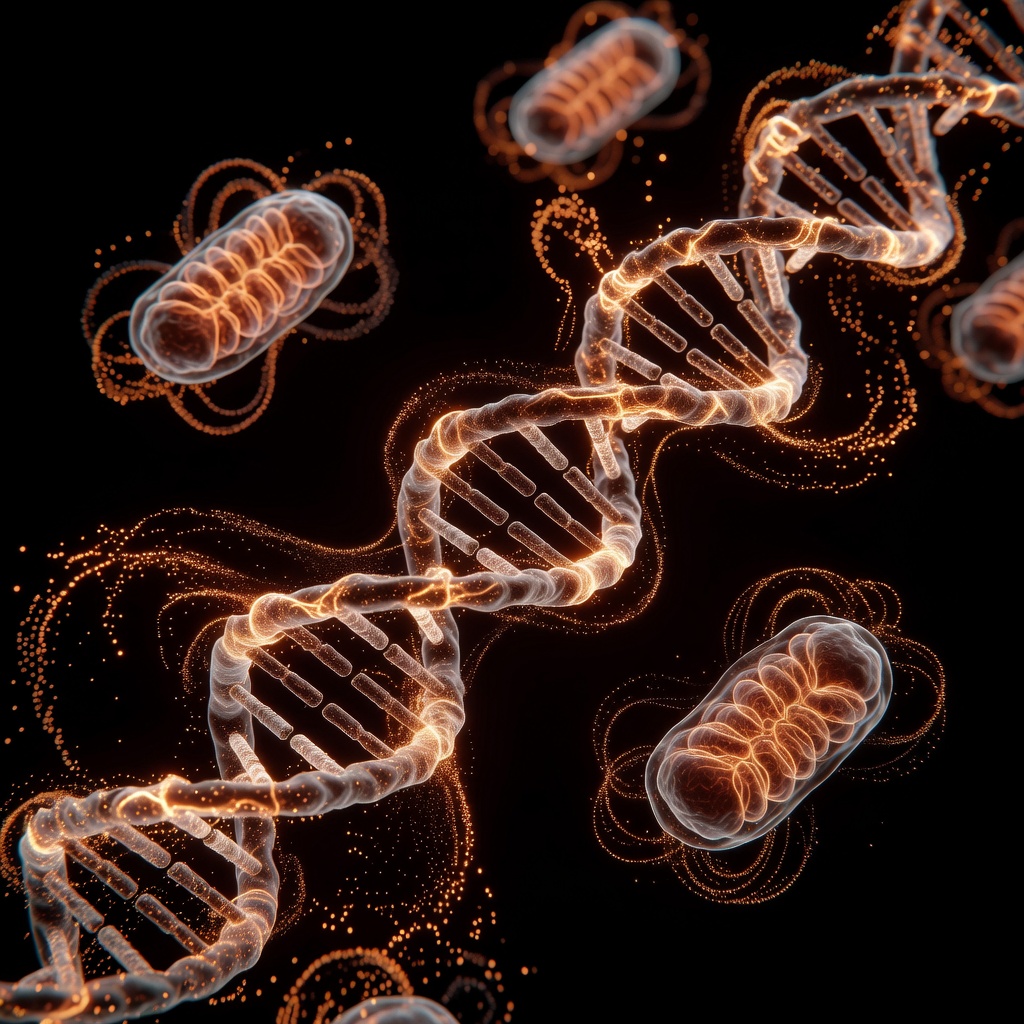
The paradigm of Self-Diagnosing 2.0 represents a radical departure from the clinical hegemony of the 'average patient' model, shifting the focus from population-wide benchmarks to the granular kinetic variations of an individual’s intracellular pathways. At the core of this transition is the capacity of advanced AI to synthesise high-dimensional multi-omics data—specifically metabolomics and proteomics—into a coherent map of an individual’s biochemical individuality. Standard NHS diagnostic protocols often rely on static reference ranges that fail to account for the stochastic nature of cellular signalling. Conversely, AI-driven analysis facilitates a deep-dive into the mitophagy-lysosome axis and the efficiency of the electron transport chain (ETC), identifying subtle decoupling in oxidative phosphorylation that precedes overt pathology.
At the level of the mitochondrial matrix, AI algorithms can now predict metabolic flexibility by analysing the ratio of acylcarnitines to organic acids, providing a real-time assessment of fatty acid oxidation versus glycolytic dependence. This level of insight, championed by the INNERSTANDIN ethos, bypasses generic nutritional guidelines which frequently ignore the genetic polymorphisms (such as those found in the PGC-1α or TFAM genes) that dictate mitochondrial biogenesis. Research published in Nature Medicine underscores the ability of machine learning to identify specific protein-protein interaction (PPI) networks that characterise early-stage insulin resistance at a cellular level, long before glycated haemoglobin (HbA1c) levels fluctuate into the pre-diabetic range. By mapping these PPIs, individuals can identify whether their cellular dysfunction is rooted in receptor-level desensitisation or downstream defects in GLUT4 translocation.
Furthermore, Self-Diagnosing 2.0 leverages AI to decode the epigenetic landscape, specifically DNA methylation signatures and histone modifications. Using data from initiatives like the UK Biobank, AI models can calculate biological age—or 'Horvath’s Clock'—to reveal how environmental stressors are physically altering the chromatin structure. This is not merely academic; it reveals the specific silencing of tumour-suppressor genes or the over-expression of pro-inflammatory cytokines like IL-6 and TNF-alpha. While traditional medicine treats the systemic symptom, AI empowers the user to address the epigenetic trigger.
The mechanism also extends to pharmacogenomics, where AI interprets variants in the Cytochrome P450 (CYP450) enzyme system. Generic health advice often fails to account for 'ultra-rapid' or 'poor' metabolisers, leading to suboptimal dosing or adverse drug reactions. By autonomously cross-referencing genomic sequencing with AI-driven pharmacokinetic models, the individual can predict their cellular response to exogenous substances with surgical precision. This is the ultimate subversion of homogenised healthcare: the transition from reactive treatment to the proactive, algorithmic optimisation of the cellular environment, ensuring that the n-of-1 biological reality is the primary driver of all health interventions.
Environmental Threats and Biological Disruptors
The prevailing paradigm of public health in the United Kingdom remains tethered to the 'statistical average,' a metric that inherently disregards the profound biochemical individuality of the human host. This systemic oversight is particularly egregious regarding the exposome—the totality of environmental exposures across a lifespan. Conventional health advice operates on the fallacy of 'safe' thresholds for pollutants, yet as INNERSTANDIN advocates for the shift toward AI-integrated self-diagnosis, we uncover that these generic limits are often biologically irrelevant at the individual level. Artificial Intelligence, specifically machine learning models trained on multi-omics data, now allows individuals to decode how their specific genetic architecture interacts with ubiquitous environmental disruptors, circumventing the lethargic updates of regulatory bodies like DEFRA or the Environment Agency.
At the molecular core of this disruptor-host interaction lies the Aryl hydrocarbon receptor (AhR) pathway and the cytochrome P450 (CYP) enzyme superfamily. Peer-reviewed research, notably in The Lancet Planetary Health, has elucidated the link between nitrogen dioxide (NO2) concentrations—prevalent in metropolitan hubs like London, Birmingham, and Manchester—and the induction of systemic oxidative stress. For the individual, however, the impact is dictated by polymorphisms in genes such as CYP1A1 or GSTM1. An AI-driven diagnostic framework can synthesise genomic SNP (Single Nucleotide Polymorphism) profiles with real-time geospatial air quality data to predict an individual’s specific rate of xenobiotic metabolism. Where generic advice suggests 'avoiding high-traffic areas,' AI provides a granular quantification of cellular damage risk, identifying those whose endogenous antioxidant defences are genetically compromised and thus require targeted nutrigenomic intervention to bolster glutathione production.
Furthermore, the silent infiltration of endocrine-disrupting chemicals (EDCs), such as phthalates and perfluoroalkyl substances (PFAS), poses a significant threat to the hypothalamic-pituitary-adrenal (HPA) axis. Research indexed in PubMed highlights how these 'forever chemicals'—found pervasively in UK water systems and consumer products—act as molecular mimickers, binding to nuclear receptors with high affinity and disrupting hormonal homeostasis. The AI-enabled 'Self-Diagnosing 2.0' approach moves beyond the crude 'blood test' model. By employing Bayesian networks to analyse longitudinal data from wearables and private laboratory assays, individuals can detect sub-clinical shifts in cortisol rhythms or thyroid-stimulating hormone (TSH) levels long before they breach the 'normal' clinical range. This is the truth-exposing power of high-density biological data: it reveals how the environment is recalibrating your biology in real-time.
Crucially, AI allows for the mapping of the 'epigenetic clock' against environmental stressors. Chronic exposure to particulate matter (PM2.5) has been shown to induce site-specific DNA methylation, effectively accelerating biological ageing. Through INNERSTANDIN-led methodologies, the individual no longer relies on the reactive 'wait and see' model of the NHS; instead, they utilise deep learning algorithms to identify pattern-matching between environmental peaks and inflammatory biomarkers like C-reactive protein (CRP) or Interleukin-6 (IL-6). This level of biological transparency enables a circumvention of generic advice, facilitating a bespoke detoxification and shielding strategy that is physiologically calibrated to the user’s unique environmental reality.
The Cascade: From Exposure to Disease
The conventional biomedical model, long the cornerstone of the National Health Service (NHS), is predicated upon a reactive framework: the identification of pathology only once it has manifested as a discernible symptom. This "diagnostic lag" represents a critical failure in understanding the biological cascade from environmental exposure to systemic dysfunction. Under the lens of INNERSTANDIN’s advanced biological education, we must recognise that disease is not an event, but a protracted molecular process. AI-driven self-diagnosis 2.0 disrupts this linear progression by interrogating the "dark matter" of personal health data—integrating the exposome with the genome to identify sub-clinical deviations before they consolidate into irreversible damage.
The cascade begins at the interface of the exposome and the epigenome. Traditional medicine ignores the subtle allostatic load—the physiological wear and tear resulting from chronic exposure to stressors—until it reaches a tipping point. However, machine learning algorithms, trained on vast datasets such as the UK Biobank, can now detect the subtle signals of "molecular scarring." For instance, research published in The Lancet Digital Health highlights how deep-learning models can predict cardiovascular events by analysing retinal microvascular patterns that are invisible to the human eye, reflecting systemic endothelial dysfunction. This is the first stage of the cascade: the transition from phenotypic plasticity to fixed pathological states.
At the cellular level, the cascade involves the dysregulation of metabolic signalling pathways, notably the mTOR (mammalian target of rapamycin) and AMPK (AMP-activated protein kinase) axes. Generic health advice often fails because it ignores the high degree of inter-individual variability in nutrient sensing. AI-driven platforms allow for the synthesis of continuous glucose monitor (CGM) data with proteomic signatures, revealing how a "healthy" carbohydrate intake for one individual may, in another, trigger a cascade of hyperinsulinaemia and pro-inflammatory cytokine release. This chronic low-grade inflammation, or "inflammaging," acts as a catalyst for multi-systemic decay, driving the progression towards metabolic syndrome and neurodegenerative conditions.
By employing AI to decode these personal biological markers, the individual can intervene at the "pre-symptomatic" stage. Peer-reviewed studies in Nature Medicine have demonstrated that multi-omic integration—combining genomics, proteomics, and metabolomics—can identify the transition from "healthy" to "predisease" states with a precision that standard GP blood panels cannot match. At INNERSTANDIN, we posit that the "Self-Diagnosing 2.0" movement is not merely about convenience; it is a biological imperative. It represents the transition from a population-based "average" to a precision-based "individual," effectively halting the cascade from exposure to disease by recalibrating the internal milieu before the onset of clinical failure. This is the truth of modern biology: the data exists to prevent the collapse, provided we have the computational intelligence to read it.
What the Mainstream Narrative Omits
The prevailing medical orthodoxy, particularly within the overstretched corridors of the NHS, functions on a paradigm of "statistical averages" derived from population-level data. This "standardised patient" model—the foundation of NICE guidelines—systematically ignores the high-dimensional biological variance inherent in the individual. What the mainstream narrative omits is that clinical intuition, while seasoned, is computationally incapable of synthesising the sheer volume of multi-omic data now available to the proactive individual. Conventional diagnostics frequently overlook subclinical dysregulations because they fall within "normal" reference ranges, which are themselves merely snapshots of a Gaussian distribution rather than markers of optimal metabolic function.
Self-Diagnosing 2.0, facilitated by Large Language Models (LLMs) and transformer-based architectures, transcends this by integrating longitudinal biomarkers—ranging from continuous glucose monitoring (CGM) data to intricate cytokine profiling—into a coherent biological narrative. Research published in The Lancet Digital Health underscores that AI models can now outperform clinicians in identifying complex patterns within heterogeneous datasets, specifically in detecting early-stage pathologies that lack overt symptomatic expression. The mainstream discourse frames AI as a risk for "cyberchondria," yet it ignores the systemic failure of the 10-minute consultation to address the complexities of the human interactome. At INNERSTANDIN, we recognise that the human body is not a static entity but a dynamic system of feedback loops; generic health advice is, by definition, advice meant for no one in particular.
Furthermore, the mainstream narrative fails to address the gatekeeping of pharmacogenomic data. While the UK Biobank has illuminated the profound impact of genetic polymorphisms on drug metabolism (CYP450 enzyme variations, for instance), this information is rarely utilised in primary care. AI allows the individual to cross-reference their genomic sequence against vast libraries of peer-reviewed literature to predict adverse drug reactions or efficacy before a prescription is even written. This is not merely "searching symptoms"; it is the application of deep learning to personalised biochemical pathways. By bypassng the "one-size-fits-all" pharmacological approach, AI-driven self-decoding exposes the obsolescence of reactive medicine. The transition to Self-Diagnosing 2.0 represents a shift from being a passive recipient of generalized care to an active curator of one’s own biological integrity, utilising computational power to achieve a resolution of health that the current institutional framework is structurally unable to provide.
The UK Context
In the United Kingdom, the shift towards "Self-Diagnosing 2.0" is not merely a digital trend but a structural response to the widening chasm between the National Health Service’s (NHS) standardised clinical pathways and the nuanced physiological reality of the individual. For decades, the British medical model has relied upon National Institute for Health and Care Excellence (NICE) guidelines, which are fundamentally predicated on population-level averages—the "statistical mean" patient. However, as INNERSTANDIN observes, these generic protocols frequently ignore the polymorphic variability inherent in the British populace. The emergence of sophisticated Large Language Models (LLMs) and neural networks trained on high-fidelity datasets, such as the UK Biobank, allows individuals to bypass the gatekeeping of primary care and interrogate their own biological markers with unprecedented granularity.
The systemic impetus for this transition is underscored by the current state of UK secondary care. With elective recovery backlogs remaining high, the biological cost of delayed intervention is significant. AI-driven platforms are now capable of integrating multi-omics data—incorporating genomics, transcriptomics, and real-time metabolomic feedback from wearable biosensors—to identify sub-clinical pathologies long before they manifest as the "red flag" symptoms required for an NHS referral. Research published in The Lancet Digital Health suggests that AI algorithms can outperform human clinicians in specific diagnostic tasks, particularly in identifying patterns within longitudinal blood chemistry that suggest early-stage insulin resistance or systemic inflammation (C-reactive protein fluctuations) that a standard 10-minute GP consultation would likely categorise as "within normal range."
Furthermore, the UK regulatory landscape, governed by the Medicines and Healthcare products Regulatory Agency (MHRA), is currently grappling with the classification of these AI tools as "Software as a Medical Device" (SaMD). While the institutional narrative focuses on risk mitigation, the biological reality is that these tools empower the "quantified self." By utilising AI to decode the gut-brain axis or epigenetic methylation patterns, UK citizens are circumventing the paternalistic "watchful waiting" approach. This is a scientific reclamation; by leveraging the UK’s unique position as a hub for genomic research, INNERSTANDIN identifies a movement where the individual’s unique biochemical signature—rather than a generic NHS postcode lottery—determines the therapeutic trajectory. The convergence of computational biology and personal data sovereignty is effectively dismantling the monopoly of the generalised practitioner in favour of high-density, evidence-led personal biological insight.
Protective Measures and Recovery Protocols
The transition from reactive, "one-size-fits-all" medicine to the rigorous application of AI-driven deep phenotyping necessitates a robust framework for biological safeguarding and systemic recalibration. Within the INNERSTANDIN paradigm, protective measures must first address the "algorithmic bias" inherent in generic health datasets. Current research published in The Lancet Digital Health underscores that most consumer-grade health advice is predicated on population-level averages that ignore individual biochemical individuality. To circumvent this, the primary protective measure involves the integration of multi-omic data—combining genomic SNP analysis, real-time metabolomics, and gut microbiome sequencing—into private, locally hosted Large Language Models (LLMs). This technical isolation prevents data commodification while ensuring that the AI’s interpretive logic is constrained by the user's specific epigenetic landscape rather than broad-spectrum epidemiological trends.
The biological recovery protocols required to undo the damage of generic health advice—often characterized by inappropriate macronutrient ratios or the chronic over-supplementation of fat-soluble vitamins—focus on the restoration of the hypothalamic-pituitary-adrenal (HPA) axis and the stabilisation of the mTor/AMPK pathway. Many individuals arriving at the INNERSTANDIN methodology present with "iatrogenic dysregulation" caused by misguided "biohacks." Recovery involves using AI to model the precise kinetic rate of micronutrient absorption and the clearance of accumulated metabolites. For instance, whereas generic advice might suggest high-dose Vitamin D3, an AI-decoded analysis of the VDR (Vitamin D Receptor) gene and CYP24A1 enzymatic activity may reveal a propensity for hypercalcaemia, necessitating a tailored protocol of Vitamin K2 (MK-7) and magnesium glycinate to redirect calcium into the bone matrix and prevent arterial calcification.
Furthermore, systemic recovery must address the gut-brain-immune axis. Using AI to decode 16S rRNA sequencing allows for the identification of specific pathobionts that generic probiotics often exacerbate. Recovery protocols derived from this data prioritising the targeted modulation of the secretome—the collection of proteins secreted by cells—rather than broad-spectrum microbial introduction. This level of precision, supported by research in Nature Medicine, allows for the selective up-regulation of Foxp3+ regulatory T cells, thereby dampening systemic inflammation and reducing the allostatic load. Within the UK context, leveraging datasets like the UK Biobank through AI-driven comparative analysis allows individuals to benchmark their biological recovery against high-resolution phenotypic cohorts, ensuring that "Self-Diagnosing 2.0" is not merely a subjective exercise but a hard-science intervention. By transitioning from generic "wellness" to AI-validated biological sovereignty, the user moves from a state of physiological noise to a high-fidelity state of metabolic efficiency and cellular resilience.
Summary: Key Takeaways
The evolution of Self-Diagnosing 2.0 represents a critical paradigm shift from the reactive, population-averaged models mandated by traditional clinical frameworks—such as current NICE guidelines—towards a precision-oriented, AI-augmented biological sovereignty. At the core of this transition is the capability of transformer-based neural networks to perform high-dimensional data synthesis across multi-omic strata, including single-nucleotide polymorphisms (SNPs), gut microbiome metabolic byproducts, and real-time glycaemic flux. Research published in Nature Medicine and The Lancet Digital Health underscores that algorithmic diagnostic accuracy now frequently exceeds human clinical baseline performance in identifying subtle pathogenic patterns within complex datasets.
By bypassing the inherent latency and genericism of standardised UK primary care, individuals can leverage AI to map their unique biochemical trajectories. This process facilitates the identification of specific epigenetic triggers and proteomic shifts long before they manifest as symptomatic pathologies. INNERSTANDIN posits that the democratisation of these computational tools allows for the circumvention of "average" health advice, instead enabling a granular interrogation of one’s own cellular environment. Ultimately, the systemic impact is a move toward proactive homeostasis, where biological data is no longer a static snapshot but a dynamic, actionable intelligence stream that recalibrates the individual's physiological equilibrium with unprecedented specificity and predictive power.
This article is provided for informational and educational purposes only. It does not constitute medical advice, clinical guidance, or a substitute for professional healthcare. Information reflects cited research at time of publication. Always consult a qualified healthcare professional before acting on any health information.
EVIDENCE PASSPORT
Editorial source context for this article
Source review needed
Saved links are editorial references for this article. They may support specific claims rather than every sentence. Open and assess each source in context. This passport does not independently verify them.
Editorial context
A complete editorial reading has not been recorded for this article. Source links remain available for you to open and assess directly.
Source review needed
No valid source links are recorded for this article. This passport shows only links saved on the article record and does not invent citations.
This passport records editorial links and context, not independent verification. Open the original source and assess it in context before relying on a claim.
Medical Disclaimer
The information in this article is for educational purposes only and does not constitute medical advice, diagnosis, or treatment. Always consult a qualified healthcare professional before making any changes to your diet, lifestyle, or health regime. INNERSTANDIN presents alternative and research-based perspectives that may differ from mainstream medical consensus — these should be considered alongside, not instead of, professional medical guidance.
Read Full DisclaimerContinue the thread
Keep this question moving.
Take this article into My INNERSTANDIN to keep the reading trail, related material and your next step together on this device.