
Shedding Phenomena: Assessing Environmental Transmission and Public Health Risks
Updated May 2026
Evaluating the scientific data regarding the secondary transmission of synthesized proteins between individuals. This article looks at the implications for community health and environmental exposure.
Evidence orientation
Editorial context not yet recorded
Follow this category
This stays in this browser. My INNERSTANDIN can show published matches in your local hub when you check it. It does not send email, push, or alert notifications.
Local learning review
A private browser aid for revisiting ideas. It is not an alert or a health recommendation.
Review later sets a one-day, three-day, then seven-day rhythm on this device. Choose it only when you want to revisit this article.
Overview
The biological landscape of the 21st century has been fundamentally altered by the introduction of mass-scale biosynthetic interventions. For decades, the concept of shedding was confined to the realm of live-attenuated viral vaccines—where a weakened virus could, in theory, be transmitted from a vaccine recipient to a contact. However, the advent of mRNA and viral-vector platforms has necessitated a radical re-evaluation of this paradigm. We are no longer merely discussing the transmission of a weakened pathogen; we are investigating the secondary transmission of synthetically encoded proteins and the lipid nanoparticles (LNPs) that house the genetic instructions for their production.
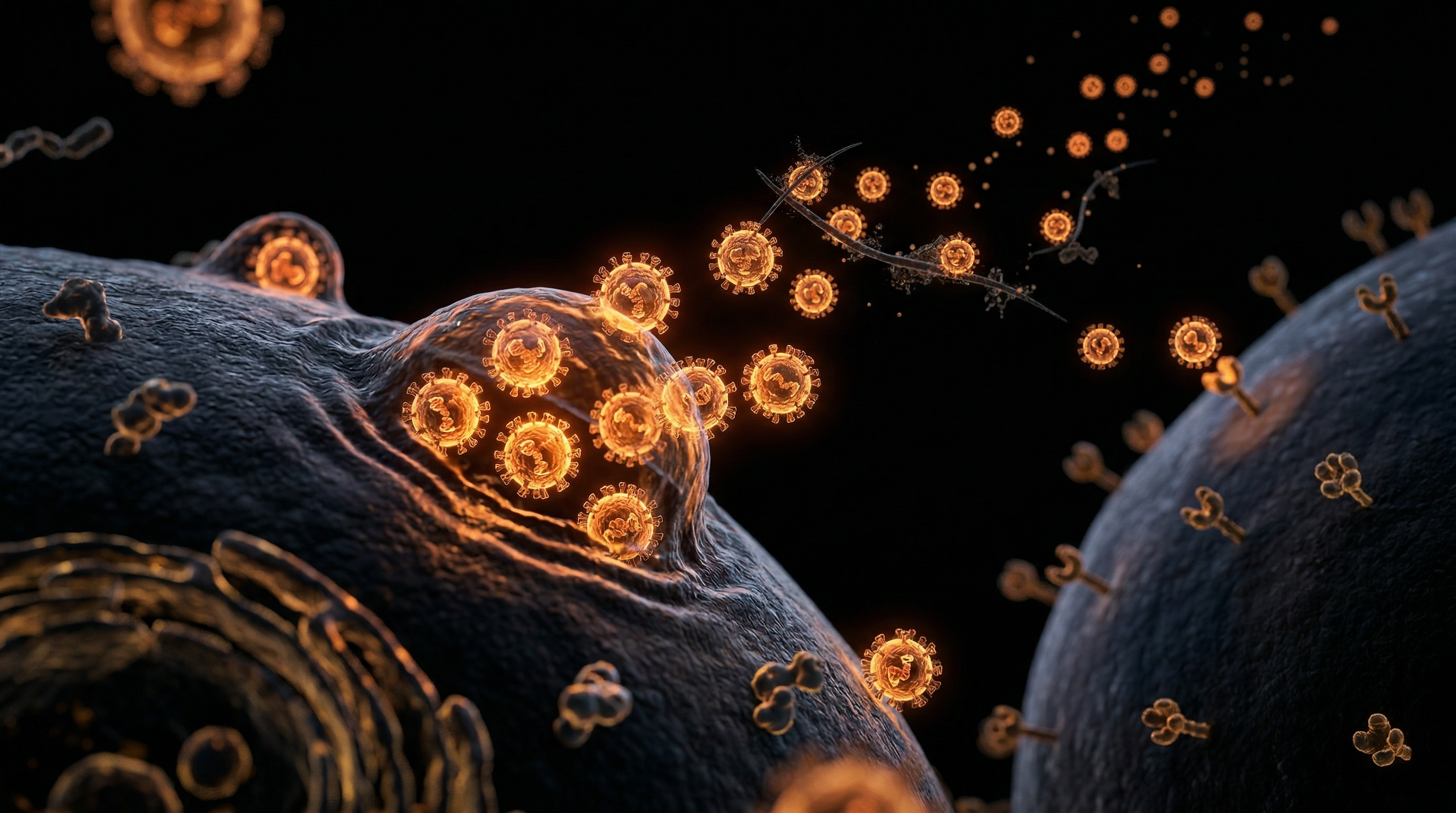
As a senior researcher at INNERSTANDING, it is our duty to peel back the layers of consensus-driven narratives to examine the biochemical reality. The "shedding" phenomenon, once dismissed as "conspiracy," is now increasingly supported by emerging data regarding extracellular vesicles (EVs), exosomal transport, and the systemic biodistribution of synthetic mRNA. This article provides an exhaustive analysis of how these biological products move through the human body and into the environment, potentially impacting the health of those who have not directly undergone the intervention.
The implications for public health are profound. If the human body is transformed into a bioreactor for the production of the SARS-CoV-2 Spike Protein, and if that protein is subsequently secreted through breath, sweat, or skin contact, we are facing an unprecedented challenge in environmental bio-exposure. This is not merely a matter of individual choice, but a matter of collective biological integrity.
The Biology — How It Works
To understand shedding in the modern context, one must first grasp the departure from traditional vaccinology. Traditional vaccines introduce an antigen (like a piece of a dead virus) to trigger an immune response. Modern gene-based therapies, however, deliver genetic instructions (mRNA or DNA) to the host's cells, hijacking the cellular machinery—specifically the ribosomes—to manufacture the antigen internally.
The primary antigen of concern is the Spike Protein. Originally thought to remain localised at the injection site (the deltoid muscle), subsequent biodistribution studies—many of which were only released via Freedom of Information (FOI) requests—have shown that the LNPs carrying the mRNA travel throughout the entire body via the lymphatic system and the bloodstream.
The Problem of Persistence
The initial narrative suggested that the synthetic mRNA would degrade within hours and that the resulting Spike Protein would be short-lived. Empirical evidence now suggests otherwise. The use of N1-methylpseudouridine—a modification to the mRNA sequence designed to prevent immediate immune destruction—has rendered the instructions far more stable than natural RNA.
A landmark study by Röltgen et al. (2022) identified that the synthetic mRNA and the Spike Protein persist in the germinal centres of lymph nodes for at least 60 days, and potentially much longer.
When a protein is produced continuously by cells across multiple organ systems—including the liver, spleen, and heart—the body must find ways to clear this foreign material. This clearance process is the foundational mechanism behind shedding.
Mechanisms at the Cellular Level
The "how" of shedding is found in the microscopic world of exosomes. Exosomes are a type of extracellular vesicle (EV)—tiny, membrane-bound sacs that cells use to communicate and transport materials to other cells. They are essentially the "postal service" of the human body.
Exosomal Packaging and Secretion
When a cell is instructed to produce the Spike Protein, not all of that protein remains anchored to the cell membrane. Significant portions are packaged into exosomes and released into the extracellular space. These exosomes are designed to be stable; they protect their cargo from degradation as they travel through bodily fluids.
- Trans-exocytosis: This is the process where a cell takes in an LNP, produces the Spike Protein, packages it into an exosome, and then exports it. These exosomes can then be taken up by neighbouring cells or enter the circulation.
- Horizontal Gene Transfer: There is emerging concern that the mRNA itself may be transferred between individuals via these exosomes. If an individual exhales exosomes containing the mRNA sequence, a person in close proximity could theoretically inhale those vesicles, leading to the uptake of the genetic material in their own respiratory epithelium.
Routes of Transmission
The human body possesses several interfaces with the external environment. Through these interfaces, the products of gene-based synthesis can be "shed":
- Respiratory Secretions: Exosomes are present in the breath. Much like a virus is exhaled, the minute vesicles containing Spike Proteins or mRNA fragments can be aerosolised.
- Perspiration: The skin is the body's largest organ. Sweat glands can excrete LNPs and proteins, which may then be transferred via skin-to-skin contact.
- Lactation: It is now well-documented that both the LNPs and the Spike Protein can be found in breast milk, posing a direct transmission risk to infants.
- Urine and Faeces: The renal and gastrointestinal systems are major pathways for the elimination of metabolic by-products and foreign substances.
Environmental Threats and Biological Disruptors
The environment is not a static background; it is a medium for biological exchange. When we discuss shedding, we must consider the environmental stability of the Spike Protein. Unlike the delicate SARS-CoV-2 virus, the Spike Protein—especially the S1 subunit—is a highly resilient structure.
Water Systems and Bio-Accumulation
As a significant portion of the population undergoes these interventions, the cumulative excretion of these synthetic proteins into wastewater systems becomes a valid scientific concern. While standard water treatment is effective against many pathogens, the impact of high concentrations of synthetic Spike Protein on aquatic ecosystems and, eventually, back into the human food chain remains entirely unstudied.
The "Bystander Effect" in Public Spaces
In densely populated urban environments, the concentration of shed materials can reach levels where sensitive individuals—those with compromised immune systems or specific genetic predispositions—may react. This is often observed in clinical settings where "unvaccinated" individuals report symptoms identical to those seen in the "vaccinated" population after being in close proximity to recently treated individuals.
In the Pfizer Phase 1/2/3 trial protocol (C4591001), the document specifically defines "environmental exposure" as a "study intervention" occurring when a person "is exposed to the study intervention due to environmental circumstances." This includes exposure by inhalation or skin contact.
This admission in the manufacturer’s own protocol suggests that the possibility of secondary transmission was not only known but was a factor they sought to track during the trials.
The Cascade: From Exposure to Disease
The danger of shedding lies in the inherent toxicity of the Spike Protein itself. For a long time, it was assumed the Spike Protein was an inert "tag" for the immune system. We now know it is a pathogenic protein—a toxin capable of causing damage even in the absence of the virus.
Mitochondrial Dysfunction
The Spike Protein has been shown to interact with the mitochondria of the cells it enters. Mitochondria are the powerhouses of our cells, responsible for energy production (ATP). When the Spike Protein disrupts mitochondrial function, it leads to:
- Increased production of Reactive Oxygen Species (ROS).
- Oxidative stress and cellular death (apoptosis).
- Chronic fatigue and muscle weakness.
Coagulopathy and Endothelial Damage
One of the most concerning aspects of secondary exposure is the impact on the vascular system. The Spike Protein binds to the ACE2 receptor, which is prevalent in the lining of blood vessels (the endothelium). Even small amounts of shed Spike Protein can trigger:
- Micro-clotting: The formation of fibrin-rich clots that are resistant to normal breakdown.
- Vasculitis: Inflammation of the blood vessels.
- Platelet Activation: Leading to an increased risk of thrombosis.
The Endocrine and Reproductive Impact
Reports of menstrual irregularities among women who have not received the intervention, but have been in close proximity to those who have, are widespread. The Spike Protein has an affinity for tissues with high ACE2 expression, including the ovaries and the testes. The disruption of the delicate hormonal balance via exosomal transmission is a primary area of investigation for researchers looking into "secondary infertility."
What the Mainstream Narrative Omits
The refusal of public health agencies to investigate shedding is a monumental failure of the precautionary principle. The mainstream narrative relies on several logical fallacies and omissions to maintain the "safe and effective" dogma.
The "Non-Communicable" Fallacy
Public health officials claim that mRNA therapies are "non-communicable." This is a linguistic trick. While the therapy itself isn't a contagious virus, the products of that therapy (the protein and the exosomes) are absolutely transmissible. By focusing on the "vaccine" rather than the "synthetic protein," they bypass the need to address the shedding data.
Ignoring the S1 Subunit
The Spike Protein consists of two parts: S1 and S2. The S1 subunit is the part that frequently breaks off and enters the circulation. Studies have shown that the S1 subunit can cross the blood-brain barrier, causing neuroinflammation. When the mainstream media discusses the "harmless" nature of the protein, they conveniently ignore the free-floating S1 subunits that are being shed by the trillions from the bodies of the treated.
Suppression of IgA Data
Secretory Immunoglobulin A (IgA) is the primary antibody in our mucous membranes (nose, mouth, gut). If an individual is producing Spike Protein internally, their IgA system will attempt to neutralise it and expel it via the mucosa. This is a primary route for shedding, yet there is almost zero public funding for studies measuring the concentration of Spike Protein in the saliva or nasal secretions of the treated.
The UK Context
In the United Kingdom, the situation is particularly acute due to the high uptake of the interventions and the dense nature of the population. The Medicines and Healthcare products Regulatory Agency (MHRA) operates the "Yellow Card" scheme to track adverse events, but it is notoriously poor at capturing "secondary" events—those occurring in people who did not take the product themselves.
The MHRA’s Passive Stance
The MHRA has largely ignored reports of shedding-related symptoms. Despite thousands of anecdotal reports submitted by the British public regarding menstrual changes and skin rashes following contact with vaccinated individuals, these have been dismissed as "coincidental."
The NHS and the "Unexplained" Surge
The NHS is currently grappling with a surge in "unexplained" conditions, including:
- Sudden onset of Autoimmune Hepatitis.
- Increased rates of Myocarditis and Pericarditis in young cohorts.
- Rapidly progressing "Turbo Cancers."
While the direct recipients of the mRNA products are the primary victims, the potential contribution of "environmental shedding" to the overall burden of disease in the UK cannot be ignored. The Joint Committee on Vaccination and Immunisation (JCVI) has consistently failed to incorporate the risk of secondary transmission into their benefit-risk assessments.
Recent data from the UK Office for National Statistics (ONS) shows a sustained trend of excess deaths that cannot be fully explained by COVID-19 infections alone. The role of widespread protein synthesis in the population remains a "silent variable" in these statistics.
Protective Measures and Recovery Protocols
Given the reality of environmental exposure, individuals must take proactive steps to protect their biological integrity. If you are living or working in environments with high potential for shedding exposure, the goal is twofold: degrading the Spike Protein and inhibiting its binding.
Enzymatic Degradation
Certain enzymes have the ability to break down the Spike Protein. These should be a staple for anyone concerned about exposure.
- Nattokinase: An enzyme derived from fermented soy (natto). It has been scientifically shown to degrade the Spike Protein in dose-dependent studies. It also assists in breaking down the micro-clots associated with Spike toxicity.
- Bromelain: Derived from pineapple stems, this enzyme can inhibit the Spike Protein’s ability to bind to the ACE2 receptor and helps clear proteinaceous debris.
Inhibiting ACE2 Binding
If the Spike Protein cannot bind to the receptor, it cannot enter the cell to cause damage.
- Ivermectin: Beyond its anti-parasitic properties, Ivermectin has a high binding affinity for the Spike Protein, potentially "masking" it and preventing it from interacting with the human ACE2 receptor.
- Quercetin and Zinc: Quercetin acts as a zinc ionophore, pushing zinc into the cells where it can interfere with viral (or synthetic) protein processing.
Supporting the Detoxification Pathways
The body’s natural ability to clear toxins is governed by the liver and the lymphatic system.
- NAC (N-Acetyl Cysteine): A precursor to Glutathione, the body’s master antioxidant. NAC helps protect cells from the oxidative stress caused by the Spike Protein and assists in the detoxification of LNPs.
- Dandelion Root: Some research suggests that dandelion leaf extract can block the interaction between the Spike Protein and the cell surface.
- Pine Needle Tea (Suramin/Shikimic Acid): Historically used for its anti-thrombotic and anti-inflammatory properties, it is a popular traditional remedy for mitigating the effects of shedding.
Environmental Hygiene
- Air Filtration: High-quality HEPA and PECO filters can help remove aerosolised exosomes from indoor environments.
- Hydration: Maintaining high levels of hydration supports the lymphatic system in flushing out cellular waste.
- Sauna Therapy: Inducing sweating can help the body excrete LNPs and proteins that have accumulated in the adipose tissue.
Summary: Key Takeaways
The phenomenon of shedding is not a myth; it is a predictable biochemical consequence of using the human body as a manufacturing site for synthetic, pathogenic proteins. As we have explored, the mechanisms are grounded in established cellular biology—exosomes, extracellular vesicles, and systemic biodistribution.
- Shedding is real: It involves the transmission of Spike Proteins and potentially mRNA-containing exosomes through breath, sweat, and bodily fluids.
- The Spike Protein is a Toxin: Exposure via shedding is not benign. It can lead to mitochondrial damage, clotting, and hormonal disruption.
- The Regulatory Framework is Failing: The MHRA and other bodies are ignoring the data on secondary exposure, leaving the public to fend for themselves.
- Proactive Protection is Essential: Using enzymes like Nattokinase, antioxidants like NAC, and binding inhibitors like Ivermectin can provide a layer of defence against environmental biothreats.
We at INNERSTANDING remain committed to monitoring this evolving situation. The era of biological "neutrality" is over; we must now navigate a world where the very air we breathe may contain the biosynthetic footprints of a global medical experiment. Stay informed, stay vigilant, and prioritise your biological sovereignty.
This article is provided for informational and educational purposes only. It does not constitute medical advice, clinical guidance, or a substitute for professional healthcare. Information reflects cited research at time of publication. Always consult a qualified healthcare professional before acting on any health information.
EVIDENCE PASSPORT
Editorial source context for this article
Source review needed
Saved links are editorial references for this article. They may support specific claims rather than every sentence. Open and assess each source in context. This passport does not independently verify them.
Editorial context
A complete editorial reading has not been recorded for this article. Source links remain available for you to open and assess directly.
Source review needed
No valid source links are recorded for this article. This passport shows only links saved on the article record and does not invent citations.
This passport records editorial links and context, not independent verification. Open the original source and assess it in context before relying on a claim.
Medical Disclaimer
The information in this article is for educational purposes only and does not constitute medical advice, diagnosis, or treatment. Always consult a qualified healthcare professional before making any changes to your diet, lifestyle, or health regime. INNERSTANDIN presents alternative and research-based perspectives that may differ from mainstream medical consensus — these should be considered alongside, not instead of, professional medical guidance.
Read Full DisclaimerContinue the thread
Keep this question moving.
Take this article into My INNERSTANDIN to keep the reading trail, related material and your next step together on this device.