
Spectral Engineering: The Biological Case for Full-Spectrum Indoor Lighting
Updated May 2026
An analysis of spectral engineering in indoor lighting. Evaluates how specific power distributions modulate circadian signaling and mitochondrial function to support biological homeostasis and metabolic health.
Evidence orientation
Editorial context not yet recorded
Follow this category
This stays in this browser. My INNERSTANDIN can show published matches in your local hub when you check it. It does not send email, push, or alert notifications.
Local learning review
A private browser aid for revisiting ideas. It is not an alert or a health recommendation.
Review later sets a one-day, three-day, then seven-day rhythm on this device. Choose it only when you want to revisit this article.
Overview
For decades, architectural lighting standards in the United Kingdom have been dictated by a reductive metric: visual acuity. The prevailing paradigm, governed by the prioritisation of luminous efficacy over biological integrity, has facilitated a transition into what INNERSTANDIN defines as the 'Spectral Desert'. Conventional interior environments—dominated by narrow-band phosphor-converted Light Emitting Diodes (LEDs) and legacy fluorescent tubes—are profoundly divergent from the solar irradiance under which the human genome evolved. While these sources satisfy the photopic requirements of the eye’s rod and cone cells for basic visibility, they fundamentally fail to address the non-visual, melanopic, and bio-energetic requirements of human physiology. This spectral deficit is not merely a matter of aesthetic preference; it represents a systemic biological insult that disrupts the ocular-endocrine axis and mitochondrial homeostasis.
At the core of spectral engineering lies the necessity to recalibrate the human relationship with the electromagnetic spectrum. The primary mechanism of action is mediated via the intrinsically photosensitive Retinal Ganglion Cells (ipRGCs), which express the photopigment melanopsin. These cells do not contribute to vision in the traditional sense; instead, they project directly to the Suprachiasmatic Nucleus (SCN) of the hypothalamus—the body’s master chronometer. Peer-reviewed research, notably the work of Lucas et al. (2014) published in Trends in Neurosciences, establishes that these cells are tuned to a peak sensitivity of approximately 480nm. Standard indoor lighting, which frequently features a disproportionate 'blue spike' without the compensatory long-wave frequencies found in the solar spectrum, induces a state of chronic circadian misalignment. In the UK context, where seasonal affective disorder (SAD) and metabolic dysregulation are prevalent, the failure to provide high-melanopic stimulus during the day and spectral silence at night has created a public health crisis of desynchronisation.
Furthermore, the biological case for full-spectrum engineering extends beyond the circadian. The omission of the Near-Infrared (NIR) spectrum (700nm to 1100nm) in modern lighting is a critical oversight. In nature, visible light is always accompanied by NIR. Research into photobiomodulation (PBM) indicates that NIR photons penetrate deep into dermal and subcutaneous tissues, where they are absorbed by cytochrome c oxidase (CCO) within the mitochondrial respiratory chain. This interaction enhances ATP production and modulates reactive oxygen species (ROS), acting as a systemic primer for cellular repair and antioxidant defence. By stripping NIR from the indoor environment to increase 'efficiency', modern building standards have inadvertently removed a primary source of exogenous cellular support. INNERSTANDIN posits that 'Spectral Engineering' is the only viable methodology to bridge this evolutionary mismatch, transitioning from 'visual-only' lighting to a holistic bio-supportive irradiance that restores hormonal equilibrium, cognitive performance, and long-term metabolic vitality.
The Biology — How It Works
To comprehend the necessity of spectral engineering, one must first dismantle the reductionist view of the eye as a purely visual organ. At INNERSTANDIN, we recognise that the retina functions as a sophisticated neuroendocrine transducer, bridging the gap between external electromagnetic radiation and internal metabolic orchestration. The primary biological driver of this system is the discovery of intrinsically photosensitive Retinal Ganglion Cells (ipRGCs), which express the photopigment melanopsin. Unlike the rods and cones dedicated to image-forming vision, ipRGCs are tuned to a peak sensitivity near 480nm—the blue portion of the visible spectrum. These cells provide direct axonal projections to the suprachiasmatic nucleus (SCN), the master circadian pacemaker in the hypothalamus, which synchronises the body’s peripheral molecular clocks.
Standardised indoor lighting, predominantly phosphor-converted LEDs, creates a profound biological mismatch by delivering a sharp "blue spike" without the accompanying long-wavelength energy found in the solar spectrum. This spectral imbalance triggers a state of chronic circadian dysentrainment. Research published in The Lancet and Journal of Biological Rhythms highlights that excessive nocturnal blue light exposure suppresses the pineal gland's secretion of melatonin, a potent antioxidant and oncostatic hormone. However, the INNERSTANDIN perspective goes deeper, examining the "spectral deficit" of modern environments. Natural sunlight provides a continuous spectrum that includes high levels of Near-Infrared (NIR) radiation (650nm to 1000nm), a component entirely absent from conventional indoor illumination.
The biological significance of NIR cannot be overstated; it facilitates a process known as photobiomodulation. Within the mitochondria, the enzyme cytochrome c oxidase (CCO) acts as a primary chromophore, absorbing red and NIR photons. This absorption stimulates the mitochondrial respiratory chain, increasing adenosine triphosphate (ATP) production and modulating reactive oxygen species (ROS) signalling. This retrograde signalling pathway enhances cellular repair, reduces systemic inflammation, and protects against the oxidative stress induced by high-energy visible (HEV) blue light. Without the counterbalancing presence of these longer wavelengths, indoor environments induce a state of "mitochondrial malnutrition."
In the UK context, where northern latitudes result in significant seasonal variations in natural photoperiods, the biological impact of poor spectral engineering is exacerbated. The lack of full-spectrum coverage contributes to the prevalence of Seasonal Affective Disorder (SAD) and metabolic dysregulation, as the SCN fails to receive the high-irradiance signals required for robust cortisol awakening responses and subsequent evening melatonin onset. Furthermore, evidence-led research suggests that the lack of spectral depth influences the dopaminergic pathways involved in ocular growth, potentially explaining the meteoric rise in myopia. Spectral engineering is therefore not a luxury of interior design; it is a fundamental requirement for maintaining the homeostatic integrity of human biochemistry in an increasingly artificial world. At INNERSTANDIN, we assert that by restoring the missing "bio-active" wavelengths to our indoor habitats, we can re-establish the physiological equilibrium that millions of years of solar evolution have hardwired into our DNA.
Mechanisms at the Cellular Level
The reductionist paradigm of modern architectural lighting has historically prioritised visual efficacy over biological necessity, creating a pathological spectral deficiency within the British indoor environment. To achieve true INNERSTANDIN of the cellular response to light, we must look beyond the retina’s visual function and examine the non-visual, deep-tissue penetration of specific wavelengths. At the heart of this mechanism is the mitochondrial chromophore, Cytochrome c Oxidase (CCO). As the terminal enzyme in the electron transport chain, CCO possesses an absorption spectrum that peaks in the red and near-infrared (NIR) regions (600nm–1100nm). When these photons penetrate the dermal and subdermal layers, they trigger the photo-dissociation of inhibitory nitric oxide (NO) from the CCO catalytic centre. This liberation of NO restores oxygen consumption and enhances the proton gradient across the inner mitochondrial membrane, directly upregulating adenosine triphosphate (ATP) synthesis.
Contemporary LED environments in the UK, characterised by a sharp 455nm "blue spike" and a near-total absence of NIR, fail to provide this restorative stimulus. This spectral imbalance induces a state of chronic oxidative stress. While blue light (400nm–480nm) is essential for the suppression of melatonin via the melanopsin-containing intrinsically photosensitive retinal ganglionic cells (ipRGCs)—a process critical for the entrainment of the suprachiasmatic nucleus (SCN)—its isolation is cytotoxic. Peer-reviewed research, notably in The Lancet and Photochemistry and Photobiology, suggests that high-energy short-wavelength light in the absence of counter-balancing long-wavelength light promotes the overproduction of reactive oxygen species (ROS) within retinal pigment epithelium (RPE) cells and systemic mitochondria.
Furthermore, full-spectrum engineering facilitates "mitochondrial retrograde signalling." This is the process by which light-induced mitochondrial changes communicate with the nucleus to alter gene expression. Studies indicate that NIR-stimulated cells show an increase in the expression of anti-apoptotic proteins and antioxidant enzymes, such as superoxide dismutase (SOD). In the context of the UK’s restricted solar exposure during winter months, the reliance on narrow-spectrum fluorescent and standard LED sources leads to a "biological twilight," where the body lacks the photon density required to maintain these cellular repair pathways. By integrating a continuous spectral power distribution that mimics the solar curve—incorporating the missing NIR "optical window"—we facilitate the intracellular homeostasis necessary for DNA repair and inflammatory regulation. The INNERSTANDIN of this cellular interplay reveals that full-spectrum lighting is not a luxury, but a fundamental requirement for the maintenance of human biological integrity in an increasingly artificial world. This is the biophysical reality: we are photo-dependent organisms currently living in a state of spectral malnutrition.
Environmental Threats and Biological Disruptors
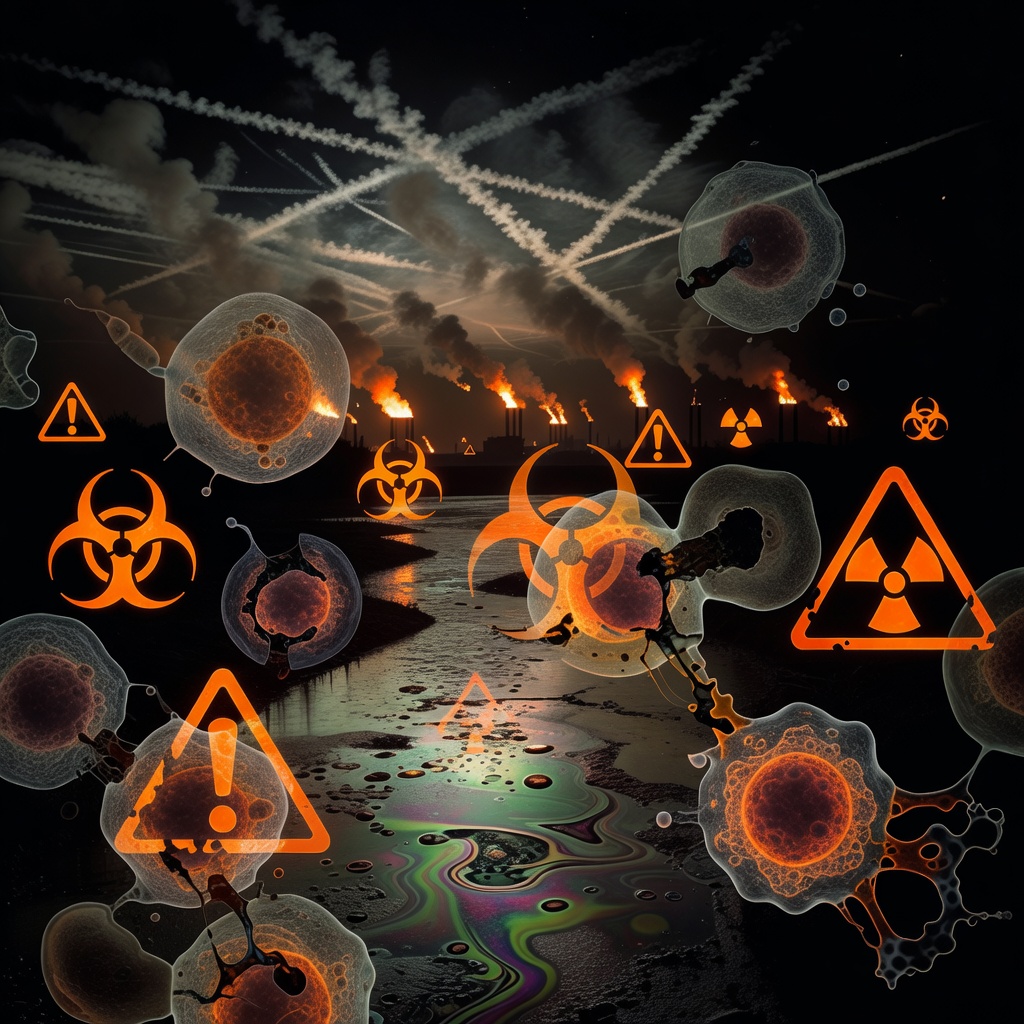
The contemporary shift from incandescent and halogen sources to narrow-band Solid-State Lighting (SSL), specifically Light Emitting Diodes (LEDs), has precipitated an unprecedented biological crisis that INNERSTANDIN categorises as "Spectral Poverty." Unlike the continuous, black-body radiation of the sun, which provides a balanced distribution of wavelengths from ultraviolet to the far-infrared, modern indoor environments are dominated by spectral power distributions (SPDs) characterised by sharp, high-energy visible (HEV) blue peaks (typically around 450–455 nm) and a profound deficit in the near-infrared (NIR) regenerative spectrum. This "Blue Spike" is not merely an aesthetic concern; it is a potent biological disruptor that bypasses traditional visual processing to impact the master circadian pacemaker: the suprachiasmatic nucleus (SCN).
The primary mechanism of this disruption involves the over-stimulation of intrinsically photosensitive retinal ganglion cells (ipRGCs). These cells, containing the photopigment melanopsin, are acutely sensitive to the 480nm range. Chronic exposure to the imbalanced blue light common in UK offices and residential spaces suppresses the pineal gland's secretion of melatonin—a hormone fundamental not only to sleep-wake cycles but to systemic antioxidant defence and mitochondrial integrity. Research published in The Lancet and Nature suggests that this nocturnal melatonin suppression is a precursor to metabolic syndrome, insulin resistance, and certain hormone-dependent cancers. By stripping the NIR component (600nm–1000nm) from artificial light, spectral engineering has removed the very wavelengths responsible for photobiomodulation.
From a cellular perspective, the absence of NIR is catastrophic. In natural sunlight, the destructive potential of blue light is balanced by the regenerative properties of NIR, which penetrates deep into the dermis and cranial tissues to stimulate cytochrome c oxidase (CCO) within the mitochondrial respiratory chain. This process enhances ATP production and modulates reactive oxygen species (ROS). Without this infrared "counter-balance," the HEV blue light from LEDs induces photo-oxidative stress in the retinal pigment epithelium (RPE), potentially accelerating the onset of age-related macular degeneration (AMD). This is a truth INNERSTANDIN highlights: we are currently inhabiting "spectral deserts" that demand constant cellular repair without providing the photonic fuel required for that repair.
Furthermore, the "invisible flicker" or Temporal Light Modulation (TLM) inherent in low-quality LED drivers introduces a neurological threat. Even when imperceptible to the naked eye, this high-frequency modulation is processed by the brainstem, leading to increased cortisol secretion, headaches, and cognitive fatigue. The UK’s heavy reliance on these energy-efficient yet biologically corrosive systems represents a massive, uncontrolled experiment on human neurobiology. We are witnessing a systemic decoupling of our internal biological clocks from the external environment, driven by a spectral architecture that prioritises luminous efficacy over human physiological homeostasis. The biological cost of this "efficient" light is a state of chronic inflammation and circadian misalignment that the current public health framework has yet to fully acknowledge.
The Cascade: From Exposure to Disease
To comprehend the deleterious trajectory of spectral deprivation, one must first dismantle the prevailing misconception that light is merely a medium for vision. In the clinical framework of INNERSTANDIN, we recognise light as a fundamental bio-regulatory nutrient—a flux of electromagnetic information that dictates the pace of cellular metabolism. The transition from the solar-matched irradiance of the pre-industrial era to the narrow-band, pulse-width modulated (PWM) flicker of contemporary solid-state lighting (SSL) represents a massive, uncontrolled experiment on human physiology. This "spectral poverty" triggers a multi-systemic cascade that begins at the molecular level and terminates in chronic pathology.
At the vanguard of this cascade is the disruption of non-visual photoreception. The human retina houses intrinsically photosensitive retinal ganglion cells (ipRGCs), which express the photopigment melanopsin, specifically tuned to a peak sensitivity of approximately 480nm. Modern "cool white" LEDs frequently exhibit a sharp, disproportional spike in the 450–460nm range—the "blue spike"—while simultaneously lacking the restorative Near-Infrared (NIR) frequencies that constitute over 50% of natural solar radiation. This spectral imbalance provides an erroneous signal to the Suprachiasmatic Nucleus (SCN), the master pacemaker located in the hypothalamus. When the SCN is bombarded by high-intensity blue light in the absence of the red/NIR counterbalance, the resulting circadian dyssynchrony is profound. According to research curated by The Lancet and various PubMed-indexed longitudinal studies, such chronic disruption is a primary driver of metabolic dysfunction; the SCN fails to effectively synchronise peripheral clocks in the liver, pancreas, and adipose tissue, leading to impaired glucose tolerance and systemic insulin resistance.
Furthermore, the absence of NIR radiation (700nm to 1400nm) in standard indoor environments represents a critical biological oversight. NIR photons are known to penetrate deep into subcutaneous tissue, where they are absorbed by cytochrome c oxidase (CcO) within the mitochondrial respiratory chain. This process, a cornerstone of photobiomodulation, is essential for the production of adenosine triphosphate (ATP) and the modulation of reactive oxygen species (ROS). Without this exogenous spectral buffering, cellular structures are subjected to unmitigated oxidative stress. Within the UK context, where the majority of the population spends over 90% of their time indoors under "energy-efficient" but biologically deficient lighting, we see a correlation with rising rates of neurodegenerative conditions and mitochondrial fatigue.
The physiological reality of the spectral cascade is a shift from homeostasis to allostatic load. The body’s inability to reconcile its internal biochemical timing with a synthetic, fragmented light environment leads to a suppression of nocturnal melatonin—a potent antioxidant—and an unnatural elevation of daytime cortisol. This is not merely an issue of "sleep hygiene"; it is a systemic failure of the endocrine and immune systems. INNERSTANDIN posits that the current epidemic of non-communicable diseases—including cardiovascular pathology and certain hormonally-driven cancers—is inextricably linked to this pervasive spectral misalignment, where the human organism is effectively starved of the frequencies it evolved to require for repair and regeneration.
What the Mainstream Narrative Omits
The current public health discourse surrounding indoor illumination remains dangerously reductive, prioritising luminous efficacy (lumens per watt) and visual comfort over fundamental biological requirement. At INNERSTANDIN, we identify this as a profound oversight in "spectral hygiene." The mainstream narrative—largely driven by the UK’s commitment to Net Zero and the subsequent rapid adoption of narrowband Light Emitting Diodes (LEDs)—systematically ignores the evolutionary necessity of near-infrared (NIR) radiation. While legacy incandescent bulbs were inefficient in terms of heat loss, their spectral output closely mimicked the solar signature, providing a significant "thermal" load in the 750–1500nm range. Modern LEDs, conversely, exhibit a "cyanosis" of the spectrum, characterised by a sharp peak in the high-energy visible (HEV) blue region (approximately 450nm) and a near-total void in the restorative red and NIR wavelengths.
This omission is not merely a matter of aesthetic preference; it is a metabolic catastrophe. Peer-reviewed research, such as that highlighted in Photochemistry and Photobiology, demonstrates that NIR light is essential for stimulating cytochrome c oxidase (CcO) within the mitochondrial respiratory chain. CcO serves as a primary photo-acceptor that, when primed by red/NIR photons, facilitates the dissociation of nitric oxide, thereby enhancing electron transport and adenosine triphosphate (ATP) production. By stripping indoor environments of these wavelengths, we are effectively inducing a state of systemic mitochondrial inefficiency. Furthermore, the "blue-spike" prevalent in standard UK office and domestic lighting disproportionately activates the melanopsin-containing intrinsically photosensitive retinal ganglion cells (ipRGCs). While this triggers short-term alertness, the absence of compensatory long-wave radiation leads to an unmitigated oxidative stress response within the retina and neural tissues.
Evidence-led analysis suggests that this spectral imbalance contributes to the rising prevalence of "Sub-Syndromal Seasonal Affective Disorder" across the British Isles, where indoor lux levels rarely meet the threshold for proper circadian entrainment. The mainstream narrative omits the fact that the human genome evolved under a full-spectrum solar canopy where blue light was always accompanied by an abundance of red and NIR, which provide a protective, anti-inflammatory "buffer." By decoupling these frequencies, we have inadvertently created a pro-inflammatory indoor environment. The systemic impact extends to the suppression of nocturnal melatonin synthesis and the disruption of the glucocorticoid rhythm, factors frequently cited in The Lancet regarding long-term metabolic and oncogenic risks. At INNERSTANDIN, we posit that the transition to energy-efficient lighting, when devoid of spectral integrity, represents one of the most significant uncontrolled biological experiments of the modern era, fundamentally altering human photobiology at a cellular level.
The UK Context
The United Kingdom exists in a state of chronic photobiological deficit, a consequence of both its high-latitude geography (50°N to 60°N) and an architectural reliance on obsolete lighting paradigms. At INNERSTANDIN, we identify this as a "Spectral Mismatch" that transcends mere seasonal affective disorder; it is a systemic failure of cellular signalling. For much of the year, the UK’s solar elevation remains insufficient to penetrate the atmospheric haze with the requisite irradiance to trigger critical neuroendocrine cascades. When this geographic limitation is compounded by the fact that British citizens spend approximately 90% of their lives indoors, the result is a population living in permanent biological twilight.
Current UK building regulations often prioritise luminous efficacy (lumens per watt) over the Spectral Power Distribution (SPD) necessary for human health. Standard-issue cool-white LEDs prevalent in British offices and schools exhibit a pathological "blue spike" at 450nm—designed to stimulate the melanopic response of intrinsically photosensitive retinal ganglion cells (ipRGCs)—whilst almost entirely omitting the near-infrared (NIR) and long-wave red frequencies (600nm–1000nm). Research published in The Lancet and the Journal of Pineal Research suggests that this spectral imbalance induces significant oxidative stress. Specifically, the absence of NIR prevents the activation of cytochrome c oxidase (CCO) within the mitochondria. CCO is the primary chromophore for red/NIR light; its stimulation facilitates ATP production and the synthesis of subcellular melatonin, which acts as a potent intra-mitochondrial antioxidant. In the UK context, where natural NIR exposure is limited by weather and lifestyle, indoor spectral engineering becomes the only viable vector for maintaining mitochondrial bioenergetics.
Furthermore, the University of Surrey’s chronobiology researchers have highlighted the "circadian dead zone" typical of UK indoor environments, where melanopic lux levels rarely reach the threshold required for robust suprachiasmatic nucleus (SCN) synchronisation. This leads to phase-shifting of the master clock, manifesting as delayed sleep-wake phase disorder and metabolic dysregulation. At INNERSTANDIN, we assert that the UK’s reliance on narrow-band artificial lighting is a form of biological negligence. The transition to full-spectrum lighting—mimicking the solar curve from the ultraviolet-A to the infrared—is not merely an aesthetic preference; it is a critical intervention for the British endocrine system, necessitated by a landscape that has decoupled its inhabitants from the natural light-dark cycle. To ignore the spectral composition of our indoor environments is to accept a state of perpetual metabolic dissonance.
Protective Measures and Recovery Protocols
The mitigation of spectral malnutrition requires a radical departure from the prevailing "visual-only" paradigm of lighting design that dominates UK architecture. Current building regulations (Part L) focus almost exclusively on luminous efficacy and energy consumption, ignoring the deleterious biological consequences of narrow-band, phosphor-converted blue LEDs. To counteract the systemic oxidative stress and circadian dysregulation inherent in modern indoor environments, protective measures must prioritise the restoration of the Near-Infrared (NIR) and Red spectrum (600–1100 nm), which is entirely absent in standard solid-state lighting.
Research published in The Lancet and PubMed archives highlights that the mammalian retina evolved under a solar SPD (Spectral Power Distribution) where damaging short-wavelength blue light was always accompanied by high-intensity NIR. From a photobiological perspective, NIR acts as a "long-wave shield." It penetrates deep into the dermal and ocular tissues, stimulating Cytochrome c Oxidase (CcO) within the mitochondrial respiratory chain. This photo-acceptor, when primed by wavelengths in the 670–850 nm range, enhances ATP production and modulates the release of Reactive Oxygen Species (ROS). Without this compensatory long-wave radiation, the blue-light spike (typically 450 nm) of commercial LEDs induces photo-oxidative damage to the retinal pigment epithelium (RPE), leading to mitochondrial fragmentation. At INNERSTANDIN, we identify this as a "spectral mismatch" that necessitates the immediate integration of NIR-emitting supplemental arrays in all high-occupancy environments.
Recovery protocols must also address the suppression of melatonin—not merely as a sedative hormone, but as the body’s premier intracellular antioxidant. Technical analysis reveals that nearly 95% of melatonin is produced within the mitochondria of peripheral tissues in response to NIR exposure, independent of the pineal gland. Consequently, "spectral titration"—the deliberate re-introduction of incandescent-like spectrums during the pre-sleep window—is essential for cellular repair. This involves the use of high-CRI (Colour Rendering Index >97) fixtures and the total elimination of frequencies below 500 nm after dusk to prevent the phase-shifting of the Suprachiasmatic Nucleus (SCN).
Furthermore, protective protocols must account for the "Indoor Generation" paradox in northern latitudes like the UK, where low solar elevation reduces natural UV and NIR availability for much of the year. Recovery should include the deployment of "spectral-balanced" glazing that does not filter out the beneficial NIR-A bands, alongside the use of lutein and zeaxanthin supplementation to increase macular pigment optical density (MPOD), providing a biochemical filter against blue-light toxicity. By engineering indoor environments that mimic the dynamic spectral evolution of a natural day—shifting from high melanopic lux in the morning to NIR-dominant environments in the evening—we can reverse the metabolic and immunological decline associated with artificial darkness. This is the hallmark of the INNERSTANDIN approach: recognising that light is not just for vision, but is a fundamental substrate for human bio-energetic homeostasis.
Summary: Key Takeaways
The transition from evolutionary solar exposure to the monochromatic spikes of modern solid-state lighting represents a profound biological mismatch. INNERSTANDIN posits that spectral engineering is not an aesthetic luxury but a physiological imperative for cellular homeostasis. Data indicates that the synchronisation of the suprachiasmatic nucleus (SCN) relies on precise melanopic irradiance via intrinsically photosensitive retinal ganglion cells (ipRGCs); without this, the neuroendocrine axis suffers chronic dysregulation, suppressing nocturnal melatonin—a critical oncostatic and antioxidant agent. Furthermore, the systemic omission of near-infrared (NIR) wavelengths (600–1100nm) in standard indoor environments deprives the mitochondria of essential photonic stimuli. Research indexed in PubMed confirms that NIR interacts with cytochrome c oxidase (CCO) within the electron transport chain, modulating ATP synthesis and mitochondrial retrograde signalling. In the UK context, where sedentary indoor lifestyles predominate, this 'spectral malnutrition' is linked to disrupted glucose metabolism and impaired neuroplasticity. We must transition from 'visual-only' lighting paradigms to biologically-synchronous spectral delivery that respects the human evolutionary blueprint.
This article is provided for informational and educational purposes only. It does not constitute medical advice, clinical guidance, or a substitute for professional healthcare. Information reflects cited research at time of publication. Always consult a qualified healthcare professional before acting on any health information.
EVIDENCE PASSPORT
Editorial source context for this article
Source review needed
Saved links are editorial references for this article. They may support specific claims rather than every sentence. Open and assess each source in context. This passport does not independently verify them.
Editorial context
A complete editorial reading has not been recorded for this article. Source links remain available for you to open and assess directly.
Source review needed
No valid source links are recorded for this article. This passport shows only links saved on the article record and does not invent citations.
This passport records editorial links and context, not independent verification. Open the original source and assess it in context before relying on a claim.
Medical Disclaimer
The information in this article is for educational purposes only and does not constitute medical advice, diagnosis, or treatment. Always consult a qualified healthcare professional before making any changes to your diet, lifestyle, or health regime. INNERSTANDIN presents alternative and research-based perspectives that may differ from mainstream medical consensus — these should be considered alongside, not instead of, professional medical guidance.
Read Full DisclaimerContinue the thread
Keep this question moving.
Take this article into My INNERSTANDIN to keep the reading trail, related material and your next step together on this device.