
Squalene Adjuvants: MF59 and the Induction of Chronic Inflammatory States
Updated May 2026
An analysis of oil-in-water emulsions like MF59 used in UK influenza vaccines. It critiques the persistent activation of the innate immune system and chronic inflammation links.
Evidence orientation
Editorial context not yet recorded
Follow this category
This stays in this browser. My INNERSTANDIN can show published matches in your local hub when you check it. It does not send email, push, or alert notifications.
Local learning review
A private browser aid for revisiting ideas. It is not an alert or a health recommendation.
Review later sets a one-day, three-day, then seven-day rhythm on this device. Choose it only when you want to revisit this article.
Overview
In the high-stakes arena of vaccinology, the pursuit of "immunogenicity"—the ability of a substance to provoke an immune response—has led to the widespread adoption of adjuvants. Derived from the Latin adjuvare, meaning "to help," these substances are designed to accelerate, prolong, or enhance the quality of the immune response to a vaccine's antigen. Among the most controversial of these technologies are oil-in-water emulsions, specifically MF59.
MF59 is a proprietary squalene-based adjuvant, primarily utilised in the United Kingdom in seasonal influenza vaccines (such as Fluad) intended for the elderly. While the mainstream medical narrative heralds MF59 as a breakthrough that overcomes the "immunosenescence" (ageing of the immune system) of older populations, a deeper biological interrogation suggests a more troubling reality. By bypassing the body’s natural gates and inducing a "state of emergency" at the cellular level, MF59 may be a primary driver in the burgeoning epidemic of chronic inflammatory conditions and autoimmune dysregulation.
This article explores the biochemical architecture of MF59, the specific pathways by which it forces the innate immune system into a state of hyper-vigilance, and the long-term consequences of repeatedly stimulating these pathways. We will examine how this "immunological sledgehammer" disrupts homeostasis and why the current regulatory oversight fails to account for the cumulative biological burden of squalene-based interventions.
Key Statistic: Since its introduction in the late 1990s, MF59 has been administered in over 100 million doses worldwide, yet long-term, multi-generational studies on its impact on the human "immunome" remain non-existent.
##
The Biology — How It Works
To understand the risks of MF59, one must first understand its composition. MF59 is not a single chemical but a complex emulsion. Its primary ingredient is squalene (approximately 9.75 mg per dose), a naturally occurring triterpene hydrocarbon. Squalene is a precursor to cholesterol and is found naturally in the human liver and skin surface oils. However, the squalene used in vaccines is typically sourced from shark liver oil and, crucially, is administered via intramuscular injection rather than ingestion or topical application.
The Emulsion Structure
The MF59 adjuvant consists of squalene droplets stabilised by two surfactants:
- Polysorbate 80 (Tween 80): A synthetic non-ionic surfactant.
- Sorbitan trioleate (Span 85): An oil-soluble surfactant.
When these components are emulsified into droplets roughly 160 nanometres in diameter, they create a substance that is highly "reactive." Unlike traditional aluminium salts, which are thought to act partly through a "depot effect" (releasing the antigen slowly), MF59 works by creating an immediate immunocompetent environment at the site of injection.
Bypassing Natural Barriers
The human body is designed to process squalene through the digestive tract. When injected, the immune system encounters a substance it recognises as "self" in a context that is fundamentally "non-self." This creates a profound biological paradox. The injection of oil-in-water emulsions triggers a rapid influx of chemokines—signalling proteins that act as a "call to arms" for white blood cells.
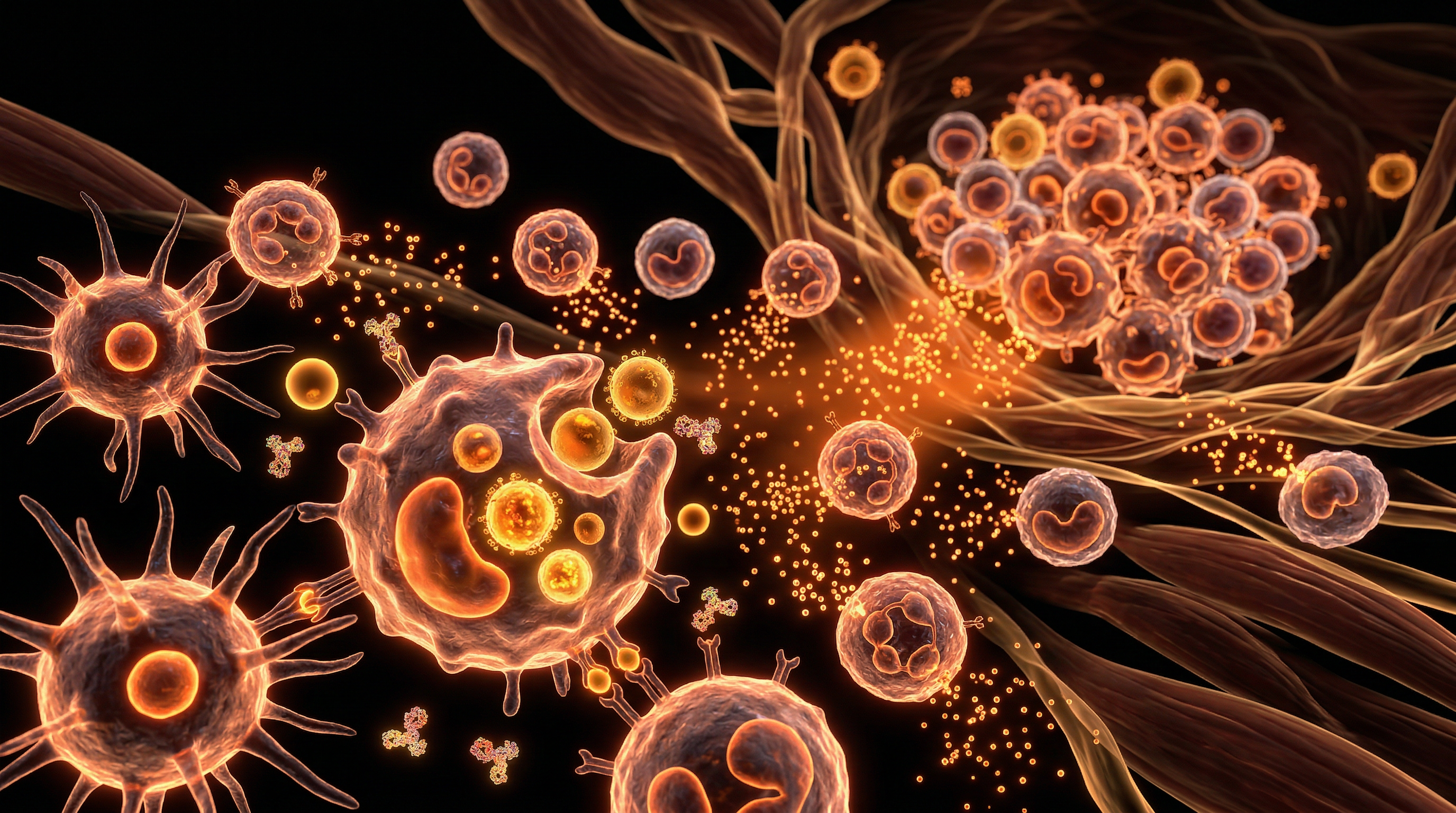
Within minutes of injection, MF59 triggers a massive recruitment of monocytes, macrophages, and dendritic cells to the muscle tissue. This is not a subtle nudge to the immune system; it is a systemic alarm. The adjuvant forces the muscle cells to secrete CCL2, CXCL8, and CCL4, effectively turning the injection site into a "biological furnace" of inflammation.
##
Mechanisms at the Cellular Level
The "success" of MF59 in boosting antibody titres (the measurement of antibodies in the blood) is predicated on its ability to activate the Innate Immune System—the body's first line of defence. However, the mechanisms by which it achieves this are increasingly linked to cellular damage and the disruption of signalling pathways.
The NLRP3 Inflammasome
One of the primary pathways activated by squalene adjuvants is the NLRP3 inflammasome. This is a multi-protein intracellular complex that detects "danger signals" or DAMPs (Damage-Associated Molecular Patterns). When the NLRP3 inflammasome is triggered, it leads to the maturation and release of pro-inflammatory cytokines, specifically Interleukin-1β (IL-1β) and Interleukin-18.
Callout Fact: Continuous or excessive activation of the NLRP3 inflammasome is a well-documented precursor to a range of chronic diseases, including Type 2 diabetes, Alzheimer’s disease, and atherosclerosis.
By design, MF59 ensures that the NLRP3 pathway remains "lit up." While this assists in the production of antibodies against the flu virus, it also lowers the threshold for inflammatory responses throughout the body.
MyD88 Signalling and ATP Release
Research has shown that MF59 induces the release of adenosine triphosphate (ATP) from cells at the injection site. In a healthy cellular environment, ATP is the "energy currency" kept inside the cell. When found outside the cell, it is treated as a sign of catastrophic cell death or trauma. MF59-induced ATP release triggers signalling through the MyD88 (Myeloid Differentiation Primary Response 88) protein.
The MyD88 pathway is a central hub for Toll-Like Receptor (TLR) signalling. By forcing this pathway, MF59 essentially "hijacks" the cell's communication system. This does not just affect the immediate area; it alters the epigenetic programming of the recruited monocytes, potentially leading to "trained immunity"—a state where the innate immune system remains in a hyper-responsive, pro-inflammatory state long after the vaccine components have been cleared.
Disruption of Lipid Metabolism
Because squalene is a lipid, its introduction in an emulsified, surfactant-heavy form disrupts local lipid metabolism. There is evidence to suggest that the surfactants in MF59, particularly Polysorbate 80, can increase the permeability of biological membranes. This "leakiness" allows the adjuvant and the antigen to reach the lymphatic system more rapidly, but it also risks the transport of these substances across the blood-brain barrier—a possibility that is rarely addressed in standard safety literature.
##
Environmental Threats and Biological Disruptors
The danger of MF59 cannot be viewed in isolation. We live in an era of "Total Toxic Burden," where the human body is bombarded by microplastics, heavy metals, pesticides, and electromagnetic frequencies. When a squalene adjuvant is introduced into this already compromised biological terrain, it acts as a biological disruptor.
Synergistic Toxicity
Squalene is highly susceptible to oxidation. When exposed to oxidative stress (common in individuals with poor diets or high environmental toxin exposure), squalene can turn into squalene peroxide. This substance is highly comedogenic and inflammatory. The surfactants in MF59 may further exacerbate the body’s sensitivity to other environmental toxins. For instance, the presence of aluminium (from other vaccines) alongside squalene has been shown in animal models to produce a significantly more profound autoimmune response than either substance alone.
The "Oil Syndrome"
History provides a grim precedent for the injection of oil-based substances. In the 1970s and 80s, the "Spanish Toxic Oil Syndrome" and subsequent studies into adjuvant-induced disease revealed that mineral oils and certain hydrocarbons, when introduced into the body, can trigger a systemic collapse of immune tolerance. MF59, while more refined than these industrial oils, operates on the same fundamental principle: it uses a non-metabolisable (or slowly metabolisable) oil to provoke a chronic immune response.
Biological Persistence
The "official" line is that MF59 is quickly broken down. However, independent research into the kinetics of adjuvants suggests that small amounts of these synthetic emulsions can be "mopped up" by macrophages and transported to distant sites, including the spleen, liver, and bone marrow. Once lodged in these tissues, they can act as a persistent source of low-grade inflammation for months or even years.
##
The Cascade: From Exposure to Disease
The progression from a single (or annual) injection of MF59 to a diagnosed chronic disease is rarely immediate. It is a pathological cascade—a slow-motion derailment of the immune system.
ASIA: Autoimmune/inflammatory Syndrome Induced by Adjuvants
The term ASIA, coined by world-renowned immunologist Dr. Yehuda Shoenfeld, describes a spectrum of conditions triggered by an external stimulus that leads to an immune overreaction. MF59 is a textbook "trigger" for ASIA. The symptoms are often vague at first:
- Chronic fatigue
- Myalgia (muscle pain)
- Joint pain
- Cognitive impairment ("brain fog")
- Sleep disturbances
Over time, this non-specific activation can crystallise into defined autoimmune diseases, such as Rheumatoid Arthritis, Systemic Lupus Erythematosus (SLE), or Multiple Sclerosis. The mechanism is likely molecular mimicry, where the immune system, hyper-stimulated by the squalene emulsion, begins to misidentify the body’s own proteins as foreign threats.
Th1/Th2 Imbalance
A healthy immune system maintains a delicate balance between Th1 (cellular) and Th2 (humoral/antibody) responses. MF59 is designed to push the body toward a potent Th2 and Th17 response. A chronic Th17-dominant state is a hallmark of tissue destruction and autoimmunity. By annually "re-tuning" the immune system of the elderly toward this Th17/Th2 bias, we may be inadvertently accelerating the progression of age-related inflammatory diseases.
The Gulf War Connection
The controversy surrounding squalene adjuvants is inextricably linked to Gulf War Syndrome (GWS). During the 1990-1991 conflict, many veterans were administered experimental vaccines. Independent testing found anti-squalene antibodies in the blood of those suffering from GWS. While the Ministry of Defence and the DoD have denied the use of squalene in those specific batches, the correlation between the presence of these antibodies and the symptoms of chronic systemic inflammation remains a pivotal "smoking gun" in the critique of oil-based adjuvants.
##
What the Mainstream Narrative Omits
In the UK, the Medicines and Healthcare products Regulatory Agency (MHRA) and the Joint Committee on Vaccination and Immunisation (JCVI) present MF59 as a "gold standard" for flu prevention in the over-65s. However, their safety assessments frequently suffer from significant methodological flaws.
The "Active Placebo" Deception
One of the most egregious omissions in clinical trials for MF59-adjuvanted vaccines is the lack of a true inert placebo. In many "safety" studies, the control group does not receive a saline injection. Instead, they receive:
- A different vaccine with the same adjuvant.
- A vaccine with an aluminium-based adjuvant.
- The adjuvant "buffer" solution alone.
This practice is scientifically dishonest. By comparing a new adjuvant (MF59) against an old adjuvant (like Aluminium), researchers can claim the new product is "as safe as" the old one. This obscures the absolute rate of adverse events and masks the chronic inflammatory potential of the substance. If both the study group and the "control" group develop joint pain at a rate of 10%, the researcher concludes the product is "safe," whereas a saline control might have revealed a background rate of only 1%.
Ignoring the Cumulative Effect
Regulatory approval is typically based on short-term monitoring (days or weeks). There is no requirement for manufacturers to monitor recipients of MF59-adjuvanted vaccines for five or ten years to see if there is an increase in autoimmune diagnoses. In the UK, the flu vaccine is an annual recommendation. This means a 65-year-old may receive ten doses of MF59 by the age of 75. The science of cumulative adjuvant burden is virtually non-existent in mainstream literature.
Important Fact: There have been zero long-term studies investigating the cumulative effect of repeated annual squalene injections on the human neurological system.
Genetic Susceptibility
The mainstream narrative treats every human as a "biological monolith." In reality, individuals with certain HLA (Human Leukocyte Antigen) genotypes are significantly more susceptible to adjuvant-induced autoimmunity. By ignoring genetic diversity and promoting a "one-size-fits-all" adjuvanted vaccine, the healthcare system is playing a game of biological roulette with the population.
##
The UK Context
The United Kingdom has been a primary adopter of MF59-adjuvanted vaccines. The NHS Influenza Immunisation Programme heavily relies on Fluad (aTIV) and its newer four-strain version, Fluad Quadrivalent.
The Rationale: Overcoming Immunosenescence
The UK's JCVI justifies the use of MF59 by citing the reduced effectiveness of standard flu shots in the elderly. As people age, their T-cell diversity declines, and their response to antigens weakens. MF59 "solves" this by forcing a more aggressive response. From a purely bureaucratic perspective, if an adjuvanted vaccine reduces hospitalisations by a small percentage, it is deemed a "success," regardless of whether it increases the long-term incidence of chronic inflammation or autoimmune decline in that same population.
The CSL Seqirus Monopoly
The UK market is dominated by Seqirus (a subsidiary of CSL Limited), the manufacturer of MF59-adjuvanted vaccines. The relationship between the manufacturer, the regulatory bodies, and the NHS creates a feedback loop where the drive for high "uptake" of the flu jab often supersedes the nuanced discussion of adjuvant risks.
The "Nudge" Economy
In UK GP surgeries, the "adjuvanted" flu jab is marketed as the "superior" or "enhanced" vaccine for the elderly. Patients are rarely, if ever, informed of the presence of squalene or Polysorbate 80, nor are they explained the mechanisms of innate immune activation. The "informed" part of informed consent has been replaced by a streamlined "nudge" toward compliance.
##
Protective Measures and Recovery Protocols
For those who have received MF59-adjuvanted vaccines and are concerned about the induction of chronic inflammatory states, or for those wishing to mitigate potential damage, a biological "recovery" strategy is essential. The goal is to dampen the hyper-activated innate immune system and restore the Th1/Th2/Th17 balance.
1. Modulating the Inflammasome
Since MF59 triggers the NLRP3 inflammasome, nutritional and pharmacological interventions that inhibit this pathway are paramount.
- Curcumin (High Bioavailability): A potent inhibitor of the NLRP3 inflammasome and IL-1β production.
- Quercetin: A flavonoid that stabilises mast cells and reduces the pro-inflammatory "storm" triggered by adjuvants.
- Melatonin: Beyond sleep, melatonin is a master regulator of the immune system and has been shown to suppress NLRP3 activation in various tissues.
2. Addressing Lipid Peroxidation
To counter the potential oxidation of injected squalene and the effects of surfactants:
- Vitamin E (Mixed Tocopherols): Protects lipid membranes from oxidative damage.
- Glutathione Support: Using N-Acetyl Cysteine (NAC) to boost the body’s primary antioxidant, which is essential for detoxifying the chemical components of vaccine emulsions.
3. Restoring Immune Tolerance
The "ASIA" protocol involves moving the body away from a state of hyper-vigilance.
- Vitamin D3: Essential for the induction of T-regulatory (Treg) cells, which are the "peacekeepers" of the immune system. Most elderly individuals in the UK are chronically deficient in Vitamin D, making them more susceptible to adjuvant-induced dysregulation.
- Omega-3 Fatty Acids (EPA/DHA): Crucial for the resolution of inflammation (the "switch-off" phase) which adjuvants like MF59 intentionally delay.
4. Reducing the Total Toxic Burden
The impact of MF59 is magnified by other toxins. Individuals should focus on:
- Sauna Therapy: To encourage the excretion of lipophilic (fat-soluble) toxins.
- Silica-Rich Water: To help facilitate the excretion of aluminium, which may be acting synergistically with the squalene adjuvant.
##
Summary: Key Takeaways
The science of MF59 is a testament to the "arrogance of intervention." In an attempt to solve the problem of waning immunity in the elderly, vaccinology has introduced a substance that may be undermining the very foundations of long-term health.
- MF59 is not just a "helper"; it is a potent immune-modulator that forces the innate immune system into a state of persistent alarm via the NLRP3 inflammasome and MyD88 signalling.
- Squalene in an emulsion is fundamentally different from squalene in food or skin. When injected, it creates a risk of molecular mimicry and the development of anti-squalene antibodies.
- Chronic Inflammation is the direct consequence of repeated exposure to these oil-in-water emulsions. The link between adjuvants and the ASIA syndrome is a growing field of study that the mainstream narrative continues to ignore.
- UK Regulatory Oversight relies on "active placebo" trials that mask the true side-effect profile of squalene-based vaccines, failing to account for the cumulative biological burden on the elderly population.
- Informed Choice is the only defence. Understanding the biochemical pathways activated by MF59 allows individuals to make informed decisions and take protective measures to maintain immune homeostasis.
As we move further into an era of "enhanced" vaccines, the burden of proof must remain on the manufacturers to prove that they are not trading a temporary reduction in flu symptoms for a permanent increase in chronic, life-altering autoimmune disease. Until such proof is provided, MF59 must be viewed not as a scientific triumph, but as a biological disruptor of the highest order.
This article is provided for informational and educational purposes only. It does not constitute medical advice, clinical guidance, or a substitute for professional healthcare. Information reflects cited research at time of publication. Always consult a qualified healthcare professional before acting on any health information.
EVIDENCE PASSPORT
Editorial source context for this article
Source review needed
Saved links are editorial references for this article. They may support specific claims rather than every sentence. Open and assess each source in context. This passport does not independently verify them.
Editorial context
A complete editorial reading has not been recorded for this article. Source links remain available for you to open and assess directly.
Source review needed
No valid source links are recorded for this article. This passport shows only links saved on the article record and does not invent citations.
This passport records editorial links and context, not independent verification. Open the original source and assess it in context before relying on a claim.
Medical Disclaimer
The information in this article is for educational purposes only and does not constitute medical advice, diagnosis, or treatment. Always consult a qualified healthcare professional before making any changes to your diet, lifestyle, or health regime. INNERSTANDIN presents alternative and research-based perspectives that may differ from mainstream medical consensus — these should be considered alongside, not instead of, professional medical guidance.
Read Full DisclaimerContinue the thread
Keep this question moving.
Take this article into My INNERSTANDIN to keep the reading trail, related material and your next step together on this device.