
Structural Integrity: How Pressurised Oxygen Supports Bone Density and Connective Tissue Resilience
Updated May 2026
Evidence orientation
Editorial context not yet recorded
Follow this category
This stays in this browser. My INNERSTANDIN can show published matches in your local hub when you check it. It does not send email, push, or alert notifications.
Local learning review
A private browser aid for revisiting ideas. It is not an alert or a health recommendation.
Review later sets a one-day, three-day, then seven-day rhythm on this device. Choose it only when you want to revisit this article.
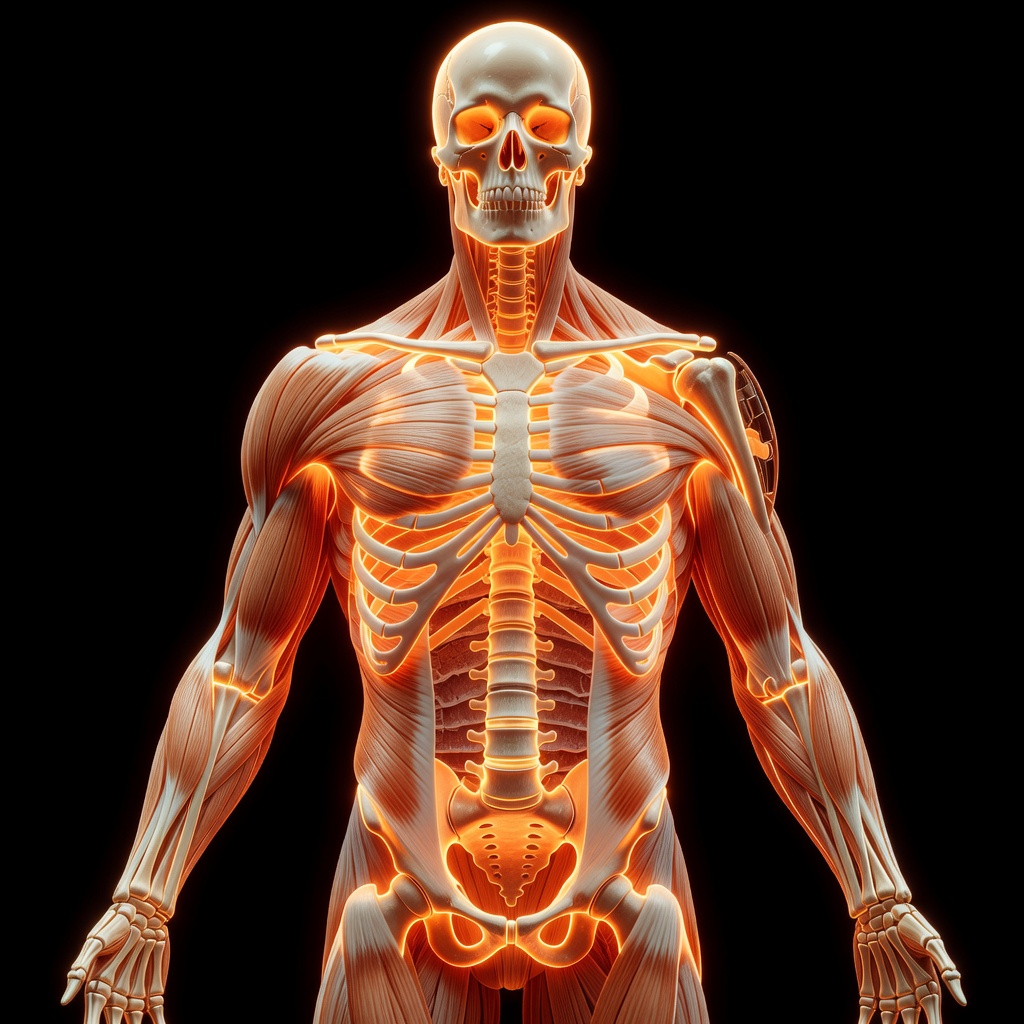
In the modern era, the human biological scaffold is under siege. We are witnessing an unprecedented rise in degenerative skeletal conditions, from premature osteoporosis to the chronic degradation of tendons and ligaments. While mainstream medicine often treats these issues as inevitable consequences of ageing or "wear and tear", the deeper truth lies in the cellular environment—specifically, the availability of the fundamental fuel for repair: Oxygen.
To maintain structural integrity, the body requires more than just calcium and movement. It requires a high-energy metabolic state capable of synthesising dense protein matrices and mineralising bone tissue. Hyperbaric Oxygen Therapy (HBOT) emerges not merely as a clinical intervention, but as a foundational necessity for those seeking to reclaim their physical resilience. By harnessing the physics of atmospheric pressure, we can force-feed oxygen into tissues that are traditionally "hypoxic" (oxygen-starved), triggering a cascade of structural rejuvenation.
The Architectural Crisis: Why We Are Crumbling
The human frame is a masterpiece of bio-engineering, designed to distribute force and resist gravity. However, this architecture is only as strong as its extracellular matrix (ECM). Today, a combination of sedentary lifestyles, nutrient-depleted diets, and environmental toxins has led to a state of systemic "cellular suffocation."
When oxygen levels drop, the body enters a survival mode. Repairing a micro-fracture in the femur or a tear in the Achilles tendon becomes a secondary priority compared to maintaining heart and brain function. Consequently, our "structural bank account" begins to dwindle. Connective tissues become brittle, and bone density decreases, leading to a fragile existence.
Key Fact: Bone and connective tissues are naturally "hypovascular," meaning they have a limited blood supply compared to organs like the heart. This inherent lack of circulation makes them the first to suffer when systemic oxygen levels are suboptimal.
The Biological Mechanisms: How HBOT Rebuilds the Frame
Hyperbaric Oxygen Therapy works on the principle of Henry’s Law, which states that more gas will be dissolved into a liquid when under pressure. In an HBOT chamber, the patient breathes pure oxygen at pressures higher than sea level. This dissolves oxygen directly into the blood plasma, bypassing the need for red blood cell transport and allowing life-giving gas to reach the deepest, most compressed areas of the skeletal system.
1. Stimulating Osteoblast Activity
Bone is a living tissue, constantly being broken down by osteoclasts and rebuilt by osteoblasts. In a low-oxygen environment, the osteoclasts (the "demolition crew") often outpace the osteoblasts (the "builders").
HBOT tips the scales back in favour of the builders. High-pressure oxygen stimulates the proliferation of osteoblasts and enhances the mineralisation process. By increasing the metabolic energy available to these cells, HBOT ensures that the hydroxyapatite crystals—the mineral component of bone—are laid down densely and correctly.
2. Neovascularisation: Creating New Supply Lines
One of the most profound effects of pressurised oxygen is angiogenesis—the growth of new blood vessels. In cases of bone trauma or age-related thinning, the local blood supply is often compromised. HBOT triggers the release of Vascular Endothelial Growth Factor (VEGF). This signals the body to build new capillary networks directly into the bone marrow and connective tissue, ensuring a long-term supply of nutrients and oxygen long after the session has ended.
3. Collagen Synthesis and Hydroxylation
Collagen is the glue that holds the human body together. It provides the tensile strength for our skin, tendons, and the "flexible" framework of our bones. However, the synthesis of collagen is a chemically demanding process.
The enzymes responsible for "cross-linking" collagen fibres—prolyl hydroxylase and lysyl hydroxylase—are oxygen-dependent. Without sufficient oxygen, the collagen produced is weak, unstable, and prone to rupture. HBOT provides the "hyper-oxygenated" environment required to produce high-quality, resilient Type I and Type III collagen.
##
##
The UK Context
: A Growing Need for Structural Support
In the United Kingdom, the burden of musculoskeletal ill-health is staggering. According to the NHS and various health surveys, over 20 million people in the UK suffer from a musculoskeletal condition, such as osteoarthritis or back pain.
The British climate and lifestyle contribute significantly to this. With limited sunlight for several months of the year, Vitamin D deficiency—essential for bone health—is rampant. Furthermore, the UK's ageing population is placing an immense strain on orthopaedic services.
Truth-Exposing Reality: The traditional UK approach to bone health is reactive, often involving pharmaceutical intervention (such as bisphosphonates) only after a fracture has occurred. HBOT represents a shift towards proactive structural maintenance, addressing the oxygen-starvation that precedes the fracture.
While HBOT is currently available on the NHS for a limited number of conditions (such as carbon monoxide poisoning or decompression sickness), the private sector in the UK is seeing a surge in "Wellness HBOT." This reflects a growing "Innerstanding" among the British public that cellular health is the prerequisite for structural longevity.
Environmental Factors: The Invisible Eraders of Density
We do not live in a vacuum. Our environment actively influences our structural integrity. Several factors contribute to the degradation of our bones and tissues, making the role of oxygen even more critical:
- Microplastics and Endocrine Disruptors: Modern environments are saturated with chemicals that interfere with the hormonal signals (like oestrogen and testosterone) required to maintain bone density.
- Sedentary Indoor Culture: A lack of mechanical loading (exercise) combined with the "stale air" of modern office environments leads to poor systemic oxygenation and weak skeletal structures.
- Chronic Inflammation: "Inflammaging" is a state of persistent, low-grade inflammation that activates osteoclasts. HBOT is a powerful anti-inflammatory, switching off the signals that lead to bone resorption.
Protective Strategies: Integrating HBOT into a Structural Protocol
To truly optimise structural integrity, Hyperbaric Oxygen Therapy should be viewed as the cornerstone of a broader regenerative strategy.
Synergistic Nutrition
Oxygen provides the energy, but the body still requires the raw materials.
- Vitamin K2 and D3: K2 is essential for directing calcium into the bone and out of the arteries.
- Magnesium and Silica: These trace minerals are vital for the flexibility and mineralisation of the bone matrix.
- Vitamin C: A critical co-factor in the oxygen-dependent collagen synthesis process.
Strategic Loading
For HBOT to be most effective, the bone should be stimulated through Wolf’s Law—the principle that bone grows or remodels in response to the forces or demands placed upon it. Combining a course of HBOT with resistance training or weight-bearing exercise creates a powerful "signal and supply" effect: the exercise provides the signal for growth, and HBOT provides the oxygen supply to execute it.
Stem Cell Mobilisation
Research has shown that a single session of HBOT at 2.0 ATA can significantly increase the concentration of circulating Stem Cells (specifically CD34+ cells). These cells are the body's "repair kit," capable of transforming into bone or cartilage cells. By increasing the number of these "master cells" in the UK population, we can accelerate recovery from sports injuries and age-related degeneration.
The Truth About "Ageing" Joints
We are often told that "stiff joints" are an unavoidable part of getting older. This is a half-truth. While chronological age is fixed, biological age is malleable. Joint stiffness is often the result of fibrosis—the buildup of poor-quality, non-functional scar tissue—and a lack of synovial fluid oxygenation.
By saturating the joint capsule with oxygen, HBOT reduces fibrotic tissue and promotes the health of chondrocytes (cartilage cells). This restores the "glide" to our movement, proving that structural resilience is possible well into our later decades.
Key Takeaways: Reclaiming Your Foundation
- Oxygen is the Architect: Without sufficient pressurised oxygen, the body cannot maintain the high-metabolic demand of bone and collagen synthesis.
- Pressure is the Key: Simply breathing more air is insufficient; the pressure of an HBOT chamber is required to dissolve oxygen into the plasma and reach avascular tissues.
- Reversing Decay: HBOT does not just slow down bone loss; by stimulating osteoblasts and stem cell release, it provides a pathway for actual structural regeneration.
- The UK Imperative: Given the high rates of musculoskeletal issues in the UK, HBOT offers a necessary alternative to reactive, pharmaceutical-heavy protocols.
- Total Integrity: For maximum results, combine HBOT with a nutrient-dense diet (K2, C, Magnesium) and consistent mechanical loading.
Structural integrity is not a static state; it is a dynamic process of constant renewal. By embracing the power of Hyperbaric Oxygen Therapy, we provide our bodies with the fundamental element required to stand tall, move freely, and resist the pressures of modern environmental decay. It is time to move beyond "managing" decline and start investing in the cellular truth of our biological architecture.
This article is provided for informational and educational purposes only. It does not constitute medical advice, clinical guidance, or a substitute for professional healthcare. Information reflects cited research at time of publication. Always consult a qualified healthcare professional before acting on any health information.
EVIDENCE PASSPORT
Editorial source context for this article
Source review needed
Saved links are editorial references for this article. They may support specific claims rather than every sentence. Open and assess each source in context. This passport does not independently verify them.
Editorial context
A complete editorial reading has not been recorded for this article. Source links remain available for you to open and assess directly.
Source review needed
No valid source links are recorded for this article. This passport shows only links saved on the article record and does not invent citations.
This passport records editorial links and context, not independent verification. Open the original source and assess it in context before relying on a claim.
Medical Disclaimer
The information in this article is for educational purposes only and does not constitute medical advice, diagnosis, or treatment. Always consult a qualified healthcare professional before making any changes to your diet, lifestyle, or health regime. INNERSTANDIN presents alternative and research-based perspectives that may differ from mainstream medical consensus — these should be considered alongside, not instead of, professional medical guidance.
Read Full DisclaimerContinue the thread
Keep this question moving.
Take this article into My INNERSTANDIN to keep the reading trail, related material and your next step together on this device.