Synaptic Pruning Deficits in the Basal Ganglia: A Developmental Perspective on Compulsive Spectrum Disorders
Discuss this resourceUpdated August 2026
This article explores how failures in synaptic pruning within the basal ganglia circuitry during critical developmental windows contribute to the pathophysiology of obsessive-compulsive spectrum disorders.
Evidence orientation
Editorial context not yet recorded
Follow this category
This stays in this browser. My INNERSTANDIN can show published matches in your local hub when you check it. It does not send email, push, or alert notifications.
Local learning review
A private browser aid for revisiting ideas. It is not an alert or a health recommendation.
Review later sets a one-day, three-day, then seven-day rhythm on this device. Choose it only when you want to revisit this article.

# The Basal Ganglia and Developmental Pruning: A Foundation for Compulsion. The human brain undergoes a massive architectural reorganization during adolescence, a process primarily driven by synaptic pruning—the selective elimination of redundant or weak neural connections. In the context of INNERSTANDING’s mission to elucidate the root causes of neurobehavioral health, we must examine how disruptions in this process within the basal ganglia—the brain's primary motor and habit-control center—underlie obsessive-compulsive spectrum disorders. ## Understanding the Basal Ganglia Circuitry. The basal ganglia are a cluster of nuclei responsible for action selection and habit formation.
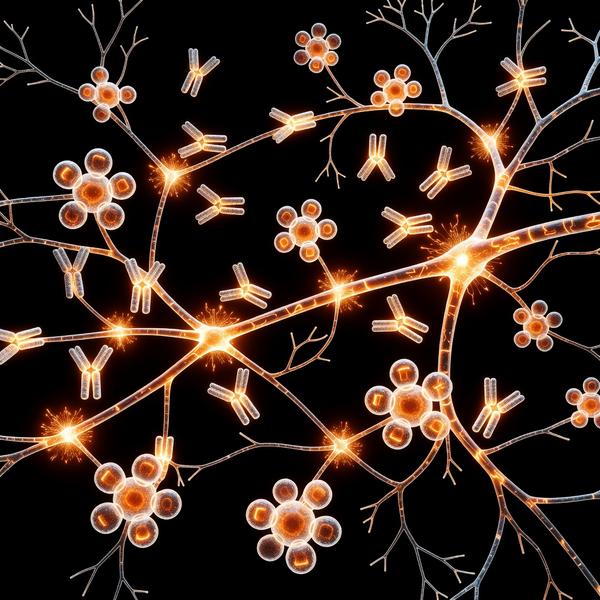
In a healthy brain, excitatory signals from the cortex are filtered through the striatum to allow for fluid movement and cognitive flexibility. However, in compulsive spectrum disorders, this 'gating' mechanism often becomes hypersensitive. ## The Pruning Mechanism. Synaptic pruning, mediated largely by microglia (the brain's resident immune cells), ensures that neural pathways are efficient. When this mechanism falters in the striatum, the brain fails to refine the loops between the cortex and the basal ganglia.
This leads to 'hyper-connectivity,' where motor and cognitive patterns become stuck, manifesting as the repetitive thoughts and ritualistic behaviors characteristic of OCD. ## Developmental Windows and Root Causes. The critical window for this pruning occurs during late childhood and puberty. Environmental factors, including chronic neuroinflammation and oxidative stress, can interfere with microglia function, essentially 'blunting' their ability to clear excessive synapses. When these circuits remain hyper-dense, the inhibitory pathways that should signal 'stop' are drowned out by excessive excitatory input. ## Clinical Implications.
By viewing compulsive behaviors through a developmental lens, we move away from purely symptomatic treatment toward understanding biological root causes. Addressing the integrity of the pruning process—through nutritional support, stress regulation, and potential immune-modulatory interventions—offers a deeper pathway to long-term neurobiological resilience. As we advance our innerstanding of these biological loops, we create more effective, compassionate frameworks for recovery.
This article is provided for informational and educational purposes only. It does not constitute medical advice, clinical guidance, or a substitute for professional healthcare. Information reflects cited research at time of publication. Always consult a qualified healthcare professional before acting on any health information.
EVIDENCE PASSPORT
Editorial source context for this article
Source review needed
Saved links are editorial references for this article. They may support specific claims rather than every sentence. Open and assess each source in context. This passport does not independently verify them.
Editorial context
A complete editorial reading has not been recorded for this article, and no source links are saved on its record.
Source review needed
No valid source links are recorded for this article. Supplementary research, where available, is listed separately below.
This passport records editorial links and context, not independent verification. Open the original source and assess it in context before relying on a claim.
Medical Disclaimer
The information in this article is for educational purposes only and does not constitute medical advice, diagnosis, or treatment. Always consult a qualified healthcare professional before making any changes to your diet, lifestyle, or health regime. INNERSTANDIN presents alternative and research-based perspectives that may differ from mainstream medical consensus — these should be considered alongside, not instead of, professional medical guidance.
Read Full DisclaimerContinue the thread
Keep this question moving.
Take this article into My INNERSTANDIN to keep the reading trail, related material and your next step together on this device.
Explore this in the Body Map
Explore related body structures and their educational pages in the interactive Body Map.
Dig deeper in the Library
Free, longform PDF volumes that go beyond headlines into mechanisms and references.
RABBIT HOLE
Follow the biological thread deeper