
Telomere Attrition and DNA Damage Response: The Root Causes of Age-Related Hematopoietic Decline
Discuss this resourceUpdated August 2026
An in-depth exploration into how cellular aging within the bone marrow niche leads to hematological dysfunction, focusing on the molecular interplay between telomere erosion and the DNA damage response.
Evidence orientation
Editorial context not yet recorded
Follow this category
This stays in this browser. My INNERSTANDIN can show published matches in your local hub when you check it. It does not send email, push, or alert notifications.
Local learning review
A private browser aid for revisiting ideas. It is not an alert or a health recommendation.
Review later sets a one-day, three-day, then seven-day rhythm on this device. Choose it only when you want to revisit this article.
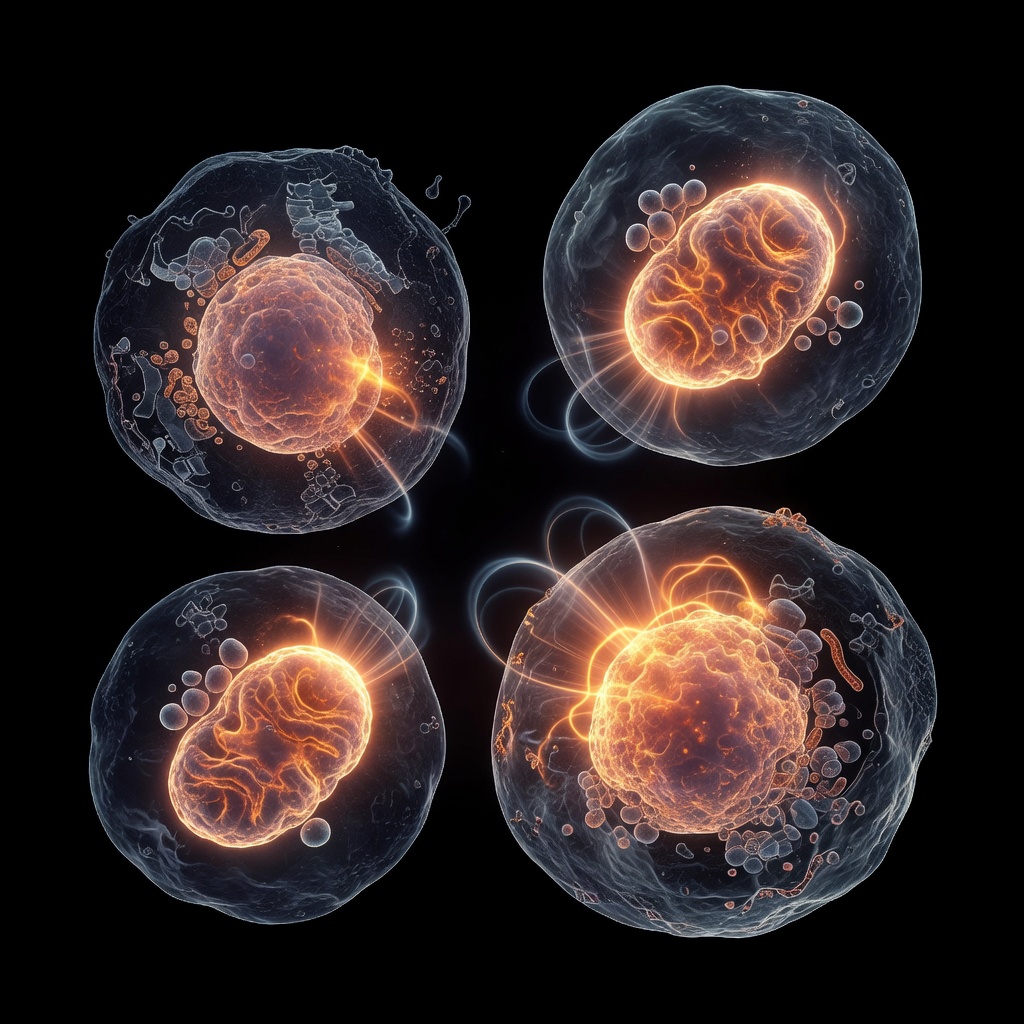
The Foundation of Hematopoiesis
Hematopoiesis is a tightly regulated, lifelong process responsible for the continuous production of blood cells. At the apex of this hierarchy lies the Hematopoietic Stem Cell (HSC). As we age, however, the efficiency of this system wanes, manifesting in anemia, immune senescence, and an increased susceptibility to myeloid malignancies. The primary driver of this decline is the progressive accumulation of molecular insults within the HSC compartment.
Telomere Attrition: The Biological Clock
Telomeres—repetitive TTAGGG sequences protected by the shelterin protein complex—act as buffers at the ends of linear chromosomes. With every cycle of HSC division, these telomeres shorten due to the 'end-replication problem.' Unlike germline cells, mature HSCs possess limited telomerase activity, insufficient to maintain telomere length over decades of proliferative stress. When telomeres reach a critical threshold, they trigger a permanent state of cell cycle arrest known as replicative senescence. This limits the regenerative capacity of the bone marrow, effectively depleting the pool of functional stem cells available to replenish peripheral blood lineages.
The DNA Damage Response (DDR)
Beyond simple attrition, the DNA Damage Response (DDR) is a sophisticated signaling network that senses genomic instability. Persistent telomere shortening is perceived by the cell as double-strand breaks. This activates the ATM and ATR kinase pathways, which orchestrate a cascade involving p53 and p21. While intended to prevent the propagation of mutated cells, chronic DDR activation in HSCs is maladaptive. It induces a secretome known as the Senescence-Associated Secretory Phenotype (SASP), which alters the bone marrow microenvironment, promoting systemic inflammation and hindering the function of neighboring, healthier stem cells.
Consequences for Hematological Health
This decline results in 'clonal hematopoiesis,' where specific HSC clones harboring mutations in epigenetic regulators (such as DNMT3A or TET2) gain a competitive advantage. This clonal expansion is a hallmark of aging bone marrow. When these mutated clones reach a high burden, the risk for secondary leukemias rises, while the overall diversity of the immune system collapses, leading to 'inflammaging.'
Toward Clinical Intervention
Understanding these mechanisms is vital for future therapeutic strategies. Current research into telomerase activators and senolytics—compounds designed to selectively clear senescent cells—offers a promising frontier for restoring hematological vigor. By addressing the root causes of telomeric and genomic degradation, we move closer to rejuvenating the bone marrow niche and extending human healthspan.
This article is provided for informational and educational purposes only. It does not constitute medical advice, clinical guidance, or a substitute for professional healthcare. Information reflects cited research at time of publication. Always consult a qualified healthcare professional before acting on any health information.
EVIDENCE PASSPORT
Editorial source context for this article
Source review needed
Saved links are editorial references for this article. They may support specific claims rather than every sentence. Open and assess each source in context. This passport does not independently verify them.
Editorial context
A complete editorial reading has not been recorded for this article, and no source links are saved on its record.
Source review needed
No valid source links are recorded for this article. Supplementary research, where available, is listed separately below.
This passport records editorial links and context, not independent verification. Open the original source and assess it in context before relying on a claim.
Medical Disclaimer
The information in this article is for educational purposes only and does not constitute medical advice, diagnosis, or treatment. Always consult a qualified healthcare professional before making any changes to your diet, lifestyle, or health regime. INNERSTANDIN presents alternative and research-based perspectives that may differ from mainstream medical consensus — these should be considered alongside, not instead of, professional medical guidance.
Read Full DisclaimerContinue the thread
Keep this question moving.
Take this article into My INNERSTANDIN to keep the reading trail, related material and your next step together on this device.