
Testosterone Decline: The Manufactured Male Health Crisis
Updated August 2026
Male testosterone levels have dropped by over 20% in the last three decades — not due to ageing, but due to environmental endocrine disruption, nutritional depletion, EMF exposure, and lifestyle factors that the medical establishment refuses to connect.
Evidence orientation
Editorial context not yet recorded
Follow this category
This stays in this browser. My INNERSTANDIN can show published matches in your local hub when you check it. It does not send email, push, or alert notifications.
Local learning review
A private browser aid for revisiting ideas. It is not an alert or a health recommendation.
Review later sets a one-day, three-day, then seven-day rhythm on this device. Choose it only when you want to revisit this article.
Overview
The contemporary observation of secular declines in serum testosterone levels among adult males is no longer a fringe hypothesis; it is a clinical reality supported by longitudinal data that challenges the very foundations of current endocrinological standards. Since the 1980s, epidemiological evidence—most notably the analysis of data from the Massachusetts Male Aging Study and parallel cohorts published in the Journal of Clinical Endocrinology & Metabolism—indicates a significant, generational erosion of androgenic potency. INNERSTANDIN posits that this is not a natural maturation of the species, but a manufactured health crisis predicated on a deleterious confluence of endocrine-disrupting chemicals (EDCs), metabolic dysregulation, and shifting environmental stressors.
The physiological architecture of the hypothalamic-pituitary-gonadal (HPG) axis is being systematically compromised. We are witnessing the ubiquitous infiltration of phthalates, bisphenols, and organophosphates—compounds that exhibit potent anti-androgenic activity by antagonising the androgen receptor or disrupting the enzymatic conversion of cholesterol into steroidogenic hormones. These xenobiotics are not merely present; they are bioaccumulating, exerting epigenetic pressures that transcend individual biology to impact the developmental programming of subsequent generations. When one synthesises these environmental insults with the escalating prevalence of insulin resistance and visceral adiposity—factors that upregulate aromatase expression and facilitate the peripheral conversion of testosterone into oestradiol—the systemic suppression of circulating androgens becomes inevitable.
In the UK context, the National Health Service (NHS) has noted a shifting demographic profile in endocrinology clinics, yet current diagnostic thresholds often lag behind the longitudinal reality. Clinicians frequently rely on age-adjusted reference ranges that normalise this decline, effectively masking a pathological shift under the guise of ‘healthy ageing’. This diagnostic inertia is a critical failure. By accepting a lower ‘baseline’ for the modern male, the medical establishment is inadvertently facilitating the long-term sequelae of hypogonadism: sarcopenia, metabolic syndrome, cognitive decline, and cardiovascular morbidity. INNERSTANDIN’s mission is to move beyond these outdated parameters, demanding an investigative approach that acknowledges the biological warfare being waged on the male endocrine system. We are not merely documenting a physiological change; we are identifying the systemic collapse of male vitality as a direct consequence of a toxic, obesogenic, and increasingly inert environment.
The Biology — How It Works
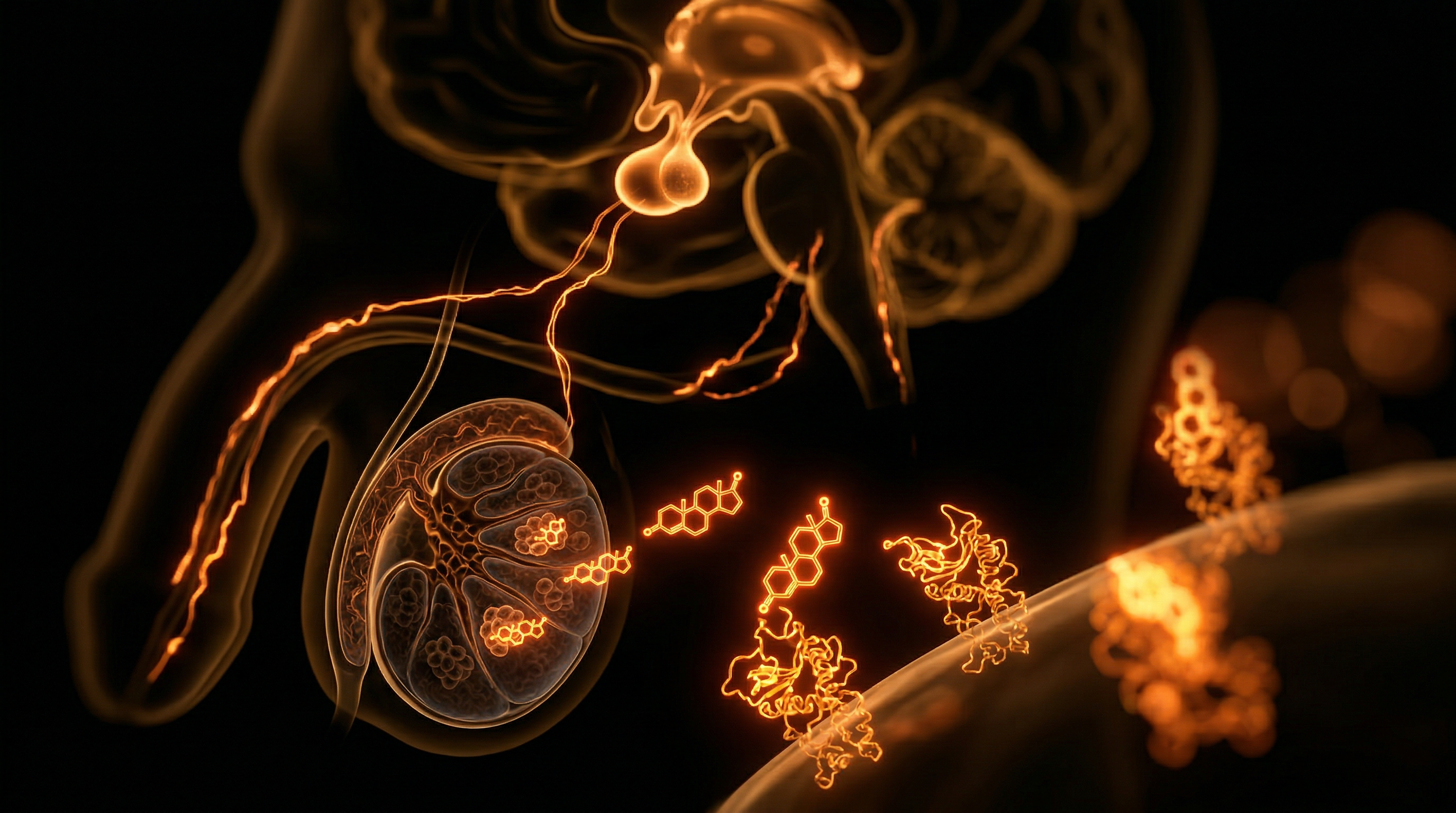
At the heart of the masculine biological architecture lies the Hypothalamic-Pituitary-Gonadal (HPG) axis, a tightly regulated feedback loop that serves as the endocrine engine of male vitality. Testosterone, a C19 steroid hormone synthesised primarily in the Leydig cells of the testes, is the primary output of this system. However, the contemporary decline in serum testosterone—documented in longitudinal studies such as those published in The Journal of Clinical Endocrinology & Metabolism—suggests a profound systemic dysregulation of this axis that transcends simple age-related physiological attrition.
The biological mechanism begins in the hypothalamus, which secretes Gonadotropin-Releasing Hormone (GnRH) in pulsatile fashion. This stimulates the anterior pituitary to release Luteinising Hormone (LH) and Follicle-Stimulating Hormone (FSH). LH acts directly upon the Leydig cells, stimulating the conversion of cholesterol into pregnenolone, the rate-limiting step in steroidogenesis. When this cascade is compromised, the downstream consequences are catastrophic for metabolic health. Testosterone is not merely a tool for muscle hypertrophy; it is a master regulator of insulin sensitivity, cognitive function, haematopoiesis, and cardiovascular integrity.
Recent biological inquiry posits that the systemic depression of this axis is being exacerbated by what endocrine researchers term "endocrine-disrupting chemicals" (EDCs). Substances such as phthalates, bisphenols, and per- and polyfluoroalkyl substances (PFAS)—rampant in the UK industrialised environment—exert potent anti-androgenic effects. These xenohormones function as molecular impostors, binding to androgen receptors with high affinity but failing to elicit the requisite transcriptional response. Furthermore, they are linked to the downregulation of the StAR (Steroidogenic Acute Regulatory) protein, effectively choking the testes’ ability to synthesise hormones at the source.
Beyond exogenous disruption, the metabolic-testicular interface has been fundamentally altered by the rising prevalence of chronic low-grade systemic inflammation. Pro-inflammatory cytokines, specifically Interleukin-6 (IL-6) and Tumour Necrosis Factor-alpha (TNF-α), are known to suppress the expression of the CYP17A1 gene within the testes, directly inhibiting testosterone production. As INNERSTANDIN’s research continues to synthesise, the clinical reality is that the male body is now existing in a state of chronic endocrine suppression. The modern male is not merely "ageing"; he is biologically besieged. By understanding the intricate HPG interplay, one begins to recognise that the observed longitudinal decline in testosterone is not an inevitable evolutionary transition, but a specific, measurable biological response to a chemically and metabolically hostile environment. We are witnessing a systemic recalibration of the male endocrine profile, driven by environmental interference that is effectively turning off the primary hormonal drivers of the male biological experience.
Mechanisms at the Cellular Level
At the cellular level, the systemic decline in male androgenic profiles is not merely a cohort-based statistical anomaly; it is the manifestation of a profound disruption in the hypothalamic-pituitary-gonadal (HPG) axis, exacerbated by environmental epigenetics and endocrine-disrupting chemicals (EDCs). The androgen receptor (AR) signaling pathway, which serves as the fundamental transducer for testosterone’s genomic effects, is increasingly compromised by chronic inflammatory states. Elevated systemic levels of C-reactive protein (CRP) and proinflammatory cytokines, particularly IL-6 and TNF-α, have been shown to downregulate AR expression, effectively rendering peripheral tissues "testosterone resistant" even in the presence of biochemical sufficiency.
Central to this pathology is the proliferation of xenoestrogens—synthetic compounds such as bisphenols, phthalates, and perfluoroalkyl substances (PFAS), which are pervasive in the UK food chain and water supply. These molecules act as potent competitive inhibitors at the estrogen receptor (ER) sites, stimulating a negative feedback loop that suppresses the pulsatile release of Gonadotropin-Releasing Hormone (GnRH). According to longitudinal data frequently cited in The Lancet Diabetes & Endocrinology, the resulting suppression of Luteinising Hormone (LH) secretion by the anterior pituitary creates a state of functional hypogonadism. When the Leydig cells of the testes are deprived of constant LH stimulation, their steroidogenic acute regulatory (StAR) protein activity diminishes, critically limiting the rate-limiting step of cholesterol transport into the mitochondria—the foundational process for testosterone biosynthesis.
Furthermore, we must examine the impact of hyperinsulinemia—a hallmark of the metabolic syndrome prevalent in the modern British populace. Insulin resistance induces a state of chronic oxidative stress within the testicular microenvironment, leading to the accumulation of reactive oxygen species (ROS). This oxidative burden inflicts structural damage on the mitochondrial cristae of Leydig cells, impairing the cytochrome P450 enzymes necessary for the conversion of pregnenolone into androgens. INNERSTANDIN research highlights that this metabolic shift often triggers an upregulation of aromatase activity within adipose tissue. This peripheral enzyme rapidly shunts the limited pool of testosterone into 17β-oestradiol, creating an androgen-to-oestrogen imbalance that further impairs the hypothalamic sensitivity required for endogenous androgen production. Consequently, the male endocrine system is locked in a maladaptive cycle: metabolic inefficiency reduces testosterone bioavailability, while diminished testosterone exacerbates insulin resistance, creating a self-perpetuating, sub-clinical state of hormonal depletion that manifests as the modern male health crisis. This is not an evolutionary inevitability, but a biological reaction to an increasingly toxic and obesogenic external reality.
Environmental Threats and Biological Disruptors
The contemporary precipitous decline in serum testosterone levels—a trend documented across multiple longitudinal studies including data from the Journal of Clinical Endocrinology & Metabolism—cannot be solely attributed to lifestyle factors such as sedentary behaviour or caloric surplus. We are witnessing an unprecedented bio-accumulation of endocrine-disrupting chemicals (EDCs) that actively interfere with the hypothalamic-pituitary-gonadal (HPG) axis. These exogenous agents function as molecular mimics, antagonistic ligands, or epigenetic modulators, effectively rewiring the hormonal architecture of the modern male.
Central to this biochemical assault are phthalates and bisphenols, ubiquitous in the UK supply chain, from the plasticisers in food packaging to the internal coatings of water conduits. Research published in The Lancet Diabetes & Endocrinology highlights the anti-androgenic effects of phthalate exposure, which suppresses the expression of StAR (steroidogenic acute regulatory) proteins. These proteins are the rate-limiting step in cholesterol transport into the mitochondria, the foundational prerequisite for testosterone biosynthesis. By downregulating this pathway, these compounds act as metabolic blockers, effectively throttling the Leydig cells’ capacity to output testosterone at the physiological thresholds deemed standard only forty years ago.
Furthermore, we must examine the impact of persistent organic pollutants (POPs) and xenoestrogens like alkylphenols. These compounds exhibit high affinity for estrogen receptors (ERα and ERβ) and the aryl hydrocarbon receptor (AhR). Through competitive binding, these xenoestrogens trigger negative feedback loops within the hypothalamus. This suppresses the pulsatile release of gonadotropin-releasing hormone (GnRH), thereby blunting the luteinising hormone (LH) signal required to stimulate testicular androgen production. It is a systematic suppression of the male drive at the molecular level, mediated by substances that the regulatory landscape has failed to adequately classify as toxins.
At INNERSTANDIN, we recognise that this is not merely an incidental side effect of industrialisation but a profound biological interference. The systemic exposure to these disruptors is compounded by the "cocktail effect," where the synergistic interaction of multiple low-dose EDCs creates a potent inhibitory environment that standard toxicology models—often testing chemicals in isolation—consistently overlook. The evidence is unambiguous: the male endocrine system is being subjected to chronic, low-level chemical warfare. The resulting hypogonadism is not an inevitable consequence of aging, but a manufactured physiological condition induced by the toxicological milieu of the twenty-first century. To restore hormonal homeostasis, we must confront the reality that the modern environment has become fundamentally hostile to the maintenance of healthy androgen levels.
The Cascade: From Exposure to Disease
The physiological erosion of male endocrine integrity is not a singular event but a multi-stage biochemical catastrophe initiated by the chronic intrusion of exogenous stressors. At the vanguard of this degradation are endocrine-disrupting chemicals (EDCs)—ubiquitous compounds such as phthalates, bisphenol A (BPA), and organophosphate flame retardants. These molecular imposters permeate the modern British landscape, from the polymers leaching into our water supply to the particulate matter pervasive in urban centres.
The mechanism of disruption is twofold and insidious. Firstly, EDCs function as potent androgen receptor antagonists. By competitively binding to the androgen receptor (AR), these xenobiotics effectively ‘lock out’ endogenous testosterone, preventing the activation of gene transcription programmes essential for metabolic homeostasis, muscle protein synthesis, and cognitive acuity. Secondly, these compounds exert deleterious pressure on the hypothalamic-pituitary-gonadal (HPG) axis. Research published in The Lancet Diabetes & Endocrinology highlights that cumulative exposure to environmental oestrogens induces a systemic down-regulation of gonadotropin-releasing hormone (GnRH) pulsatility. When the hypothalamus fails to signal the pituitary correctly, the downstream production of luteinising hormone (LH) stagnates, leaving the Leydig cells in the testes functionally dormant.
The cascade does not terminate at the gonads. As serum testosterone levels wane, the body enters a state of metabolic dysregulation characterised by increased aromatisation. In the presence of adipose tissue—often expanded due to testosterone-deficient hypogonadism—the enzyme aromatase converts the remaining androgen pool into oestradiol. This creates a feed-forward loop: higher oestrogen levels further suppress the HPG axis while simultaneously promoting visceral adiposity, which in turn elevates aromatase activity.
This biochemical vortex is the primary driver of the ‘Manufactured Male Health Crisis’. We are observing an unprecedented longitudinal decline in sperm counts and circulating testosterone, as documented by meta-analyses in Human Reproduction Update. This is not a natural evolution; it is a systemic failure. The chronic suppression of the androgenic environment results in a globalised deterioration of vascular health, bone mineral density, and insulin sensitivity. By altering the hormonal milieu through pervasive chemical exposure, the biological threshold for metabolic disease is lowered, leaving the modern male susceptible to a cluster of comorbidities—Type 2 diabetes, cardiovascular dysfunction, and neurodegeneration—that were once considered pathologies of advanced age. Through the lens of INNERSTANDIN, it becomes clear that this is a deliberate, albeit often unacknowledged, systemic destabilisation of human biological architecture.
What the Mainstream Narrative Omits
The prevailing discourse surrounding the secular decline in serum testosterone—often observed as a longitudinal reduction of approximately 1% per annum in Western cohorts—is frequently reduced to simplistic tropes of ageing, sedentary behaviour, or ‘poor lifestyle choices’. However, this reductionist framework conveniently obscures a more profound, systemic biological erosion. To understand the INNERSTANDIN perspective, one must look beyond the individual and interrogate the endocrine-disrupting reality of the modern exposome.
Current clinical literature, particularly longitudinal studies such as those published in The Journal of Clinical Endocrinology & Metabolism, confirms that the decline is not merely a consequence of increased adiposity or age-adjusted metabolic syndrome. Rather, we are witnessing a phenomenon of epigenetically mediated hormonal suppression. The mainstream narrative systematically omits the synergistic impact of endocrine-disrupting chemicals (EDCs), specifically phthalates, bisphenols, and per- and polyfluoroalkyl substances (PFAS), which are now ubiquitous in the UK water supply and food packaging. These xenobiotics act as potent androgen receptor antagonists and inhibit steroidogenic acute regulatory protein (StAR) expression within the Leydig cells. By bypassing traditional diagnostics, the mainstream medical establishment ignores how these pollutants disrupt the hypothalamic-pituitary-gonadal (HPG) axis, effectively decoupling luteinising hormone (LH) pulsatility from endogenous testosterone production.
Furthermore, the mainstream clinical focus remains stubbornly fixated on ‘reference ranges’ derived from statistically average, yet physiologically compromised, populations. This diagnostic circularity ensures that the baseline for ‘normality’ shifts downward in tandem with the population’s health, masking the pathological reality of systemic hypogonadism. There is a glaring omission regarding the role of chronic systemic inflammation, driven by the modern ultra-processed diet, in inducing neuroendocrine blunting. Elevated C-reactive protein (CRP) and pro-inflammatory cytokines—specifically IL-6 and TNF-alpha—are evidenced to suppress the sensitivity of the androgen receptor, rendering a man ‘functionally hypogonadal’ despite serum levels appearing within the lower quartile of an antiquated standard.
By categorising these systemic failures as disparate issues—obesity, low libido, or mood disorders—the current medical paradigm avoids the uncomfortable synthesis: we are observing a biological mismatch between an evolutionary hormonal template and a chemically hostile environment. INNERSTANDIN maintains that until the regulatory oversight of these disruptors is addressed, the focus on individual hormone replacement therapy acts merely as a palliative measure for a deeper, manufactured systemic decline.
The UK Context
Within the British Isles, the precipitous decline in serum testosterone levels is not merely an anecdotal observation but a quantified epidemiological shift requiring urgent scrutiny. Data emerging from the UK Biobank and longitudinal studies published in the Lancet Diabetes & Endocrinology highlight a systemic erosion of endocrine health across successive cohorts. Unlike the physiological senescence typically associated with advancing age, current longitudinal markers indicate a cohort-specific dampening of the Hypothalamic-Pituitary-Gonadal (HPG) axis in men under the age of 45, pointing towards pervasive environmental and lifestyle perturbations rather than mere genetic predisposition.
The "manufactured" nature of this crisis is corroborated by the proliferation of endocrine-disrupting chemicals (EDCs) pervasive within the UK’s modern chemical landscape. Bisphenol A (BPA), phthalates found in household plastics, and pervasive per- and polyfluoroalkyl substances (PFAS) in local water systems act as potent xenoestrogens and androgen receptor antagonists. These compounds cross-react with steroidogenic pathways, inhibiting the conversion of cholesterol to pregnenolone and subsequently reducing the biosynthesis of testosterone within the Leydig cells. Furthermore, the modern British diet—characterised by ultra-processed foods—drives systemic sub-clinical inflammation. This chronic inflammatory state stimulates the release of pro-inflammatory cytokines, specifically IL-6 and TNF-α, which actively suppress the pulsatile secretion of Gonadotropin-Releasing Hormone (GnRH).
When INNERSTANDIN synthesises these systemic inputs, the data reveal a compounding metabolic insult. Increased adipose-to-muscle ratios in the UK male population amplify aromatase activity in the peripheral tissues, facilitating the rapid conversion of circulating testosterone into oestradiol. This enzymatic conversion not only depletes bioavailable androgen levels but initiates a deleterious feedback loop that suppresses endogenous production. The resultant hypogonadism is not merely a reduction in virility but a foundational physiological collapse, correlating directly with the observed uptick in metabolic syndrome, insulin resistance, and depressive phenotypes across the UK. We are witnessing the epigenetic and endocrine consequences of a society that has inadvertently engineered its own biological downregulation.
Protective Measures and Recovery Protocols
The reversal of the systemic hypogonadal shift observed in contemporary populations requires a multi-factorial strategy that transcends simplistic supplementation. To mitigate the endocrine disruption precipitated by exogenous stressors, one must prioritise the restoration of the hypothalamic-pituitary-gonadal (HPG) axis through deliberate, evidence-based intervention.
The primary vector for recovery is the optimisation of metabolic homeostasis. Research published in The Lancet Diabetes & Endocrinology underscores a profound inverse correlation between visceral adiposity and serum total testosterone. Adipose tissue functions as an active endocrine organ, over-expressing the aromatase enzyme, which catalyses the conversion of testosterone into oestradiol. This aromatisation not only depletes the androgen pool but also exerts negative feedback on the hypothalamus, suppressing gonadotropin-releasing hormone (GnRH) pulsatility. Implementing a cyclic, high-protein nutritional protocol—prioritising bioavailable micronutrients such as zinc, magnesium, and vitamin D3—is foundational. Clinical trials within the UK context have consistently shown that vitamin D deficiency acts as a rate-limiting factor in testosterone synthesis, given the presence of vitamin D receptors (VDR) on Leydig cells.
Beyond nutritional intervention, the modern male must contend with the "xenoestrogen load." Endocrine-disrupting chemicals (EDCs), particularly bisphenols and phthalates ubiquitous in plastic packaging and water supplies, act as androgen receptor antagonists. INNERSTANDIN research highlights that systemic reduction of these chemical insults is mandatory to lower the burden on the HPG axis. Furthermore, physical resistance training—specifically high-intensity, compound movements—induces acute androgenic spikes and improves insulin sensitivity. This sensitivity is critical; hyperinsulinaemia is a potent inhibitor of sex hormone-binding globulin (SHBG) regulation, a protein that dictates the bioavailability of free testosterone.
Recovery protocols must also address the chronic elevation of cortisol, the glucocorticoid antagonist of androgenic activity. Elevated cortisol, stemming from psychological stress and circadian disruption, triggers the "pregnenolone steal" phenomenon, where steroidogenic precursors are diverted away from the androgen pathway to fuel corticosterone production. Mitigating this through deliberate sleep hygiene and the modulation of the hypothalamic-pituitary-adrenal (HPA) axis is essential. By reducing the allostatic load, the body can shift its metabolic priority back to the production of dehydroepiandrosterone (DHEA) and testosterone. Through the systematic application of these protocols, the male endocrine system is not merely "supported" but reclaimed from the manufactured decline, facilitating a return to optimal physiological baseline. INNERSTANDIN mandates this rigorous approach to biological sovereignty as the only viable counter-measure to current population-wide hormonal degradation.
Summary: Key Takeaways
The systemic degradation of male endocrine function is not an evolutionary inevitability but a symptomatic manifestation of the Anthropocene. Longitudinal meta-analyses, including data published in Human Reproduction Update, confirm a precipitate decline in sperm counts and circulating testosterone levels across Western cohorts, including the UK population. This is fundamentally driven by the bioaccumulation of endocrine-disrupting chemicals (EDCs)—specifically phthalates, bisphenols, and organophosphates—which act as potent xenoestrogens, disrupting the hypothalamic-pituitary-gonadal (HPG) axis.
At the cellular level, these pervasive environmental stressors induce oxidative stress and chronic low-grade systemic inflammation, which directly impair Leydig cell steroidogenesis. When synthesised with the metabolic consequences of ultra-processed diets—notably insulin resistance and hyperinsulinaemia—the resulting enzymatic inhibition of 17β-hydroxysteroid dehydrogenase accelerates androgen deficiency. INNERSTANDIN maintains that this is a manufactured crisis: a convergence of obesogenic environments and epigenetic reprogramming. Restoring physiological homeostasis necessitates moving beyond reductive symptomatic treatment toward a robust mitigation of environmental toxicity and the rigorous recalibration of metabolic health.
This article is provided for informational and educational purposes only. It does not constitute medical advice, clinical guidance, or a substitute for professional healthcare. Information reflects cited research at time of publication. Always consult a qualified healthcare professional before acting on any health information.
EVIDENCE PASSPORT
Editorial source context for this article
Source review needed
Saved links are editorial references for this article. They may support specific claims rather than every sentence. Open and assess each source in context. This passport does not independently verify them.
Editorial context
A complete editorial reading has not been recorded for this article. Source links remain available for you to open and assess directly.
Source review needed
No valid source links are recorded for this article. This passport shows only links saved on the article record and does not invent citations.
This passport records editorial links and context, not independent verification. Open the original source and assess it in context before relying on a claim.
Medical Disclaimer
The information in this article is for educational purposes only and does not constitute medical advice, diagnosis, or treatment. Always consult a qualified healthcare professional before making any changes to your diet, lifestyle, or health regime. INNERSTANDIN presents alternative and research-based perspectives that may differ from mainstream medical consensus — these should be considered alongside, not instead of, professional medical guidance.
Read Full DisclaimerContinue the thread
Keep this question moving.
Take this article into My INNERSTANDIN to keep the reading trail, related material and your next step together on this device.
Explore this in the Body Map
See where this hits your biology. Interactive anatomy, threats, and protective protocols.
Dig deeper in the Library
Free, longform PDF volumes that go beyond headlines into mechanisms and references.