
The Calcification Crisis: Fluoride’s Affinity for the Pineal Gland
Updated May 2026
This study examines the biological mechanism by which fluoride accumulates in the pineal gland’s hydroxyapatite crystals. Implications for melatonin production and circadian rhythm disruption are analyzed in detail.
Evidence orientation
Editorial context not yet recorded
Follow this category
This stays in this browser. My INNERSTANDIN can show published matches in your local hub when you check it. It does not send email, push, or alert notifications.
Local learning review
A private browser aid for revisiting ideas. It is not an alert or a health recommendation.
Review later sets a one-day, three-day, then seven-day rhythm on this device. Choose it only when you want to revisit this article.
Overview
In the annals of human physiology, few organs have been shrouded in as much mystery and reverence as the pineal gland. Historically described by René Descartes as the "principal seat of the soul," this tiny, pinecone-shaped endocrine gland nestled deep within the geometric centre of the brain serves as the master regulator of our biological rhythms. However, in the modern industrial age, the pineal gland has become the silent victim of a geochemical assault. This article explores a phenomenon of profound biological significance: the calcification crisis.
The central protagonist in this crisis is fluoride, a halogen element aggressively promoted by public health mandates for its purported dental benefits. Yet, while the narrative of "safe and effective" water fluoridation has been maintained for decades, a burgeoning body of independent research suggests a more sinister reality. The pineal gland possesses a unique physiological vulnerability: it is not protected by the blood-brain barrier (BBB) and exhibits a high rate of blood flow, second only to the kidneys. Most critically, the pineal gland is a mineralising tissue, naturally containing hydroxyapatite crystals.
Research indicates that fluoride has a devastating affinity for these crystals, accumulating in the pineal gland at concentrations far exceeding those found in teeth or bone. This accumulation leads to the premature calcification of the gland, a process that does not merely represent a structural change, but a functional catastrophe. When the pineal gland becomes encrusted with fluorapatite, its ability to synthesise melatonin—the hormone of darkness—is severely compromised.
The implications of this are vast, stretching from the disruption of the circadian rhythm to the acceleration of puberty and the potential onset of neurodegenerative diseases. As we peel back the layers of industrial dogma, we find that the calcification of the pineal gland may be one of the most significant, yet overlooked, environmental health crises of our time.
Fact: The pineal gland has the highest calcification rate of any soft tissue in the human body, and by old age, it can contain as much fluoride as a fluorosed tooth.
The Biology — How It Works
To understand why fluoride targets the pineal gland, one must first appreciate its unique anatomy and placement within the circumventricular organs (CVOs). Unlike most of the brain, which is shielded by the selective permeability of the blood-brain barrier, the pineal gland is exposed to the systemic circulation. This allows it to sample the blood directly to release melatonin into the bloodstream, but it also leaves it vulnerable to any toxins circulating in the plasma.
The Mineralised Core
The pineal gland is composed of two main types of cells: pinealocytes, which produce melatonin, and interstitial cells, which are similar to the glia found in the rest of the brain. However, what sets the pineal apart is the presence of acervuli, also known as "brain sand" or corpora arenacea. These are small, multi-laminated calcified concretions composed primarily of calcium phosphate, calcium carbonate, and magnesium phosphate.
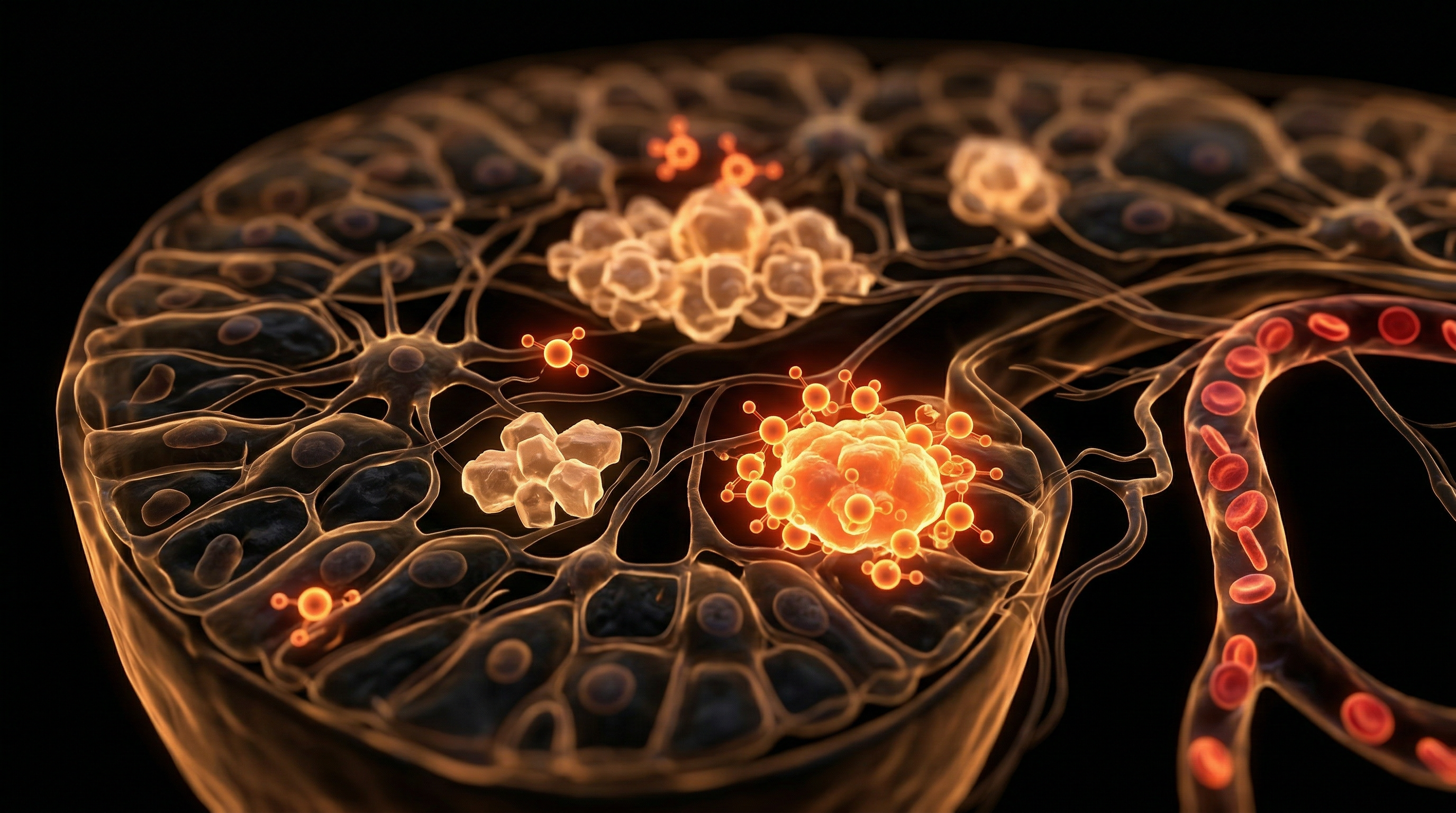
Biochemically, these structures are nearly identical to hydroxyapatite, the primary mineral component of bone and tooth enamel. Hydroxyapatite crystals act as a magnetic sink for fluoride ions. Because the pineal gland is bathed in a constant, high-volume flow of blood, it acts as a filter, trapping fluoride ions within its mineral matrix.
The Replacement Mechanism
Fluoride’s affinity for the pineal gland is driven by simple chemistry. The fluoride ion (F-) is smaller and more electronegative than the hydroxyl ion (OH-) typically found in hydroxyapatite [Ca10(PO4)6(OH)2]. Through a process of ion exchange, the fluoride ion displaces the hydroxyl ion, transforming the crystal into fluorapatite [Ca10(PO4)6F2].
Fluorapatite is more stable and less soluble than hydroxyapatite. Once fluoride is integrated into the pineal gland’s mineral structure, it is incredibly difficult to remove. Over years of exposure—primarily through drinking water, dental products, and diet—this "sand" grows, eventually forming large calcified masses that displace the functional pinealocytes.
Fact: The concentration of fluoride in the pineal gland is significantly higher than in the bone. In some elderly subjects, fluoride levels in the pineal have been measured as high as 21,000 ppm.
Mechanisms at the Cellular Level
The biological havoc wrought by fluoride is not limited to the structural hardening of the gland; it permeates the very machinery of cellular production. The synthesis of melatonin is a multi-step enzymatic process that begins with the amino acid L-tryptophan.
The Serotonin-Melatonin Pathway
- L-tryptophan is converted into 5-hydroxytryptophan (5-HTP).
- 5-HTP is decarboxylated into serotonin (5-hydroxytryptamine).
- During the dark phase, the enzyme arylalkylamine N-acetyltransferase (AANAT)—often called the "timezyme"—converts serotonin into N-acetylserotonin.
- Finally, hydroxyindole-O-methyltransferase (HIOMT) converts N-acetylserotonin into melatonin.
Fluoride interferes with this pathway through several mechanisms. First, the presence of fluorapatite crystals appears to reduce the surface area available for the metabolic activity of pinealocytes. More importantly, fluoride is a known enzyme inhibitor. It can interfere with the mitochondrial function of pinealocytes, reducing the ATP required for the high-energy demands of hormone synthesis.
Oxidative Stress and Calcium Signalling
Fluoride exposure triggers the production of reactive oxygen species (ROS) within the pinealocytes. This oxidative stress leads to lipid peroxidation and DNA damage. Furthermore, the pineal gland relies on complex calcium signalling to regulate its activity. By altering the local calcium environment through the formation of fluorapatite, fluoride disrupts the delicate electrochemical balance required for the gland to respond to signals from the suprachiasmatic nucleus (SCN) of the hypothalamus.
As a result, even if the eyes perceive darkness, the "calcified" pineal gland may lack the cellular vitality or the structural integrity to produce a sufficient nocturnal surge of melatonin.
Environmental Threats and Biological Disruptors
The calcification of the pineal gland is not a natural byproduct of ageing; it is an industrially induced pathology. The primary driver of this crisis is the omnipresence of fluoride in our environment.
Water Fluoridation
The most significant source of chronic fluoride exposure is community water fluoridation (CWF). Originally introduced in the mid-20th century under the guise of preventing dental caries, CWF involves the addition of hydrofluorosilicic acid—a byproduct of the phosphate fertiliser industry—into municipal water supplies. Unlike naturally occurring calcium fluoride, these industrial silicofluorides are highly soluble and rapidly absorbed by the human body.
Dietary Sources and "The Tea Factor"
While water is the primary vector, the diet contributes significantly to the fluoride burden. The plant Camellia sinensis (the tea plant) is a known hyper-accumulator of fluoride from the soil. Cheap, lower-quality teas, which are often made from older leaves, contain the highest concentrations. For a population like that of the United Kingdom, where tea consumption is culturally ingrained, the cumulative dose of fluoride can be staggering.
Processed Foods and Pesticides
- Mechanically Deboned Meat: The process of deboning often leaves behind microscopic bone fragments, which are rich in fluoride.
- Pesticides: Certain pesticides, such as cryolite (sodium aluminofluoride), are used extensively in grape and fruit production, leading to high fluoride residues in juices and wines.
- Teflon and PFAS: The degradation of perfluorinated compounds (PFAS), often called "forever chemicals," contributes to the total fluoride body burden.
Pharmaceutical Contributions
A growing number of psychiatric and metabolic medications are fluorinated to increase their stability and lipophilicity. Drugs like Prozac (Fluoxetine) and certain anaesthetics release inorganic fluoride as they are metabolised, further contributing to the calcification of the pineal gland.
Warning: Modern infant formulas, when reconstituted with fluoridated tap water, provide fluoride levels hundreds of times higher than those found in natural breast milk.
The Cascade: From Exposure to Disease
The physiological consequences of a calcified, fluoride-saturated pineal gland are not confined to the brain. Because melatonin is a systemic master-regulator, its suppression triggers a cascade of dysfunction across multiple biological systems.
Circadian Disruption and Sleep Disorders
Melatonin is the primary signal for the "biological night." Suppression of melatonin leads to circadian dysregulation, manifesting as insomnia, poor sleep quality, and altered REM cycles. Chronic sleep disruption is linked to a host of metabolic disorders, including insulin resistance, obesity, and cardiovascular disease.
Precocious Puberty
One of the most concerning findings regarding pineal fluoride accumulation is its link to precocious puberty (early onset of puberty). In the 1990s, researcher Dr. Jennifer Luke discovered that fluoride-treated gerbils reached sexual maturity significantly earlier than controls. Melatonin naturally inhibits the release of gonadotropins from the pituitary gland. When melatonin levels drop due to pineal calcification, the "brake" on the reproductive system is removed prematurely. This mirrors a documented trend in human populations where the age of menarche has been steadily declining in fluoridated areas.
Neurodegeneration and Cognitive Decline
Melatonin is one of the brain's most potent antioxidants. It crosses the blood-brain barrier (when produced internally) and mops up free radicals, protecting neurons from oxidative damage. A deficiency in melatonin is strongly associated with the development of Alzheimer’s disease and Parkinson’s disease. Furthermore, fluoride itself is a documented developmental neurotoxin. Over 70 human studies have linked higher fluoride exposure to decreased IQ in children.
Mood and Mental Health
The pineal gland is a major site of serotonin production before it is converted to melatonin. Disruption of pineal chemistry can lead to imbalances in serotonin levels, contributing to depression, anxiety, and seasonal affective disorder (SAD).
What the Mainstream Narrative Omits
The refusal of public health authorities to acknowledge the pineal-fluoride link is a case study in institutional inertia and the suppression of "inconvenient" science.
The Suppression of Dr. Jennifer Luke’s Research
In the late 1990s, Dr. Jennifer Luke of the University of Surrey conducted the first-ever study on the effects of fluoride on the human pineal gland. Her findings were explosive: the pineal gland was a "fluoride sink." Despite the monumental implications for public health, her work was largely ignored by the medical establishment and was not followed up with the urgency it deserved.
The Myth of Topical vs. Systemic Benefit
The primary argument for water fluoridation is that it strengthens tooth enamel. However, modern dental science largely agrees that the benefit of fluoride is topical (applied to the surface of the teeth), not systemic (ingested). There is no physiological requirement for fluoride; it is not an essential nutrient. By drinking fluoridated water, we are subjecting every internal organ—including the pineal gland—to a toxic halogen for a marginal and contested dental benefit.
The Industry Connection
The "fluoridation of the world" was heavily influenced by the aluminium and phosphate industries, which faced significant costs in disposing of fluoride waste. By rebranding this waste as a "public health miracle," they turned a liability into a profit-generating commodity.
Quote: "Fluoride is a protected pollutant. To admit its harm to the pineal gland is to admit the failure of a seventy-year public health experiment." — Anonymous Senior Toxicologist.
The UK Context
In the United Kingdom, the fluoride debate has reached a fever pitch. Unlike most of Europe, where water fluoridation has been rejected or discontinued (97% of Western Europe does not fluoridate its water), the UK government has recently moved to expand these schemes.
The Health and Care Act 2022
The Health and Care Act 2022 granted the Secretary of State for Health and Social Care the power to mandate water fluoridation across the entire country, bypassing local authorities who had previously resisted it. Areas like the West Midlands and North East of England have been fluoridated for decades, and current plans aim to expand this to millions more.
British Tea Culture
The UK’s unique vulnerability lies in its tea consumption. The British public, unknowingly consuming high-fluoride tea made with fluoridated water, may be ingesting doses far above the "upper tolerable limit." Public Health England (now the UK Health Security Agency) continues to dismiss concerns about the pineal gland, relying on outdated safety assessments that do not account for the latest bio-accumulation data.
Social Disparity
Fluoridation is often framed as a "social justice" issue to help the poor. However, the most vulnerable members of society are the least likely to afford the high-quality water filtration systems required to remove fluoride, further entrenching the biological divide.
Protective Measures and Recovery Protocols
While the "calcification crisis" is daunting, it is not irreversible. Through targeted strategies, one can reduce fluoride intake and support the decalcification of the pineal gland.
1. Zero-Fluoride Water
The most critical step is to stop the ingestion of fluoridated water. Standard carbon filters (like Brita) do not remove fluoride. Only three methods are effective:
- Reverse Osmosis (RO): The most effective home solution.
- Distillation: Highly effective but requires remineralisation of the water.
- Activated Alumina Filters: Specifically designed to target fluoride.
2. Dietary Modifications
- Switch to Organic/High-Quality Tea: If you drink tea, opt for organic white tea (made from young buds) or herbal teas that do not accumulate fluoride.
- Iodine Supplementation: Fluoride, as a halogen, competes with iodine for receptors in the body. Ensuring adequate iodine levels can help "displace" fluoride, though this should be done under supervision to avoid thyroid issues.
- Tamarind: Some studies suggest that tamarind paste can help the body excrete fluoride through the urine.
3. Decalcification Agents
- Vitamin K2 (MK-7): Known as the "calcium traffic cop," Vitamin K2 helps ensure that calcium is directed into the bones and teeth rather than the soft tissues like the pineal gland and arteries.
- Magnesium: Magnesium helps balance calcium levels and prevents the formation of mineral concretions.
- Boron: Boron is a potent fluoride chelator. It has been shown in animal studies to help move fluoride out of the tissues and increase its excretion.
- Shilajit: A mineral-rich fulvic acid supplement that may assist in heavy metal and halogen detoxification.
4. Melatonin Support
To compensate for a compromised pineal gland, one should optimise natural melatonin production by:
- Eliminating blue light exposure after sunset.
- Getting direct sunlight in the eyes (without sunglasses) early in the morning to "set" the circadian clock.
- Supplementing with low-dose melatonin (0.3mg to 1mg) if sleep is severely disrupted.
Summary: Key Takeaways
The calcification of the pineal gland by fluoride is a biological reality that challenges the foundations of modern public health policy. By understanding the mechanism—ion exchange in hydroxyapatite—we see that the pineal gland is uniquely targeted by this environmental toxin.
- Accumulation: The pineal gland accumulates more fluoride than any other part of the body, leading to the formation of fluorapatite.
- Functional Loss: This calcification suppresses melatonin production, leading to sleep disorders, hormonal imbalances, and cognitive decline.
- Developmental Impact: High fluoride levels are linked to precocious puberty and reduced IQ in children.
- Systemic Neglect: Regulatory bodies continue to promote systemic fluoridation despite the topical nature of fluoride’s dental benefits and its clear endocrine-disrupting potential.
- Action: Protecting the pineal gland requires active intervention, primarily through water filtration, Vitamin K2 supplementation, and a reduction in high-fluoride dietary habits.
The "seat of the soul" is under siege, but through awareness and physiological sovereignty, we can reclaim our biological rhythms and protect the most vital regulator of our human experience. The calcification crisis is a call to action—for scientists, for doctors, and for every individual who values the clarity and health of their own mind.
This article is provided for informational and educational purposes only. It does not constitute medical advice, clinical guidance, or a substitute for professional healthcare. Information reflects cited research at time of publication. Always consult a qualified healthcare professional before acting on any health information.
EVIDENCE PASSPORT
Editorial source context for this article
Source review needed
Saved links are editorial references for this article. They may support specific claims rather than every sentence. Open and assess each source in context. This passport does not independently verify them.
Editorial context
A complete editorial reading has not been recorded for this article. Source links remain available for you to open and assess directly.
Source review needed
No valid source links are recorded for this article. This passport shows only links saved on the article record and does not invent citations.
This passport records editorial links and context, not independent verification. Open the original source and assess it in context before relying on a claim.
Medical Disclaimer
The information in this article is for educational purposes only and does not constitute medical advice, diagnosis, or treatment. Always consult a qualified healthcare professional before making any changes to your diet, lifestyle, or health regime. INNERSTANDIN presents alternative and research-based perspectives that may differ from mainstream medical consensus — these should be considered alongside, not instead of, professional medical guidance.
Read Full DisclaimerContinue the thread
Keep this question moving.
Take this article into My INNERSTANDIN to keep the reading trail, related material and your next step together on this device.
Explore this in the Body Map
See where this hits your biology. Interactive anatomy, threats, and protective protocols.
Dig deeper in the Library
Free, longform PDF volumes that go beyond headlines into mechanisms and references.