
The Collagen Crisis: Assessing British Dietary Impacts on Tissue Integrity
Updated May 2026
The prevalence of ultra-processed foods in the UK is leading to widespread collagen synthesis deficiencies. Poor amino acid profiles are causing a premature weakening of the human fascial web.
Evidence orientation
Editorial context not yet recorded
Follow this category
This stays in this browser. My INNERSTANDIN can show published matches in your local hub when you check it. It does not send email, push, or alert notifications.
Local learning review
A private browser aid for revisiting ideas. It is not an alert or a health recommendation.
Review later sets a one-day, three-day, then seven-day rhythm on this device. Choose it only when you want to revisit this article.
Overview
The United Kingdom is currently in the grip of a silent, structural catastrophe. While public health discourse focuses heavily on rising rates of obesity and Type 2 diabetes, a more insidious form of biological erosion is taking place beneath the skin. This is the Collagen Crisis: a systemic failure of the human fascial web, driven by a radical departure from evolutionary nutrition.
For the first time in history, we are observing a population that is simultaneously overfed and structurally malnourished. The British diet, now dominated by Ultra-Processed Foods (UPFs), has systematically stripped away the essential building blocks required to maintain the Extracellular Matrix (ECM). The result is a nation literally "coming apart at the seams." From the soaring rates of musculoskeletal disorders and early-onset osteoarthritis to the increasing prevalence of hernias and pelvic floor dysfunction, the symptoms are diverse but the root cause is singular: the degradation of our connective tissue integrity.
Collagen is not merely a cosmetic concern for the anti-ageing industry; it is the primary structural protein of the human body, accounting for approximately 30% of our total protein mass. It provides the tension and scaffolding for our organs, the elasticity of our vasculature, and the resilience of our joints. As a senior researcher for INNERSTANDING, I must posit that the modern British lifestyle—characterised by high-sugar intake, inflammatory seed oils, and a total absence of "nose-to-tail" eating—has induced a state of biological fragility. We are witnessing a premature ageing of the British fascial system, a process I term "The Great Thinning."
Fact: The UK has the highest consumption of ultra-processed foods in Europe, with UPFs making up over 50% of the average household's caloric intake, directly correlating with the decline in structural protein synthesis.
The Biology — How It Works
To understand the crisis, we must first understand the architecture. Collagen is a complex, long-chain protein made up of specific amino acids: Glycine, Proline, and Hydroxyproline. Unlike muscle tissue, which thrives on branched-chain amino acids (BCAAs), connective tissue requires a unique "glue-like" profile that is increasingly absent from modern skeletal-muscle-only diets.
The Triple Helix Structure
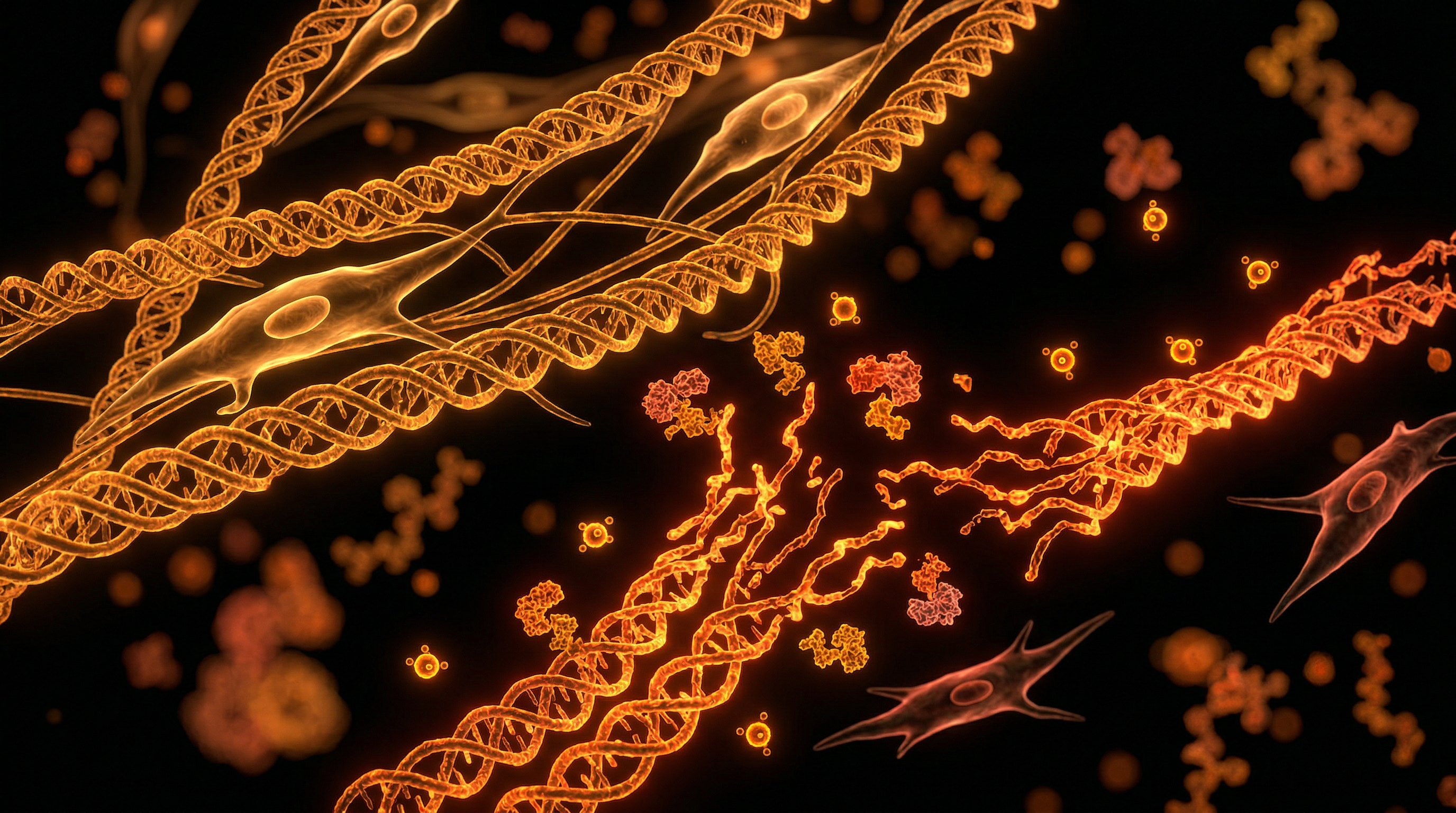
The fundamental unit of collagen is the tropocollagen molecule. This is a triple helix formed by three polypeptide chains. This structure is incredibly robust, providing the tensile strength necessary to withstand mechanical stress. Within the British diet, the lack of precursor nutrients means these helices are either formed incorrectly or are susceptible to rapid degradation.
- Type I Collagen: Found in skin, tendons, vasculature, organs, and bone. It is the strongest of the types.
- Type II Collagen: The primary component of cartilage.
- Type III Collagen: Found in reticular fibres (common in skin and blood vessels), often acting as a scaffold for Type I.
The Role of the Fascial Web
Fascia was long dismissed by 20th-century anatomy as mere "packing material." We now know it is a sophisticated, body-wide communication network. This fascial web is composed of collagen, elastin, and a hydrating ground substance. It facilitates mechanotransduction—the process by which cells convert mechanical stimulus into electrochemical activity. When collagen synthesis is compromised, this communication breaks down, leading to chronic pain and decreased motor control.
The Nutrient Co-factors
Collagen synthesis is not an isolated event; it is a complex enzymatic process.
- Vitamin C: Essential for the hydroxylation of proline and lysine. Without it, the triple helix cannot stabilise.
- Copper: Necessary for lysyl oxidase, the enzyme that cross-links collagen and elastin fibres.
- Zinc: A vital component for collagen production and the repair of damaged tissue.
Important Fact: Without sufficient Vitamin C, the body cannot "glue" its collagen fibres together, leading to the microscopic structural failures seen in sub-clinical scurvy—a condition returning to British clinics in the form of poor wound healing and fragile gums.
Mechanisms at the Cellular Level
At the heart of this crisis is the fibroblast, the primary cell responsible for manufacturing the extracellular matrix. Fibroblasts are the "architects" of our internal landscape. However, in the context of the modern British environment, these cells are being placed under extreme metabolic stress.
The Fibroblast Fatigue
Under healthy conditions, fibroblasts sense mechanical tension and respond by secreting fresh collagen to reinforce the area. This is why movement is life. However, when the body is flooded with pro-inflammatory cytokines (the result of a high-sugar, high-fat British diet), the fibroblast’s priority shifts from "build and repair" to "survive."
The Synthesis Pathway
- Transcription: The DNA in the fibroblast nucleus provides the blueprint.
- Translation: Ribosomes create the pre-pro-collagen chain.
- Hydroxylation: Vitamin C and iron modify the amino acids to allow for twisting.
- Glycosylation: Glucose and galactose are added to the chain.
- Exocytosis: The pro-collagen is shipped out of the cell into the extracellular space.
- Cleavage and Cross-linking: Enzymes trim the ends and tie the molecules together into fibrils.
Disruption via Glycation
One of the most destructive mechanisms currently at play in the British population is Glycation. When blood sugar levels remain chronically elevated—due to the frequent consumption of refined carbohydrates and sugary teas—glucose molecules "stick" to collagen fibres. This creates Advanced Glycation End-products (AGEs).
AGEs cause collagen to become brittle, yellowed, and inelastic. Think of a healthy collagen fibre as a flexible, strong rope; a glycated collagen fibre is like a piece of dry, uncooked spaghetti. It snaps under the slightest pressure. This "cross-linking" of proteins is a hallmark of biological ageing and is now being observed in Britons in their 20s and 30s.
Environmental Threats and Biological Disruptors
The collapse of tissue integrity is not solely due to what is missing from the diet, but also what has been introduced into our environment. The modern British landscape is hostile to connective tissue health.
The UPF Invasion
Ultra-processed foods are industrial formulations that contain little to no whole food. In the UK, the "meal deal" culture and the reliance on frozen, ready-to-eat meals have introduced high levels of Emulsifiers and Synthetic Preservatives. These compounds disrupt the gut microbiome, leading to systemic inflammation which directly inhibits collagen synthesis.
Seed Oils and Oxidative Stress
The transition from traditional animal fats (tallow, lard, butter) to industrial seed oils (rapeseed, sunflower, soybean) has altered the lipid composition of our cell membranes. These oils are high in Linoleic Acid, which is prone to oxidation. Lipid Peroxidation generates free radicals that attack the fibroblast membranes, hindering their ability to produce high-quality collagen.
Glyphosate and the Glycine Substitution
A more controversial but increasingly evidenced threat is the presence of Glyphosate in the British wheat supply. Glyphosate is chemically similar to the amino acid Glycine. There is emerging research suggesting that the body may mistakenly incorporate glyphosate into the collagen chain in place of glycine. If this "substitution" occurs, the resulting collagen molecule is structurally defective, unable to fold into the necessary triple helix. Given that the UK consumes vast quantities of glyphosate-sprayed grains, this represents a profound threat to the nation's structural bio-security.
Environmental Toxins and Heavy Metals
Contaminants in the water supply and air, such as Cadmium and Lead, can displace essential minerals like Zinc and Copper. Since these minerals are the enzymatic keys to collagen production, their displacement leaves the body’s "construction crew" without the tools they need to function.
Callout: Modern wheat in the UK is often harvested using "desiccation," where crops are sprayed with glyphosate just before harvest, leading to higher residues in the final bread and pastry products consumed by millions.
The Cascade: From Exposure to Disease
The failure of collagen synthesis does not manifest as a single disease; instead, it creates a cascade of systemic failures. We must stop viewing these conditions as isolated "bad luck" and start seeing them as the structural collapse of a malnourished organism.
Musculoskeletal Breakdown
The most visible sign of the collagen crisis is the epidemic of chronic back pain and joint issues. When the fascia loses its integrity, it can no longer support the skeleton. Muscles have to overwork to compensate, leading to chronic "tightness" that no amount of stretching can resolve.
- Tendinopathy: Micro-tears in tendons that refuse to heal.
- Disc Degeneration: The intervertebral discs are largely collagen. Their "dehydration" and thinning are direct results of poor protein turnover.
Vascular Fragility
The integrity of our arteries and veins depends on Type III collagen. When this fails, we see an increase in Aneurysms, Varicose Veins, and Haemorrhoids. The "hardening of the arteries" is not just about cholesterol; it is about the loss of the elastic collagen matrix that allows vessels to expand and contract.
Intestinal Permeability (Leaky Gut)
The lining of the digestive tract is replaced every few days and requires a massive amount of collagen to maintain its barrier function. In the absence of glycine and proline, the gut wall becomes porous. This allows undigested food particles and endotoxins (LPS) into the bloodstream, triggering an autoimmune response that further attacks the body's own connective tissues—a vicious, self-perpetuating cycle.
The Cosmetic Mask
While the British public spends millions on topical "collagen creams," these are biologically useless for structural integrity. The thinning of the skin, the "crepey" texture, and the loss of facial volume are early warning signs that the internal organs and fascia are also thinning. The skin is simply the most visible "canary in the coal mine."
What the Mainstream Narrative Omits
The UK’s public health authorities and mainstream nutritional advice are decades behind the science of connective tissue. There is a "dogmatic blindness" that prevents the necessary shift in dietary recommendations.
The RDA Fallacy
The Recommended Dietary Allowance (RDA) for protein is calculated to prevent muscle wasting in sedentary individuals. It does not account for the structural demand of the fascial web. Furthermore, it treats all protein as equal. The mainstream narrative suggests that getting 50g of protein from a soy-based "protein bar" is the same as 50g from slow-cooked brisket. This is biophysically false. The amino acid profile of plant-based proteins is notoriously low in the glycine and hydroxyproline required for collagen synthesis.
The War on Saturated Fat
For 50 years, Britons have been told to avoid animal fats. This has led to the abandonment of "traditional" cooking methods. In the past, British families would consume the whole animal—bones, skin, and gristle—often in the form of stews and broths. These "gelatinous" cuts are the world's richest sources of collagen precursors. By demonising animal products, the mainstream narrative has inadvertently starved the population of the specific nutrients needed for tissue repair.
The Suppression of Fascial Science
Until recently, medical schools in the UK treated fascia as a "passive wrap." Consequently, most GPs are not trained to recognise fascial dysfunction. When a patient presents with "vague" chronic pain, they are often given painkillers or told it is psychosomatic, rather than being assessed for structural malnutrition.
The "Big Food" Influence
The UK's food policy is heavily influenced by a lobby that profits from the stability and shelf-life of UPFs. A population that requires fresh, collagen-rich, "nose-to-tail" food is a population that cannot be easily serviced by the industrial food complex. It is far more profitable to sell refined wheat and seed-oil-based snacks than it is to provide the raw materials for biological integrity.
The UK Context
The UK is uniquely positioned for this crisis due to a combination of cultural habits, economic factors, and geographical limitations.
The "Beige Diet"
The British "beige diet"—bread, pasta, potatoes, and pastries—is a disaster for collagen. It provides high energy (calories) but zero structural support. The "sandwich culture" of the British lunchtime means that millions of people are skipping the opportunity to consume warm, nutrient-dense soups or stews in favour of cold, pro-inflammatory wheat and processed meats.
The Lack of Sunlight (Vitamin D)
While Vitamin C is the famous co-factor, Vitamin D plays a crucial role in modulating the inflammatory response within the ECM. In the UK, with its limited sunlight, chronic Vitamin D deficiency is the norm. This deficiency creates a "pro-inflammatory" environment where the body is more likely to break down collagen than to build it.
The Cost of Living and "Protein Poverty"
As food prices rise in the UK, the first things to be cut from the budget are high-quality animal proteins. People turn to cheaper, grain-based fillers. This "Protein Poverty" is not about a lack of grams of protein, but a lack of quality and diversity in the amino acid pool.
The NHS Burden
The NHS is currently bucking under the weight of "age-related" conditions that are, in fact, "malnutrition-related." If the British population were to restore their collagen integrity, the demand for hip and knee replacements would plummet. However, the current medical model is focused on replacement rather than regeneration.
Statistic: Musculoskeletal conditions account for the second-largest portion of NHS spending, yet nutritional interventions targeting collagen synthesis are almost non-existent in standard care protocols.
Protective Measures and Recovery Protocols
To reverse the collagen crisis, we must move beyond the "balanced diet" platitudes and adopt a targeted, bio-available strategy for tissue reconstruction.
1. The Restoration of Bone Broth
The single most effective intervention for British tissue health is the return to making traditional bone broth. Simmering animal bones (beef, chicken, or fish) for 12–24 hours releases Gelatin, which is essentially cooked collagen.
- It provides an immediate, pre-digested source of glycine and proline.
- It contains Glycosaminoglycans (GAGs) like hyaluronic acid, which hydrate the fascial web.
2. Glycine Supplementation
For those unable to consume bone broth daily, pure glycine powder is a vital tool. Research suggests that the human body may be deficient in glycine by as much as 10g per day relative to our evolutionary needs. Supplementing with 5–10g of glycine before bed can not only support collagen synthesis but also improve sleep quality and liver detoxification.
3. The Vitamin C / Movement Synergy
Collagen synthesis is "load-dependent." To tell the body where to put the new collagen, you must move.
- Protocol: Consume a source of Vitamin C and collagen (or gelatin) 40–60 minutes before exercise. This ensures the amino acids are "in the pipe" when the mechanical stress of movement triggers the fibroblasts to begin building.
4. Elimination of Biological Disruptors
- Zero UPFs: If it comes in a packet with more than five ingredients, it is likely damaging your fascia.
- Ditch the Seed Oils: Switch to butter, ghee, or coconut oil to reduce oxidative stress on fibroblasts.
- Sugar Control: Minimising glucose spikes is the only way to prevent the "brittle-isation" of your tissues via glycation.
5. Photobiomodulation (Red Light Therapy)
Red and near-infrared light (660nm–850nm) has been shown to stimulate the mitochondria within fibroblasts, increasing their energy production (ATP) and thus their capacity to manufacture collagen. Given the lack of sunlight in the UK, red light therapy is a potent "biohack" for tissue integrity.
6. Silica and Trace Minerals
Ensure adequate intake of Silica (found in horsetail or bamboo shoots) and Manganese. These minerals act as the "cross-linking" agents that give collagen its final strength.
Summary: Key Takeaways
The Collagen Crisis is the hidden foundation of the UK's current health decline. To reclaim our biological heritage, we must acknowledge the following:
- Structural Malnutrition: We are suffering from a lack of specific connective tissue precursors (Glycine, Proline, Hydroxyproline), not just "protein" in the generic sense.
- The UPF Threat: Ultra-processed foods are the primary drivers of glycation and inflammation, which actively dismantle the fascial web.
- Fascia is Vital: The fascial system is a body-wide communication and support network that requires constant nutritional "upkeep."
- The Solution is Ancestral: Re-introducing bone broths, "nose-to-tail" eating, and Vitamin C-rich whole foods is the only path to structural recovery.
- Movement is the Catalyst: Nutritional intake must be paired with mechanical loading to stimulate the cellular "machinery" of repair.
The British people are not destined to be frail, stiff, and in chronic pain. By understanding the biological requirements of our connective tissues and rejecting the industrialised "beige" diet, we can begin the work of rebuilding the nation’s integrity—one collagen fibre at a time. The choice is simple: continue to degrade, or begin to reinforce. The architecture of your future self depends entirely on the biological building blocks you provide today.
This article is provided for informational and educational purposes only. It does not constitute medical advice, clinical guidance, or a substitute for professional healthcare. Information reflects cited research at time of publication. Always consult a qualified healthcare professional before acting on any health information.
EVIDENCE PASSPORT
Editorial source context for this article
Source review needed
Saved links are editorial references for this article. They may support specific claims rather than every sentence. Open and assess each source in context. This passport does not independently verify them.
Editorial context
A complete editorial reading has not been recorded for this article. Source links remain available for you to open and assess directly.
Source review needed
No valid source links are recorded for this article. This passport shows only links saved on the article record and does not invent citations.
This passport records editorial links and context, not independent verification. Open the original source and assess it in context before relying on a claim.
Medical Disclaimer
The information in this article is for educational purposes only and does not constitute medical advice, diagnosis, or treatment. Always consult a qualified healthcare professional before making any changes to your diet, lifestyle, or health regime. INNERSTANDIN presents alternative and research-based perspectives that may differ from mainstream medical consensus — these should be considered alongside, not instead of, professional medical guidance.
Read Full DisclaimerContinue the thread
Keep this question moving.
Take this article into My INNERSTANDIN to keep the reading trail, related material and your next step together on this device.
Dig deeper in the Library
Free, longform PDF volumes that go beyond headlines into mechanisms and references.