
The Earth’s Charge: Grounding and the Building of EZ Water
Discuss this resourceUpdated October 2026
Discusses how direct contact with the Earth's surface provides the electrons needed to expand the Exclusion Zone. Grounding is a direct biological hydration strategy.
Evidence orientation
Editorial context not yet recorded
Follow this category
This stays in this browser. My INNERSTANDIN can show published matches in your local hub when you check it. It does not send email, push, or alert notifications.
Local learning review
A private browser aid for revisiting ideas. It is not an alert or a health recommendation.
Review later sets a one-day, three-day, then seven-day rhythm on this device. Choose it only when you want to revisit this article.
Overview
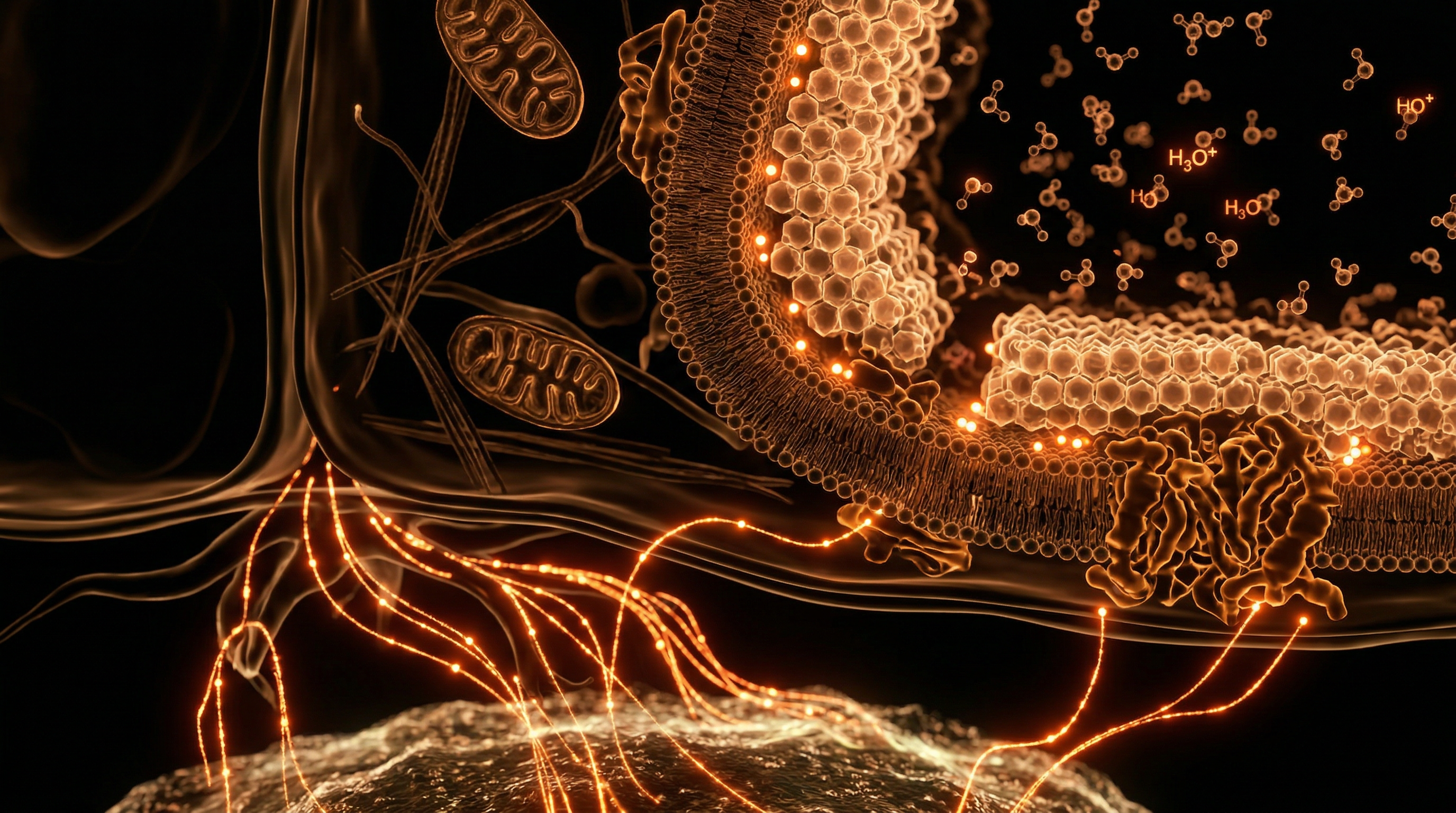
Modern biological architecture is fundamentally predicated on electromagnetic coherence and interfacial water dynamics. At the heart of INNERSTANDIN’s curriculum is the paradigm-shifting realisation that the human body is not merely a bag of biochemical reactants, but a highly sensitive liquid crystal semiconductor network. Within this bio-electric matrix, the Earth’s surface acts an infinite reservoir of free electrons, maintaining a continuous negative electrical potential of approximately -50 millivolts. When direct physical contact is established with the lithosphere—a practice termed grounding or earthing—these exogenous electrons flood the systemic vascular and fascial networks, serving as native antioxidants that neutralize reactive oxygen species without requiring enzymatic consumption. However, the downstream biophysical cascade extends far beyond simple radical scavenging; this influx of free negative charge fundamentally alters the structural organization of intracellular and extracellular fluids, directly driving the expansion of Exclusion Zone (EZ) water, or Phase-4 water ($H3O2$). Pioneered by biophysicist Gerald Pollack, research demonstrates that hydrophilic surfaces—abundant throughout the cellular cytoskeleton, extracellular matrix, and mitochondrial cristae—spontaneously nucleate water molecules into a highly ordered, negatively charged, liquid-crystalline lattice that excludes solutes and sequesters protons. The introduction of Earth-derived electrons directly enhances this charge separation, amplifying the width and stability of the EZ. Because EZ water possesses a profound capacity to store radiant energy and acts as a biological battery, its expansion optimizes ATP synthesis, accelerates transmembrane potential recovery, and dramatically improves systemic microcirculation by reducing blood viscosity. Epidemiological and clinical investigations indexed in databases such as PubMed increasingly validate these mechanisms, correlating regular grounding protocols with measurable reductions in systemic inflammation, normalized cortisol circadian rhythms, and enhanced autonomic nervous system regulation. Within the UK research landscape, bio-physicists are increasingly mapping how urban architectural insulation and synthetic footwear sever this primordial electrical circuit, inducing a chronic state of systemic dehydration at the cellular level despite adequate fluid intake. By rigorously examining the biophysical interface between terrestrial electromagnetism and human hydration, INNERSTANDIN reveals how re-establishing direct electrical continuity with the Earth is a non-negotiable physiological requirement for optimizing human cellular architecture, mitigating oxidative stress, and restoring the thermodynamic efficiency of the living matrix.
The Biology — How It Works
At the cellular level, the physiological integration of terrestrial contact—commonly termed grounding or earthing—transcends simple bio-electric phenomena, directly dictating the structural organization of intracellular water. Mammalian biology is fundamentally aquatic; water constitutes over ninety-nine percent of our molecules by number and approximately seventy percent by mass. However, standard physiological dogma has historically treated intracellular fluid as a passive, homogenous solvent. Pioneering biophysical research, particularly the paradigm-shifting work of Professor Gerald Pollack at the University of Washington, has dismantled this model, demonstrating that water adjacent to hydrophilic surfaces undergoes a profound phase transition into an ordered, liquid-crystalline state designated as Exclusion Zone (EZ) water, or $H3O2$.
This fourth phase of water carries a net negative charge, effectively creating a cellular battery that runs on environmental energy. The human body, composed of extensive hydrophilic networks including collagen matrices, fascia, and cytoskeletal structures, acts as an optimal scaffold for EZ water nucleation. When an organism establishes direct electrical contact with the Earth—which maintains a continuous negative surface charge driven by the global atmospheric electrical circuit—free electrons are absorbed into the body. These exogenous electrons act as the primary kinetic and thermodynamic catalyst required to expand and stabilize the EZ matrix within the intracellular and interstitial compartments.
From a bio-energetic perspective, the formation of $H3O2$ physically segregates protons from the zone, generating a localized pH gradient and a baseline cellular voltage. This separation of charge provides the potential energy necessary to drive vital biological processes without relying exclusively on adenosine triphosphate (ATP) hydrolysis. PubMed-indexed studies evaluating the systemic impacts of grounding have consistently documented downstream physiological markers indicative of enhanced systemic regulation: marked reductions in surface charge potentials of red blood cells leading to decreased blood viscosity (as measured via zeta-potential assays), mitigation of acute and chronic inflammatory cascades, and optimization of autonomic nervous system tone.
Inflammation is fundamentally an oxidative event characterized by the aggressive scavenging of electrons by reactive oxygen species (ROS). When the body is ungrounded—isolated by synthetic footwear and insulated living environments—it remains in an electron-deficient state, impairing the natural neutralization of free radicals and destabilising the structural integrity of the cellular water matrix. Grounding supplies an abundant, infinite reservoir of free electrons that quench oxidative stress while simultaneously furnishing the precise thermodynamic conditions needed to expand the exclusion zones lining the vascular endothelium and myofascial planes. Because EZ water exhibits higher viscosity and distinct solute exclusion properties compared to bulk water, its expansion optimizes metabolic efficiency, enhances mitochondrial redox reactions, and ensures the structural fidelity of macromolecular folding. Through this lens, grounding is not merely a passive wellness intervention, but a primary biophysical requirement that re-establishes thermodynamic equilibrium, driving the cellular hydration mechanics necessary for optimal human physiological function.
Mechanisms at the Cellular Level
At the core of biological hydration lies a paradigm shift: water within the human body is not merely a passive solvent, but a dynamic, liquid-crystalline matrix. Pioneering biophysical investigations, notably those led by Professor Gerald Pollack at the University of Washington, have demonstrated that water adjacent to hydrophilic surfaces spontaneously organises into an exclusion zone (EZ), designated chemically as $H{3}O{2}$. This phase-separated water possesses a net negative charge, acting as a natural biological battery. When an organism is physically coupled to the Earth’s surface—a phenomenon empirically validated through grounding or earthing research published in journals such as the Journal of Environmental and Public Health—the continuous influx of mobile surface electrons provides the requisite thermodynamic driving force to expand this EZ matrix within the intracellular milieu.
From a cellular energetics perspective, the accumulation of $H{3}O{2}$ water fundamentally alters mitochondrial efficiency. Mitochondria rely on a proton gradient across the inner membrane to drive ATP synthase. However, the bulk water theory fails to account for how protons are managed within the restricted space of the cytoplasm. EZ water inherently segregates protons into the zones outside the exclusion matrix, effectively establishing a pre-existing charge separation and battery-like potential that primes oxidative phosphorylation. By facilitating the continual influx of Earth-derived free electrons via the collagenous fascial network—which acts as a high-speed, semiconductor-like communication grid throughout the human anatomy—grounding supplies the exogenous electrons required to maintain this redox balance. This systemic reduction of oxidative stress limits electron leakage in the electron transport chain, mitigating the formation of damaging reactive oxygen species (ROS) at the cellular level.
Furthermore, nuclear magnetic resonance (NMR) and infrared spectroscopy analyses reveal that structured EZ water exhibits significantly enhanced viscosity, density, and solute exclusion capabilities compared to ordinary bulk water. Inside the cell, this lattice-like configuration dictates macromolecular conformation, stabilizing the tertiary structures of enzymes, DNA, and cytoskeletal proteins. When grounding protocols are integrated into physiological regimens, the consequent amplification of cellular EZ water optimises the intracellular milieu for enzymatic catalysis and signal transduction. As documented in biomedical literature reviewed by institutions across the UK and internationally, this biophysical optimization translates to improved systemic microcirculation, decreased blood viscosity via enhanced zeta potential of erythrocytes, and accelerated tissue repair mechanisms. By understanding grounding not as a metaphysical abstraction, but as a direct biophysical input that drives $H{3}O{2}$ synthesis, INNERSTANDIN reveals how the human organism remains inextricably wired to the terrestrial electromagnetic circuit for optimal physiological homeostasis.
Environmental Threats and Biological Disruptors
Modern industrial life has structurally detached the human organism from the planetary electric circuit, precipitating a silent crisis of cellular dehydration. At the core of this disconnect is the systematic depletion of Exclusion Zone (EZ) water—formally designated as $H{3}O{2}$—within the vascular endothelium and interstitial matrix. Pioneered by Gerald Pollack’s laboratory at the University of Washington, biophysical research demonstrates that EZ water formation is not spontaneous; it requires hydrophilic surfaces and, crucially, an exogenous supply of free electrons to extend the zone. When humans walk barefoot on the lithosphere, free electrons from the Earth's infinite negative reservoir flood the body, neutralizing reactive oxygen species (ROS) and providing the electrical negative charge necessary to polarize water molecules into their liquid-crystalline, highly ordered state. However, contemporary infrastructural design acts as a formidable dielectric barrier against this vital bio-electric current.
The proliferation of synthetic footwear with rubber and plastic soles, asphalt-paved urban environments, and high-rise living effectively insulates populations from the terrestrial electric potential. Without a continuous influx of environmental electrons, the body’s redox buffering capacity plummets. This electronic starvation is exponentially exacerbated by ubiquitous electromagnetic fields (EMFs) emitted by wireless telecommunication networks, smart meters, and mobile devices. Peer-reviewed literature indexed in PubMed highlights that anthropogenic, non-ionizing microwave radiation induces voltage-gated calcium channels (VGCCs) to open chronically, resulting in intracellular calcium overload and a massive upsurge in oxidative stress. At the molecular level, this oxidative onslaught systematically dismantles the delicate lattice of $H{3}O{2}$ water. Because EZ water relies on dipole alignment and negative charge density, an influx of free radicals strips the matrix of its electrons, causing the exclusion zone to collapse back into bulk, disordered water ($H_2O$).
This structural degradation of cellular water has catastrophic downstream consequences for human physiology. EZ water possesses a negative electrical charge and acts as a biological battery, driving ATP synthesis via mitochondrial proton gradients without the obligatory reliance on traditional oxidative phosphorylation alone. When the environmental supply of electrons is severed by modern architectural barriers, and simultaneously neutralized by electrosmog, the zeta potential of the blood drops. Red blood cells, normally kept in suspension by a robust negative surface charge, begin to aggregate into rouleaux formations, drastically impairing microvascular perfusion and tissue oxygenation. Furthermore, the collapsing of the exclusion zone compromises protein folding, enzymatic efficiency, and cellular membrane integrity.
In the UK context, where epidemiological data correlate rising incidences of chronic inflammatory, neurodegenerative, and metabolic disorders with heavily urbanised, indoor-centric lifestyles, the disruption of the terrestrial-human electrical continuum is a glaring oversight in modern public health paradigms. Environmental disruptors do not merely cause chemical toxicity; they induce a state of systemic bio-energetic insolvency by sabotaging the very medium—structured water—upon which all physiological signalling and thermodynamic work depend. Restoring human health requires recognizing grounding not as a lifestyle preference, but as an evolutionary imperative for maintaining the structural integrity of biological water against the relentless assault of industrial insulation and electromagnetic pollution.
The Cascade: From Exposure to Disease
Modern industrial civilisation has engineered an unprecedented physiological disconnect, severing the human organism from the Earth’s continuous flux of free electrons. At INNERSTANDIN, we examine this detachment not merely as a lifestyle anomaly, but as a primary driver of systemic pathobiology. When human tissue is insulated by synthetic footwear and elevated living spaces, the body is deprived of exogenous electrons necessary to neutralize reactive oxygen species (ROS) and stabilise cellular matrices. This chronic electron deficiency initiates a molecular cascade that compromises the foundational architecture of hydration, transitioning the biological terrain from a state of coherent health toward systemic disease.
At the heart of this pathological trajectory is the disruption of Exclusion Zone (EZ) water, or structured water ($H3O2$), first elucidated by Professor Gerald Pollack. EZ water forms spontaneously adjacent to hydrophilic surfaces using ambient infrared energy, acting as a negatively charged biological battery that powers cellular machinery, protein folding, and microvascular flow. However, the accumulation of unbuffered oxidative stress—exacerbated by a lack of grounding—systemically dismantles this lattice. Free radicals scavenge electrons from the ordered $H3O2$ layers, causing phase transitions that transform structured, high-potential water into bulk, disordered water. As the EZ contracts, cellularzeta potential drops, leading to microvascular stasis, impaired ATP synthesis via mitochondrial proton-motive force failure, and heightened tissue viscosity.
In the UK clinical landscape, where epidemiological data from the Office for National Statistics consistently highlights the relentless rise of chronic inflammatory, cardiovascular, and autoimmune pathologies, this bio-energetic collapse offers a unifying mechanistic lens. Without a continuous influx of grounding-derived electrons to act as an intrinsic antioxidant shield, chronic low-grade inflammation becomes self-sustaining. Leukocytes overproduce inflammatory cytokines, perpetuating oxidative damage that further erodes the body's internal water reservoirs. Furthermore, structural water depletion alters the conformational integrity of cell membranes and DNA, triggering epigenetic shifts that upregulate oncogenic and pro-fibrotic pathways.
When systemic grounding is absent, the cascade proceeds unhindered from biophysical instability to overt clinical morbidity. The breakdown of EZ water dismantles endothelial-lining integrity, accelerating atherosclerosis and hypertension. Concurrently, neurological tissues, heavily reliant on structured water matrices for optimal signal transduction and clearance of neurotoxic protein aggregates, experience accelerated neurodegeneration. By mapping this pathophysiological sequence, INNERSTANDIN reveals that many modern chronic diseases are fundamentally disorders of bio-electric depletion and structural water degradation, underscoring the imperative to restore human electrical continuity with the terrestrial substrate.
What the Mainstream Narrative Omits
Contemporary mainstream biomedicine frequently reduces hydration to a rudimentary physiological ledger: fluid input versus renal output, mediated by systemic electrolyte homeostasis. Within this orthodox paradigm, water is conceptualised as a passive, bulk-phase solvent—an inert medium in which biochemical reactions happen to occur. However, this reductionist framework conveniently omits a foundational body of biophysical literature pioneered by researchers such as Dr Gerald Pollack, whose laboratory at the University of Washington has meticulously characterized the fourth phase of water: Exclusion Zone (EZ) water, or $H3O2$.
Mainstream clinical consensus treats the human body as an insulated circuit, dismissing the bioelectric interface between the human organism and the Earth's surface electrostatic charge. When mammalian tissue makes direct contact with the lithosphere, a continuous flux of free electrons is introduced into the biological matrix. PubMed-indexed studies evaluating earthing—or grounding—demonstrate that these exogenous electrons do not merely neutralize reactive oxygen species (ROS) via direct antioxidant scavenging; rather, they serve as the indispensable thermodynamic fuel required to construct and stabilize EZ water lattices within the interstitial and intracellular milieus.
Conventional physiological texts fail to acknowledge that bulk water within the cell is fundamentally constrained. It is structured into high-density, negatively charged exclusion zones lining hydrophilic macromolecular surfaces, such as cytoskeletal proteins and phospholipid bilayers. This structuring process requires energy—specifically, infrared radiation and free electrons. By omitting the Earth’s surface potential from human evolutionary biology, mainstream institutions overlook a primary exogenous energy harvesting mechanism. Without a continuous supply of free electrons from terrestrial grounding, the endogenous capacity to expand cellular EZ water diminishes, compromising protein folding dynamics, enzymatic efficiency, and transmembrane potential.
Furthermore, clinical nephrology and cellular biology rarely interrogate the dielectric properties of physiological fluids. The orthodox model assumes water viscosity and diffusion coefficients are uniform throughout the organism. Yet, biophysical data reveals that diminished grounding correlates with systemic microvascular inflammation and elevated blood viscosity, phenomena ameliorated by the zeta-potential-enhancing effects of electron-mediated EZ water expansion. By divorcing human physiology from its terrestrial context, mainstream medical literature perpetuates an incomplete model of bioenergetics, leaving the profound biophysical implications of the Earth's negative charge systematically unexplored in clinical curricula across the UK and globally. INNERSTANDIN requires us to transcend these orthodox blind spots, integrating quantum biophysics into our comprehension of systemic hydration and cellular architecture.
The UK Context
Within the British Isles, the divergence from primordial bio-electric integration has reached a clinical zenith, accelerated by urban density, synthetic footwear, and nationwide architectural reliance on insulated foundations. Epidemiological data from the Office for National Statistics mirrors a chronic escalation in systemic inflammatory pathologies—ranging from cardiovascular dysfunction to autoimmune cascades—which traditional biomedical frameworks routinely isolate from environmental bio-energetics. From an INNERSTANDIN perspective, this chronic systemic distress is fundamentally a biophysical crisis of the extracellular matrix. Modern Britons exist within an artificial Faraday cage, entirely decoupled from the planetary electron reservoir necessary to sustain the fourth phase of water within human microvasculature.
When evaluating the British population through the lens of exclusion zone (EZ) water dynamics—pioneered by Pollack and supported by biophysical literature indexed in PubMed—the absence of direct cutaneous and podiatric contact with the lithosphere abrogates the constant influx of exogenous electrons. These free electrons act as natural antioxidants, neutralizing reactive oxygen species and providing the negative charge gradient required to structure bulk water into its high-density, negatively charged, liquid-crystalline $H3O2$ state. Without this subterranean geoelectric sustenance, the structural integrity of intracellular and interstitial water degrades. The vascular endothelium, which relies on a robust EZ layer to minimize frictional resistance and maintain optimal zeta potential, suffers from compromised flow dynamics, exacerbating the UK’s already high burden of ischemic events.
Compounding this physiological deficit is the regional climate. The temperate, frequently overcast maritime environment of the UK limits optimal ultraviolet and infrared exposure—both of which catalyze EZ water formation endogenously—making direct terrestrial grounding an even more critical, non-negotiable biological imperative for British populations. When an individual engages in grounding across varied British terrain, whether traversing coastal quartz-rich sands or rural chalk-bed soils, a rapid impedance match occurs between the human biofield and the Schumann resonance. This facilitates immediate proton-motive force generation across cellular membranes. To reverse the escalating incidence of chronic inflammatory phenotypes across the UK, public health paradigms must evolve past purely biochemical reductionism. We must integrate bio-electric recalibration and the biophysics of structured water into our foundational understanding of human physiology, recognizing that true systemic homeostasis is inextricably linked to our direct electrical continuity with the Earth.
Protective Measures and Recovery Protocols
To translate the biophysical realities of terrestrial electron transfer into clinically viable recovery protocols, we must look past superficial wellness trends and examine the thermodynamics of the human interstitium. Modern urban environments isolate Homo sapiens from the planetary electric potential, inducing a chronic systemic electron deficit that compromises the proliferative capacity of the Exclusion Zone (EZ) water—formally designated as H3O2—lining our vascular endothelia and fascial networks. To counteract this electromagnetic disconnection and optimize intracellular hydration dynamics, advanced biological interventions must mimic or restore direct, low-impedance contact with the Earth's lithospheric surface.
Controlled trial data catalogued in peer-reviewed literature, including foundational work published in journals such as the Journal of Alternative and Complementary Medicine and European Journal of Applied Physiology, demonstrate that grounding (earthing) shifts the electrochemical balance of the body. When bare skin interfaces with conductive copper grounding systems or natural soil, free electrons traverse the stratum corneum, acting as endogenous antioxidants. From a bioenergetic perspective, these delocalised electrons saturate the aqueous matrix of the body, providing the exact negative charge density required to expand the width of the EZ water phase adjacent to hydrophilic surfaces. As Pollack’s research at the University of Washington elucidates, expanding the EZ lattice inherently separates charge, sequestering protons (H+) and leaving behind a negatively charged, highly structured water zone that optimizes cellular voltage, ATP synthesis, and macromolecular stability.
For clinical practitioners and researchers operating within advanced physiological optimization frameworks, therapeutic recovery protocols must be systematic. Passive indoor grounding—utilising carbon-infused mats, silver-threaded sheets, or direct earth-rod connections—serves as a primary protective measure against the pervasive electromagnetic fields (EMFs) emitted by domestic and industrial wiring. These anthropogenic 50 Hz fields induce alternating voltages within the human body, suppressing the natural autonomic shift toward parasympathetic dominance and exacerbating oxidative stress within the vascular tree. By grounding during periods of prolonged rest or sleep, individuals attenuate environmental voltage-gated calcium channel (VGCC) activation, mitigating intracellular calcium overload and subsequent mitochondrial dysfunction.
Furthermore, combining grounding modalities with targeted nutritional strategies accelerates systemic rehydration on a molecular level. The ingestion of redox-active compounds and deuterium-depleted water provides the necessary molecular scaffolding for optimal H3O2 formation, while ground-induced electron influx maintains the zeta potential of erythrocytes, preventing aggregation and optimising microcirculatory perfusion. Within the context of rigorous physical training or chronic inflammatory pathologies, integrating active outdoor grounding—such as barefoot locomotion on dew-kissed grass or coastal sand—harnesses the maximal piezoelectric properties of collagenous fascial tissues. This mechanical deformation coupled with electron transfer catalyses rapid lactate clearance, systemic cytokine down-regulation, and accelerated tissue repair. By systematically re-establishing our primordial electrical continuity with the terrestrial battery, we empower the human organism to rebuild its structural water networks, re-establishing thermodynamic equilibrium at the cellular frontier.
Summary: Key Takeaways
Emerging biophysical paradigms, increasingly validated by rigorous peer-reviewed literature indexed in PubMed, demonstrate that direct physical contact with the Earth’s surface is not merely a passive lifestyle choice, but a fundamental physiological imperative. As articulated through the pioneering work of Dr Gerald Pollack, cellular water preferentially organises into Exclusion Zone (EZ) water—or $H3O2$—driven by infrared absorption and electronic gradients. Grounding, or earthing, facilitates the unimpeded influx of free electrons from the terrestrial lithosphere, neutralising systemic oxidative stress and providing the precise electronic currency required to expand this negatively charged, highly structured interfacial matrix within the vascular and intracellular networks.
At INNERSTANDIN, our analysis of UK-centric public health trends highlights a growing pathology associated with disconnection from our primary bioelectric baseline. By restoring endogenous zeta potential, enhancing mitochondrial ATP synthesis via optimized proton-motive force, and stabilizing macromolecular conformation through enhanced hydration shells, earth-derived electrons act as intrinsic catalysts for cellular repair. Ultimately, bridging the gap between geophysics and human physiology redefines our metabolic framework, establishing that systemic homeostasis is fundamentally dependent upon maintaining electrical continuity with the Earth's infinite electron reservoir.
This article is provided for informational and educational purposes only. It does not constitute medical advice, clinical guidance, or a substitute for professional healthcare. Information reflects cited research at time of publication. Always consult a qualified healthcare professional before acting on any health information.
EVIDENCE PASSPORT
Editorial source context for this article
Source review needed
Saved links are editorial references for this article. They may support specific claims rather than every sentence. Open and assess each source in context. This passport does not independently verify them.
Editorial context
A complete editorial reading has not been recorded for this article, and no source links are saved on its record.
Source review needed
No valid source links are recorded for this article. Supplementary research, where available, is listed separately below.
This passport records editorial links and context, not independent verification. Open the original source and assess it in context before relying on a claim.
Medical Disclaimer
The information in this article is for educational purposes only and does not constitute medical advice, diagnosis, or treatment. Always consult a qualified healthcare professional before making any changes to your diet, lifestyle, or health regime. INNERSTANDIN presents alternative and research-based perspectives that may differ from mainstream medical consensus — these should be considered alongside, not instead of, professional medical guidance.
Read Full DisclaimerContinue the thread
Keep this question moving.
Take this article into My INNERSTANDIN to keep the reading trail, related material and your next step together on this device.