
The Impact of UK Air Quality on Lipid Peroxidation
Updated May 2026
Particulate matter from UK traffic pollution can directly oxidise circulating lipids, accelerating heart disease. Understanding this environmental mechanism is vital for residents of major British cities.
Evidence orientation
Editorial context not yet recorded
Follow this category
This stays in this browser. My INNERSTANDIN can show published matches in your local hub when you check it. It does not send email, push, or alert notifications.
Local learning review
A private browser aid for revisiting ideas. It is not an alert or a health recommendation.
Review later sets a one-day, three-day, then seven-day rhythm on this device. Choose it only when you want to revisit this article.
Overview
In the bustling metropolitan hubs of the United Kingdom—from the congested arteries of the M25 to the narrow, "canyon-like" streets of Manchester and Birmingham—an invisible biochemical war is being waged. While the mainstream medical discourse remains fixated on dietary cholesterol as the primary driver of cardiovascular disease, a more insidious culprit is being overlooked: the atmospheric environment. As a senior researcher for INNERSTANDING, I have spent decades scrutinising the intersection of environmental toxicology and human biochemistry. The data is clear, yet largely suppressed in public health messaging: UK traffic pollution is a direct catalyst for lipid peroxidation, a process that transforms essential physiological fats into potent vascular toxins.
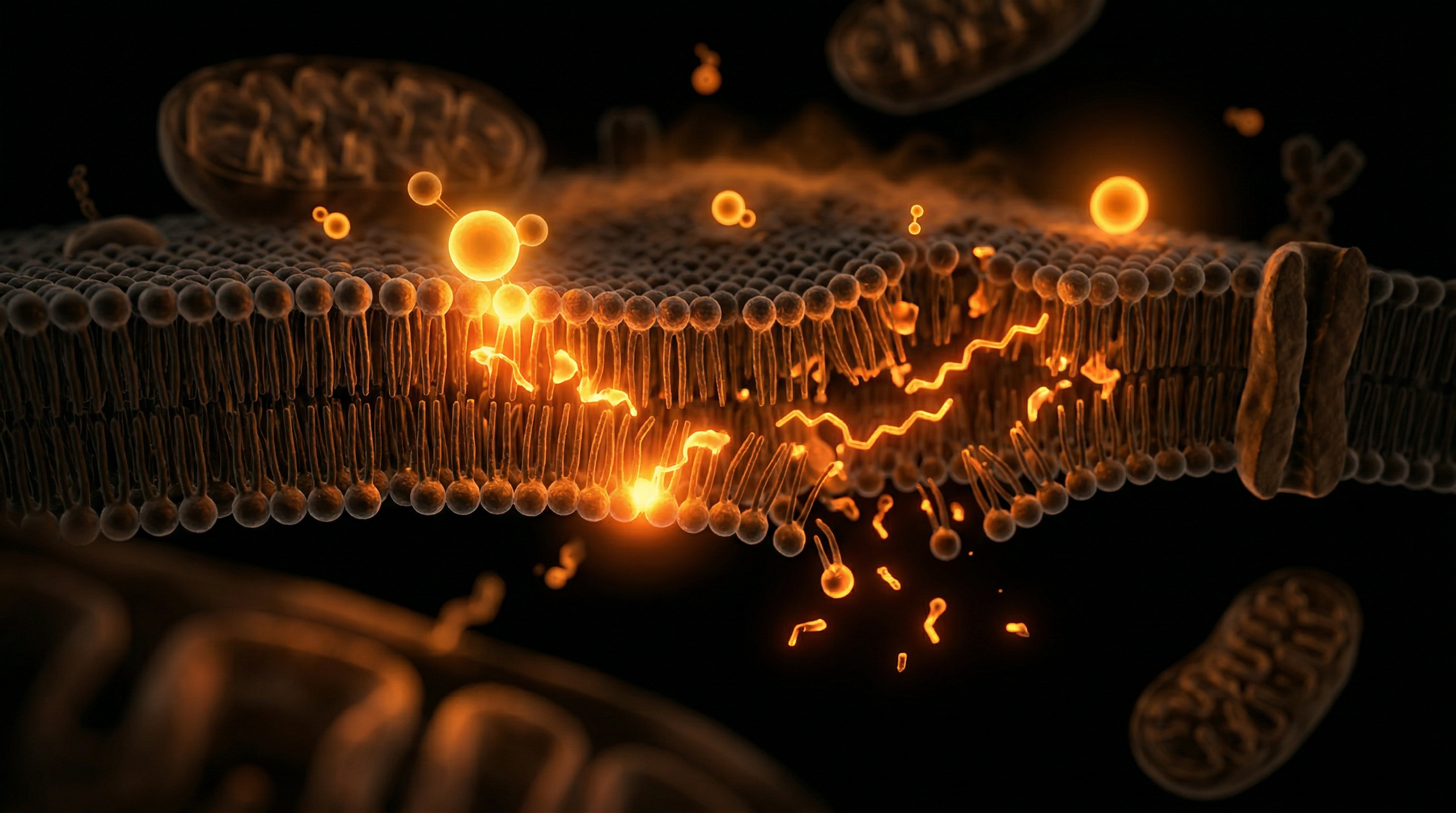
Lipid peroxidation is the oxidative degradation of lipids. It is the process whereby free radicals "steal" electrons from the lipids in our cell membranes and circulating lipoproteins, resulting in cell damage. In the context of British air quality, particularly the high concentrations of Particulate Matter (PM2.5) and Nitrogen Dioxide (NO2), we are witnessing a systemic "rusting" of the British public’s cardiovascular system. This is not merely an issue of lung irritation; it is a fundamental disruption of lipid science that accelerates atherosclerosis, drives systemic inflammation, and bypasses the traditional risk factors often cited by GPs.
According to Public Health England, air pollution is the largest environmental risk to public health in the UK, linked to between 28,000 and 36,000 deaths every year, with a significant proportion of these being cardiovascular in nature.
This article provides an exhaustive examination of how the unique chemical profile of UK air pollution interacts with human lipids, the cellular mechanisms that fail under this pressure, and the steps individuals must take to shield their biology from an increasingly toxic atmosphere.
The Biology — How It Works
To understand the impact of UK air quality on lipid peroxidation, one must first understand the vulnerability of the Polyunsaturated Fatty Acid (PUFA). Lipids are not static storage units; they are dynamic components of every cell membrane and the primary cargo of lipoproteins like LDL and HDL.
The Vulnerability of the Double Bond
The chemical structure of PUFAs contains multiple double bonds. These bonds are the sites of highest vulnerability. A free radical—an atom or molecule with an unpaired electron—seeks stability by pulling a hydrogen atom from a carbon atom in the lipid chain. This occurs most easily at the "methylene bridges" between double bonds.
The Three Stages of Peroxidation
- Initiation: A reactive oxygen species (ROS), such as a hydroxyl radical generated by inhaling diesel exhaust, reacts with a lipid molecule, creating a lipid radical.
- Propagation: The lipid radical is unstable. It reacts with molecular oxygen to form a lipid peroxyl radical. This radical then attacks a neighbouring lipid molecule, creating a chain reaction. This is the most dangerous phase, as a single spark of pollution can ignite a firestorm of oxidation across thousands of lipid molecules.
- Termination: The reaction only stops when two radicals react with each other to form a non-radical species, or when an antioxidant (like Vitamin E or CoQ10) intervenes to donate an electron and neutralise the threat.
The Role of the Lipoprotein
In the bloodstream, lipids are transported in "packages" called lipoproteins. Low-Density Lipoprotein (LDL) is particularly susceptible to the pollutants found in London or Leeds. When PM2.5 enters the alveoli of the lungs, it doesn't stay there. The smallest particles cross the lung-blood barrier, entering the systemic circulation where they directly encounter LDL particles. Once these lipids are oxidised (forming oxLDL), they are no longer recognised by the liver's receptors. Instead, they become "foreign" invaders that trigger an immune response.
Mechanisms at the Cellular Level
The transition from a soot-filled breath to a damaged artery involves complex intracellular signalling pathways. When we breathe in the specific cocktail of pollutants common in the UK—largely derived from diesel engines and tyre wear—we trigger a cascade of cellular dysfunction.
Transition Metals and the Fenton Reaction
UK road dust is heavily enriched with transition metals, including Iron (Fe), Copper (Cu), and Manganese (Mn), derived from brake pads and engine wear. These metals are often adsorbed onto the surface of PM2.5 particles. Once inhaled, these metals facilitate the Fenton Reaction.
The Fenton Reaction: Fe2+ + H2O2 → Fe3+ + •OH + OH−. This reaction generates the hydroxyl radical (•OH), the most reactive and damaging radical in biological systems, which instantly initiates lipid peroxidation upon contact with the vascular endothelium.
Mitochondrial Disruption
The mitochondria are the powerhouses of the cell, but they are also the primary site of endogenous ROS production. Environmental pollutants disrupt the Electron Transport Chain (ETC). When PM2.5 enters a cell, it causes the mitochondria to "leak" electrons, which then react with oxygen to form superoxide. This internal oxidative stress compounds the external stress from the pollution, leading to a state of mitochondrial bankruptcy where the cell can no longer repair the damaged lipids in its own membrane.
The Activation of the NLRP3 Inflammasome
Oxidised lipids are not merely broken fats; they are signalling molecules. 4-Hydroxynonenal (4-HNE) and Malondialdehyde (MDA) are toxic by-products of lipid peroxidation. These aldehydes act as "Damage-Associated Molecular Patterns" (DAMPs). They are detected by the NLRP3 inflammasome within macrophages. This triggers the release of pro-inflammatory cytokines like Interleukin-1β (IL-1β), creating a state of chronic, low-grade systemic inflammation that is the hallmark of modern British chronic disease.
Environmental Threats and Biological Disruptors
The UK's environmental profile is unique, shaped by historical industrialisation, dense urban planning, and a specific "diesel-heavy" transport legacy.
PM2.5: The Invisible Spear
Particulate Matter 2.5 refers to particles less than 2.5 micrometres in diameter. In cities like Glasgow or Bristol, these particles are small enough to bypass the cilia of the throat and the mucus of the bronchi, reaching the deep gas-exchange regions of the lungs. From there, they enter the blood. These particles act as "Trojan Horses," carrying polycyclic aromatic hydrocarbons (PAHs) and heavy metals directly into the path of circulating lipids.
Nitrogen Dioxide (NO2) and Nitrative Stress
The UK has consistently struggled to meet legal limits for NO2. While ROS are well-known, NO2 contributes to Reactive Nitrogen Species (RNS). This leads to protein nitration and lipid nitration, particularly affecting the surfactants in the lungs that prevent alveolar collapse. When these surfactants (which are lipid-rich) are oxidised, lung function drops, and the systemic load of oxidised lipids increases.
The "Brake Dust" Crisis
A suppressed truth in UK environmental policy is that even as we transition to Electric Vehicles (EVs), the issue of lipid peroxidation persists. EVs are significantly heavier than internal combustion engine vehicles, leading to increased non-exhaust emissions (NEE).
- Tyre Wear: Releases microplastics and zinc.
- Brake Wear: Releases metallic particles (Iron, Copper) that are potent catalysts for lipid oxidation.
- Road Surface Wear: Contributes to the coarse PM fraction that still drives local inflammatory responses.
The Cascade: From Exposure to Disease
The journey from a walk down London’s Marylebone Road to a myocardial infarction (heart attack) is a documented biochemical cascade.
Step 1: The Endothelial Breach
The endothelium is the single-cell thick lining of the blood vessels. It is the primary barrier between the blood and the vessel wall. Air pollution induces oxidative stress that "pokes holes" in this barrier, increasing its permeability.
Step 2: LDL Sequestration
In a healthy environment, LDL moves freely. In a polluted environment, the damaged, oxidised LDL becomes "sticky." It gets trapped in the sub-endothelial space (the layer beneath the vessel lining).
Step 3: Foam Cell Formation
The immune system senses the oxLDL as a pathogen. Macrophages (white blood cells) are dispatched to consume the oxidised fat. However, because the fat is so damaged, the macrophages cannot process it. They become engorged with oxidised lipids, transforming into Foam Cells.
Step 4: Plaque Development and Rupture
These foam cells accumulate, forming a "fatty streak" which eventually becomes a calcified plaque. The continuous inhalation of UK air pollution ensures a constant supply of new ROS, which destabilises the fibrous cap of these plaques.
- Vulnerable Plaque: A plaque with a thin cap and a large core of oxidised lipids.
- Rupture: Triggered by a spike in pollution (e.g., a "high pollution day" in Winter), the plaque ruptures, leading to a clot and a subsequent stroke or heart attack.
What the Mainstream Narrative Omits
The current medical and governmental approach to heart disease in the UK is dangerously incomplete. By focusing almost exclusively on dietary saturated fat and "lowering LDL" via statins, the "Establishment" ignores the environmental context in which these lipids exist.
The Cholesterol Deception
Cholesterol itself is vital for life; it is the precursor to Vitamin D and steroid hormones (testosterone, oestrogen, cortisol). The danger is not the level of cholesterol, but the state of the cholesterol. High LDL in a clean-air, low-toxin environment may be benign. However, even "normal" LDL levels in a high-pollution UK city are dangerous because a high percentage of those particles will be oxidised.
The mainstream narrative fails to mention that statins, while lowering LDL numbers, do very little to protect the remaining LDL particles from being oxidised by environmental PM2.5.
The Regulatory Failure
UK air quality standards have historically been weaker than the World Health Organization (WHO) recommendations. For years, the UK government focused on reducing CO2 (a global warming gas) by subsidising diesel engines. This was a catastrophic public health error. Diesel engines emit significantly more PM and NO2 than petrol engines. We are now living through the "Lipid Legacy" of this policy, where an entire generation has been exposed to levels of traffic pollution that make lipid peroxidation an inevitability rather than a risk.
The Monitoring Gap
UK air quality monitoring stations are often placed in parks or "background" locations. This masks the "street-level" reality. In the "urban canyons" of London or Manchester, where buildings trap exhaust fumes, the concentration of lipid-oxidising particles can be ten times higher than the official "average" reported for the city.
The UK Context
The United Kingdom presents a specific set of challenges for the biological researcher concerned with lipid health.
The "Deep Tube" Effect
The London Underground is one of the most polluted environments on Earth. The PM2.5 levels on the Northern Line or Central Line can reach concentrations of 250 µg/m³—ten times the WHO limit. This dust is uniquely rich in magnetite (iron oxide) from the friction of wheels on rails.
- Magnetite's Impact: These nanoparticles are small enough to travel along the olfactory nerve directly into the brain, where they catalyse lipid peroxidation in the delicate fats of the brain (the myelin sheath), potentially driving neurodegenerative diseases like Alzheimer's.
The North-South Health Divide
There is a stark correlation between air quality and the "North-South Divide" in the UK. Many post-industrial northern cities have higher rates of cardiovascular disease. While socioeconomic factors play a role, the concentration of heavy industry and older, more polluting vehicle fleets in these areas creates a "peroxidation hotspot."
The "Canyon Effect" in British Architecture
Unlike the wide boulevards of Paris or Washington D.C., British cities are characterised by narrow streets and high-density buildings. This creates a "canyon effect" where pollutants are trapped at ground level (the "breathing zone"). Pedestrians and cyclists are exposed to concentrated plumes of NO2 and PM that have no way to disperse, leading to acute spikes in lipid oxidation every time they commute.
Protective Measures and Recovery Protocols
While we cannot always control the air we breathe, we can modify our internal biochemistry to be more resilient to the oxidative stress of UK life.
1. Intracellular Antioxidant Support
To stop the "propagation" phase of lipid peroxidation, the body requires a robust shield of fat-soluble antioxidants.
- Vitamin E (Alpha-Tocopherol): The primary defender of the lipid membrane. It sacrifices itself to neutralise peroxyl radicals.
- Coenzyme Q10 (Ubiquinol): Vital for regenerating Vitamin E and protecting mitochondrial lipids.
- Astaxanthin: A potent carotenoid that can span the entire lipid bilayer, providing "360-degree" protection against oxidation.
2. Enhancing the Glutathione Pathway
Glutathione is the body's "Master Antioxidant." It is essential for the function of Glutathione Peroxidase, an enzyme that specifically reduces lipid hydroperoxides to non-toxic alcohols.
- N-Acetyl Cysteine (NAC): A precursor to glutathione that helps the lungs detoxify inhaled pollutants.
- Sulforaphane: Found in broccoli sprouts; it activates the Nrf2 pathway, which turns on the body's internal "antioxidant factory."
3. Environmental Mitigation
- HEPA Filtration: Residents of UK cities must use high-quality HEPA (High-Efficiency Particulate Air) filters in their homes, particularly in bedrooms. This creates a "clean air sanctuary" where the body can repair oxidised lipids during sleep.
- Nasal Breathing: The nose acts as a natural filter for larger particulates. Mouth breathing allows pollutants direct access to the lower lungs and the bloodstream.
- The "Clean Route" Planning: Using side streets rather than main roads for walking or cycling can reduce PM2.5 exposure by up to 50% in UK cities.
4. Dietary Shifts
- Reducing PUFA Intake: Paradoxically, a diet very high in industrial seed oils (omega-6 PUFAs) provides more "fuel" for the fire of lipid peroxidation. Shifting toward more stable fats (like olive oil or moderate saturated fats) can make cell membranes less susceptible to oxidative "rusting."
- Phytochemical Shielding: Consuming high-polyphenol foods (blueberries, dark chocolate, green tea) provides secondary protection against the systemic inflammation triggered by oxLDL.
Summary: Key Takeaways
- The Real Culprit: Cardiovascular disease in the UK is driven as much by environmentally-induced lipid peroxidation as it is by diet or genetics.
- The Chemical Trigger: UK traffic pollution (PM2.5, NO2, and brake dust) acts as a direct catalyst, using transition metals to initiate a chain reaction of lipid destruction.
- The LDL Transformation: Air pollution transforms healthy LDL into oxLDL, a potent vascular toxin that the immune system cannot clear, leading to plaque formation.
- The Regulatory Blindspot: The UK government's historical push for diesel and the failure to meet WHO air quality standards has created a public health crisis that mainstream medicine tries to "statin away" without addressing the root cause.
- The Invisible Threat: Environments like the London Underground are "hotbeds" for iron-rich particles that oxidise lipids in both the blood and the brain.
- Individual Defence: Protection requires a combination of fat-soluble antioxidants (Vitamin E, CoQ10), environmental filtration (HEPA), and a deep understanding of the vulnerability of polyunsaturated fats.
The air in our British cities is not just a breath; it is a biochemical input. Until we treat air quality as a core component of lipid science, the epidemic of "modern" heart disease will continue to rise, regardless of how many statins are prescribed. It is time for a paradigm shift—from blaming the egg on the plate to addressing the exhaust in the street.
This article is provided for informational and educational purposes only. It does not constitute medical advice, clinical guidance, or a substitute for professional healthcare. Information reflects cited research at time of publication. Always consult a qualified healthcare professional before acting on any health information.
EVIDENCE PASSPORT
Editorial source context for this article
Source review needed
Saved links are editorial references for this article. They may support specific claims rather than every sentence. Open and assess each source in context. This passport does not independently verify them.
Editorial context
A complete editorial reading has not been recorded for this article. Source links remain available for you to open and assess directly.
Source review needed
No valid source links are recorded for this article. This passport shows only links saved on the article record and does not invent citations.
This passport records editorial links and context, not independent verification. Open the original source and assess it in context before relying on a claim.
Medical Disclaimer
The information in this article is for educational purposes only and does not constitute medical advice, diagnosis, or treatment. Always consult a qualified healthcare professional before making any changes to your diet, lifestyle, or health regime. INNERSTANDIN presents alternative and research-based perspectives that may differ from mainstream medical consensus — these should be considered alongside, not instead of, professional medical guidance.
Read Full DisclaimerContinue the thread
Keep this question moving.
Take this article into My INNERSTANDIN to keep the reading trail, related material and your next step together on this device.
Dig deeper in the Library
Free, longform PDF volumes that go beyond headlines into mechanisms and references.