
The Maternal-Fetal Nutrient Transfer Gradient: Mechanism of Long-Chain Polyunsaturated Fatty Acid Depletion
An exploration of the biological mechanisms that prioritize fetal neurodevelopment over maternal nutrient stores, specifically focusing on the placental transfer of DHA and the resulting risk of postpartum depletion.
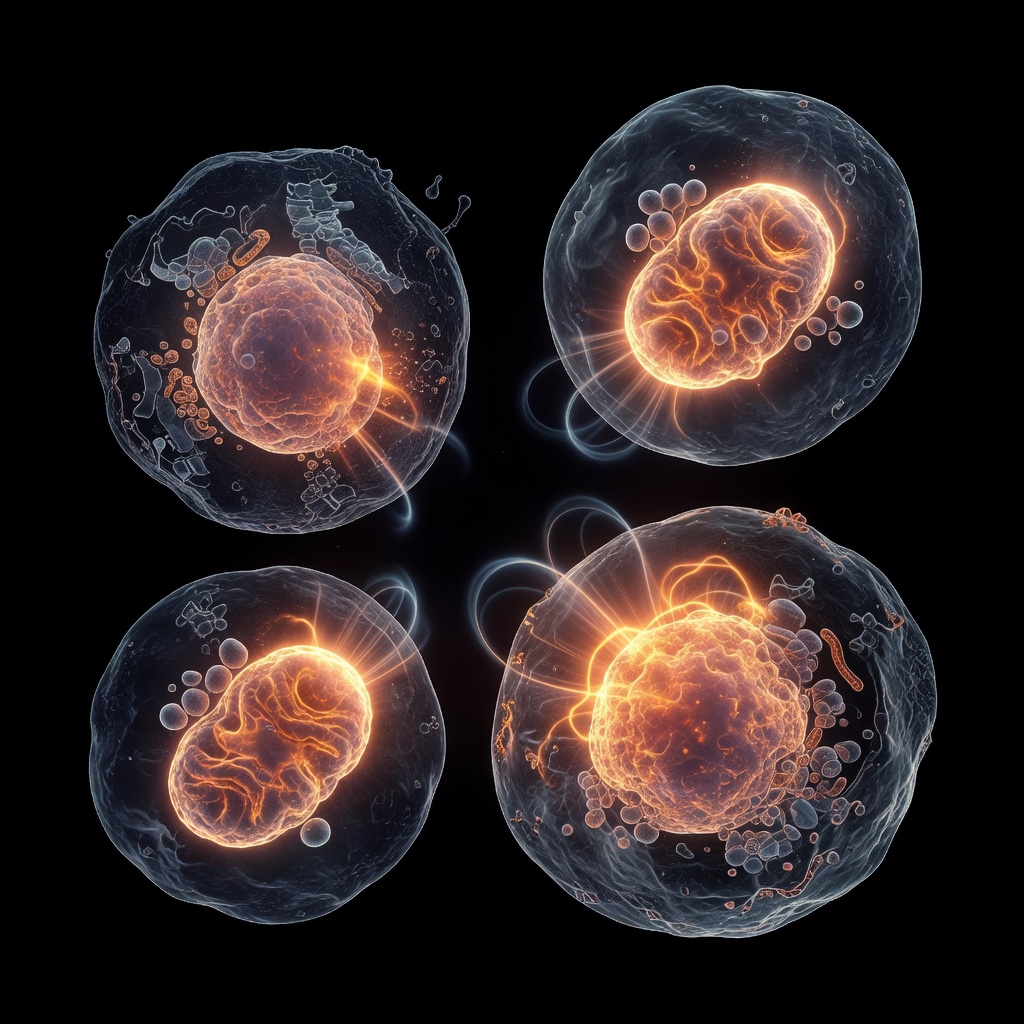
# The Maternal-Fetal Nutrient Transfer Gradient: Mechanism of Long-Chain Polyunsaturated Fatty Acid Depletion\n\nIn the landscape of maternal health, the transition from pregnancy to the postpartum period is often viewed through the lens of hormonal fluctuation. However, at INNERSTANDING, we recognize that the root cause of many postpartum health challenges lies deeper within the biological architecture of nutrient allocation. One of the most significant, yet frequently overlooked, phenomena is the 'Maternal-Fetal Nutrient Transfer Gradient'—a physiological mechanism that ensures fetal survival at the expense of maternal long-chain polyunsaturated fatty acid (LCPUFA) stores.\n\n## The Principle of Fetal Priority\n\nFrom an evolutionary perspective, the placenta is an incredibly efficient organ designed to maximize the survival of the offspring. It operates on a principle of biological priority, often referred to as 'biomagnification.' This process ensures that the concentration of essential nutrients, particularly Docosahexaenoic Acid (DHA) and Arachidonic Acid (ARA), is significantly higher in the fetal circulation than in the maternal circulation. By the third trimester, the fetus requires an enormous influx of these fats to support the rapid expansion of the brain and central nervous system. \n\nThe mechanism is not a passive diffusion but an active, one-way transport system.
The mother acts as the source, and the fetus acts as the sink. If maternal dietary intake is insufficient to meet these demands, the body does not stop the transfer; instead, it begins to demineralize and 'de-fat' the mother's own tissues to satisfy the fetal requirement.\n\n## The Mechanism of Selective Transfer\n\nHow does the body move these fatty acids against a concentration gradient? The answer lies in the placental membrane and specific transport proteins. Fatty Acid Transport Proteins (FATPs) and Plasma Membrane-associated Fatty Acid-Binding Proteins (FABPpm) act as gatekeepers. These proteins have a high affinity for DHA, selectively 'pulling' it from the maternal plasma and delivering it into the umbilical vein.\n\nResearch indicates that by the time of birth, the levels of DHA in a newborn's blood are typically 2 to 3 times higher than those in the mother’s blood.
This gradient is essential for the formation of the synaptic membranes in the fetal brain, where DHA makes up nearly 30-40% of the gray matter's fatty acid content. However, this biological success for the infant creates a 'depletion debt' for the mother.\n\n## The DHA Drain: Maternal Impact\n\nDuring the course of a single pregnancy, a mother may lose up to 50% of her total LCPUFA stores. This is particularly pronounced in the maternal brain, which actually undergoes a measurable reduction in volume during late pregnancy as DHA is mobilized to support the fetus. \n\nThe root cause of 'Postpartum Brain Fog' or 'Mommy Brain' is often linked to this structural depletion. Because DHA is critical for membrane fluidity and neurotransmitter signaling (particularly dopamine and serotonin), its depletion can lead to neuroinflammation and impaired cognitive processing. Furthermore, there is a strong correlation between low maternal LCPUFA levels and the risk of Postpartum Depression (PPD), as the brain struggles to maintain emotional regulation without its primary structural lipids.\n\n## The Cumulative Effect of Parity\n\nThe depletion of LCPUFAs is not a one-off event.
It is cumulative. If the interval between pregnancies is short (less than 18–24 months), the mother rarely has enough time to replenish her stores. This leads to a phenomenon where subsequent children may actually receive fewer LCPUFAs than the firstborn, or the mother sinks into a deeper state of depletion with each successive child. \n\nThis 'sequential depletion' is a major factor in maternal exhaustion and long-term metabolic dysfunction. Modern diets, which are heavily skewed toward Omega-6 fatty acids (pro-inflammatory) and lacking in Omega-3s (anti-inflammatory), exacerbate this problem. The high Omega-6 intake further inhibits the body's already inefficient ability to convert Alpha-Linolenic Acid (ALA) into the usable DHA and EPA required for recovery.\n\n## Addressing the Root Cause\n\nTo rectify the LCPUFA depletion, we must move beyond the standard prenatal vitamin.
Addressing the root cause requires a focused approach to lipid restoration:\n\n1. Pre-conception Priming: Building DHA stores months before pregnancy begins to ensure a 'buffer' exists for the fetal gradient.\n2. High-Dose Postpartum Supplementation: Standard RDI (Recommended Daily Intake) levels are often insufficient for a mother who has already lost half her stores. Therapeutic doses of clean, triglyceride-form fish oils or algae-based DHA are necessary.\n3. Managing the Omega-6 to Omega-3 Ratio: Reducing industrial seed oils that compete for the same enzymes (delta-6 desaturase) allows for more efficient utilization of Omega-3s.\n4. Phospholipid Delivery: Consuming LCPUFAs in phospholipid form (found in wild fish roe or pasture-raised egg yolks) may improve brain-specific uptake compared to standard ethyl-ester supplements.\n\n## Conclusion\n\nThe Maternal-Fetal Nutrient Transfer Gradient is a marvel of biological engineering, ensuring the next generation starts with the best possible neurological foundation. However, the cost to the mother is significant. By understanding the mechanism of LCPUFA depletion, we can better support postpartum health, moving away from the 'normalizing' of maternal exhaustion and toward a model of true nutritional restoration. At INNERSTANDING, we believe that a healthy mother is the cornerstone of a healthy family, and restoring the lipid balance is a vital step in that journey.
This article is provided for informational and educational purposes only. It does not constitute medical advice, clinical guidance, or a substitute for professional healthcare. Information reflects cited research at time of publication. Always consult a qualified healthcare professional before acting on any health information.
RESEARCH FOUNDATIONS
Biological Credibility Archive
Citations provided for educational reference. Verify via PubMed or institutional databases.
Medical Disclaimer
The information in this article is for educational purposes only and does not constitute medical advice, diagnosis, or treatment. Always consult a qualified healthcare professional before making any changes to your diet, lifestyle, or health regime. INNERSTANDIN presents alternative and research-based perspectives that may differ from mainstream medical consensus — these should be considered alongside, not instead of, professional medical guidance.
Read Full DisclaimerReady to learn more?
Continue your journey through our classified biological research.
DISCUSSION ROOM
Members of THE COLLECTIVE discussing "The Maternal-Fetal Nutrient Transfer Gradient: Mechanism of Long-Chain Polyunsaturated Fatty Acid Depletion"
SILENT CHANNEL
Be the first to discuss this article. Your insight could help others understand these biological concepts deeper.
THE ARSENAL
Based on Postpartum Health & Nutritional Depletion — products curated by our research team for educational relevance and biological support.
Magnesium Blend – The Most Important Mineral

Clean Slate – Detoxes thousands of chemicals,heavy metals, pesticides, allergens, mold spores and fungus
Vegan Essential Amino Acids – Plant-Powered Protein Building
INNERSTANDING may earn a commission on purchases made through these links. All products are selected based on rigorous educational relevance to our biological research.