
The Mitochondrial Engine: How 660nm Photons Fuel ATP Production
Updated May 2026
This article explores the specific mechanism of cytochrome c oxidase absorption and its role in accelerating cellular energy. It details how specific red wavelengths overcome respiratory inhibitors to restore metabolic function.
Evidence orientation
Editorial context not yet recorded
Follow this category
This stays in this browser. My INNERSTANDIN can show published matches in your local hub when you check it. It does not send email, push, or alert notifications.
Local learning review
A private browser aid for revisiting ideas. It is not an alert or a health recommendation.
Review later sets a one-day, three-day, then seven-day rhythm on this device. Choose it only when you want to revisit this article.
Overview
For decades, the mainstream medical establishment has treated the human body as a chemical machine, governed primarily by pharmaceutical interventions and caloric tallies. However, a silent revolution in bioenergetics is revealing that we are, in fact, electromagnetic beings, powered by light. At the heart of this biological engine lies the mitochondrion, an organelle that does far more than just "produce energy." It acts as a sophisticated environmental sensor, a quantum processor, and a light-harvesting antenna.
The specific interaction between photons and cellular life is known as Photobiomodulation (PBM). While the electromagnetic spectrum is vast, a narrow window—specifically the 660nm wavelength within the visible red spectrum—holds a unique key to unlocking cellular vitality. This article explores the precise molecular mechanisms by which 660nm photons interact with Cytochrome c Oxidase, the terminal enzyme of the mitochondrial respiratory chain, to accelerate the production of Adenosine Triphosphate (ATP).
We shall move beyond the superficial "red light is good" narrative to dissect the quantum biological reality of how light restores metabolic function, overcomes environmental toxins, and reverses the "cellular winter" imposed by modern industrial living.
Fact: The human body contains approximately 10 quadrillion mitochondria, and their collective surface area is equivalent to three football pitches, all designed to harvest and process energy.
The Biology — How It Works
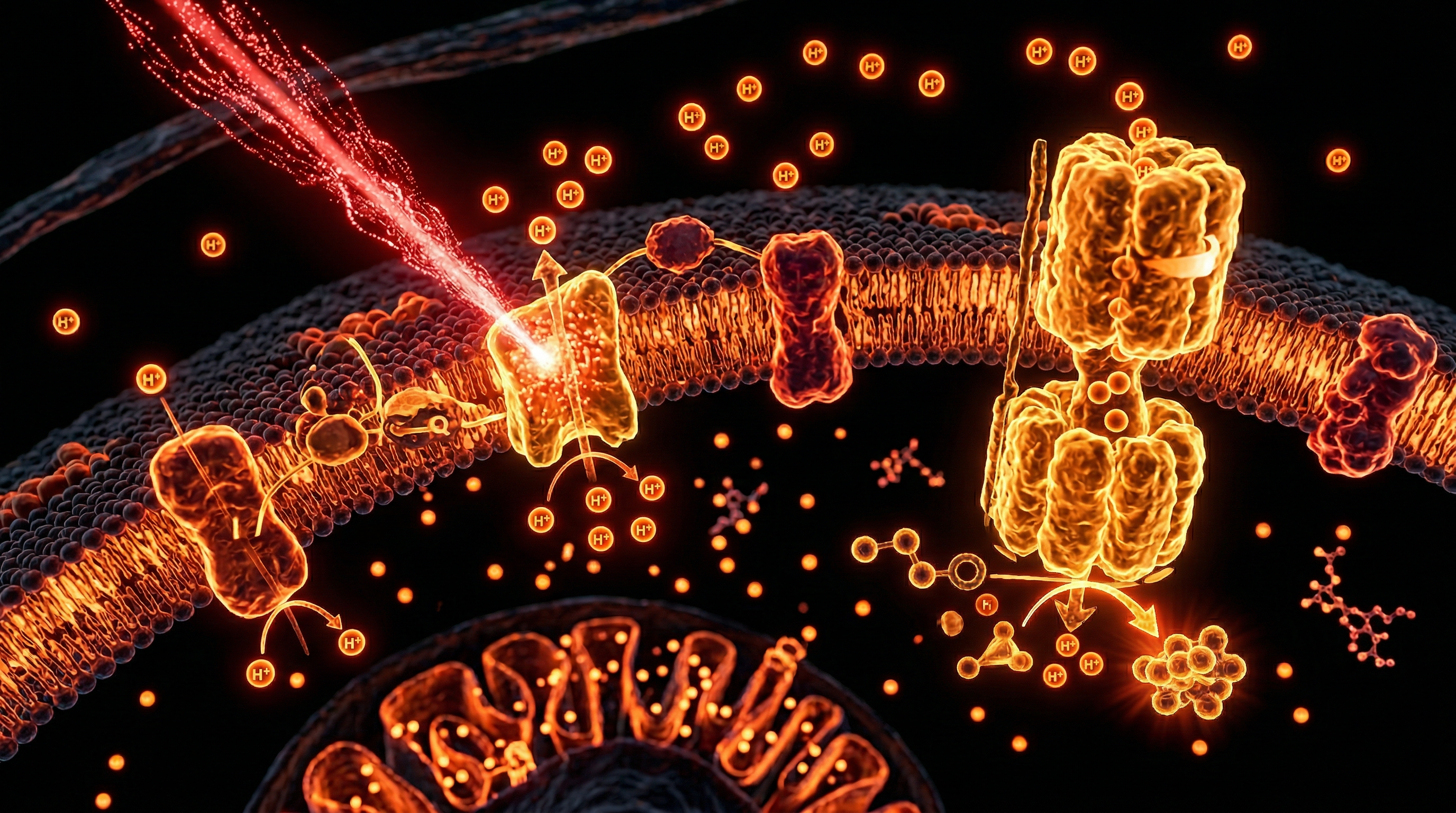
To understand why 660nm light is transformative, one must first master the mechanics of the Electron Transport Chain (ETC). The ETC is a series of protein complexes (I through IV) located in the inner mitochondrial membrane. Its primary purpose is to create an electrochemical gradient—a biological battery—that drives the synthesis of ATP.
The Role of Cytochrome c Oxidase (CCO)
Cytochrome c Oxidase (CCO), also known as Complex IV, is the "master regulator" of this process. It is a large transmembrane protein complex containing copper and haem (iron) centres. Its primary job is to take electrons from Cytochrome c and transfer them to oxygen molecules, which then combine with hydrogen ions to form water. This final step is the rate-limiting stage of cellular respiration.
The Absorption Spectra of Life
Every molecule has an absorption spectrum—specific frequencies of light that it can absorb. CCO is unique because it possesses "chromophores" (light-absorbing clusters) that are specifically tuned to the red and near-infrared (NIR) spectrum.
- 660nm (Visible Red): This wavelength penetrates the skin and is absorbed primarily by the metallic centres of CCO.
- 850nm (Near-Infrared): This wavelength penetrates deeper into tissues, reaching bones and organs, but interacts with CCO through slightly different vibrational mechanics.
When a 660nm photon hits the CCO enzyme, it triggers a "photo-dissociation" event. This is the catalyst that shifts the cell from a state of metabolic stagnation to one of high-velocity energy production.
ATP: The Universal Energy Currency
ATP is the molecule that powers every muscle contraction, every thought, and every enzymatic repair process in the body. Without sufficient ATP, the cell enters a state of "stress," prioritising immediate survival over long-term maintenance and repair. By stimulating CCO with 660nm photons, we essentially "supercharge" the production of ATP, providing the cell with the surplus energy required to heal.
Mechanisms at the Cellular Level
The magic of 660nm light does not happen by merely "adding heat." It is a non-thermal, quantum interaction. There are three primary mechanisms through which this wavelength restores the mitochondrial engine.
1. The Dissociation of Nitric Oxide (NO)
The most critical barrier to energy production in a stressed cell is Nitric Oxide (NO). When cells are under oxidative stress, mitochondria produce NO, which binds to the iron and copper sites of Cytochrome c Oxidase.
Critical Fact: Nitric Oxide acts as a competitive inhibitor to oxygen. When NO is bound to CCO, oxygen cannot bind, and the respiratory chain grinds to a halt. This is known as "metabolic hypoxia."
660nm photons possess the exact energy level required to vibrate the bond between NO and CCO, causing the NO to be released (dissociated). Once the NO is kicked out, oxygen can immediately rush back into the enzyme, restoring the flow of electrons and the production of ATP. This is the biological equivalent of clearing a blockage in a fuel line.
2. Hormesis and ROS Signalling
Contrary to popular belief, Reactive Oxygen Species (ROS) are not purely "bad." In small, controlled bursts, they act as vital signalling molecules. When 660nm light hits the mitochondria, it causes a brief, transient spike in ROS.
This minor stressor triggers a hormetic response—an adaptive survival mechanism. In response to this light-induced pulse, the cell activates antioxidant genes (via the Nrf2 pathway), produces more protective enzymes (like Superoxide Dismutase), and stimulates mitochondrial biogenesis (the creation of new mitochondria).
3. Structured Water and Viscosity
Recent research into Exclusion Zone (EZ) Water, pioneered by Dr Gerald Pollack, suggests that 660nm light alters the physical properties of water within the cell. The water inside a mitochondrion is not "bulk water"; it is highly structured.
660nm photons increase the "charge" of this structured water and reduce its viscosity. By making the water "thinner" or more slippery, the ATP Synthase motor (a physical spinning protein that rotates at 9,000 RPM) can spin with less resistance, significantly increasing the efficiency of ATP production.
Environmental Threats and Biological Disruptors
The modern world is a "mitochondrial minefield." Our internal engines are being constantly assaulted by environmental factors that 660nm light was naturally intended to counteract.
The Blue Light Hazard (HEV Light)
We live under the glare of High-Energy Visible (HEV) Blue Light from LEDs, smartphones, and computer screens. While natural sunlight contains a balance of all colours, artificial lighting is heavily skewed toward blue.
- Blue light in isolation causes mitochondrial fragmentation.
- It increases the production of ROS without the restorative "antidote" of red light.
- Chronic blue light exposure at night suppresses melatonin, which is not only a sleep hormone but the body’s primary mitochondrial antioxidant.
Glyphosate and Mitochondrial Poisoning
The prevalence of glyphosate (the active ingredient in many herbicides) in the modern food supply is a direct threat to the ETC. Glyphosate can mimic glycine, an amino acid, and incorporate itself into mitochondrial proteins, effectively "gumming up" the engine and leading to chronic ATP depletion.
Non-Native Electromagnetic Fields (nnEMFs)
The proliferation of Wi-Fi, 5G, and cellular radiation impacts the voltage-gated calcium channels (VGCCs) in cell membranes. This leads to an influx of calcium into the cell, which creates an environment of "electrosmog" that further inhibits CCO function. Red light therapy acts as a corrective frequency to mitigate this intracellular chaos.
The Cascade: From Exposure to Disease
When the mitochondrial engine fails—a state known as Mitochondrial Dysfunction—a predictable cascade of systemic decay begins. It is not a coincidence that we are seeing an explosion in "energy-deficiency" diseases.
- Neurological Decline: The brain uses 20% of the body's ATP. When CCO is inhibited, neurons cannot maintain their membrane potential, leading to "brain fog," and eventually, neurodegenerative conditions like Alzheimer’s and Parkinson's.
- Metabolic Syndrome: If mitochondria cannot efficiently burn glucose and fats (a process called Oxidative Phosphorylation), the body resorts to Glycolysis (fermentation). This is the hallmark of insulin resistance and Type 2 Diabetes.
- The Warburg Effect: In 1931, Otto Warburg won the Nobel Prize for discovering that cancer cells derive their energy from fermentation rather than mitochondrial respiration. Cancer is, at its core, a disease of mitochondrial failure.
- Chronic Fatigue Syndrome (ME/CFS): This condition is often characterized by a "Cell Danger Response" where mitochondria intentionally shut down energy production to protect the cell from perceived threats (viruses, toxins, or light deficiency).
Statistic: Over 90% of chronic diseases in the West are now linked to metabolic dysfunction, which begins with the failure of the mitochondrial respiratory chain.
What the Mainstream Narrative Omits
The suppression of light-based medicine is one of the greatest oversights—or perhaps intentional omissions—of modern pharmacology. For over a century, the medical establishment has prioritised "patentable" molecules over the fundamental requirements of human biology.
The Pharmaceutical Bias
You cannot patent a wavelength of light. You cannot "brand" the sun. Because 660nm therapy is inexpensive, safe, and can be administered at home, it offers no recurring revenue for the multi-billion-pound pharmaceutical industry. As a result, medical students are rarely taught about Bioenergetics or the Photo-Electric Effect in human tissue.
The "Sunlight is Dangerous" Myth
The mainstream narrative has successfully terrified the public into avoiding the sun and slathering themselves in chemical sunscreens (which often contain mitochondrial disruptors like oxybenzone). While UV overexposure is a risk, the avoidance of the red and infrared spectrum found in natural sunlight has led to a population-wide deficiency in mitochondrial fuel.
The establishment focuses on "Vitamin D" as the only benefit of sunlight, completely ignoring the fact that red photons are essential for the very production of energy. Sunlight is not just for making vitamins; it is a direct source of wireless power for the body.
The UK Context
In the United Kingdom, the mitochondrial crisis is amplified by our geography and climate. For a significant portion of the year, the UK exists in a "Red Light Deficit."
The Northern Latitude Problem
From October to April, the angle of the sun in the UK is such that most of the red and near-infrared light is filtered out by the atmosphere. Coupled with the UK’s notoriously overcast weather, many Britons are living in a state of biological "hibernation." This contributes to the high prevalence of Seasonal Affective Disorder (SAD), which is essentially a light-deprivation-induced mitochondrial crash.
Indoor Living and "Sick Building Syndrome"
The British population spends, on average, 90% of its time indoors. Modern UK building regulations focus on energy efficiency (insulation) but often ignore "biological efficiency." Energy-efficient double glazing often filters out the beneficial infrared wavelengths of natural light, leaving occupants under the stressful flicker of cheap LED and fluorescent lighting.
Furthermore, the NHS is currently facing an unprecedented burden of chronic conditions. Integrating PBM/Red Light Therapy into standard care could potentially save billions by addressing the root cause of energy-deficiency diseases rather than merely managing symptoms with expensive drugs.
Protective Measures and Recovery Protocols
To restore the mitochondrial engine, one must adopt a multi-faceted approach to Light Hygiene and bioenergetic support.
1. Targeted Red Light Therapy (RLT)
To effectively stimulate CCO, use a high-quality 660nm LED device.
- Irradiance: Ensure the device delivers a high power density (at least 50mW/cm² at the skin).
- Dosing: 5-10 minutes of exposure per body area. Overdosing can lead to a "diminished return" due to the biphasic dose response.
- Timing: Early morning is ideal, as it mimics the sunrise and prepares the mitochondria for the day’s stressors.
2. Block the Blue
Protect your mitochondria from "unbalanced" light.
- Use Blue Light Blocking Glasses (red or amber lenses) after sunset.
- Swap cool-white LEDs for warm, "flicker-free" incandescent or red bulbs in the home.
- Use software like Iris or f.lux to shift screen colours toward the red spectrum.
3. Nutritional Support for the ETC
- Methylene Blue: In very low doses, Methylene Blue acts as an electron cycler, helping the ETC bypass damaged complexes and working synergistically with 660nm light.
- Magnesium: Essential for the stability of the ATP molecule.
- Limit Seed Oils: Polyunsaturated Fatty Acids (PUFAs) like linoleic acid can accumulate in the mitochondrial membrane (cardiolipin), making it more susceptible to oxidative damage (lipid peroxidation).
4. Cold Thermogenesis
Short bouts of cold exposure (cold showers or ice baths) stimulate Mitochondrial Biogenesis. The cold forces the mitochondria to work harder to produce heat (via Uncoupling Protein 1), effectively "exercising" the engine.
Pro-Tip: Combine Red Light Therapy with Cold Thermogenesis. The red light provides the "fuel," while the cold provides the "stimulus" for cellular renewal.
Summary: Key Takeaways
The mitochondrial engine is the foundation of all human health, and light is its primary fuel. Understanding the interaction between 660nm photons and the body is not just "alternative" science; it is the future of restorative medicine.
- 660nm Light is specifically absorbed by Cytochrome c Oxidase (CCO), the "spark plug" of the cell.
- Its primary function is to dissociate Nitric Oxide, which otherwise acts as a poison to the respiratory chain.
- This process results in an immediate increase in ATP (energy) and a decrease in systemic oxidative stress.
- Modern life—characterized by blue light, toxins, and a lack of natural sunlight—is a direct assault on our mitochondria.
- In the UK, the "light deficit" makes external supplementation with red light wavelengths a biological necessity rather than a luxury.
- By shifting our focus from a purely chemical view of the body to a bioenergetic and quantum perspective, we can reclaim our health from the "cellular winter" of the modern world.
We are not merely what we eat; we are what we absorb—and nothing is more fundamental to our existence than the absorption of light. It is time to step out of the shadows and refuel the mitochondrial engine.
This article is provided for informational and educational purposes only. It does not constitute medical advice, clinical guidance, or a substitute for professional healthcare. Information reflects cited research at time of publication. Always consult a qualified healthcare professional before acting on any health information.
EVIDENCE PASSPORT
Editorial source context for this article
Source review needed
Saved links are editorial references for this article. They may support specific claims rather than every sentence. Open and assess each source in context. This passport does not independently verify them.
Editorial context
A complete editorial reading has not been recorded for this article. Source links remain available for you to open and assess directly.
Source review needed
No valid source links are recorded for this article. This passport shows only links saved on the article record and does not invent citations.
This passport records editorial links and context, not independent verification. Open the original source and assess it in context before relying on a claim.
Medical Disclaimer
The information in this article is for educational purposes only and does not constitute medical advice, diagnosis, or treatment. Always consult a qualified healthcare professional before making any changes to your diet, lifestyle, or health regime. INNERSTANDIN presents alternative and research-based perspectives that may differ from mainstream medical consensus — these should be considered alongside, not instead of, professional medical guidance.
Read Full DisclaimerContinue the thread
Keep this question moving.
Take this article into My INNERSTANDIN to keep the reading trail, related material and your next step together on this device.
Explore this in the Body Map
See where this hits your biology. Interactive anatomy, threats, and protective protocols.
Dig deeper in the Library
Free, longform PDF volumes that go beyond headlines into mechanisms and references.