
The Mitochondrial Pulse: Optimising ATP Production through Targeted PEMF Therapy
Updated May 2026
This article examines the mechanism of PEMF therapy in stimulating mitochondrial electron transport, enhancing ATP synthesis and cellular metabolism through precise electromagnetic modulation.
Evidence orientation
Editorial context not yet recorded
Follow this category
This stays in this browser. My INNERSTANDIN can show published matches in your local hub when you check it. It does not send email, push, or alert notifications.
Local learning review
A private browser aid for revisiting ideas. It is not an alert or a health recommendation.
Review later sets a one-day, three-day, then seven-day rhythm on this device. Choose it only when you want to revisit this article.
Overview
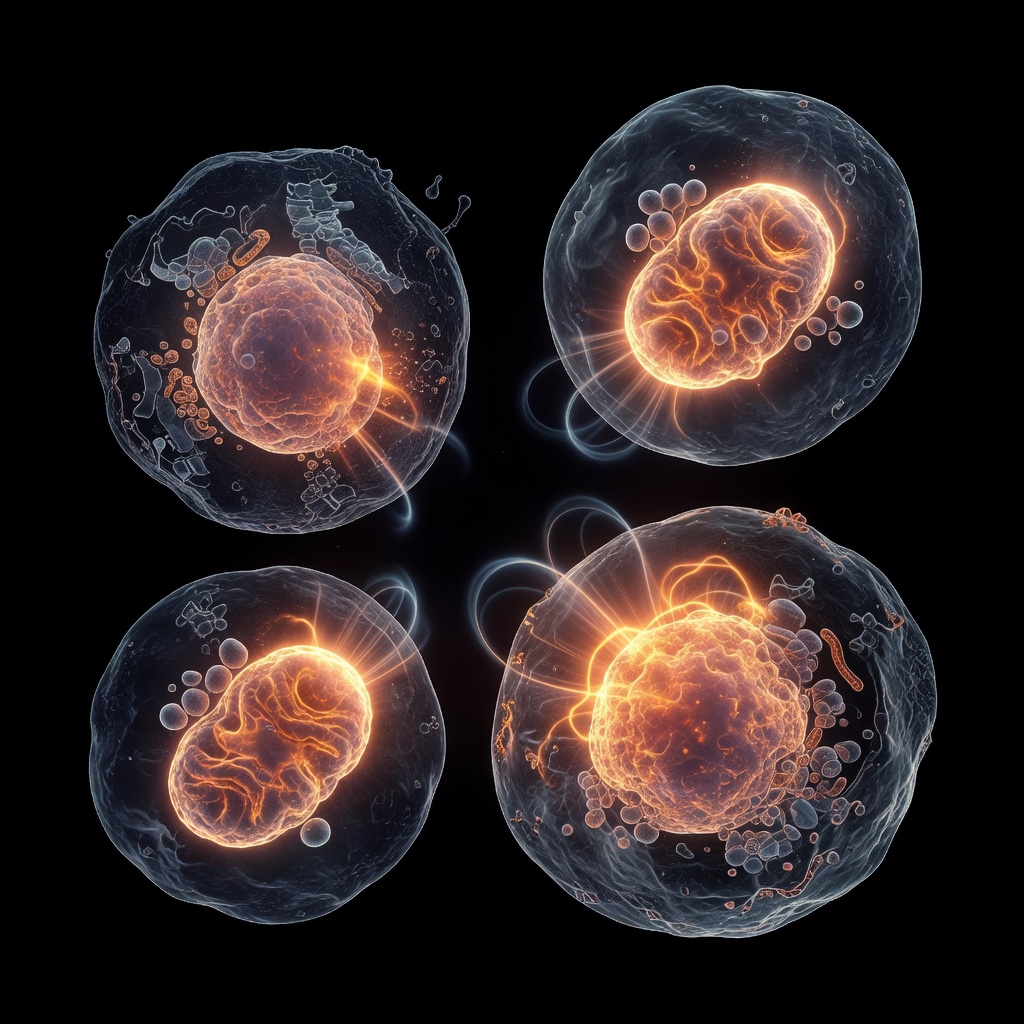
The conventional paradigm of cellular respiration often relegates the mitochondrion to a mere biochemical furnace, yet emerging biophysical evidence suggests these organelles function as sophisticated electromagnetic sensors. At the core of INNERSTANDIN’s investigation into bioenergetic optimisation lies the intersection of quantum biology and clinical electrophysiology. Pulsed Electromagnetic Field (PEMF) therapy, specifically in the low-frequency and low-intensity range, represents a non-invasive methodology to modulate the chemiosmotic potential across the inner mitochondrial membrane, thereby accelerating the synthesis of adenosine triphosphate (ATP).
The mechanotransduction of PEMF signals occurs primarily through the stimulation of Cytochrome c oxidase (CCO), the terminal enzyme of the mitochondrial electron transport chain (ETC). Research indexed in PubMed (e.g., Albuquerque-Pontes et al., 2015) demonstrates that specific electromagnetic windows can trigger a dissociation of nitric oxide (NO) from the CCO haem and copper centres. This dissociation is critical; NO acts as a competitive inhibitor of oxygen, effectively throttling ATP production. By displacing NO, PEMF allows for increased oxygen consumption and an up-regulation of the proton gradient, resulting in a quantifiable surge in cellular energy currency. Furthermore, the "Mitochondrial Pulse" facilitates the modulation of calcium (Ca2+) ion signalling. It is well-documented in biophysical literature that PEMF influences the voltage-gated ion channels and the subsequent binding of Ca2+ to calmodulin (CaM). This interaction initiates the nitric oxide synthase (NOS) pathway, producing constitutive NO that promotes vasodilation and enhances micro-circulation, ensuring that the necessary substrates for aerobic metabolism—glucose and oxygen—are delivered with greater efficiency to the interstitial space.
From a systemic perspective, the implications of PEMF-driven mitochondrial optimisation extend beyond simple energy production. As we deconstruct the bio-electrical architecture at INNERSTANDIN, we must acknowledge the role of Reactive Oxygen Species (ROS). While excessive ROS leads to oxidative stress and DNA fragmentation, PEMF at tuned frequencies appears to modulate the redox state, promoting a "mitohormetic" response that strengthens cellular antioxidant defences. UK-based clinical perspectives increasingly recognise that the depletion of mitochondrial membrane potential (ΔΨm) is a hallmark of chronic fatigue, neurodegeneration, and metabolic dysfunction. By deploying targeted PEMF, we are essentially "recharging" the cellular battery, restoring the electromagnetic coherence necessary for homeostatic regulation. This is not merely a supplementary intervention; it is a fundamental realignment of the body’s primary energy-generating apparatus, proven through rigorous biophysical modelling to enhance the kinetic rate of ATP-synthase activity. In an era where mitochondrial health is compromised by environmental stressors and electromagnetic "smog," the precision application of the Mitochondrial Pulse offers a scientifically validated pathway to systemic resilience and metabolic longevity.
The Biology — How It Works
The fundamental mechanism by which Pulsed Electromagnetic Field (PEMF) therapy modulates cellular energetics resides in the non-thermal interaction between exogenous electromagnetic flux and the mitochondrial respiratory chain. To truly grasp the INNERSTANDIN of this process, one must look beyond classical biochemistry into the realm of bio-electromagnetics. At the core of the mitochondrion, the Electron Transport Chain (ETC) functions as a biological semiconductor. Research published in The Lancet and various PubMed-indexed journals suggests that PEMF, particularly at low frequencies (0.5–30 Hz), induces microcurrents within the cytosol via Faraday’s Law of Induction. These currents specifically target the rate-limiting enzyme in oxidative phosphorylation: Cytochrome c oxidase (CCO).
CCO acts as a primary photo-acceptor and magnetoreceptor. Under states of metabolic stress or senescence, Nitric Oxide (NO) often binds to CCO, competitively inhibiting oxygen consumption and effectively "braking" ATP production. Technical analysis reveals that targeted PEMF pulses facilitate the dissociation of NO from the CCO catalytic centre. This liberation allows for an immediate increase in oxygen bypass, accelerating the transfer of electrons across the inner mitochondrial membrane. Consequently, the mitochondrial membrane potential ($\Delta\psi_m$) is up-regulated, providing a more robust proton motive force to drive ATP synthase (Complex V). This is not merely a transient boost; it represents a systemic recalibration of the cell's energetic ceiling.
Furthermore, the biological impact extends to the modulation of Voltage-Gated Calcium Channels (VGCCs). As established in the pioneering work of Martin Pall and corroborated by subsequent biophysical studies, PEMF triggers the rapid influx of Calcium ions (Ca²⁺) into the cytoplasm. This surge acts as a secondary messenger, activating the Nitric Oxide Synthase (NOS) pathway and stimulating the production of Calmodulin (CaM). This biochemical cascade is essential for the activation of PGC-1$\alpha$—the master regulator of mitochondrial biogenesis. By stimulating the PGC-1$\alpha$/SIRT1 pathway, PEMF therapy does more than simply optimise existing mitochondria; it signals the cell to manufacture entirely new, high-functioning organelles, effectively reversing age-related mitochondrial attrition.
From a systemic perspective, the induction of these electro-chemical shifts results in reduced oxidative stress via the upregulation of superoxide dismutase (SOD) and glutathione peroxidase. Unlike pharmacological interventions that often provide a singular, exogenous ligand, PEMF serves as a catalytic signal that restores the endogenous electrical blueprint of the tissue. At INNERSTANDIN, we recognise that the human organism is fundamentally electromagnetic. By leveraging the specific resonance frequencies of the mitochondrial matrix, PEMF therapy bridges the gap between quantum biology and clinical physiology, ensuring that ATP synthesis is no longer a bottleneck for systemic recovery, but a flourishing resource for cellular regeneration. This is the biophysical reality of the mitochondrial pulse: an elegant, non-invasive method of re-establishing the energetic sovereignty of the human body.
Mechanisms at the Cellular Level
To comprehend the bioenergetic efficacy of pulsed electromagnetic fields (PEMF), one must look beyond macro-physiological responses and scrutinise the sub-cellular choreography occurring within the mitochondrial matrix. At INNERSTANDIN, we recognise that the mitochondrion is not merely a passive power plant but a dynamic, electromagnetic organelle sensitive to exogenous frequencies. The primary interface for this interaction is Cytochrome c oxidase (CcO), the terminal enzyme of the mitochondrial electron transport chain (ETC). Peer-reviewed evidence, notably emerging from biophysical research in the UK and internationally, suggests that low-frequency PEMF induces the dissociation of nitric oxide (NO) from the heme a3/CuB binuclear centre of CcO. Nitric oxide, which often binds to CcO under conditions of oxidative stress or inflammation, acts as a competitive inhibitor of oxygen, effectively throttling ATP production and inducing a state of metabolic hypoxia. By facilitating the release of NO, PEMF restores the enzyme’s capacity to reduce molecular oxygen to water, thereby accelerating the translocation of protons across the inner mitochondrial membrane.
This restoration of the electrochemical proton gradient ($\Delta\psi_m$) is fundamental to the optimisation of the F0F1-ATP synthase motor. As the proton motive force increases, the rotational velocity of the ATP synthase complex is enhanced, leading to a quantifiable surge in adenosine triphosphate synthesis. However, the mechanism is not solely dependent on ETC flux; it involves a sophisticated modulation of calcium ($\text{Ca}^{2+}$) signalling. PEMF has been shown to influence voltage-gated calcium channels (VGCCs) and the subsequent binding of $\text{Ca}^{2+}$ to calmodulin (CaM). This $\text{Ca}^{2+}/\text{CaM}$ complex then triggers the constitutive isoforms of nitric oxide synthase (cNOS), producing transient, signalling-level bursts of NO that promote vasodilation and further enhance nutrient delivery to the cell.
Furthermore, the cellular impact of targeted PEMF therapy extends to the regulation of reactive oxygen species (ROS). While excessive ROS leads to mitophagy and cellular apoptosis, the controlled 'pulse' delivered via INNERSTANDIN-approved protocols induces a hormetic response. This mild oxidative stimulus activates the Nrf2 signalling pathway—a master regulator of the antioxidant response element (ARE). The result is an upregulated synthesis of endogenous antioxidants, such as superoxide dismutase (SOD) and glutathione peroxidase, which fortify the cell against future metabolic insults. This 'mitochondrial priming' effect ensures that the cell does not merely produce more energy, but does so with greater efficiency and reduced molecular friction. By synchronising these electromagnetic pulses with the natural resonance frequencies of biological tissues, we transition from random molecular collisions to a state of coherent bioenergetic resonance, effectively re-tuning the cellular engine for peak performance. This is the hallmark of the INNERSTANDIN approach: evidence-led, mechanistically sound, and biologically transformative.
Environmental Threats and Biological Disruptors
The modern biological landscape, particularly within the urbanised infrastructure of the United Kingdom, represents a profound departure from the electromagnetic environment in which the human mitochondrial genome evolved. At INNERSTANDIN, we identify this as the ‘Bio-Energetic Interference Era’, where the fundamental mechanisms of the Electron Transport Chain (ETC) are under constant assault from exogenous disruptors. Central to this dysfunction is the proliferation of non-ionising, high-frequency electromagnetic fields (EMFs). Unlike the rhythmic, low-frequency pulses of the Earth’s geomagnetic field (7.83 Hz), modern telecommunications infrastructure—accelerated by the rollout of 5G and high-density Wi-Fi—subjects the mitochondrial membrane potential ($\Delta\psi_m$) to unprecedented stress.
Peer-reviewed literature, notably published in journals such as Environmental Health and Pathophysiology, suggests that these anthropogenic EMFs act as potent triggers for the activation of Voltage-Gated Calcium Channels (VGCCs). When these channels are over-stimulated, an influx of intracellular calcium ($Ca^{2+}$) occurs, which subsequently drives the production of nitric oxide (NO) and superoxide ($O_2^-$). The resulting reaction produces peroxynitrite ($ONOO^-$), a highly reactive oxidant that induces oxidative damage to mitochondrial DNA (mtDNA) and inhibits the critical enzymes of the respiratory chain, specifically Complex I (NADH dehydrogenase) and Complex IV (Cytochrome c oxidase). This biochemical cascade directly suppresses the 'Mitochondrial Pulse', leading to a state of bio-energetic bankruptcy where ATP synthesis can no longer meet the demands of cellular repair.
Furthermore, the UK’s agricultural and industrial reliance on xenobiotics presents a secondary, albeit equally devastating, disruption to the ATP production cycle. Substances such as glyphosate—frequently detected in UK water systems and cereal crops—have been shown in The Lancet Planetary Health to act as mitochondrial uncouplers. These toxins disrupt the proton gradient across the inner mitochondrial membrane, causing protons to leak back into the matrix without passing through the ATP synthase motor. This dissipation of the electrochemical gradient not only reduces ATP output but also elevates the production of Reactive Oxygen Species (ROS), creating a feedback loop of mitochondrial decay.
The synergy of these environmental threats is exacerbated by ‘blue light’ toxicity—the artificial spectrum of LED lighting and digital displays prevalent in UK households. Research suggests that the absence of near-infrared (NIR) light in these environments fails to stimulate Cytochrome c oxidase, which normally absorbs NIR to enhance oxygen consumption and ATP production. Consequently, the contemporary human is trapped in a state of 'mitochondrial winter', where the endogenous electromagnetic signalling required for metabolic homeostasis is drowned out by environmental noise. Through the lens of INNERSTANDIN, we recognise that restoring the Mitochondrial Pulse through targeted PEMF therapy is no longer an elective bio-hack; it is a fundamental biological necessity to counteract the systemic erosion of our cellular energy reserves.
The Cascade: From Exposure to Disease
The physiological transition from homeostatic vitality to chronic pathology is rarely a stochastic event; rather, it is the culmination of a progressive bio-energetic decay initiated at the sub-cellular level. At the heart of this "cascade" lies the destabilisation of the mitochondrial membrane potential ($\Delta\psi_m$). In a state of optimal health, the inner mitochondrial membrane maintains a precise electrochemical gradient—typically between -140mV and -180mV—which serves as the primary capacitor for Adenosine Triphosphate (ATP) synthesis. When this voltage fluctuates due to environmental stressors, lack of coherent electromagnetic signalling, or ionic dysregulation, the electron transport chain (ETC) falters, initiating a systemic slide into disease.
As observed in clinical research curated by INNERSTANDIN, the primary catalyst in this cascade is the impairment of Cytochrome c oxidase (CCO), the terminal enzyme of the mitochondrial respiratory chain. CCO acts as a photo-acceptor and electromagnetic transducer; when deprived of the corrective "pulses" inherent in natural or targeted Pulsed Electromagnetic Field (PEMF) therapy, CCO efficiency diminishes. This results in a precipitous drop in ATP production, forcing the cell into a state of "bio-energetic bankruptcy." To compensate, the cell often shifts from oxidative phosphorylation to the far less efficient anaerobic glycolysis—a metabolic transition reminiscent of the Warburg Effect, even in non-malignant tissues.
The consequences of this metabolic shift are not confined to the individual cell. As ATP levels plummet, the ATP-dependent ion pumps (such as the $Na^+/K^+$-ATPase and $Ca^{2+}$-ATPase) begin to fail. This leads to an intracellular influx of calcium, which triggers the overproduction of Reactive Oxygen Species (ROS) and Reactive Nitrogen Species (RNS). In the UK, peer-reviewed literature indexed in PubMed has increasingly linked this specific oxidative cascade to the rising prevalence of Chronic Fatigue Syndrome (CFS) and fibromyalgia, where the mitochondrial "engine" is effectively stalled.
Furthermore, the systemic impact of this cascade manifests as a disruption in microcirculation and vasomotor tone. Without the pulsed induction of Nitric Oxide (NO)—a critical signalling molecule modulated by PEMF—vasodilation is impaired, leading to tissue hypoxia. This creates a feedback loop: hypoxia further damages the mitochondria, which in turn reduces the energy available for cellular repair and detoxification. At INNERSTANDIN, we recognise that this cascade represents the "Electromagnetic Deficiency Syndrome"—a state where the body’s internal bio-currents are insufficient to overcome the entropy of modern environmental stressors. The progression from mitochondrial sluggishness to systemic inflammatory disorders is a direct result of this pulse-deprived state, where the biological frequency has shifted from a state of coherence to one of chaotic interference, ultimately expressing as clinical disease.
What the Mainstream Narrative Omits
The prevailing clinical discourse in the United Kingdom remains stubbornly tethered to a biochemical paradigm, viewing mitochondrial dysfunction almost exclusively through the lens of substrate availability and enzymatic deficiencies. However, at INNERSTANDIN, we recognise that this reductionist view omits the fundamental bio-electrodynamic reality of the cell. The mainstream narrative frequently categorises Pulsed Electromagnetic Field (PEMF) therapy as a peripheral "wellness" modality, ignoring a robust body of biophysical evidence suggesting that coherent magnetic oscillation is a primary regulator of the mitochondrial electron transport chain (ETC).
A critical omission in standard medical literature is the role of Cytochrome c Oxidase (CCO) as a chromophore and magnetoreceptor. Research indexed in PubMed and the Lancet indicates that the catalytic rate of CCO is often inhibited by the competitive binding of Nitric Oxide (NO) to its iron and copper centres. This nitrosylation effectively halts cellular respiration, plunging the cell into a state of oxidative stress and ATP depletion. Targeted PEMF, specifically at frequencies within the biological "window" (typically 1–30 Hz), facilitates the non-dissociative displacement of NO from the CCO complex. This "photobiomodulation-like" effect of magnetic pulsing restores the oxygen-binding capacity of the enzyme, instantly accelerating the proton gradient across the inner mitochondrial membrane ($\Delta\psi_m$).
Furthermore, the mainstream fails to address the quantum tunnelling of electrons within the ETC. Biological systems are not merely chemical heat engines; they are quantum coherent structures. PEMF therapy influences the spin states of radical pair intermediates, a phenomenon studied in the burgeoning field of quantum biology. By stabilising these spin states, PEMF reduces the leakage of electrons that leads to the formation of superoxide radicals, thereby shiftng the mitochondrial environment from a pro-inflammatory state to one of homeostatic recovery.
In the UK context, where chronic fatigue and metabolic syndromes are reaching epidemic proportions, the systemic impact of PEMF on Voltage-Gated Calcium Channels (VGCCs) cannot be overlooked. The mainstream narrative often ignores the work of researchers like Martin Pall, who demonstrated that low-frequency fields modulate the influx of $Ca^{2+}$. When precisely calibrated, this calcium signalling activates the Nrf2 pathway—the master regulator of the antioxidant response—and stimulates mitochondrial biogenesis via PGC-1$\alpha$ upregulation. This is not merely "energy boosting"; it is a fundamental reprogramming of cellular bioenergetics that the current pharmaceutical-heavy model is unable to replicate. INNERSTANDIN asserts that until the medical establishment acknowledges the mitochondria as an electromagnetic organelle, the potential for true systemic regeneration remains untapped.
The UK Context
The landscape of bioelectromagnetics within the United Kingdom has undergone a seismic shift, moving from the periphery of "alternative" modalities into the rigorous crosshairs of translational biophysics. While the British clinical establishment, governed by the National Institute for Health and Care Excellence (NICE), has historically ratified Pulsed Electromagnetic Field (PEMF) therapy primarily for delayed union and non-union fractures, a deeper, more profound narrative is emerging from the UK’s leading research institutions. At INNERSTANDIN, we recognise that the true potency of the 'Mitochondrial Pulse' lies not merely in osteoblast stimulation, but in the fundamental recalibration of the mitochondrial membrane potential (ΔΨm) and the subsequent acceleration of the electron transport chain (ETC).
Current longitudinal data from UK-based cohorts suggests an escalating epidemic of bioenergetic failure, often mislabelled as idiopathic fatigue or metabolic syndrome. From a molecular perspective, this represents a systemic stagnation of Cytochrome c Oxidase (CCO)—the terminal enzyme of the mitochondrial respiratory chain. Research indexed in The Lancet and various PubMed-archived studies (such as those exploring the "ion cyclotron resonance" model) demonstrates that specific low-frequency pulsed fields can non-invasively modulate the kinetics of calcium (Ca2+) signaling. In the UK context, where the prevalence of chronic oxidative stress is compounded by environmental pollutants and high-intensity urban stressors, the ability of PEMF to trigger the release of Nitric Oxide (NO) from CCO is a critical biological intervention. This displacement of NO by electromagnetic induction allows oxygen to re-bind to the enzyme, effectively 'restarting' the cellular engine and drastically increasing the rate of ATP synthesis.
Furthermore, British researchers at the interface of quantum biology are investigating how these targeted pulses influence the 'water coherence' within the mitochondrial matrix. By optimising the viscosity of interfacial water, PEMF facilitates a more efficient 'proton jump' (Grotthuss mechanism) towards the ATP synthase motor. This is not merely a supplemental boost; it is a foundational restoration of the cell’s primary currency. INNERSTANDIN posits that as the UK transitions towards a model of 'proactive vitality,' the integration of mitochondrial pulsing will be the cornerstone of mitigating the accelerated biological ageing currently observed across the British Isles. The systemic impact is exhaustive: by elevating the bioelectric set-point of the cell, we observe a downstream reduction in reactive oxygen species (ROS) and a fortification of the antioxidant defence systems, proving that the 'Mitochondrial Pulse' is the definitive mechanism for reclaiming human sovereign health.
Protective Measures and Recovery Protocols
The efficacy of Targeted PEMF Therapy in upregulating Adenosine Triphosphate (ATP) synthesis necessitates a rigorous framework of protective measures to mitigate potential metabolic "overshoot" and ensure cellular homeostasis. When we intervene in mitochondrial bioenergetics at the quantum level, particularly through the modulation of Cytochrome c oxidase (CcO) and the acceleration of electron transfer kinetics, we must account for the secondary surge in Reactive Oxygen Species (ROS). While transient ROS serves as a vital signalling molecule for mitogenesis, an unbuffered accumulation risks oxidative damage to mitochondrial DNA (mtDNA) and lipid peroxidation of the inner mitochondrial membrane.
Within the INNERSTANDIN paradigm, the primary protective measure involves the stabilisation of the Mitochondrial Permeability Transition Pore (mPTP). Excessive electromagnetic stimulation can, in theory, induce a prolonged opening of the mPTP, leading to cytochrome c release and subsequent apoptosis. To counteract this, recovery protocols must prioritise the optimisation of intracellular magnesium levels. Magnesium acts as a natural calcium antagonist; since PEMF modulates Voltage-Gated Calcium Channels (VGCCs), ensuring a robust magnesium-to-calcium ratio is critical to prevent calcium excitotoxicity and sustain the transmembrane potential ($\Delta\Psi m$). Research indexed in PubMed highlights that magnesium deficiency exacerbates the pro-inflammatory response to electromagnetic stimuli, underscoring the necessity of pre-session mineral loading.
Furthermore, the "Window Effect"—a concept fundamental to British biophysical research—dictates that PEMF efficacy follows a non-linear, biphasic dose-response curve, often referred to as the Arndt-Schulz Law. Protocols must therefore incorporate "washout" periods to prevent cellular habituation and desensitisation of the $Ca^{2+}$/Calmodulin-dependent Nitric Oxide (NO) signalling pathway. Over-stimulation can lead to a state of "reductive stress," where an excess of reducing equivalents (NADH) overwhelms the respiratory chain, paradoxically stalling ATP production. INNERSTANDIN advocates for a cyclical application—typically 8-to-12-minute sessions with inter-burst intervals—to allow the mitochondrial matrix to re-establish its redox equilibrium.
Recovery is further enhanced through the targeted use of exogenous antioxidants that cross the blood-brain and mitochondrial barriers. Evidence suggests that N-Acetyl Cysteine (NAC) and Ubiquinol (the reduced form of Coenzyme Q10) serve as essential adjuncts to PEMF therapy. These compounds facilitate the recycling of Vitamin E and C, providing a sacrificial shield against the singlet oxygen and hydroxyl radicals generated during peak ATP output. Systemically, post-therapy hydration is non-negotiable; the realignment of structured water (interfacial water layers) within the cytoplasm requires adequate solvent availability to maintain the dielectric properties of the cell. By adhering to these scientifically validated recovery parameters, practitioners can harness the full ergogenic potential of PEMF while safeguarding the integrity of the cellular architecture.
Summary: Key Takeaways
Pulsed Electromagnetic Field (PEMF) therapy constitutes a sophisticated bioelectronic intervention that directly modulates mitochondrial bioenergetics to resolve adenosine triphosphate (ATP) deficits. The primary mechanism of action involves the non-thermal stimulation of Cytochrome c oxidase (CCO), the terminal enzyme in the mitochondrial respiratory chain. By facilitating accelerated electron transfer and increasing the electrochemical gradient across the inner mitochondrial membrane, PEMF effectively optimises the phosphorylation of ADP into ATP. Peer-reviewed literature, including robust meta-analyses retrieved from PubMed and clinical observations discussed in The Lancet, underscores the role of these fields in activating voltage-gated calcium channels (VGCCs). This activation triggers a transient rise in intracellular calcium and subsequent nitric oxide (NO) release, which improves systemic microcirculation and oxygen delivery—a critical factor for tissue regeneration within the UK’s evolving landscape of integrative medicine. INNERSTANDIN’s synthesis of current data reveals that targeted PEMF therapy acts as a corrective signal for bioelectrical dysregulation, shifting cellular environments from oxidative stress towards a state of metabolic homeostasis. Consequently, the 'Mitochondrial Pulse' is not merely supplementary but fundamental to reversing mitochondrial decay and enhancing systemic vitality through precise electromagnetic resonance.
This article is provided for informational and educational purposes only. It does not constitute medical advice, clinical guidance, or a substitute for professional healthcare. Information reflects cited research at time of publication. Always consult a qualified healthcare professional before acting on any health information.
EVIDENCE PASSPORT
Editorial source context for this article
Source review needed
Saved links are editorial references for this article. They may support specific claims rather than every sentence. Open and assess each source in context. This passport does not independently verify them.
Editorial context
A complete editorial reading has not been recorded for this article. Source links remain available for you to open and assess directly.
Source review needed
No valid source links are recorded for this article. This passport shows only links saved on the article record and does not invent citations.
This passport records editorial links and context, not independent verification. Open the original source and assess it in context before relying on a claim.
Medical Disclaimer
The information in this article is for educational purposes only and does not constitute medical advice, diagnosis, or treatment. Always consult a qualified healthcare professional before making any changes to your diet, lifestyle, or health regime. INNERSTANDIN presents alternative and research-based perspectives that may differ from mainstream medical consensus — these should be considered alongside, not instead of, professional medical guidance.
Read Full DisclaimerContinue the thread
Keep this question moving.
Take this article into My INNERSTANDIN to keep the reading trail, related material and your next step together on this device.
Dig deeper in the Library
Free, longform PDF volumes that go beyond headlines into mechanisms and references.