The Neurobiology of Glutamatergic Imbalance within the Striatum in OCD Patients
Discuss this resourceUpdated August 2026
An exploration into the excitatory neurotransmitter dynamics within the basal ganglia, examining how glutamate dysregulation contributes to the intrusive thought loops and repetitive behaviors characteristic of OCD.
Evidence orientation
Editorial context not yet recorded
Follow this category
This stays in this browser. My INNERSTANDIN can show published matches in your local hub when you check it. It does not send email, push, or alert notifications.
Local learning review
A private browser aid for revisiting ideas. It is not an alert or a health recommendation.
Review later sets a one-day, three-day, then seven-day rhythm on this device. Choose it only when you want to revisit this article.
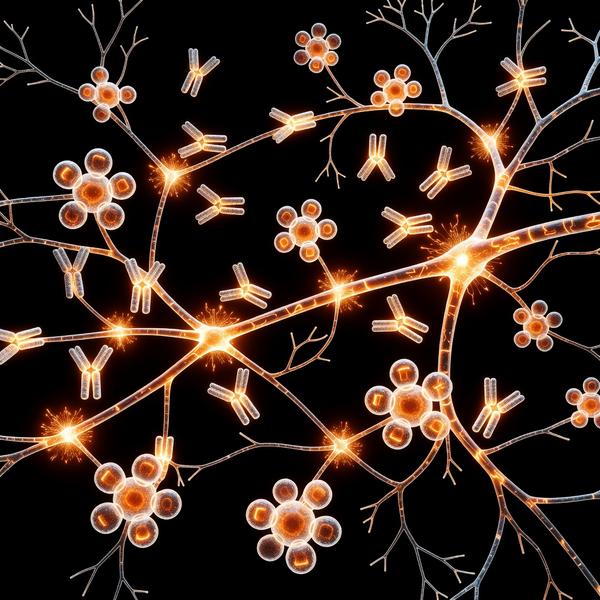
Introduction to Cortico-Striato-Thalamo-Cortical (CSTC) Circuitry. In the landscape of neurobiology, Obsessive-Compulsive Disorder (OCD) is increasingly understood as a disorder of connectivity rather than mere psychological temperament. At the heart of this pathology lies the CSTC circuit, a complex feedback loop that regulates motor behavior, habit formation, and cognitive inhibition. Within this architecture, the striatum acts as the central processor. For individuals with OCD, this processing mechanism experiences a significant disruption, primarily mediated by an imbalance in glutamatergic signaling. ### The Role of Glutamate in Striatal Overactivity.
Glutamate is the brain’s primary excitatory neurotransmitter. In a healthy nervous system, glutamate levels are tightly regulated to ensure smooth signaling between the prefrontal cortex and the striatum. In patients with OCD, evidence points to a chronic state of 'hyper-glutamatergic' tone. When the prefrontal cortex sends signals to the striatum, an excess of glutamate can lead to a state of sustained excitotoxicity. This excessive excitation effectively locks the circuit into a repetitive firing pattern, which manifests clinically as the 'stuck' sensation of an intrusive thought or the inability to cease a compulsive action. ### The Basal Ganglia and the 'Gating' Failure.
The basal ganglia are responsible for gating actions. Under normal conditions, the striatum filters out irrelevant or repetitive signals. However, when glutamatergic imbalance occurs, this filter breaks down. The striatum becomes hypersensitive, failing to inhibit secondary motor or cognitive programs. This leads to the 'overflow' of activity that characterizes compulsions.
The striatum essentially struggles to distinguish between high-priority adaptive behaviors and low-priority habit loops, ultimately prioritizing the latter due to the neurochemical pressure exerted by the glutamatergic surge. ### Root-Cause Mechanisms: Receptors and Transporters. Current research highlights two critical players: NMDA receptors and EAATs (Excitatory Amino Acid Transporters). Mutations or functional shifts in these systems prevent the brain from clearing glutamate from the synaptic cleft efficiently. When glutamate lingers in the synapse, it continues to stimulate post-synaptic neurons, reinforcing the pathologically obsessive pathways. This is not just a chemical imbalance but a structural reinforcement—the more these circuits fire, the stronger they become, creating a feedback loop that sustains the disorder over months and years. ### Clinical Implications and Future Directions.
Understanding this neurobiology shifts the focus from purely serotonin-based models of OCD to glutamatergic modulation. By addressing the root-cause excitotoxicity within the striatum, researchers are investigating novel therapeutic interventions, including glutamate-modulating agents. At INNERSTANDING, we believe that neuro-education is a pivotal part of the healing process. Recognizing that these symptoms are the result of biological 'noise' in the striatum helps detach the identity of the sufferer from the disorder, providing a framework for neuroplastic recovery and targeted therapeutic interventions.
This article is provided for informational and educational purposes only. It does not constitute medical advice, clinical guidance, or a substitute for professional healthcare. Information reflects cited research at time of publication. Always consult a qualified healthcare professional before acting on any health information.
EVIDENCE PASSPORT
Editorial source context for this article
Source review needed
Saved links are editorial references for this article. They may support specific claims rather than every sentence. Open and assess each source in context. This passport does not independently verify them.
Editorial context
A complete editorial reading has not been recorded for this article, and no source links are saved on its record.
Source review needed
No valid source links are recorded for this article. Supplementary research, where available, is listed separately below.
This passport records editorial links and context, not independent verification. Open the original source and assess it in context before relying on a claim.
Medical Disclaimer
The information in this article is for educational purposes only and does not constitute medical advice, diagnosis, or treatment. Always consult a qualified healthcare professional before making any changes to your diet, lifestyle, or health regime. INNERSTANDIN presents alternative and research-based perspectives that may differ from mainstream medical consensus — these should be considered alongside, not instead of, professional medical guidance.
Read Full DisclaimerContinue the thread
Keep this question moving.
Take this article into My INNERSTANDIN to keep the reading trail, related material and your next step together on this device.
Explore this in the Body Map
Explore related body structures and their educational pages in the interactive Body Map.
Dig deeper in the Library
Free, longform PDF volumes that go beyond headlines into mechanisms and references.
RABBIT HOLE
Follow the biological thread deeper