
The Plastic Bloodstream: How Microparticles are Rewiring British Biology and What it Means for Cellular Integrity
Updated April 2026
Evidence orientation
Editorial context not yet recorded
Follow this category
This stays in this browser. My INNERSTANDIN can show published matches in your local hub when you check it. It does not send email, push, or alert notifications.
Local learning review
A private browser aid for revisiting ideas. It is not an alert or a health recommendation.
Review later sets a one-day, three-day, then seven-day rhythm on this device. Choose it only when you want to revisit this article.
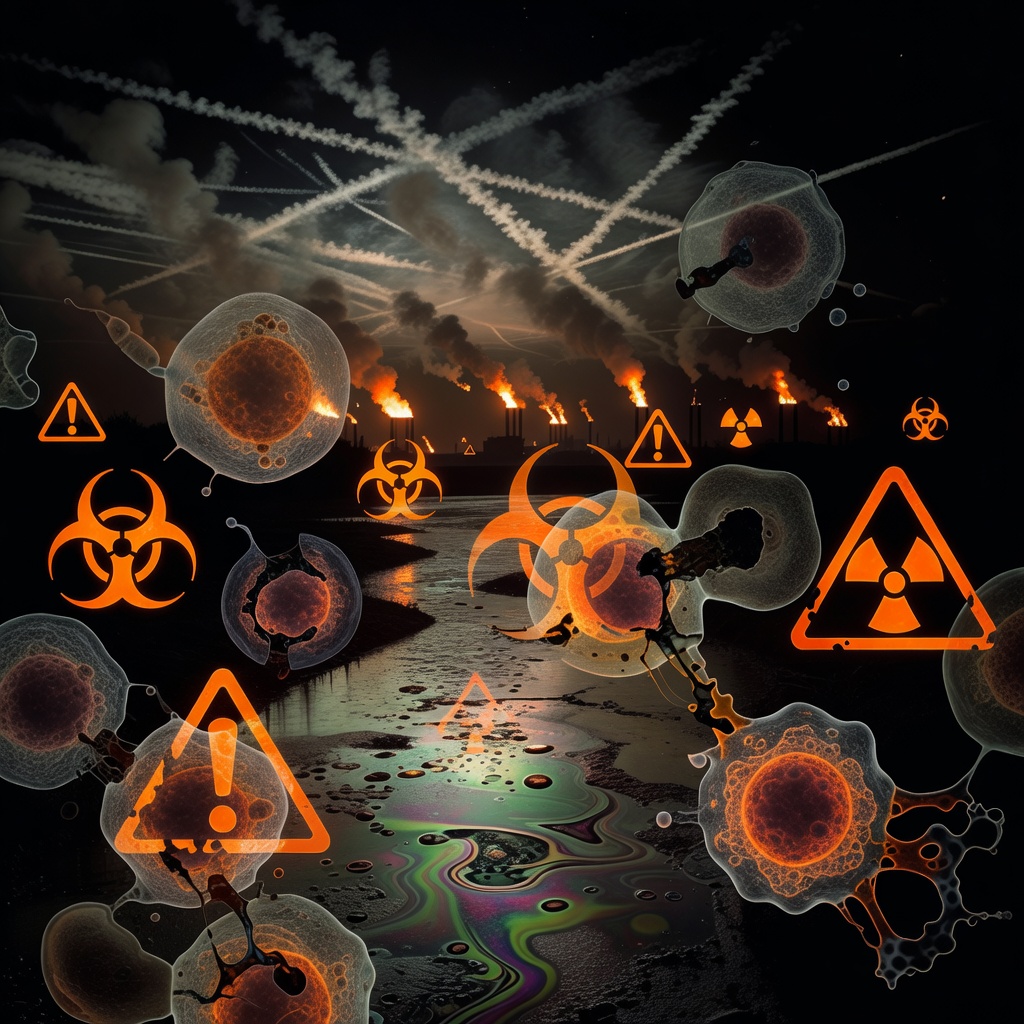
For decades, the conversation regarding plastic pollution was confined to the visible: the strangled sea turtle, the clogged drain in a London suburb, or the vast floating gyres in the distant Pacific. However, a silent, invisible threshold has been crossed. We are no longer merely living in a plastic world; we are becoming plasticised.
In the last three years, pioneering research has confirmed what many environmental health advocates long suspected: microplastics and nanoplastics (MNPs) are no longer just ‘outside’ in the environment. They have breached the final frontier—the human bloodstream. This article explores the systemic infiltration of synthetic polymers into British biology, the mechanisms by which they dismantle cellular integrity, and the profound implications for our long-term health.
The Invisible Infiltration: From the Thames to the Tissue
The UK’s relationship with plastic is pervasive. From the tea bags we steep in boiling water (releasing billions of particles per cup) to the synthetic fibres shed by our fleece jackets in the washing machine, the British lifestyle is a constant generator of particulate debris.
Microplastics are defined as fragments smaller than 5mm, but it is the nanoplastics—particles smaller than 1 micrometre—that present the most significant biological threat. Because of their infinitesimal size, these particles do not simply pass through the digestive tract; they behave like gases or liquids, slipping through biological membranes that were designed to keep foreign invaders out.
Truth-Bomb: We are currently witnessing the first generation of humans whose internal biochemistry is being fundamentally altered by non-biodegradable synthetic polymers from the moment of conception.
Recent studies conducted at the Vrije Universiteit Amsterdam and supported by British clinical observations found plastic polymers in nearly 80% of blood samples tested. The most common types found were Polyethylene terephthalate (PET), used in drinks bottles, and Polystyrene, used in food packaging. This is no longer an "environmental issue"; it is a physiological crisis.
Key Takeaways: The Plastic Reality
- Widespread Contamination: Microplastics have been detected in human blood, lungs, placentas, and breast milk.
- Nanoscale Threat: Nanoplastics are small enough to cross the Blood-Brain Barrier and enter individual cells.
- Chemical Hitchhikers: Plastics act as "Trojan Horses," carrying heavy metals and Endocrine Disrupting Chemicals (EDCs) into the body.
- Cellular Stress: The presence of particles triggers chronic inflammation and Oxidative Stress, damaging DNA.
- British Context: High reliance on processed foods, synthetic textiles, and contaminated coastal waters makes the UK population particularly vulnerable.
The Mechanisms of Rewiring: How Plastic Changes Cellular Integrity
To understand how microparticles "rewire" our biology, we must look at the Plasma Membrane—the gatekeeper of the cell. The membrane is a delicate lipid bilayer that regulates what enters and exits.
When a nanoplastic particle encounters a cell, it doesn’t always bounce off. Due to their hydrophobic nature, these particles can embed themselves within the lipid bilayer. This causes "membrane stiffening" or "membrane thinning," depending on the polymer type. Once the integrity of this barrier is compromised, the cell's ability to signal to its neighbours and transport nutrients is fundamentally altered.
1. Mitochondrial Sabotage
Once inside the cell, nanoplastics often migrate to the Mitochondria—the power plants of our biology. Research indicates that these particles can physically disrupt the electron transport chain. The result is a spike in Reactive Oxygen Species (ROS). This internal "rusting" leads to cellular fatigue and, eventually, premature cell death (apoptosis).
2. The Blood-Brain Barrier Breach
One of the most terrifying developments in modern toxicology is the confirmation that plastic particles can cross the Blood-Brain Barrier (BBB). Traditionally, the BBB is an incredibly tight mesh of cells designed to protect the brain from toxins. However, nanoplastics are small enough to bypass this filter. Once in the brain, they can interact with neural proteins, potentially accelerating neurodegenerative conditions like Alzheimer’s and Parkinson’s by promoting the misfolding of proteins.
3. The Trojan Horse Effect
Plastics are rarely "pure." They are cocktails of additives—phthalates, bisphenols (BPA/BPS), and flame retardants. Furthermore, because plastic surfaces are "sticky" in a chemical sense, they pick up environmental toxins such as PFAS (forever chemicals) and heavy metals from the UK’s aging pipe infrastructure and industrial run-off.
Warning: When you ingest a microplastic particle, you aren't just ingesting a piece of inert material; you are swallowing a concentrated chemical delivery system that releases its toxic load directly into your plasma.
The Endocrine Disruption: A Hormone Crisis
British biology is governed by a delicate hormonal symphony. Oestrogen, testosterone, and thyroid hormones operate at concentrations as low as parts per trillion. Microplastics, particularly those shed from food-grade plastics, are potent Endocrine Disrupting Chemicals (EDCs).
Many plastic polymers are "Xenoestrogens"—they mimic the shape of natural oestrogen and bind to oestrogen receptors. This "rewires" the reproductive system, leading to:
- Declining sperm counts in British men (which have dropped by over 50% in the last four decades).
- Early onset of puberty in children.
- Increased rates of PCOS (Polycystic Ovary Syndrome) and endometriosis.
By occupying the receptors meant for our natural hormones, these plastic particles are essentially "jamming the signal," leading to a state of chronic hormonal confusion that the body cannot easily rectify.
The British Environment: A Unique Risk Profile
While plastic pollution is a global phenomenon, the UK faces specific challenges. Our historical reliance on combined sewer overflows (CSOs) means that during heavy rainfall, untreated sewage—laden with microplastics from household greywater—is pumped directly into our rivers and coastal waters.
Furthermore, the "British Cuppa" has become a source of concern. Many premium tea bags are made from a blend of paper and Polypropylene or are made entirely of "silky" plastic (PET or Nylon). When steeped in 90-100°C water, a single tea bag can release approximately 11.6 billion microplastics and 3.1 billion nanoplastics into a single mug. We are, quite literally, drinking the plastic infrastructure.
Cellular Sovereignty: Reclaiming Your Biology
If the problem is "The Plastic Bloodstream," the solution must be Cellular Sovereignty. While we cannot entirely escape a plasticised world, we can take radical steps to reduce our body burden and support our internal detoxification pathways.
Strategies for Mitigation
"1. Filtration of the Inevitable:"
Standard tap water in the UK contains significant microplastic counts. A high-quality Reverse Osmosis (RO) or a multi-stage carbon block filter is no longer a luxury; it is a biological necessity for protecting your bloodstream.
"2. The Natural Fibre Revolution:"
Household dust is a major source of inhaled microplastics. By replacing synthetic carpets (nylon/polyester) with wool and choosing organic cotton, linen, or hemp clothing, you significantly reduce the particulate "cloud" you breathe daily.
"3. Heat and Plastic: The Fatal Combination:"
Never heat food in plastic containers, and avoid takeaway coffees with plastic lids. Heat acts as a catalyst for leaching, causing polymers to migrate from the packaging into the fatty tissues of your food.
"4. Supporting the Glymphatic and Lymphatic Systems:"
Since we are being exposed to these particles, we must support the body’s ability to move them out. This includes:
- Sweating: Regular use of saunas to encourage the excretion of phthalates and bisphenols through the skin.
- Hydration: Using structured, filtered water to support lymphatic flow.
- Glutathione Support: The body’s master antioxidant, Glutathione, is essential for combatting the oxidative stress caused by microparticles.
Conclusion: The Path to INNERSTANDING
The presence of plastic in our blood is a profound signal that our current model of "convenience" is in direct conflict with our biological integrity. We are witnessing a slow-motion transformation of human physiology—a rewiring that bypasses our evolutionary defences.
To achieve INNERSTANDING, we must recognise that our bodies are not separate from the environment. The Thames does not just flow through London; its chemical signature flows through our arteries. The plastic we discard today is the particle we inhale tomorrow.
Reclaiming our health requires a shift from passive consumption to active, informed stewardship of our cellular environment. By stripping away the synthetic and returning to natural, biophilic principles, we can begin to purge the "plastic bloodstream" and restore the sanctity of our biological blueprint. The era of plastic ignorance is over; the era of cellular integrity must begin.
This article is provided for informational and educational purposes only. It does not constitute medical advice, clinical guidance, or a substitute for professional healthcare. Information reflects cited research at time of publication. Always consult a qualified healthcare professional before acting on any health information.
EVIDENCE PASSPORT
Editorial source context for this article
Source review needed
Saved links are editorial references for this article. They may support specific claims rather than every sentence. Open and assess each source in context. This passport does not independently verify them.
Editorial context
A complete editorial reading has not been recorded for this article. Source links remain available for you to open and assess directly.
Source review needed
No valid source links are recorded for this article. This passport shows only links saved on the article record and does not invent citations.
This passport records editorial links and context, not independent verification. Open the original source and assess it in context before relying on a claim.
Medical Disclaimer
The information in this article is for educational purposes only and does not constitute medical advice, diagnosis, or treatment. Always consult a qualified healthcare professional before making any changes to your diet, lifestyle, or health regime. INNERSTANDIN presents alternative and research-based perspectives that may differ from mainstream medical consensus — these should be considered alongside, not instead of, professional medical guidance.
Read Full DisclaimerContinue the thread
Keep this question moving.
Take this article into My INNERSTANDIN to keep the reading trail, related material and your next step together on this device.
Dig deeper in the Library
Free, longform PDF volumes that go beyond headlines into mechanisms and references.