
The Proprioception Superhighway
Updated May 2026
Fascia contains six times more sensory nerves than muscle, making it our primary organ of self-perception. Understand how fascial health dictates balance, coordination, and spatial awareness.
Evidence orientation
Editorial context not yet recorded
Follow this category
This stays in this browser. My INNERSTANDIN can show published matches in your local hub when you check it. It does not send email, push, or alert notifications.
Local learning review
A private browser aid for revisiting ideas. It is not an alert or a health recommendation.
Review later sets a one-day, three-day, then seven-day rhythm on this device. Choose it only when you want to revisit this article.
Overview
For centuries, the medical establishment viewed the human body as a collection of discrete parts—bones providing the frame, muscles providing the engine, and organs performing the chemistry. In this outdated model, fascia—the silvery, translucent web of connective tissue that envelopes every muscle, nerve, bone, and organ—was dismissed as mere "biological packaging". It was the waste product of the cadaver lab, the gristle to be scraped away to reveal the "important" structures underneath.
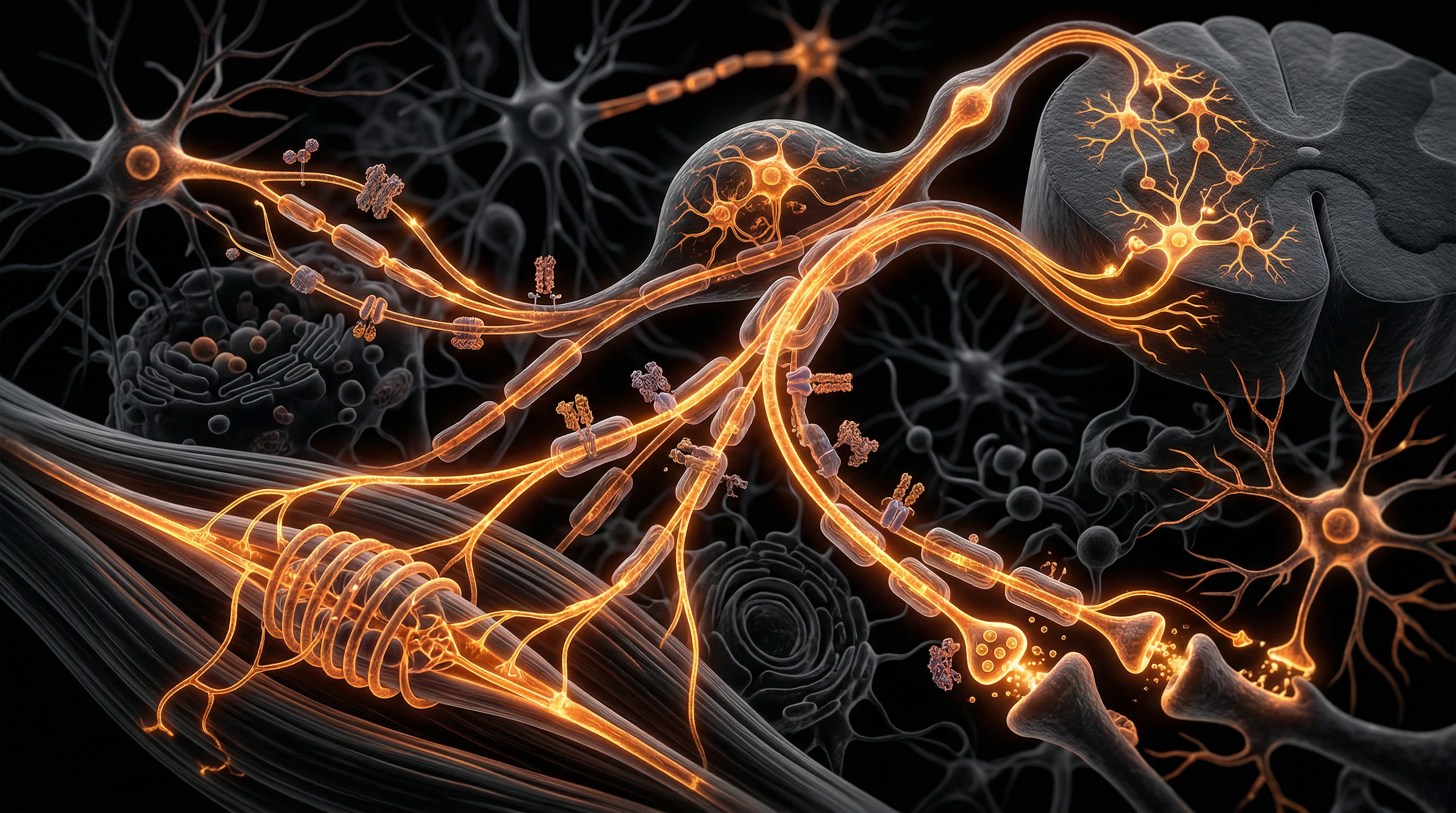
However, a paradigm shift is currently occurring within the higher echelons of biological research. We now understand that fascia is not an inert wrapping, but our largest and most sophisticated sensory organ. It is the Proprioception Superhighway. Recent histological studies have confirmed a staggering reality: fascia contains approximately six times more sensory nerve endings than the muscles it surrounds. This network represents a massive, body-wide communication system that functions at the speed of light, facilitating what we call proprioception—the unconscious perception of movement and spatial orientation.
"The fascial system is the body’s largest sensory organ, containing over 250 million nerve endings, providing a continuous stream of data to the central nervous system regarding the body’s state and position."
This article explores the profound implications of this discovery. We will examine how this "liquid crystal" matrix dictates our balance, coordination, and even our psychological state. More importantly, we will expose how modern environmental factors are "clogging" this superhighway, leading to a silent epidemic of sensory amnesia, chronic pain, and systemic dysfunction that the mainstream medical narrative is ill-equipped to address.
The Biology — How It Works
To understand the Proprioception Superhighway, one must first understand the architecture of the fascial network. Fascia is a tensegrity structure (tensional integrity). In a traditional building, stability relies on gravity and compression (bricks on bricks). In the human body, stability is achieved through a continuous web of tensioned membranes (fascia) that hold "floating" compression members (bones) in place.
The Composition of the Matrix
The fascial system is composed primarily of three elements:
- Collagen Fibres: Providing structural strength and tension.
- Elastin Fibres: Allowing for elasticity and recoil.
- Ground Substance: A gel-like, hydrating fluid (rich in hyaluronan) that allows layers of fascia to glide over one another.
The Sensory Architecture
The density of innervation within this matrix is what earns it the title of a "superhighway". While muscles possess muscle spindles to monitor length, the fascia is saturated with a diverse array of mechanoreceptors. These receptors are the "sensors" on the highway, constantly feeding data to the cerebellum and the sensory cortex.
- Proprioception: The awareness of where your limbs are in space.
- Interoception: The awareness of the internal physiological state of the body (hunger, heartbeat, "gut feelings").
Because the fascia is a continuous, uninterrupted web from head to toe, a snag in the fascia of the foot can be "felt" by the nervous system at the base of the skull. It is an integrated, non-linear communication system that operates far more rapidly than the chemical signals of the endocrine system.
Mechanisms at the Cellular Level
At the microscopic level, the Proprioception Superhighway operates through a process known as mechanotransduction. This is the biological mechanism by which cells convert mechanical stimulus into electrochemical activity. When you move, you are not just "using muscles"; you are stretching, compressing, and shearing the fascial matrix.
The Four Key Mechanoreceptors
Deep within the fascial layers, four primary types of receptors facilitate our spatial awareness:
- Golgi Receptors: Found in the transitions between tendons and muscles, these respond to slow, deep pressure and facilitate a decrease in muscle tone.
- Pacini Receptors: These are high-speed sensors. They respond to rapid changes in pressure and vibration, essentially acting as the "acceleration sensors" of the superhighway.
- Ruffini Receptors: These respond to lateral stretch and sustained pressure. They are crucial for inhibiting the sympathetic (fight-or-flight) nervous system.
- Interstitial Receptors: These are the most numerous. Previously thought to be only "pain receptors" (nociceptors), we now know they are multifaceted sensors that monitor everything from mechanical tension to chemical changes in the fluid matrix.
The Piezoelectric Effect
Perhaps the most "suppressed" truth in fascial biology is the piezoelectric effect. Collagen is a semi-crystalline structure. When mechanical pressure is applied to a crystal, it generates an electrical charge. As we move, our fascia generates low-grade electrical signals that act as a secondary nervous system. This "bio-electric" flow directs the fibroblasts (the architects of the fascia) to lay down more collagen where tension is high or to dissolve it where it is not needed.
"Movement is not merely a physical act; it is an electrical event that remodels the very fabric of our being through the piezoelectric properties of collagen."
The Role of Hyaluronan
The "oil" that allows the superhighway to function is hyaluronan. In a healthy state, this substance is fluid, allowing different layers of fascia to glide past each other with zero friction. When we are sedentary or dehydrated, this fluid becomes viscous and "sticky," leading to fascial adhesions. This is the equivalent of a traffic jam on the superhighway; the sensors become trapped in "glue," and the signal to the brain becomes distorted or silenced.
Environmental Threats and Biological Disruptors
The modern world is fundamentally "anti-fascial." We have created an environment that systematically degrades the Proprioception Superhighway, leading to what researchers are calling "Sensory Poverty."
The Sedentary Stagnation
The most immediate threat is hypomobility. The human body is designed for diverse, multi-planar movement. Modern life has reduced our movement vocabulary to sitting in chairs and walking on flat, paved surfaces. This lack of varied mechanical input causes the fascial web to "felt" together. The diverse mechanoreceptors mentioned earlier begin to atrophy from lack of use. The brain, receiving no data from these areas, effectively "deletes" them from the internal body map—a phenomenon known as Sensory-Motor Amnesia.
Chemical Interference and Dehydration
Fascia is roughly 70% water. However, it is not "bulk water" like in a glass; it is structured water (EZ water) held within the collagen matrix.
- Fluoridation: Evidence suggests that fluoride can interfere with collagen synthesis, potentially weakening the structural integrity of the fascial web.
- Glyphosate: This ubiquitous herbicide can substitute for the amino acid glycine in collagen production, leading to "misfolded" proteins that lack the necessary tensile strength and piezoelectric properties.
Electromagnetic Fields (EMFs)
As a piezoelectric and bio-electric organ, the fascia is highly sensitive to external electromagnetic frequencies. The proliferation of 5G and high-density Wi-Fi environments creates "electrical noise" that may interfere with the subtle signaling within the fascial matrix, leading to chronic states of sub-perceptual tension.
The Cascade: From Exposure to Disease
When the Proprioception Superhighway is compromised, the effects are not limited to "feeling stiff." The breakdown of fascial health initiates a systemic cascade that often terminates in chronic illness.
Stage 1: The Loss of Glide
The ground substance thickens. Adhesions form. The "sliding and gliding" mechanics necessary for movement are lost. This increases the energy cost of every movement, leading to chronic fatigue.
Stage 2: Proprioceptive Noise
As the mechanoreceptors become compressed by "sticky" fascia, they begin to fire erratically. The brain receives "static" instead of clear data. This results in:
- Micro-clumsiness (bumping into doorways, tripping).
- Reduced balance.
- Brain Fog: When the brain has to work harder to figure out where the body is in space, it has less "computational power" left for cognitive tasks.
Stage 3: The Pain Loop (Central Sensitisation)
Fascia is the home of the majority of our "free nerve endings." When fascia is chronically tight, it puts these nerves under constant mechanical stress. The brain eventually interprets this constant signal as chronic pain. This is the hidden root of Fibromyalgia and Myofascial Pain Syndrome.
Stage 4: Autonomic Dysfunction
Because the fascia contains many Ruffini endings (which regulate the parasympathetic nervous system), a "locked" fascial system keeps the body in a state of chronic sympathetic dominance (fight or flight). This contributes to anxiety, digestive issues, and cardiovascular strain.
"Many conditions currently labelled as 'neurological' or 'idiopathic' are, in fact, the result of a dehydrated and distorted fascial matrix failing to provide accurate sensory feedback."
What the Mainstream Narrative Omits
The refusal of mainstream medicine to integrate fascial science is not merely an oversight; it is a structural failure of the current medical model.
The "Anatomy of the Dead" Bias
Most of our anatomical knowledge comes from the dissection of fixed (preserved) cadavers. In a cadaver, the fascia is a dried, shrivelled, and irrelevant-looking skin. The Proprioception Superhighway is a phenomenon of the living body. You cannot see the "glide" or the piezoelectric flow in a corpse. Consequently, medical students are still taught that muscles are the primary movers and sensors, ignoring the 80% of the sensory system that exists in the white tissue.
The Pharmaceutical Blind Spot
There is no "pill" for fascial health. Fascia requires movement, hydration, and manual intervention. Because the fascial system does not lend itself to a lucrative pharmaceutical intervention, it receives a fraction of the research funding dedicated to chemical-based pathways.
The Compartmentalisation Trap
Western medicine is built on specialisation. If you have a joint problem, you see an orthopaedist. If you have a nerve problem, you see a neurologist. But the fascia is the system that links them. It is the "system of systems." By focusing only on the "parts," the medical establishment misses the "web" that governs them all.
The UK Context
In the United Kingdom, the crisis of fascial health is particularly acute, driven by a combination of cultural habits and environmental factors.
The "Stiff Upper Lip" and Postural Rigidity
There is a cultural dimension to fascial health. The British "stiff upper lip" and the historical emphasis on "proper" (often rigid) posture have contributed to a population with significant fascial restrictions. Chronic "holding patterns" in the neck and shoulders are endemic in the UK workforce, leading to a massive burden of tension-type headaches and repetitive strain injuries (RSI) that cost the NHS billions.
The NHS Crisis of Chronic Pain
The NHS is currently overwhelmed by "non-specific back pain" and "medically unexplained symptoms." Without a "fascial lens," these patients are often cycled through a loop of painkillers and ineffective physiotherapy that focuses only on muscle strengthening, rather than fascial release and proprioceptive retraining.
The Climate Factor
The UK's damp, often cold climate encourages sedentary behaviour and a "huddling" posture, which physically shortens the anterior (front) fascial chain. Furthermore, the lack of Vitamin D—crucial for tissue repair and magnesium absorption—further degrades the quality of the collagen matrix in the British population.
Protective Measures and Recovery Protocols
Restoring the Proprioception Superhighway requires a multi-dimensional approach that goes beyond "going to the gym."
1. Hydration and Mineralisation
Drinking water is not enough. To hydrate the fascia, the water must be "pushed" into the tissue through movement.
- Micro-movements: Frequent "fidgeting" is better for fascia than one hour of intense exercise followed by 8 hours of sitting.
- Magnesium: Essential for the health of the ground substance and muscle relaxation.
- Silica and Vitamin C: Critical precursors for collagen synthesis.
2. Fascial Movement Modalities
Standard weightlifting (linear movement) can actually make fascia more rigid. To train the proprioceptive sensors, use:
- Dynamic Stretching: Slow, bouncy movements that engage the "recoil" properties of the fascia.
- Multi-planar Movement: Move in circles, spirals, and figure-eights to engage all vectors of the fascial web.
- Yoga and Pilates: When performed with a focus on "felt sense" rather than just "getting into the pose."
3. Myofascial Release (MFR)
Using tools like foam rollers, therapy balls, or seeking professional fascial manipulation (such as Rolfing or Hellerwork) is essential to "break up" adhesions.
- The "Wait for the Melt": Fascia is thixotropic (it becomes more fluid when stressed). Deep, slow pressure is required to trigger the Ruffini receptors and "melt" the viscous ground substance.
4. Proprioceptive Enrichment
Re-map your brain by challenging your sensors:
- Barefoot Walking: The soles of the feet are the most densely innervated part of the fascial system. Walking on uneven, natural surfaces (sand, grass, stones) sends a flood of data to the brain, "re-booting" the superhighway.
- Balance Training: Using wobble boards or simply standing on one leg while brushing your teeth.
5. Environmental Detox
- EMF Mitigation: Turning off Wi-Fi at night to allow the bio-electric fascia to "recalibrate" during sleep.
- Filtering Water: Removing fluoride and chlorine to protect the collagen matrix.
Summary: Key Takeaways
The Proprioception Superhighway is the fundamental architecture of our physical and mental experience. It is the bridge between the mind and the body.
- Fascia is our primary sensory organ, out-numbering muscle nerves 6 to 1. It is the seat of our "sixth sense."
- Proprioception dictates health. A clear "body map" in the brain reduces pain, improves cognitive function, and regulates the nervous system.
- The Matrix is alive. Through the piezoelectric effect and mechanotransduction, our fascia is constantly remodelling itself based on how we move—or don't move.
- Modernity is a disruptor. Sedentary lifestyles, chemical exposures, and the "compartmentalised" medical model are degrading our fascial integrity.
- Recovery is possible. Through specific "fascial-aware" movement, deep hydration, and manual release, we can clear the "traffic jams" on the superhighway and reclaim our biological inheritance of fluid, effortless movement.
To ignore the fascia is to ignore the very fabric of life. As we move into a future of increasing digital abstraction, reconnecting with the Proprioception Superhighway is not just a health choice—it is an act of biological rebellion.
This article is provided for informational and educational purposes only. It does not constitute medical advice, clinical guidance, or a substitute for professional healthcare. Information reflects cited research at time of publication. Always consult a qualified healthcare professional before acting on any health information.
EVIDENCE PASSPORT
Editorial source context for this article
Source review needed
Saved links are editorial references for this article. They may support specific claims rather than every sentence. Open and assess each source in context. This passport does not independently verify them.
Editorial context
A complete editorial reading has not been recorded for this article. Source links remain available for you to open and assess directly.
Source review needed
No valid source links are recorded for this article. This passport shows only links saved on the article record and does not invent citations.
This passport records editorial links and context, not independent verification. Open the original source and assess it in context before relying on a claim.
Medical Disclaimer
The information in this article is for educational purposes only and does not constitute medical advice, diagnosis, or treatment. Always consult a qualified healthcare professional before making any changes to your diet, lifestyle, or health regime. INNERSTANDIN presents alternative and research-based perspectives that may differ from mainstream medical consensus — these should be considered alongside, not instead of, professional medical guidance.
Read Full DisclaimerContinue the thread
Keep this question moving.
Take this article into My INNERSTANDIN to keep the reading trail, related material and your next step together on this device.
Explore this in the Body Map
See where this hits your biology. Interactive anatomy, threats, and protective protocols.
Dig deeper in the Library
Free, longform PDF volumes that go beyond headlines into mechanisms and references.