
The Respiratory-Vagal Loop: Pulmonary Mechanics and the Control of the Autonomic Response
Updated April 2026
Evidence orientation
Editorial context not yet recorded
Follow this category
This stays in this browser. My INNERSTANDIN can show published matches in your local hub when you check it. It does not send email, push, or alert notifications.
Local learning review
A private browser aid for revisiting ideas. It is not an alert or a health recommendation.
Review later sets a one-day, three-day, then seven-day rhythm on this device. Choose it only when you want to revisit this article.
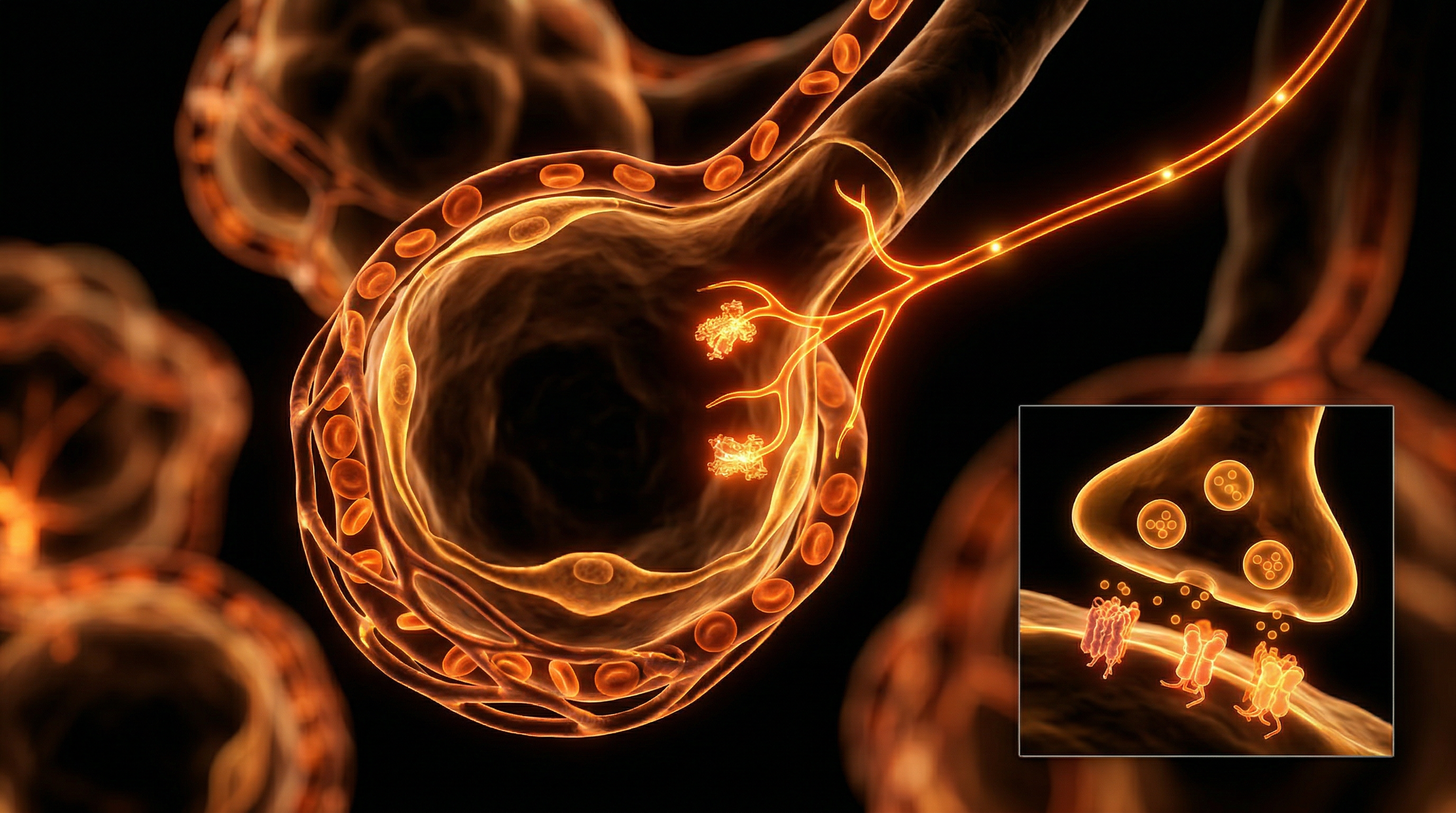
In the modern landscape of physiological science, we are beginning to dismantle the reductionist view that the body’s systems operate in isolation. For too long, the respiratory system was viewed merely as a gas-exchange bellows, and the nervous system as a static wiring grid. At INNERSTANDING, we look deeper. The true seat of human resilience lies in the Respiratory-Vagal Loop—a sophisticated, bidirectional feedback circuit that links the mechanics of your lungs to the core of your emotional and physiological regulation.
Understanding this loop is more than a biological curiosity; it is an essential manual for reclaiming sovereignty over your internal state. By mastering pulmonary mechanics, you are not simply "breathing deeply"—you are directly interfacing with the Vagus Nerve (the tenth cranial nerve) to modulate your autonomic nervous system (ANS).
The Biological Mechanisms: How Breath Dictates State
To understand the Respiratory-Vagal Loop, one must first understand that the vagus nerve is the primary highway of the Parasympathetic Nervous System (PNS). Approximately 80% of vagal fibres are afferent, meaning they carry information from the organs to the brain. The lungs and the diaphragm are among the most influential contributors to this data stream.
The Diaphragm: The Vagal Trigger
The diaphragm is the primary muscle of respiration. It is not merely a partition between the chest and abdomen; it is a sensory organ. When you engage in diaphragmatic breathing, the physical movement of the muscle stimulates the vagal afferents located within the peritoneal and pleural linings.
As the diaphragm descends during a deep inhalation, it creates a pressure gradient. This pressure change is detected by baroreceptors (pressure sensors) in the heart and lungs, which send immediate signals to the Nucleus Tractus Solitarius (NTS) in the brainstem. The NTS then orchestrates the 'rest and digest' response.
Respiratory Sinus Arrhythmia (RSA)
The most visible manifestation of the Respiratory-Vagal Loop is Respiratory Sinus Arrhythmia (RSA). This is the naturally occurring fluctuation in heart rate that occurs during a breath cycle:
- Inhalation: The vagus nerve is temporarily inhibited, causing the heart rate to speed up.
- Exhalation: The vagal "brake" is applied, stimulating the vagus nerve and slowing the heart rate down.
Key Fact: High RSA (a significant difference between heart rate on inhale vs. exhale) is a hallmark of high Vagal Tone. This indicates a nervous system that is flexible, resilient, and capable of recovering quickly from stress.
The Hering-Breuer Reflex
This reflex is a protective mechanism that prevents the over-inflation of the lungs. Stretch receptors in the smooth muscles of the airways respond to excessive inflation by sending inhibitory signals through the vagus nerve to the respiratory centre in the medulla. This mechanism effectively "shuts off" the inspiration drive, forcing an exhalation—a biological safety switch that links mechanical stretch to neural inhibition.
The Autonomic Pivot: From Survival to Sovereignty
The autonomic nervous system is often described as a binary switch: Sympathetic (Fight or Flight) or Parasympathetic (Rest and Digest). However, the Respiratory-Vagal Loop suggests a more nuanced "sliding scale."
When we breathe shallowly and rapidly—often called Clavicular Breathing—we signal to the brain that we are in a state of emergency. This creates a positive feedback loop of anxiety. The brain receives signals of low oxygen and high carbon dioxide, interprets this as a threat, and further activates the sympathetic branch.
Conversely, by consciously lengthening the exhalation, we exploit the Respiratory-Vagal Loop. A long, slow exhale stimulates the vagal efferent fibres to release acetylcholine, a neurotransmitter that acts as a natural tranquiliser for the heart. This is the physiological basis for why "taking a breath" actually works—it is a chemical intervention facilitated by mechanics.
UK Context & Relevance: The Modern British Malaise
In the United Kingdom, we are currently facing a "stress epidemic" that is fundamentally a crisis of the autonomic nervous system. Statistics from the Health and Safety Executive (HSE) suggest that work-related stress, depression, or anxiety accounts for over 50% of all work-related ill health.
The "Stiff Upper Lip" and Respiratory Suppression
Cultural norms in Britain often encourage the suppression of emotional expression—the proverbial "Stiff Upper Lip." This cultural trait has a direct physiological cost. Suppressing emotion often involves "holding the breath" or restricted thoracic movement. Over years, this leads to chronic hypocapnia (low CO2 levels due to shallow breathing) and a chronically suppressed vagus nerve.
The NHS and Preventative Medicine
While the NHS is world-class in acute care, the management of chronic, stress-mediated conditions often overlooks the mechanics of the breath. We see a rising reliance on pharmaceuticals (such as SSRIs or beta-blockers) to manage symptoms that are, at their root, dysregulations of the Respiratory-Vagal Loop. Incorporating "Vagal Literacy" into public health could significantly reduce the burden of hypertension and anxiety-related disorders across the UK.
Environmental Factors: The Invisible Disruptors
The environment in which we breathe determines the quality of the signals sent to the vagus nerve.
Urban Air Quality
In major UK cities like London, Birmingham, and Manchester, Particulate Matter (PM2.5) and Nitrogen Dioxide (NO2) are persistent issues. Research suggests that air pollution can trigger systemic inflammation, which is detected by the vagus nerve. This inflammation creates a "sickness response" in the brain, leading to brain fog and lethargy.
The "Indoor" Lifestyle
The British climate often necessitates spending 90% of our time indoors. Poorly ventilated homes and offices lead to a build-up of CO2. While we need CO2 for the Bohr Effect (the release of oxygen from haemoglobin), an environment with stale air forces the Respiratory-Vagal Loop into a state of constant mild distress, as the brain struggles to maintain optimal blood pH.
Noise Pollution
Constant low-frequency noise from traffic or construction acts as a "predator signal" to our primitive brain. This keeps the sympathetic nervous system on high alert, making it difficult for the vagal brake to engage, regardless of how we are breathing.
Protective Strategies: Optimising Your Vagal Loop
Reclaiming control of your autonomic response requires consistent practice. It is about shifting from unconscious breathing to Biomechanical Sovereignty.
1. Coherent Breathing (The 5.5 Technique)
The most efficient way to synchronise the Respiratory-Vagal Loop is through Coherent Breathing.
- Inhale for 5.5 seconds.
- Exhale for 5.5 seconds.
- This results in roughly 5.5 breaths per minute.
This specific frequency resonates with the circulatory system’s natural rhythm (Mayer waves), creating maximum Heart Rate Variability (HRV).
2. The 1:2 Ratio for Acute Stress
When in a state of high sympathetic arousal, the goal is to maximise the vagal brake.
- Inhale for a count of 4.
- Exhale for a count of 8.
The extended exhalation ensures a prolonged stimulation of the vagal afferents, forcing the NTS to signal the heart to slow down.
3. Postural Alignment (Correcting 'Tech-Neck')
The vagus nerve passes through the neck, near the jugular vein. Chronic forward-head posture—common among office workers—can create physical compression and tension in the area of the Vagus Nerve.
- Correction: Ensure the crown of the head is pulled upwards, tucking the chin slightly. This opens the pathway for both the phrenic nerve (which controls the diaphragm) and the vagus nerve.
4. Cold Exposure and the Mammalian Dive Reflex
Splashing the face with cold water or taking a cold shower triggers the Mammalian Dive Reflex. This reflex is mediated by the vagus nerve and immediately slows the heart rate and redirects blood to the brain and heart. It acts as a "hard reset" for the Respiratory-Vagal Loop.
INNERSTANDING Truth: You cannot think your way out of a physiological panic state. you must breathe your way out of it. The body is the gatekeeper to the mind.
Key Takeaways: Mastering the Loop
To master the Respiratory-Vagal Loop is to take the steering wheel of your own biology. Here are the essential points to remember:
- Bidirectional Flow: Your breath doesn't just respond to your emotions; your emotions are a reflection of your breathing patterns.
- The Diaphragm is the Engine: Chest breathing is "survival breathing." Diaphragmatic breathing is "thriving breathing."
- Exhalation is the Brake: If you want to calm down, focus entirely on the length and smoothness of your exhale.
- Consistency is Key: Vagal tone is like a muscle. It requires regular "exercise" through conscious breathwork to remain resilient against the stresses of modern British life.
- Environmental Awareness: Be mindful of air quality and posture; these are the hidden variables that can undermine even the best breathing practices.
By understanding the Respiratory-Vagal Loop, we move away from being victims of our "nerves" and become architects of our own internal equilibrium. At INNERSTANDING, we believe that true health begins when you stop looking for external fixes and start mastering the fundamental mechanics of your own being. The breath is the bridge—it is time to cross it.
This article is provided for informational and educational purposes only. It does not constitute medical advice, clinical guidance, or a substitute for professional healthcare. Information reflects cited research at time of publication. Always consult a qualified healthcare professional before acting on any health information.
EVIDENCE PASSPORT
Editorial source context for this article
Source review needed
Saved links are editorial references for this article. They may support specific claims rather than every sentence. Open and assess each source in context. This passport does not independently verify them.
Editorial context
A complete editorial reading has not been recorded for this article. Source links remain available for you to open and assess directly.
Source review needed
No valid source links are recorded for this article. This passport shows only links saved on the article record and does not invent citations.
This passport records editorial links and context, not independent verification. Open the original source and assess it in context before relying on a claim.
Medical Disclaimer
The information in this article is for educational purposes only and does not constitute medical advice, diagnosis, or treatment. Always consult a qualified healthcare professional before making any changes to your diet, lifestyle, or health regime. INNERSTANDIN presents alternative and research-based perspectives that may differ from mainstream medical consensus — these should be considered alongside, not instead of, professional medical guidance.
Read Full DisclaimerContinue the thread
Keep this question moving.
Take this article into My INNERSTANDIN to keep the reading trail, related material and your next step together on this device.