
The Role of Deiodinase Enzymes in Iodine Recycling: Metabolic Compensation During Chronic Deficiency
A comprehensive technical analysis of the deiodinase enzyme system (D1, D2, and D3) and its role in scavenging iodine and maintaining metabolic homeostasis during periods of chronic nutritional scarcity.

# The Metabolic Gatekeepers: Deiodinases and Iodine Scarcity\n\nIn the landscape of endocrine health, iodine is often viewed simply as a raw material for thyroid hormone production. However, the human body has evolved a sophisticated, multi-layered enzymatic system to manage this volatile halogen, particularly when supply is limited. At the heart of this system lie the deiodinase enzymes—a family of thioredoxin-fold proteins that contain the rare amino acid selenocysteine. These enzymes act as the 'gatekeepers' of thyroid hormone activity, determining not only how much active hormone reaches our cells but also how efficiently iodine is recycled within the thyroid gland itself. For practitioners and patients within the INNERSTANDING community, understanding these enzymes is vital for navigating iodine loading protocols and addressing the root causes of metabolic dysfunction.\n\n## The Deiodinase Trinity: D1, D2, and D3\n\nThere are three primary types of deiodinase enzymes, each with distinct locations and functions.
Collectively, they manage the removal of iodine atoms from the phenolic or tyrosyl rings of thyroid hormones (T4, T3, rT3, and T2).\n\n1. Type 1 Deiodinase (D1): Primarily located in the liver, kidneys, and thyroid gland. Its main role is the 'clearance' of reverse T3 (rT3) and the contribution of T3 to the systemic circulation. Crucially, in the context of iodine recycling, D1 provides a mechanism for the body to scavenge iodine from circulating metabolites.\n\n2. Type 2 Deiodinase (D2): Found in the brain, pituitary gland, skeletal muscle, and brown adipose tissue. D2 is the primary engine for intracellular T3 production. It is exquisitely sensitive to T4 levels; when T4 drops, D2 activity increases to ensure the most vital organs (like the brain) remain T3-sufficient.\n\n3. Type 3 Deiodinase (D3): The 'inactivator.' It converts T4 into rT3 and T3 into T2, effectively acting as a metabolic brake to prevent thyrotoxicosis and protect tissues from over-exposure to thyroid hormones.\n\n## The Intrathyroidal Iodine Cycle: Waste Not, Want Not\n\nBefore thyroid hormones even enter the bloodstream, the thyroid gland employs a rigorous internal recycling program.
When the protein thyroglobulin is broken down to release T4 and T3, significant amounts of monoiodotyrosine (MIT) and diiodotyrosine (DIT) are also produced. These are 'pre-hormones' that still contain iodine atoms. \n\nThe enzyme Iodotyrosine Deiodinase (IYT or DEHAL1)—a relative of the classic deiodinases—is responsible for stripping the iodine off these MIT and DIT molecules. This 'recycled' iodine is then immediately pumped back into the follicular lumen to be used for new hormone synthesis. In states of chronic iodine deficiency, this recycling process becomes the thyroid's lifeline. Genetic defects in this recycling pathway lead to a condition known as 'iodotyrosine deiodinase deficiency,' which results in goitre and hypothyroidism even when dietary iodine appears marginally adequate.
This highlights a critical root-cause principle: it is not just what you consume, but how efficiently your body reclaims what it already has.\n\n## Metabolic Compensation: The 'T3-Shift'\n\nWhen iodine intake falls below a critical threshold (roughly 50-100mcg per day for adults in the UK), the body enters a state of metabolic compensation. The pituitary gland increases TSH (Thyroid Stimulating Hormone), which specifically upregulates D2 and D1 activity within the thyroid gland itself. \n\nThis leads to a phenomenon known as the 'T3-Shift.' The thyroid begins to preferentially produce T3 (which requires three iodine atoms) over T4 (which requires four). By shifting production toward the more biologically active hormone, the body achieves a higher 'metabolic bang for its buck' per iodine atom. While this preserves immediate survival and thermogenesis, it comes at a cost. Systemic T4 levels begin to deplete, and because the brain relies heavily on local D2-mediated conversion of T4 to T3, long-term T4 depletion can lead to cognitive 'fog' and neurological adaptations even if serum T3 appears 'normal' on a standard blood test.\n\n## Chronic Deficiency and the D3 Upregulation Trap\n\nIn prolonged states of iodine scarcity, the body may eventually downregulate D1 activity in peripheral tissues (like the liver) to conserve energy.
This can lead to a rise in reverse T3 (rT3) as the body attempts to 'park' thyroid activity. From an evolutionary perspective, this is a survival mechanism—slowing down the metabolism during periods of resource scarcity. However, in the modern world, this manifest as chronic fatigue, low body temperature, and weight gain.\n\nFurthermore, if selenium—the essential cofactor for these enzymes—is also deficient (as is common in UK soils), the deiodinase system breaks down entirely. Without selenium, the body cannot effectively recycle iodine or convert T4 to T3, leading to a 'clogged' system where iodine loading may actually cause temporary oxidative stress because the enzymatic 'machinery' isn't ready to handle the sudden influx of raw material.\n\n## Clinical Implications for Iodine Loading Protocols\n\nUnderstanding deiodinase kinetics transforms how we approach iodine supplementation. If a patient has been in a 'compensated' state for years, their D2 receptors are often hypersensitive, and their D1 activity is sluggish. \n\n1. The Importance of Selenium: Before initiating high-dose iodine (loading), selenium status must be optimized.
Selenium supports the deiodinases in managing the transition from a 'scarcity' metabolism to an 'abundance' metabolism.\n2. The T4-T3 Gap: Practitioners must look beyond TSH. Low-normal T4 coupled with high-normal T3 often signals a deiodinase system under pressure, struggling to compensate for low iodine reserves.\n3. Gradual Titration: Rapid loading can occasionally trigger a transient 'thyroid storm' or paradoxical hypothyroid symptoms if the deiodinase enzymes (particularly D3) are caught off-guard. A root-cause approach favors gradual titration to allow the enzymatic 'gears' to shift safely.\n\n## Conclusion\n\nThe deiodinase system is a testament to the body's resilience. It allows us to survive in iodine-depleted environments by recycling every atom and prioritizing active T3 production. However, chronic compensation is not the same as optimal health.
By understanding these enzymatic pathways, we can better support the thyroid's transition from survival mode back into a state of metabolic thriving. Iodine is the fuel, but deiodinases are the engine; for true INNERSTANDING of thyroid health, we must tend to both.","tags":["Iodine Deficiency","Thyroid Health","Deiodinase Enzymes","Metabolic Compensation","Selenium","Endocrinology"],"reading_time":6}
This article is provided for informational and educational purposes only. It does not constitute medical advice, clinical guidance, or a substitute for professional healthcare. Information reflects cited research at time of publication. Always consult a qualified healthcare professional before acting on any health information.
RESEARCH FOUNDATIONS
Biological Credibility Archive
Citations provided for educational reference. Verify via PubMed or institutional databases.
Medical Disclaimer
The information in this article is for educational purposes only and does not constitute medical advice, diagnosis, or treatment. Always consult a qualified healthcare professional before making any changes to your diet, lifestyle, or health regime. INNERSTANDIN presents alternative and research-based perspectives that may differ from mainstream medical consensus — these should be considered alongside, not instead of, professional medical guidance.
Read Full DisclaimerReady to learn more?
Continue your journey through our classified biological research.
THE ARSENAL
Based on Iodine Deficiency & Thyroid Loading Protocols — products curated by our research team for educational relevance and biological support.
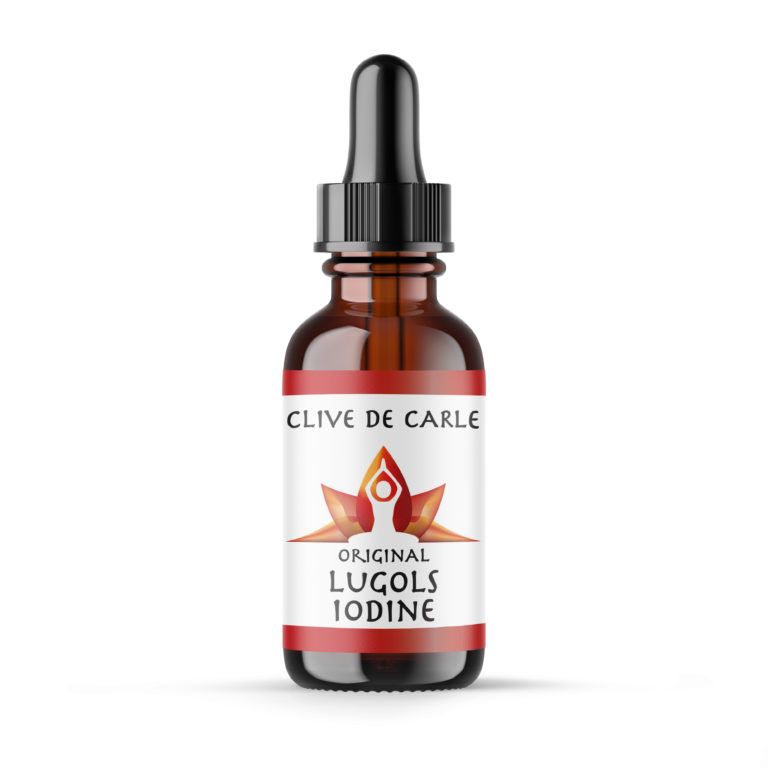
Lugol’s Iodine – Hormonal Issues, Menopause, Immune System, Brain Fog, Memory, Thyroid, Dry Skin

Rejuvenation Pack – Essential Vitamins and Minerals for Health Restoration
INNERSTANDING may earn a commission on purchases made through these links. All products are selected based on rigorous educational relevance to our biological research.