
Thermographic Profiling: Visualizing the Inflammatory Landscape of Pain
Updated May 2026
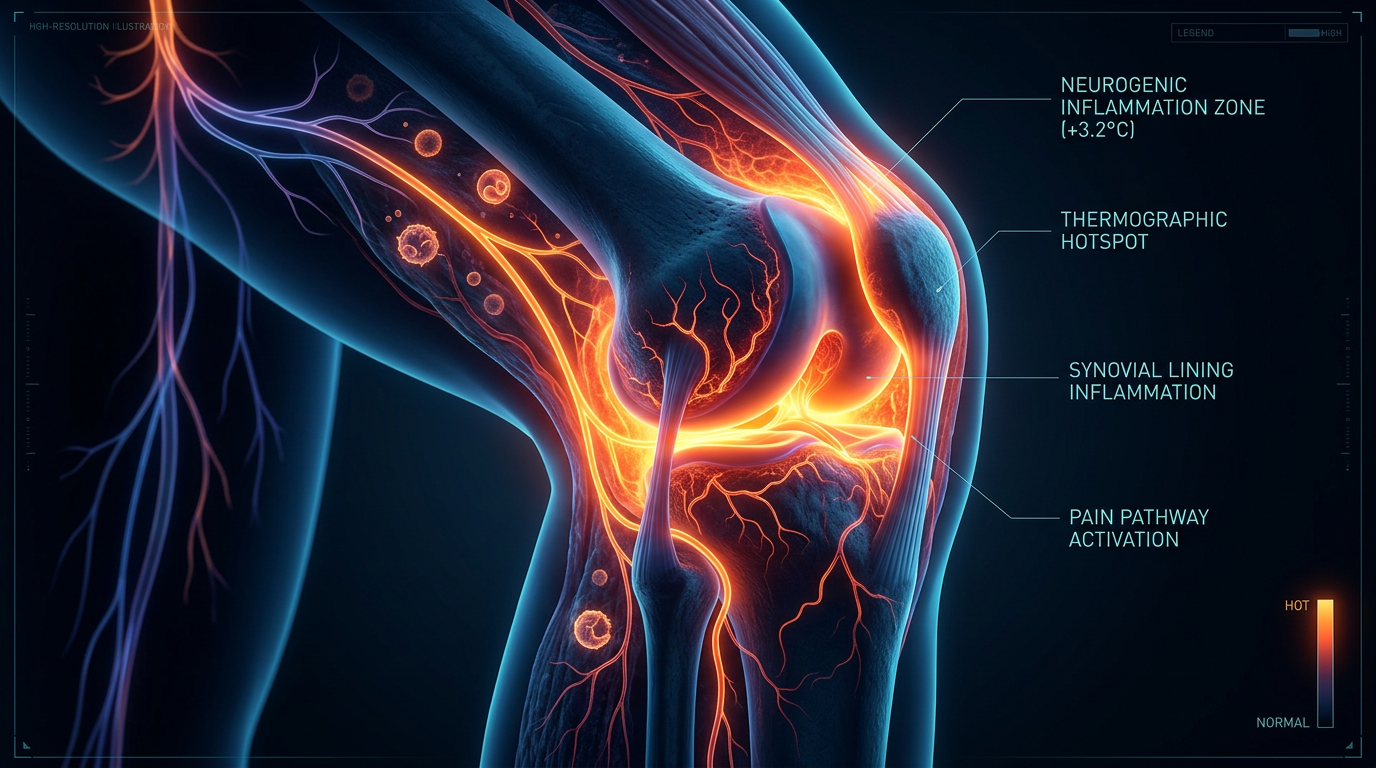
Medical thermography can detect subtle changes in skin temperature that correlate with underlying inflammation and nerve dysfunction. This non-invasive tool reveals the physiological reality of pain that standard MRIs often miss.
Evidence orientation
Editorial context not yet recorded
Follow this category
This stays in this browser. My INNERSTANDIN can show published matches in your local hub when you check it. It does not send email, push, or alert notifications.
Local learning review
A private browser aid for revisiting ideas. It is not an alert or a health recommendation.
Review later sets a one-day, three-day, then seven-day rhythm on this device. Choose it only when you want to revisit this article.
Overview
In the modern landscape of clinical diagnostics, a profound and systemic failure persists: the reliance on anatomical imaging to solve physiological mysteries. For decades, patients suffering from chronic, debilitating pain have been ushered through the corridors of mainstream medicine, subjected to the cold, structural scrutiny of Magnetic Resonance Imaging (MRI) and X-rays. While these tools are superlative at identifying broken bones or herniated discs, they are fundamentally blind to the biochemical firestorm of chronic inflammation and the subtle, dysregulated whispers of the autonomic nervous system. This is where Thermographic Profiling—specifically Digital Infrared Thermal Imaging (DITI)—emerges as a revolutionary beacon of objective clarity.
Thermography does not look at the body as a collection of static parts; it visualises the body as a dynamic, energetic system. By capturing the infrared radiation emitted by the skin, thermography maps the inflammatory landscape in real-time. It reveals what the patient feels but what the surgeon cannot see: the hyperthermic signatures of active inflammation and the hypothermic "ghosts" of nerve dysfunction. For the millions of individuals currently trapped in a cycle of "unexplained" pain, thermography offers more than just a picture; it offers validation. It exposes the physiological reality of conditions that are frequently dismissed as psychosomatic simply because they do not appear on a structural scan.
As a senior researcher at INNERSTANDING, my objective is to peel back the layers of conventional diagnostic dogma. We must understand that pain is not merely a signal sent from a damaged site to the brain; it is a systemic expression of biological distress, often driven by environmental factors and cellular disruptions that go unmonitored by the medical establishment. Thermographic profiling is the key to decoding this expression, allowing us to intervene before functional disturbances solidify into irreversible disease.
##
The Biology — How It Works
To understand thermography, one must first appreciate the skin not just as a barrier, but as the body's primary radiator and a sophisticated interface for the Autonomic Nervous System (ANS). Every living organism emits infrared radiation as a byproduct of metabolic activity. In humans, the skin’s temperature is tightly regulated by the microvasculature, which is in turn controlled by the sympathetic nervous system.
When a tissue is injured or under stress, the body initiates a complex cascade of events. Acute inflammation triggers vasodilation, increasing blood flow to the area to deliver white blood cells and nutrients. This surge in local circulation manifests as a "hot spot" on a thermographic scan. Conversely, chronic nerve irritation or compression often leads to vasoconstriction or the "reflux" of the sympathetic system, resulting in localized cooling. These thermal gradients—often accurate to within 0.01 degrees Celsius—provide a high-definition map of the body's internal struggle.
In the United Kingdom, it is estimated that nearly 28 million adults are living with some form of chronic pain, yet a staggering percentage of these cases remain "idiopathic" or "non-specific" under traditional diagnostic frameworks.
The physics of thermography rests on the principle of emissivity. The human skin is a nearly perfect "blackbody," meaning it emits infrared energy with extreme efficiency. A DITI camera captures this energy and converts it into a digital map. Unlike an MRI, which uses powerful magnetic fields and radio waves to excite protons in the body’s water molecules, thermography is entirely passive. It emits nothing. It simply listens to the heat. This makes it a uniquely safe and non-invasive window into the vascular and neurological health of the patient.
Crucially, the thermal patterns we observe are symmetrical in a healthy individual. The human body exhibits a remarkable degree of thermal symmetry between the left and right sides. Any deviation from this symmetry—known as a thermal anomaly—is a red flag for underlying pathology. Whether it is a "hot" pattern indicating myofascial trigger points, arthritis, or lymphatic congestion, or a "cold" pattern indicating neuropathy or complex regional pain syndrome (CRPS), the thermogram provides a visual objective record of the patient's subjective experience.
##
Mechanisms at the Cellular Level
At the heart of every thermal signature lies the mitochondrion and the micro-capillary bed. To truly grasp the inflammatory landscape, we must zoom in past the tissues and into the interstitial fluid and cellular membranes. Inflammation is, at its core, a metabolic process. When cells are under threat—whether from mechanical trauma, oxidative stress, or environmental toxins—they release pro-inflammatory cytokines (such as TNF-alpha, IL-6, and IL-1β) and signalling molecules like Nitric Oxide (NO).
Nitric Oxide is a potent vasodilator. In the context of inflammation, its overproduction leads to a sustained opening of the capillary beds, which thermography detects as an area of intense heat. Furthermore, the "Substance P" peptide, released by irritated nerve endings, further exacerbates this vasodilation and increases the permeability of blood vessels. This "neurogenic inflammation" is a primary driver of chronic pain syndromes that are invisible to X-rays because they involve fluid dynamics and chemical signalling rather than bone alignment.
Mitochondrial Dysfunction and Heat
Mitochondria are the furnaces of the cell. In a state of chronic inflammation, mitochondrial efficiency drops, leading to an increase in the production of Reactive Oxygen Species (ROS). This oxidative stress damages cellular membranes and triggers a "danger signal" to the surrounding tissues. The resulting thermal signature is not just a reflection of blood flow, but a reflection of the metabolic cost of repair. Areas of high thermal activity often correlate with regions where the cells are working overtime—and failing—to maintain homeostasis.
The Sympathetic Reflex
The relationship between pain and the sympathetic nervous system is fundamental to thermographic interpretation. The skin's capillary bed is innervated by sympathetic fibres. When a sensory nerve is damaged, it can trigger an abnormal sympathetic response. This is why some chronic pain patients feel a "burning" sensation (hyperthermia) while others feel a "deathly cold" in the affected limb (hypothermia). Thermography is the only diagnostic tool capable of visualising this sympathoneural response, providing a direct window into the functional state of the nervous system.
##
Environmental Threats and Biological Disruptors
We do not live in a biological vacuum. The inflammatory landscapes we see on thermographic scans are increasingly shaped by the "invisible" threats of the modern world. Mainstream medicine often ignores the role of the exposome—the total sum of environmental exposures over a lifetime—in the genesis of chronic pain.
Electrosmog and Voltage-Gated Calcium Channels (VGCCs)
One of the most significant, yet suppressed, disruptors of biological harmony is Electromagnetic Field (EMF) radiation. Research has shown that human cells possess Voltage-Gated Calcium Channels that are exquisitely sensitive to external electromagnetic signals. When these channels are triggered by ambient WiFi, cellular signals, or "dirty electricity," they allow an influx of calcium into the cell. This triggers a massive release of Nitric Oxide and subsequent oxidative stress. On a thermogram, individuals with high EMF sensitivity often display diffuse, mottled inflammatory patterns across the head, neck, and chest—patterns that defy standard anatomical explanation but align perfectly with environmental exposure.
Circadian Disruption and Blue Light
The body’s ability to regulate temperature is intrinsically linked to the circadian rhythm. The modern obsession with artificial blue light after sunset suppresses melatonin production and elevates systemic cortisol. This chronic state of "fight or flight" keeps the sympathetic nervous system in a state of hyper-arousal, leading to constricted peripheral circulation and poor thermal regulation. We frequently observe "cold" extremities in patients who are otherwise healthy, a sign of what we term "circadian thermal collapse."
Chemical Adjuvants and Bio-accumulation
The accumulation of heavy metals (such as aluminium and mercury) and persistent organic pollutants (POPs) in the fatty tissues and lymphatic system creates a persistent inflammatory "hum." The lymphatic system, responsible for clearing cellular waste, often becomes "congested" in the presence of these toxins. Thermography can detect this lymphatic stagnation as specific heat patterns along the axilla (underarms), neck, and groin, often years before a palpable lump or systemic disease manifests.
##
The Cascade: From Exposure to Disease
Disease does not occur overnight; it is the final act in a long-standing drama of functional decline. The "Cascade" is the process by which environmental triggers and cellular stress evolve into the chronic pain signatures we detect during thermographic profiling.
- Phase 1: The Bio-Energetic Disturbance: At this stage, there is no physical damage. However, the body's electrical and thermal symmetry is already breaking down due to stress or toxin exposure.
- Phase 2: The Inflammatory Surge: Nociceptors (pain receptors) become sensitised. The microvasculature begins to stay "open" or "closed" for too long. The patient begins to feel "niggles" or transient pain.
- Phase 3: The Neurogenic Lock: The nervous system enters a state of central sensitisation. The brain begins to "loop" the pain signal, and the thermogram now shows fixed patterns of hyper- or hypo-thermia.
- Phase 4: Structural Breakdown: Only now, after months or years of physiological dysfunction, does the bone, cartilage, or organ show actual damage that an MRI can detect.
It is a damning indictment of modern healthcare that patients are forced to wait until Phase 4—irreversible structural damage—before their pain is taken seriously by the diagnostic establishment.
By the time a "disc has slipped" or a "joint has worn down," the inflammatory landscape has been scorched for years. Thermographic profiling allows us to intervene at Phase 1 or 2. It visualises the pre-clinical state, giving the practitioner and the patient the opportunity to change the environment and the biology before the "disease" becomes a permanent fixture.
##
What the Mainstream Narrative Omits
The resistance to thermography within the medical-industrial complex is not due to a lack of efficacy, but due to a clash of paradigms. Mainstream medicine is built on a mechanical model: if the "machine" is broken, find the broken part and fix or medicate it. Thermography, however, operates on a biological/functional model. It suggests that the body is a self-regulating system that is reacting to its environment.
The MRI Deception
The general public has been led to believe that the MRI is the "gold standard" for pain. However, studies have shown that a significant percentage of people without pain have "abnormal" MRIs (herniated discs, labral tears), while many with excruciating pain have "perfect" scans. This is the Anatomical Fallacy. By focusing solely on structure, the mainstream narrative ignores the vasculature, the lymphatic system, and the autonomic nervous system—the very systems that actually generate and modulate the experience of pain.
The Pharmaceutical Bias
There is little profit in a diagnostic tool that suggests a patient needs to reduce their EMF exposure, fix their circadian rhythm, or detoxify their lymphatic system. The mainstream narrative prefers diagnostics that lead directly to a prescription. Since thermography often points towards lifestyle and environmental interventions, it is frequently sidelined or labelled as "alternative," despite its solid foundation in infrared physics and human physiology.
The Suppression of Prevention
Modern medicine is reactive. It waits for the tumour to be large enough to see, or the artery to be clogged enough to measure. Thermography is a proactive tool. In breast health, for example, thermography can detect the "angiogenesis" (the formation of new blood vessels) that feeds a growing colony of abnormal cells years before a mammogram can see a solid mass. The omission of this "early warning system" from standard care is a calculated failure that prioritises crisis management over true health.
##
The UK Context
The United Kingdom presents a unique and troubling landscape for chronic pain management. The National Health Service (NHS), while a cornerstone of British society, is currently buckling under the weight of an ageing and increasingly inflamed population.
Statistics from the British Pain Society indicate that chronic pain affects more people in the UK than heart disease and cancer combined, costing the economy an estimated £10 billion annually in lost productivity and healthcare expenses.
Despite this, the "postcode lottery" for pain treatment means that many patients are stuck in a loop of GP visits, ibuprofen prescriptions, and years-long waiting lists for specialist consultants who will only offer another structural scan. In the UK, fibromyalgia and Chronic Fatigue Syndrome (ME/CFS)—conditions perfectly suited for thermographic profiling due to their systemic inflammatory and autonomic nature—are still often met with scepticism by medical professionals.
The UK's environmental landscape also contributes to this crisis. High population density in urban centres like London, Manchester, and Birmingham exposes millions to unprecedented levels of 5G radiation and air pollution, both of which drive the inflammatory signatures we see on DITI scans. Furthermore, the British climate—characterized by low sunlight levels for much of the year—exacerbates Vitamin D deficiency and circadian disruption, further "locking" the body into a pro-inflammatory state.
Thermography offers a way out of the NHS "waiting game." It provides an immediate, objective assessment that can be used to tailor private or self-directed recovery protocols, bypassing the "standard of care" that has failed so many.
##
Protective Measures and Recovery Protocols
Visualising the inflammatory landscape is only the first step. The true power of thermographic profiling lies in using the data to implement targeted, biologically-sound recovery protocols. If the "map" shows heat, we must cool the fire; if it shows cold, we must restore the flow.
1. Environmental Sanitisation
If thermography reveals patterns consistent with EMF sensitivity (often seen as heat in the parotid glands and temporal regions), the first step is environmental mitigation.
- Hardwire your internet: Disable WiFi and use Ethernet cables.
- Sleep in a Faraday cage: Or at least turn off all power to the bedroom at the circuit breaker.
- EMF Shielding: Use silver-lined fabrics to protect the most sensitive tissues from ambient radiation.
2. Restoring the Microvasculature
For "cold" signatures indicating poor circulation or nerve suppression:
- Cold Thermogenesis: Brief, controlled exposure to cold (ice baths or cold showers) triggers a powerful sympathetic rebound, forcing the microvasculature to open and "flush" the tissues.
- Nitric Oxide Boosting: Use natural precursors like beetroot juice or L-arginine, combined with sunlight exposure, to encourage healthy vasodilation.
- Grounding (Earthing): Connecting the skin directly to the Earth allows for the transfer of free electrons, which help neutralise the positive charge of inflammation and improve blood viscosity (zeta potential).
3. Lymphatic Clearing
For "hot" signatures along lymphatic pathways:
- Dry Brushing: A simple but effective way to manually stimulate lymphatic flow.
- Rebounding: Using a mini-trampoline for 10 minutes a day creates the gravitational shifts necessary to pump the lymphatic valves.
- Infrared Sauna: Unlike steam saunas, far-infrared heat penetrates deep into the tissues, mobilising toxins stored in the fat and encouraging their excretion through sweat.
4. Circadian Realignment
To address the "fight or flight" thermal patterns:
- Morning Sunlight: 10–20 minutes of direct sunlight into the eyes (without glasses/contacts) first thing in the morning sets the master clock (SCN) and regulates temperature for the rest of the day.
- Blue-Blockers: Wear high-quality amber or red lenses after sunset to protect melatonin production.
- Temperature Cycling: Sleeping in a cool room (around 18°C) mimics the natural nocturnal drop in body temperature, allowing for deeper cellular repair.
5. Anti-Inflammatory Nutrition
The "internal" environment must also be addressed.
- Elimination of Seed Oils: Industrial seed oils (sunflower, rapeseed, soybean) are high in Linoleic Acid, which integrates into cell membranes and makes them highly susceptible to oxidative damage (OXLAMs).
- Pro-Metabolic Support: Favouring bioavailable nutrients like pasture-raised eggs, organ meats, and seasonal fruits provides the cellular energy (ATP) required to resolve inflammation.
##
Summary: Key Takeaways
Thermographic Profiling is not merely a diagnostic "tool"; it is a philosophical shift in how we understand human suffering. It bridges the gap between the patient’s subjective experience and the cold reality of clinical data.
- Visibility of the Invisible: Thermography reveals the physiological "fire" of inflammation and the "ice" of nerve dysfunction that MRIs and X-rays systematically miss.
- Functional vs. Structural: Chronic pain is primarily a functional disorder of the nervous and vascular systems. Treating it as a purely structural issue is a recipe for medical failure.
- The Environmental Link: Our inflammatory landscapes are a direct reflection of our environment. EMFs, blue light, and toxins are the "hidden" drivers of the modern pain epidemic.
- Early Intervention: By detecting thermal anomalies in the pre-clinical phase, we can prevent "Phase 4" structural disease and take control of our biological destiny.
- Objective Validation: For the millions in the UK and beyond who have been told "there is nothing wrong" because their scans are clear, thermography provides the visual proof that their pain is real, physiological, and treatable.
The future of medicine belongs to those who look deeper than the bone. It belongs to the study of the living, breathing, thermal organism. Through Thermographic Profiling, we finally have the means to visualize the invisible and map a path back to true, biological sovereignty. At INNERSTANDING, we believe that to see is to know—and to know is the first step toward healing.
This article is provided for informational and educational purposes only. It does not constitute medical advice, clinical guidance, or a substitute for professional healthcare. Information reflects cited research at time of publication. Always consult a qualified healthcare professional before acting on any health information.
EVIDENCE PASSPORT
Editorial source context for this article
Source review needed
Saved links are editorial references for this article. They may support specific claims rather than every sentence. Open and assess each source in context. This passport does not independently verify them.
Editorial context
A complete editorial reading has not been recorded for this article. Source links remain available for you to open and assess directly.
Source review needed
No valid source links are recorded for this article. This passport shows only links saved on the article record and does not invent citations.
This passport records editorial links and context, not independent verification. Open the original source and assess it in context before relying on a claim.
Medical Disclaimer
The information in this article is for educational purposes only and does not constitute medical advice, diagnosis, or treatment. Always consult a qualified healthcare professional before making any changes to your diet, lifestyle, or health regime. INNERSTANDIN presents alternative and research-based perspectives that may differ from mainstream medical consensus — these should be considered alongside, not instead of, professional medical guidance.
Read Full DisclaimerContinue the thread
Keep this question moving.
Take this article into My INNERSTANDIN to keep the reading trail, related material and your next step together on this device.