
Thirst is a Late Signal: Redefining Chronic Cellular Dehydration
Updated May 2026
Challenges the conventional wisdom of thirst-based hydration in the context of structured water. Learn why many UK citizens are dehydrated at a cellular level despite drinking liters of tap water.
Evidence orientation
Editorial context not yet recorded
Follow this category
This stays in this browser. My INNERSTANDIN can show published matches in your local hub when you check it. It does not send email, push, or alert notifications.
Local learning review
A private browser aid for revisiting ideas. It is not an alert or a health recommendation.
Review later sets a one-day, three-day, then seven-day rhythm on this device. Choose it only when you want to revisit this article.
Overview
In the modern landscape of health and wellness, we are often told that if we feel thirsty, we are already dehydrated. This statement, while technically accurate, represents a gross oversimplification of a profound biological crisis. As a senior biological researcher for INNERSTANDING, it is my duty to expose a reality that mainstream medicine continues to overlook: Thirst is an emergency flare, not a maintenance gauge. By the time the hypothalamus triggers the thirst sensation, the cellular architecture of the body has already begun to undergo structural degradation.
The traditional view of hydration—simply pouring liquid into the gastrointestinal tract—is fundamentally flawed. We are currently witnessing an epidemic of "Chronic Cellular Dehydration" in the United Kingdom and across the Western world. This occurs when individuals drink two, three, or even four litres of water daily, yet their cells remain biologically parched. This paradox exists because the water being consumed is "dead." It lacks the liquid-crystalline structure required for seamless integration into the biological system.
This article redefines hydration not as a volume of liquid, but as a state of biological organisation. We will explore why the water in your tap is fundamentally different from the water in your cells, and how the environmental landscape of the 21st century—from electromagnetic frequencies (EMFs) to chemical contaminants—is actively de-structuring the water within us, leading to a cascade of chronic disease, cognitive decline, and premature ageing.
Fact: Scientific research suggests that by the time you feel thirsty, you have already lost approximately 1% to 2% of your body’s total water content—a deficit that can result in a 10% reduction in cognitive function and a significant spike in cortisol levels.
The Biology — How It Works
To understand hydration, we must first abandon the notion that water is merely a solvent. In the biological context, water is a structural component. It is the "glue" that holds our proteins, DNA, and membranes in their functional shapes.
The Fourth Phase of Water
Conventional science teaches three phases of water: solid, liquid, and gas. However, pioneering research—most notably by Dr Gerald Pollack—has identified a fourth phase, known as Exclusion Zone (EZ) water or Structured Water. This is $H3O2$, a hexagonal, gel-like state of water that forms when liquid water is placed next to "hydrophilic" (water-loving) surfaces, such as our cell membranes.
Unlike "bulk water" ($H_2O$), EZ water has a negative charge. It acts as a biological battery, storing energy that the body uses to fuel cellular processes. When we are truly hydrated, our cells are surrounded by this crystalline lattice. This structure excludes solutes and toxins (hence "Exclusion Zone"), protecting the delicate machinery of the cell.
Endogenous Water Production
Most people assume all our water comes from what we drink. This is incorrect. A healthy human body produces metabolic water through the mitochondria. As our mitochondria process fats and carbohydrates to create ATP (energy), they also produce highly purified, deuterium-depleted water as a byproduct.
Statistic: In a healthy metabolic state, the human body can produce up to 10% of its own water needs through mitochondrial respiration. This "internal spring" is often the first thing to fail in states of chronic disease.
The Role of Fascia
For decades, fascia (the connective tissue wrapping every muscle and organ) was dismissed as "biological packing material." We now know it is a high-speed communication network. Fascia is primarily composed of collagen and water. However, it isn't just liquid water; it is a liquid crystal matrix. This matrix allows for the instantaneous transmission of bio-electric signals. When this water loses its structure (de-structures), the fascia becomes brittle, signal transmission slows, and we experience chronic pain and stiffness—the physical hallmarks of "cellular thirst."
Mechanisms at the Cellular Level
Hydration is a gatekeeping process. The cell does not simply allow any liquid to enter its inner sanctum. This process is governed by two primary mechanisms: Aquaporins and Mineral Ion Gradients.
Aquaporins: The Molecular Sieve
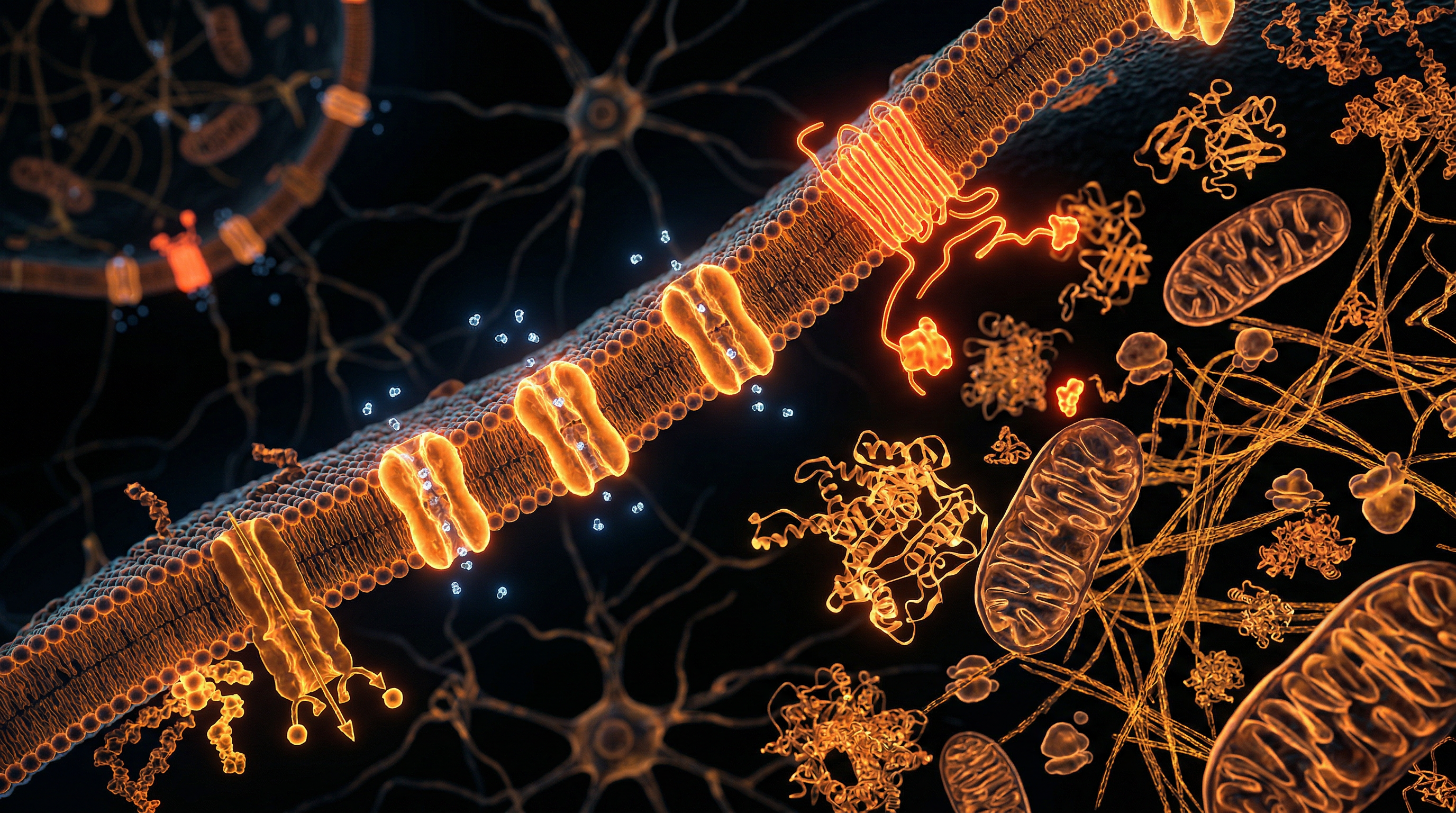
In 2003, Peter Agre was awarded the Nobel Prize for the discovery of aquaporins—specialised protein channels that allow water molecules to pass through the cell membrane one molecule at a time, in single file.
However, there is a catch: aquaporins are highly selective. "Bulk" tap water, which often exists in large, chaotic clusters due to high-pressure piping and chemical additives, requires a significant amount of cellular energy (ATP) to be "processed" and broken down before it can pass through these channels. If the cell is energy-deficient (a common state in modern humans), it cannot pull the water in. This results in "extra-cellular oedema"—where you are "waterlogged" on the outside of your cells (swollen ankles, puffiness) but dehydrated on the inside.
The Charge Barrier
As mentioned, EZ water ($H3O2$) carries a negative charge. The interior of a healthy cell is also negatively charged (approximately -70 to -90 millivolts). This membrane potential acts as a pump, drawing in structured water and essential minerals. Chronic dehydration is, at its core, a loss of this electrical charge. When the cell loses its charge, the water structure collapses, the aquaporins become sluggish, and the cell enters a state of "metabolic winter."
Deuterium: The Heavy Water Problem
A critical, though often ignored, mechanism is the role of deuterium. Deuterium is a heavy isotope of hydrogen. When water contains high levels of deuterium, these "heavy" atoms can break the nanomotors in your mitochondria.
- Light Water ($H_2O$): Supports energy production.
- Heavy Water ($D_2O$): Slows down energy production.
Naturally occurring water in the wild (glaciers, deep springs) is often lower in deuterium. Conversely, recycled municipal water systems—common in the UK—tend to concentrate these heavy isotopes, contributing to cellular fatigue despite "adequate" fluid intake.
Environmental Threats and Biological Disruptors
The reason we are facing a dehydration crisis is not simply that we aren't drinking enough; it is that our environment is systematically destroying the water we do drink.
The EMF Effect
We are currently submerged in an unprecedented sea of Non-Ionizing Radiation (EMFs)—Wi-Fi, 4G, 5G, and Bluetooth. Research indicates that these frequencies interfere with the hydrogen bonding in water. EMFs act as a "stressor" that breaks down the EZ water layer around our cells.
Callout: Continuous exposure to 2.4GHz frequencies (standard Wi-Fi) has been shown in laboratory settings to reduce the size of the Exclusion Zone in water, effectively "un-structuring" it before it even enters your body.
Chemical Contaminants: Glyphosate and Fluoride
- Glyphosate: The world's most widely used herbicide is a potent chelator. It binds to minerals, making them unavailable for the body to use in structuring water. Furthermore, glyphosate can substitute for the amino acid glycine in our collagen, destroying the "scaffolding" that holds structured water in our fascia.
- Fluoride: Often added to UK water supplies under the guise of dental health, fluoride is a highly reactive electronegative element. It disrupts the delicate balance of the water crystal, interfering with the way water interacts with our proteins and enzymes.
The "Dead Water" Infrastructure
Water in nature does not travel in straight lines. It meanders, vortexes, and tumbles over rocks, which naturally aerates and structures it. In the UK, our water is forced through miles of straight, high-pressure metal or plastic pipes. This high-pressure environment destroys the natural hexagonal structure of water, delivering "biologically incoherent" liquid to our taps.
The Cascade: From Exposure to Disease
Chronic cellular dehydration is not a "condition" in itself; it is the foundational soil upon which most modern diseases grow. When the body cannot maintain its liquid crystalline state, it enters a state of emergency.
Stage 1: Adaptive Conservation
When cells lack structured water, the brain prioritises vital organs. Histamine levels rise—not as an allergic reaction, but as a water-regulator. High histamine levels trigger the narrowing of the airways and the constriction of blood vessels to prevent water loss through evaporation and respiration. This is why asthma and hypertension are frequently early symptoms of chronic cellular dehydration.
Stage 2: Metabolic Disruption
As mitochondria struggle with heavy water and a lack of EZ water, they produce more Reactive Oxygen Species (ROS). This leads to oxidative stress. The body, sensing an energy deficit, triggers cravings for "quick energy" sources like sugar. This creates a vicious cycle: high sugar intake further dehydrates the cells through osmotic pressure, leading to insulin resistance and Type 2 Diabetes.
Stage 3: Proteopathy and Neurodegeneration
Proteins must be folded correctly to function. This folding is entirely dependent on the "water jacket" (structured water) surrounding the protein. In a dehydrated state, proteins misfold.
Scientific Warning: Misfolded proteins are the hallmark of neurodegenerative diseases such as Alzheimer’s and Parkinson’s. Amyloid plaques are essentially "dried out" protein clumps that have lost their structured water shell.
The Fascial Collapse
When the fascia dehydrates, it becomes "sticky." This is known as tissue densification. It results in:
- Chronic back and neck pain.
- Reduced range of motion.
- Sluggish lymphatic drainage (the "sewer system" of the body becomes clogged).
- Cellulite (which is often a fascial/water structure issue rather than a fat issue).
What the Mainstream Narrative Omits
The mainstream advice on hydration is outdated and, in some cases, dangerous. Here is what the textbooks aren't telling you:
The "Clear Pee" Fallacy
We are told to drink until our urine is clear. This is potentially hazardous advice. Clear urine often indicates that the water you are drinking is passing straight through your extracellular space and being excreted by the kidneys without ever entering the cells. This can lead to hyponatremia—a dilution of essential electrolytes. True hydration results in straw-coloured urine, indicating that the water has been used by the cells and is carrying metabolic waste products out of the body.
The Mineral Gap
Water is not just $H_2O$; in its natural state, it is a complex mineral delivery system. Modern filtration (Reverse Osmosis or Distillation) removes toxins, which is good, but it also creates "hungry water." This mineral-free water is aggressive; it will strip minerals from your bones and teeth to re-balance itself. Mainstream narratives rarely mention that water without minerals is a leaching agent, not a hydrating agent.
The Sunlight Connection
Standard hydration theory ignores physics. Dr Pollack's work proved that Infrared Light (IR) is the primary "fuel" that builds the Exclusion Zone. You can drink the best water in the world, but if you spend all day indoors under LED lights, away from the sun’s infrared spectrum, your body will struggle to structure that water. Hydration is as much about light exposure as it is about liquid intake.
The UK Context
The United Kingdom faces a unique set of challenges regarding hydration that differ from our European and American counterparts.
The London "Cocktail"
In major UK hubs, particularly London and the Southeast, water is recycled multiple times. By the time it reaches a Londoner's tap, it has been through several human bodies and industrial treatment plants. While "pure" from a bacterial standpoint, this water is energetically dead. It carries the vibrational "imprint" of pharmaceuticals—including oestrogen from birth control pills and antidepressants—which standard filtration often fails to remove completely.
Hard Water vs. Soft Water
The UK's "Hard Water" (prevalent in the South and East) is rich in calcium carbonate. While minerals are good, the form of these minerals in UK tap water is often inorganic and poorly absorbed, leading to scaling in pipes and, potentially, contributing to "tissue calcification" in the body. Meanwhile, "Soft Water" areas (the North and Scotland) lack these minerals, often leading to a different set of hydration issues related to electrolyte depletion.
The British Indoor Lifestyle
The UK climate, characterised by frequent cloud cover and short winter days, means the average citizen is chronically deprived of the Near-Infrared (NIR) light required to build EZ water. Combined with a culture that spends 90% of its time indoors, the "biological battery" of the British public is perpetually undercharged.
Protective Measures and Recovery Protocols
If thirst is a late signal, how do we stay ahead of the curve? We must move from drinking to bio-hydrating.
1. Restructuring Your Intake
You must breathe life back into your water.
- Vortexing: Use a magnetic stirrer or a simple glass carafe to create a vortex. This mimics natural flow and helps re-structure the molecules.
- Mineralisation: Add a pinch of high-quality Celtic sea salt or Himalayan salt to every litre of water. This provides the 80+ trace minerals needed to create the "charge" required for cellular entry.
- Quinton Marine Plasma: Consider using hypertonic or isotonic minerals harvested from plankton blooms, which are bio-identical to human blood plasma.
2. Light as a Hydrator
To build the EZ layer, you must expose your skin to infrared light.
- Sunrise/Sunset: The sun's light is richest in infrared during the "golden hours." 15 minutes of exposure can significantly boost your cellular water structure.
- Red Light Therapy: If you live in the UK, a high-quality Red/NIR light panel is not a luxury; it is a biological necessity for maintaining structured water during the winter months.
3. Deuterium Depletion
Periodically "lighten" your body's water load.
- Green Juices: Plants naturally filter out deuterium. Consuming organic cucumber, celery, and leafy green juices provides "pre-structured," deuterium-depleted water.
- Fats over Carbs: Burning fat for fuel (ketosis) produces more metabolic water than burning glucose. This internal water is the highest quality hydration available.
4. Grounding (Earthing)
The Earth is a massive reservoir of negatively charged electrons. By walking barefoot on grass or sand (even in the UK!), you allow these electrons to flow into your body. This negative charge directly supports the formation of the negatively charged Exclusion Zone water in your cells.
5. Managing the Fascial Matrix
- Hydraulic Movement: Instead of just linear gym movements, engage in multi-planar movement (Yoga, Tai Chi, or "fascial bouncing"). This "squeezes" the fascial sponge, forcing out stagnant bulk water and allowing fresh, structured water to rush in.
Summary: Key Takeaways
- Thirst is a Crisis Signal: By the time you feel it, your cellular machinery is already compromised.
- Water is a Crystal: True hydration is the presence of $H3O2$ (Structured Water), not just $H_2O$.
- The Energy Battery: Structured water acts as a battery; EMFs, glyphosate, and fluoride drain this battery.
- Mitochondria are Springs: We produce our own purest water internally when our metabolism is healthy.
- The UK Environment is Dehydrating: Recycled water, low sunlight, and "dead" piping infrastructure require proactive intervention.
- Beyond the Glass: Hydration requires minerals, infrared light, grounding, and movement—not just a reusable water bottle.
We must stop viewing ourselves as "containers" for water and start seeing ourselves as biological resonators. If the water within you loses its structure, the "music" of your biology becomes discordant, leading eventually to the silence of disease. Hydrate your cells, not just your throat. The future of your health depends on the quality of the crystal within.
This article is provided for informational and educational purposes only. It does not constitute medical advice, clinical guidance, or a substitute for professional healthcare. Information reflects cited research at time of publication. Always consult a qualified healthcare professional before acting on any health information.
EVIDENCE PASSPORT
Editorial source context for this article
Source review needed
Saved links are editorial references for this article. They may support specific claims rather than every sentence. Open and assess each source in context. This passport does not independently verify them.
Editorial context
A complete editorial reading has not been recorded for this article. Source links remain available for you to open and assess directly.
Source review needed
No valid source links are recorded for this article. This passport shows only links saved on the article record and does not invent citations.
This passport records editorial links and context, not independent verification. Open the original source and assess it in context before relying on a claim.
Medical Disclaimer
The information in this article is for educational purposes only and does not constitute medical advice, diagnosis, or treatment. Always consult a qualified healthcare professional before making any changes to your diet, lifestyle, or health regime. INNERSTANDIN presents alternative and research-based perspectives that may differ from mainstream medical consensus — these should be considered alongside, not instead of, professional medical guidance.
Read Full DisclaimerContinue the thread
Keep this question moving.
Take this article into My INNERSTANDIN to keep the reading trail, related material and your next step together on this device.