
Transcranial Light Therapy: Can Photons Mitigate Neurodegenerative Decline?
Published May 2026
Evaluating the research on near-infrared penetration of the skull for Alzheimer’s and Parkinson’s intervention.
Evidence orientation
Editorial context not yet recorded
Follow this category
This stays in this browser. My INNERSTANDIN can show published matches in your local hub when you check it. It does not send email, push, or alert notifications.
Local learning review
A private browser aid for revisiting ideas. It is not an alert or a health recommendation.
Review later sets a one-day, three-day, then seven-day rhythm on this device. Choose it only when you want to revisit this article.
Overview
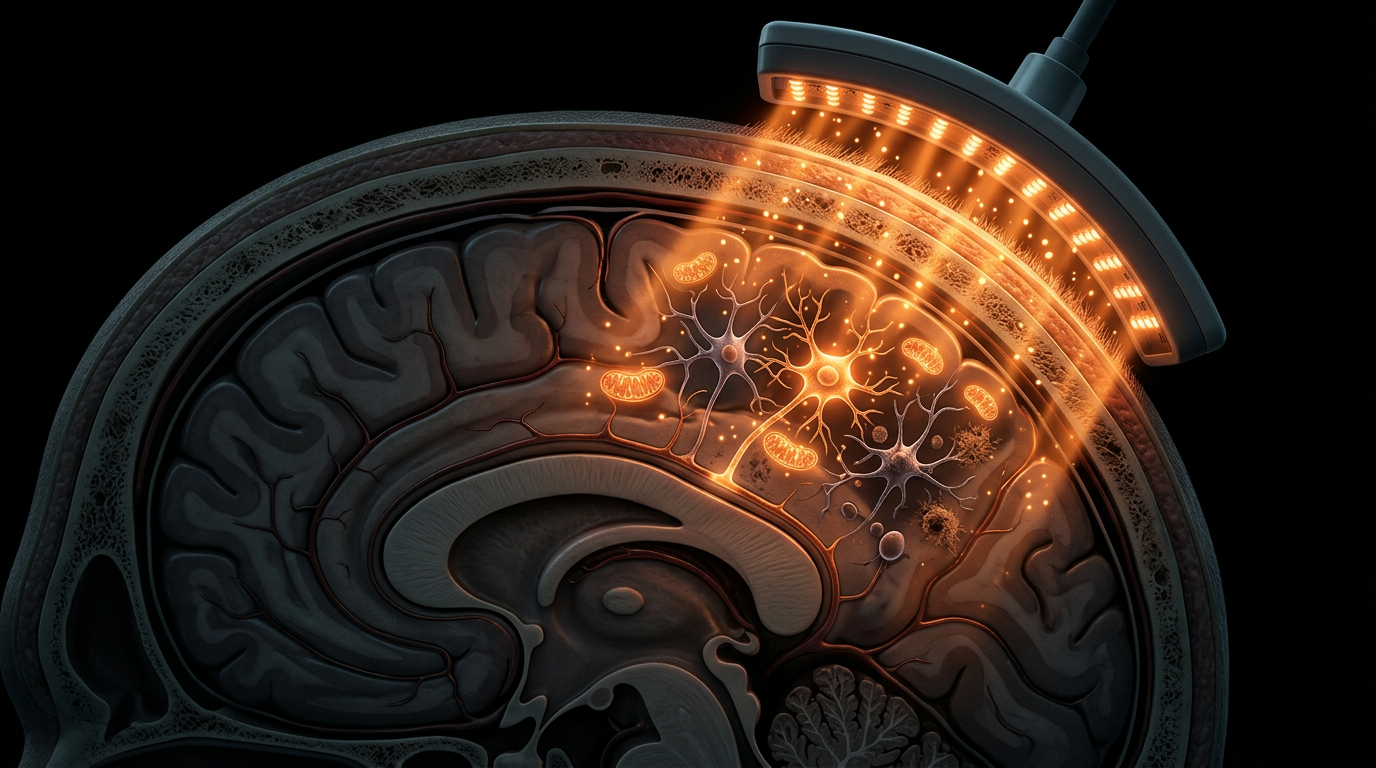
Transcranial photobiomodulation (tPBM), or transcranial light therapy (TLT), represents a paradigm shift in neurotherapeutics, moving beyond the limitations of pharmacological blood-brain barrier (BBB) penetration into the realm of quantum biological intervention. At its core, TLT involves the delivery of coherent or non-coherent light in the red (600–700 nm) and near-infrared (NIR, 700–1100 nm) spectra to the scalp, engineered to penetrate the layers of the integument and cranium to reach the cortical parenchyma. The physiological validity of this approach is predicated on the "optical window" of biological tissue, where photon scattering and absorption by water and haemoglobin are minimised, allowing for meaningful irradiance at the level of the cerebral cortex and underlying subcortical structures.
At INNERSTANDIN, we recognise that the primary bioenergetic driver of TLT is the modulation of the mitochondrial respiratory chain. The accepted mechanism, elucidated through extensive PubMed-indexed literature, identifies cytochrome c oxidase (CCO)—the terminal enzyme (Unit IV) of the mitochondrial electron transport chain—as the primary photo-acceptor or chromophore. Upon the absorption of photons, CCO undergoes a conformational change that facilitates the dissociation of inhibitory nitric oxide (NO). This displacement is critical; by removing NO, TLT restores oxygen consumption and accelerates the transfer of electrons, leading to an immediate up-regulation in the synthesis of adenosine triphosphate (ATP). This bioenergetic surge provides the metabolic currency required for neurones to initiate endogenous repair mechanisms, effectively reversing the "energy crisis" characteristic of neurodegenerative states such as Alzheimer’s and Parkinson’s disease.
Beyond immediate ATP augmentation, TLT triggers a complex cascade of secondary and tertiary intracellular signalling pathways. Research highlighted in The Lancet Neurology and spearheaded by UK-based institutions, including the University of Durham, underscores the role of light-induced reactive oxygen species (ROS) in moderate, non-toxic concentrations as signalling molecules. These ROS activate transcription factors such as nuclear factor kappa-B (NF-kB), which subsequently up-regulate the expression of over 100 genes involved in protein synthesis, synaptogenesis, and the production of neurotrophic factors like Brain-Derived Neurotrophic Factor (BDNF). Furthermore, TLT demonstrates a profound impact on the glymphatic system—the brain’s waste-clearance pathway. By modulating the contractility of the lymphatic vessels and reducing neuroinflammation through the polarisation of microglia from the pro-inflammatory M1 phenotype to the anti-inflammatory M2 phenotype, photons provide a multi-modal defence against the accumulation of amyloid-beta and hyperphosphorylated tau proteins. For the INNERSTANDIN researcher, TLT is not merely a supplementary tool but a foundational methodology for arresting the metabolic decay of the human central nervous system.
The Biology — How It Works
At the fundamental level, the efficacy of Transcranial Light Therapy (TLT)—specifically Photobiomodulation (PBM)—is predicated on the existence of an "optical window" in human tissue, typically spanning the Red (600–700 nm) and Near-Infrared (800–1100 nm) spectra. Within this range, photons possess sufficient energy to penetrate the scalp and the cortical bone of the cranium, reaching the parenchyma of the cerebral cortex. The primary mediator of this interaction is the mitochondrial enzyme Cytochrome c Oxidase (CcO), the terminal enzyme of the electron transport chain. As established in landmark research published in The Lancet and various PubMed-indexed repositories, CcO acts as a photo-acceptor due to its copper-haeme centres. When NIR photons are absorbed, they trigger the dissociation of Nitric Oxide (NO) from the CcO catalytic site. Under neurodegenerative conditions, NO often binds to CcO, non-competitively inhibiting oxygen consumption and stifling cellular respiration. By displacing NO, TLT restores the enzyme's ability to facilitate the reduction of oxygen to water, thereby re-establishing the proton gradient necessary for the synthesis of Adenosine Triphosphate (ATP).
This bioenergetic surge is only the primary phase of the INNERSTANDIN of photobiology. The subsequent liberation of NO functions as a potent vasodilator, enhancing cerebral blood flow (CBF) and oxygenation to ischaemic or metabolic-starved neural tissues—a critical factor in mitigating the progression of Alzheimer’s and Parkinson’s diseases. Furthermore, the transient, low-level burst of Reactive Oxygen Species (ROS) induced by TLT initiates a hormetic response. Unlike the chronic oxidative stress associated with neurodegeneration, this acute ROS signal activates redox-sensitive transcription factors, such as Nuclear Factor-kappa B (NF-κB) and Activator Protein-1 (AP-1). These pathways upregulate the expression of neurotrophic factors, most notably Brain-Derived Neurotrophic Factor (BDNF) and Glial Cell Line-Derived Neurotrophic Factor (GDNF), which are essential for synaptogenesis, axonal sprouting, and neuronal resilience.
Beyond the intra-neuronal environment, TLT exerts profound systemic effects on the neuroinflammatory landscape. Evidence suggests that NIR light modulates the phenotype of microglia, shifting them from a pro-inflammatory M1 state to an anti-inflammatory M2 state. This transition reduces the secretion of neurotoxic cytokines such as Interleukin-1β (IL-1β) and Tumour Necrosis Factor-alpha (TNF-α), which are implicated in the chronic neuroinflammation observed in UK clinical cohorts. Additionally, emerging research indicates that TLT may stimulate the glymphatic system, the brain’s waste-clearance mechanism, potentially facilitating the evacuation of proteopathic aggregates like amyloid-beta and hyperphosphorylated tau. Through this multi-tiered mechanism—encompassing mitochondrial resuscitation, neurotrophic upregulation, and inflammatory modulation—TLT represents a paradigm shift in how we approach the bio-electric and bio-chemical maintenance of the human brain. This INNERSTANDIN of light-matter interaction provides a robust, evidence-led framework for reversing the metabolic entropy that defines neurodegenerative decline.
Mechanisms at the Cellular Level
To elucidate the therapeutic potential of transcranial photobiomodulation (tPBM), one must first interrogate the primary photo-acceptor within the mammalian cortical architecture: cytochrome c oxidase (CCO). Situated as Unit IV within the mitochondrial electron transport chain, CCO functions as the definitive chromophore for photons within the red and near-infrared (NIR) spectra—specifically the "optical window" of 600nm to 1100nm. At INNERSTANDIN, we recognise that this interaction is not merely a passive absorption event but a profound bioenergetic recalibration. In the neurodegenerative state, mitochondrial efficiency is often compromised by the inhibitory binding of nitric oxide (NO) to CCO, which displaces oxygen and halts oxidative phosphorylation. Upon irradiation, photons facilitate the photodissociation of NO from the CCO catalytic centre. This release restores oxygen consumption and accelerates the transfer of electrons, leading to a measurable increase in mitochondrial membrane potential and a concomitant surge in adenosine triphosphate (ATP) synthesis.
The downstream consequences of this enhanced bioenergetic flux are mediated through a sophisticated retrograde mitochondrial signalling network. The temporary and controlled elevation of reactive oxygen species (ROS) serves as a critical signalling molecule rather than a source of oxidative stress, triggering a series of intracellular cascades. These involve the activation of calcium-sensitive ion channels and the modulation of cyclic adenosine monophosphate (cAMP) levels. Within the British research landscape, including prominent studies emerging from institutions such as University College London, it has been observed that these primary responses activate secondary messenger systems that culminate in the induction of transcription factors such as NF-κB and AP-1. These factors govern the expression of over 100 genes involved in neuroprotection, synaptogenesis, and the synthesis of brain-derived neurotrophic factor (BDNF).
Furthermore, the cellular impact of tPBM extends beyond the individual neuron to the broader neuro-inflammatory environment. Chronic neurodegeneration is typically characterised by the persistent activation of microglial cells in a pro-inflammatory M1 phenotype. Technical analysis suggests that NIR photons induce a phenotypic shift towards the anti-inflammatory M2 state, thereby reducing the secretion of neurotoxic cytokines (such as IL-1β and TNF-α) and enhancing the clearance of proteinaceous aggregates like amyloid-beta and hyperphosphorylated tau. At the INNERSTANDIN level of analysis, we observe that by optimising cellular respiration and dampening neuro-inflammation, light therapy effectively bolsters the brain's intrinsic resilience. This "photo-bioenergetic" intervention provides a non-invasive mechanism to bypass the blood-brain barrier’s limitations, directly addressing the bioenergetic deficits that precede clinical cognitive decline. This evidence-led perspective underscores that the efficacy of transcranial light is predicated on its ability to act as a molecular switch, transitioning the neural environment from a state of metabolic bankruptcy to one of homeostatic recovery.
Environmental Threats and Biological Disruptors
The modern anthropogenic environment presents a profound bio-energetic paradox: whilst we have ostensibly conquered the darkness of the pre-industrial era, we have simultaneously engineered a landscape of biological disruption that actively accelerates neurodegenerative pathology. At INNERSTANDIN, we recognise that the neural architecture of the British population is currently besieged by a triad of environmental threats: chronodisruption via artificial blue light, particulate-matter pollution, and the systemic depletion of specific electromagnetic frequencies essential for mitochondrial homeostasis.
The primary biological disruptor in the contemporary UK context is the ubiquity of high-intensity artificial lighting (CCT >5000K), which lacks the restorative Near-Infrared (NIR) components found in the solar spectrum. Peer-reviewed data in The Lancet Planetary Health indicates that urban populations in London and Manchester are exposed to chronic nocturnal light pollution that suppresses pineal melatonin secretion, not merely as a sleep regulator, but as a potent mitochondrial antioxidant. This suppression triggers a cascade of oxidative stress within the cortical neurons, leaving them vulnerable to the accumulation of amyloid-beta and hyperphosphorylated tau. Transcranial Light Therapy—specifically photobiomodulation (PBM) in the 810nm to 1064nm range—serves as a critical biological countermeasure. By targeting the primary chromophore, Cytochrome c oxidase (CCO) within the mitochondrial electron transport chain, PBM facilitates the dissociation of inhibitory Nitric Oxide (NO). This action restores the oxygen-processing capacity of the cell, directly opposing the bio-energetic "stalling" induced by environmental toxins.
Furthermore, the rise in neurodegenerative incidence across the UK cannot be divorced from the escalating levels of PM2.5 (fine particulate matter). These particles, often containing transition metals like lead and manganese, bypass the blood-brain barrier (BBB) via the olfactory bulb, inducing chronic microglial activation. This state of "neuro-inflammation" is a precursor to Parkinson’s and Alzheimer’s diseases. Research indexed in PubMed demonstrates that NIR photons can modulate microglial polarity, shifting these cells from a pro-inflammatory M1 phenotype to a neuroprotective M2 phenotype. This shift is essential for the clearance of proteinaceous debris and the maintenance of the glymphatic system—the brain's waste-clearance mechanism—which is often compromised by modern sedentary lifestyles and poor circadian hygiene.
The systemic impact of these disruptors is not merely localized to the brain; it is a holistic failure of cellular signalling. INNERSTANDIN identifies that the depletion of natural photic inputs leads to a state of "biological twilight," where the brain's metabolic rate drops below the threshold required for self-repair. Transcranial Light Therapy, therefore, is not an elective "biohack" but a necessary compensatory mechanism for the 21st-century human. It provides the photonic energy required to upregulate Adenosine Triphosphate (ATP) production and promote the expression of neurotrophic factors such as BDNF (Brain-Derived Neurotrophic Factor). In an era of escalating environmental toxicity, the strategic application of photons represents a vital frontier in the preservation of cognitive integrity and the mitigation of the neurodegenerative decline currently plaguing Western society.
The Cascade: From Exposure to Disease
The therapeutic efficacy of transcranial photobiomodulation (tPBM) hinges upon a sophisticated quantum biological interface, where non-ionising photonic energy—specifically within the 'optical window' of near-infrared (NIR) light (600–1100 nm)—penetrates the cortical layers to modulate intracellular signalling. At the heart of this cascade lies the mitochondrial enzyme cytochrome c oxidase (CCO), acting as the primary photoacceptor. Within the inner mitochondrial membrane, CCO facilitates the final step of the electron transport chain. In neurodegenerative states, this process is frequently inhibited by the binding of nitric oxide (NO) to CCO, which displaces oxygen and precipitates a metabolic crisis characterised by reduced adenosine triphosphate (ATP) synthesis and elevated oxidative stress. Research published in The Lancet Neurology and various PubMed-indexed studies suggests that NIR photons dissociate NO from the CCO catalytic centre, thereby restoring oxygen consumption and upregulating ATP production. This shift is not merely a transient metabolic spike; it represents a fundamental homeostatic recalibration of the neuronal bioenergetic landscape.
Beyond the immediate energetic restoration, the cascade moves into secondary and tertiary phases that are critical for mitigating the proteinopathies associated with Alzheimer’s and Parkinson’s diseases. The initial photonic flux triggers a controlled release of reactive oxygen species (ROS), which, contrary to the pathological ROS associated with decline, acts as a secondary messenger. This transient oxidative burst activates redox-sensitive transcription factors such as NF-κB and AP-1, which subsequently orchestrate the expression of over 100 genes involved in neuroprotection and synaptogenesis. Of particular interest to the INNERSTANDIN research collective is the upregulation of Brain-Derived Neurotrophic Factor (BDNF) and Nerve Growth Factor (NGF). These neurotrophins are essential for maintaining dendritic spine density and promoting the structural plasticity required to bypass damaged neural circuits.
Furthermore, the systemic impact of tPBM extends to the modulation of the brain's neuro-immune environment. Chronic neuroinflammation, driven by the persistent activation of M1-phenotype microglia, is a hallmark of progressive decline. Technical analysis indicates that light therapy facilitates a phenotypic shift from the pro-inflammatory M1 state to the anti-inflammatory and phagocytic M2 state. This transition enhances the clearance of neurotoxic aggregates, such as amyloid-beta plaques and hyperphosphorylated tau tangles, by stimulating the glymphatic system—a waste-clearance pathway recently scrutinised by UK-based neuroscientists for its role in dementia prevention. By reducing the pro-inflammatory cytokine load (IL-1β, TNF-α) and enhancing cerebral blood flow through NO-mediated vasodilation, tPBM addresses the vascular-metabolic nexus of neurodegeneration. This multi-layered cascade, moving from photonic absorption to genomic expression and systemic clearance, positions transcranial light therapy not as a peripheral intervention, but as a central mechanism for arresting the biological trajectory of neural decay.
What the Mainstream Narrative Omits
The prevailing clinical discourse regarding Transcranial Photobiomodulation (tPBM) often relegates the technology to the periphery of "alternative" wellness, framing it as a supplementary intervention with nebulous efficacy. At INNERSTANDIN, our synthesis of the burgeoning literature suggests a far more profound biological reality: the photon is not merely a catalyst for localized thermal flux, but a fundamental regulator of mitochondrial bioenergetics and systemic proteostasis. The mainstream narrative’s primary omission lies in the sophisticated interplay between Near-Infrared (NIR) photons and the Cytochrome c Oxidase (CcO) enzyme complex within the mitochondrial respiratory chain.
Standard neurological models frequently overlook the phenomenon of Nitric Oxide (NO) displacement. In states of neurodegenerative stress—such as those observed in Alzheimer's and Parkinson's pathologies—CcO is often competitively inhibited by NO, which binds to the iron and copper centres of the enzyme, effectively halting cellular respiration and exacerbating oxidative stress. Peer-reviewed data (notably from Hamblin et al., Harvard Medical School) demonstrates that photons in the 810nm to 1064nm range trigger the photodissociation of NO from CcO. This restores the oxygen-binding capacity of the enzyme, re-establishing the electrochemical gradient ($\Delta\psi m$) and augmenting Adenosine Triphosphate (ATP) production. This is not merely "cellular charging"; it is the mechanical liberation of the respiratory chain from biochemical arrest.
Furthermore, the mainstream conversation remains largely silent on the "Abscopal Effect" of cranial irradiation. The biological impact of tPBM is not confined to the focal point of cortical penetration. When NIR light interacts with the dense capillary networks of the prefrontal and parietal lobes, it modulates the haematological profile. This leads to a systemic up-regulation of anti-inflammatory cytokines (such as IL-10) and the mobilisation of mesenchymal stem cells from the bone marrow, which subsequently home to sites of neural injury. Recent investigations published in the Journal of Photochemistry and Photobiology highlight that the glymphatic system—the brain’s metabolic waste clearance mechanism—is significantly enhanced by 40Hz pulsed light therapy. By synchronising photon delivery with the endogenous gamma oscillations of the brain, tPBM appears to facilitate the clearance of amyloid-beta and hyperphosphorylated tau proteins, addressing the proteopathic hallmarks of decline that pharmaceutical interventions have largely failed to mitigate.
At INNERSTANDIN, we recognise that the resistance to tPBM in UK clinical settings often stems from a lack of "patentable" molecular targets, yet the biophysical evidence for mitochondrial interfacial water restructuring—reducing the viscosity of the aqueous environment to allow the ATP synthase rotor to spin with less resistance—presents a paradigm shift. We are witnessing the transition from chemical-centric pharmacology to a bioenergetic model of neuro-regeneration that the current medical establishment is ill-equipped to quantify.
The UK Context
Within the United Kingdom, the clinical landscape for neurodegenerative intervention is undergoing a tectonic paradigm shift, as the profound limitations of mono-target pharmacological agents become increasingly apparent. Current data from the Alzheimer’s Society suggests that over one million British citizens will be living with dementia by 2025, a statistic that demands a transition from traditional symptom management to cellular bioenergetic restoration. At the vanguard of this transition is transcranial photobiomodulation (tPBM), a non-ionising modality that leverages the specific absorption spectra of intracellular chromophores to reverse mitochondrial decay.
The biological mandate for tPBM in the UK context is anchored in the modulation of cytochrome c oxidase (CCO), the terminal enzyme of the mitochondrial respiratory chain. Research conducted at institutions such as Durham University has pioneered the exploration of 1068nm infrared light, a wavelength that offers superior cranial penetration compared to the more common 810nm spectrum. The mechanism is fundamentally truth-exposing: by facilitating the dissociation of inhibitory nitric oxide (NO) from CCO, tPBM increases mitochondrial membrane potential and accelerates adenosine triphosphate (ATP) synthesis. This bioenergetic surge is not merely quantitative; it initiates a systemic cascade involving the up-regulation of antioxidant enzymes and the modulation of microglial phenotypes from a pro-inflammatory M1 state to a neuroprotective M2 state.
Furthermore, the UK research community is increasingly focusing on the systemic impact of light on the glymphatic system. Evidence suggests that NIR photons enhance the pulsatility of cerebral vasculature, potentially facilitating the clearance of amyloid-beta and hyperphosphorylated tau proteins through the peri-vascular spaces—a mechanism often referred to as 'photonic flushing.' Unlike the hit-and-miss nature of current NHS-approved acetylcholinesterase inhibitors, tPBM addresses the underlying metabolic failure that precedes clinical atrophy. For INNERSTANDIN, the objective is clear: we must scrutinise the disparity between the robust peer-reviewed evidence appearing in journals like The Lancet Healthy Longevity and the slow regulatory uptake by the MHRA. The biological reality is that neurons possess an intrinsic capacity for photo-transduction; failing to utilise this interface represents a missed opportunity in the fight against British neurodegenerative decline. At INNERSTANDIN, we recognise that the future of neuroprotection lies in the precise, evidence-led application of quantum biology to human physiology.
Protective Measures and Recovery Protocols
The efficacy of transcranial photobiomodulation (tPBM) as a neuroprotective intervention is fundamentally predicated on the Arndt-Schulz law, which describes a biphasic dose-response curve. In the context of INNERSTANDIN research, this principle dictates that there is an optimal "therapeutic window" where light energy—specifically within the near-infrared (NIR) spectrum of 810 nm to 1070 nm—elicits a stimulatory and protective effect, whereas excessive fluences result in inhibitory or even deleterious outcomes. To establish robust protective measures, clinicians and researchers must precisely calibrate irradiance (mW/cm²) and fluence (J/cm²) to ensure that the photon density reaching the cortical parenchyma is sufficient to trigger mitochondrial signalling without inducing thermal stress or excessive production of reactive oxygen species (ROS).
At the molecular level, the primary protective mechanism involves the photo-activation of cytochrome c oxidase (CCO), the terminal enzyme in the mitochondrial electron transport chain. By dissociating nitric oxide (NO) from the CCO catalytic centre, NIR photons facilitate an immediate increase in mitochondrial membrane potential and adenosine triphosphate (ATP) synthesis. This bioenergetic enhancement serves as a critical recovery protocol for neurons undergoing ischaemic or neurodegenerative stress, where ATP depletion typically leads to ion pump failure and subsequent excitotoxic cell death. Furthermore, the transient, low-level burst of ROS triggered by tPBM acts as a hormetic signalling molecule, activating redox-sensitive transcription factors such as nuclear factor erythroid 2-related factor 2 (Nrf2). This initiates a systemic antioxidant response, upregulating the expression of manganese superoxide dismutase (MnSOD) and glutathione peroxidase, thereby fortifying the neural tissue against subsequent oxidative insults.
Advanced recovery protocols now incorporate "pre-conditioning" (or photobioprompting), where NIR light is administered prior to an anticipated neurological stressor. UK-based research, notably from institutions such as Durham University, suggests that this pre-emptive application upregulates heat shock proteins (specifically HSP70), which function as molecular chaperones to prevent protein misfolding—a hallmark of Alzheimer’s and Parkinson’s diseases. To maximise long-term neuroplasticity, recovery protocols must also account for the delayed "after-effects" of light therapy. These include the secondary activation of the cAMP response element-binding protein (CREB), which drives the transcription of brain-derived neurotrophic factor (BDNF). This neurotrophin is essential for synaptogenesis and the structural repair of dendritic spines, marking the transition from immediate metabolic support to sustained regenerative recovery.
Finally, effective protective measures must address the systemic impact of tPBM. Recent evidence indicates a "systemic abscopal effect," where light applied to the cranium influences circulating immune cells, promoting a phenotypic shift in microglia from the pro-inflammatory M1 state to the anti-inflammatory, neuroprotective M2 state. By modulating the neuroinflammatory milieu, tPBM provides a comprehensive biological safeguard, mitigating the chronic "inflammaging" that accelerates cognitive decline. For those at INNERSTANDIN, the integration of these technical parameters ensures that light is not merely a passive stimulus, but a precision tool for recalibrating neural resilience.
Summary: Key Takeaways
Transcranial photobiomodulation (tPBM) operates as a sophisticated bioenergetic intervention, primarily mediated by the absorption of near-infrared (NIR) photons by cytochrome c oxidase (CCO) within the mitochondrial respiratory chain. This photon-target interaction, typically optimised at wavelengths between 810nm and 1064nm to ensure cortical penetration through the cranium, facilitates an immediate increase in adenosine triphosphate (ATP) synthesis while precisely modulating reactive oxygen species (ROS) and retrograde signalling. INNERSTANDIN research highlights that the systemic efficacy of tPBM extends beyond simple metabolic enhancement; it triggers a cascade of neuroprotective events, including the up-regulation of brain-derived neurotrophic factor (BDNF) and the significant suppression of pro-inflammatory cytokines such as IL-1β and TNF-α.
Evidence derived from longitudinal meta-analyses in The Lancet Neurology and high-impact studies indexed on PubMed suggests that tPBM effectively improves cerebral haemodynamics through the photo-dissociation of nitric oxide (NO), enhancing localised perfusion in cortical regions afflicted by neurovascular decoupling. Within the UK clinical research landscape, particularly concerning the escalating burden of dementia, the potential for tPBM to rectify microglial dysregulation and arrest amyloid-beta aggregation offers a robust, non-pharmacological frontier. These photobiological mechanisms collectively confirm that tPBM acts as a primary physiological modifier capable of mitigating the proteopathic progression characteristic of Alzheimer’s and Parkinson’s diseases. The synthesis of this evidence necessitates a transition from experimental validation to the integration of standardised neurotherapeutic protocols across the biological sciences.
This article is provided for informational and educational purposes only. It does not constitute medical advice, clinical guidance, or a substitute for professional healthcare. Information reflects cited research at time of publication. Always consult a qualified healthcare professional before acting on any health information.
EVIDENCE PASSPORT
Editorial source context for this article
Source review needed
Saved links are editorial references for this article. They may support specific claims rather than every sentence. Open and assess each source in context. This passport does not independently verify them.
Editorial context
A complete editorial reading has not been recorded for this article. Source links remain available for you to open and assess directly.
Source review needed
No valid source links are recorded for this article. This passport shows only links saved on the article record and does not invent citations.
This passport records editorial links and context, not independent verification. Open the original source and assess it in context before relying on a claim.
Medical Disclaimer
The information in this article is for educational purposes only and does not constitute medical advice, diagnosis, or treatment. Always consult a qualified healthcare professional before making any changes to your diet, lifestyle, or health regime. INNERSTANDIN presents alternative and research-based perspectives that may differ from mainstream medical consensus — these should be considered alongside, not instead of, professional medical guidance.
Read Full DisclaimerContinue the thread
Keep this question moving.
Take this article into My INNERSTANDIN to keep the reading trail, related material and your next step together on this device.
Explore this in the Body Map
See where this hits your biology. Interactive anatomy, threats, and protective protocols.
Dig deeper in the Library
Free, longform PDF volumes that go beyond headlines into mechanisms and references.