Voltage-Gated Calcium Channels and Wireless Radiation
Discuss this resourceUpdated October 2026
Scientific analysis of how pulsed microwave radiation triggers excessive calcium influx into cells. This mechanism explains the biological damage caused by modern wireless technology.
Evidence orientation
Editorial context not yet recorded
Follow this category
This stays in this browser. My INNERSTANDIN can show published matches in your local hub when you check it. It does not send email, push, or alert notifications.
Local learning review
A private browser aid for revisiting ideas. It is not an alert or a health recommendation.
Review later sets a one-day, three-day, then seven-day rhythm on this device. Choose it only when you want to revisit this article.

Overview
At the core of contemporary electro-biological discourse lies a fundamental paradigm shift regarding how non-ionising electromagnetic fields (EMF) interact with living systems. For decades, standard regulatory frameworks, including those set by Public Health England and the International Commission on Non-Ionizing Radiation Protection (ICNIRP), have operated under the reductionist premise that radiofrequency (RF) radiation—such as that emitted by mobile telephony, Wi-Fi routers, and cellular masts—possesses insufficient energy to break chemical bonds. Consequently, biological risk has been exclusively attributed to thermal mechanisms, discounting any non-thermal systemic impacts. However, rigorous molecular biophysics and peer-reviewed literature indexed on PubMed increasingly invalidate this thermal-only paradigm. At the centre of this pathophysiological mechanism are Voltage-Gated Calcium Channels (VGCCs), specialised transmembrane pore-forming proteins that orchestrate intracellular calcium ion ($\text{Ca}^{2+}$) homeostasis.
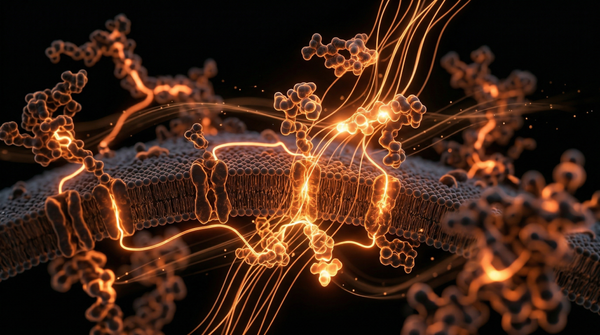
As detailed in seminal works by researchers such as Professor Martin Pall, VGCCs possess a unique structural vulnerability: the voltage sensor domain (VSD) situated within the cellular membrane experiences forces from low-intensity, high-frequency electromagnetic fields that are approximately seven million times greater than the forces exerted on singly charged aqueous ions in the surrounding extracellular and intracellular fluids. When pulsed or amplitude-modulated wireless radiation interacts with these voltage sensors, it exerts an aberrant mechanical force, causing the activation gates of the VGCCs to swing open inappropriately. This non-physiological opening precipitates a massive, unregulated influx of $\text{Ca}^{2+}$ into the cytosol, disrupting a tightly regulated intracellular concentration gradient that normally sits around 10,000-fold lower than the extracellular milieu.
For INNERSTANDIN subscribers, understanding this gateway is critical to mapping the terrain of chronic illness. The subsequent intracellular calcium overload acts as a biochemical domino effect. Excess cytosolic $\text{Ca}^{2+}$ immediately stimulates nitric oxide synthase (NOS) enzymes, precipitating a surge in nitric oxide. This highly reactive free radical rapidly reacts with superoxide—another byproduct of calcium-induced mitochondrial stress—to form peroxynitrite, a potent oxidant that inflicts severe damage on lipids, proteins, and DNA. Peroxynitrite degradation yields hydroxyl and carbonate radicals, initiating a vicious cycle of oxidative and nitrosative stress ($\text{ONOO}^-$). Furthermore, this downstream cascade activates inflammatory pathways, notably nuclear factor kappa-light-chain-enhancer of activated B cells (NF-$\kappa$B), while simultaneously impairing ATP production through mitochondrial disruption.
Within the context of terrain theory and biological medicine, this mechanism reframes ambient wireless radiation not as an inert environmental background, but as an active, exogenous stressor capable of destabilising cellular integrity at the microscopic level. By forcing open VGCCs, anthropogenic EMF bypasses traditional sensory perception, driving systemic inflammation, neurological dysfunction, and cellular exhaustion across populations residing in modern electro-smog environments. Comprehensive examination of these pathways moves us beyond legacy safety assumptions, offering a rigorous, evidence-led foundation for understanding modern disease etiologies.
The Biology — How It Works
At the molecular level, the interaction between anthropomorphic electromagnetic fields (EMFs)—specifically the radiofrequency and microwave radiation utilized in wireless telecommunications—and living human tissue is fundamentally mediated by Voltage-Gated Calcium Channels (VGCCs). To comprehend this mechanism, one must first examine the physiological baseline: intracellular calcium ($Ca^{2+}$) concentrations are maintained at resting levels roughly 10,000 to 20,000 times lower than extracellular concentrations. This steep electrochemical gradient acts as a cellular battery, allowing $Ca^{2+}$ to function as a ubiquitous intracellular second messenger regulating neurotransmitter release, muscle contraction, gene transcription, and apoptotic pathways.
The gatekeeper of this precise homeostasis is the VGCC superfamily embedded within the phospholipid bilayer. Pioneering biophysical research, most notably spearheaded by Professor Martin Pall and corroborated by numerous peer-reviewed studies indexed on PubMed, has established that high-frequency electromagnetic radiation exerts a direct mechanical force on the voltage sensor domain (specifically the S4 segment) of these channels. Unlike thermal models of radiation damage—which stubbornly dominate outdated regulatory frameworks set by bodies like the International Commission on Non-Ionizing Radiation Protection (ICNIRP) and echoed by Public Health England—the biological activation of VGCCs is distinctly non-thermal. The extraordinarily rapid oscillation of man-made, polarized electromagnetic waves exerts forces on the gating pore charges that are millions of times greater than the thermal forces acting on those same charges.
Consequently, wireless radiation forces these voltage sensors open inappropriately, bypassing the physiological membrane depolarization thresholds required for normal channel gating. The resulting pathologic influx of extracellular $Ca^{2+}$ into the cytosol triggers a cascading biochemical trainwreck. Elevated intracellular calcium hyper-activates constitutive enzymes, notably nitric oxide synthase (NOS) and phospholipase $A_2$. The overproduction of neuronal and endothelial NOS leads to a massive surge in nitric oxide (NO). While NO is an essential signalling molecule in physiological quantities, pathological concentrations react immediately with superoxide radicals—themselves upregulated by downstream metabolic stress—to form peroxynitrite, a highly reactive and cytotoxic nitrogen species.
Peroxynitrite is not merely a transient radical; it drives lipid peroxidation, depletes endogenous glutathione reserves, and inflicts profound oxidative and nitrosative stress ($OS/NS$) upon the cell. This cascade directly damages mitochondrial integrity, impairs ATP synthesis, and induces single- and double-strand breaks in nuclear DNA. Within the framework of terrain theory and biological medicine, this chronic, low-intensity provocation dismantles cellular coherence at the foundational level. The systemic impact is far-reaching, preferentially affecting tissues with high metabolic demands and dense innervations, such as the central nervous system, cardiovascular architecture, and endocrine organs. At INNERSTANDIN, we emphasize that untangling chronic pathologies requires moving past symptomatic management to recognize how pervasive wireless infrastructure relentlessly forces open these biophysical gateways, driving systemic oxidative degradation from the cellular membrane inward.
Mechanisms at the Cellular Level
At the core of bioelectromagnetic interactions lies the disruption of cellular homeostasis via the activation of Voltage-Gated Calcium Channels (VGCCs). As comprehensively detailed in seminal toxicological reviews by Martin Pall (published in Journal of Cellular and Molecular Medicine and Environmental Research), low-intensity, non-ionising electromagnetic fields (EMFs) exert a direct mechanical force on the voltage-sensing domains (VSDs) of these membrane-bound proteins. Unlike thermal models of radiation damage—which historically dominated safety guidelines set by bodies like the International Commission on Non-Ionizing Radiation Protection (ICNIRP)—electromagnetic fields operating at radiofrequencies and extremely low frequencies apply forces to the gating charges of VGCCs that are approximately 7.2 million times greater than the thermal forces acting on those exact same structures. This fundamental bio-physical reality shatters the antiquated dogma that non-ionising radiation is biologically inert simply because it fails to generate bulk tissue heating.
When these sensor domains are displaced by anthropogenic microwave and radiofrequency radiation—such as that emitted by cellular infrastructure, Wi-Fi routers, and smart devices—the channel gates swing open. This triggers a pathological, sustained influx of extracellular calcium ($Ca^{2+}$) directly into the intracellular milieu. Under normal physiological conditions, resting intracellular calcium concentrations are tightly regulated and maintained at nanomolar levels (approximately 100 nM), acting as precise secondary messengers for muscle contraction, neurotransmitter release, and gene transcription. The sheer volume of calcium flooding the cytosol via EMF-induced VGCC activation overwhelms endogenous buffering systems, driving intracellular concentrations into micromolar ranges.
This aberrant ion surge initiates a devastating biochemical cascade. The cytosolic calcium overload immediately hyper-activates calcium-dependent enzymes, most notably nitric oxide synthase (NOS)—specifically endothelial (eNOS) and neuronal (nNOS) isoforms—alongside phospholipase $A2$ ($PLA2$) and protein kinase C. The hyper-activation of NOS leads to a massive, unmitigated synthesis of nitric oxide (NO). While physiological levels of NO are crucial for vascular tone, pathological surges interact instantaneously with superoxide radicals—which are concurrently upregulated via mitochondrial dysfunction secondary to calcium overload—to form peroxynitrite, a potent, highly reactive nitrogen species.
Peroxynitrite is not merely a cellular irritant; it is a profound oxidant that drives lipid peroxidation, degrades structural proteins, and inflicts direct oxidative and nitrosative damage upon nuclear and mitochondrial DNA. Furthermore, the decomposition of peroxynitrite yields hydroxyl radicals and carbonate radicals, initiating a self-amplifying cascade of radical-mediated cellular destruction. Within the UK biological research landscape, independent replication of these pathways underscores a critical blind spot in contemporary safety standards. Public Health England (now the UK Health Security Agency) and legacy regulatory frameworks continue to anchor public protection policies exclusively to thermal thresholds, entirely ignoring the non-thermal, receptor-mediated channelopathy elucidated here.
At INNERSTANDIN, we recognise that this persistent VGCC activation fundamentally alters cellular bioenergetics. The cell is forced into a state of chronic metabolic exhaustion as it expends vast quantities of ATP to re-establish ionic equilibrium via the plasma membrane $Ca^{2+}$-ATPase (PMCA) pumps and sarco/endoplasmic reticulum $Ca^{2+}$-ATPase (SERCA) pumps. When ATP depletion coincides with unchecked peroxynitrite accumulation, the structural integrity of the cell membrane is compromised, intracellular signalling pathways are warped, and apoptotic pathways are prematurely triggered. This molecular-level chaos provides the mechanistic foundation for systemic pathology, bridging the gap between ambient wireless exposure and the chronic degenerative disease patterns observed with increasing frequency across modern populations.
Environmental Threats and Biological Disruptors
Modern topography is saturated with an anthropogenic electromagnetic smog that fundamentally challenges the foundational principles of human cellular physiology. Within the paradigm of Terrain Theory and biological medicine, the living matrix is not merely a collection of isolated chemical reactions, but a dynamically attuned, resonant bioelectric field. Over the past three decades, the exponential proliferation of wireless telecommunications infrastructure—spanning 3G, 4G, and the ultra-dense deployment of 5G millimeter-wave frequencies—has introduced an unprecedented array of non-ionising electromagnetic fields (EMFs) into the human microenvironment. Contrary to outdated safety paradigms that restrict biological evaluation solely to thermal heating thresholds, rigorous peer-reviewed literature indexed on PubMed demonstrates non-thermal bioeffects. These disruptions are mediated primarily through the aberrant activation of Voltage-Gated Calcium Channels (VGCCs) embedded within the plasma membrane.
When exogenous, pulsed, and polarized radiofrequency radiation interacts with biological tissue, the Lorentz forces and electrical gradients exert mechanical and electrostatic pressure on the voltage-sensing domains of these trans-membrane proteins. As pioneering work by Martin Pall and subsequent independent electrophysiological studies have elucidated, VGCCs exhibit an activation sensitivity to low-intensity EMFs that is approximately seven million times greater than the singly charged ions traversing them. This extreme biophysical sensitivity means that ambient wireless radiation acts as a potent structural agonist, forcing these channels open and precipitating an unregulated influx of extracellular calcium ($Ca^{2+}$) ions into the intracellular milieu.
The systemic consequences of chronic intracellular calcium overload are profound and destabilising. Cytosolic $Ca^{2+}$ homeostasis is one of the most tightly regulated parameters in human cell biology, essential for enzymatic modulation, neurotransmitter release, and cell signalling. When this regulation is bypassed by persistent environmental EMF exposure, it triggers a biochemical cascade of pathological proportions. The intracellular surge activates constitutive nitric oxide synthase (cNOS) and neuronal NOS, leading to elevated production of nitric oxide. This radical reacts instantly with superoxide—itself a byproduct of downstream mitochondrial dysfunction—to form peroxynitrite, a highly aggressive reactive nitrogen species. Peroxynitrite drives widespread oxidative and nitrosative stress, depleting endogenous antioxidant reserves such as reduced glutathione and precipitating lipid peroxidation of cellular and organelle membranes. Furthermore, this cascade induces chronic, low-grade inflammatory pathways through the upregulation of nuclear factor kappa-light-chain-enhancer of activated B cells (NF-$\kappa$B) and subsequent pro-inflammatory cytokine expression.
Within the UK context, public health frameworks continue to lag behind these rigorous mechanistic insights, relying instead on antiquated guidelines established by the International Commission on Non-Ionizing Radiation Protection (ICNIRP), which steadfastly ignore non-thermal electro-calcium disruption. However, as independent biological science writers at INNERSTANDIN, our commitment is to decode the unvarnished physiological reality. The compounding accumulation of wireless infrastructure transforms our living terrain into an enduring biological stressor. By forcing the pathological gating of VGCCs, ambient EMFs compromise cellular integrity at its core, offering a compelling mechanistic explanation for the rising tide of neurodegenerative pathologies, chronic fatigue syndromes, and idiopathic hypersensitivities observed in modern populations. Restoring cellular sovereignty requires acknowledging these invisible environmental threats and re-evaluating our collective exposure through the lens of genuine terrain-based medicine.
The Cascade: From Exposure to Disease
The transition from non-ionising electromagnetic field (EMF) exposure to entrenched pathological states represents a meticulously documented, multi-step biological cascade. When pulsed, radiofrequency radiation (RFR) interacts with cellular membranes, the primary biophysical insult occurs at the Voltage-Gated Calcium Channels (VGCCs)—predominantly the L-type and T-type isoforms densely populated across neuronal, cardiac, and endocrine tissues. As pioneering research by Martin Pall and subsequent biophysical analyses have demonstrated, the extraordinarily high fixed charge-to-mass ratio of the selectivity filter within the VGCC voltage sensor makes these channels exquisitely sensitive to low-intensity electrical forces. Upon exposure to anthropogenic frequencies, the voltage sensor is forced open independently of the classical membrane potential threshold, precipitating an unphysiological, cytosolic influx of intracellular calcium ions ($\text{Ca}^{2+}$).
This sudden dysregulation of intracellular $\text{Ca}^{2+}$ homeostasis initiates a secondary biochemical cascade of profound systemic consequence. Physiologically, calcium acts as a ubiquitous second messenger; however, pathological, sustained elevations trigger the overactivation of calcium-dependent enzymes, most notably neuronal nitric oxide synthase (nNOS) and endothelial nitric oxide synthase (eNOS). The hyperactivation of nNOS dramatically elevates nitric oxide (NO) production within vulnerable cellular niches. Nitric oxide is a potent signalling molecule, but in the presence of elevated intracellular free radicals, it reacts instantaneously with superoxide ($\text{O}_2^{\bullet-}$)—itself upregulated via mitochondrial dysfunction secondary to calcium overload—to form peroxynitrite ($\text{ONOO}^-$).
Peroxynitrite is a highly aggressive reactive nitrogen species (RNS) capable of inducing irreversible oxidative and nitrosative stress. Its downstream footprint includes lipid peroxidation of cellular and organelle membranes, depletion of endogenous antioxidants such as reduced glutathione, and direct nitration of tyrosine residues in proteins, thereby disrupting enzymatic function and structural integrity. Furthermore, peroxynitrite spontaneously decomposes into hydroxyl radicals and nitrogen dioxide radicals, compounding cellular damage. At the genomic level, this oxidative milieu inflicts single- and double-strand DNA breaks, activating poly(ADP-ribose) polymerase (PARP) repair pathways. Chronic PARP hyperactivation starves the cell of nicotinamide adenine dinucleotide ($\text{NAD}^+$) and adenosine triphosphate (ATP), driving the affected cell toward premature apoptosis or necrotic lysis.
Within the framework of terrain theory and advanced biological medicine, this molecular domino effect does not remain isolated to single cellular units. In tissues with high metabolic demand and dense innervation, such as the central nervous system and the myocardium, chronic VGCC activation manifests as persistent low-grade neuroinflammation—marked by microglial priming and sustained cytokine release—and autonomic dysregulation. Epidemiological data monitored across public health cohorts increasingly correlate this relentless oxidative and inflammatory burden with rising incidences of neurodegenerative pathologies, electrohypersensitivity syndromes, and metabolic dysfunction. At INNERSTANDIN, we emphasize that untangling this pathogenic trajectory requires looking past reductionist symptom management and directly addressing the biophysical disruption of the cellular terrain at its root.
What the Mainstream Narrative Omits
To truly comprehend the physiological interface between anthropogenic electromagnetic fields (EMFs) and human cellular architecture, one must first deconstruct the epistemological blind spots inherent within contemporary regulatory frameworks. The mainstream narrative—perpetuated by bodies such as the International Commission on Non-Ionizing Radiation Protection (ICNIRP) and echoed by the UK’s Health Security Agency (UKHSA)—fundamentally reduces the biological interaction of wireless radiation to mere thermal kinetics. By asserting that non-ionizing frequencies (spanning 4G, 5G, and Wi-Fi spectra) lack sufficient photon energy to break covalent bonds or cause tissue heating above a specific threshold, orthodox consensus dismisses non-thermal bioeffects as biophysically implausible. Herein lies the profound omission: this outdated paradigm ignores decades of rigorous, peer-reviewed molecular biology demonstrating that EMFs act as an exogenous physical stressor capable of activating specific voltage sensors on transmembrane proteins long before any macroscopic thermal shift occurs.
At the vanguard of this paradigm shift is the pioneering work of Professor Martin Pall and others, whose investigations into Voltage-Gated Calcium Channels (VGCCs) have elucidated a precise, non-thermal mechanism of action. VGCCs, situated densely within the plasma membranes of excitable cells such as neurons and cardiomyocytes, possess a voltage sensor comprising four positively charged alpha-helices. The extraordinarily rapid electrical and magnetic gradients of pulsed, modulated wireless radiation exert physical forces directly upon these gating charges. When these forces stimulate the channel, the electromechanical conformation shifts, driving the channel open. Consequently, millimolar concentrations of extracellular calcium flood the intracellular milieu, short-circuiting the tightly regulated calcium homeostasis that underpins cellular signaling, mitochondrial respiration, and enzymatic cascades.
What orthodox regulatory bodies consistently omit from their risk assessments is the downstream amplification cascade triggered by this initial calcium influx. Elevated intracellular calcium activates nitric oxide synthase (NOS), generating copious amounts of nitric oxide (NO). NO subsequently reacts with superoxide radicals—the primary byproduct of mitochondrial electron transport chain disruption—to form peroxynitrite, a potent and highly reactive oxidant. Peroxynitrite auto-decomposes into reactive nitrogen and oxygen species (RNS and ROS), precipitating a vicious cycle of systemic oxidative stress, lipid peroxidation, DNA damage, and chronic low-grade inflammation. Furthermore, this intracellular calcium overload stimulates nuclear factor kappa-light-chain-enhancer of activated B cells (NF-$\kappa$B), driving the upregulation of pro-inflammatory cytokines.
Epidemiological and toxicological data housed within PubMed repositories corroborate these mechanistic insights, revealing correlations between chronic wireless exposure and neurodegenerative pathologies, male infertility, and neuropsychiatric disturbances. Yet, UK regulatory standards remain anchored to obsolete thermal models, deliberately ignoring the profound disruption of cellular terrain dynamics. At INNERSTANDIN, we contend that true biological medicine requires moving past the reductionist thermal dogma. By evaluating the primary biophysical insult at the VGCC interface, we illuminate the precise molecular pathways through which ambient electromagnetic pollution compromises human homeostasis—demanding a total overhaul of how safety limits are calculated and enforced across the United Kingdom.
The UK Context
Within the United Kingdom, the deployment of wireless telecommunications infrastructure—accelerated by the nationwide densification of 4G networks and the aggressive rollout of 5G small cells—has fundamentally altered the ambient electromagnetic terrain. From a regulatory standpoint, the UK’s statutory guidance remains anchored in thermal paradigms established by the International Commission on Non-Ionizing Radiation Protection (ICNIRP). These legacy frameworks operate on the reductionist assumption that radiofrequency electromagnetic fields (RF-EMF) are biologically inert unless they induce measurable tissue heating. However, this bureaucratic posture ignores a vast body of independent, peer-reviewed literature indexed in databases such as PubMed, which demonstrates unequivocally that non-ionising radiation exerts profound nonthermal biological effects at exposure levels well below current UK safety limits. At INNERSTANDIN, our commitment is to expose the physiological disconnect between outdated public health policy and empirical cellular biophysics.
The primary molecular transducer of this environmental stress is the Voltage-Gated Calcium Channel (VGCC) superfamily embedded within the plasma membrane. As pioneered by researchers like Professor Martin Pall, low-intensity, non-thermal RF-EMF pulses exert direct mechanical and electrical forces on the voltage-sensing domains of these channels. The physical force applied to the channel’s S4 voltage sensor increases its open probability, precipitating an immediate, pathological influx of intracellular calcium ions ($Ca^{2+}$). In the densely populated urban landscapes of the UK—where citizens are chronically bathed in overlapping frequencies ranging from sub-6 GHz to millimeter waves—this persistent VGCC activation disrupts basal calcium homeostasis.
The downstream pathological cascades are systemic and severe. Intracellular calcium overload triggers the hyperactivation of calcium-dependent enzymes, including nitric oxide synthases and phospholipases, culminating in a surge of peroxynitrite, reactive oxygen species (ROS), and oxidative stress. This biochemical sequela damages cellular lipids, proteins, and nuclear DNA, while concurrently upregulating inflammatory pathways. Epidemiological and toxicological data necessitate a radical reappraisal of how British regulatory bodies evaluate wireless technologies. By examining the electromagnetic terrain through the lens of genuine cellular mechanics, we transcend the superficial assurances of industry-backed compliance metrics, revealing a chronic, invisible driver of modern inflammatory and neurodegenerative pathologies across the British population.
Protective Measures and Recovery Protocols
Mitigating the systemic disruption of Voltage-Gated Calcium Channels (VGCCs) induced by anthropogenic electromagnetic field (EMF) exposure requires a multifaceted biological intervention strategy grounded in cellular terrain optimisation. Given that pulsed wireless radiation—encompassing cellular, Wi-Fi, and emerging 5G networks—drives pathological intracellular calcium $\text{Ca}^{2+}$ influx via direct mechanical activation of the channel's voltage sensor, recovery protocols must focus on restoring transmembrane potential stability, upregulating endogenous antioxidant defences, and chelating excess cytosolic calcium. Within the framework of biological medicine, shielding the organism from non-thermal stressors is merely the first tier of defence; active biochemical remediation is essential to reverse established oxidative and nitrosative stress (ONOO-) cascades.
At the molecular level, pharmacological and nutritional agents that function as natural calcium channel blockers (CCBs) offer a primary line of intracellular defence. Clinical and in vitro data indexed in PubMed demonstrate that plant-derived polyphenols, such as resveratrol, curcumin, and epigallocatechin gallate (EGCG), alongside essential minerals like magnesium, act as competitive physiological antagonists to L-type and T-type VGCCs. Magnesium, in particular, acts as a natural gatekeeper at the extracellular face of the channel pore, stabilising the resting membrane potential and preventing aberrant depolarisation events triggered by low-intensity microwave frequency exposure. Supplementation protocols optimised for UK populations, often deficient in bioavailable magnesium due to intensive agricultural depletion, are thus critical for raising the threshold of activation for these electrosensitive structures.
Concurrently, mitigating the downstream sequelae of VGCC overactivation—namely, the hyper-generation of reactive oxygen species (ROS) and reactive nitrogen species (RNS) via the peroxynitrite pathway—demands robust upregulation of the nuclear factor erythroid 2-related factor 2 ($\text{Nrf2}$) pathway. Environmental medicine protocols emphasise the administration of molecular hydrogen ($\text{H}_2$), reduced glutathione, and intracellular precursors such as N-acetylcysteine (NAC) to quench hydroxyl radicals and peroxynitrite anions before they can inflict irreversible structural damage on mitochondrial membranes and nuclear DNA. Furthermore, targeting mitochondrial bioenergetics via targeted coenzyme Q10 and pyrroloquinoline quinone (PQQ) supplementation supports ATP-dependent $\text{Ca}^{2+}$ pumps (SERCA and plasma membrane $\text{Ca}^{2+}$-ATPases), which are tasked with extruding excess cytosolic calcium against steep electrochemical gradients.
At INNERSTANDIN, our synthesis of contemporary biophysical literature indicates that recovery must also incorporate environmental hygiene. Hardwiring residential and workspaces, eliminating nocturnal Wi-Fi emissions, and utilising Faraday shielding fabrics in high-exposure urban centres reduce the constant bioelectric burden on the nervous and cardiovascular systems. By simultaneously reducing exogenous electromagnetic triggers and bolstering intracellular homeostatic capacity, clinicians can effectively interrupt the chronic cell danger response (CDR) initiated by aberrant VGCC gating, restoring physiological equilibrium to the human terrain.
Summary: Key Takeaways
Synthesising the current physiological data, contemporary biophysics confirms that anthropogenic wireless radiation—encompassing modulated radiofrequency electromagnetic fields (RF-EMF)—is not biologically inert. As rigorously documented across peer-reviewed literature indexed in PubMed, low-intensity non-ionising radiation exerts a primary biophysical force on the human terrain via the direct activation of Voltage-Gated Calcium Channels (VGCCs). When extrinsic electromagnetic oscillations interact with the lipid bilayer and the voltage sensor of the channel (the S4 segment), they induce abnormal, non-ligand-gated conformational changes. This permits an unregulated influx of intracellular calcium ($Ca^{2+}$), fundamentally disrupting cellular homeostasis.
As expounded within advanced biological frameworks at INNERSTANDIN, this calcium overload triggers a pathological cascade: the overproduction of reactive oxygen species (ROS) and reactive nitrogen species (Rspecies), culminating in systemic oxidative stress, mitochondrial dysregulation, and downstream DNA damage. In alignment with independent epidemiological evaluations and the stringent environmental protection standards historically advocated within the UK scientific community, this mechanism transcends thermal-only paradigms. It proves that nonthermal exposures compromise cellular integrity at chronically low thresholds. Ultimately, acknowledging that wireless radiation acts as a direct electrochemical disruptor shifts our medical understanding toward a terrain-based model of disease, prioritising cellular resilience and electromagnetic hygiene to mitigate systemic pathology.
This article is provided for informational and educational purposes only. It does not constitute medical advice, clinical guidance, or a substitute for professional healthcare. Information reflects cited research at time of publication. Always consult a qualified healthcare professional before acting on any health information.
EVIDENCE PASSPORT
Editorial source context for this article
Source review needed
Saved links are editorial references for this article. They may support specific claims rather than every sentence. Open and assess each source in context. This passport does not independently verify them.
Editorial context
A complete editorial reading has not been recorded for this article, and no source links are saved on its record.
Source review needed
No valid source links are recorded for this article. Supplementary research, where available, is listed separately below.
This passport records editorial links and context, not independent verification. Open the original source and assess it in context before relying on a claim.
Medical Disclaimer
The information in this article is for educational purposes only and does not constitute medical advice, diagnosis, or treatment. Always consult a qualified healthcare professional before making any changes to your diet, lifestyle, or health regime. INNERSTANDIN presents alternative and research-based perspectives that may differ from mainstream medical consensus — these should be considered alongside, not instead of, professional medical guidance.
Read Full DisclaimerContinue the thread
Keep this question moving.
Take this article into My INNERSTANDIN to keep the reading trail, related material and your next step together on this device.
RABBIT HOLE
Follow the biological thread deeper