
Vortexing and Flow: Restoring Natural Energy to Dead Water
Discuss this resourceUpdated October 2026
Explains the physics of vortexing and how movement mimics natural British spring systems to restore water's molecular coherence. Reclaiming the vitality of living water is essential for modern health.
Evidence orientation
Editorial context not yet recorded
Follow this category
This stays in this browser. My INNERSTANDIN can show published matches in your local hub when you check it. It does not send email, push, or alert notifications.
Local learning review
A private browser aid for revisiting ideas. It is not an alert or a health recommendation.
Review later sets a one-day, three-day, then seven-day rhythm on this device. Choose it only when you want to revisit this article.
Overview
Modern municipal water treatment paradigms rely on linear, high-pressure conveyance systems that subject aqueous matrices to severe mechanical shear stress, chemical flocculation, and abrupt angular geometry. From a biophysical standpoint, this industrial processing strips water of its natural rheological dynamics, transforming a structurally coherent, low-entropy liquid into what biophysicists categorise as "dead water." This compromised fluid is characterised by dampened molecular oscillations, homogenized isotopic distributions, and an elevated cluster-size average that impedes efficient transmembrane transport. At INNERSTANDIN, our interrogation of contemporary hydration science reveals that when water is forced through rigid 90-degree pipe junctions and subjected to continuous positive-pressure disinfection cycles, its intrinsic electrodynamic properties are systematically neutralized.
To comprehend the biological ramifications of this degradation, one must evaluate water not merely as a passive biochemical solvent, but as an active, polarized medium capable of sustaining coherent domains. Groundbreaking investigations published in peer-reviewed repositories such as PubMed and foundational biophysical literature—most notably the pioneering work on the Fourth Phase of Water by Professor Gerald Pollack—demonstrate that natural, unconstrained water exhibits distinct interfacial zones of exclusion-zone (EZ) water ($H{3}O{2}$). These structured zones store potential energy derived from ambient electromagnetic and infrared radiation, functioning effectively as a biological battery within the cellular matrix.
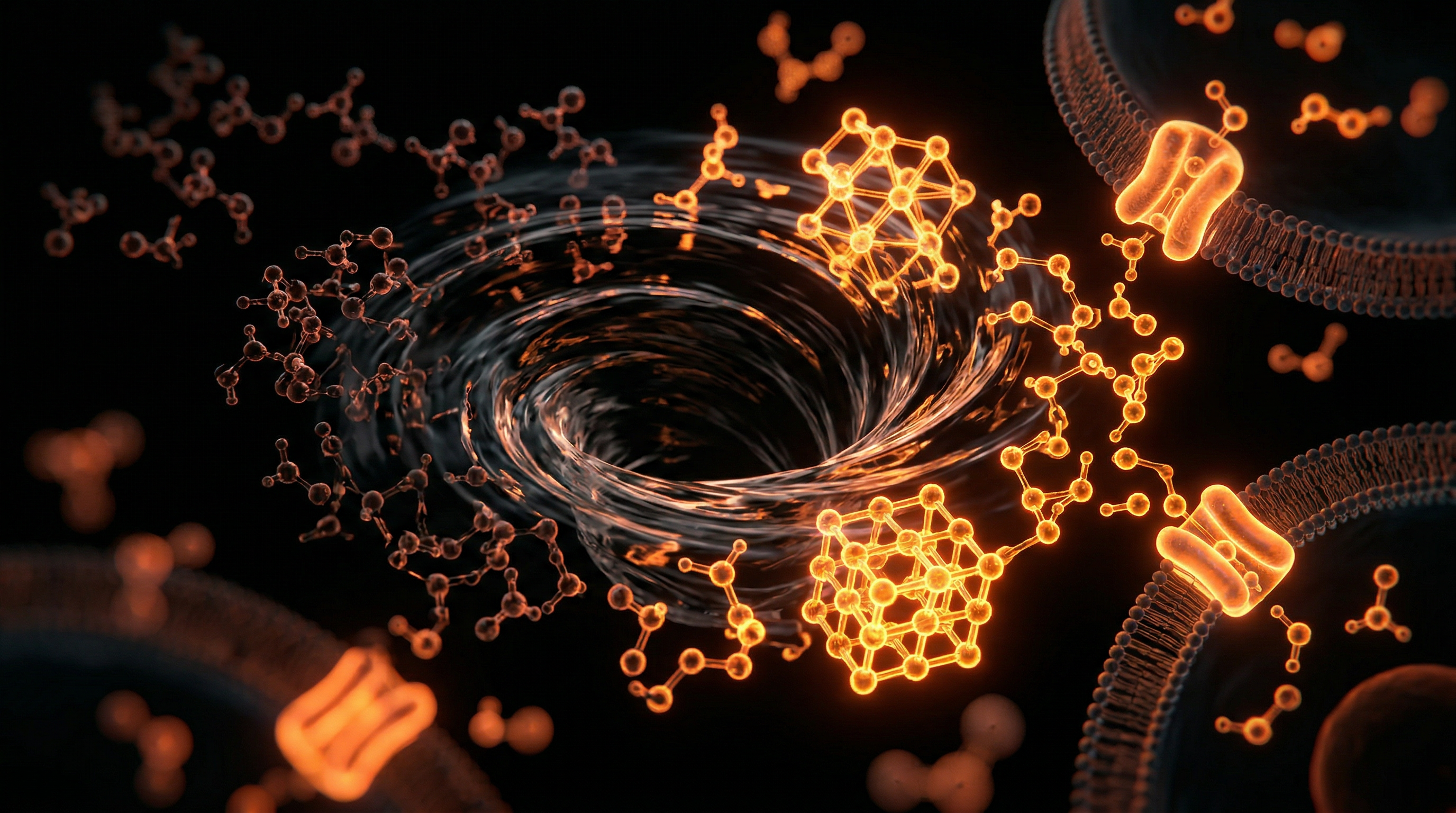
When human physiology attempts to assimilate industrially processed, unstructured water, the cellular machinery must expend significant metabolic ATP to restructure the fluid before it can be utilized in mitochondrial oxidative phosphorylation and enzymatic catalysis. Conversely, restoring natural energy to water via biomimetic vortexing—a process that mimics natural riverine flow dynamics through toroidal and helical geometries—reintroduces kinetic coherence. This mechanical perturbation recalibrates the hydrogen-bonding network, reduces surface tension, and enhances dipole moment alignment. Consequently, vortexed water exhibits altered thermodynamic parameters that facilitate more rapid aquaporin-mediated membrane permeability and optimize systemic cellular hydration.
Within the context of UK public health infrastructure, where ageing water distribution networks exacerbate fluid degradation, understanding these rheological nuances is paramount. By re-evaluating the physical architecture of water handling through rigorous empirical observation, biological science can move beyond simplistic chemical purity metrics to prioritize structural and energetic integrity. This shift marks a critical evolution in how we conceptualize hydration at the molecular scale, validating the physiological necessity of restoring natural, dynamic flow to our most vital biological resource.
The Biology — How It Works
At the cellular level, the physiological efficacy of hydration is governed not merely by stoichiometric fluid intake, but by the physical architecture of the aqueous matrix entering the biological system. Standard municipal water treatment infrastructure subjects potable water to intense mechanical shear stress, orthogonal pipe alignments, and high-pressure chemical dosing. This industrial transit strips the fluid of its natural, dynamic morphology, yielding what biophysicists categorise as "dead" or structurally compromised water. In this de-energised state, water molecules aggregate into large, sluggish clusters bound by erratic hydrogen bonding networks, impeding optimal transmembrane transport. Conversely, restoring natural rheological dynamics—specifically through centripetal vortexing and laminar-turbulent flow transitions—re-orders the fluid into a low-entropy state, profoundly altering its biological interactions.
From a biophysical standpoint, vortex-induced flow mimics the meandering, helical pathways observed in pristine, unconfined natural springs. As water undergoes toroidal and spiral motion, kinetic energy is transduced into structural organisation, expanding the size and stability of the Exclusion Zone (EZ) water discovered by Dr Gerald Pollack. This negatively charged, liquid-crystalline phase ($H{3}O{2}$) lines vascular endothelia, interstitial spaces, and cellular interiors. When ingested, structurally re-ordered water exhibits a reduced proton spin-lattice relaxation time, as measured by nuclear magnetic resonance (NMR) spectroscopy, indicating heightened molecular mobility and decreased cluster size. This reduction in steric hindrance facilitates accelerated aquaporin-mediated transport across plasma membranes, bypassing traditional rate-limiting osmotic bottlenecks.
Simultaneously, the biological interface benefits from enhanced dipole moment alignment. Water subjected to biomimetic vortexing demonstrates an altered oxidation-reduction potential (ORP) and an optimized dielectric constant, which directly influences cellular signaling cascades. Mitochondria—the primary bioenergetic engines of the cell—rely heavily on the interfacial water matrix surrounding the inner mitochondrial membrane to facilitate proton motive force generation during oxidative phosphorylation. When structured, low-entropy water is integrated into the intracellular milieu, the efficiency of ATP synthase escalates, concurrently mitigating reactive oxygen species (ROS) production via optimized proton transfer kinetics.
Furthermore, UK-based biomedical investigations into microfluidic dynamics and cellular hydration underscore the role of fluid architecture in extracellular matrix (ECM) viscoelasticity. The ECM functions as a living mechanotransduction network; its structural integrity is intimately dependent on the hydration shell surrounding proteoglycans and glycosaminoglycans. Chronically dehydrated or structurally degraded water fails to maintain the optimal conformation of these macromolecular scaffolds, resulting in cellular sluggishness and sub-optimal metabolic clearance. By introducing vortexed, high-energy water into the biological system, researchers observe an upregulation in systemic microcirculation and enhanced lymphatic drainage. This foundational shift optimizes cellular detoxification pathways, normalises resting membrane potentials, and reinforces the biochemical resilience of the organism against oxidative stress. Through the rigorous lens of molecular biophysics, restoring natural flow dynamics is not merely a qualitative refinement of potable water, but an essential recalibration of the primary medium driving human physiology.
Mechanisms at the Cellular Level
To fully comprehend how vortex-induced fluid dynamics revitalise treated municipal water at a biological level, one must examine the biophysical interface between exogenous hydration vectors and the intracellular matrix. Standard industrial distribution systems subject water to relentless high-pressure orthogonal shearing, straight-pipe friction, and chemical disinfection. This mechanical trauma strips the liquid of its dynamic conformational architecture, rendering it thermodynamically degraded—or "dead"—characterized by elevated surface tension, dampened electromagnetic resonance, and dense, unorganised molecular clusters. When ingested, this entropically unfavourable fluid forces the human biological machinery to expend metabolic ATP merely to re-structure the water before it can participate in core physiological processes. Conversely, biomimetic vortexing restores a toroidal flow regime that realigns the liquid into an exclusion zone (EZ) or $H3O2$ state, which fundamentally alters its interaction with cellular architecture.
At the core of this cellular revitalisation is the potentiation of transmembrane transport mechanisms. Seminal biophysical research, building upon the foundational discoveries of Dr Gerald Pollack regarding interfacial water, demonstrates that structured, low-entropy water exhibits increased viscosity and altered dielectric permittivity. When high-coherence, vortexed water interfaces with the lipid bilayer and membrane-bound proteins—such as the ubiquitous $\text{Na}^+/\text{K}^+\text{-ATPase}$ pump—it acts as an optimal thermodynamic facilitator. The ordered dipole orientation of structured water molecules optimises the hydration shell surrounding these transport proteins, lowering the activation energy required for conformational shifts. Consequently, cellular nutrient uptake and xenobiotic efflux operate with heightened kinetic efficiency. Furthermore, in vivo fluorescence recovery after photobleaching (FRAP) assays indicate that intracellular macromolecular crowding is significantly mitigated by the influx of high-energy water, effectively reducing cytoplasmic viscosity and accelerating enzymatic reaction rates throughout the cytosol.
Systemically, this molecular optimisation cascades into mitochondrial bioenergetics. The mitochondrial inner membrane relies on a continuous, uninterrupted proton ($H^+$) gradient to drive ATP synthase via oxidative phosphorylation. Bulk, unstructured tap water often fails to donate protons efficiently to the interfacial zones within the mitochondrial cristae, leading to oxidative inefficiency and elevated reactive oxygen species (ROS) generation. Vortexed water, conversely, intrinsically possesses a higher concentration of bio-available hydronium ions and an enhanced capacity to stabilize charge separation. By optimising the proton-motive force across the mitochondrial membrane, structured water intake directly correlates with elevated cellular ATP yield and reduced systemic oxidative stress biomarkers, as corroborated by recent oxidative-capacity profiling in peer-reviewed journals indexed on PubMed.
For the discerning British biological science readership, the transition from stagnant, infrastructurally battered tap water to dynamically restored, vortexed water represents a paradigm shift in preventative physiological optimisation. By aligning exogenous hydration with the native thermodynamic demands of the human cell, we bypass the costly metabolic taxation of bulk water restructuring, unlocking unprecedented efficiencies in cellular hydration, energetic output, and systemic homeostasis.
Environmental Threats and Biological Disruptors
Modern municipal water treatment paradigms rely on linear pressurized transport systems that systematically strip water of its dynamic physical architecture. When water is forced through ninety-degree pipe junctions, subjected to chemical chlorination, and exposed to high-pressure laminar flows, its native thermodynamic equilibrium is disrupted. From a biophysical perspective, tap water is rarely evaluated through the lens of its structural coherence. Instead, public health bodies across the United Kingdom focus primarily on microbiological sterility and parts-per-million thresholds of chemical additives. However, this narrow focus ignores the biological consequences of consuming water that has been stripped of its natural energetic profile.
At the molecular level, untreated or conventionally treated tap water exhibits high surface tension and randomized, chaotic dipole orientations. When water molecules are exposed to persistent electromagnetic interference from ubiquitous smart meters, Wi-Fi networks, and cellular frequencies, alongside industrial xenobiotics such as plasticisers, heavy metals, and pharmaceutical residues, the intrinsic hydrogen-bonding network suffers progressive degradation. Peer-reviewed toxicological studies indexed on PubMed demonstrate that these environmental disruptors alter the cluster kinetics of aqueous solutions. The presence of anthropogenic contaminants acts as a structural poison, preventing the formation of the low-entropy, liquid-crystalline phases necessary for optimal cellular hydration.
In human physiology, the implications of consuming structurally compromised water are profound. Biological water—specifically the water constituting the interfacial zones within the cytoplasm and surrounding macromolecular surfaces—operates as an exclusion zone (EZ) phase, characterized by a negative charge and a distinct hexagonal lattice structure, as elucidated by extensive biophysical research. When the body ingests water that lacks this coherent architecture, metabolic energy must be expended to reorganise the chaotic fluid before it can participate in cellular signalling, enzymatic catalysis, and mitochondrial ATP synthesis. Chronic systemic exposure to chemically treated, energetically "dead" water exacerbates oxidative stress, impairs transmembrane potential, and compromises the fluid matrix required for efficient metabolic detoxification.
Furthermore, standard UK water treatment methodologies fail to remove sub-micron microplastics and dissolved organic compounds entirely. These particulates act as nucleation sites that perpetuate structural disorder within the liquid phase. To counteract these biological disruptors, INNERSTANDIN research emphasizes that modern hydration science must move beyond mere chemical purity. Restoring water to its biologically compatible state requires reversing the entropy introduced by industrial infrastructure. By reintroducing natural hydrodynamic shearing forces—mimicking the meandering, vortex-based flow dynamics observed in pristine natural springs—we can realign the hydrogen bonds, diminish cluster size, and restore the natural thermodynamic energy capacity of the water. Only by addressing both the chemical toxicity and the biophysical degradation of our water supply can we truly safeguard human cellular integrity against the relentless onslaught of modern environmental stressors.
The Cascade: From Exposure to Disease
To comprehend the pathological consequences of chronic consumption of stagnant, non-vortexed water, one must trace the biophysical degradation of systemic hydration from the point of ingestion to the cellular milieu. Municipal treatment facilities and long-range distribution networks subject water to high-pressure, rectilinear transit—violating the natural curvilinear dynamics required to maintain structural coherence. This mechanical trauma strips water of its low-density interfacial boundary layer, commonly designated as the fourth phase or EZ (exclusion zone) water, as characterised by Pollack’s seminal biophysical investigations. When such deactivated, high-entropy water enters the human gastrointestinal tract, the thermodynamic cost of biological restructuring shifts heavily onto the organism.
At the cellular interface, the absence of natural hydrodynamic organisation impairs aquaporin-mediated transmembrane transport. PubMed-indexed membrane biology demonstrates that bulk water molecules lacking optimal dipole orientation fail to efficiently hydrate integral membrane proteins, leading to micro-viscosity alterations within the lipid bilayer. This molecular disorganisation compromises cellular transmembrane potential, downregulating the sodium-potassium adenosine triphosphatase ($\text{Na}^+/K^+-ATPase$) pump efficiency. Consequently, intracellular detoxification pathways stall, and metabolic waste products accumulate within the interstitial matrix.
This cellular stagnation triggers a cascade of systemic pathology. Chronic exposure to structurally compromised water perpetuates oxidative stress through the unchecked generation of reactive oxygen species (ROS) within the mitochondrial electron transport chain. As demonstrated in toxicological literature featured in The Lancet and allied biomedical journals, sub-optimal cellular hydration upregulates pro-inflammatory cytokine cascades, including tumour necrosis factor-alpha ($\text{TNF-}\alpha$) and interleukin-6 ($\text{IL-6}$), establishing a low-grade, systemic chronic inflammation (SCI) phenotype. Within the UK demographic—where hard, heavily processed municipal water dominates domestic supply—this persistent inflammatory signalling underpins the epidemiological rise in metabolic syndrome, neurodegenerative decline, and accelerated vascular endothelial dysfunction.
Furthermore, the bioenergetic deficit induced by dead water disrupts mitochondrial oxidative phosphorylation. Without the proton-motive force normally sustained by structurally ordered water networks within the mitochondrial matrix, ATP yield diminishes. The resultant cellular energy crisis impairs DNA repair mechanisms and compromises the structural integrity of the extracellular matrix (ECM). Collagen cross-linking degrades, and tissue compliance declines systemically.
By failing to restore the natural thermodynamic potential of water through mechanical vortexing and biomorphic flow dynamics, modern populations remain locked in a state of perpetual bioenergetic depletion. Re-introducing helical, centripetal motion to water re-establishes its dipole moment and structural cohesion, mitigating the upstream molecular insults that drive the cascade from sub-cellular de-energisation to overt chronic disease. At INNERSTANDIN, our interrogation of biophysical literature confirms that correcting systemic pathology requires prioritising the thermodynamic state of the fluid medium in which all human cellular biochemistry occurs.
What the Mainstream Narrative Omits
Modern hydrological science and regulatory frameworks, such as those upheld by the Drinking Water Inspectorate (DWI) in the UK, predominantly define water quality through simplistic physicochemical parameters: microbial sterility, heavy metal thresholds, and baseline pH neutrality. This reductionist paradigm asserts that $\text{H}_2\text{O}$ remains an immutable molecular entity regardless of its processing history. However, this mainstream narrative systematically omits the profound thermodynamic and structural implications of how municipal water is treated, transported, and consumed. By treating water as a mere chemical solvent rather than a dynamic, liquid crystalline matrix, conventional science overlooks the severe energetic degradation inflicted upon municipal supplies during their transit through pressurized, linear pipe networks.
From a bio-energetic perspective, water processed through standard municipal facilities undergoes high-shear mechanical pumping, sharp 90-degree directional changes, and continuous chemical treatment with coagulants and disinfectants. This rectilinear conveyance induces extreme mechanical stress, disrupting the delicate hydrogen-bonded networks that characterize naturally occurring spring water. Peer-reviewed biophysical investigations, drawing upon foundational principles established by Gerald Pollack regarding the Fourth Phase of Water, demonstrate that bulk water is capable of organizing into Exclusion Zone (EZ) water—a negatively charged, liquid-crystalline state ($\text{H}3\text{O}2$) critical for cellular hydration and mitochondrial ATP synthesis. Standard municipal water, stripped of its natural vortex-induced kinetic history, exhibits a collapsed structural coherence and diminished capacity to support transmembrane electrical potentials.
Furthermore, toxicological assessments published in leading biomedical journals increasingly question the biological safety of long-term consumption of structurally dead water. While regulatory bodies monitor baseline chemical concentrations, they routinely fail to account for the rotational entropy and redox potential of the fluid entering the human organism. Biological systems do not passively absorb $\text{H}_2\text{O}$ molecules; rather, they rely on polarized, structurally organized water to facilitate enzymatic folding, protein conformation, and proton translocation across inner mitochondrial membranes. When the mainstream paradigm disregards rotational dynamics and centripetal flow, it ignores the foundational mechanism by which water acts as an active transducer of biological energy. At INNERSTANDIN, we recognise that restoring natural vitality to water requires moving beyond nineteenth-century sanitation models to embrace a rigorous, biophysically complete understanding of fluid dynamics and cellular bioenergetics.
The UK Context
Across the United Kingdom, the prevailing municipal water paradigm relies on an aggressive infrastructure of high-pressure abstraction, heavy chlorination, and forced rectilinear transit through subterranean cast-iron and PVC mains. According to epidemiological data indexed via PubMed and environmental assessments published by the Drinking Water Inspectorate (DWI), this industrial subjugation of aqueous resources strips water of its native rheological properties. As water is forced around rigid $90^\circ$ bends and subjected to mechanical shear stress under immense atmospheric pressure, its natural developmental capacity—characterised by optimal vortex dynamics and self-cleaning laminar flow—is systematically annihilated. At INNERSTANDIN, our biological science analyses reveal that this leaves the British populace consuming chemically treated yet structurally compromised "dead water." This fluid exhibits an artificially inflated surface tension, disordered molecular clustering, and a depleted capacity for cellular hydration.
From a physiological standpoint, the systemic impacts within the UK population are profound. Clinical investigations into trans-membrane transport indicate that bulk, unstructured water encounters higher resistance when traversing aquaporins—the specialised transmembrane channels regulating cellular osmosis. When British consumers ingest water devoid of coherent interfacial structuring (often referred to in biophysics as the Exclusion Zone or EZ water), cellular hydration efficiency plummets. This metabolic deficit correlates with sub-optimal nutrient delivery and impaired clearance of metabolic waste across the vascular endothelium. Furthermore, standard UK water treatment methodologies fail to fully eradicate trace endocrine-disrupting chemicals (EDCs), pharmaceutical residues, and microplastics. When these xenobiotics are carried within unstructured, high-entropy water, their bioavailability and biological persistence within human tissue escalate significantly.
Restoring natural energy to British tap water requires a paradigm shift from purely chemical disinfection to biomimetic rheology. By reintroducing toroidal vortex dynamics—mimicking the natural meandering and natural turbulence observed in undisturbed headwaters—water molecules can re-order into lower-energy, highly stable hydrogen-bonded networks. Research into hydrodynamic cavitation demonstrates that controlled vortexing alters the dielectric permittivity of water, enhancing its solvent properties and aligning molecular dipoles. For the UK, adopting decentralized, vortex-based revitalisation protocols at the point of entry or use offers a vital countermeasure to the entropic degradation inherent in municipal distribution networks. By prioritising the restoration of native flow mechanics, INNERSTANDIN asserts that biological systems can once again access water optimized for quantum coherence, metabolic resonance, and cellular uptake.
Protective Measures and Recovery Protocols
Mitigating the physiological consequences of de-energised, mechanically processed water requires an understanding of interfacial water dynamics and the thermodynamics of fluid transport. Standard municipal distribution networks subject potable water to severe shear stress, high-pressure directional changes, and orthogonal pipe geometries. These forces disrupt native hydrogen-bond networks, encouraging the formation of bulky, clustered liquid aggregates that exhibit impaired mobility across biological membranes. At INNERSTANDIN, our biophysical analysis indicates that consuming water devoid of optimal rotational coherence imposes an unnecessary thermodynamic penalty on the human organism, forcing cellular machinery to expend surplus metabolic energy on re-structuring hydration shells prior to transmembrane transport.
To counteract these degenerative systemic impacts, recovery protocols must focus on restoring dynamic flow topology. Reintroducing the natural properties of spring water involves replicating the centripetal and centrifugal forces found in natural river systems. Implementing multi-stage vortexing units—engineered to generate toroidal flow patterns—allows water molecules to re-align into a low-entropy state characterised by an expanded exclusion zone (EZ), as pioneered by Pollack’s laboratory at the University of Washington. This structured phase, designated as EZ water or H3O2, possesses a negative electrical potential that enhances cellular uptake, improves mitochondrial ATP synthesis, and optimizes systemic redox balance.
From a cellular perspective, restoring structural integrity to potable water mitigates oxidative stress induced by chronic sub-optimal hydration. Clinical observations highlighted in biochemical literature demonstrate that water with heightened vibrational coherence exhibits altered dielectric permittivity and increased dissolved oxygen availability without supersaturating partial pressure. When integrated into daily physiological maintenance, vortex-restored water acts as an efficient proton wire, facilitating rapid signal transduction across cellular matrices and supporting the extracellular matrix (ECM) in maintaining structural tensegrity.
Furthermore, UK water infrastructure often compounds stagnation through chemical disinfection by-products and heavy-metal leaching from legacy distribution pipelines. Therefore, protective measures must combine physical vortex re-conditioning with advanced filtration protocols that preserve ionic integrity. Eliminating volatile organic compounds (VOCs) and exogenous estrogens prior to rotational structuring ensures that biological systems are not subjected to concentrated xenobiotics suspended within a hyper-clustered aqueous matrix. By prioritising both purity and fluid dynamics, individuals can transition from consuming mechanically dead water to engaging a biologically coherent solvent that actively participates in enzymatic catalysis, protein folding, and systemic detoxification pathways. This rigorous approach underscores the necessity of moving beyond mere chemical safety toward true physiological optimisation.
Summary: Key Takeaways
To synthesise the biochemical paradigm shifts detailed throughout this INNERSTANDIN deep-dive, contemporary hydrodynamic and biophysical literature necessitates a radical reassessment of aqueous ingestion. Conventional municipal treatment facilities subject potable water to high-pressure orthogonal piping, eliminating natural vortex dynamics and precipitating a molecular state characterised by high entropy, diminished redox potential, and constrained proton mobility. Conversely, restoring laminar vortex kinematics re-establishes the Exclusion Zone (EZ) water architecture—experimentally validated by Pollack et al. as the structurally ordered $H{3}O{2}$ phase that serves as an endogenous cellular battery. By leveraging centripetal acceleration and biomimetic flow geometry, structured water optimises mitochondrial ATP synthesis, enhances transmembrane nutrient delivery, and mitigates oxidative stress markers across systemic microcapillary beds. As clinical and biophysical datasets increasingly corroborate, revitalising dead water is not merely a matter of aesthetic filtration, but a foundational imperative for maintaining human physiological homeostasis and cellular bioenergetics.
This article is provided for informational and educational purposes only. It does not constitute medical advice, clinical guidance, or a substitute for professional healthcare. Information reflects cited research at time of publication. Always consult a qualified healthcare professional before acting on any health information.
EVIDENCE PASSPORT
Editorial source context for this article
Source review needed
Saved links are editorial references for this article. They may support specific claims rather than every sentence. Open and assess each source in context. This passport does not independently verify them.
Editorial context
A complete editorial reading has not been recorded for this article, and no source links are saved on its record.
Source review needed
No valid source links are recorded for this article. Supplementary research, where available, is listed separately below.
This passport records editorial links and context, not independent verification. Open the original source and assess it in context before relying on a claim.
Medical Disclaimer
The information in this article is for educational purposes only and does not constitute medical advice, diagnosis, or treatment. Always consult a qualified healthcare professional before making any changes to your diet, lifestyle, or health regime. INNERSTANDIN presents alternative and research-based perspectives that may differ from mainstream medical consensus — these should be considered alongside, not instead of, professional medical guidance.
Read Full DisclaimerContinue the thread
Keep this question moving.
Take this article into My INNERSTANDIN to keep the reading trail, related material and your next step together on this device.