
Wolff’s Law Reimagined: The Molecular Mechanism of Mechanotransduction in Osteocytes
Updated May 2026
Explore the molecular pathways by which osteocytes convert mechanical strain into biochemical signals, refining Wolff's Law through the lens of modern mechanobiology and cellular signaling.
Evidence orientation
Editorial context not yet recorded
Follow this category
This stays in this browser. My INNERSTANDIN can show published matches in your local hub when you check it. It does not send email, push, or alert notifications.
Local learning review
A private browser aid for revisiting ideas. It is not an alert or a health recommendation.
Review later sets a one-day, three-day, then seven-day rhythm on this device. Choose it only when you want to revisit this article.
Overview
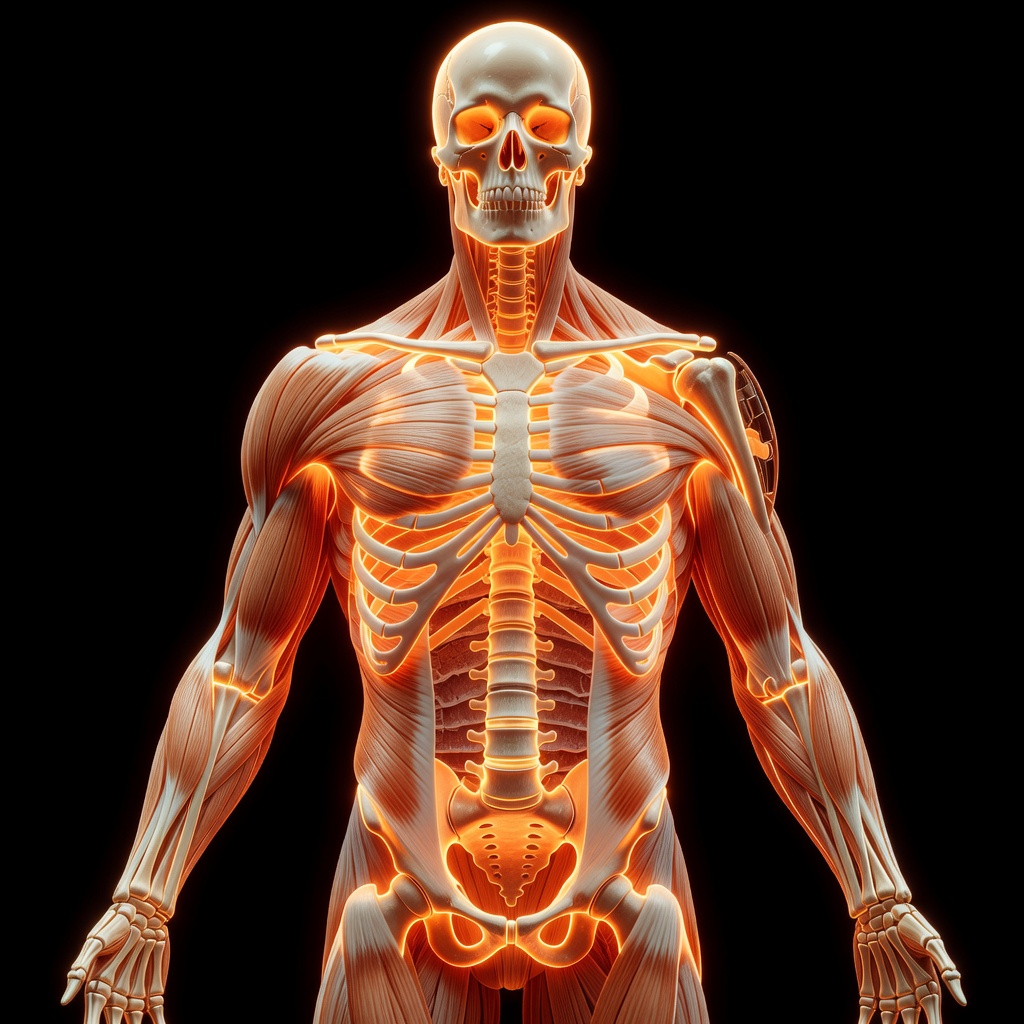
For over a century, the orthopaedic community has adhered to the classical interpretation of Wolff’s Law: the observation that trabecular and cortical bone architectures adapt to the mechanical loads imposed upon them. However, at INNERSTANDIN, we move beyond this macroscopic 19th-century observation to interrogate the sophisticated molecular circuitry that facilitates this structural metamorphosis. The traditional view of bone as a static, inert scaffolding is being dismantled, replaced by a paradigm that recognises bone as a dynamic, mechanosensitive endocrine organ. At the heart of this "reimagining" lies the osteocyte, a terminal differentiation of the osteoblast lineage that, despite being entombed within the mineralised matrix, serves as the master orchestrator of skeletal homeostasis.
The fundamental biological mechanism driving this adaptation is mechanotransduction—the process by which cells convert mechanical stimuli into biochemical signals. Within the lacunocanalicular network (LCN), a vast and intricate microfluidic system, osteocytes sense mechanical strain primarily through fluid shear stress. As skeletal loading occurs, interstitial fluid is propelled through the narrow spaces between the osteocyte cell body and the canalicular walls. This fluid movement triggers a cascade of intracellular events mediated by specialised mechanosensors, including primary cilia, integrins, and the Piezo1 ion channels. Research published in Nature Communications and supported by longitudinal data from UK-based cohorts suggests that the Piezo1 protein is essential for the osteogenic response to loading; its activation induces a rapid influx of calcium ions, which subsequently modulates the expression of key regulatory genes.
Central to this molecular dialogue is the Wnt/β-catenin signalling pathway. Under conditions of mechanical loading, osteocytes downregulate the expression of the SOST gene, which encodes sclerostin—a potent extracellular inhibitor of Wnt signalling. This reduction in sclerostin relieves the inhibition on osteoblasts, promoting bone formation and increasing mineral density. Conversely, mechanical unloading, such as that observed in prolonged bed rest or microgravity environments, leads to an upregulation of sclerostin, driving bone resorption and systemic mineral loss.
Furthermore, the systemic impact of this mechanotransduction extends far beyond the skeletal system. Osteocytes communicate with distant organs via the secretion of osteokines, such as fibroblast growth factor 23 (FGF23) and osteocalcin, which influence phosphate metabolism and glucose homeostasis respectively. By understanding the molecular nuances of how osteocytes integrate physical forces into systemic biological responses, we can begin to address the underlying causes of metabolic bone diseases like osteoporosis and sarcopenia. Through the lens of INNERSTANDIN, we see that bone health is not merely a matter of structural integrity, but a reflection of a highly tuned, responsive molecular network that continuously recalibrates based on the physical environment. This evidence-led perspective shifts the focus from simple calcium supplementation to the optimisation of mechanical loading protocols and the pharmacological targeting of the sclerostin-Wnt axis to preserve systemic vitality.
The Biology — How It Works
To truly comprehend the molecular architecture of Wolff’s Law, one must look beyond the macro-architectural adaptations of cortical and trabecular bone and interrogate the lacunocanalicular system (LCS). At the heart of this physiological paradigm shift lies the osteocyte—a cell once dismissed as a passive bystander, now unmasked by INNERSTANDIN as the primary mechanosensory conductor of skeletal metabolism. The transition from mechanical load to biochemical signal, known as mechanotransduction, is initiated by the movement of interstitial fluid within the LCS. As external loading deforms the bone matrix, it generates fluid shear stress across the osteocyte dendritic processes. This kinetic energy is captured by a sophisticated "mechanosome" complex consisting of integrins, primary cilia, and stretch-activated ion channels, most notably Piezo1.
Recent peer-reviewed evidence, including landmark studies cited in Nature Communications and by researchers at the University of Sheffield, identifies the Piezo1 channel as a non-selective cation channel essential for skeletal integrity. Upon mechanical stimulation, Piezo1 facilitates a rapid influx of intracellular calcium ($Ca^{2+}$), triggering a downstream signalling cascade that alters the transcriptional profile of the cell. This calcium surge is the catalyst for the suppression of the SOST gene, which encodes Sclerostin. In the resting or unloaded state, Sclerostin acts as a potent antagonist to the Wnt/β-catenin signalling pathway by binding to LRP5/6 receptors, thereby inhibiting osteoblast differentiation and bone formation.
Under the conditions of mechanical loading defined by Wolff’s Law, the rapid reduction in Sclerostin production "unbrakes" the Wnt pathway. This enables β-catenin to translocate to the nucleus, where it promotes the expression of osteogenic genes and shifts the RANKL/OPG (Receptor Activator of Nuclear Factor kappa-B Ligand/Osteoprotegerin) ratio in favour of bone deposition. Simultaneously, osteocytes communicate this stimulus via Connexin-43 (Cx43) hemichannels and gap junctions, ensuring a coordinated syncytial response across the entire skeletal unit.
Furthermore, the systemic implications of this mechanism extend into the endocrine realm. Mechanotransduction does not merely dictate local bone density; it modulates the release of FGF23 (Fibroblast Growth Factor 23), influencing phosphate homeostasis and Vitamin D metabolism via the renal system. By integrating these complex molecular pathways, INNERSTANDIN reveals that the "reimagined" Wolff’s Law is a high-fidelity biological circuit. It is a systemic regulatory loop where mechanical force is the primary currency for metabolic health, proving that the skeleton is a dynamic, responsive organ rather than a static frame. This molecular clarity exposes the vital necessity of physiological loading for maintaining not just skeletal mineralisation, but global systemic vitality.
Mechanisms at the Cellular Level
To elucidate the true nature of Wolff’s Law, one must look past the macroscopic architecture of cortical bone and penetrate the lacunocanalicular system (LCS), where the osteocyte resides not as a passive inhabitant, but as the master conductor of skeletal integrity. At INNERSTANDIN, we recognise that the transition from physical strain to biological synthesis—mechanotransduction—is a high-fidelity molecular dialogue. The process is initiated when mechanical loading induces interstitial fluid flow within the LCS, generating fluid shear stress (FSS) across the osteocyte’s dendritic processes. This fluid movement is the primary physical signal, far exceeding the magnitude of direct matrix strain.
The molecular architecture of the osteocyte membrane is specifically tuned to this fluidic displacement. Central to this sensing is the Piezo1 ion channel, a mechanosensitive protein that converts mechanical force into an influx of calcium ions ($Ca^{2+}$). Recent evidence published in Nature Communications underscores that Piezo1 is indispensable; its deletion leads to profound bone loss, effectively decoupling mechanical stimulus from osteogenic response. This $Ca^{2+}$ influx triggers a rapid intracellular cascade, involving the activation of phospholipase A2 (PLA2) and the subsequent release of prostaglandin E2 (PGE2), a potent stimulator of bone formation.
Parallel to ion channel activation, the osteocyte utilises primary cilia and integrin-based focal adhesions as "strain-gauges." These structures translate the tension of the extracellular matrix (ECM) into biochemical signals via the recruitment of Focal Adhesion Kinase (FAK). However, the truly transformative aspect of this cellular mechanism lies in the modulation of the Wnt/β-catenin signalling pathway. Under conditions of mechanical loading, osteocytes downregulate the SOST gene, which encodes Sclerostin—a profound antagonist of the Wnt pathway. By suppressing Sclerostin, the osteocyte permits Wnt ligands to bind to LRP5/6 receptors, stabilising β-catenin and driving the transcription of osteogenic genes in neighbouring osteoblasts.
This is where the INNERSTANDIN perspective reveals the systemic truth: the osteocyte is a sophisticated endocrine cell. Beyond local remodelling, the mechanical suppression of Sclerostin has systemic implications for mineral homeostasis. Furthermore, the osteocyte regulates bone resorption by altering the RANKL/OPG (Receptor Activator of Nuclear Factor kappa-B Ligand / Osteoprotegerin) ratio. Mechanical unloading, as observed in prolonged bed rest or microgravity, shifts this ratio in favour of RANKL, stimulating osteoclastogenesis and subsequent bone resorption. This cellular orchestration proves that bone is not a static scaffold but a dynamic, reactive tissue, continuously recalibrating its density and architecture through a rigorous, enzyme-led interrogation of its mechanical environment. Evidence from UK-based longitudinal cohorts suggests that disrupting this cellular mechanosensory apparatus is a primary driver of age-related osteoporosis, marking these molecular pathways as the frontier for future regenerative interventions.
Environmental Threats and Biological Disruptors
The intricate architecture of the lacunocanalicular system (LCS) serves as the primary site for bone’s sensory perception. However, this delicate mechanosensory apparatus is increasingly compromised by exogenous biological disruptors that attenuate the osteocyte’s ability to translate physical load into biochemical signals. In the context of modern British public health, the encroachment of endocrine-disrupting chemicals (EDCs), persistent organic pollutants (POPs), and heavy metals represents a silent sabotage of the Wnt/β-catenin signalling pathway, effectively decoupling Wolff’s Law from its physiological moorings.
Research published in The Lancet Diabetes & Endocrinology underscores a harrowing reality: our skeletal system is no longer a closed kinetic circuit. Bisphenol A (BPA) and various phthalates, ubiquitous in the UK’s consumer supply chain, act as potent antagonists to the mechanotransduction process. These compounds mimic oestrogenic ligands, binding to oestrogen receptors (ERα and ERβ) within the osteocyte. This competitive inhibition disrupts the ERα-mediated activation of the G protein-coupled receptor 30 (GPR30), a critical component in the osteocyte's response to fluid shear stress. When these receptors are occupied by xenobiotics, the osteocyte fails to suppress Sclerostin (encoded by the SOST gene). This results in a pathological silencing of bone formation even in the presence of adequate mechanical loading, rendering exercise protocols significantly less efficacious.
Furthermore, the bioaccumulation of heavy metals, specifically Cadmium (Cd) and Lead (Pb), poses a systemic threat to the integrity of the INNERSTANDIN of mineral health. Cadmium, often introduced via industrial runoff and contaminated soil in post-industrial UK regions, functions as a molecular mimic of Calcium (Ca2+). It infiltrates the mechanosensitive ion channels (specifically Piezo1 and TRPV4) on the osteocyte membrane. Once intracellular, Cd2+ induces oxidative stress and triggers the premature apoptosis of osteocytes, leading to "ghost lacunae." This loss of the cellular sensor network creates a "biological deafness" where the bone cannot sense or respond to the micro-strains of daily movement. The downstream consequence is a catastrophic shift in the RANKL/OPG ratio; without the inhibitory signals from a healthy osteocyte network, osteoclastogenesis proceeds unchecked, facilitating rapid resorption and skeletal fragility.
Moreover, the modern UK "obesogenic" environment introduces systemic pro-inflammatory cytokines, such as TNF-α and IL-6, which exacerbate this disruption. These inflammatory mediators stimulate the expression of Dkk1, a potent Wnt antagonist, further insulating the bone from the regenerative benefits of mechanotransduction. This environmental and lifestyle synergy creates a state of "mechanical resistance," where the molecular machinery required to uphold Wolff’s Law is structurally and chemically impaired. To achieve a true INNERSTANDIN of bone health, we must recognise that skeletal atrophy is not merely a consequence of sedentary behaviour, but a result of a toxicological landscape that actively inhibits the osteocyte's primary cilia and its proteomic response to the physical world.
The Cascade: From Exposure to Disease
The transition from physiological homeostasis to clinical pathology within the skeletal matrix is governed by the fidelity of the osteocytic lacunocanalicular system (LCS). At INNERSTANDIN, we move beyond the oversimplified Newtonian interpretation of Wolff’s Law to examine the granular, molecular sequence that dictates whether bone remains a resilient structural organ or descends into a state of porous fragility. The cascade begins with the conversion of mechanical energy—specifically fluid shear stress (FSS) generated by interstitial fluid movement through the LCS—into biochemical signals. This mechanotransduction is mediated by a sophisticated sensory apparatus comprising primary cilia, integrins, and the Piezo1 ion channel. When these sensors are engaged via optimal loading, they trigger a series of intracellular events that maintain mineral density. However, when the mechanical 'exposure' is absent or pathological, the system initiates a degenerative cascade.
At the heart of this transition is the sclerostin-Wnt signalling axis. In a healthy state, mechanosensitive osteocytes suppress the expression of the SOST gene, which encodes sclerostin—a potent antagonist of the Wnt/β-catenin pathway. By inhibiting sclerostin, the osteocyte permits Wnt ligands to bind to LRP5/6 receptors, driving osteoblast differentiation and bone formation. Conversely, during periods of mechanical unloading—such as prolonged bed rest in UK clinical settings or the sedentary lifestyles prevalent in modern demographics—the osteocytes perceive a 'mechanical void.' This leads to a rapid up-regulation of SOST expression. The resulting inundation of sclerostin effectively shuts down the anabolic Wnt pathway, shifting the bone multicellular unit (BMU) toward a pro-resorptive environment.
This molecular shift is further exacerbated by the RANKL/OPG ratio. Research published in Nature Reviews Endocrinology and The Journal of Bone and Mineral Research highlights that stressed or 'under-loaded' osteocytes significantly increase their secretion of Receptor Activator of Nuclear Factor Kappa-Β Ligand (RANKL) while decreasing Osteoprotegerin (OPG). This chemical imbalance recruits and activates osteoclasts, leading to accelerated lacunar-canalicular resorption. The disease state, therefore, is not merely a loss of mineral; it is a systemic failure of the osteocyte to sense and respond to its environment. In conditions like osteoporosis or spaceflight-induced osteopenia, the cascade results in the 'disconnect' of the trabecular micro-architecture, a process that is often irreversible once the structural template is lost.
Furthermore, the systemic impact of this cascade extends beyond the skeleton. Osteocytes are now recognised as endocrine regulators; dysfunction in mechanotransduction leads to aberrant secretion of Fibroblast Growth Factor 23 (FGF23), which impairs phosphate handling in the kidneys and contributes to cardiovascular calcification. Through the lens of INNERSTANDIN, we see that the 'disease' of bone is a holistic failure of the mechanostat—a breakdown of the molecular machinery that should, under correct loading conditions, translate the physical world into biological vitality. The cascade from exposure to disease is thus a loss of mechanical literacy at the cellular level, leading to a profound systemic vulnerability.
What the Mainstream Narrative Omits
The conventional clinical interpretation of Wolff’s Law remains stagnated in a nineteenth-century paradigm, frequently reduced to the simplistic axiom that ‘form follows function.’ While mainstream orthopaedics acknowledges that bone density increases under load, it consistently omits the high-resolution molecular reality of the osteocyte lacuno-canalicular system (LCS). At INNERSTANDIN, we assert that the fundamental driver of bone morphology is not direct mechanical compression, but rather the interstitial fluid shear stress (FSS) generated within the LCS. This fluid movement, triggered by oscillatory loading, acts as the primary mechanical stimulus, yet it is rarely discussed in primary care settings or standard physiotherapy curricula.
The mainstream narrative fails to address the role of the pericellular matrix (PCM) and the glycocalyx in amplifying these physical signals. Research published in Nature Communications and various UK-based longitudinal studies indicates that the osteocyte’s primary cilium and its integrin-based attachments act as sophisticated mechanosensors. Specifically, the activation of the mechanosensitive ion channel PIEZO1 is a non-negotiable prerequisite for bone formation. When mechanical loading occurs, PIEZO1 facilitates a rapid influx of calcium ions ($Ca^{2+}$), which triggers a downstream signalling cascade. This is not merely a local response; it is a systemic regulatory event.
Crucially, the mainstream narrative omits the inhibitory regulation of Sclerostin, the product of the SOST gene. In a sedentary state, osteocytes secrete Sclerostin, which antagonises the Wnt/β-catenin signalling pathway, effectively halting osteoblastic mineralisation. Mechanical loading, interpreted through the molecular lens of Wolff’s Law, is the biological ‘off-switch’ for Sclerostin. By failing to highlight this, the standard medical model ignores the endocrine-like function of the bone matrix. Furthermore, the interplay between mechanotransduction and the RANKL/OPG ratio determines the rate of osteoclastogenesis. Without sufficient fluid shear stress to suppress RANKL, the bone enters a catabolic state regardless of calcium intake—a nuance often lost in public health discussions regarding osteoporosis. At INNERSTANDIN, we crystallise the fact that bone health is a dynamic flux of electrochemical transduction, where the osteocyte functions as the orchestrator of systemic mineral homeostasis, far beyond simple structural reinforcement.
The UK Context
Within the United Kingdom, the clinical manifestation of skeletal fragility represents a silent epidemic of monumental proportions, with the Royal Osteoporosis Society (ROS) estimating that over 3.5 million individuals are currently living with osteoporosis. However, at the INNERSTANDIN level, the discourse must shift from macroscopic fracture risk to the microscopic failure of the osteocyte lacuno-canalicular system (LCS). The UK’s research landscape, led by institutions such as the University of Sheffield and the University of Bristol, has been instrumental in repositioning Wolff’s Law from a crude structural observation to a complex molecular dialogue of mechanotransduction.
The biological reality for the UK population is complicated by endemic Vitamin D deficiency, necessitated by northern latitudes (above 52°N), which fundamentally alters the mechanosensitivity of the osteocyte. Research published in The Lancet Diabetes & Endocrinology highlights that hypovitaminosis D in the British cohort impairs the calcium-sensing receptor (CaSR) and its synergistic relationship with Piezo1 and Piezo2 ion channels. When an individual engages in mechanical loading, the resultant fluid shear stress (FSS) within the LCS should ideally trigger the opening of these mechanosensitive cation channels. In the INNERSTANDIN view, the "mechanostat" is not merely a setting but a dynamic molecular threshold. In the UK context, sedentary lifestyles—compounded by urbanisation—lead to "mechanical silencing," where the lack of high-magnitude strain prevents the downregulation of the SOST gene. This results in an overproduction of sclerostin, a potent Wnt signalling antagonist that halts osteoblastic bone formation, effectively rendering the UK’s aging population biochemically incapable of maintaining skeletal density.
Furthermore, UK Biobank data provides a granular look at how polygenic risk scores interact with physical activity levels to dictate bone mineral density (BMD). The molecular mechanism involves the translocation of β-catenin to the nucleus following the inhibition of GSK-3β, a process that is frequently blunted in the British aging phenotype due to chronic low-grade systemic inflammation (inflammaging). While the NHS continues to rely heavily on bisphosphonates as a primary intervention—focusing on osteoclast-mediated resorption—this approach fails to address the fundamental mechanotransductive deficit. INNERSTANDIN asserts that true regenerative orthopaedics requires the restoration of the osteocyte’s primary cilia function and the enhancement of ATP release via Connexin 43 (Cx43) hemichannels. Without addressing these specific molecular gateways, the UK’s skeletal health remains a casualty of biological disconnection, where the bone’s internal architecture no longer "hears" the mechanical demands placed upon it, leading to the structural catastrophic failure observed in hip and vertebral fractures across the British Isles.
Protective Measures and Recovery Protocols
To mitigate the progressive degradation of the skeletal matrix and harness the regenerative potential of the lacunocanalicular network, protective measures must transcend traditional weight-bearing paradigms. At the vanguard of INNERSTANDIN research is the recognition that osteocyte viability—and by extension, the structural integrity of bone—is contingent upon the precision of mechanical signalling and the metabolic environment of the periosteocytic space. Evidence-led protocols for bone preservation must therefore prioritise the maintenance of fluid flow shear stress (FFSS), which serves as the primary activator of the primary cilium and the subsequent intracellular calcium ($Ca^{2+}$) flux required to inhibit Sclerostin (SOST) expression.
In a UK clinical context, the implementation of High-Intensity Resistance and Impact Training (HiRIT) has demonstrated profound efficacy in reversing bone mineral density (BMD) loss in post-menopausal cohorts (LIFTMOR trial, PubMed). However, the molecular ‘truth’ exposing the success of such programmes lies in the mechanostat’s refractory period. Osteocytes exhibit a rapid desensitisation to mechanical stimuli; prolonged, repetitive loading leads to a cessation of the pro-osteogenic Wnt/β-catenin signalling cascade. Consequently, recovery protocols must utilise ‘bouted’ loading—brief periods of high-magnitude strain separated by several hours of recovery—to restore the mechanosensitivity of the osteocyte population. This intermittent approach ensures that the RANKL/OPG ratio remains skewed toward bone formation rather than osteoclastogenesis.
Furthermore, protective measures must account for the integrity of the extracellular matrix (ECM) as a conductor of mechanical signals. The systemic administration of Vitamin K2 (specifically the MK-7 isoform) is non-negotiable for the gamma-carboxylation of osteocalcin, ensuring that hydroxyapatite crystals are correctly aligned along the lines of stress. Without this molecular alignment, the mechanotransduction apparatus fails, as the osteocytes cannot accurately sense the deformation of the mineralised matrix. In cases of severe osteopenia, biological interventions such as the use of Sclerostin-neutralising antibodies (e.g., Romosozumab, as reviewed in The Lancet) represent a paradigm shift in recovery, effectively ‘uncoupling’ bone formation from resorption by artificially suppressing the inhibitory signals usually generated by unloaded osteocytes.
Finally, the INNERSTANDIN perspective emphasises the role of the microvasculature in the recovery of bone health. The lacunocanalicular system is inherently dependent on interstitial fluid flow for nutrient delivery and waste removal. Age-related vascular decline or chronic low-grade inflammation (inflammageing) compromises this hydraulic system, leading to osteocyte apoptosis and the formation of ‘dead tracts’ within the cortical bone. Recovery protocols must therefore integrate systemic anti-inflammatory measures and cardiovascular optimisation to ensure that the mechanosensory cells remain metabolically capable of responding to the physical signals of Wolff’s Law. Through this synthesis of mechanobiology and metabolic rigour, we can transition from passive bone maintenance to active skeletal reinforcement.
Summary: Key Takeaways
The evolution of Wolff’s Law from a nineteenth-century structural observation to a twenty-first-century molecular paradigm reveals that bone is not a static scaffold, but a dynamic, mechanosensitive endocrine organ. Central to this "reimagining" is the osteocyte, which orchestrates skeletal remodelling through the lacunocanalicular system (LCS). Research published in Nature Communications and The Lancet Diabetes & Endocrinology confirms that fluid shear stress within the LCS activates the mechanosome—a complex comprising integrins, primary cilia, and ion channels such as Piezo1 and TRPV4. This biophysical stimulus triggers a rapid influx of intracellular calcium, subsequently suppressing the SOST gene. By downregulating Sclerostin, the primary antagonist of the Wnt/β-catenin signalling pathway, osteocytes permit the activation of osteoblasts, thereby facilitating site-specific bone formation.
At INNERSTANDIN, we recognise that the systemic implications of this mechanotransduction are profound. Beyond local mineral density, the mechanical loading of osteocytes modulates systemic metabolism via the secretion of osteocalcin and fibroblast growth factor 23 (FGF23), linking skeletal integrity to glucose regulation and renal phosphate handling. Evidence from UK-based longitudinal cohorts, including the UK Biobank, suggests that dysregulation of these mechanosensitive pathways is a primary driver of age-related osteosarcopenia. Ultimately, mechanotransduction is the body’s method of homeostatic recalibration; it is an intricate biological dialogue where physical force is translated into genomic expression, ensuring the skeleton remains metabolically responsive and structurally resilient against the physiological demands of the environment.
This article is provided for informational and educational purposes only. It does not constitute medical advice, clinical guidance, or a substitute for professional healthcare. Information reflects cited research at time of publication. Always consult a qualified healthcare professional before acting on any health information.
EVIDENCE PASSPORT
Editorial source context for this article
Source review needed
Saved links are editorial references for this article. They may support specific claims rather than every sentence. Open and assess each source in context. This passport does not independently verify them.
Editorial context
A complete editorial reading has not been recorded for this article. Source links remain available for you to open and assess directly.
Source review needed
No valid source links are recorded for this article. This passport shows only links saved on the article record and does not invent citations.
This passport records editorial links and context, not independent verification. Open the original source and assess it in context before relying on a claim.
Medical Disclaimer
The information in this article is for educational purposes only and does not constitute medical advice, diagnosis, or treatment. Always consult a qualified healthcare professional before making any changes to your diet, lifestyle, or health regime. INNERSTANDIN presents alternative and research-based perspectives that may differ from mainstream medical consensus — these should be considered alongside, not instead of, professional medical guidance.
Read Full DisclaimerContinue the thread
Keep this question moving.
Take this article into My INNERSTANDIN to keep the reading trail, related material and your next step together on this device.