
Zinc Oxide Nanoparticles: When Essential Minerals Become Cellular Disruptors
Published April 2026
A deep dive into how nano-scale zinc oxide used in fortification can paradoxically damage the intestinal brush border and interfere with mineral balance.
Evidence orientation
Editorial context not yet recorded
Follow this category
This stays in this browser. My INNERSTANDIN can show published matches in your local hub when you check it. It does not send email, push, or alert notifications.
Local learning review
A private browser aid for revisiting ideas. It is not an alert or a health recommendation.
Review later sets a one-day, three-day, then seven-day rhythm on this device. Choose it only when you want to revisit this article.
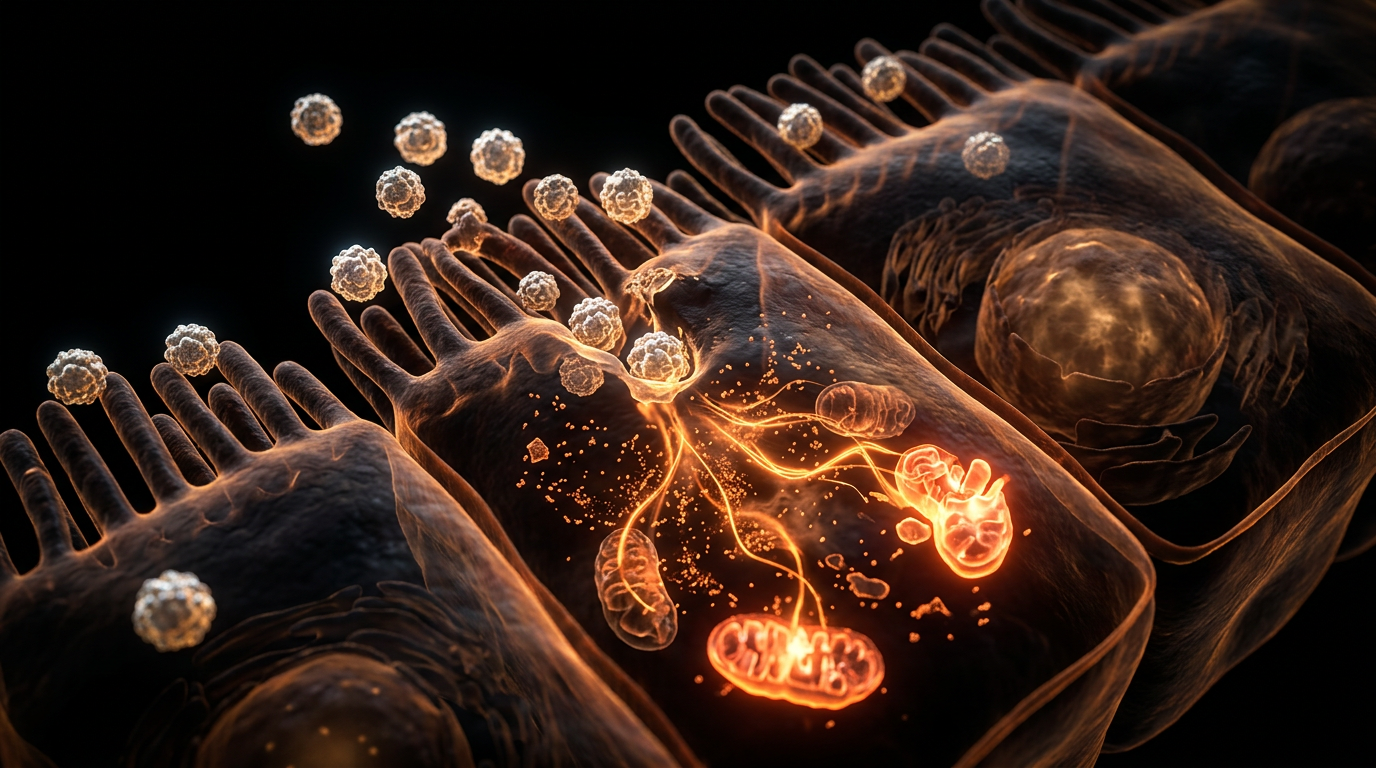
Zinc is an essential micronutrient, vital for over 300 enzymatic reactions in the body. However, the food industry's use of Zinc Oxide (ZnO) nanoparticles in supplements and fortified foods presents a case of 'too much of a good thing' in the wrong form. While ionic zinc is tightly regulated by the body, nano-scale ZnO bypasses these regulatory pathways, leading to unexpected cellular disruptions. Altering the Brush Border Architecture: The small intestine is lined with microscopic projections called villi, which are further covered by microvilli, forming the 'brush border' where nutrient absorption occurs. Studies using advanced imaging have shown that exposure to ZnO nanoparticles can cause 'remodeling' of this architecture.
Specifically, the nanoparticles can induce a flattening of the microvilli, which reduces the total surface area available for nutrient uptake. This is a subtle form of malabsorption that does not manifest as acute illness but rather as a slow decline in nutritional status. Interestingly, this effect is often more pronounced with nanoparticles than with equivalent doses of bulk zinc, highlighting that the physical form of the mineral is as important as its chemical identity. Ion Release vs. Particle Toxicity: Once inside the intestinal environment, ZnO nanoparticles undergo 'dissolution,' releasing high local concentrations of zinc ions.
While zinc is necessary, an acute localized surge can be toxic to the epithelial cells, causing mitochondrial stress and triggering apoptosis (programmed cell death). This creates a paradoxical situation where a person may be taking a zinc-fortified product to boost their health while simultaneously damaging the very cells responsible for absorbing that mineral. Furthermore, high levels of nano-zinc have been shown to interfere with the absorption of other divalent cations, particularly iron and copper, leading to secondary deficiencies. Malabsorption and the Micronutrient Gap: The investigative lens reveals that mainstream fortification strategies often prioritize stability and shelf-life over biological compatibility. ZnO nanoparticles are stable and don't change the flavor of food, making them a favorite for manufacturers.
For the consumer, the strategy should be to prioritize 'whole food' sources of zinc—such as oysters, grass-fed beef, or pumpkin seeds—where the mineral is bound in a biological complex that the body recognizes and regulates. If supplementation is necessary, seeking out chelated forms (like zinc bisglycinate) rather than oxide forms can bypass the risks associated with nano-particulate toxicity. Understanding the nuances of mineral delivery is essential for maintaining the integrity of the intestinal absorptive surface.
This article is provided for informational and educational purposes only. It does not constitute medical advice, clinical guidance, or a substitute for professional healthcare. Information reflects cited research at time of publication. Always consult a qualified healthcare professional before acting on any health information.
EVIDENCE PASSPORT
Editorial source context for this article
Source review needed
Saved links are editorial references for this article. They may support specific claims rather than every sentence. Open and assess each source in context. This passport does not independently verify them.
Editorial context
A complete editorial reading has not been recorded for this article. Source links remain available for you to open and assess directly.
Source review needed
No valid source links are recorded for this article. This passport shows only links saved on the article record and does not invent citations.
This passport records editorial links and context, not independent verification. Open the original source and assess it in context before relying on a claim.
Medical Disclaimer
The information in this article is for educational purposes only and does not constitute medical advice, diagnosis, or treatment. Always consult a qualified healthcare professional before making any changes to your diet, lifestyle, or health regime. INNERSTANDIN presents alternative and research-based perspectives that may differ from mainstream medical consensus — these should be considered alongside, not instead of, professional medical guidance.
Read Full DisclaimerContinue the thread
Keep this question moving.
Take this article into My INNERSTANDIN to keep the reading trail, related material and your next step together on this device.
Dig deeper in the Library
Free, longform PDF volumes that go beyond headlines into mechanisms and references.