
Anthocyanin Architecture: Decoding the Role of Native British Berries in Mitigating Oxidative Stress
Updated April 2026
Evidence orientation
Editorial context not yet recorded
Follow this category
This stays in this browser. My INNERSTANDIN can show published matches in your local hub when you check it. It does not send email, push, or alert notifications.
Local learning review
A private browser aid for revisiting ideas. It is not an alert or a health recommendation.
Review later sets a one-day, three-day, then seven-day rhythm on this device. Choose it only when you want to revisit this article.
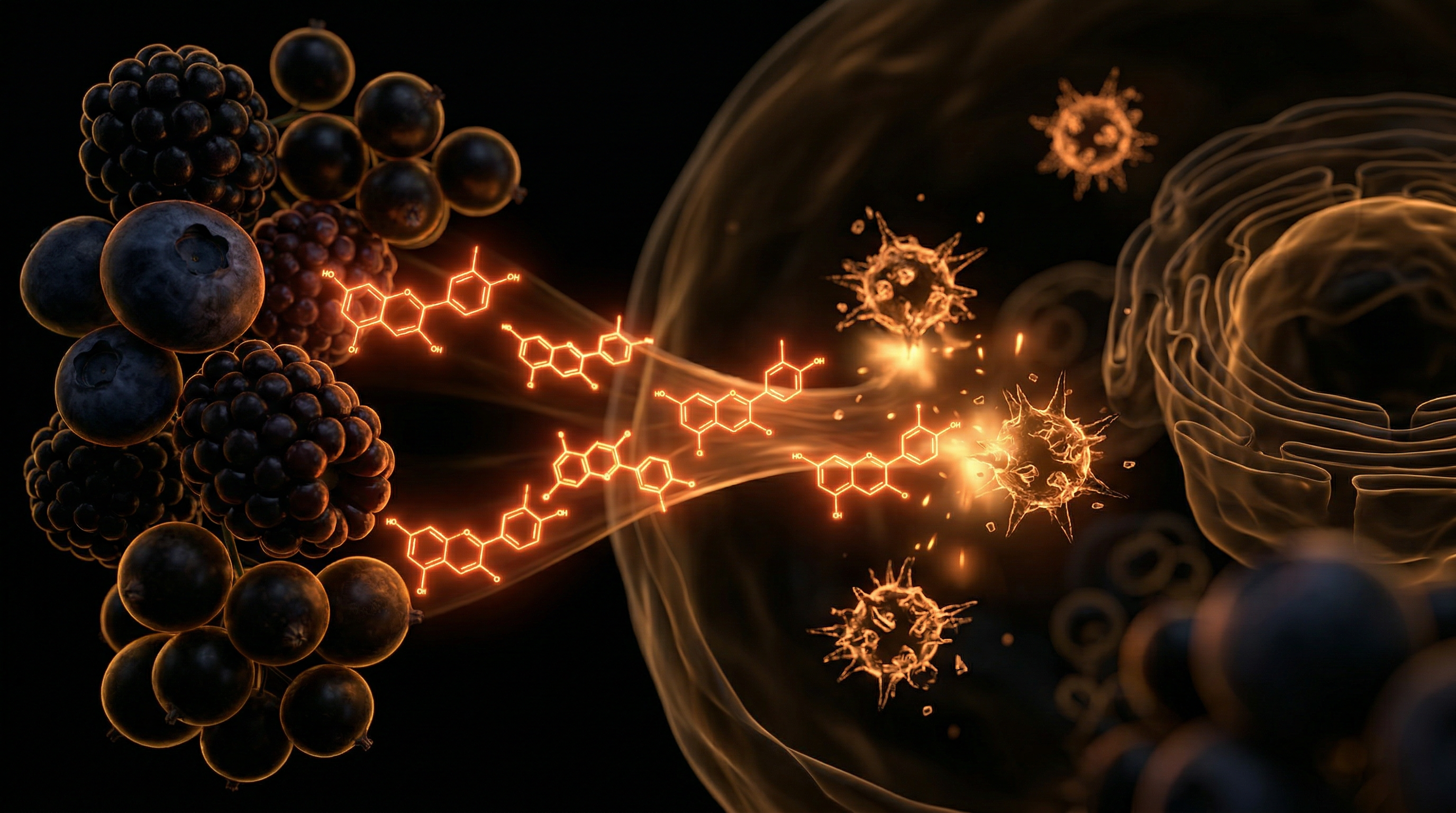
In an era defined by the relentless onslaught of industrial pollutants, processed dietary additives, and the pervasive "blue light" of digital saturation, the human biological system is under a state of perpetual siege. At the heart of this physiological crisis lies oxidative stress—a silent, corrosive imbalance between the production of reactive oxygen species (ROS) and the body’s ability to neutralise them.
While the modern pharmaceutical complex offers synthetic interventions to manage the symptoms of this decline, the "Innerstanding" of true health directs our gaze back to the soil. Within the tangled hedgerows and ancient woodlands of the British Isles exists a sophisticated molecular architecture designed for protection, repair, and resilience. This architecture is built upon anthocyanins: a class of water-soluble vacuolar pigments that give our native berries their deep violets, crimsons, and indigos.
To understand the role of native British berries is to decode a survival mechanism that has co-evolved with our ancestors for millennia. It is time to expose the profound efficacy of the British "Hedgegrow Pharmacy" and its role in safeguarding the human temple.
The Molecular Blueprint: What are Anthocyanins?
Anthocyanins are a subset of the flavonoid family, a group of polyphenolic compounds synthesised by plants as a defensive response to environmental stressors. In the botanical world, these pigments serve two primary purposes: attracting pollinators and acting as a high-performance "sunscreen" that protects the plant’s delicate DNA from ultraviolet radiation and oxidative damage.
When we ingest these pigments, we engage in a process known as xenohormesis. This biological principle suggests that humans have evolved to sense the chemical signals of stress in plants; by consuming the molecules the plant created to survive, we inherit that same cellular resilience.
The Chemical Scavenger
Chemically, anthocyanins are uniquely equipped to mitigate oxidative stress. Their structure allows them to donate hydrogen atoms to unstable free radicals, effectively "quenching" the molecular fire before it can damage cellular membranes, proteins, or DNA.
Key Fact: Unlike many synthetic antioxidants, anthocyanins possess the rare ability to cross the blood-brain barrier, providing direct neuroprotective benefits and shielding the central nervous system from neurodegenerative decline.
Biological Mechanisms: Beyond Simple Antioxidants
The traditional view of antioxidants as mere "radical scavengers" is an oversimplification. The true power of anthocyanins lies in their ability to modulate complex intracellular signalling pathways. They do not just "clean up" damage; they re-programme the cell to be more resilient.
1. Activation of the Nrf2 Pathway
Anthocyanins act as potent activators of the Nrf2 (Nuclear factor erythroid 2-related factor 2) pathway. This is the body’s "master switch" for antioxidant protection. Once activated, Nrf2 migrates to the cell nucleus and triggers the production of endogenous antioxidants such as glutathione and superoxide dismutase (SOD). This provides a systemic defence far more powerful than any external supplement could offer.
2. Mitochondrial Integrity
The mitochondria are the powerhouses of our cells, but they are also the primary site of ROS production. Anthocyanins have been shown to maintain the mitochondrial membrane potential, ensuring efficient energy (ATP) production while reducing the "leakage" of electrons that leads to oxidative damage.
3. Inhibition of NF-κB
Oxidative stress and chronic inflammation are two sides of the same coin. Anthocyanins inhibit NF-κB (Nuclear Factor kappa-light-chain-enhancer of activated B cells), the primary pro-inflammatory signalling complex. By suppressing this pathway, native berries mitigate the low-grade systemic inflammation that underpins cardiovascular disease, type 2 diabetes, and metabolic syndrome.
The British Context: Native Potency vs. Imported Novelty
In the globalised health market, "superfoods" are often marketed based on their exotic origins. However, the native British berry—acclimatised to the specific light cycles, soil mineralogy, and climatic stresses of the British Isles—possesses a phytochemical profile that often surpasses its imported counterparts.
The Bilberry (Vaccinium myrtillus)
Often confused with the American blueberry, the native British Bilberry is a far more potent therapeutic agent. While blueberries have pale green flesh, the Bilberry is deep purple throughout, indicating a significantly higher concentration of anthocyanins.
- Target: Microcirculation and ocular health.
- The Truth: Bilberries contain up to four times the anthocyanin content of cultivated blueberries, specifically high in cyanidin-3-glucoside, a master regulator of metabolic health.
The Blackcurrant (Ribes nigrum)
The British Blackcurrant is a nutritional titan often overlooked in favour of the "goji" or "acai" berry. Blackcurrants are exceptionally high in delphinidin and rutin, which specifically target arterial stiffness and promote vascular elasticity.
- Context: Britain produces some of the world’s most nutrient-dense blackcurrants due to our temperate, high-latitude climate.
The Elderberry (Sambucus nigra)
A staple of British folk medicine, the Elderberry is now clinically recognised for its antiviral and immunomodulatory properties. Its anthocyanins prevent viral attachment to host cells, effectively acting as a biological shield.
Environmental Factors: Why Stress Matters
The efficacy of a berry is not determined by its size or sweetness, but by its phytochemical density. In the UK, our variable weather—alternating between harsh rains, wind, and periods of intense UV exposure—is exactly what forces the plant to produce high levels of anthocyanins.
- Wild vs. Cultivated: Wild-foraged berries (such as those found on the Scottish moors or English hedgerows) are consistently higher in antioxidants than supermarket varieties. Without the "protection" of pesticides and fertilisers, the wild plant must invest more energy into its own chemical defence system.
- Soil Health: The relationship between mycorrhizal fungi in the soil and berry-producing shrubs is crucial. These fungi assist the plant in mineral uptake, particularly zinc and magnesium, which are essential co-factors for the synthesis of complex anthocyanin structures.
Key Fact: Anthocyanin levels in British berries are often at their peak in late August and September. This timing is evolutionary: it prepares the human body for the oxidative challenges of the coming winter and the reduction in natural vitamin D synthesis.
Protective Strategies: Integrating Native Potency
To harness the "Anthocyanin Architecture" of British berries, one must move beyond the occasional punnet of fruit and adopt a structured, phytotherapeutic approach.
1. Prioritise Bioavailability
Anthocyanins are notoriously delicate. They are sensitive to high temperatures and alkaline environments.
- Strategy: Consume berries raw or lightly steamed. If preserving for winter, flash-freezing is superior to canning or jam-making, as it preserves the integrity of the polyphenolic rings.
2. Synergistic Pairing
The absorption of anthocyanins can be enhanced by what they are eaten with.
- Strategy: Pair berries with a small amount of healthy fat (such as walnuts or flaxseeds). This stimulates the gallbladder and enhances the micellar solubilisation of the compounds in the digestive tract.
3. The "Whole Fruit" Philosophy
While berry juices are popular, the majority of the protective fibre and certain specific tannins are located in the skin and seeds.
- Strategy: Use the whole berry. The skins of British Blackberries (Rubus fruticosus) are particularly rich in ellagitannins, which work synergistically with anthocyanins to promote a healthy gut microbiome.
Decoding the Hidden Truth: The Assault on Local Wisdom
It is a profound irony of the modern age that we spend billions on synthetic "longevity" molecules while ignoring the free, potent medicine growing in our own landscapes. The marginalisation of the British hedgerow is a symptom of a larger disconnection from the biological sovereignty that comes with knowing your local ecology.
Oxidative stress is not just a chemical process; it is a manifestation of a life lived out of sync with natural cycles. By reintegrating these native pigments, we are not just "supplementing"; we are re-establishing a molecular dialogue with our environment.
Key Takeaways for the INNERSTANDING Practitioner:
- Anthocyanins are more than antioxidants: They are signalling molecules that activate the body’s internal defence systems (Nrf2) and protect mitochondrial integrity.
- Native is superior: The British Bilberry and Blackcurrant offer higher phytochemical density and better biological "matching" for those living in the UK climate than exotic imports.
- Stress produces strength: The harsher the conditions the berry grows in, the more potent its protective architecture. Seek wild-crafted or organic sources.
- Consistency is vital: Oxidative stress is a daily occurrence; therefore, the intake of anthocyanin-rich foods must be a daily practice, not a seasonal luxury.
Conclusion: Reclaiming the Architecture of Health
The path to mitigating oxidative stress does not lie in a laboratory, but in the deep purples of a wild blackberry and the tart snap of a blackcurrant. These berries are the result of millions of years of evolutionary engineering, designed to thrive in the face of environmental adversity.
When we consume the anthocyanins of the British Isles, we are not merely eating fruit; we are ingesting a molecular script of survival. By decoding this "Anthocyanin Architecture," we empower ourselves to stand resilient against the modern world’s oxidative tide, reclaiming our health through the wisdom of the land. This is the essence of Innerstanding: the realisation that the remedy is often as close as the nearest hedge.
This article is provided for informational and educational purposes only. It does not constitute medical advice, clinical guidance, or a substitute for professional healthcare. Information reflects cited research at time of publication. Always consult a qualified healthcare professional before acting on any health information.
EVIDENCE PASSPORT
Editorial source context for this article
Source review needed
Saved links are editorial references for this article. They may support specific claims rather than every sentence. Open and assess each source in context. This passport does not independently verify them.
Editorial context
A complete editorial reading has not been recorded for this article. Source links remain available for you to open and assess directly.
Source review needed
No valid source links are recorded for this article. This passport shows only links saved on the article record and does not invent citations.
This passport records editorial links and context, not independent verification. Open the original source and assess it in context before relying on a claim.
Medical Disclaimer
The information in this article is for educational purposes only and does not constitute medical advice, diagnosis, or treatment. Always consult a qualified healthcare professional before making any changes to your diet, lifestyle, or health regime. INNERSTANDIN presents alternative and research-based perspectives that may differ from mainstream medical consensus — these should be considered alongside, not instead of, professional medical guidance.
Read Full DisclaimerContinue the thread
Keep this question moving.
Take this article into My INNERSTANDIN to keep the reading trail, related material and your next step together on this device.