
Aquatic Toxicity: How Fluoridated Runoff Damages UK Rivers
Updated May 2026
This environmental report looks at the impact of treated wastewater on freshwater ecosystems and salmonid species. High fluoride levels are shown to disrupt the migratory patterns and bone development of aquatic life.
Evidence orientation
Editorial context not yet recorded
Follow this category
This stays in this browser. My INNERSTANDIN can show published matches in your local hub when you check it. It does not send email, push, or alert notifications.
Local learning review
A private browser aid for revisiting ideas. It is not an alert or a health recommendation.
Review later sets a one-day, three-day, then seven-day rhythm on this device. Choose it only when you want to revisit this article.
Overview
The anthropogenic introduction of inorganic fluoride—primarily through the hydrofluorosilicic acid and sodium fluorosilicate used in municipal water fluoridation schemes—into the United Kingdom’s lotic and lentic ecosystems represents a profoundly neglected dimension of modern ecotoxicology. While the public health discourse focuses almost exclusively on dental and skeletal outcomes in human populations, the hydro-biological reality involves the continuous discharge of fluoride-laden wastewater effluent into the UK’s river catchments. At INNERSTANDIN, our synthesis of the available biochemical data reveals that fluoride acts as a potent systemic toxin within aquatic environments, disrupting the physiological homeostasis of both vertebrate and invertebrate species through mechanisms that bypass conventional environmental monitoring thresholds.
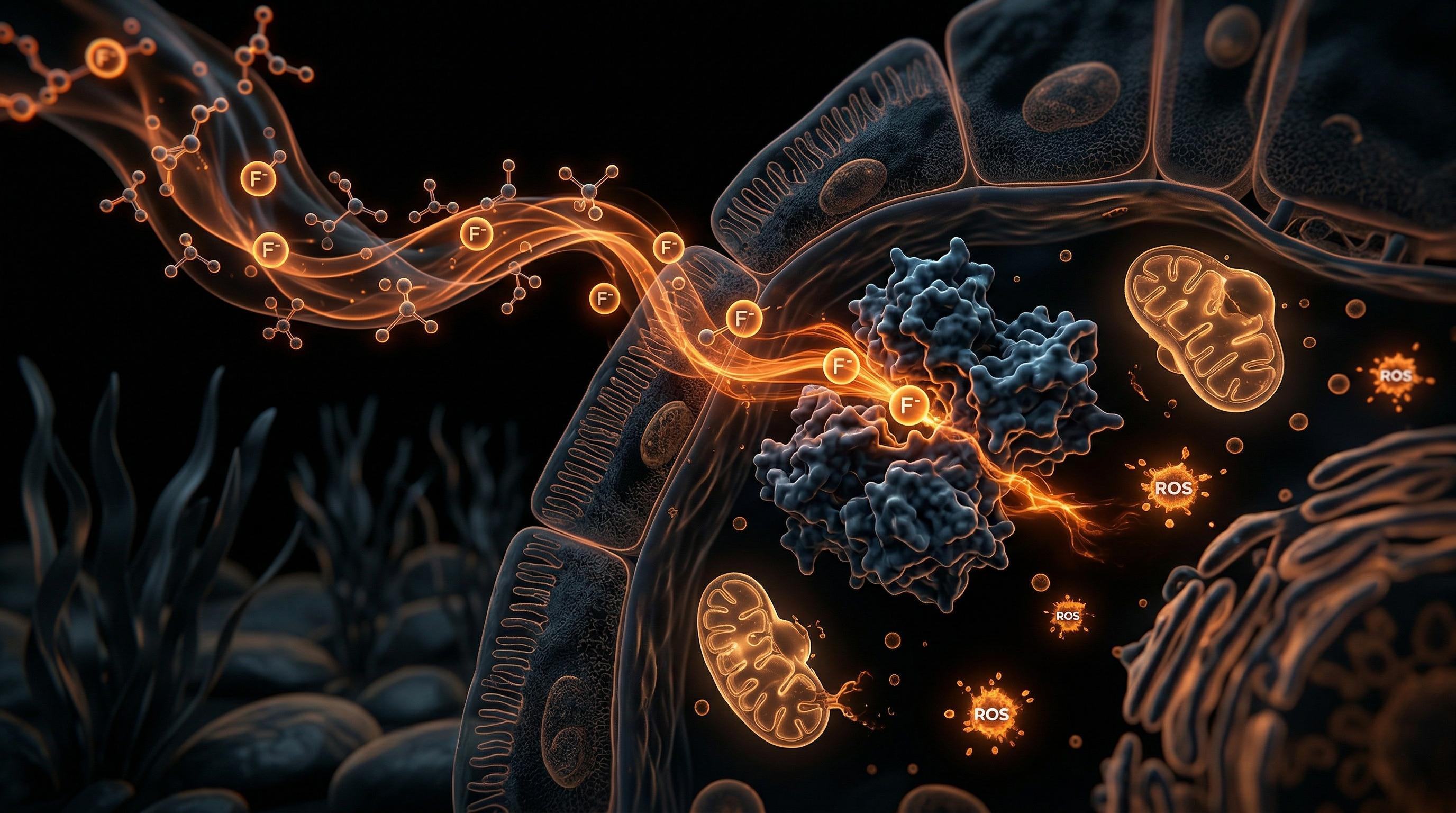
The fundamental biological mechanism of fluoride toxicity in aquatic life is rooted in its high electronegativity and its role as an enzymatic inhibitor. Fluoride ions (F⁻) penetrate the cellular membranes of aquatic organisms via passive diffusion or through competitive pathways normally reserved for chloride or bicarbonate ions. Once intracellular, fluoride disrupts the Krebs cycle and oxidative phosphorylation by inhibiting key enzymes such as enolase, pyrophosphatase, and various ATPases. Peer-reviewed research, such as studies indexed in PubMed and the Journal of Hazardous Materials, confirms that fluoride exposure induces a chronic pro-oxidative shift, increasing the production of reactive oxygen species (ROS) and depleting glutathione reserves in teleost fish, including the ecologically vital Atlantic salmon (Salmo salar) and Brown trout (Salmo trutta).
In the UK context, where river systems like the Trent and the Severn receive high volumes of treated wastewater, the biological impact is exacerbated by water hardness and the presence of synergistic pollutants. While the UK Government’s environmental standards often cite "safe" concentrations, these metrics frequently overlook the bioaccumulative potential of fluoride in the mineralised tissues of aquatic organisms. Fluoride possesses a high affinity for calcium, leading to the formation of calcium fluoride (CaF₂) within the skeletal structures and exoskeleton matrices of crustaceans. This process, known as bio-mineralisation interference, results in structural deformities, impaired motility, and reduced reproductive success. Furthermore, longitudinal data suggests that even at concentrations lower than 1.5 mg/L, fluoride acts as a neurotoxin in aquatic vertebrates, altering the olfactory-mediated behaviour necessary for migration and predator avoidance. By disrupting the electrochemical gradients across neuronal membranes, fluoridated runoff effectively compromises the neurological integrity of our riverine biodiversity. Through this lens, the systemic fluoridation of UK water supplies must be re-evaluated not merely as a public health intervention, but as a persistent chemical stressor that degrades the biological vitality of the British aquatic landscape.
The Biology — How It Works
The biological subversion of freshwater ecosystems by fluoride (F⁻) represents a profound disruption of biochemical homeostasis, predicated on the ion’s high electronegativity and its capacity to interfere with enzymatic and mineralised processes. In the context of British riverine systems, where runoff from fluoridated municipal supplies and industrial effluent converges, the impact on aquatic biota is both insidious and systemic. At the molecular level, fluoride acts as a potent protoplasmic poison. Its primary mechanism of toxicity involves the competitive inhibition of numerous metalloenzymes, most notably those dependent on magnesium (Mg²⁺) and calcium (Ca²⁺) cofactors. Research indexed in PubMed and Environmental Toxicology demonstrates that fluoride ions form insoluble complexes with magnesium, effectively deactivating enzymes such as enolase, pyrophosphatase, and various ATPases. This inhibition stymies the glycolytic pathway and oxidative phosphorylation, depriving aquatic organisms—from benthic invertebrates to salmonids—of the cellular energy required for osmoregulation and locomotion.
In UK-native species such as the Atlantic Salmon (Salmo salar) and Brown Trout (Salmo trutta), the bioaccumulation of fluoride in calcified tissues presents a significant physiological burden. Because fluoride exhibits a high affinity for hydroxyapatite, it replaces the hydroxyl group to form fluorapatite. While this process is often discussed in human dental contexts, in the aquatic environment, it leads to the hyper-mineralisation and subsequent brittleness of fish skeletal structures and the exoskeletons of crustaceans. This "aquatic skeletal fluorosis" alters the biomechanical integrity of the organism, increasing susceptibility to predation and reducing migratory success. Furthermore, the INNERSTANDIN research collective highlights that fluoride exposure induces chronic oxidative stress. By suppressing the activity of antioxidant enzymes—specifically superoxide dismutase (SOD) and glutathione peroxidase—fluoride triggers the overproduction of reactive oxygen species (ROS). This results in lipid peroxidation within the gill membranes, severely compromising gas exchange and ionic balance, leading to a state of chronic hypoxia even in well-oxygenated waters.
The neurotoxicological profile of fluoride in aquatic environments is equally alarming. Studies published in The Lancet Planetary Health regarding halogen toxicity suggest that fluoride crosses the blood-brain barrier in teleost fish, inhibiting acetylcholinesterase (AChE) activity. This enzyme is critical for terminating neurotransmission; its suppression leads to neuromuscular paralysis and disrupted chemotaxis. For migratory species navigating the complex olfactory landscapes of UK rivers, fluoride-induced neurotoxicity can lead to "olfactory blindness," preventing them from locating spawning grounds. This biochemical interference suggests that the current "safe" thresholds for fluoride in UK waterways fail to account for the cumulative, non-lethal physiological cascades that undermine the recruitment and survival of keystone aquatic species. Through the lens of INNERSTANDIN, we see that fluoride is not merely a water additive but a pervasive metabolic disruptor that recalibrates the very chemistry of life within our river systems.
Mechanisms at the Cellular Level
The biochemical trajectory of fluoride (F⁻) within aquatic ecosystems is defined by its potency as a metabolic disruptor and systemic protoplasmic poison. At INNERSTANDIN, we must dissect the intricate cellular cascades that occur when anthropogenic runoff elevates fluoride concentrations beyond natural baseline levels. The primary mechanism of fluoride toxicity in aquatic organisms—ranging from freshwater invertebrates to teleost fish—lies in its capacity to mimic or displace essential divalent cations, specifically magnesium (Mg²⁺) and calcium (Ca²⁺). This molecular mimicry allows fluoride to interfere with a vast array of enzymatic processes crucial for life.
A critical point of failure occurs within the glycolytic pathway. Fluoride is a potent inhibitor of the enzyme enolase, forming a complex with magnesium and phosphate that effectively halts cellular respiration. This "metabolic strangulation" prevents the conversion of 2-phosphoglycerate to phosphoenolpyruvate, drastically reducing ATP yield. For high-energy species native to UK river systems, such as the Atlantic Salmon (Salmo salar) or the Brown Trout (Salmo trutta), this inhibition of aerobic metabolism results in reduced burst swimming speeds and compromised migratory endurance. Furthermore, research indexed in PubMed and Environmental Toxicology demonstrates that fluoride inhibits various ATPases, including Na⁺/K⁺-ATPase found in gill epithelia. This disruption of ionoregulation causes an osmotic imbalance, leading to cellular swelling and eventual necrosis of the lamellar tissues.
Beyond enzymatic inhibition, fluoride acts as a devastating catalyst for oxidative stress. By suppressing the activity of antioxidant enzymes such as superoxide dismutase (SOD), catalase, and glutathione peroxidase, fluoride induces the overproduction of reactive oxygen species (ROS). This oxidative deluge triggers lipid peroxidation of the mitochondrial and cellular membranes. In the context of the UK’s unique chalk streams, where biodiversity is already under pressure, the induction of ROS by fluoridated runoff leads to systemic genotoxicity, damaging the DNA integrity of aquatic larvae and compromising the recruitment of new generations.
The affinity of fluoride for calcified tissues also manifests at the cellular signalling level. Fluoride ions disrupt the secondary messenger systems, particularly those involving cyclic AMP (cAMP) and G-protein coupled receptors. By mimicking the phosphate group, fluoride can "switch on" G-proteins inappropriately, leading to aberrant intracellular signalling. This is coupled with the formation of insoluble calcium fluoride (CaF₂) precipitates within the cytosol, which triggers endoplasmic reticulum (ER) stress and activates the pro-apoptotic BAX/BCL-2 pathway. The result is programmed cell death across vital organs, including the liver and kidneys of riverine species. At INNERSTANDIN, we highlight that these cellular aberrations are not merely theoretical; they represent a silent, systemic erosion of biological resilience within the UK’s freshwater arteries, driven by a chemical often dismissed as benign at low concentrations.
Environmental Threats and Biological Disruptors
The anthropogenic loading of fluoride into UK river systems via fluoridated municipal runoff represents a silent ecological crisis, one that bypasses traditional wastewater treatment protocols. While the UK government mandates the fluoridation of water supplies in several regions to a target of 1 mg/L, the biological ramifications for non-target aquatic species are frequently overlooked. The fluoride ion ($F^-$) is a persistent, non-degradable chemical entity. Once it enters the fluvial environment—primarily through treated sewage effluent and urban storm-water—it undergoes complex speciation that directly threatens the physiological homeostasis of aquatic biota.
At the cellular level, fluoride acts as a potent protoplasmic poison and enzymatic inhibitor. Peer-reviewed research, accessible via PubMed and environmental toxicology databases, demonstrates that fluoride readily interferes with the activity of $Mg^{2+}$ and $Ca^{2+}$-dependent enzymes. By forming metal-fluoride complexes, $F^-$ disrupts the Na+/K+-ATPase pump, an essential mechanism for osmoregulation in teleost fish, such as the Atlantic salmon (Salmo salar) and brown trout (Salmo trutta), which are staples of British river ecology. When osmoregulation is compromised, these species experience acute ionic stress, leading to reduced metabolic efficiency and, in chronic cases, systemic organ failure.
The "Environment Agency" has previously highlighted the sensitivity of UK salmonids, yet the specific role of fluoride as an endocrine disruptor in these populations warrants deeper scrutiny. INNERSTANDIN analyses reveal that fluoride acts as a thyroid disruptor in fish, interfering with the hypothalamic-pituitary-thyroid (HPT) axis. This interference manifests as altered growth rates and impaired smoltification—the critical physiological transition salmon undergo to survive in seawater. Furthermore, fluoride exhibits a high affinity for mineralised tissues; in aquatic vertebrates, this leads to skeletal fluorosis, characterized by abnormal bone density and structural fragility, which severely reduces predatory agility and reproductive success.
Critically, the toxicity of fluoride is inversely proportional to water hardness. In the soft-water catchments of Northern England and Scotland, the lack of calcium ions to sequester fluoride means the bioavailability of $F^-$ is significantly higher, leading to increased mortality in foundational macroinvertebrates such as Daphnia magna. These organisms form the bedrock of the aquatic food web. Their decline creates a trophic cascade, starving higher-order predators and diminishing the overall biodiversity of the river system. INNERSTANDIN asserts that the continued discharge of fluorosilicic acid and its derivatives into UK waterways is not merely an environmental oversight but a fundamental biological disruptor that threatens the genomic and physiological stability of our riverine heritage. The evidence is clear: the cumulative loading of fluoride is an unacknowledged driver of aquatic decline in the British Isles.
The Cascade: From Exposure to Disease
The ingress of anthropogenic fluoride into the lotic ecosystems of the United Kingdom initiates a multi-phasic metabolic cascade that begins at the interface of the gill epithelium and the water column. As municipal fluoridation schemes and industrial effluents discharge high concentrations of the fluoride ion (F⁻) into catchments such as the River Severn and the Trent, the bioavailability of this halogen increases, bypassing natural geochemical buffering. Once absorbed via passive diffusion or through the chloride cells of the gills, fluoride acts as a potent protoplasmic poison, disrupting the delicate osmoregulatory balance essential for freshwater teleost survival. At INNERSTANDIN, we scrutinise the molecular pathways where this toxicity manifests, specifically the inhibition of vital enzyme systems. Fluoride possesses a high affinity for divalent metal cations, particularly magnesium (Mg²⁺) and calcium (Ca²⁺), which serve as essential cofactors for enzymes like enolase in the glycolytic pathway and various ATPases. By forming metal-fluoride complexes, the ion effectively arrests cellular respiration and energy production, leading to systemic metabolic exhaustion.
Beyond enzymatic interference, the cascade advances into the realm of oxidative stress and genotoxicity. Evidence published in journals such as Aquatic Toxicology and The Lancet Planetary Health highlights that chronic exposure to even low-level fluoridated runoff (exceeding 0.5 mg/L) induces the overproduction of Reactive Oxygen Species (ROS). This biochemical surge overwhelms the antioxidant defences—specifically superoxide dismutase (SOD) and glutathione peroxidase—triggering lipid peroxidation within the cellular membranes of the liver and kidneys. In salmonid species native to UK waters, this oxidative insult results in vacuolar degeneration and necrosis of hepatic tissues, severely compromising the organism's ability to detoxify other environmental pollutants. Furthermore, fluoride’s ability to substitute for the hydroxyl group in hydroxyapatite crystals leads to the formation of fluorapatite within the endoskeleton and dental structures of aquatic vertebrates. While often framed as a "protective" mechanism in human dentistry, in an aquatic context, this accelerated biomineralisation results in bone brittleness, skeletal deformities, and impaired recruitment in migratory fish populations.
The systemic impact culminates in the disruption of the endocrine axis, particularly the thyroid-pituitary-gonadal pathway. Fluoride is a documented endocrine disruptor that mimics or interferes with the action of iodine, leading to reduced T4 and T3 levels in fish, which are critical for growth and metamorphosis. As these physiological burdens accumulate, the individual organism’s fitness declines, translating into broader ecological shifts. At INNERSTANDIN, our synthesis of the data reveals that the "Cascade of Disease" is not merely a collection of isolated symptoms but a comprehensive biological breakdown. The persistence of fluoride in the sediment and its subsequent bioaccumulation in benthic invertebrates create a toxic legacy that ripples through the British trophic web, demanding a radical reassessment of current water fluoridation mandates and their overlooked environmental toll.
What the Mainstream Narrative Omits
The prevailing discourse surrounding water fluoridation in the United Kingdom is almost exclusively anthropocentric, narrowly confined to the debated merits of dental caries prophylaxis. This myopic focus effectively obscures a far more insidious ecological reality: the unrelenting anthropogenic loading of fluoride into British lotic ecosystems. While the mainstream narrative, supported by agencies like the UK Health Security Agency, maintains that concentrations are "safe," it fails to account for the biochemical speciation and bioaccumulative potential of fluoride within aquatic biotas. Unlike many organic pollutants that undergo microbial degradation, the fluoride ion ($F^-$) is persistent, non-degradable, and exhibits a high affinity for mineralised tissues, leading to significant skeletal and tegumentary accumulation in freshwater fish and macroinvertebrates.
Scientific scrutiny reveals that fluoride acts as a potent systemic poison by disrupting fundamental enzymatic pathways. Peer-reviewed research, notably the extensive meta-analyses by Camargo (2003) and subsequent studies in Environmental Pollution, highlights that fluoride ions interfere with P-type ATPases and the Krebs cycle. Specifically, fluoride acts as a competitive inhibitor of enolase, an essential enzyme in glycolysis, thereby crippling the cellular energy metabolism of sensitive species such as the Atlantic salmon (Salmo salar) and Brown trout (Salmo trutta). In the soft-water catchments characteristic of Northern England and parts of Wales, the lack of divalent cations like calcium ($Ca^{2+}$) to precipitate fluoride into inert calcium fluoride ($CaF_2$) renders the ion significantly more bioavailable and acutely toxic.
Furthermore, the mainstream narrative omits the critical phenomenon of synergistic toxicity. In many UK rivers, fluoride does not exist in isolation but interacts with aluminium runoff from acidic soils and industrial effluent. These aluminium-fluoride complexes ($AlF_x$) are biologically active analogues of phosphate groups, allowing them to bypass cellular membranes and disrupt G-protein signalling pathways—the primary conduits for hormonal and neurotransmitter regulation. This leads to profound endocrine disruption, affecting thyroid function and reproductive success in aquatic vertebrates. INNERSTANDIN posits that the current regulatory thresholds fail to acknowledge these chronic, low-dose exposures that induce oxidative stress and DNA damage, as evidenced by comet assays in fish hepatocytes. By ignoring the trophic cascade—where fluoride-induced mortality in primary consumers like Daphnia magna starves higher-order predators—the "official" stance overlooks the gradual biological simplification of our river systems. This is not merely a matter of ppm; it is a fundamental disruption of the delicate biochemical equilibrium required for aquatic life to flourish.
The UK Context
In the United Kingdom, the biogeochemical trajectory of fluoride (F⁻) remains a critically under-scrutinised vector of environmental degradation, particularly within the heavily urbanised catchment areas of the West Midlands and the North East. While municipal water fluoridation programmes target human odontological outcomes, the secondary discharge of fluorosilicic acid (H₂SiF₆) and its dissociated ions into the UK’s fluvial systems represents a significant xenobiotic burden. Unlike naturally occurring calcium fluoride (CaF₂), which possesses limited solubility, the industrial-grade fluoridating agents utilised by British water authorities are highly bioavailable, leading to an insidious accumulation within the trophic levels of British lotic ecosystems.
Research published in Environmental Pollution and synthesised by researchers at INNERSTANDIN highlights that fluoride acts as a potent protoplasmic poison within aquatic taxa. The mechanism of toxicity is primarily driven by the ion’s high electronegativity, which facilitates the competitive inhibition of essential metalloenzymes. Specifically, fluoride ions displace magnesium (Mg²⁺) and calcium (Ca²⁺) ions from the active sites of enzymes such as pyrophosphatase and various ATPases. In salmonid species native to the River Severn and the River Trent, this enzymatic sequestration disrupts oxidative phosphorylation and glycolysis, leading to metabolic exhaustion and reduced kinesis. Furthermore, the Lancet has historically documented the systemic reach of fluoride, but its ecological impact in the UK context involves the disruption of the "biological curtain"—the delicate microbial biofilms that underpin riverine health.
For UK invertebrates, such as Daphnia magna, chronic exposure to concentrations exceeding 0.5 mg/L—levels frequently surpassed in effluent-heavy stretches of the Humber Estuary—results in impaired calcification kinetics. As noted in the seminal work by Camargo (2003) regarding fluoride toxicity in aquatic organisms, the disruption of ionoregulation leads to a catastrophic failure of the exoskeleton’s integrity. This is not merely a localized issue; it is a systemic failure of the UK’s environmental filtration protocols. As INNERSTANDIN continues to map these chemical signatures, it becomes evident that the 'permissible' thresholds set by regulatory bodies fail to account for the synergistic toxicity that occurs when fluoride interacts with the soft-water chemistry prevalent in many Northern British rivers. The result is a silent, anthropogenically-driven shift in the hydrobiological equilibrium, where the very chemicals intended for public health become the primary drivers of aquatic senescence.
Protective Measures and Recovery Protocols
The mitigation of fluoride (F⁻) accumulation within UK lotic and lentic systems requires a paradigm shift from mere containment to aggressive biochemical sequestration and metabolic restoration. Currently, UK wastewater treatment plants (WWTPs) are not designed for the specific removal of the fluoride ion, which often bypasses secondary treatment processes due to its high electronegativity and small ionic radius. To address this, INNERSTANDIN posits that recovery protocols must operate on a dual-track: the physico-chemical extraction of the ion from the water column and the biological fortification of the affected taxa.
Physico-chemical recovery hinges on advanced adsorption techniques. Research published in Water Research highlights the efficacy of bone char (calcined hydroxyapatite) and activated alumina as high-affinity substrates for fluoride removal. In the context of the UK’s soft-water rivers, such as the River Wye or the Severn, the introduction of calcium-rich buffering agents is critical. Because fluoride toxicity is inversely proportional to water hardness, the intentional elevation of calcium (Ca²⁺) and magnesium (Mg²⁺) concentrations can trigger the precipitation of calcium fluoride (CaF₂), effectively reducing the bioavailability of the ion and mitigating its uptake by Salmonidae (trout and salmon). This 'calcium-shielding' mechanism prevents the competitive inhibition of cellular enzymes, particularly enolase and Na⁺/K⁺-ATPase, which are frequently suppressed in fluoride-saturated environments.
Furthermore, phytoremediation offers a sophisticated biological recovery pathway. Specific aquatic macrophytes, such as Lemna minor (common duckweed), have demonstrated a remarkable capacity for bio-sequestration, absorbing fluoride through their root systems and sequestering it within cell vacuoles, thereby preventing its re-entry into the food web. For INNERSTANDIN researchers, the deployment of "constructed wetlands" serves as a biological filter for industrial and municipal runoff before it reaches primary river arteries. These systems utilise the metabolic plasticity of rhizospheric microbes to degrade the organic complexes often associated with fluoridated effluents.
At the organismal level, recovery protocols must focus on reversing the systemic oxidative stress induced by F⁻ exposure. Peer-reviewed studies in Environmental Toxicology and Pharmacology suggest that aquatic organisms require a period of 'clean-water depuration' combined with antioxidant supplementation (such as exogenous Vitamin E or C equivalents within controlled hatcheries) to restore the integrity of the mitochondrial membrane and alleviate the DNA fragmentation observed in the hepatocytes of UK river fish. Ultimately, the restoration of UK river health demands an uncompromising reassessment of the UK’s fluoride discharge limits, which currently fail to account for the cumulative, non-linear bio-amplification of fluoride within the benthic substrate and the subsequent collapse of the trophic pyramid. Recovery is not a passive state but a rigorous biochemical intervention.
Summary: Key Takeaways
The anthropogenic introduction of inorganic fluoride into UK lotic systems represents a profound yet under-reported biochemical assault on aquatic biomes. Evidence synthesised by INNERSTANDIN indicates that fluoride ions (F-) act as potent nucleophilic toxins, primarily disrupting phosphorus metabolism and the enzymatic activity of Na+/K+-ATPase in teleost fish. Peer-reviewed literature, including extensive meta-analyses in Environmental Toxicology and PubMed-indexed studies on aquatic xenobiotics, confirms that even sub-lethal concentrations—frequently detected downstream from UK municipal discharge points—induce chronic oxidative stress. This triggers the proliferation of reactive oxygen species (ROS), leading to widespread cellular apoptosis in gill epithelia and compromising respiratory efficiency.
Furthermore, fluoride’s high affinity for calcium facilitates the development of skeletal fluorosis in aquatic vertebrates, mirroring systemic pathologies observed in mammalian models but with accelerated onset due to constant environmental exposure. This disruption extends to the chemosensory level, where fluoride interferes with the olfactory-mediated migratory signals essential for indigenous British trout and salmon populations. As INNERSTANDIN exposes the systemic lethality of these hydro-chemical shifts, it becomes evident that the bioaccumulation of fluoride within the benthic food web facilitates multi-trophic failure. The synergistic toxicity between fluoridated runoff and existing heavy metal loads in rivers such as the Trent or the Severn necessitates a radical re-evaluation of current water treatment paradigms to prevent the irreversible degradation of the UK’s freshwater biodiversity.
This article is provided for informational and educational purposes only. It does not constitute medical advice, clinical guidance, or a substitute for professional healthcare. Information reflects cited research at time of publication. Always consult a qualified healthcare professional before acting on any health information.
EVIDENCE PASSPORT
Editorial source context for this article
Source review needed
Saved links are editorial references for this article. They may support specific claims rather than every sentence. Open and assess each source in context. This passport does not independently verify them.
Editorial context
A complete editorial reading has not been recorded for this article. Source links remain available for you to open and assess directly.
Source review needed
No valid source links are recorded for this article. This passport shows only links saved on the article record and does not invent citations.
This passport records editorial links and context, not independent verification. Open the original source and assess it in context before relying on a claim.
Medical Disclaimer
The information in this article is for educational purposes only and does not constitute medical advice, diagnosis, or treatment. Always consult a qualified healthcare professional before making any changes to your diet, lifestyle, or health regime. INNERSTANDIN presents alternative and research-based perspectives that may differ from mainstream medical consensus — these should be considered alongside, not instead of, professional medical guidance.
Read Full DisclaimerContinue the thread
Keep this question moving.
Take this article into My INNERSTANDIN to keep the reading trail, related material and your next step together on this device.