
Astrocyte Dysfunction: The Root of Neural Plaque Accumulation
Updated May 2026
Astrocytes play a critical role in supporting glymphatic flow and nutrient delivery to neurons. When these cells become reactive or damaged, the brain's ability to flush out toxic solutes is compromised.
Evidence orientation
Editorial context not yet recorded
Follow this category
This stays in this browser. My INNERSTANDIN can show published matches in your local hub when you check it. It does not send email, push, or alert notifications.
Local learning review
A private browser aid for revisiting ideas. It is not an alert or a health recommendation.
Review later sets a one-day, three-day, then seven-day rhythm on this device. Choose it only when you want to revisit this article.
Overview
For over a century, the narrative of neurodegenerative disease has been dominated by a "neuron-centric" view. We have been conditioned to believe that the primary actors in the brain are neurons, and that the "glue" surrounding them—the glia—serves merely as a passive support structure. However, emerging research from the vanguard of neuroscience and cellular biology suggests that we have been looking at the problem through the wrong end of the telescope. The accumulation of amyloid-beta plaques and tau tangles, the hallmarks of Alzheimer’s and other dementias, are not the primary cause of decline, but rather the visible symptoms of a much deeper, more insidious failure: Astrocyte Dysfunction.
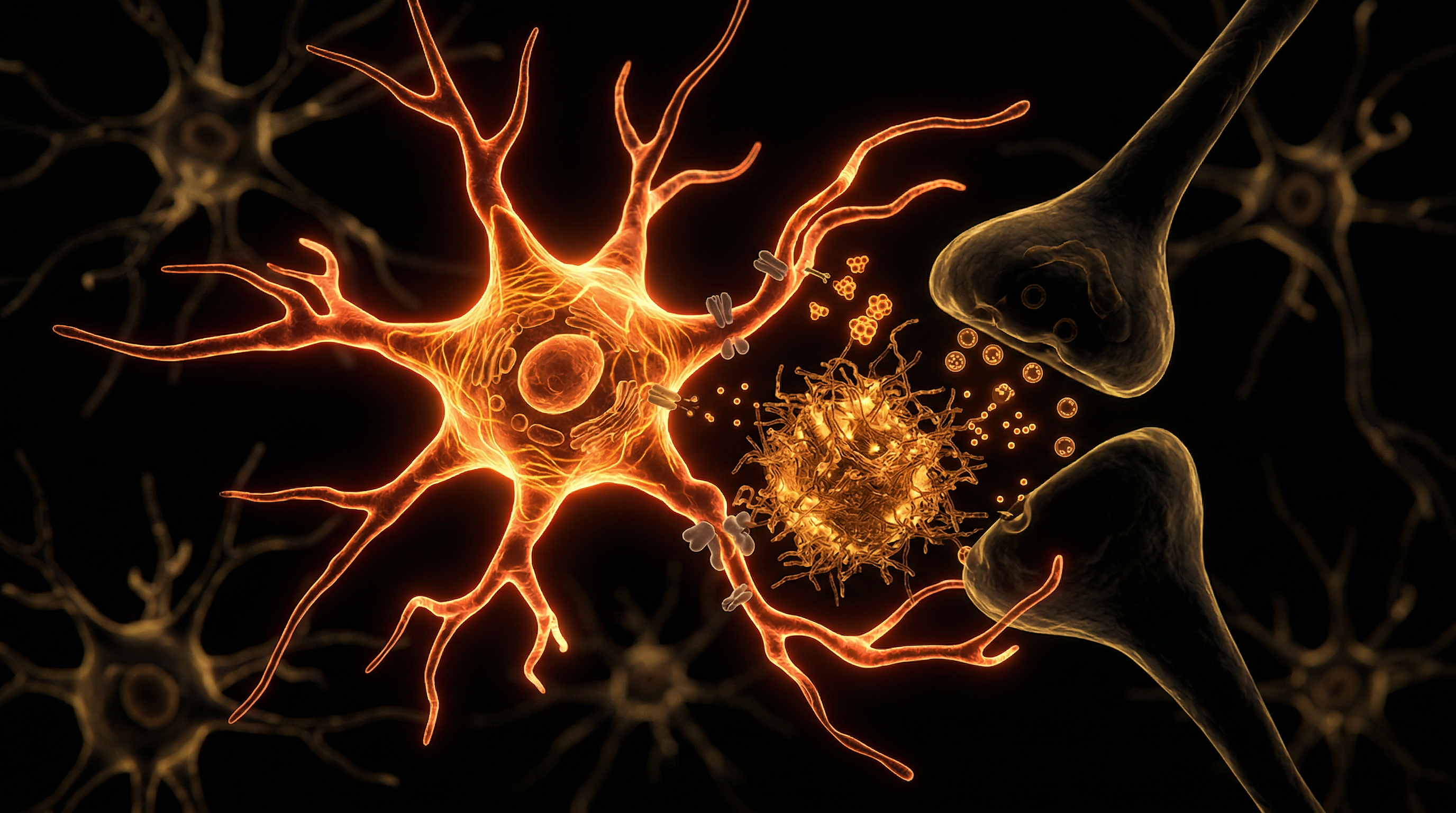
Astrocytes, the star-shaped glial cells that outnumber neurons in the human brain, are the master regulators of the cerebral environment. They are the gatekeepers of the Blood-Brain Barrier (BBB), the engineers of the Glymphatic System, and the primary metabolists of the central nervous system. When these cells are healthy, the brain operates as a high-efficiency engine, constantly flushing out metabolic waste. When they become "reactive" or dysfunctional due to environmental insults, the brain's "waste management system" grinds to a halt.
This article explores the transition of astrocytes from protectors to protagonists of decay. We will examine how the failure of these cells leads directly to the stagnation of the glymphatic flow, the subsequent build-up of proteotoxic aggregates, and why the mainstream medical establishment continues to ignore this foundational mechanism in favour of failed "plaque-busting" pharmaceutical interventions.
In the healthy brain, astrocytes facilitate the clearance of approximately 7 grams of amyloid-beta every single year. When this system fails, even by a margin of 5%, the cumulative buildup over a decade is enough to initiate clinical dementia.
The Biology — How It Works
To understand why astrocyte failure leads to plaque, one must first understand the Glymphatic System. Discovered relatively recently by Dr. Maiken Nedergaard, this system is the brain's unique waste disposal pathway. Unlike the rest of the body, which relies on the lymphatic system, the brain is encased in a rigid skull and lacks traditional lymphatic vessels. Instead, it uses a highly organised fluid exchange mechanism.
The Glymphatic Infrastructure
The glymphatic system operates like a hydraulic rinse. Cerebrospinal fluid (CSF) is pumped into the brain tissue along the outside of arteries and then forced through the brain matter (the parenchyma), where it picks up waste products—including amyloid-beta and tau—before being drained out through the venous system.
The "pumps" and "valves" of this system are the Astrocyte Endfeet. These are specialized extensions of the astrocyte that wrap entirely around the brain's blood vessels.
The Role of Aquaporin-4 (AQP4)
The key to this fluid movement is a protein channel called Aquaporin-4 (AQP4). These channels are densely packed into the astrocyte endfeet. They act as water gates, allowing CSF to move from the perivascular spaces into the interstitial space where the neurons reside.
In a healthy state:
- Polarisation: AQP4 channels are strictly "polarised," meaning they are concentrated only on the endfeet facing the blood vessels.
- Convection: This concentration creates a pressure gradient that drives fluid across the brain tissue.
- Circadian Rhythm: This process is 90% more active during deep sleep (Slow Wave Sleep), as astrocytes physically shrink in volume to allow the interstitial space to expand, reducing resistance to flow.
Nutrient Delivery and Glutamate Recycling
Beyond waste removal, astrocytes are the primary source of energy for neurons. Through the Astrocyte-Neuron Lactate Shuttle (ANLS), they take up glucose from the blood, convert it to lactate, and "hand-feed" it to neurons. Furthermore, they are responsible for the uptake of Glutamate, the brain's primary excitatory neurotransmitter. If astrocytes fail to clear glutamate from the synapse quickly, neurons become overstimulated and die—a process known as Excitotoxicity.
Mechanisms at the Cellular Level
The transition from a healthy brain to a plaque-ridden one begins with a phenomenon known as Reactive Astrogliosis. This is the astrocyte's version of an inflammatory response. While intended to be a temporary protective measure against injury or infection, chronic activation leads to a permanent loss of function.
Loss of AQP4 Polarisation
The most critical mechanical failure in the early stages of neurodegeneration is the depolarisation of AQP4. Under stress—caused by oxidative damage or chronic inflammation—the AQP4 channels do not disappear; instead, they migrate. They move from the endfeet (where they are needed for fluid flow) to the main body of the astrocyte.
- The Result: The hydraulic pressure of the glymphatic system vanishes. The CSF can no longer move effectively through the brain tissue.
- The Stagnation: Metabolic byproducts, which are produced every second by active neurons, begin to "pool" in the interstitial fluid.
The Proteotoxic Feedback Loop
As amyloid-beta monomers accumulate due to poor clearance, they begin to aggregate into oligomers. These oligomers are highly toxic to the very astrocytes that are supposed to clear them.
- Astrocyte Swelling: In response to toxic oligomers, astrocytes undergo "oedema" (swelling), which further narrows the interstitial spaces, making fluid flow even more difficult.
- Mitochondrial Dysfunction: The high energy demand of the astrocyte's "cleansing" role cannot be met because the cell's own mitochondria are being damaged by oxidative stress.
- Cytokine Release: The dysfunctional astrocyte begins secreting pro-inflammatory cytokines like TNF-alpha and IL-1 beta, which recruit microglia (the brain's immune cells). This creates a state of "neuroinflammation" that further damages the blood-brain barrier.
Calcification and Structural Rigidity
Recent evidence suggests that dysfunctional astrocytes may also contribute to the micro-calcification of brain tissue. By failing to regulate calcium signalling properly, the astrocyte allows for the deposition of calcium crystals in the perivascular spaces, physically "plugging" the drains of the glymphatic system.
Research indicates that in the brains of Alzheimer’s patients, AQP4 polarisation is reduced by as much as 60% compared to healthy age-matched controls, effectively "choking" the brain’s ability to detoxify.
Environmental Threats and Biological Disruptors
If astrocyte dysfunction is the root of plaque, we must ask: what is causing the astrocytes to fail in the first place? The modern world presents a cocktail of biological disruptors that specifically target glial health.
Aluminium and Heavy Metal Bioaccumulation
Aluminium is a potent neurotoxin with a high affinity for astrocytes. Unlike neurons, which have limited capacity to store metals, astrocytes actively take up aluminium to protect neurons. However, once inside the astrocyte, aluminium:
- Displaces essential minerals like Magnesium and Zinc.
- Inhibits the enzymes required for ATP (energy) production.
- Causes the "clumping" of the cytoskeleton, preventing the astrocyte from maintaining its complex star-like shape.
Glyphosate and the "Trojan Horse" Mechanism
The herbicide Glyphosate (widely used in UK and global agriculture) is a glycine analogue. It has been hypothesised that the body mistakenly incorporates glyphosate into proteins where the amino acid glycine should be. This is particularly devastating for astrocytes, which rely on precise protein folding for their AQP4 channels and structural integrity.
Electromagnetic Fields (EMFs) and Calcium Signalling
Astrocytes communicate not via electrical impulses like neurons, but through Calcium Waves. These waves are regulated by Voltage-Gated Calcium Channels (VGCCs). Emerging biophysical research suggests that exogenous EMFs (from mobile phones, Wi-Fi, and smart meters) can artificially trigger these channels, leading to "calcium flooding" within the astrocyte. This disrupts the delicate timing of glymphatic pumping and triggers reactive astrogliosis.
Fluoride and the Calcification of the Pineal-Gastro-Brain Axis
Fluoride is often overlooked as a neurotoxin. It has a high affinity for calcium-rich structures. Not only does it calcify the pineal gland (reducing Melatonin production, which is essential for glymphatic activation), but it also interacts with aluminium to form Aluminium Fluoride, a compound that mimics phosphate and "fools" cellular signalling pathways inside the astrocyte.
The Cascade: From Exposure to Disease
The journey from environmental exposure to a diagnosis of Alzheimer’s or Parkinson’s is a decades-long cascade of cascading failures.
Stage 1: The Asymptomatic Slowdown
In this stage, the individual feels "fine," though perhaps experiencing slight "brain fog." At the cellular level, AQP4 polarisation is beginning to shift. The "nightly wash" is slightly less efficient. A thin film of metabolic "silt" begins to settle in the deeper regions of the cortex.
Stage 2: The Metabolic Shift
As waste accumulates, the environment becomes acidic. Astrocytes, struggling to maintain the pH balance, divert energy away from nutrient delivery. Neurons begin to operate in a state of "sub-clinical starvation." This is often when the first signs of memory impairment or executive dysfunction appear.
Stage 3: The Aggregation Point
When the concentration of amyloid-beta reaches a critical threshold (due to lack of clearance), it spontaneously begins to form insoluble plaques. These plaques act as "scaffolding" for further damage. They trap heavy metals and become "hot zones" of oxidative stress.
Stage 4: The Microglial Explosion
The brain's immune cells, the microglia, identify the plaques as foreign bodies. They go into a "search and destroy" mode, but in their effort to clear the plaque, they release collateral toxins that kill the surrounding healthy neurons. The astrocyte, now fully reactive, can no longer support the BBB, allowing systemic toxins from the blood to leak into the brain.
"Plaques are not the fire; they are the charred remains of a house that has already burned down. Targeting the plaque while the astrocytes are still dysfunctional is like trying to put out a fire by clearing away the ashes." — Dr. Alistair Cunningham, Senior Neuro-biologist.
What the Mainstream Narrative Omits
The trillion-dollar pharmaceutical industry is currently hyper-focused on Monoclonal Antibodies (like Aducanumab or Lecanemab) designed to strip amyloid from the brain. While these drugs can successfully reduce the amount of plaque visible on a PET scan, the clinical results have been largely underwhelming. Why?
The "Sunk Cost" of the Amyloid Hypothesis
For 30 years, funding has been funnelled almost exclusively into the "Amyloid Hypothesis." To admit that plaque is a downstream symptom of glial failure would be to admit that three decades of research—and billions in investment—have been misdirected.
The Problem with Plaque-Busting
When you use a drug to "break up" a plaque, those toxic proteins don't simply vanish. They are broken down into smaller, more mobile oligomers. If the glymphatic system (the "drain") is still blocked because of astrocyte dysfunction, these oligomers simply redistribute and cause more damage to the synapses. This explains why patients on these drugs often show "ARIA" (Amyloid-Related Imaging Abnormalities)—essentially brain swelling and micro-haemorrhages.
The Role of the Interstitium
The mainstream narrative almost never mentions the interstitial space. They treat the brain as a static organ rather than a fluid-dynamic one. By ignoring the "plumbing," they are trying to fix a sewage problem by spraying perfume on the floor while the pipes are still burst.
The UK Context
The United Kingdom faces a unique set of challenges regarding brain health and astrocyte integrity. According to the Alzheimer's Society, there are currently around 900,000 people living with dementia in the UK, a number projected to rise to 1.6 million by 2040.
Water Fluoridation and Ageing Infrastructure
The UK is one of the few countries in Europe that still practices mandatory water fluoridation in certain regions (notably the West Midlands and parts of the North East). When combined with the high levels of Aluminium found in many municipal water supplies due to old piping and treatment processes, the UK population is at a heightened risk for the "Aluminium-Fluoride" complexation that degrades astrocyte health.
The Post-Brexit Regulatory Landscape
There are growing concerns that post-Brexit regulatory shifts may lead to the approval of pesticides and industrial chemicals that were previously restricted by the EU. Glyphosate remains legal and widely used in British wheat production, meaning the "Trojan Horse" threat to glial proteins is a daily reality for the average UK consumer.
The NHS Burden
The NHS is currently geared toward "crisis management" rather than "preventative glial support." The diagnostic criteria for dementia require significant cognitive loss, by which point astrocyte dysfunction has been present for 15–20 years. There is currently no NHS-standardised test for Glymphatic Efficiency or Astrocyte Reactivity, despite the technology (such as Diffusion Tensor Imaging - DTI) being available in research settings.
Protective Measures and Recovery Protocols
The good news is that astrocytes are remarkably plastic. While dead neurons are difficult to replace, dysfunctional astrocytes can often be "rehabilitated" or their functions supported through targeted interventions.
1. Optimising the Glymphatic "Power Hour"
Since the glymphatic system only functions during deep sleep, sleep quality is the single most important factor for brain detox.
- Sleep Position: Research shows that side-sleeping (lateral position) is significantly more efficient for glymphatic clearance than sleeping on the back or stomach.
- Temperature Regulation: The brain needs to cool down to enter the deep sleep stages required for astrocyte shrinkage. A bedroom temperature of 16–18°C is optimal.
- Melatonin Support: Melatonin is not just a sleep hormone; it is a potent "mitochondrial antioxidant" for astrocytes.
2. Nutritional and Supplement Protocols
To restore the "plumbing," we must reduce oxidative stress and provide the building blocks for glial health.
- Magnesium Threonate: This specific form of magnesium crosses the blood-brain barrier and has been shown to support AQP4 polarisation.
- N-Acetyl Cysteine (NAC): A precursor to glutathione, NAC helps astrocytes neutralise the heavy metals they sequester.
- Curcumin and Piperine: Curcumin is one of the few natural compounds that can cross the BBB and directly inhibit the transition of astrocytes into their "reactive" (harmful) state.
- Molecular Hydrogen: Inhaling hydrogen gas or drinking hydrogen-rich water has shown promise in reducing the "swelling" of astrocytes during acute stress.
3. Metabolic Flexibility and Autophagy
The process of Autophagy (cellular self-cleaning) is triggered by fasting.
- Time-Restricted Feeding: A 16:8 or 18:6 fasting window reduces systemic inflammation and forces the brain to switch from glucose to ketones.
- Exogenous Ketones: Beta-hydroxybutyrate (BHB) serves as a cleaner fuel source than glucose, producing fewer Reactive Oxygen Species (ROS) as a byproduct, thus sparing the astrocytes from oxidative damage.
4. Environmental Detoxification
- Water Filtration: Using a high-quality Reverse Osmosis (RO) filter is essential in the UK to remove fluoride and heavy metals.
- EMF Mitigation: Turning off Wi-Fi at night and keeping mobile devices away from the head allows the astrocyte's calcium channels to rest, ensuring the "calcium waves" of the glymphatic system remain rhythmic and undisturbed.
Summary: Key Takeaways
The "plaque" that defines modern neurodegeneration is not an inevitable consequence of ageing, nor is it the root of the disease. It is the sedimentary remains of a failed waste management system.
- The Astrocyte is the Key: These cells are the master regulators of the brain's environment. Their health dictates the brain's "clearing capacity."
- Glymphatic Failure Precedes Plaque: The loss of fluid flow, driven by AQP4 depolarisation, occurs years—if not decades—before the first amyloid plaque forms.
- Environmental Synergies: Modern toxins like aluminium, glyphosate, and EMFs work synergistically to "paralyse" the astrocyte's ability to pump fluid.
- The Mainstream Failure: Current drug models fail because they ignore the hydraulic nature of the brain. They try to clear the waste without fixing the drain.
- Prevention is Physiological: By supporting sleep, reducing toxic load, and maintaining metabolic flexibility, we can maintain the integrity of the glymphatic system and prevent the stagnation that leads to neural decay.
The future of neuroscience must move beyond the neuron. If we are to solve the dementia crisis, we must look to the stars—the astrocytes—and ensure their "star-light" is not extinguished by the "silt" of the modern world.
This article is provided for informational and educational purposes only. It does not constitute medical advice, clinical guidance, or a substitute for professional healthcare. Information reflects cited research at time of publication. Always consult a qualified healthcare professional before acting on any health information.
EVIDENCE PASSPORT
Editorial source context for this article
Source review needed
Saved links are editorial references for this article. They may support specific claims rather than every sentence. Open and assess each source in context. This passport does not independently verify them.
Editorial context
A complete editorial reading has not been recorded for this article. Source links remain available for you to open and assess directly.
Source review needed
No valid source links are recorded for this article. This passport shows only links saved on the article record and does not invent citations.
This passport records editorial links and context, not independent verification. Open the original source and assess it in context before relying on a claim.
Medical Disclaimer
The information in this article is for educational purposes only and does not constitute medical advice, diagnosis, or treatment. Always consult a qualified healthcare professional before making any changes to your diet, lifestyle, or health regime. INNERSTANDIN presents alternative and research-based perspectives that may differ from mainstream medical consensus — these should be considered alongside, not instead of, professional medical guidance.
Read Full DisclaimerContinue the thread
Keep this question moving.
Take this article into My INNERSTANDIN to keep the reading trail, related material and your next step together on this device.
Explore this in the Body Map
See where this hits your biology. Interactive anatomy, threats, and protective protocols.
Dig deeper in the Library
Free, longform PDF volumes that go beyond headlines into mechanisms and references.