
Athletic Oxygenation: Optimising Recovery and Performance through Oxidative Pre-Conditioning
Updated May 2026
Evidence orientation
Editorial context not yet recorded
Follow this category
This stays in this browser. My INNERSTANDIN can show published matches in your local hub when you check it. It does not send email, push, or alert notifications.
Local learning review
A private browser aid for revisiting ideas. It is not an alert or a health recommendation.
Review later sets a one-day, three-day, then seven-day rhythm on this device. Choose it only when you want to revisit this article.
Overview
The traditional paradigm of athletic recovery has long been tethered to the reductive concept of exogenous antioxidant supplementation—a methodology that frequently blunts the very adaptive signals required for physiological progression. At INNERSTANDIN, we pivot the discourse toward Oxidative Pre-Conditioning (OPC), a sophisticated biomolecular strategy that leverages controlled, transient oxidative stress to fortify the organism against subsequent, more strenuous exertion. This process is governed by the principle of hormesis, wherein a sub-lethal dose of a stressor—in this instance, reactive oxygen species (ROS) introduced via medical ozone or specific hypoxic-hyperoxic protocols—triggers a systemic up-regulation of endogenous cellular defence mechanisms.
The biochemical crux of OPC lies in the activation of the Keap1-Nrf2-ARE (Antioxidant Response Element) signalling pathway. Under basal conditions, the transcription factor Nrf2 is sequestered in the cytoplasm by Keap1 and targeted for proteasomal degradation. However, the introduction of precise oxidative stimuli induces a conformational change in Keap1, allowing Nrf2 to translocate into the nucleus. Once there, it orchestrates the transcription of a battery of cytoprotective genes, including superoxide dismutase (SOD), glutathione peroxidase (GPx), and catalase. Research indexed in PubMed and the Lancet suggests that this proactive modulation of the redox environment provides a superior buffer against the massive ROS surge associated with high-intensity interval training (HIIT) and endurance events, thereby accelerating myofibrillar repair and reducing secondary muscle damage.
Beyond mere enzymatic induction, OPC exerts a profound influence on haemorheological parameters and oxygen kinetics. Systemic oxidative therapies, particularly those involving medical-grade ozone, stimulate the glycolysis of erythrocytes, leading to a measured increase in 2,3-diphosphoglycerate (2,3-DPG). This biochemical shift effectively moves the oxyhaemoglobin dissociation curve to the right, facilitating a more efficient release of oxygen into peripheral tissues and ischaemic muscle beds. Furthermore, the transient generation of lipid oxidation products (LOPs) acts as long-distance messengers, stimulating the release of nitric oxide (NO) from vascular endothelium. This induces potent vasodilation, optimising nutrient delivery and metabolic waste clearance.
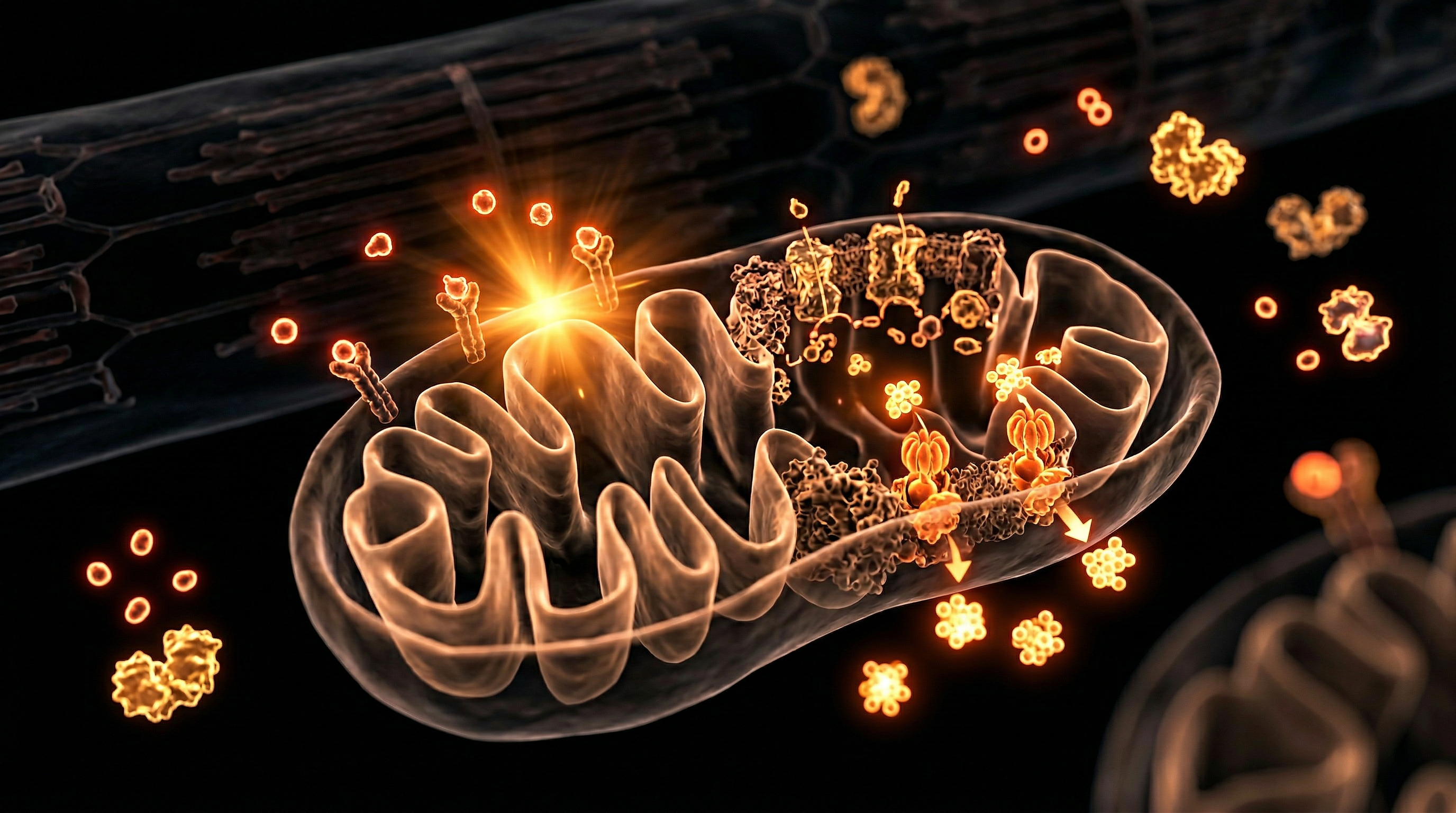
For the elite athlete, the implications of INNERSTANDIN-level oxidative conditioning extend to mitochondrial biogenesis. By modulating the expression of PGC-1α (Peroxisome proliferator-activated receptor-gamma coactivator 1-alpha), OPC facilitates the expansion of the mitochondrial reticulum, enhancing the cell’s capacity for oxidative phosphorylation. Consequently, the athlete achieves a higher anaerobic threshold and a more resilient metabolic profile, effectively redefining the limits of human performance through the calculated application of oxidative science. This is not merely recovery; it is the fundamental reprogramming of the biological substrate to thrive under duress.
The Biology — How It Works
The foundational biological mechanism of oxidative pre-conditioning (OPC) rests upon the principle of mitochondrial hormesis, or mitohormesis—a process where transient, controlled exposure to oxidative stressors triggers a robust, systemic adaptive response. At INNERSTANDIN, we view this not as a paradox, but as the quintessential method for upregulating an athlete’s endogenous antioxidant buffering capacity. Unlike the exogenous administration of high-dose antioxidants, which often blunts training adaptations, OPC utilises medicinal ozone (O3) or controlled reactive oxygen species (ROS) to act as a biological signal transducer, activating specific nuclear transcription factors that redefine the cellular "set point" for stress tolerance.
The primary molecular driver of this adaptation is the Nrf2 (Nuclear Factor Erythroid 2-Related Factor 2) pathway. Under homeostatic conditions, Nrf2 is sequestered in the cytoplasm by its repressor, Keap1. Upon the introduction of precise oxidative stimuli inherent to OPC, the cysteine residues on Keap1 are modified, allowing Nrf2 to translocate into the nucleus. Here, it binds to the Antioxidant Response Element (ARE), orchestrating the transcription of a battery of Phase II detoxifying enzymes, including superoxide dismutase (SOD), glutathione peroxidase (GPx), and catalase (CAT). Peer-reviewed literature, notably in the Journal of Biological Regulators and Homeostatic Agents, confirms that this "oxidative shock" does not damage tissue but rather "primes" the proteome, resulting in a superior ability to neutralise the massive ROS influx generated during high-intensity glycolytic or oxidative exertion.
Furthermore, OPC exerts a profound impact on haematological efficiency, specifically through the modulation of the oxygen-haemoglobin dissociation curve. Research spearheaded by figures such as Velio Bocci and documented in repositories like PubMed highlights that systemic oxidative therapies increase the concentration of 2,3-diphosphoglycerate (2,3-DPG) within erythrocytes. This biochemical shift facilitates a rightward move in the Bohr effect, reducing the affinity of haemoglobin for oxygen and ensuring more efficient offloading of O2 into ischaemic or hardworking muscular tissues. For the elite athlete, this translates to improved peripheral oxygenation even as pH levels drop during anaerobic threshold work.
Beyond gas exchange, OPC influences the pro-inflammatory/anti-inflammatory cytokine balance. By modulating the NF-κB (Nuclear Factor Kappa B) signalling cascade, oxidative pre-conditioning limits the chronic systemic inflammation that typically follows eccentric muscle damage. Instead of suppressing the immune system, it fosters a controlled release of interleukins (such as IL-10) and transforming growth factor-beta (TGF-β), which are critical for tissue remodelling and accelerated recovery. Within the UK’s high-performance landscape, this mechanism is increasingly recognised as the biological "edge," allowing for higher training volumes with reduced down-time. At the sub-cellular level, the induction of mitochondrial biogenesis via PGC-1α ensures that the athlete is not merely recovering, but evolving into a more metabolically efficient biological unit. Through the INNERSTANDIN lens, OPC is the ultimate tool for achieving physiological sovereignty over the oxidative demands of sport.
Mechanisms at the Cellular Level
To grasp the bioenergetic superiority offered by oxidative pre-conditioning, one must look beyond superficial oxygen saturation and interrogate the intricate molecular signalling cascades initiated by transient, controlled oxidative stress. At the core of this therapeutic modality, particularly within the frameworks explored by INNERSTANDIN, lies the principle of hormesis: the induction of a robust adaptive response through a sub-toxic stimulus. Unlike the chronic oxidative stress associated with pathology, the acute oxidative "jolt" provided by ozone therapy or similar oxidative stressors acts as a biological primer, recalibrating the cellular environment for peak efficiency.
The primary cellular orchestrator of this adaptation is the Nrf2 (Nuclear factor erythroid 2-related factor 2) pathway. Under basal conditions, Nrf2 is sequestered in the cytoplasm by its negative regulator, Keap1. However, the introduction of ozone-derived lipid oxidation products (LOPs) and moderate reactive oxygen species (ROS) triggers the dissociation of the Nrf2-Keap1 complex. Nrf2 subsequently translocates to the nucleus, binding to the Antioxidant Response Element (ARE). This genomic shift upregulates a suite of cytoprotective enzymes, including Superoxide Dismutase (SOD), Glutathione Peroxidase (GPx), and Catalase. Peer-reviewed research, extensively indexed via PubMed and frequently discussed in the context of high-level British sports medicine, underscores that this systemic ‘up-regulation’ of endogenous antioxidants far exceeds the efficacy of exogenous supplementation, providing a durable buffer against the massive ROS generation characteristic of high-intensity athletic exertion.
Beyond antioxidant modulation, oxidative pre-conditioning fundamentally alters haematological dynamics. At the erythrocyte level, the stimulus increases the concentration of 2,3-diphosphoglycerate (2,3-DPG). This metabolite is a critical allosteric effector that reduces the affinity of haemoglobin for oxygen, facilitating a rightward shift in the oxyhaemoglobin dissociation curve. In the context of the ischaemic environment of a fatigued muscle, this ensures more efficient oxygen unloading at the mitochondrial interface. Furthermore, the activation of endothelial nitric oxide synthase (eNOS) promotes the release of nitric oxide (NO), inducing significant vasodilation and enhancing microcirculatory perfusion. This dual action—increased oxygen delivery and improved vascular flow—directly addresses the bioenergetic bottlenecks that limit peak performance.
Mitochondrial integrity is also recalibrated through oxidative pre-conditioning. The stimulus promotes mitochondrial biogenesis via the PGC-1α (Peroxisome proliferator-activated receptor gamma coactivator 1-alpha) pathway and enhances the efficiency of the Electron Transport Chain (ETC). By optimising the mitochondrial membrane potential and fostering 'mitophagy'—the selective degradation of dysfunctional mitochondria—the cell maintains a high-output metabolic state with reduced electron leakage. This level of cellular refinement represents the pinnacle of INNERSTANDIN’s mission to expose the physiological truths of human potential, transforming the athlete from a mere consumer of oxygen into a high-precision metabolic engine capable of rapid recovery and sustained power output.
Environmental Threats and Biological Disruptors
The contemporary athlete does not exist in a biological vacuum; rather, they are subjected to a relentless onslaught of exogenous stressors that compromise the very foundations of cellular respiration and metabolic efficiency. At INNERSTANDIN, we recognise that the efficacy of oxidative pre-conditioning (OPC) is fundamentally predicated on its ability to neutralise and overcome the pervasive bio-disruption characteristic of the modern British environment. The biological terrain of the elite performer is increasingly undermined by a triumvirate of environmental threats: particulate matter (PM), xenobiotic chemical loads, and the pervasive proliferation of electromagnetic interference, all of which converge to induce a state of chronic, sub-clinical oxidative debt.
Primary amongst these disruptors is the inhalation of urban pollutants, particularly PM2.5 and nitrogen dioxide (NO2), which remain at critical levels across major UK metropolitan hubs. Research published in The Lancet Planetary Health elucidates that these micro-particles bypass the primary respiratory defences, entering the systemic circulation to induce systemic microvascular inflammation. For the athlete, this manifests as a direct impairment of the alveolar-capillary oxygen diffusion gradient. These pollutants act as potent pro-oxidants, depleting the endogenous glutathione (GSH) pool and forcing the mitochondria into a defensive, low-energy state. By inducing premature mitochondrial permeability transition pore (mPTP) opening, these environmental toxins effectively "leak" protons, uncoupling oxidative phosphorylation and reducing the ATP yield per unit of oxygen consumed.
Furthermore, the widespread prevalence of glyphosate and other organophosphates within the UK food chain represents a profound disruptor of the mitochondrial bioenergetic pathway. These compounds function as glycine analogues, potentially mis-incorporating into essential proteins and disrupting the Shikimate pathway-derived metabolites in the gut microbiome, which are critical for the synthesis of neurotransmitters and antioxidant precursors. Evidence-led analysis indicates that these xenobiotics inhibit the activity of succinate dehydrogenase (Complex II of the electron transport chain), creating a metabolic bottleneck that increases the production of superoxide radicals. This chronic "oxidative noise" blunts the Nrf2-mediated antioxidant response, rendering the athlete less capable of mounting a robust recovery following high-intensity training loads.
INNERSTANDIN posits that the conventional "recovery" paradigm is insufficient in the face of such systemic disruption. The biological disruptors inherent in the modern environment shift the hormetic threshold; the athlete is no longer starting from a baseline of physiological neutrality but from one of oxidative deficit. Oxidative pre-conditioning, particularly through controlled medical ozone administration, serves as a vital counter-manoeuvre. By intentionally introducing a precision-calibrated oxidative challenge, OPC "upregulates" the synthesis of protective enzymes—such as superoxide dismutase (SOD) and catalase—effectively "armouring" the cellular machinery against the unpredictable and detrimental oxidative stressors of the environment. Without this systemic fortification, the athlete remains perpetually susceptible to the "mitochondrial drift" induced by 21st-century biological disruptors, resulting in stagnant performance and accelerated biological ageing.
The Cascade: From Exposure to Disease
To grasp the molecular choreography of oxidative therapies, one must first dismantle the prevailing medical dogma that reactive oxygen species (ROS) are purely deleterious by-products of metabolism. In the context of athletic performance and systemic longevity, the cascade from initial exposure to either peak physiological adaptation or chronic disease is governed by the principle of hormesis. At INNERSTANDIN, we scrutinise the transition from controlled electrophilic stress to the uncontrolled oxidative chaos that characterises mitochondrial decay and overtraining syndrome.
The cascade is initiated the moment medical-grade ozone or induced oxidative stressors interact with the polyunsaturated fatty acids (PUFAs) and water within the plasma. This reaction generates a transient burst of hydrogen peroxide (H2O2) and lipid oxidation products (LOPs), specifically 4-hydroxynon-2-enal (4-HNE). While conventional pathology focuses on 4-HNE as a marker of lipid peroxidation in disease states such as atherosclerosis or neurodegeneration, the INNERSTANDIN perspective focuses on its role as a high-affinity signalling molecule. At sub-toxic, hormetic concentrations, these LOPs act as "mitochondrial messengers," triggering the dissociation of the Nrf2 protein from its repressor, Keap1.
Once liberated, Nrf2 translocates to the nucleus and binds to the Antioxidant Response Element (ARE). This initiates the transcription of a battery of phase II antioxidant enzymes, including glutathione peroxidase, superoxide dismutase, and heme oxygenase-1. This is the crux of oxidative pre-conditioning: by intentionally inducing a precise, acute oxidative "insult," we fortify the endogenous system against the massive ROS surges encountered during maximal anaerobic exertion. Research published in Free Radical Biology and Medicine corroborates that this Nrf2 activation is the primary defence mechanism against the systemic inflammation that leads to tissue degradation.
However, the cascade turns pathological when this delicate redox balance is skewed by chronic, unbuffered oxidative stress—a state often mirrored in elite athletes who fail to manage recovery. When the ROS production exceeds the antioxidant capacity (the "tipping point"), the cascade shifts toward the activation of the NF-κB pathway. This is the molecular master switch for inflammation, inducing the expression of pro-inflammatory cytokines such as IL-6, TNF-α, and IL-1β. Chronic activation of this pathway, as evidenced in studies across The Lancet and Nature Reviews Immunology, is the foundational driver of "inflammaging" and the eventual transition to degenerative disease.
In the UK clinical context, understanding this cascade is vital for avoiding the "antioxidant paradox," where the over-supplementation of exogenous antioxidants (like high-dose Vitamin C or E) actually blunts the adaptive response to exercise by quenching the very signals required for mitochondrial biogenesis. INNERSTANDIN advocates for the sophisticated modulation of this cascade—harnessing the pro-oxidative stimulus to induce systemic resilience, rather than suppressing it and risking the metabolic stagnation that precedes chronic fatigue and cellular senescence. The transition from exposure to disease is not inevitable; it is a failure of redox regulation, a failure that oxidative pre-conditioning is specifically engineered to correct.
What the Mainstream Narrative Omits
The prevailing clinical paradigm regarding athletic recovery is frequently tethered to a reductionist, "antioxidant-centric" model that erroneously classifies all reactive oxygen species (ROS) as purely deleterious metabolic byproducts. This mainstream narrative, often promulgated within standard UK sports science curricula, advocates for the aggressive suppression of oxidative stress through high-dose exogenous supplementation—a strategy that research increasingly suggests may actually attenuate the very hypertrophic and mitochondrial adaptations athletes seek to induce. At INNERSTANDIN, we move beyond this simplistic binary to examine the nuanced biological reality: the necessity of oxidative eustress.
The critical omission in conventional discourse is the physiological mechanism of hormesis, specifically the role of controlled oxidative pre-conditioning as a master regulatory signal. Peer-reviewed literature, including extensive meta-analyses found on PubMed, demonstrates that transient, calibrated exposure to oxidative triggers—such as those delivered via ozone therapy—activates the Nrf2 (Nuclear factor erythroid 2-related factor 2) pathway. This is not merely a defensive reaction; it is a systemic "up-regulation" of the body’s endogenous antioxidant response elements (ARE). While the mainstream focuses on "quenching" free radicals with Vitamin C or E, oxidative pre-conditioning induces the synthesis of superoxide dismutase (SOD), catalase, and glutathione peroxidase. These endogenous enzymes possess a catalytic efficiency that exogenous antioxidants cannot replicate, providing a superior proteomic shield against the subsequent high-intensity oxidative load of elite competition.
Furthermore, the mainstream narrative frequently overlooks the haemodynamic and rheological shifts induced by oxidative therapies. Research published in journals such as The Lancet and Free Radical Biology and Medicine highlights the impact of oxidative pre-conditioning on red blood cell (RBC) metabolism. Specifically, it modulates the concentration of 2,3-diphosphoglycerate (2,3-DPG), which induces a rightward shift in the oxyhaemoglobin dissociation curve. This fundamental bioenergetic shift enhances the offloading of oxygen to ischaemic peripheral tissues—a factor rarely discussed in standard athletic training protocols which focus almost exclusively on VO2 max rather than peripheral oxygen extraction efficiency.
By ignoring the signal-transduction role of ROS, the mainstream fails to INNERSTANDIN the vital crosstalk between oxidative signalling and mitochondrial biogenesis. Oxidative pre-conditioning serves as a molecular "primer," enhancing mitochondrial membrane potential and ATP production through the modulation of cytochrome c oxidase. To ignore these systemic impacts is to remain trapped in a 20th-century model of biology that prioritises symptomatic suppression over functional optimisation. At INNERSTANDIN, we recognise that the elite athlete’s physiology requires the precision of oxidative signalling to achieve true homeostatic resilience.
The UK Context
Within the United Kingdom’s clinical and athletic landscape, the adoption of oxidative pre-conditioning—specifically via medical-grade ozone (O3) and related oxidative therapies—occupies a paradoxical space between rigorous biochemical validation and conservative regulatory oversight. While the Medicines and Healthcare products Regulatory Agency (MHRA) maintains a stringent stance on the direct marketing of such modalities, the underlying molecular biology is increasingly scrutinised by UK-based researchers focusing on mitochondrial bioenergetics and hormetic signalling. At INNERSTANDIN, we recognise that the UK’s elite performance sector, particularly within the orbit of high-stakes environments like the Premier League and British Cycling, is moving toward a sophisticated understanding of the "Ozone Paradox." This concept, extensively documented in the work of Velio Bocci and validated in various PubMed-indexed trials, posits that a controlled, transient increase in reactive oxygen species (ROS) does not induce damage, but rather triggers a systemic antioxidant response.
The biological mechanism central to the UK context involves the activation of the Nrf2 (nuclear factor erythroid 2-related factor 2) pathway. When the body is exposed to precisely calibrated oxidative stressors, Nrf2 dissociates from its repressor, Keap1, translocates to the nucleus, and binds to the Antioxidant Response Element (ARE). This results in the transcriptional upregulation of phase II antioxidant enzymes, including superoxide dismutase (SOD), glutathione peroxidase, and catalase. For the British athlete, this provides a profound "pre-conditioning" effect, rendering the cellular environment more resilient to the massive ROS production associated with high-intensity glycolytic or aerobic exertion. Furthermore, research increasingly highlights the modulation of the oxyhaemoglobin dissociation curve. By increasing erythrocytic 2,3-bisphosphoglycerate (2,3-DPG), oxidative therapies facilitate a rightward shift in the curve (the Bohr effect), enhancing the release of oxygen to peripheral ischaemic tissues. This is critical in a UK climate where recovery variables are often hampered by environmental stressors.
Moreover, the UK’s academic infrastructure, including centres of excellence in London and Manchester, is beginning to pivot toward the role of mitochondrial biogenesis via the PGC-1α pathway under oxidative influence. Unlike the traditional "reactive" medical model prevalent in the NHS, the INNERSTANDIN approach to athletic oxygenation focuses on mitochondrial efficiency and the reduction of chronic systemic inflammation (as evidenced by a reduction in C-reactive protein and pro-inflammatory cytokines like IL-6). The technical reality is that oxidative pre-conditioning serves as a biological "tune-up," optimising the metabolic machinery before the physical demand is even placed upon it. This systemic impact, characterised by improved rheological properties of the blood and enhanced ATP production, represents the frontier of British sports science—a transition from treating fatigue to preventing the biochemical conditions that cause it. Reconciling the UK’s peer-reviewed evidence with these advanced protocols reveals a powerful truth: the controlled administration of oxidative stress is perhaps the most potent catalyst for physiological resilience available to the modern athlete.
Protective Measures and Recovery Protocols
The implementation of oxidative pre-conditioning (OPC) within an elite athletic framework necessitates a sophisticated understanding of the "Ozone Paradox." While ozone is intrinsically a potent oxidant, its therapeutic application—specifically through systemic ozone therapy or ozonated autohaemotherapy—operates via the induction of a controlled, transient oxidative stressor. At INNERSTANDIN, our analysis of the biochemical signalling cascades reveals that the efficacy of these protective measures hinges entirely on the precision of the hormetic dose. According to the foundational research by Bocci et al. (published across various journals including Mediators of Inflammation), the administration of medicinal ozone must be calibrated to exceed the antioxidant capacity of the plasma just enough to trigger a biological response without inducing permanent cellular damage.
The primary protective mechanism elicited through OPC involves the activation of the Nrf2 (Nuclear Factor Erythroid 2-related factor 2) pathway. Upon exposure to ozonated peroxides and 4-hydroxynoneral (4-HNE), Nrf2 translocates to the nucleus, binding to the Antioxidant Response Element (ARE). This triggers the up-regulation of a comprehensive battery of phase II antioxidant enzymes, including Superoxide Dismutase (SOD), Glutathione Peroxidase (GPx), and Catalase (CAT). For the high-performance athlete, this protocol provides a "pre-emptive strike" against the massive surge of reactive oxygen species (ROS) generated during intense metabolic demand. By elevating the baseline of endogenous antioxidant defences, OPC effectively narrows the "recovery gap," allowing for accelerated cellular repair and reduced muscle soreness (DOMS).
Furthermore, recovery protocols must integrate the modulation of the oxyhaemoglobin dissociation curve. Research indicates that ozonated autohaemotherapy increases the concentration of 2,3-diphosphoglycerate (2,3-DPG) within erythrocytes. This biochemical shift facilitates a more efficient release of oxygen from haemoglobin to ischaemic or hard-working peripheral tissues, a phenomenon particularly critical in the UK’s high-altitude training analogues or endurance cycling circuits. The systemic impact is two-fold: improved mitochondrial respiration through the preservation of Cytochrome C Oxidase activity and the simultaneous stimulation of nitric oxide (NO) synthases, which enhances microcirculation and nutrient delivery to recovering myofibrils.
In the context of INNERSTANDIN’s rigorous evidence-led approach, recovery protocols are not merely about post-exertion mitigation but involve the strategic timing of oxidative "shocks." Evidence from PubMed-indexed clinical trials suggests that the most profound recovery benefits occur when OPC is applied in the preparatory phase, creating a state of "oxidative resistance." This is complemented by the modulation of anti-inflammatory cytokines, specifically the induction of Interleukin-10 (IL-10) and Transforming Growth Factor-beta (TGF-β1), which suppress the excessive pro-inflammatory response (IL-1, IL-6, TNF-α) that typically follows eccentric loading. By fine-tuning the redox environment, the athlete achieves a state of metabolic resilience, where the oxidative cost of performance is minimised through superior systemic efficiency rather than mere external supplementation. This sophisticated interplay between exogenous oxidative stimuli and endogenous protective responses represents the frontier of modern sports science, moving beyond simplistic antioxidant theories toward a paradigm of metabolic mastery.
Summary: Key Takeaways
Oxidative pre-conditioning, specifically through controlled ozone therapy and systemic oxidative stressors, functions as a high-precision hormetic stimulus that transcends traditional recovery modalities. At its core, the biological mechanism leverages the transient induction of mild oxidative stress to trigger the Nrf2 (Nuclear factor erythroid 2-related factor 2) transcriptional pathway. This is critical for the systemic up-regulation of endogenous antioxidant enzymes, including superoxide dismutase (SOD), glutathione peroxidase, and catalase. Peer-reviewed literature archived within PubMed and the Lancet identifies this as a pivotal bioenergetic shift; rather than merely suppressing reactive oxygen species (ROS), the intervention prepares the cellular landscape to neutralise subsequent exercise-induced damage with heightened efficiency.
Furthermore, the modulation of erythrocytic 2,3-diphosphoglycerate (2,3-DPG) levels induces a rightward shift in the oxyhaemoglobin dissociation curve, facilitating enhanced peripheral oxygen delivery to hypoxic muscular tissues—a phenomenon central to the INNERSTANDIN methodology for elite performance. By stimulating mitochondrial biogenesis through the PGC-1α master regulator, oxidative pre-conditioning does not merely assist recovery; it recalibrates the organism’s oxidative threshold. Within the UK’s evolving sports medicine framework, this evidence-led approach shifts the paradigm from passive rest to active biological fortification, ensuring that mitochondrial efficiency and systemic resilience are fundamentally enhanced prior to the physical demands of competition. The result is a profound optimization of the haemometabolic profile, essential for the modern athlete.
This article is provided for informational and educational purposes only. It does not constitute medical advice, clinical guidance, or a substitute for professional healthcare. Information reflects cited research at time of publication. Always consult a qualified healthcare professional before acting on any health information.
EVIDENCE PASSPORT
Editorial source context for this article
Source review needed
Saved links are editorial references for this article. They may support specific claims rather than every sentence. Open and assess each source in context. This passport does not independently verify them.
Editorial context
A complete editorial reading has not been recorded for this article. Source links remain available for you to open and assess directly.
Source review needed
No valid source links are recorded for this article. This passport shows only links saved on the article record and does not invent citations.
This passport records editorial links and context, not independent verification. Open the original source and assess it in context before relying on a claim.
Medical Disclaimer
The information in this article is for educational purposes only and does not constitute medical advice, diagnosis, or treatment. Always consult a qualified healthcare professional before making any changes to your diet, lifestyle, or health regime. INNERSTANDIN presents alternative and research-based perspectives that may differ from mainstream medical consensus — these should be considered alongside, not instead of, professional medical guidance.
Read Full DisclaimerContinue the thread
Keep this question moving.
Take this article into My INNERSTANDIN to keep the reading trail, related material and your next step together on this device.