
The ATP Currency: How Mitochondria Fuel Every Human Function
Updated May 2026
Mitochondria act as cellular refineries that convert the food we eat and the air we breathe into Adenosine Triphosphate (ATP). This article explores the biochemical necessity of ATP and how its efficient production dictates our vitality and health span.
Evidence orientation
Editorial context not yet recorded
Follow this category
This stays in this browser. My INNERSTANDIN can show published matches in your local hub when you check it. It does not send email, push, or alert notifications.
Local learning review
A private browser aid for revisiting ideas. It is not an alert or a health recommendation.
Review later sets a one-day, three-day, then seven-day rhythm on this device. Choose it only when you want to revisit this article.
Overview
In the grand architecture of human physiology, there exists a currency more fundamental than the British Pound, more essential than the air we breathe, and more vital than the blood in our veins. This currency is Adenosine Triphosphate (ATP). Every blink of an eye, every heartbeat, and every complex thought formed in the prefrontal cortex is powered by the rapid turnover of this molecule. Yet, despite its ubiquity, the biological refineries responsible for its production—the mitochondria—are currently under siege.
For decades, the mainstream medical establishment has viewed the human body through a lens of symptomatic management, often ignoring the foundational bioenergetic engines that dictate health and disease. At INNERSTANDING, we recognise that the true frontier of medicine is not found in the pharmaceutical blocking of pathways, but in the restoration of mitochondrial integrity. We are currently witnessing a global energy crisis, not of fossil fuels, but of cellular capacity.
The mitochondria are far more than the "powerhouse of the cell"—a phrase so overused in secondary school biology that it has lost its profound significance. They are endosymbiotic masters of our destiny, possessing their own unique DNA (mtDNA) and acting as the primary sensors of our environment. They convert the chemical energy stored in the carbon-hydrogen bonds of our food into a flow of electrons that generates the proton motive force required to synthesise ATP.
When this production line falters, the biological economy collapses. This collapse does not manifest overnight; it begins as subtle fatigue, brain fog, and exercise intolerance, eventually escalating into the "modern plagues" of neurodegeneration, cardiovascular decay, and metabolic syndrome. In this definitive guide, we will expose the mechanisms of energy production, the environmental toxins currently sabotaging our British population, and the necessary protocols to reclaim your biological sovereignty.
Fact: At any given moment, the human body contains only about 50 grams of ATP. Because we consume approximately our body weight in ATP every single day, each molecule must be recycled over 1,000 times in a 24-hour period.
##
The Biology — How It Works
To understand the magnitude of mitochondrial function, we must first appreciate their origin and structure. Billions of years ago, a primitive eukaryotic cell engulfed a proteobacterium. Instead of digesting it, the two formed a symbiotic alliance. This event, known as endosymbiosis, gave rise to the complex life forms we see today. Because of this ancestry, mitochondria retain a circular genome inherited exclusively through the maternal line, which is significantly more susceptible to oxidative damage than nuclear DNA.
The Mitochondrial Anatomy
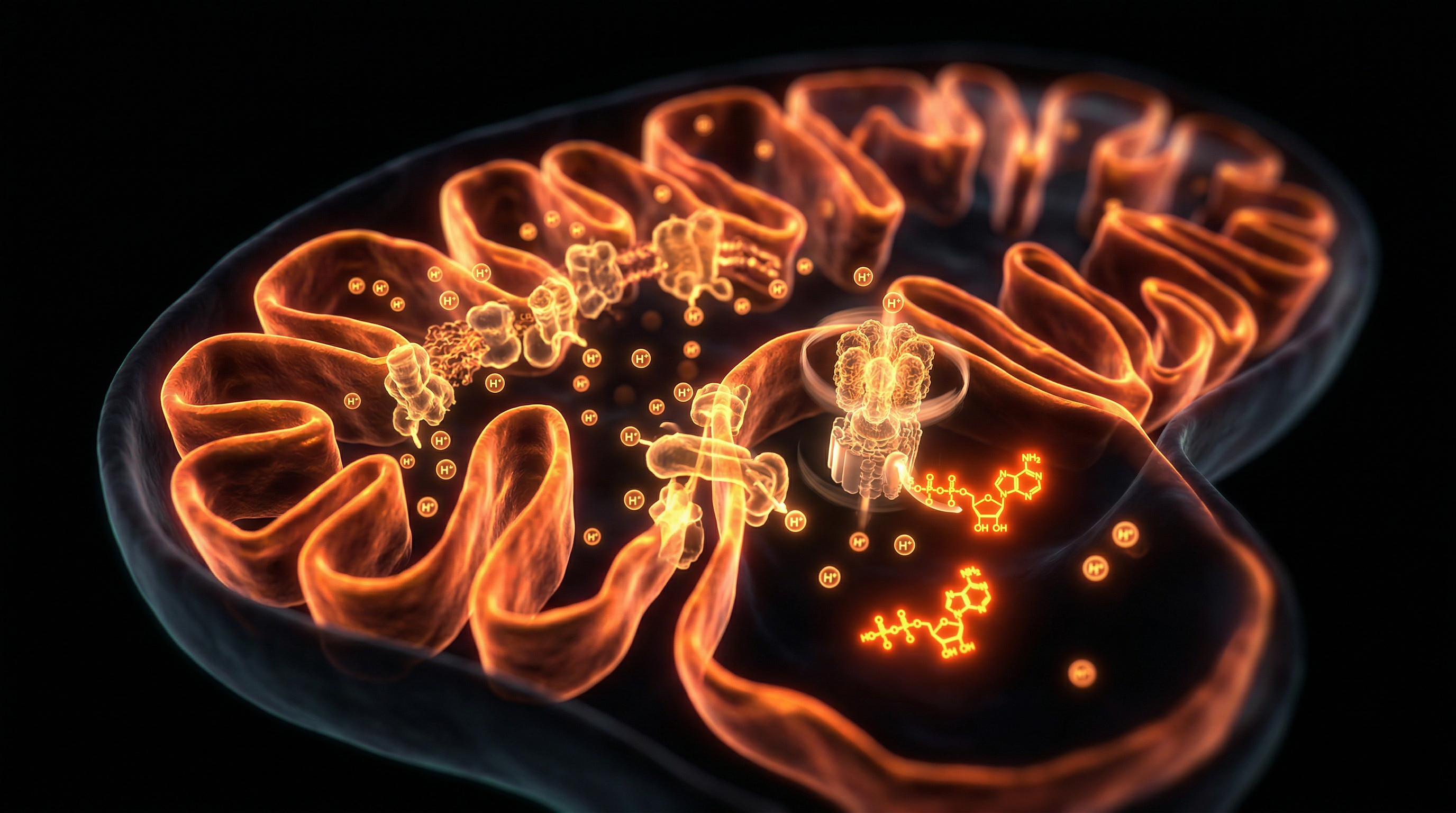
A mitochondrion is composed of four distinct compartments, each playing a critical role in the ATP manufacturing process:
- The Outer Membrane: A semi-permeable barrier containing porins, which allow small molecules like ions and ATP to pass through.
- The Intermembrane Space: The reservoir where protons (H+) are pumped, creating the electrochemical gradient essential for energy synthesis.
- The Inner Membrane: A highly folded structure forming cristae. These folds increase the surface area for the Electron Transport Chain (ETC) and ATP Synthase enzymes.
- The Matrix: The internal "soup" where the Krebs Cycle takes place, containing a dense concentration of enzymes, ribosomes, and mtDNA.
The Conversion: From Macronutrients to Electrons
The journey of ATP begins with the food we ingest. Whether you consume carbohydrates, fats, or proteins, the body’s ultimate goal is to break these down into Acetyl-CoA.
- Carbohydrates undergo glycolysis in the cytoplasm to produce pyruvate, which is then transported into the mitochondria.
- Fats undergo Beta-oxidation within the mitochondrial matrix, releasing a massive amount of Acetyl-CoA per molecule of fatty acid.
- Proteins are broken down into amino acids, which can enter the cycle at various stages depending on their structure.
The mitochondria are effectively multi-fuel engines. However, the efficiency of these engines depends heavily on the presence of specific cofactors, including B-vitamins, magnesium, and sulfur. Without these, the transition from food to fuel becomes "bottlenecked," leading to the accumulation of toxic intermediates.
##
Mechanisms at the Cellular Level
The actual production of ATP occurs through two interconnected cycles: the Tricarboxylic Acid (TCA) Cycle (also known as the Krebs Cycle) and Oxidative Phosphorylation (OXPHOS).
The Krebs Cycle: The Carbon Shunt
The Krebs Cycle is a series of eight enzymatic reactions that occur in the mitochondrial matrix. Its primary purpose is not to produce ATP directly, but to "strip" high-energy electrons from Acetyl-CoA and load them onto carrier molecules: Nicotinamide Adenine Dinucleotide (NAD+) and Flavin Adenine Dinucleotide (FAD).
As the cycle turns, it produces:
- NADH and FADH2: The "electron taxis" that carry energy to the next stage.
- Carbon Dioxide (CO2): A waste product of carbon metabolism.
- A small amount of GTP (a close relative of ATP).
Key enzymes like isocitrate dehydrogenase and alpha-ketoglutarate dehydrogenase are the rate-limiting steps of this cycle. These enzymes are highly sensitive to the presence of heavy metals and oxidative stress. If these enzymes are inhibited, the entire energy production line grinds to a halt, leading to a state of "metabolic gridlock."
Oxidative Phosphorylation: The Electron Transport Chain
This is where the real magic happens. The inner mitochondrial membrane houses five protein complexes (Complex I through V).
- Complex I (NADH Dehydrogenase): NADH drops off its electrons here. As electrons move through the complex, protons (H+) are pumped into the intermembrane space.
- Complex II (Succinate Dehydrogenase): FADH2 drops off its electrons here.
- Complex III (Cytochrome bc1 Complex): Electrons are passed along, and more protons are pumped.
- Complex IV (Cytochrome c Oxidase): This is the final electron acceptor. Electrons are combined with oxygen and hydrogen to form water (H2O). Crucially, if oxygen is not available, this entire process stops.
- Complex V (ATP Synthase): This is a literal molecular motor. The massive build-up of protons in the intermembrane space creates pressure. Protons rush back into the matrix through ATP Synthase, causing it to spin at speeds of up to 150 rotations per second. This mechanical energy is used to "snap" a phosphate group onto Adenosine Diphosphate (ADP), creating ATP.
Important Callout: The production of ATP is inherently "leaky." Approximately 0.1% to 2% of the oxygen consumed by mitochondria is converted into Reactive Oxygen Species (ROS). While low levels of ROS act as signalling molecules, excessive ROS production—often caused by environmental toxins—damages the very machinery that creates energy.
##
Environmental Threats and Biological Disruptors
In the modern world, our mitochondria are being bombarded by a cocktail of synthetic chemicals and physical stressors that were non-existent during our evolutionary development. These "mitotoxins" act as monkey wrenches in the delicate machinery of the ETC.
Glyphosate and the Disruption of Mitochondrial Integrity
Widely used in British agriculture, glyphosate (the active ingredient in many herbicides) has been shown to interfere with the mitochondrial membrane potential. While the industry claims it only affects the "Shikimate pathway" (found in bacteria), research indicates it can act as an uncoupler, meaning it allows protons to leak across the membrane without passing through ATP Synthase. This results in heat production instead of ATP production—wasted energy and increased cellular stress.
Heavy Metal Interference
Heavy metals such as mercury, lead, and cadmium have a high affinity for "thiol groups" (sulfur-containing groups) found in mitochondrial enzymes.
- Mercury specifically binds to and inhibits Complex I and III.
- Aluminium, often found in cookware and some municipal water treatments, interferes with the way mitochondria handle iron, leading to ferroptosis (iron-induced cell death).
Pharmaceutical Mitochondrial Toxicity
A truth often omitted by the MHRA (Medicines and Healthcare products Regulatory Agency) is that many commonly prescribed drugs are directly toxic to mitochondria.
- Statins: By inhibiting the HMG-CoA reductase pathway to lower cholesterol, they simultaneously block the production of Coenzyme Q10 (CoQ10), a vital electron carrier in the ETC.
- Antibiotics: Because mitochondria have bacterial origins, many antibiotics (especially fluoroquinolones like Ciprofloxacin) cannot distinguish between "bad" bacteria and your own mitochondria, leading to widespread cellular damage and "floxing" symptoms.
- NSAIDs: Common painkillers like Ibuprofen can uncouple oxidative phosphorylation when used chronically.
Fluoride and Enzyme Inhibition
In many parts of the UK, fluoride is added to the public water supply. While promoted for dental health, fluoride is a known enzyme inhibitor. It can interfere with enolase in glycolysis and has been shown to reduce the activity of succinate dehydrogenase (Complex II), effectively strangling the cell's ability to produce energy.
##
The Cascade: From Exposure to Disease
When mitochondria become dysfunctional, the body enters a state of hypometabolism. This is not merely "feeling tired"; it is a systemic failure of biological order.
The Rise of Chronic Fatigue Syndrome (CFS/ME)
For years, the NHS and the wider medical community treated Chronic Fatigue Syndrome as a psychological condition. We now know it is fundamentally a mitochondrial disease. In CFS patients, the mitochondria shift into a "Cell Danger Response" (CDR). In this state, the cell perceives a threat and intentionally downregulates energy production to prevent the spread of a suspected infection. The result is a body that is perpetually "powered down."
Neurodegeneration and the Energy Gap
The brain is the most energy-demanding organ in the body, consuming roughly 20% of all ATP produced despite being only 2% of body weight. When ATP levels drop, the brain cannot maintain the sodium-potassium pump required for neuronal firing. This leads to:
- Beta-amyloid plaque formation (the body’s attempt to protect damaged neurons).
- Tau protein tangles.
- The cognitive decline seen in Alzheimer’s and Parkinson’s disease.
Cardiovascular Collapse
The heart muscle never rests. It has the highest concentration of mitochondria per cell (up to 5,000 per cardiomyocyte). Mitochondrial failure in the heart leads to congestive heart failure and arrhythmias, as the electrical signals governing the heartbeat require massive amounts of ATP to remain synchronised.
Alarming Statistic: Research suggests that by the age of 70, the average person’s mitochondrial efficiency has dropped by approximately 50% compared to their 20s. This "energy gap" is the primary driver of biological ageing.
##
What the Mainstream Narrative Omits
The mainstream health narrative is obsessed with calories. We are told that weight gain and health are simply a matter of "calories in vs. calories out." This is a reductive and scientifically illiterate view of human biology.
It’s Not Calories; It’s Electrons
A calorie is a unit of heat. Your body does not "burn" food in a literal fire; it extracts electrons. You can consume a perfect caloric intake, but if your mitochondria cannot process those electrons—due to a lack of micronutrients or the presence of toxins—you will remain "starved" at a cellular level. This explains why an obese individual can simultaneously suffer from chronic fatigue; they have plenty of stored fuel but no "refinery" capacity to turn it into ATP.
The War on Saturated Fat
For decades, the British Heart Foundation and other bodies have vilified saturated fats. However, from a mitochondrial perspective, certain saturated fats (like those found in grass-fed tallow or coconut oil) provide a "cleaner" fuel source with fewer ROS "by-products" than highly processed polyunsaturated vegetable oils (PUFAs). These vegetable oils are unstable and easily oxidise, incorporating themselves into the mitochondrial membranes and making them prone to "leakage."
The Neglect of Light as a Nutrient
Mainstream medicine almost entirely ignores the role of photobiomodulation. Our mitochondria contain chromophores (specifically in Cytochrome c Oxidase) that absorb near-infrared light from the sun. This light stimulation increases the efficiency of the ETC and boosts ATP production. By spending our lives indoors under "flickering" LED and fluorescent lights (which lack the infrared spectrum), we are effectively starving our mitochondria of a key environmental input.
##
The UK Context
The United Kingdom faces a unique set of challenges regarding mitochondrial health. Our northern latitude, industrial history, and current regulatory environment have created a "perfect storm" for metabolic dysfunction.
The Vitamin D / Mitochondrial Link
Due to our lack of high-intensity sunlight for much of the year, a vast majority of the UK population is chronically deficient in Vitamin D. Beyond bone health, Vitamin D is a potent modulator of mitochondrial morphology. Low levels are directly linked to decreased oxidative capacity in skeletal muscle.
The Legacy of Industrial Pollution
Many of our major cities, from London to Manchester, suffer from high levels of Particulate Matter (PM2.5). These microscopic particles bypass the lung’s defences and enter the bloodstream, where they have been shown to directly damage the mitochondrial inner membrane, particularly in the vascular system.
The "Ultra-Processed" Nation
The UK consumes more ultra-processed food (UPF) than any other country in Europe. These foods are a "mitochondrial nightmare"—high in refined sugars that cause hyperglycaemic spikes (overwhelming the Krebs cycle) and loaded with emulsifiers and preservatives that disrupt the gut microbiome. Since the gut microbiome communicates directly with our mitochondria via short-chain fatty acids, a damaged gut equals damaged energy production.
Water Quality and the Environment Agency
While the Environment Agency monitors our waterways, they often overlook "forever chemicals" (PFAS) and microplastics. These substances are "bio-accumulative," meaning they build up in our tissues over time. PFAS, in particular, have been shown to disrupt the thyroid-mitochondrial axis, slowing down the basal metabolic rate of the entire country.
##
Protective Measures and Recovery Protocols
Reclaiming your energy requires a multi-faceted approach. We must move beyond the "pill for every ill" mentality and embrace a strategy of mitochondrial restoration.
1. Targeted Nutritional Support
To restart a stalled engine, you need the right parts.
- Magnesium: The "master mineral." ATP must be bound to a magnesium ion (Mg-ATP) to be biologically active. Most Britons are deficient.
- Coenzyme Q10 (Ubiquinol): Essential for transporting electrons from Complex I/II to Complex III. This is non-negotiable for anyone over the age of 40 or those on statins.
- PQQ (Pyrroloquinoline Quinone): One of the few substances known to stimulate mitochondrial biogenesis—the creation of new mitochondria.
- B-Vitamin Complex: Specifically B1 (Thiamine), B2 (Riboflavin), and B3 (Niacin in the form of NAD+ precursors), which drive the Krebs Cycle.
2. Hormetic Stress
Mitochondria respond to "good stress." This process, known as mitohormesis, signals the cell to upgrade its energy machinery.
- Cold Immersion: Short exposures to cold water (the "British sea dip" or cold showers) activate brown adipose tissue, which is packed with mitochondria that burn fat to generate heat.
- Intermittent Fasting: By giving the digestive system a rest, the body triggers autophagy and mitophagy—the clearing out of old, damaged mitochondria to make room for healthy ones.
- High-Intensity Interval Training (HIIT): Brief bursts of intense activity demand immediate ATP, forcing the mitochondria to become more efficient.
3. Environmental Detoxification
- Water Filtration: Use a high-quality filter (Reverse Osmosis or specialized gravity filters) to remove fluoride, chlorine, and heavy metals from your drinking water.
- EMF Hygiene: While still debated in the mainstream, emerging evidence suggests that Non-Ionizing Radiation (Wi-Fi, 5G) can disrupt the Voltage-Gated Calcium Channels (VGCCs) in our cell membranes, leading to mitochondrial calcium overload. Turn off routers at night and keep mobile phones away from the body.
- Grounding (Earthing): Connecting your bare skin to the earth (walking on grass or sand) allows for the transfer of free electrons from the earth's surface into your body, acting as a potent antioxidant to neutralise mitochondrial ROS.
4. Circadian Alignment
Our mitochondria follow a 24-hour clock. They are most efficient during daylight hours.
- Morning Sunlight: View natural light within 30 minutes of waking to set your circadian rhythm and prime your mitochondria for the day.
- Blue Light Blocking: Use "amber" glasses after sunset to prevent the suppression of melatonin. Melatonin is not just a sleep hormone; it is the most powerful mitochondrial antioxidant we produce, protecting our mtDNA while we sleep.
##
Summary: Key Takeaways
The ATP currency is the ultimate arbiter of health. When you have an abundance of energy, your body can invest in "long-term maintenance"—DNA repair, cellular cleanup, and robust immune surveillance. When you are in "energy debt," the body enters survival mode, sacrificing long-term health for immediate survival.
- ATP is the fundamental energy currency of the human body, recycled thousands of times daily.
- Mitochondria are environmental sensors, highly susceptible to toxins like glyphosate, fluoride, and heavy metals.
- The UK faces a metabolic crisis driven by ultra-processed foods, lack of sunlight, and industrial pollutants.
- Chronic disease is often a symptom of mitochondrial failure, manifesting as "The Cell Danger Response."
- Recovery is possible through targeted nutrition (Magnesium, CoQ10), hormetic stress (cold, fasting), and strict environmental hygiene.
At INNERSTANDING, we believe that the next revolution in healthcare will not happen in a laboratory, but in the kitchens and lifestyles of those who choose to honour their biological engines. Stop managing symptoms and start fueling your function. Your mitochondria are the gatekeepers of your vitality—treat them with the reverence they deserve.
This article is provided for informational and educational purposes only. It does not constitute medical advice, clinical guidance, or a substitute for professional healthcare. Information reflects cited research at time of publication. Always consult a qualified healthcare professional before acting on any health information.
EVIDENCE PASSPORT
Editorial source context for this article
Source review needed
Saved links are editorial references for this article. They may support specific claims rather than every sentence. Open and assess each source in context. This passport does not independently verify them.
Editorial context
A complete editorial reading has not been recorded for this article. Source links remain available for you to open and assess directly.
Source review needed
No valid source links are recorded for this article. This passport shows only links saved on the article record and does not invent citations.
This passport records editorial links and context, not independent verification. Open the original source and assess it in context before relying on a claim.
Medical Disclaimer
The information in this article is for educational purposes only and does not constitute medical advice, diagnosis, or treatment. Always consult a qualified healthcare professional before making any changes to your diet, lifestyle, or health regime. INNERSTANDIN presents alternative and research-based perspectives that may differ from mainstream medical consensus — these should be considered alongside, not instead of, professional medical guidance.
Read Full DisclaimerContinue the thread
Keep this question moving.
Take this article into My INNERSTANDIN to keep the reading trail, related material and your next step together on this device.
Explore this in the Body Map
See where this hits your biology. Interactive anatomy, threats, and protective protocols.
Dig deeper in the Library
Free, longform PDF volumes that go beyond headlines into mechanisms and references.