
Autophagy and Skeletal Muscle: Preserving Lean Mass During Fasted States
Updated May 2026
A common deterrent to fasting is the fear of muscle loss, yet the body has evolved sophisticated mechanisms to preserve protein during nutrient scarcity. Learn how Growth Hormone and ketones protect your physique while the body cleanses itself.
Overview
For decades, a pervasive and scientifically hollow myth has haunted the corridors of gymnasiums and the pages of mainstream health magazines: the idea that missing a single meal—let alone engaging in a multi-day fast—will cause the body to "cannibalise" its own muscle tissue. This narrative has been weaponised by the supplement industry and food manufacturers to ensure a constant state of consumption, keeping the British public tethered to a cycle of perpetual feeding. However, as we peel back the layers of evolutionary biology and molecular endocrinology, a far more sophisticated and elegant truth emerges.
Skeletal muscle is not merely a structural scaffold for movement; it is the body's primary metabolic engine and a vital endocrine organ. The human organism has evolved over millions of years to survive, and indeed thrive, in conditions of nutrient scarcity. If our ancestors had wasted away their muscle mass—the very tools required for hunting and gathering—at the first sign of a famine, our species would have been an evolutionary dead end. Instead, we possess a suite of protein-sparing mechanisms designed to preserve lean mass while aggressively targeting adipose tissue and cellular "junk" for fuel.
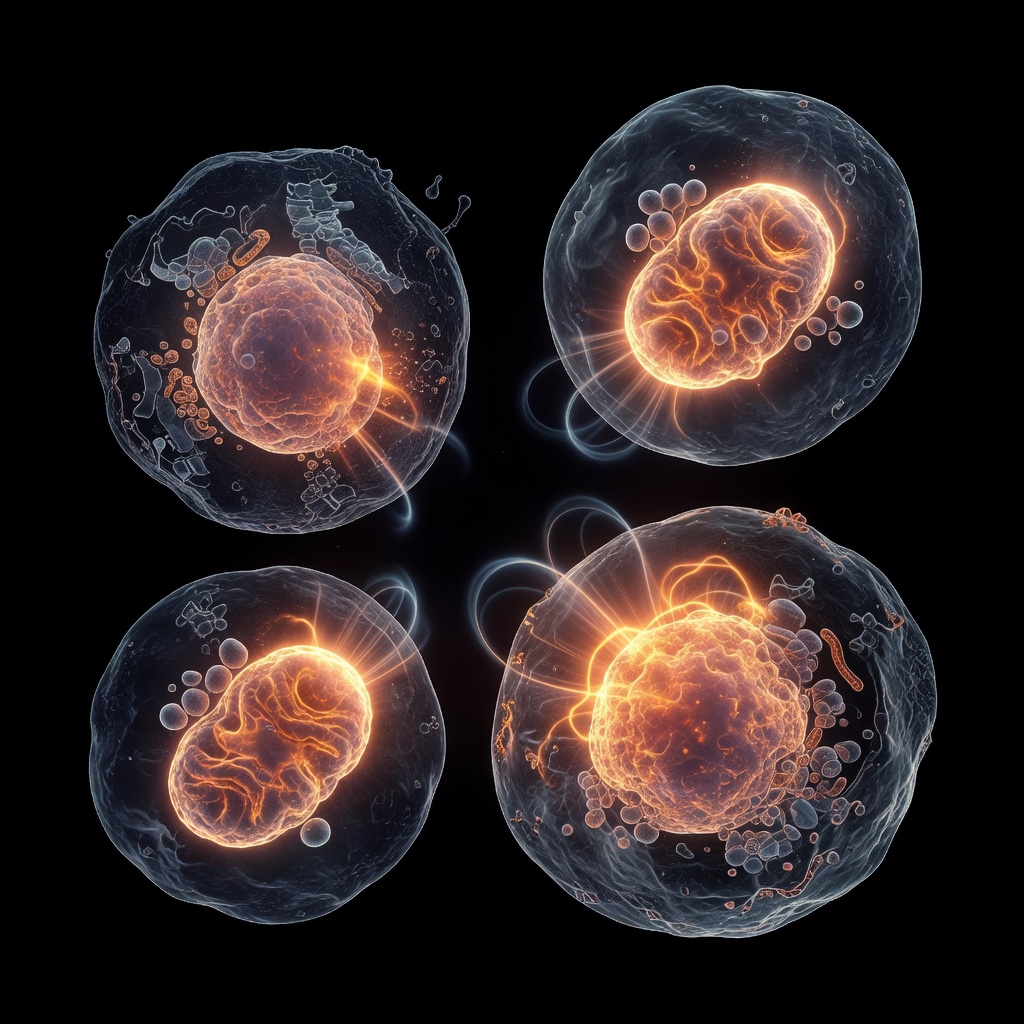
The cornerstone of this preservation strategy is autophagy. Derived from the Greek meaning "self-eating," autophagy is a highly regulated cellular recycling programme. Far from being a destructive force for muscle, autophagy is the essential "housekeeping" process that maintains the quality and contractile integrity of muscle fibres. By clearing out damaged mitochondria and misfolded proteins, autophagy prevents the onset of sarcopenia (age-related muscle wasting) and ensures that the muscle remaining is of the highest functional calibre.
In this investigation, we will expose the biological pathways—driven by Growth Hormone (HGH), ketones, and the AMPK-mTOR axis—that allow the body to enter a fasted state without sacrificing its hard-earned physique. We will also examine how modern environmental disruptors and the "mainstream" dietary narrative in the United Kingdom have conspired to weaken our metabolic resilience, and how you can reclaim your biological birthright of strength and longevity.
According to data from the British Journal of Nutrition, the average UK adult consumes food over a 15-to-16-hour window daily, effectively silencing the autophagy gene expression required for cellular repair and muscle maintenance.
---
##
##
The Biology — How It Works
To understand how the body preserves muscle during a fast, we must first understand the hierarchy of fuel utilisation. The human body is a hybrid engine, capable of burning both glucose (sugar) and fatty acids (fat). In the modern "Western" diet, dominated by refined carbohydrates and frequent snacking, the body is perpetually locked into glucose metabolism. This state suppresses the very hormones required to protect muscle tissue.
The Glucose-Insulin Paradigm
When you eat, particularly carbohydrates, your blood glucose rises, triggering the release of insulin from the pancreas. Insulin is a highly anabolic hormone; it facilitates the storage of nutrients. However, it is also a potent inhibitor of fat burning and autophagy. As long as insulin levels remain elevated, the body is in "storage mode." When you stop eating, insulin levels drop. This drop is the primary molecular signal that initiates the transition to a fasted state.
The Shift to Fat Oxidation
As insulin falls, the hormone glucagon rises, signalling the liver to release stored glycogen. Once glycogen stores are depleted—typically within 12 to 24 hours of fasting—the body undergoes a profound metabolic shift. It begins to mobilise stored body fat (triacylglycerols) into the bloodstream as free fatty acids. These are then converted in the liver into ketone bodies, specifically beta-hydroxybutyrate (βHB).
The Growth Hormone Shield
One of the most remarkable, yet frequently ignored, aspects of the fasting response is the massive surge in Endogenous Growth Hormone (HGH). In the absence of food, the pituitary gland ramps up HGH production. Contrary to the belief that fasting is "catabolic," this HGH spike serves as a powerful protector of lean mass.
- —Protein Sparing: HGH inhibits the breakdown of proteins for energy, forcing the body to rely almost exclusively on fatty acids and ketones.
- —Lipolysis: It accelerates the mobilisation of fat, providing an abundance of energy that negates the need to harvest amino acids from muscle tissue.
- —Collagen Synthesis: HGH supports the integrity of tendons and ligaments, which are often compromised during periods of caloric restriction without the hormonal support of a true fast.
Research indicates that a 48-hour fast can result in a 5-fold increase in Growth Hormone secretion, creating a profound "anabolic buffer" that protects skeletal muscle from degradation.
---
##
##
Mechanisms at the Cellular Level
The preservation of muscle mass during fasting is not a passive event; it is an active, genetically programmed orchestration involving several key signalling pathways. At the heart of this process is the interplay between mTOR (mammalian target of rapamycin) and AMPK (adenosine monophosphate-activated protein kinase).
The AMPK-mTOR Seesaw
Think of AMPK and mTOR as the "on/off" switches for cellular growth and repair.
- —mTOR is the master regulator of protein synthesis. It is activated by amino acids (especially leucine) and insulin. It builds new tissue but also inhibits autophagy.
- —AMPK is the "fuel gauge" of the cell. It is activated when cellular energy (ATP) is low. AMPK initiates the breakdown of fat and, crucially, triggers macroautophagy.
In a fed state, mTOR is dominant. In a fasted state, AMPK takes over. While mainstream "bro-science" suggests that inhibiting mTOR via fasting will cause muscle loss, the reality is that periodic mTOR suppression is necessary for muscle *quality*. Continuous mTOR activation—driven by 24/7 grazing—leads to the accumulation of cellular debris, making muscles less responsive to anabolic signals over time.
Selective Autophagy: Quality Over Quantity
Muscle loss in the context of starvation (where one has no body fat left) is very different from muscle loss in a controlled fast. During a fast, the body engages in Selective Autophagy. It does not blindly consume muscle fibres; rather, it identifies and breaks down:
- —Misfolded Proteins: Proteins that have become damaged or "clumped," which can impair muscle contraction.
- —Dysfunctional Mitochondria (Mitophagy): The "powerhouses" of the muscle cell. Old, leaky mitochondria produce excessive Reactive Oxygen Species (ROS), which cause oxidative stress and muscle damage. Fasting triggers the destruction of these "bad" mitochondria and their replacement with new, efficient ones upon refeeding.
- —Intracellular Pathogens: Autophagy is a primary defence mechanism against viruses and bacteria that may have taken up residence within the cell.
The Role of FOXO3
The FOXO3 (Forkhead box O3) transcription factor is a "longevity gene" that is highly active during fasting. FOXO3 regulates the expression of genes involved in autophagy and DNA repair. Crucially, in skeletal muscle, FOXO3 helps to fine-tune the balance between protein degradation and preservation, ensuring that only the "garbage" is recycled while the essential contractile machinery—the actin and myosin filaments—is kept intact.
Chaperone-Mediated Autophagy (CMA)
While macroautophagy handles large structures like mitochondria, Chaperone-Mediated Autophagy is a more surgical process. It uses "chaperone" proteins to identify specific damaged amino acid sequences and deliver them directly to the lysosome for recycling. This allows the muscle to renew its internal protein pool without losing any actual mass or strength.
---
##
##
Environmental Threats and Biological Disruptors
The biological perfection of the fasting response is being increasingly undermined by the modern environment. In the United Kingdom, we are exposed to a "toxic swill" of chemicals and lifestyle factors that disrupt the delicate hormonal balance required to protect muscle mass.
Endocrine Disrupting Chemicals (EDCs)
Our environment is saturated with chemicals that mimic or interfere with our natural hormones. Phthalates and Bisphenol A (BPA), commonly found in plastic food packaging and till receipts, are known to interfere with testosterone and thyroid signalling—both of which are critical for muscle maintenance.
- —Atrazine and Glyphosate: These agricultural chemicals, frequently detected in UK water supplies and non-organic cereal crops, can disrupt mitochondrial function. When mitochondria are damaged by environmental toxins, the process of mitophagy (triggered by fasting) becomes even more critical, yet the toxic load can sometimes overwhelm the body’s capacity for repair.
- —PFAS (Per- and Polyfluoroalkyl Substances): Known as "forever chemicals," these are prevalent in UK tap water. Research suggests they may interfere with lipid metabolism, making it harder for the body to transition into ketosis and potentially increasing the reliance on gluconeogenesis (protein breakdown) for energy.
The Blue Light and Circadian Mismatch
The UK’s obsession with late-night screen use and "always-on" lighting disrupts the circadian rhythm. Melatonin is not just a sleep hormone; it is a powerful antioxidant that supports mitochondrial health in muscle tissue.
- —Chronic exposure to artificial blue light suppresses melatonin and elevates cortisol at night.
- —Elevated nocturnal cortisol is highly catabolic. It actively breaks down muscle tissue and opposes the muscle-sparing effects of HGH.
- —A body that is "circadian-disrupted" will find it significantly harder to preserve muscle during a fast because the hormonal "clocks" are out of sync.
Ultra-Processed Foods (UPFs)
The UK has the highest consumption of UPFs in Europe. These "foods" are engineered to bypass satiety signals and induce leptin resistance. When the brain cannot "see" the energy stored in body fat due to leptin resistance, it may signal for the breakdown of muscle tissue as an emergency measure, even when fat stores are abundant. This is a pathological state induced by the modern diet, not a failure of fasting itself.
---
##
##
The Cascade: From Exposure to Disease
When we fail to engage the "cleanup" mechanism of autophagy—usually through a combination of constant eating and environmental toxin exposure—a destructive biological cascade begins. This cascade leads directly to the chronic diseases currently crippling the NHS.
Phase 1: Anabolic Resistance
Frequent feeding and high insulin levels lead to Anabolic Resistance. The muscle becomes "deaf" to the signals of insulin and amino acids. You can eat all the protein you want, but the muscle cannot "see" it to grow or repair. This is why many elderly people lose muscle despite eating "enough" protein. They have lost the metabolic flexibility that only periodic fasting can restore.
Phase 2: Mitochondrial Decay
Without the "reset" provided by mitophagy, damaged mitochondria accumulate. They begin to leak electrons, creating a state of chronic Oxidative Stress. This damages the DNA within the muscle cells and impairs the ability of the muscle to generate ATP. The result is chronic fatigue and "exercise intolerance."
Phase 3: Sarcopenic Obesity
This is the "UK Epidemic." It is a state where an individual has excessive body fat but pathologically low muscle mass. It is caused by the inhibition of autophagy and the promotion of fat storage. Because muscle is the primary site for glucose disposal, losing muscle mass makes the individual even more insulin resistant, creating a "death spiral" of metabolic decline.
Phase 4: Systemic Inflammaging
The "junk" that should have been cleared out by autophagy—misfolded proteins, damaged cell membranes, and metabolic waste—is instead leaked into the surrounding tissue. This triggers an immune response, leading to Chronic Low-Grade Inflammation, often termed "inflammaging." This inflammation is a primary driver of heart disease, Type 2 diabetes, and neurodegeneration.
The NHS reports that over 60% of UK adults are overweight or obese, yet a significant portion of these individuals suffer from "hidden" muscle wasting due to metabolic dysfunction and lack of cellular autophagy.
---
##
##
What the Mainstream Narrative Omits
The health guidance issued by official bodies and promoted by the media is often decades behind the current molecular understanding of autophagy and muscle metabolism. There are several "suppressed truths" that the public is rarely told.
The "Eat Every 3 Hours" Myth
This advice was largely birthed from the bodybuilding subculture of the 1980s and adopted by the snack industry. The idea was to keep the body in a "constant anabolic state." However, we now know that this is biologically impossible and counterproductive. Muscle growth occurs in the *recovery* phase, not the feeding phase. Constant feeding suppresses HGH and prevents the "cleaning" of the muscle cells. You end up with "big" muscles that are functionally weak and filled with cellular debris.
The Protein Overconsumption Fallacy
There is a massive emphasis on "hitting protein targets," often reaching 2g or 3g of protein per kilo of body weight. While protein is essential, excessive intake in the absence of fasting stimulates the IGF-1 (Insulin-like Growth Factor 1) pathway too aggressively. While IGF-1 grows muscle, chronically high levels are linked to accelerated ageing and cancer. Fasting allows for a "pulsatile" release of IGF-1—low during the fast (allowing for repair) and high during refeeding (allowing for growth). This is the evolutionary pattern our genes expect.
The Pharmaceutical Bias
The UK medical establishment is geared toward the "management" of metabolic disease through pharmacology (e.g., Metformin, Statins, and now GLP-1 agonists like Ozempic). These drugs often mimic some effects of fasting but come with a litany of side effects. For instance, some of the new weight-loss drugs are showing alarming rates of muscle loss (up to 40% of the weight lost) because they do not stimulate the natural HGH and ketone-driven protein-sparing pathways that a true fast does.
Autophagy is Free
Perhaps the most significant reason fasting and autophagy are not promoted by the mainstream is that they are entirely free. There is no profit to be made from an individual who skips two days of food a week and cleanses their own cells. The financial interests of the "Big Food" and "Big Pharma" sectors in the UK rely on a population that is constantly consuming and perpetually ill.
---
##
##
The UK Context
The United Kingdom presents a unique set of challenges and contradictions when it comes to muscle health and fasting. As a nation, we are caught between a rich heritage of sports and physical "grit" and a modern reality of profound metabolic decay.
The NHS "Eatwell Guide"
The official dietary advice from the NHS, the Eatwell Guide, continues to recommend a diet based on starchy carbohydrates (bread, pasta, potatoes) and frequent meals. This is a recipe for the total suppression of autophagy. By following these guidelines, the average Briton remains in a state of "post-prandial" (fed) stress for almost their entire lives.
Sarcopenia in the UK Population
Sarcopenia is often thought of as an "old person's disease," but we are seeing it increasingly in people in their 30s and 40s. The sedentary nature of UK office life, combined with a diet high in vegetable oils (which incorporate themselves into cell membranes and hinder autophagy), has created a "weak" population. This has direct implications for national resilience and the long-term sustainability of the healthcare system.
Regulatory Failures
The FSA (Food Standards Agency) and the Environment Agency have been slow to act on the threats posed by EDCs and UPFs.
- —While some phthalates have been restricted, many others remain in the food chain.
- —The UK's "sugar tax" was a step in the right direction but failed to address the more insidious issue of seed oils (linoleic acid) and chemical additives that disrupt the gut-muscle axis.
- —The UK water infrastructure is antiquated, leading to the presence of oestrogenic compounds and microplastics in tap water that further antagonise muscle-sparing hormones.
The British "Cult of the Snack"
The UK has a deeply ingrained "snacking culture." From "elevenses" to afternoon tea and evening biscuits, the idea of going five or six hours without food is seen as radical. Breaking this cultural conditioning is the first step toward reclaiming metabolic health.
---
##
##
Protective Measures and Recovery Protocols
Preserving muscle while harnessing the power of autophagy requires a strategic approach. It is not about "starving yourself"; it is about intermittent metabolic switching. Here is the blueprint for protecting your physique while the body cleanses itself.
1. The "Anabolic Priming" Phase
Before embarking on a fast, you must prime your muscles.
- —Resistance Training: Lifting heavy weights (6-12 rep range) creates a "mechanical signal" for the body to retain muscle. The body will not discard tissue that it perceives as vital for survival.
- —Protein Loading: In the 24 hours leading up to a fast, ensure adequate intake of high-quality, bioavailable animal proteins (grass-fed beef, wild-caught fish, organic eggs). These provide the essential amino acids that will be "recycled" during the fast.
2. The Fasting Window
To trigger meaningful autophagy while sparing protein, aim for a window of 36 to 72 hours.
- —Electrolyte Management: This is non-negotiable. You must supplement with high-quality sodium, potassium, and magnesium. Electrolytes are required for the "sodium-potassium pump" that drives muscle contraction and prevents the catabolic stress response.
- —Hydration: Use filtered water to avoid the EDCs and PFAS mentioned earlier.
- —Movement: Engage in "Zone 2" low-intensity steady-state (LISS) movement, such as walking. This promotes fat oxidation and keeps the lymphatic system moving, which helps clear the waste products generated by autophagy.
3. The "Refeeding" Protocol (Crucial for Muscle)
How you break your fast determines whether you build muscle or simply "refill" fat cells.
- —The "Leucine Trigger": Break your fast with 30-50g of high-quality protein containing at least 3g of Leucine. Leucine is the specific amino acid that "re-awakens" the mTOR pathway and signals the body to begin protein synthesis.
- —Avoid "Fat + Carb" Combinations: Upon refeeding, the body is highly insulin sensitive. Combining high fats with high carbohydrates (e.g., a burger and chips) is a metabolic disaster that causes massive fat storage. Stick to protein and fibrous vegetables for the first meal.
- —Collagen Support: Include bone broth or collagen peptides to support the structural proteins that HGH has been busy repairing.
4. Supplementation for Resilience
- —Creatine Monohydrate: One of the most researched supplements in the world. It provides a cellular energy reserve (phosphocreatine) that protects muscle cells during the energy dip of a fast.
- —Vitamin D3/K2: Most Britons are deficient. Vitamin D is a pro-hormone essential for muscle fibre recruitment and testosterone production.
- —Omega-3 (EPA/DHA): High-dose, clean fish oil helps resolve the inflammation that autophagy uncovers, and it improves "muscle protein synthetic response."
5. Environmental Mitigation
- —Filter Your Water: Use a high-quality multi-stage filter (like a reverse osmosis system) to remove PFAS and hormonal contaminants.
- —Glass Over Plastic: Never heat food in plastic and migrate to glass storage containers.
- —Blue Light Blocking: Use "red-shifted" lighting in the evening or wear high-quality blue-light blocking glasses after sunset to protect your nocturnal HGH and melatonin pulses.
---
##
##
Summary: Key Takeaways
The fear of muscle loss during fasting is a myth born of biological ignorance and commercial interest. When we step into the fasted state, we are not "wasting away"; we are engaging in a sophisticated, evolutionarily honed process of bio-optimisation.
- —Autophagy is a Quality Control Mechanism: It does not destroy muscle; it renovates it. By removing damaged proteins and mitochondria, it reverses "anabolic resistance" and makes the muscle tissue more efficient.
- —Hormones are Your Shield: The surge in Growth Hormone and the production of ketones (βHB) provide a powerful "protein-sparing" effect that prevents the body from harvesting muscle for energy.
- —Modernity is the Enemy: Environmental toxins, blue light, and ultra-processed foods are the real threats to our muscle mass, as they disrupt the hormonal signals required for repair.
- —The "Mainstream" Narrative is Flawed: The "constant feeding" model promoted by the UK food industry and supported by outdated NHS guidelines is a primary driver of sarcopenia and metabolic disease.
- —Strategic Refeeding is Key: By prioritising leucine-rich proteins and resistance training, you can use the "anabolic rebound" following a fast to build muscle that is cleaner, stronger, and more resilient.
Skeletal muscle is your currency for longevity. To protect it, you must occasionally stop feeding it and allow the body's internal "cleaning crew" to do its work. This is the truth that the "health" industry will not tell you, but it is the truth that will allow you to reclaim your strength, your health, and your biological independence.
This article is provided for informational and educational purposes only. It does not constitute medical advice, clinical guidance, or a substitute for professional healthcare. Information reflects cited research at time of publication. Always consult a qualified healthcare professional before acting on any health information.
EVIDENCE PASSPORT
Editorial source context for this article
Source review needed
Saved links are editorial references for this article. They may support specific claims rather than every sentence. Open and assess each source in context. This passport does not independently verify them.
Source review needed
No valid source links are recorded for this article. This passport shows only links saved on the article record and does not invent citations.
This passport records editorial links, not independent verification. Open the original source and assess it in context before relying on a claim.
Medical Disclaimer
The information in this article is for educational purposes only and does not constitute medical advice, diagnosis, or treatment. Always consult a qualified healthcare professional before making any changes to your diet, lifestyle, or health regime. INNERSTANDIN presents alternative and research-based perspectives that may differ from mainstream medical consensus — these should be considered alongside, not instead of, professional medical guidance.
Read Full DisclaimerReady to learn more?
Continue your journey through our classified biological research.
THE ARSENAL
Based on Fasting & Autophagy — products curated by our research team for educational relevance and biological support.

Methylene Blue – Advanced Cellular Chemistry
INNERSTANDING may earn a commission on purchases made through these links. All products are selected based on rigorous educational relevance to our biological research.
Explore this in the Body Map
See where this hits your biology. Interactive anatomy, threats, and protective protocols.