
Beyond Antibiotics: The Potential of Biofilm-Dispersing Small Molecules
Updated May 2026
Explore how biofilm-dispersing small molecules dismantle bacterial fortresses to combat AMR and pathogenic persistence where traditional antibiotics fail.
Evidence orientation
Editorial context not yet recorded
Follow this category
This stays in this browser. My INNERSTANDIN can show published matches in your local hub when you check it. It does not send email, push, or alert notifications.
Local learning review
A private browser aid for revisiting ideas. It is not an alert or a health recommendation.
Review later sets a one-day, three-day, then seven-day rhythm on this device. Choose it only when you want to revisit this article.
Overview
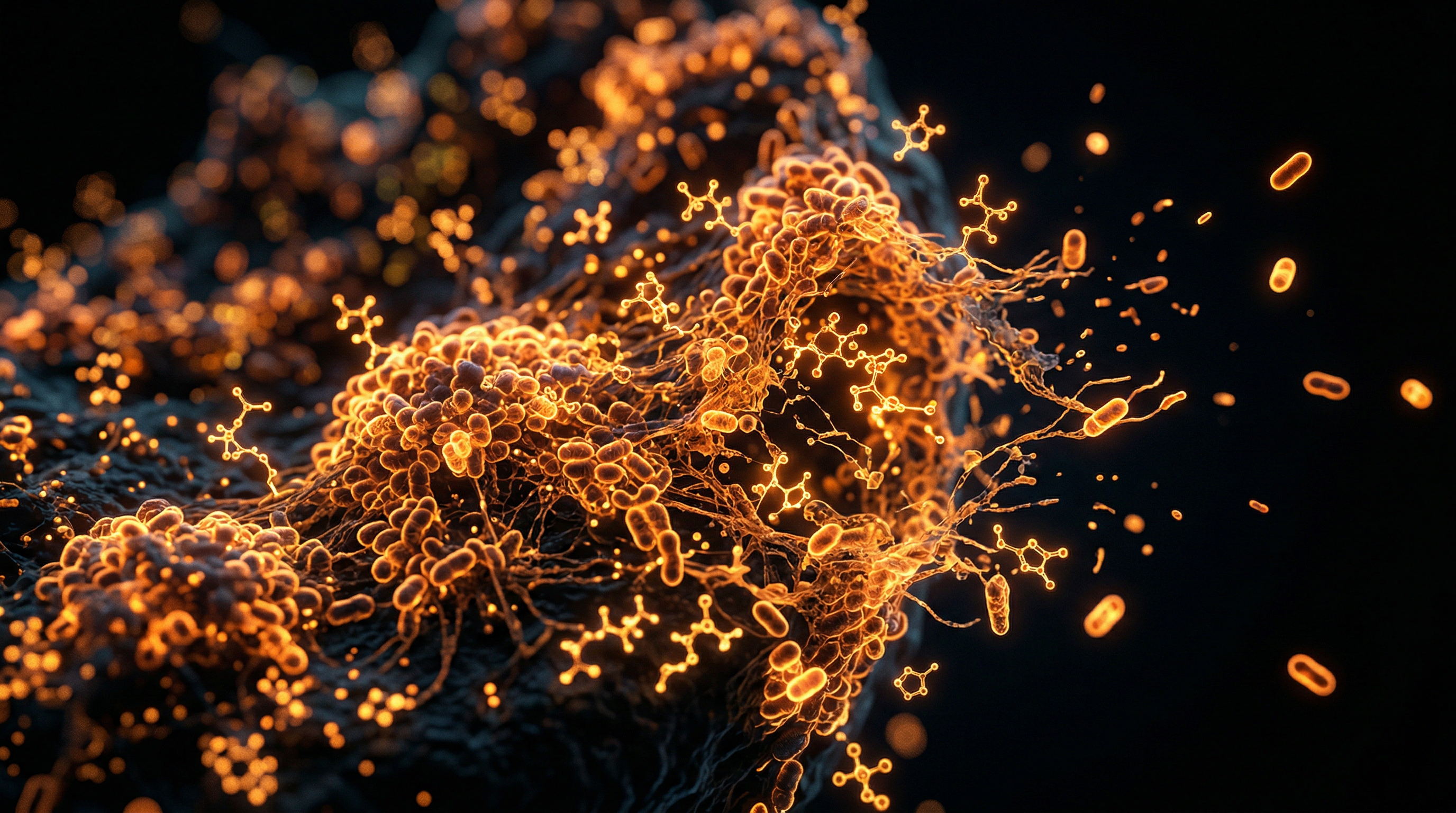
The conventional clinical reliance on bactericidal and bacteriostatic agents has reached a biological impasse, primarily due to the ubiquitous and recalcitrant nature of microbial biofilms. While the 20th-century antibiotic paradigm focused on the inhibition of essential metabolic processes in planktonic (free-swimming) bacteria, modern clinical reality—documented extensively in The Lancet Infectious Diseases and by Public Health England—reveals that upwards of 80% of human bacterial infections are mediated by biofilm architectures. At INNERSTANDIN, we recognise that these are not merely clusters of cells, but highly organised, sessile communities encased within a self-produced matrix of Extracellular Polymeric Substances (EPS), comprising polysaccharides, extracellular DNA (eDNA), and proteins. This matrix acts as a physical and chemical bulwark, rendering the constituent pathogens up to 1,000 times more resistant to conventional antibiotics than their planktonic counterparts.
The failure of the current pharmacological toolkit is rooted in the physiological heterogeneity inherent to the biofilm. Deep within the matrix, oxygen and nutrient gradients create niches of metabolic dormancy, producing 'persister cells' that are phenotypically immune to drugs targeting active cell division. Consequently, even high-dose antibiotic regimens frequently fail to achieve sterilisation, leading to the chronic relapsing infections that place an enormous burden on the UK’s National Health Service, particularly regarding cystic fibrosis, chronic wound care, and medical device-associated infections. To move beyond this crisis, the research focus must shift from eradication to disruption. Small molecules—compounds with a low molecular weight typically under 900 Daltons—emerge as the vanguard of this transition. Unlike bulky monoclonal antibodies or enzymes, these molecules possess the steric agility to penetrate the EPS and modulate the complex intracellular signalling pathways that govern biofilm formation and maintenance.
The fundamental biological mechanism under scrutiny involves the subversion of Quorum Sensing (QS) and the modulation of secondary messengers, most notably cyclic diguanylate (c-di-GMP). Research indexed in PubMed highlights that high intracellular levels of c-di-GMP promote the sessile, biofilm-forming state, while a reduction in these levels triggers a transition to the planktonic, dispersive state. Small molecule inhibitors targeting the diguanylate cyclases (DGCs) responsible for c-di-GMP synthesis, or those mimicking nitric oxide (NO) signalling to stimulate phosphodiesterases (PDEs), represent a paradigm shift. By forcing the biofilm to disassemble from within, these agents do not kill the bacteria directly—thereby exerting less selective pressure for resistance—but instead restore the efficacy of the host immune system and co-administered antibiotics. This 'dispersal-then-eradicate' strategy is the cornerstone of the next generation of precision microbiology, exposing the vulnerability of pathogens that have, until now, hidden behind a fortress of EPS. INNERSTANDIN maintains that true biological literacy requires an appreciation of this systemic shift: from the blunt force of lethality to the sophisticated chemical deconstruction of pathogenic persistence.
The Biology — How It Works
To grasp the revolutionary potential of biofilm-dispersing small molecules, one must first confront the architectural sophistication of the biofilm itself—a multicellular collective that renders conventional monotherapy virtually obsolete. At INNERSTANDIN, we recognise that the fundamental challenge is not merely bacterial virulence, but the transition from a planktonic (free-swimming) state to a sessile, protected community encased within an Extracellular Polymeric Substance (EPS) matrix. This matrix—a complex meshwork of exopolysaccharides, extracellular DNA (eDNA), and proteins—functions as a physical and chemical shield, reducing antibiotic penetration by orders of magnitude and facilitating a state of metabolic dormancy known as recalcitrance.
The biological mechanism of small-molecule dispersal hinges upon the subversion of the bacteria’s internal regulatory networks, specifically the cyclic diguanosine monophosphate (c-di-GMP) signalling pathway. In many human pathogens, such as Pseudomonas aeruginosa and Staphylococcus aureus, high intracellular levels of c-di-GMP promote the synthesis of EPS and the suppression of motility, effectively anchoring the colony in place. Dispersing small molecules, such as nitric oxide (NO) donors or specific D-amino acids, act as biochemical triggers that stimulate phosphodiesterases (PDEs). These enzymes degrade c-di-GMP, forcing a phenotypic shift from the sessile to the planktonic state. By artificially lowering c-di-GMP levels, these molecules trick the bacteria into abandoning the protective matrix, effectively 'unmasking' them to the host’s innate immune system and co-administered antimicrobial agents.
Furthermore, the disruption of Quorum Sensing (QS)—the density-dependent chemical communication system used by bacteria to synchronise gene expression—represents a primary target for these novel agents. Small molecules designed as QS inhibitors (QSI) or 'quorum quenchers' interfere with the binding of autoinducers, such as N-acyl homoserine lactones (AHLs), to their cognate receptors. Research published in The Lancet Infectious Diseases and various PubMed-indexed studies underscores that when QS is compromised, the structural integrity of the biofilm fails; the bacteria lose their ability to maintain the EPS scaffolding, leading to passive dissolution.
In the UK clinical context, where the NHS faces the escalating threat of antimicrobial resistance (AMR), the transition from bactericidal logic to dispersal logic is critical. Unlike traditional antibiotics that exert selective pressure by killing susceptible cells—thereby driving the evolution of resistance—biofilm dispersers often target non-essential pathways, potentially reducing the rate of emergent resistance. By targeting the 'persister' cells that reside in the hypoxic, nutrient-poor depths of the biofilm, these small molecules neutralise the very reservoir responsible for chronic infection and surgical site recurrence. Through the lens of INNERSTANDIN, we see this not as a mere supplement to pharmacology, but as a fundamental re-engineering of the host-pathogen interface, turning the biofilm’s own signalling architecture against itself.
Mechanisms at the Cellular Level
To interrogate the cellular architecture of pathogenic persistence, one must first acknowledge that the biofilm is not a passive aggregation of cells but a sophisticated, regulated multicellular phenotype. At INNERSTANDIN, we recognise that the failure of conventional antimicrobial therapy often resides in its inability to penetrate the biochemical and physical fortifications of the Extracellular Polymeric Substance (EPS). The transition from a sessile, biofilm-encapsulated state to a planktonic, susceptible state is governed by complex intracellular signalling pathways, most notably the modulation of secondary messengers such as cyclic dimeric guanosine monophosphate (c-di-GMP).
Small molecules designed for biofilm dispersal operate through several distinct but often overlapping biochemical mechanisms. Central to these is the perturbation of c-di-GMP homeostasis. High intracellular concentrations of c-di-GMP are synonymous with the sessile lifestyle, promoting the synthesis of EPS components like exopolysaccharides and adhesins. Research published in Nature Communications and indexed via PubMed indicates that small molecule dispersants, such as certain nitric oxide (NO) donors or non-native D-amino acids, can artificially stimulate phosphodiesterase (PDE) activity or inhibit diguanylate cyclases (DGCs). This results in a rapid decline of intracellular c-di-GMP, triggering a global transcriptional shift that downregulates biofilm-associated genes and upregulates flagellar biosynthesis, effectively 'forcing' the bacteria to abandon the matrix.
Beyond secondary messengers, Quorum Sensing (QS) inhibition—often termed 'quorum quenching'—represents a critical cellular intervention. In organisms like Pseudomonas aeruginosa, a primary driver of chronic lung infections in the UK’s cystic fibrosis patient population, the las and rhl systems coordinate the expression of virulence factors and matrix stability. Small molecules like furanones or synthetic analogues of N-acyl homoserine lactones (AHLs) competitively bind to cognate receptors (e.g., LasR). This molecular interference prevents the synchronised expression of the biofilm programme, rendering the community structurally unstable and metabolically vulnerable.
Furthermore, the integrity of the EPS itself is a target for small molecule intervention. While enzymes like DNase I have been utilised clinically to degrade extracellular DNA (eDNA), recent advances focus on small molecule chelators that sequester divalent cations ($Ca^{2+}$, $Mg^{2+}$). These ions act as essential bridges between negatively charged EPS components; their removal leads to the electrostatic repulsion of matrix polymers and subsequent cellular release. Evidence-led analysis suggests that when these small molecules are used in tandem with standard-of-care antibiotics, the result is a synergistic collapse of the biofilm's protective barrier, exposing the internal 'persister' cells to both pharmaceutical agents and the host’s innate immune effector cells. At INNERSTANDIN, we view these mechanisms as the definitive pathway toward resolving chronic infections that have long remained recalcitrant to traditional biocidal strategies.
Environmental Threats and Biological Disruptors
The prevalence of biofilms in anthropogenic water systems and clinical environments constitutes a silent, ubiquitous threat to global health security. Within the United Kingdom, ageing healthcare infrastructure—specifically the complex plumbing systems within NHS legacy estates—serves as a primary reservoir for opportunistic pathogens such as Pseudomonas aeruginosa and Legionella pneumophila. These organisms do not exist in a transient planktonic state; they are encased in a self-produced matrix of extracellular polymeric substances (EPS), comprising polysaccharides, extracellular DNA (eDNA), and proteins. This matrix creates a physical and biochemical barrier that renders traditional biocides and antibiotics virtually inert, with resistance levels often 1,000-fold higher than their free-floating counterparts.
Current evidence published in The Lancet Microbe and Nature Reviews Microbiology underscores that these environmental biofilms are primary drivers of horizontal gene transfer (HGT). The high cell density and proximity within the EPS matrix facilitate the exchange of mobile genetic elements (MGEs), including integrons and R-plasmids carrying antimicrobial resistance genes (ARGs). This process is further exacerbated by biological disruptors—specifically heavy metals and microplastics—which act as both structural scaffolds and selective pressures, accelerating the evolution of multidrug-resistant (MDR) phenotypes before they ever reach a human host. The INNERSTANDIN of these mechanisms is critical, as these environmental "training grounds" allow bacteria to develop cross-resistance to both environmental pollutants and clinical antibiotics.
The biological mechanism of this persistence relies heavily on quorum sensing (QS), a sophisticated cell-to-cell communication system that regulates gene expression based on population density. Small molecules designed to disrupt these pathways represent a radical paradigm shift in antimicrobial strategy. For instance, nitric oxide (NO) donors at sub-lethal concentrations have been identified as potent triggers for the transition from a sessile, biofilm-associated state to a vulnerable planktonic state. This dispersal mechanism does not rely on direct bactericidal action, thereby significantly reducing the selective pressure for resistance—a fundamental pillar in the INNERSTANDIN of non-traditional therapeutics.
Furthermore, research into the UK’s wastewater treatment plants (WWTPs) reveals that sub-inhibitory concentrations of pharmaceuticals act as inadvertent signalling molecules that fortify biofilm stability. To counteract this, small molecule dispersants such as D-amino acids and gallium-based compounds are being evaluated for their ability to destabilise the EPS matrix and inhibit the metabolic pathways of recalcitrant 'persister' cells. By decoupling the microbial community from its protective architecture, these small molecules expose the pathogens to the host’s immune system or lower-dose antibiotic interventions. Addressing these environmental reservoirs through biofilm-dispersing agents is no longer a peripheral concern; it is a clinical necessity to prevent the systemic collapse of existing antimicrobial efficacy.
The Cascade: From Exposure to Disease
The transition from acute, planktonic exposure to the entrenched, sessile lifestyle of a biofilm represents a fundamental shift in pathogenic architecture and genetic expression. At INNERSTANDIN, we recognise that this cascade is not merely a physical aggregation but a sophisticated biological reprogramming that renders traditional pharmacological interventions obsolete. The process initiates when free-swimming bacteria encounter a biotic or abiotic surface, often within the high-stakes environment of the UK’s NHS clinical settings—ranging from indwelling catheters to the epithelial lining of the cystic fibrosis lung. This initial contact is mediated by stochastic forces, including van der Waals interactions and gravitactic sedimentation, followed by the deployment of molecular tethers such as pili and fimbriae.
Once attachment is secured, the transition from reversible to irreversible adhesion is governed by a radical shift in the secondary messenger cyclic di-GMP (c-di-GMP). Elevated intracellular levels of c-di-GMP suppress flagellar motility while simultaneously upregulating the biosynthesis of extracellular polymeric substances (EPS). This EPS matrix—a heterogenous scaffold of exopolysaccharides, extracellular DNA (eDNA), and proteins—acts as the primary defensive bulwark. As documented in The Lancet Infectious Diseases, this matrix creates a physicochemical barrier that limits the diffusion of positively charged antibiotics (like aminoglycosides) through molecular sequestration, whilst simultaneously establishing steep oxygen and nutrient gradients.
The maturation of the biofilm leads to the development of metabolic heterogeneity. Cells located within the hypoxic core of the cluster enter a state of metabolic quiescence, becoming "persister cells." These cells are phenotypically tolerant to antibiotics that target active cell division, such as beta-lactams, ensuring the survival of the colony even under aggressive therapeutic pressure. Furthermore, the proximity of cells within the EPS facilitates horizontal gene transfer (HGT) via conjugation and natural transformation, accelerating the spread of antimicrobial resistance (AMR) genes across species.
The final, and perhaps most insidious, stage of the cascade is the active dispersal phase. Triggered by environmental cues or quorum-sensing (QS) molecules like acyl-homoserine lactones (AHLs), the biofilm undergoes a programmed rupture. This release of highly virulent planktonic progeny into the haematogenous system facilitates systemic seeding, often leading to secondary infections or sepsis. Research published in the Journal of Antimicrobial Chemotherapy highlights that these dispersed cells are often more virulent than their original ancestors. At INNERSTANDIN, we posit that the failure to disrupt this cascade at the molecular level is why chronic infections persist despite "successful" antibiotic courses; we are treating the symptoms of the dispersal while the EPS-protected reservoir remains untouched and emboldened. Understanding this cascade is the first step in moving beyond the narrow-spectrum logic of killing bacteria, toward the sophisticated logic of dismantling their collective intelligence.
What the Mainstream Narrative Omits
The conventional clinical paradigm continues to operate under the reductionist "planktonic" model of bacterial pathogenesis, an oversight that INNERSTANDIN identifies as the primary hurdle in resolving chronic infection. While the mainstream narrative fixates on genetic mutations—the classic "superbug" trope—it systematically omits the biophysical reality that over 80% of microbial infections are mediated by structured, sessile communities known as biofilms. This oversight is not merely academic; it represents a fundamental failure in current diagnostic and therapeutic protocols within the UK’s healthcare infrastructure.
The mainstream narrative relies heavily on the Minimum Inhibitory Concentration (MIC), a metric derived from liquid cultures of free-swimming bacteria. However, data published in The Lancet Infectious Diseases and various PubMed-indexed studies demonstrate that bacteria within a biofilm matrix can exhibit up to a 1,000-fold increase in antibiotic tolerance without possessing a single resistance gene. This is not "resistance" in the traditional sense; it is "recalcitrance." The omission of this distinction masks the true mechanism of treatment failure: the Extracellular Polymeric Substance (EPS) matrix. This self-produced scaffold of eDNA, proteins, and exopolysaccharides acts as a sophisticated molecular sieve and a chemical sink, neutralising positively charged aminoglycosides before they can penetrate the deeper layers of the colony.
Furthermore, the narrative ignores the phenomenon of phenotypic heterogeneity. Within the deep recesses of a biofilm, oxygen and nutrient gradients create "persister cells"—metabolically quiescent subpopulations that remain unaffected by traditional antibiotics, which typically target active cellular processes like cell wall synthesis or DNA replication. When the course of antibiotics concludes, these persisters act as a biological seed, orchestrating a systemic relapse.
True biological INNERSTANDIN requires a shift toward small molecule dispersants that target the regulatory networks of the biofilm itself, such as the secondary messenger cyclic di-GMP (c-di-GMP). The mainstream discourse rarely touches upon the potential of nitric oxide (NO) donors or D-amino acids to trigger the transition from a sessile to a planktonic state, effectively "unlocking" the bacteria for immune clearance. By focusing solely on the "kill" mechanism, current medical education ignores the "disruption" mechanism. In the UK context, where chronic wounds and catheter-associated urinary tract infections (CAUTIs) drain billions from the NHS, failing to address the molecular architecture of the biofilm is a systemic negligence that research-led institutions must now rectify. The future of antimicrobial efficacy lies not in stronger toxins, but in the intelligent application of small molecules that subvert bacterial communication and structural integrity.
The UK Context
Within the United Kingdom’s clinical infrastructure, the burgeoning crisis of antimicrobial resistance (AMR) is increasingly framed not merely as a deficit of bactericidal agents, but as a systemic failure to address the architectural complexity of the biofilm. Data derived from the UK Health Security Agency (UKHSA) and the O’Neill Review on Antimicrobial Resistance highlights a harrowing trajectory where standard-of-care antibiotics succumb to the phenotypic recalcitrance of sessile microbial communities. In the UK, chronic wound management—specifically relating to diabetic foot ulcers and pressure sores—costs the NHS an estimated £8.3 billion annually. Peer-reviewed analysis in The Lancet Infectious Diseases suggests that over 60% of these chronic infections are underpinned by multi-species biofilms, primarily dominated by Staphylococcus aureus and Pseudomonas aeruginosa, which exhibit up to a 1,000-fold increase in antibiotic tolerance compared to their planktonic counterparts.
The UK’s strategic response, spearheaded by the National Biofilms Innovation Centre (NBIC), focuses on the mechanistic disruption of the Extracellular Polymeric Substance (EPS) matrix. Small molecules, such as nitric oxide (NO) donors and D-amino acids, represent a paradigm shift from traditional "kill-only" strategies toward "disrupt-and-sensitise" protocols. Research emanating from the University of Southampton has demonstrated that low-dose NO acts as a potent signalling molecule, triggering the transition from a protected sessile state to a vulnerable planktonic state by modulating intracellular c-di-GMP levels. This metabolic reprogramming bypasses the conventional resistance mechanisms that render the NHS’s current antibiotic formulary ineffective.
Furthermore, the UK’s leadership in quorum sensing (QS) research—specifically at the University of Nottingham—has exposed the biochemical vulnerabilities of biofilm coordination. Small molecule inhibitors targeting the las and rhl systems in P. aeruginosa effectively ‘blind’ the bacteria, preventing the synthesis of the EPS scaffold. At INNERSTANDIN, we recognise that the true frontier of biological science lies in this transition from broad-spectrum annihilation to precision molecular disassembly. The UK context demands a rapid integration of these small molecules into clinical pathways to prevent the projected 10 million annual global deaths by 2050, as the current reliance on stagnant antibiotic pipelines proves insufficient against the sophisticated evolutionary biology of biofilm-forming pathogens. The systemic impact of these molecules extends beyond mere efficacy; they offer a pathway to restoring the utility of existing antimicrobial stocks, thereby safeguarding the future of British public health.
Protective Measures and Recovery Protocols
The clinical transition from biofilm-hosted chronic infection to a state of biological resolution requires a sophisticated dual-axial strategy: the orchestrated disintegration of the Extracellular Polymeric Substance (EPS) and the concomitant priming of host immunological clearance. In the UK context, research spearheaded by institutions like the National Biofilms Innovation Centre (NBIC) has highlighted that the mere dispersal of a biofilm is insufficient and potentially hazardous; without robust recovery protocols, the release of planktonic cells into the systemic circulation can precipitate acute septicaemia or the seeding of secondary infection sites. Therefore, the implementation of small-molecule dispersants—such as N-acetylcysteine (NAC) derivatives, D-amino acids, and nitric oxide (NO) donors—must be coupled with protocols that address the phenotypic heterogeneity of the released pathogens.
Protective measures must first target the metabolic quiescence of 'persister cells' that reside within the deep architectural recesses of the biofilm. These cells, identified in seminal papers within The Lancet Infectious Diseases, exhibit high-level tolerance to conventional antibiotics despite lacking genetic resistance. Recovery protocols now integrate 'potentiator' small molecules that subvert this quiescence by artificially stimulating metabolic pathways (e.g., via metabolite-enabled aminoglycoside potentiation), thereby rendering the newly liberated planktonic bacteria susceptible to host defences. Furthermore, the use of enzyme-based dispersants like DNase I and Dispersin B necessitates a metabolic recovery phase where the host’s lymphatics are supported to clear the degraded EPS matrix components—glycoproteins, extracellular DNA, and lipids—which can otherwise act as potent pro-inflammatory DAMPs (Damage-Associated Molecular Patterns).
The INNERSTANDIN framework for recovery emphasises the restoration of the mucosal barrier and the re-establishment of the commensal microbiome, which is frequently decimated during prolonged antibiotic regimes. Advanced biological protocols now utilise small-molecule inhibitors of Quorum Sensing (QS) to maintain 'biochemical silence' post-dispersal, preventing the re-aggregation of any residual bacterial populations. Evidence-led interventions focus on the modulation of the HIF-1α (Hypoxia-Inducible Factor) pathway to enhance macrophage phagocytic capacity, ensuring that the 'dispersal surge' is met with an optimised innate immune response. This systemic recalibration is essential; the transition from a chronic, biofilm-mediated 'smouldering' inflammation to a state of true biological homeostasis requires the precise timing of anti-biofilm agents alongside immunometabolic support. By prioritising the INNERSTANDIN of these microscopic dynamics, UK clinical science moves beyond the blunt force of traditional antimicrobials toward a more refined, molecularly-targeted paradigm of pathogenic eradication. Consolidating this recovery involves rigorous monitoring of C-reactive protein (CRP) and procalcitonin levels to ensure that the systemic inflammatory burden remains within a manageable threshold as the biofilm architecture is systematically dismantled and purged from the host.
Summary: Key Takeaways
The current pharmacological paradigm, dominated by conventional bactericidal antibiotics, fundamentally fails to address the architectural resilience of the extracellular polymeric substance (EPS) matrix. Research synthesised by INNERSTANDIN highlights that small-molecule dispersers—ranging from nitric oxide (NO) donors to D-amino acids and signal-interfering analogues like cis-2-decenoic acid—represent a non-lethal, evolutionary-robust strategy to disrupt pathogenic persistence. Unlike traditional agents, these molecules do not exert direct selective pressure for resistance; instead, they facilitate a controlled phenotypic transition from the protected, sessile state to a vulnerable, planktonic phase.
Peer-reviewed data published in The Lancet Infectious Diseases and Nature Reviews Microbiology underscore that disrupting the EPS scaffold significantly restores the therapeutic efficacy of co-administered antibiotics, effectively resensitising multi-drug resistant (MDR) isolates. In the UK context, where the NHS faces escalating clinical burdens from biofilm-associated chronic wounds and cystic fibrosis-related Pseudomonas aeruginosa colonisation, the transition towards small-molecule adjuvant therapy is a biological imperative. Mechanistically, these agents target high-affinity regulatory nodes, such as cyclic-di-GMP signalling pathways and quorum-sensing circuits, providing a systemic solution to the metabolic recalcitrance that defines modern antimicrobial failure. This shift towards dispersal-centric intervention, as explored through the lens of INNERSTANDIN, marks the next frontier in molecular medicine: prioritising the destabilisation of the microbial collective over the increasingly futile pursuit of total eradication via antibiotic monotherapy.
This article is provided for informational and educational purposes only. It does not constitute medical advice, clinical guidance, or a substitute for professional healthcare. Information reflects cited research at time of publication. Always consult a qualified healthcare professional before acting on any health information.
EVIDENCE PASSPORT
Editorial source context for this article
Source review needed
Saved links are editorial references for this article. They may support specific claims rather than every sentence. Open and assess each source in context. This passport does not independently verify them.
Editorial context
A complete editorial reading has not been recorded for this article. Source links remain available for you to open and assess directly.
Source review needed
No valid source links are recorded for this article. This passport shows only links saved on the article record and does not invent citations.
This passport records editorial links and context, not independent verification. Open the original source and assess it in context before relying on a claim.
Medical Disclaimer
The information in this article is for educational purposes only and does not constitute medical advice, diagnosis, or treatment. Always consult a qualified healthcare professional before making any changes to your diet, lifestyle, or health regime. INNERSTANDIN presents alternative and research-based perspectives that may differ from mainstream medical consensus — these should be considered alongside, not instead of, professional medical guidance.
Read Full DisclaimerContinue the thread
Keep this question moving.
Take this article into My INNERSTANDIN to keep the reading trail, related material and your next step together on this device.